



Pyrroloquinoline quinone disodium salt
Based on 9 publication(s) in Google Scholar
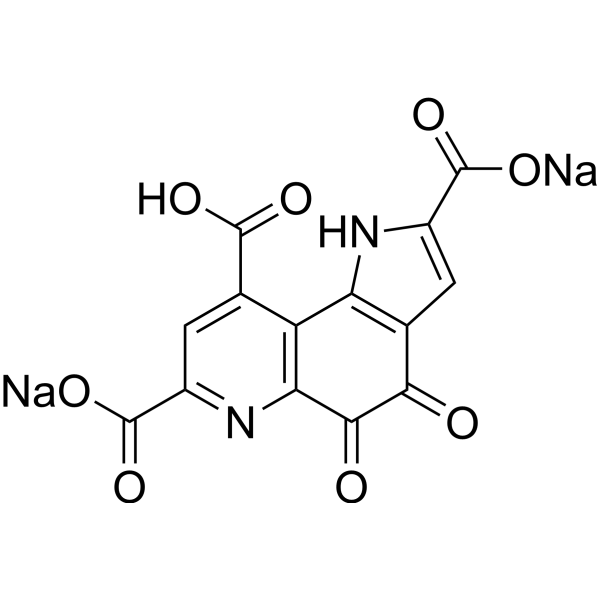
Pyrroloquinoline quinone disodium salt, a redox co-factor, is an anionic, redox-cycling orthoquinone. Pyrroloquinoline quinone disodium salt is isolated from cultures of methylotropic bacteria and tissues of mammals. Pyrroloquinoline quinone disodium salt is an essential nutrient for mammals and is important for immune function.
For research use only. We do not sell to patients.
- Purity : 98.0%
- CAS No.: 122628-50-6
- Formula: C14H4N2Na2O8
- Molecular Weight:374.17
-
Storage:
4°C, sealed storage, away from moisture
* In solvent : -80°C, 6 months; -20°C, 1 month (sealed storage, away from moisture)

To place orders, for customer services and technical support, please contact: MedChemExpress USA
Tel: 609-228-6898 E-mail: [email protected] [email protected]


-
 Biological Activity
-
Chemical Information
-
Solvent & Solubility
- Protocols
- Purity & Documentation
- References
-
 Help & FAQs


-
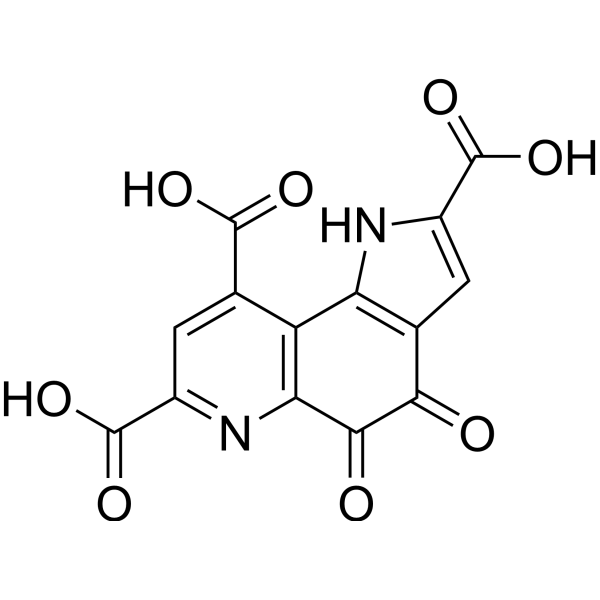
HY-100196
Pyrroloquinoline quinoneRedox Co-factor -
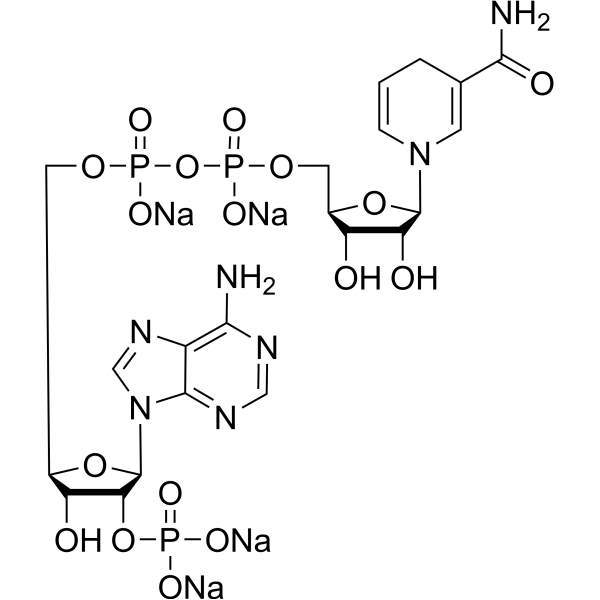
HY-F0003
NADPH tetrasodium saltCofactor -

HY-100196AR
Pyrroloquinoline quinone disodium salt (Standard)Redox Co-factor -
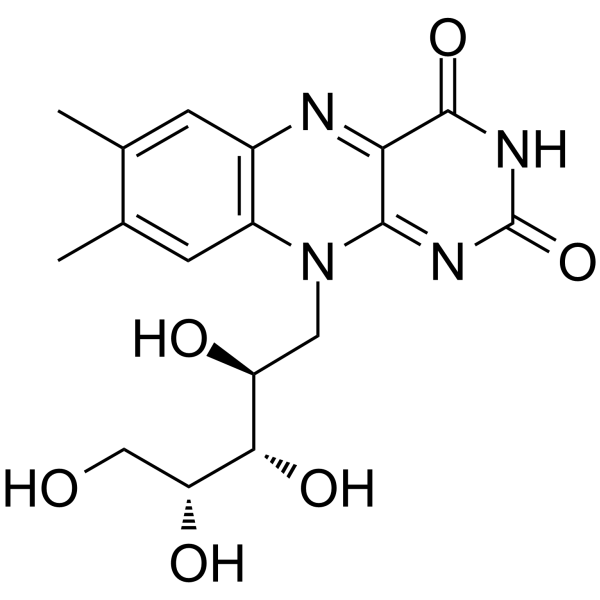
HY-B0456
RiboflavinVitamin B2 -

HY-100196R
Pyrroloquinoline quinone (Standard)Redox Co-factor -
HY-B0315
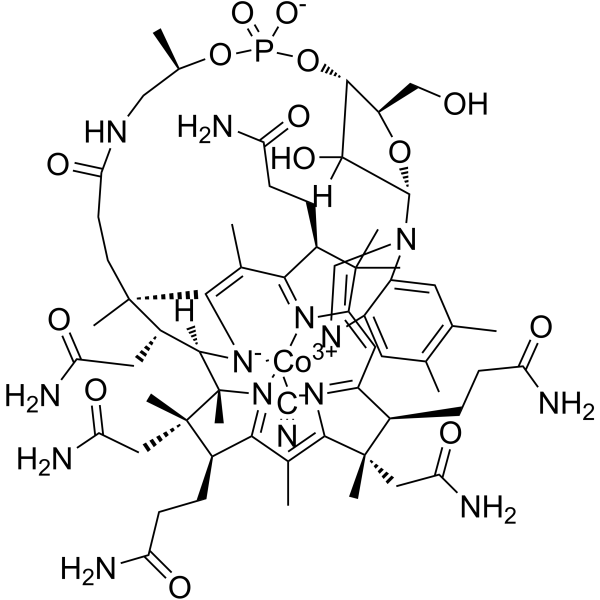
Vitamin B12Endogenous Metabolite -

HY-B0456R
Riboflavin (Standard)Vitamin B2 -

HY-F0003R
NADPH tetrasodium salt (Standard)Standard of NADPH tetrasodium salt -
HY-128851A
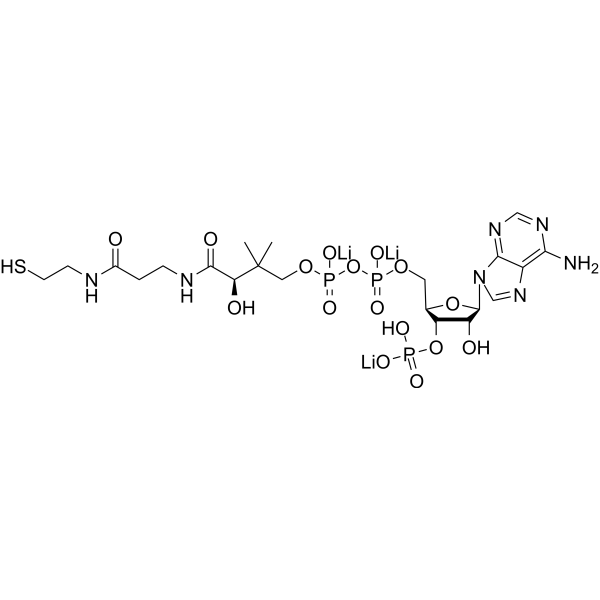
Coenzyme A trilithiumCofactor -

HY-B0315R
Vitamin B12 (Standard)Endogenous Metabolite
Publications Citing Use of MedChemExpress (MCE) Pyrroloquinoline quinone disodium salt
More- Biosens Bioelectron. 2024 Apr 15:250:116049. [Abstract]
- Phytomedicine. 2026 Apr:153:157996. [Abstract]
- Int J Biol Macromol. 2026 May 6:152409. [Abstract]
- Int J Biol Macromol. 2026 Mar 18:355:151493. [Abstract]
- Antioxidants (Basel). 2025 Jan 16;14(1):102. [Abstract]
- Antioxidants (Basel). 2024 Jan 15;13(1):104. [Abstract]
- J Agric Food Chem. 2024 Sep 25;72(38):20944-20958. [Abstract]
- J Chromatogr B Analyt Technol Biomed Life Sci. 2025 Apr 15:1256:124559. [Abstract]
- bioRxiv. 2026 Apr 28.
 Customer Validation & Images

-
Cell Proliferation/Viability Assay
-
WB
-
Histological Imaging/Staining
-
In Vivo Imaging
-
IHC
All Endogenous Metabolite Isoforms
More

Biological Activity
Description
IC50 & Target
[1]|
Microbial Metabolite |
Human Endogenous Metabolite |
In Vitro
Mouse pups born to and nursing from Pyrroloquinoline quinone disodium salt-deprived dams have a compromised immune response as well as alopecia, a hunched posture, and a susceptibility to aortic aneurysms[2].
MedChemExpress (MCE) has not independently confirmed the accuracy of these methods. They are for reference only. Further protocols information, click here.


Chemical Information
-
CAS No. 122628-50-6
-
Appearance Solid
-
Molecular Weight 374.17
-
Formula C14H4N2Na2O8
-
Color Pink to red
-
SMILES
O=C(C(N1)=CC(C2=O)=C1C3=C(N=C(C(O[Na])=O)C=C3C(O)=O)C2=O)O[Na]
-
Synonyms
PQQ disodium salt; Methoxatin disodium salt
-
Structure Classification
-
Initial Source
-
Shipping
Room temperature in continental US; may vary elsewhere.
-
Storage
4°C, sealed storage, away from moisture
* In solvent : -80°C, 6 months; -20°C, 1 month (sealed storage, away from moisture)


Publications (9)
-
Journal Impact Factor
-
Most Recent
-
Biosens Bioelectron
Development of an electrochemical impedance spectroscopy immunosensor for insulin monitoring employing pyrroloquinoline quinone as an ingestible redox probe. [Abstract]2024 Apr 15:250:116049. PMID: 38290381 -
Phytomedicine
Pyrroloquinoline quinone alleviates age-related osteoarthritis via nuclear factor erythroid 2-related factor 2-mediated stress response and insulin-like growth factor 1 receptor upregulation. [Abstract]2026 Apr:153:157996. PMID: 41763140
Pyrroloquinoline quinone disodium salt purchased from MedChemExpress. Usage Cited in: Phytomedicine. 2026 Apr:153:157996. [Abstract]
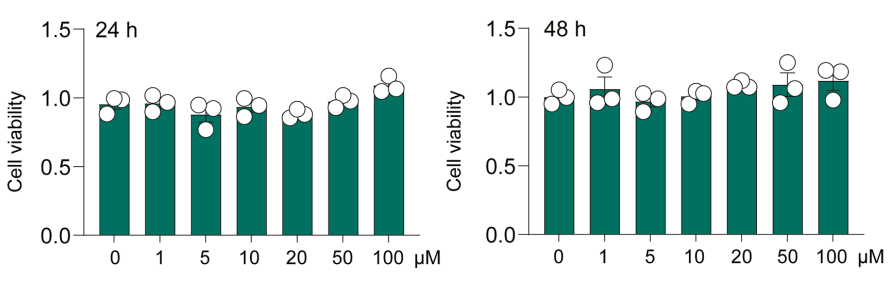
Cell viability of human articular chondrocytes (HACs) after 24 or 48 h treatment with Pyrroloquinoline quinone (PQQ, 1–100 μM).
Pyrroloquinoline quinone disodium salt purchased from MedChemExpress. Usage Cited in: Phytomedicine. 2026 Apr:153:157996. [Abstract]
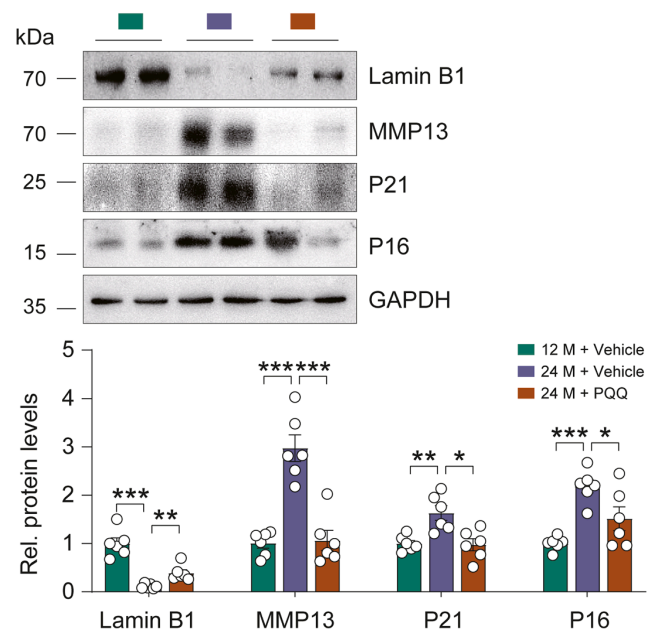
Western blotting and densitometric quantification of Lamin B1, P16, CDKN1A (P21) and MMP13 in indicated groups. The results showed that Pyrroloquinoline quinone (PQQ, 4 mg/kg; chow diet; 12 months) restored Lamin B1 levels while suppressing P16, P21 and MMP13 proteins in aged joint tissues.
Pyrroloquinoline quinone disodium salt purchased from MedChemExpress. Usage Cited in: Phytomedicine. 2026 Apr:153:157996. [Abstract]
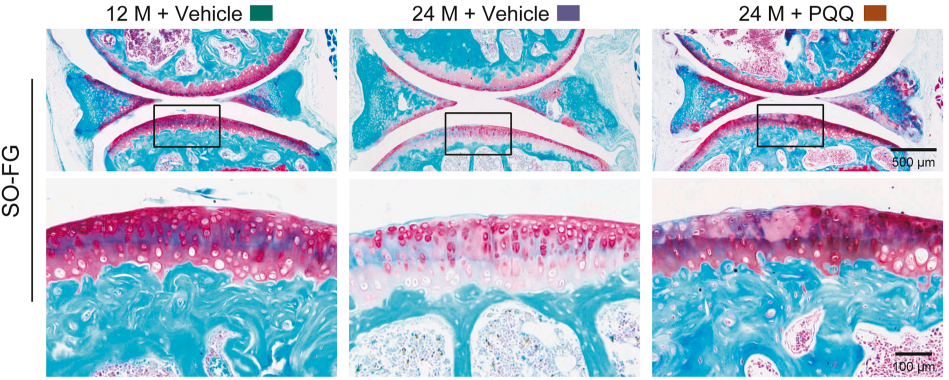
12‑month‑old wild-type (WT) male mice were given standard chow or Pyrroloquinoline quinone (PQQ)‑enriched chow (4 mg/kg) for 12 months and analyzed at 24 months (n = 6). Representative Safranin O–Fast Green (SO‑FG) staining of knee cartilage. The results showed that PQQ markedly improved cartilage integrity in 24-month-old mice.
Pyrroloquinoline quinone disodium salt purchased from MedChemExpress. Usage Cited in: Phytomedicine. 2026 Apr:153:157996. [Abstract]
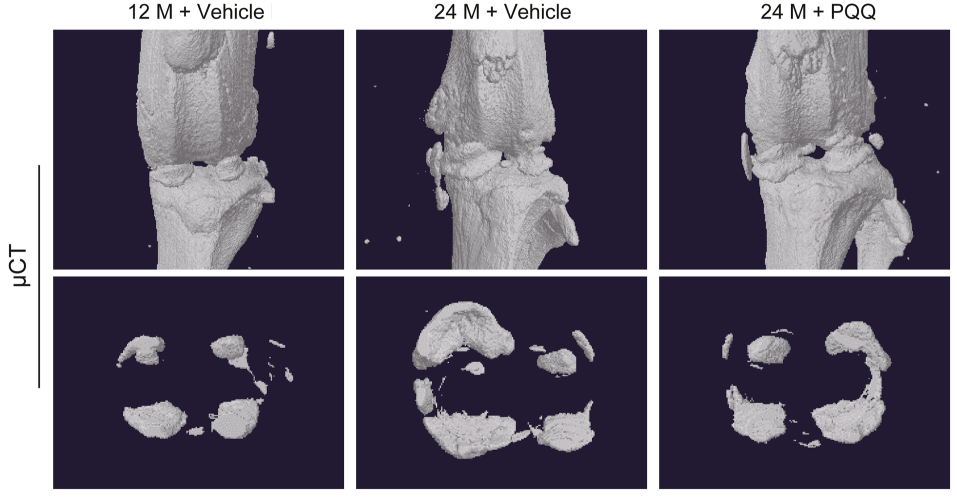
12‑month‑old wild-type (WT) male mice were given standard chow or Pyrroloquinoline quinone (PQQ)‑enriched chow (4 mg/kg) for 12 months and analyzed at 24 months (n = 6). Micro-CT analysis demonstrated that PQQ decreased bone volume (BV) of the calcified meniscus and synovial tissue in aged mice, indicating preserved joint architecture.
Pyrroloquinoline quinone disodium salt purchased from MedChemExpress. Usage Cited in: Phytomedicine. 2026 Apr:153:157996. [Abstract]
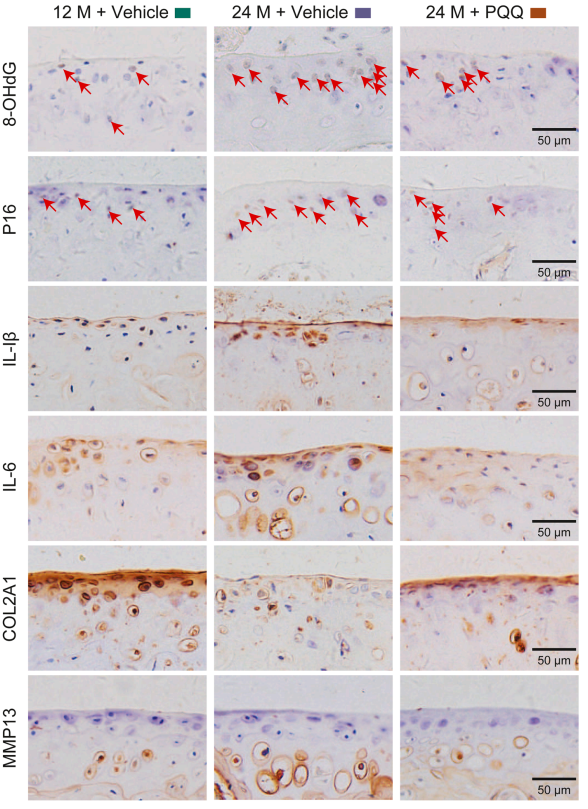
Representative immunostaining of knee joint sections from 12‑month, 24‑month and Pyrroloquinoline quinone (PQQ, 4 mg/kg; chow diet; 12 months)‑treated 24‑month mice for 8‑hydroxy‑2′‑deoxyguanosine (8‑OHdG), cyclin‑dependent kinase inhibitor 2A (P16), IL‑1β, interleukin‑6 (IL‑6), COL2A1 and MMP13.
-
Int J Biol Macromol
Molecular basis of BACE1 modulation revealed by machine learning, molecular simulations, and experimental validation. [Abstract]2026 May 6:152409. PMID: 42103119 -
Int J Biol Macromol
Structural and dynamic characterization of papain-like protease ligand recognition using integrated computational and biochemical approaches. [Abstract]2026 Mar 18:355:151493. PMID: 41861871 -
Antioxidants (Basel)
Pyrroloquinoline Quinone Improved Boar Sperm Quality via Maintaining Mitochondrial Function During Cryopreservation. [Abstract]2025 Jan 16;14(1):102. PMID: 39857436 -
Antioxidants (Basel)
Pyrroloquinoline Quinone Improves Ram Sperm Quality through Its Antioxidative Ability during Storage at 4 °C. [Abstract]2024 Jan 15;13(1):104. PMID: 38247528 -
J Agric Food Chem
Pyrroloquinoline Quinone Alleviates Mitochondria Damage in Radiation-Induced Lung Injury in a MOTS-c-Dependent Manner. [Abstract]2024 Sep 25;72(38):20944-20958. PMID: 39259217 -
J Chromatogr B Analyt Technol Biomed Life Sci
Novel GC MS/MS method for bioanalysis of pyrroloquinoline quinone, a potential cognitive enhancer in mice brains. [Abstract]2025 Apr 15:1256:124559. PMID: 40121937 -


Solvent & Solubility
In Vitro:
0.5 M NaOH : 10 mg/mL (26.73 mM; Need ultrasonic)
H2O : 1.25 mg/mL (3.34 mM; Need ultrasonic)
Please refer to the solubility information to select the appropriate solvent. Once prepared, please aliquot and store the solution to prevent product inactivation from repeated freeze-thaw cycles.
Storage method and period of stock solution: -80°C, 6 months; -20°C, 1 month (sealed storage, away from moisture). When stored at -80°C, please use it within 6 months. When stored at -20°C, please use it within 1 month.
* Note: If you choose water as the stock solution, please dilute it to the working solution, then filter and sterilize it with a 0.22 μm filter before use.
Please refer to the solubility information to select the appropriate solvent. Once prepared, please aliquot and store the solution to prevent product inactivation from repeated freeze-thaw cycles.
Storage method and period of stock solution: -80°C, 6 months; -20°C, 1 month (sealed storage, away from moisture). When stored at -80°C, please use it within 6 months. When stored at -20°C, please use it within 1 month.
* Note: If you choose water as the stock solution, please dilute it to the working solution, then filter and sterilize it with a 0.22 μm filter before use.
Concentration (start) × Volume (start) = Concentration (final) × Volume (final)
In Vivo:
For the following dissolution methods, please prepare the working solution directly:
It is recommended to prepare fresh solutions and use them promptly within a short period of time.
The percentages shown for the solvents indicate their volumetric ratio in the final prepared solution. If precipitation or phase separation occurs during preparation, heat and/or sonication can be used to aid dissolution.
Add each solvent one by one: PBS
Solubility: 2 mg/mL (5.35 mM); Clear solution; Need ultrasonic and warming and heat to 60°C
Add each solvent one by one: 0.5% CMC-Na/saline water
Solubility: 5 mg/mL (13.36 mM); Suspended solution; Need ultrasonic

Protocols
-
ROS/oxidative-stress fluorescent staining
ROS/oxidative-stress fluorescent staining uses cell-permeant fluorogenic probes that become fluorescent after oxidation inside cells or tissues; commonly used examples include DCFH-DA/DCFDA for broad cellular oxidant detection, DHE for superoxide-related signal detection, MitoSOX for mitochondrial superoxide-related signal detection, and CellROX probes for oxidative-stress-associated fluorescence readouts. The assay detects probe oxidation rather than a single ROS species unless the probe and analysis method have been chemically validated for that species. DCFH-DA enters cells, is deacetylated by intracellular esterases to DCFH, and produces fluorescent DCF after oxidation, so the readout is used as an operational measure of total cellular oxidative stress rather than a species-specific ROS measurement. DHE and MitoSOX can report superoxide-related oxidation, but red fluorescence alone can include non-specific ethidium-like oxidation products; HPLC or optimized spectral approaches are


Purity & Documentation
-
Data Sheet (278 KB)
-
SDS (394 KB)
- English - EN (394 KB)
- Français - FR (394 KB)
- Deutsch - DE (394 KB)
- Norwegian - NO (394 KB)
- Español - ES (394 KB)
- Swedish - SV (394 KB)
- Italian - IT (394 KB)
- Korean - KR (394 KB)
- Portuguese - PT (394 KB)
-
Handling Instructions (2659 KB)
References
[1]. Moog RS, et al. Evidence for methoxatin (pyrroloquinolinequinone) as the cofactor in bovine plasma amine oxidase from resonance Raman spectroscopy. Proc Natl Acad Sci U S A. 1986 Nov;83(22):8435-9. [Content Brief]
[2]. Bishop A, et al. Methoxatin (PQQ) in guinea-pig neutrophils. Free Radic Biol Med. 1994 Oct;17(4):311-20. [Content Brief]


Complete Stock Solution Preparation Table
Please refer to the solubility information to select the appropriate solvent. Once prepared, please aliquot and store the solution to prevent product inactivation from repeated freeze-thaw cycles.
Storage method and period of stock solution: -80°C, 6 months; -20°C, 1 month (sealed storage, away from moisture). When stored at -80°C, please use it within 6 months. When stored at -20°C, please use it within 1 month.
| Optional Solvent | Concentration Solvent Mass | 1 mg | 5 mg | 10 mg | 25 mg |
|---|---|---|---|---|---|
| H2O / 0.5 M NaOH | 1 mM | 2.6726 mL | 13.3629 mL | 26.7258 mL | 66.8145 mL |
| 0.5 M NaOH | 5 mM | 0.5345 mL | 2.6726 mL | 5.3452 mL | 13.3629 mL |
| 10 mM | 0.2673 mL | 1.3363 mL | 2.6726 mL | 6.6815 mL | |
| 15 mM | 0.1782 mL | 0.8909 mL | 1.7817 mL | 4.4543 mL | |
| 20 mM | 0.1336 mL | 0.6681 mL | 1.3363 mL | 3.3407 mL | |
| 25 mM | 0.1069 mL | 0.5345 mL | 1.0690 mL | 2.6726 mL |
* Note: If you choose water as the stock solution, please dilute it to the working solution, then filter and sterilize it with a 0.22 μm filter before use.


Pyrroloquinoline quinone disodium salt Related Classifications
HY-100196A Related Classifications
 Powered by Bioz