



Mozavaptan
Based on 2 publication(s) in Google Scholar
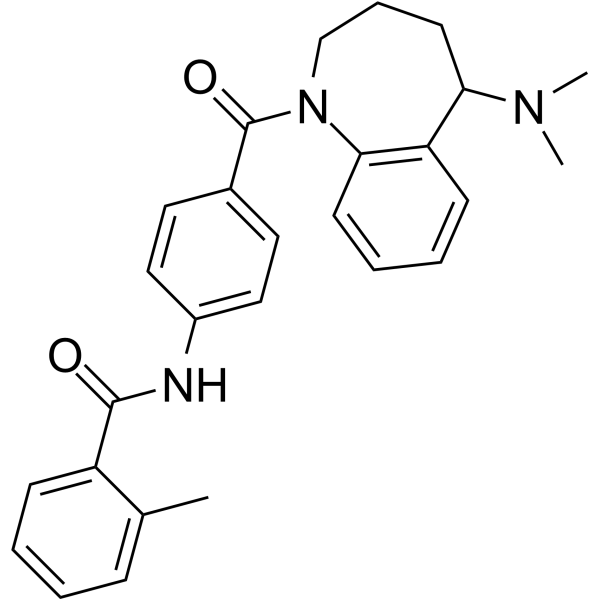
Mozavaptan (OPC-31260) is a benzazepine derivative and a potent, selective, competitive and orally active vasopressin V2 receptor antagonist with an IC50 of 14 nM. Mozavaptan shows ~85-fold selectivity for V2 receptor over V1 receptor (IC50 of 1.2 μM), and can antagonize the antidiuretic action of arginine vasopressin (AVP) in vivo. Mozavaptan has the potential for hyponatremia, syndrome of inappropriate antidiuretic hormone (SIADH), and congestive heart failure treatment.
For research use only. We do not sell to patients.
- Purity : 99.71%
- CAS No.: 137975-06-5
- Formula: C27H29N3O2
- Molecular Weight:427.54
-
Storage:Powder -20°C, 3 years , 4°C, 2 years ; In solvent -80°C, 2 years , -20°C, 1 year

To place orders, for customer services and technical support, please contact: MedChemExpress USA
Tel: 609-228-6898 E-mail: [email protected] [email protected]


-
 Biological Activity
-
Chemical Information
-
Solvent & Solubility
- Protocols
- Purity & Documentation
- References
-
 Help & FAQs


-
HY-17000
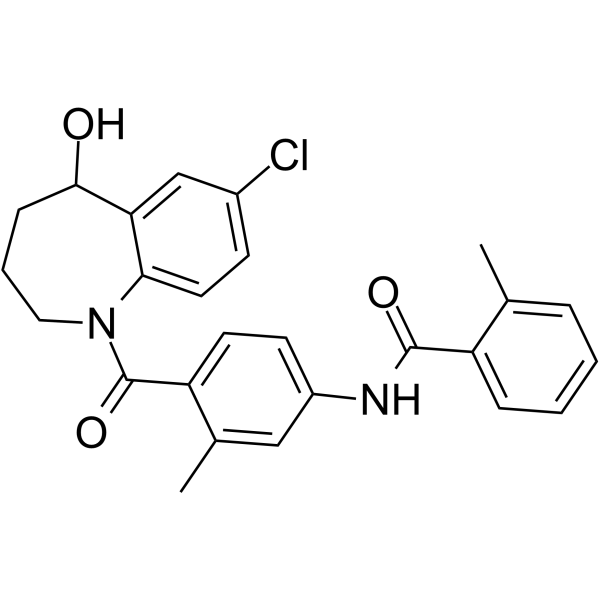
TolvaptanV2R Antagonist -
HY-18347A
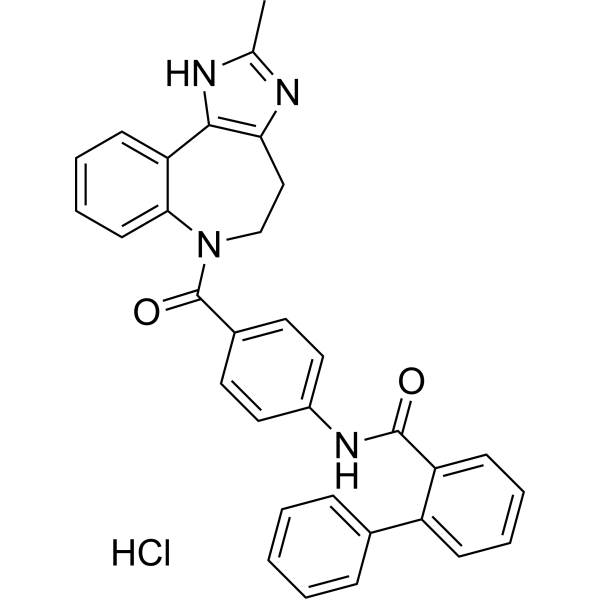
Conivaptan hydrochlorideVasopressin V1a/V2 Receptor Antagonist -
HY-18345
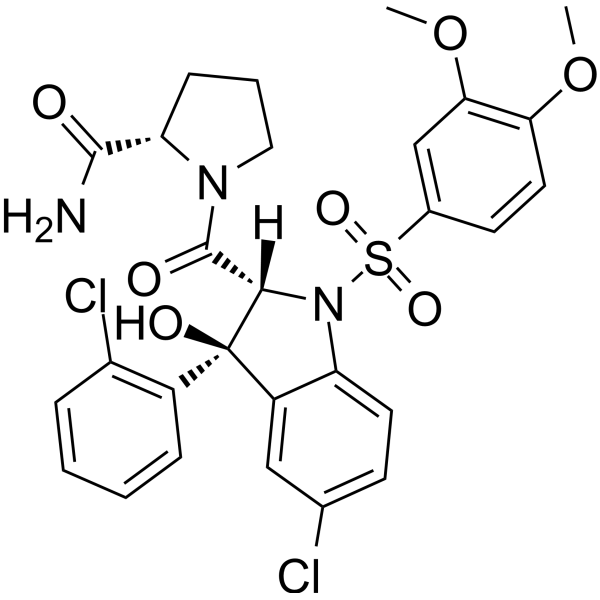
SR 49059Vasopressin V1a Antagonist -
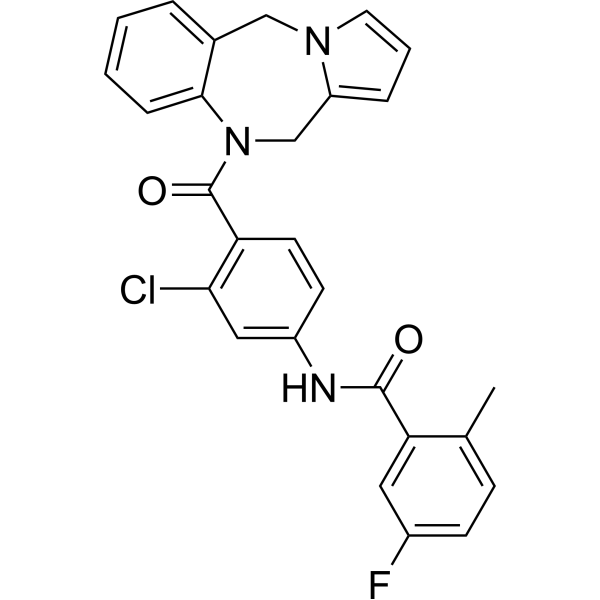
HY-14185
LixivaptanV2 Antagonist -

HY-18346R
Mozavaptan (Standard)Vasopressin V2 Receptor Antagonist -
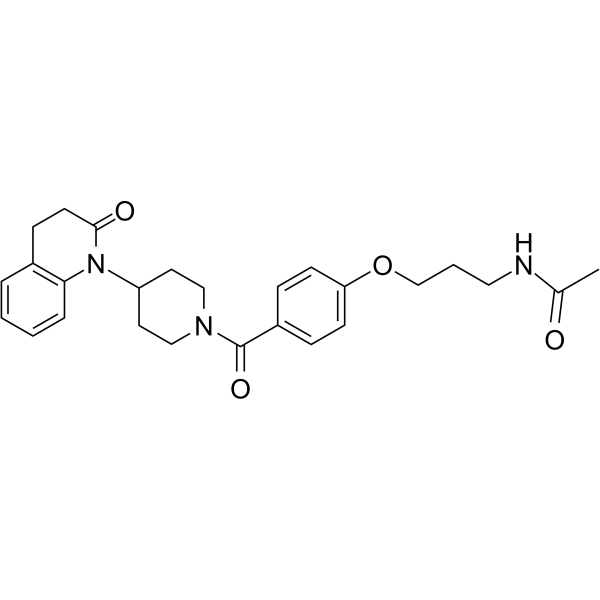
HY-15009
FuscosideVasopressin V1 Receptor Antagonist -
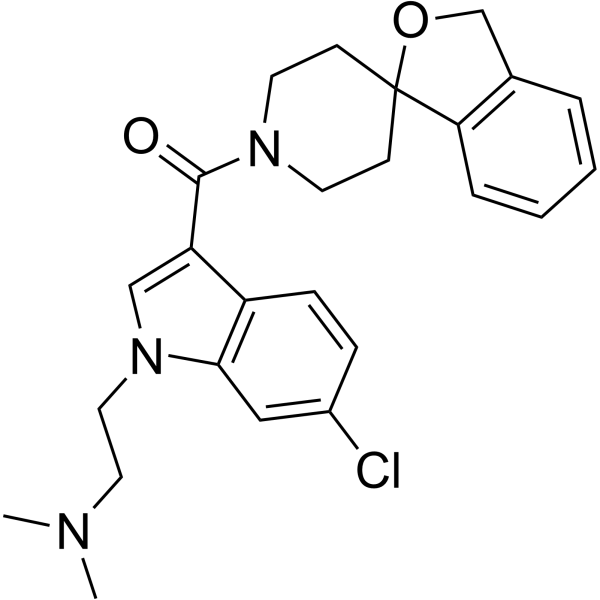
HY-12981
RG7713Vasopressin Receptor Antagonist -

HY-18347AR
Conivaptan hydrochloride (Standard)Reference Standard -
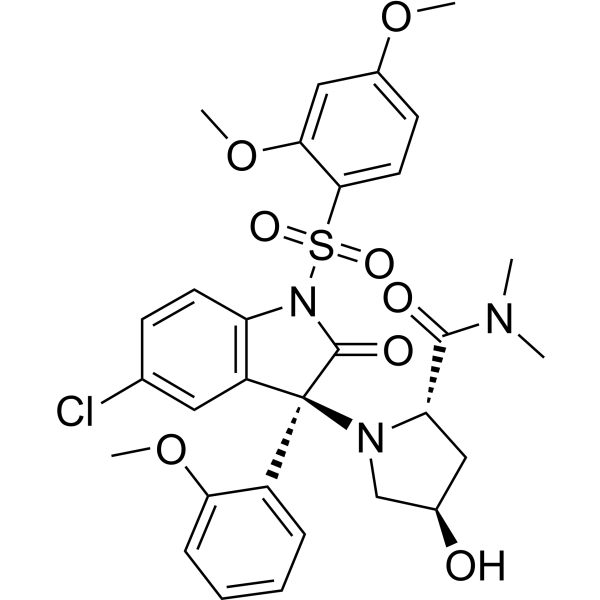
HY-10066
NelivaptanV1b Receptor Antagonist -
HY-12554A
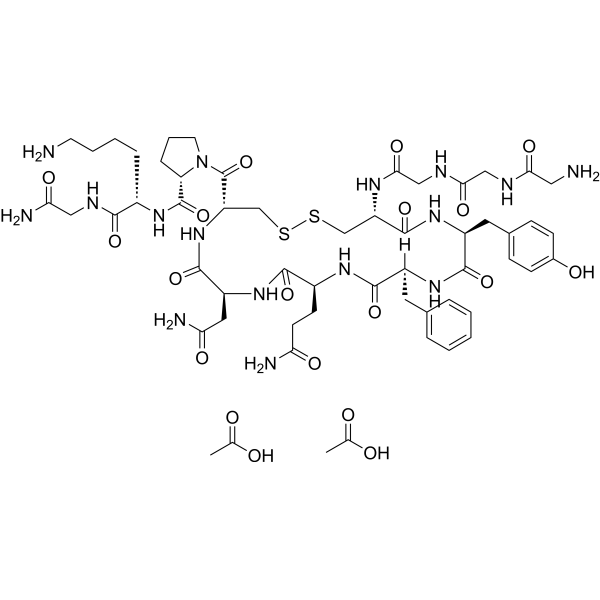
Terlipressin diacetateVasopressin V1 Receptor Agonist -
HY-109024
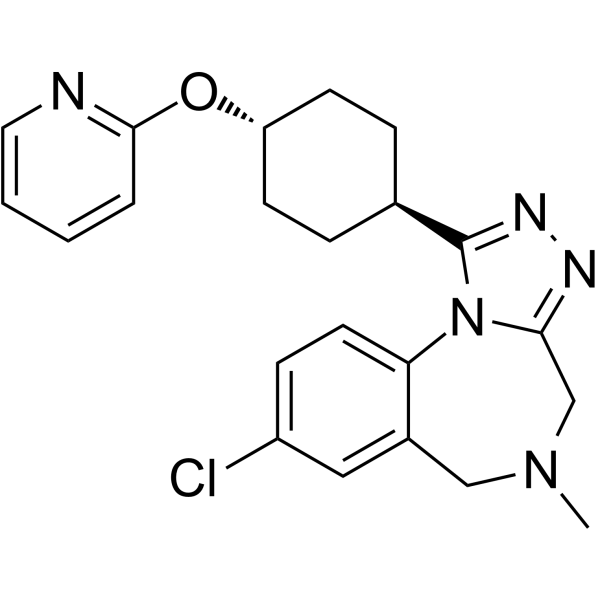
BalovaptanhV1a Receptor Antagonist -
HY-105685
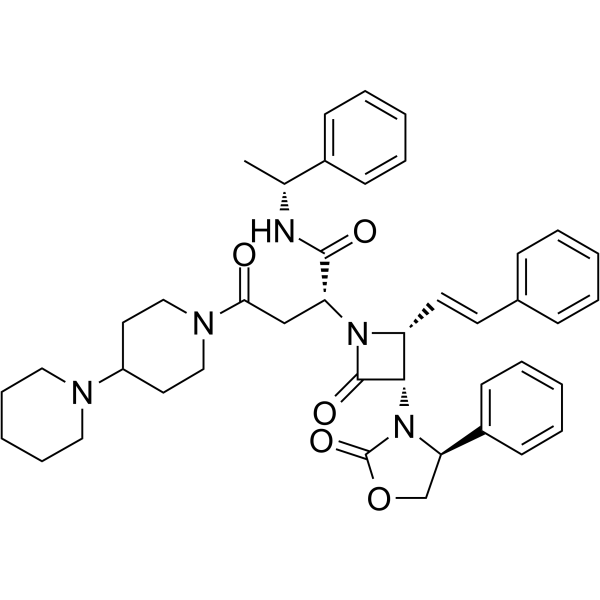
SRX246Vasopressin 1a Receptor Antagonist
Publications Citing Use of MedChemExpress (MCE) Mozavaptan
MoreAll Vasopressin Receptor Isoforms
More

Biological Activity
Description
IC50 & Target
|
V2 Receptor |
Cellular Effect
|
Cell Line

|
Type | Value | Description | References |
|---|---|---|---|---|
| CHO | IC50 |
500 nM
Compound: 3
|
Inhibitory activity against human recombinant arginine vasopressin V2 receptor using [3H]AVP as radioligand in CHO cells
Inhibitory activity against human recombinant arginine vasopressin V2 receptor using [3H]AVP as radioligand in CHO cells
|
[PMID: 7241506] |
In Vitro
Mozavaptan (OPC-31260) inhibits AVP binding to binding to rat liver (V1 receptor) and kidney (V2 receptor) plasma membranes in a competitive manner and that it is about 100 times more selective for V2 receptors. Kd value for [3H]-AVP in rat liver is 1.1 nM; in rat kidney is 1.38 nM. The Kd of [3H]-AVP is reduced significantly in both rat liver and kidney in the presence of Mozavaptan (Kd of 2.47 nM and 5.51 nM for V1 receptor at the doses of 0.3 μM and 1 μM.respectively; Kd of 2.4 nM and 4.03 nM for V2 receptor at the doses of 0.3 μM and 1 μM.respectively)[1].
MedChemExpress (MCE) has not independently confirmed the accuracy of these methods. They are for reference only. Further protocols information, click here.
In Vivo
Mozavaptan (OPC-31260; 10-100 μg/kg; intravenous injection; male Sprague-Dawley rats) treatment inhibits the antidiuretic action of exogenously administered arginine vasopressin (AVP) in water-loaded, alcohol-anaesthetized rats in a dose-dependent manner[1].
MedChemExpress (MCE) has not independently confirmed the accuracy of these methods. They are for reference only.
-
Animal Model:Hydrated conscious rats (300-350 g)[1]
-
Dosage:1 mg/kg, 3 mg/kg, 10 mg/kg, 30 mg/kg
-
Administration:Oral administration
-
Result:Dose-dependently increased urine flow and decreased urine osmolality.


Chemical Information
-
CAS No. 137975-06-5
-
Appearance Solid
-
Molecular Weight 427.54
-
Formula C27H29N3O2
-
Color White to off-white
-
SMILES
CC1=CC=CC=C1C(NC2=CC=C(C(N3C(C=CC=C4)=C4C(N(C)C)CCC3)=O)C=C2)=O
-
Synonyms
OPC-31260
-
Shipping
Room temperature in continental US; may vary elsewhere.
-
Storage
Powder -20°C 3 years 4°C 2 years In solvent -80°C 2 years -20°C 1 year


Publications (2)
-
Journal Impact Factor
-
Most Recent
-
Eur J Pharmacol
Revisit ligand-receptor interaction at the human vasopressin V2 receptor: A kinetic perspective. [Abstract]2020 Aug 5:880:173157. PMID: 32360346 -


Solvent & Solubility
In Vitro:
DMSO : 6.2 mg/mL (14.50 mM; Need warming; Hygroscopic DMSO has a significant impact on the solubility of product, please use newly opened DMSO)
Please refer to the solubility information to select the appropriate solvent. Once prepared, please aliquot and store the solution to prevent product inactivation from repeated freeze-thaw cycles.
Storage method and period of stock solution: -80°C, 2 years; -20°C, 1 year. When stored at -80°C, please use it within 2 years. When stored at -20°C, please use it within 1 year.
Please refer to the solubility information to select the appropriate solvent. Once prepared, please aliquot and store the solution to prevent product inactivation from repeated freeze-thaw cycles.
Storage method and period of stock solution: -80°C, 2 years; -20°C, 1 year. When stored at -80°C, please use it within 2 years. When stored at -20°C, please use it within 1 year.
Concentration (start) × Volume (start) = Concentration (final) × Volume (final)

Protocols
-
Cell Cytotoxicity Assay
Cytotoxicity assays are usually based on the assessment of cell membrane damage, which can also be indirectly detected by measuring cell viability. Detection methods include MTT assay, CKK-8 assay, LDH assay and ATP assay, etc.
-
Research Protocol for Endocrine Diseases
Endocrine diseases often arise from disrupted hormone production, hormone signaling, or target-tissue responsiveness; for diabetes-focused endocrine disease models, insulin signaling regulates glucose uptake, hepatic glucose output, lipid metabolism, and β-cell compensation. Type 2 diabetes develops through interacting defects in insulin resistance, β-cell dysfunction, adipose inflammation, hepatic glucose overproduction, altered incretin signaling, and ectopic lipid metabolism. A major unresolved question is whether endocrine dysfunction is driven primarily by target-tissue insulin resistance, intrinsic β-cell failure, immune/inflammatory stress, or combined multi-organ failure that differs by disease stage.
-
Research Protocol for Cardiovascular Diseases
Cardiovascular disease can be modeled as maladaptive cardiac remodeling, where ischemic injury or pressure overload activates inflammatory signaling, fibroblast activation, extracellular-matrix deposition, cardiomyocyte hypertrophy, vascular remodeling, and progressive ventricular dysfunction. The TGF-β/SMAD axis is a central profibrotic pathway after myocardial injury and pressure overload, while innate immune and cytokine pathways regulate leukocyte recruitment, scar formation, and adverse remodeling. Key unresolved questions include which inflammatory signals are reparative versus harmful, when fibrosis is protective versus maladaptive, and whether pathway inhibition improves function without weakening necessary infarct healing or compensatory remodeling.


Purity & Documentation
-
Data Sheet (280 KB)
-
SDS (393 KB)
- English - EN (393 KB)
- Français - FR (393 KB)
- Deutsch - DE (393 KB)
- Norwegian - NO (393 KB)
- Español - ES (393 KB)
- Swedish - SV (393 KB)
- Italian - IT (393 KB)
- Korean - KR (393 KB)
- Portuguese - PT (393 KB)
-
Handling Instructions (2659 KB)
References
[1]. Yamamura Y, et al. Characterization of a novel aquaretic agent, OPC-31260, as an orally effective, nonpeptide vasopressin V2 receptor antagonist. Br J Pharmacol. 1992 Apr;105(4):787-91. [Content Brief]
[2]. Yamaguchi K, et al. Clinical implication of the antidiuretic hormone (ADH) receptor antagonist mozavaptan hydrochloride in patients with ectopic ADH syndrome. Jpn J Clin Oncol. 2011 Jan;41(1):148-52. [Content Brief]


Complete Stock Solution Preparation Table
Please refer to the solubility information to select the appropriate solvent. Once prepared, please aliquot and store the solution to prevent product inactivation from repeated freeze-thaw cycles.
Storage method and period of stock solution: -80°C, 2 years; -20°C, 1 year. When stored at -80°C, please use it within 2 years. When stored at -20°C, please use it within 1 year.
| Optional Solvent | Concentration Solvent Mass | 1 mg | 5 mg | 10 mg | 25 mg |
|---|---|---|---|---|---|
| DMSO | 1 mM | 2.3390 mL | 11.6948 mL | 23.3896 mL | 58.4741 mL |
| 5 mM | 0.4678 mL | 2.3390 mL | 4.6779 mL | 11.6948 mL | |
| 10 mM | 0.2339 mL | 1.1695 mL | 2.3390 mL | 5.8474 mL |


Mozavaptan Related Classifications
HY-18346 Related Classifications
 Powered by Bioz