



NIK SMI1
Based on 16 publication(s) in Google Scholar
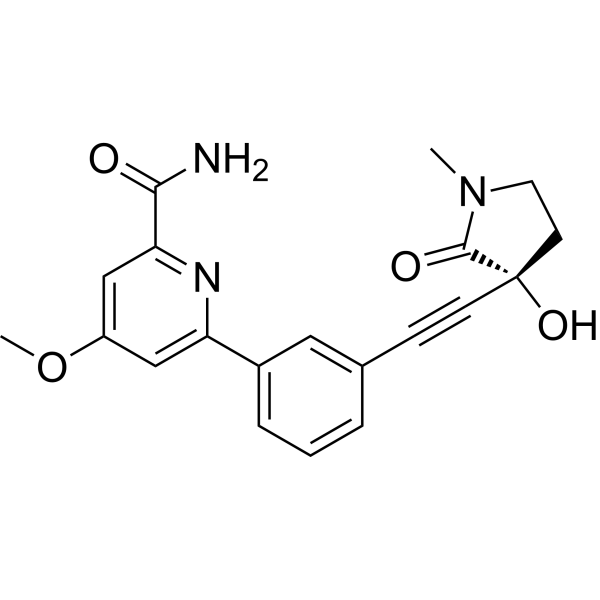
NIK SMI1 is a potent, selective NF-κB inducing kinase (NIK) inhibitor, which inhibits NIK-catalyzed hydrolysis of ATP to ADP with IC50 of 0.23±0.17 nM. NIK SMI1 is a click chemistry reagent, it contains an Alkyne group and can undergo copper-catalyzed azide-alkyne cycloaddition (CuAAc) with molecules containing Azide groups.
For research use only. We do not sell to patients.
- Purity : 99.92%
- CAS No.: 1660114-31-7
- Formula: C20H19N3O4
- Molecular Weight:365.38
-
Storage:Powder -20°C, 3 years , 4°C, 2 years ; In solvent -80°C, 1 year , -20°C, 6 months

To place orders, for customer services and technical support, please contact: MedChemExpress USA
Tel: 609-228-6898 E-mail: [email protected] [email protected]


-
 Biological Activity
-
Chemical Information
-
Solvent & Solubility
- Protocols
- Purity & Documentation
- References
-
 Help & FAQs


-
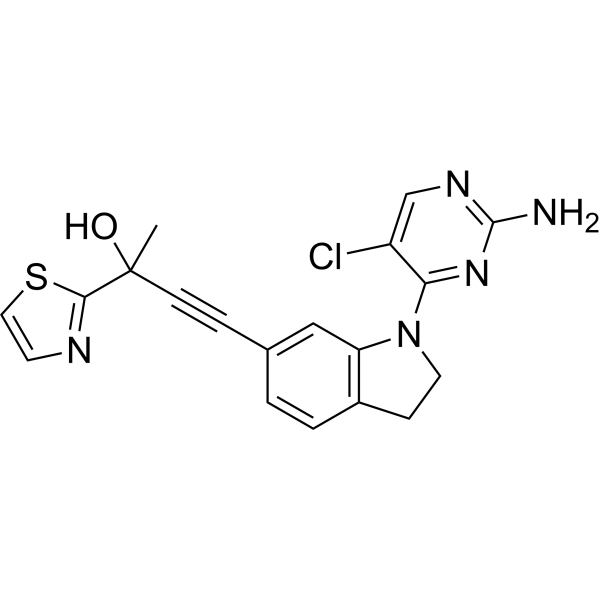
HY-120501
B022NIK Inhibitor -
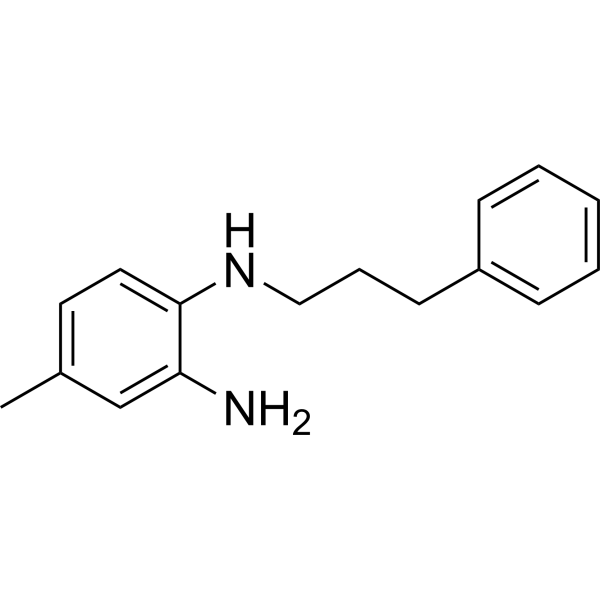
HY-13982
JSH-23NF-κB Inhibitor -
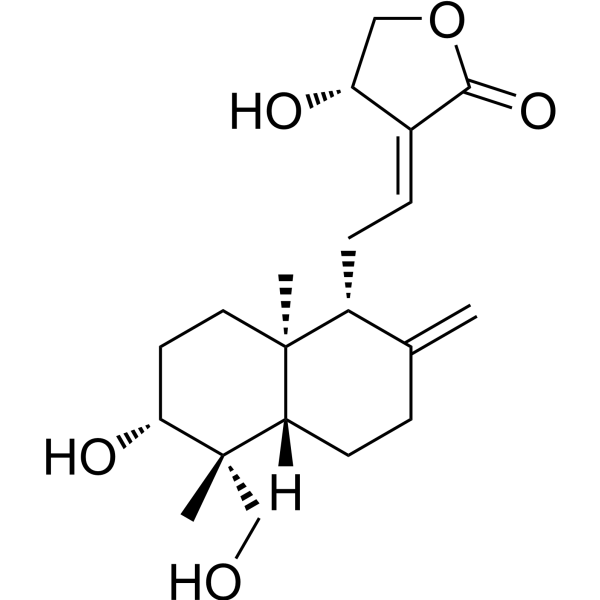
HY-N0191
AndrographolideNF-κB Inhibitor -
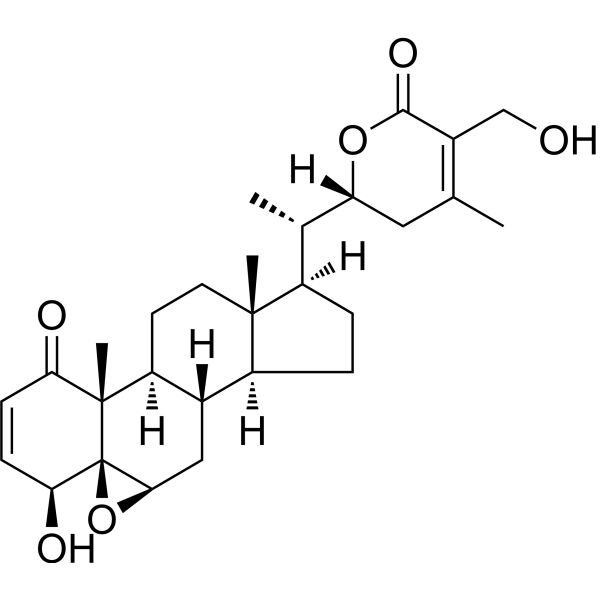
HY-N2065
Withaferin ANF-κB Inhibitor -

HY-P0151
SN50NF-κB Translocation Inhibitor -
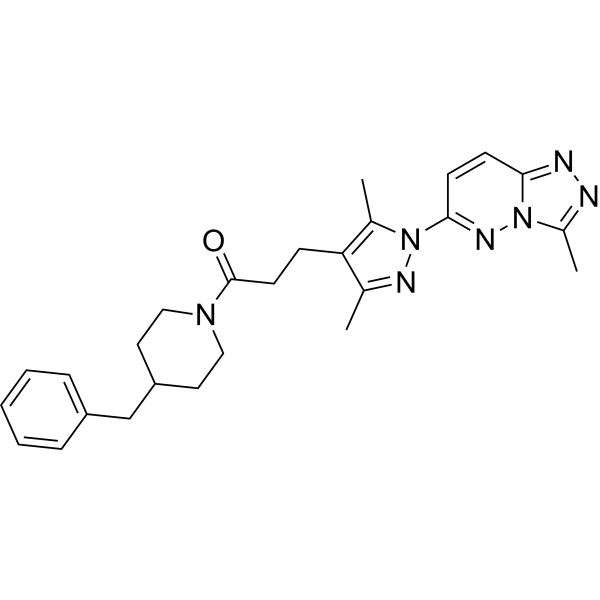
HY-120934
C25-140TRAF6-Ubc13 Inhibitor -
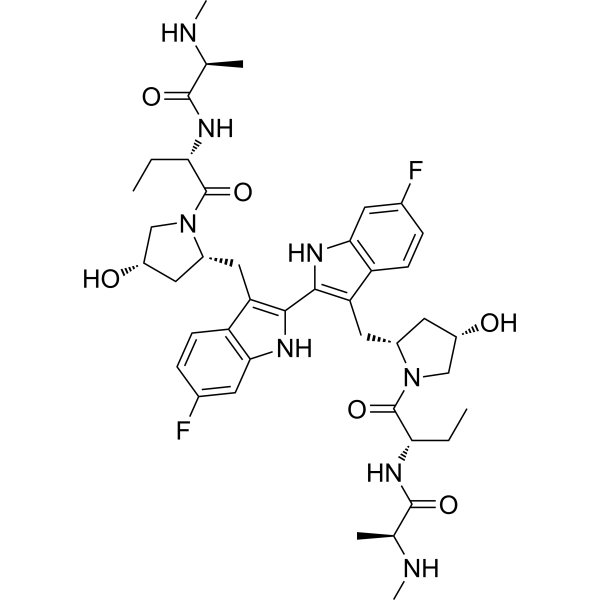
HY-16591
BirinapantXIAP/cIAP1 Antagonist -
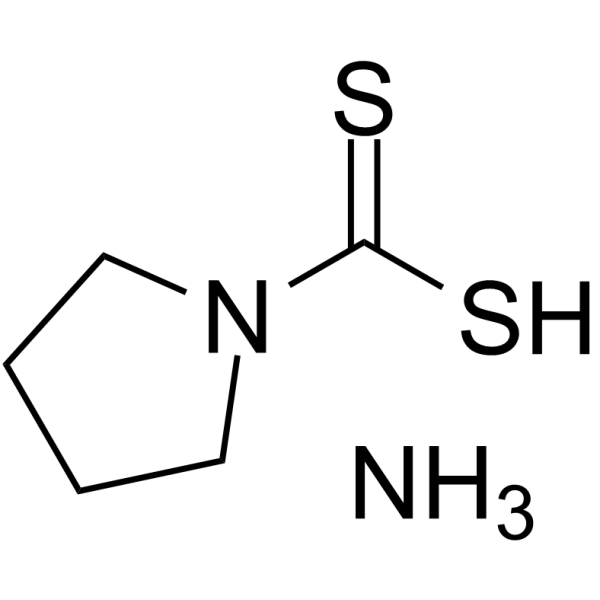
HY-18738
Pyrrolidinedithiocarbamate ammoniumSelective NF-κB Inhibitor -

HY-N2065R
Withaferin A (Standard)NF-κB Inhibitor -
HY-13453
BAY 11-7082IκBα/NF-κB Inhibitor -
HY-10496
SC75741NF-κB Inhibitor -
HY-N0274
Caffeic acid phenethyl esterApoptosis Inducer
Publications Citing Use of MedChemExpress (MCE) NIK SMI1
More- Signal Transduct Target Ther. 2025 Oct 3;10(1):326. [Abstract]
- Nature. 2025 Jun;642(8066):201-211. [Abstract]
- Nat Immunol. 2020 May;21(5):535-545. [Abstract]
- Nat Commun. 2026 Feb 12;17(1):1214. [Abstract]
- Sci Immunol. 2022 Aug 12;7(74):eabn3800. [Abstract]
- Mol Ther. 2025 Mar 20:S1525-0016(25)00199-6. [Abstract]
- Cell Rep. 2025 Oct 7;44(10):116404. [Abstract]
- Front Immunol. 2026 Feb 9:16:1762269. [Abstract]
- Mol Neurobiol. 2021 May;58(5):2435-2446. [Abstract]
- J Virol. 2025 Aug 19:e0123125. [Abstract]
- J Immunol Res. 2020 Jul 31:2020:1859260. [Abstract]
- Res Sq. 2025 Sep 1.
- bioRxiv. 2025 Jan 1.
- University of Buffalo. 2025.
- Research Square Print. 2022 Jun.
- Research Square Preprint. 2020 May.
 Customer Validation & Images

-
WB
-
WB
-
WB
-
WB
-
Bio/Physico-chemical Assay


Biological Activity
Description
IC50 & Target
NIK[1]
Cellular Effect
|
Cell Line

|
Type | Value | Description | References |
|---|---|---|---|---|
| B-cell line | IC50 |
373 nM
Compound: 4f
|
Inhibition of BAFF-stimulated mouse splenic B cell survival preincubated for 1 hr followed by BAFF stimulation measured after 4 days by Cell-Titer Glo assay
Inhibition of BAFF-stimulated mouse splenic B cell survival preincubated for 1 hr followed by BAFF stimulation measured after 4 days by Cell-Titer Glo assay
|
[PMID: 29940120] |
In Vitro
NIK SMI1 (Compound 4f) inhibits NIK-catalyzed hydrolysis of ATP to ADP (fluorescence polarization, FP) with an IC50 of 0.23±0.17 nM. NIK SMI1 inhibits the expression of NIK SMI1 response elementregulated firefly luciferase reporter gene in HEK293 cells with an IC50 of 34±6 nM. Consistent with expectations for a NIK inhibitor, NIK SMI1 is shown to inhibit nuclear translocation of p52 (RelB) (IC50=70 nM). NIK SMI1 inhibits BAFF-induced B cell (mouse) survival in vitro with an IC50 of 373±64 nM[1].
MedChemExpress (MCE) has not independently confirmed the accuracy of these methods. They are for reference only. Further protocols information, click here.
In Vivo
MedChemExpress (MCE) has not independently confirmed the accuracy of these methods. They are for reference only.


Chemical Information
-
CAS No. 1660114-31-7
-
Appearance Solid
-
Molecular Weight 365.38
-
Formula C20H19N3O4
-
Color Off-white to pink
-
SMILES
O=C(N)C1=NC(C2=CC=CC(C#C[C@]3(O)CCN(C)C3=O)=C2)=CC(OC)=C1
-
Shipping
Room temperature in continental US; may vary elsewhere.
-
Storage
Powder -20°C 3 years 4°C 2 years In solvent -80°C 1 year -20°C 6 months


Publications (16)
-
Journal Impact Factor
-
Most Recent
-
Signal Transduct Target Ther
Retinol Binding Protein 4 reactivates latent HIV-1 by triggering canonical NF-κB, JAK/STAT5 and JNK signalling. [Abstract]2025 Oct 3;10(1):326. PMID: 41038866 -
Nature
2025 Jun;642(8066):201-211. PMID: 40269158 -
Nat Immunol
Adaptive response to inflammation contributes to sustained myelopoiesis and confers a competitive advantage in myelodysplastic syndrome HSCs. [Abstract]2020 May;21(5):535-545. PMID: 32313245
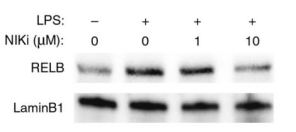
NIK SMI1 purchased from MedChemExpress. Usage Cited in: Nat Immunol. 2020 May;21(5):535-545. [Abstract]
NIK SMI1 (NIKi; 0, 1, 10 μM) suppressed nuclear accumulation of RelB in THP1 cells. Immunoblotting of nuclear extracts from THP1 cells treated with LPS (100 ng/mL) and/or NIK inhibitor (NIKi).
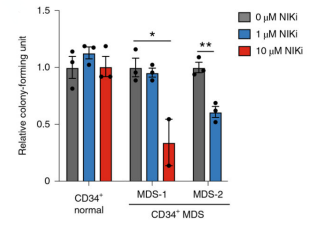
NIK SMI1 purchased from MedChemExpress. Usage Cited in: Nat Immunol. 2020 May;21(5):535-545. [Abstract]
NIK SMI1 (NIKi; 0, 1, 10 μM) inhibited progenitor colony formation in methylcellulose containing cytokines compared to untreated cells. CD34+ del(5q) MDS BM and normal CD34+ BM cells treated with NIKi were evaluated for colony formation in methylcellulose.
-
Nat Commun
Human iPSC-based Modeling of Pulmonary Fibrosis Reveals p300/CBP Inhibition Suppresses Alveolar Transitional Cell State. [Abstract]2026 Feb 12;17(1):1214. PMID: 41680175 -
Sci Immunol
Immunodeficiency, autoimmunity, and increased risk of B cell malignancy in humans with TRAF3 mutations. [Abstract]2022 Aug 12;7(74):eabn3800. PMID: 35960817 -
Mol Ther
Interaction between stromal cells and tumor cells promotes GCB-DLBCL cell survival via the CD40/RANK-KDM6B-NF-κB axis. [Abstract]2025 Mar 20:S1525-0016(25)00199-6. PMID: 40119515 -
Cell Rep
Limited activation interdependence and differing patterns of the in vivo effects of IKK1 and IKK2 downstream of NIK. [Abstract]2025 Oct 7;44(10):116404. PMID: 41060807
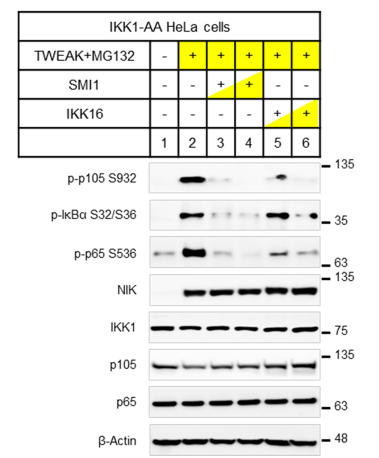
NIK SMI1 purchased from MedChemExpress. Usage Cited in: Cell Rep. 2025 Oct 7;44(10):116404. [Abstract]
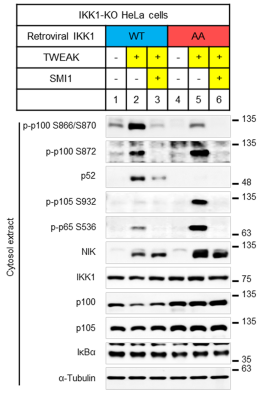
NIK SMI1 (SMI1; 1 μM; 1 h) fully blocked effects observed in cells expressing the IKK1-AA mutant.
NIK SMI1 purchased from MedChemExpress. Usage Cited in: Cell Rep. 2025 Oct 7;44(10):116404. [Abstract]
NIK SMI1 (SMI1; 0.2,1 μM) decreased the protein expression of p-p105 S932, P-IKBα, and P-P65 s536 in IKK1-AA HeLa cells.Immunoblot analysis in cells treated with TWEAK and with the IKK2 inhibitor IKK16 or the NIK inhibitor SMI1 both at 200 nM and 1 μM. MG132 was applied for the last hour.
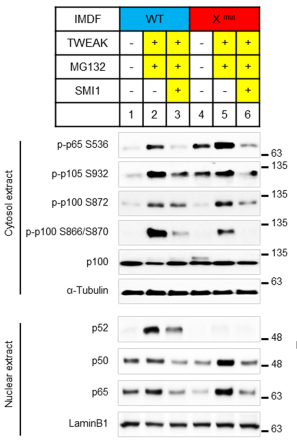
NIK SMI1 purchased from MedChemExpress. Usage Cited in: Cell Rep. 2025 Oct 7;44(10):116404. [Abstract]
Immunoblot assessment of the phosphorylation of the indicated NF-κB proteins (top) and the nuclear translocation of NF-κB proteins (bottom) in response of immortalized MDFs (IMDFs) derived from WT and NIK Xmut mice to TWEAK and MG132 and its arrest by the NIK inhibitor NIK SMI1 (SMI1; 1 μM).
-
Front Immunol
Activation of NF-κB signaling in tissue-resident memory T cells promotes recurrent psoriasis in mice. [Abstract]2026 Feb 9:16:1762269. PMID: 41737494 -
Mol Neurobiol
Myeloid TBK1 Deficiency Induces Motor Deficits and Axon Degeneration Through Inflammatory Cell Infiltration. [Abstract]2021 May;58(5):2435-2446. PMID: 33439438 -
J Virol
Mucosal vaccination with long-form TSLP induces migratory cDC1-mediated adaptive immunity against SARS-CoV-2 infection. [Abstract]2025 Aug 19:e0123125. PMID: 40827912 -
J Immunol Res
CD40 Signaling Promotes CXCR5 Expression in B Cells via Noncanonical NF- κ B Pathway Activation. [Abstract]2020 Jul 31:2020:1859260. PMID: 32802892 -
-
-
-
-


Solvent & Solubility
In Vitro:
DMSO : 125 mg/mL (342.11 mM; Need ultrasonic; Hygroscopic DMSO has a significant impact on the solubility of product, please use newly opened DMSO)
Please refer to the solubility information to select the appropriate solvent. Once prepared, please aliquot and store the solution to prevent product inactivation from repeated freeze-thaw cycles.
Storage method and period of stock solution: -80°C, 1 year; -20°C, 6 months. When stored at -80°C, please use it within 1 year. When stored at -20°C, please use it within 6 months.
Please refer to the solubility information to select the appropriate solvent. Once prepared, please aliquot and store the solution to prevent product inactivation from repeated freeze-thaw cycles.
Storage method and period of stock solution: -80°C, 1 year; -20°C, 6 months. When stored at -80°C, please use it within 1 year. When stored at -20°C, please use it within 6 months.
Concentration (start) × Volume (start) = Concentration (final) × Volume (final)
In Vivo:
Select the appropriate dissolution method based on your experimental animal and administration route.
- For the following dissolution methods, please ensure to first prepare a clear stock solution using an In Vitro approach and then sequentially add co-solvents:
- To ensure reliable experimental results, the clarified stock solution can be appropriately stored based on storage conditions. As for the working solution for In Vivo experiments, it is recommended to prepare freshly and use it on the same day.
- The percentages shown for the solvents indicate their volumetric ratio in the final prepared solution. If precipitation or phase separation occurs during preparation, heat and/or sonication can be used to aid dissolution.
Add each solvent one by one: 10% DMSO 40% PEG300 5% Tween-80 45% Saline
Solubility: ≥ 2.08 mg/mL (5.69 mM); Clear solution
This protocol yields a clear solution of ≥ 2.08 mg/mL (saturation unknown).
Taking 1 mL working solution as an example, add 100 μL DMSO stock solution (20.8 mg/mL) to 400 μL PEG300, and mix evenly; then add 50 μL Tween-80 and mix evenly; then add 450 μL Saline to adjust the volume to 1 mL.
Preparation of Saline: Dissolve 0.9 g sodium chloride in ddH₂O and dilute to 100 mL to obtain a clear Saline solution.
Add each solvent one by one: 10% DMSO 90% (20% SBE-β-CD in Saline)
Solubility: ≥ 2.08 mg/mL (5.69 mM); Clear solution
This protocol yields a clear solution of ≥ 2.08 mg/mL (saturation unknown).
Taking 1 mL working solution as an example, add 100 μL DMSO stock solution (20.8 mg/mL) to 900 μL 20% SBE-β-CD in Saline, and mix evenly.
Preparation of 20% SBE-β-CD in Saline (4°C, storage for one week): 2 g SBE-β-CD powder is dissolved in 10 mL Saline, completely dissolve until clear.
For the following dissolution methods, please prepare the working solution directly:
It is recommended to prepare fresh solutions and use them promptly within a short period of time.
The percentages shown for the solvents indicate their volumetric ratio in the final prepared solution. If precipitation or phase separation occurs during preparation, heat and/or sonication can be used to aid dissolution.
In Vivo Dissolution Calculator
Please enter the basic information of animal experiments:
-
-
-
-
Recommended: Prepare an additional quantity of animals to account for potential losses during experiments.
Please enter your animal formula composition:
-
%DMSO +
Recommended: Keep the proportion of DMSO in working solution below 2% if your animal is weak.
-
%+
-
+%Tween-80 + +
-
%Saline +
The co-solvents required include: DMSO, . All of co-solvents are available by MedChemExpress (MCE). , Tween 80. All of co-solvents are available by MedChemExpress (MCE).
Working solution concentration: 0.22 mg/mL
Method for preparing stock solution: mg drug dissolved in μL DMSO. Stock solution concentration: mg/mL.
1. Take μL DMSO stock solution;
2. Add μL .
μL , mix evenly;
3. Then add μL Tween 80, mix evenly;
4. Then add μL
Please ensure that the stock solution in the first step is dissolved to a clear state, and add co-solvents in sequence. You can use ultrasonic heating (ultrasonic cleaner, recommended frequency 20-40 kHz), vortexing, etc. to assist dissolution.

Protocols
-
EdU Incorporation Assay (Click Chemistry-Based DNA Synthesis Measurement)
The EdU incorporation assay measures DNA synthesis by adding the thymidine analog 5-ethynyl-2′-deoxyuridine to cells or tissues, where it is incorporated into newly synthesized DNA during S phase. Incorporated EdU is detected by copper-catalyzed azide-alkyne cycloaddition, in which a fluorescent azide covalently reacts with the ethynyl group on EdU, allowing S-phase cells to be detected by fluorescence microscopy, flow cytometry, or high-content imaging. EdU detection does not require DNA denaturation or anti-BrdU antibody access, which preserves sample structure and improves compatibility with immunostaining and multiparameter cytometry compared with BrdU-based detection. EdU can be cytotoxic in a cell-type- and exposure-dependent manner, so pulse duration, concentration, and continuous-labeling designs should be validated for each cell type.
-
Cell Cytotoxicity Assay
Cytotoxicity assays are usually based on the assessment of cell membrane damage, which can also be indirectly detected by measuring cell viability. Detection methods include MTT assay, CKK-8 assay, LDH assay and ATP assay, etc.
-
Research Protocol for Inflammation-related Diseases
The NLRP3 inflammasome is a cytosolic innate immune signaling platform that integrates priming signals and danger-signal activation to promote caspase-1 activation, maturation of IL-1β and IL-18, and gasdermin D-mediated pyroptotic cell death. The core experimental logic is to determine whether inflammatory disease phenotypes are driven by increased NLRP3 expression, ASC-containing inflammasome assembly, caspase-1 cleavage, GSDMD cleavage, and extracellular release of IL-1β/IL-18 rather than by nonspecific cell injury alone. The pathway is strongly linked to inflammation-related disease phenotypes because monosodium urate crystals activate NALP3/NLRP3 inflammasome signaling in gout-like crystal inflammation, cholesterol crystals activate NLRP3 inflammasomes in atherogenesis models, and DSS-induced intestinal inflammation has been reported to involve NLRP3 inflammasome activity. However, experimental colitis studies also show context-dependent protective effects of NLRP3 inflammasome co


Purity & Documentation
-
Data Sheet (281 KB)
-
SDS (251 KB)
- English - EN (251 KB)
- Français - FR (251 KB)
- Deutsch - DE (251 KB)
- Norwegian - NO (251 KB)
- Español - ES (251 KB)
- Swedish - SV (251 KB)
- Italian - IT (251 KB)
- Korean - KR (251 KB)
- Portuguese - PT (251 KB)
-
Handling Instructions (2659 KB)
References


Complete Stock Solution Preparation Table
Please refer to the solubility information to select the appropriate solvent. Once prepared, please aliquot and store the solution to prevent product inactivation from repeated freeze-thaw cycles.
Storage method and period of stock solution: -80°C, 1 year; -20°C, 6 months. When stored at -80°C, please use it within 1 year. When stored at -20°C, please use it within 6 months.
| Optional Solvent | Concentration Solvent Mass | 1 mg | 5 mg | 10 mg | 25 mg |
|---|---|---|---|---|---|
| DMSO | 1 mM | 2.7369 mL | 13.6844 mL | 27.3688 mL | 68.4219 mL |
| 5 mM | 0.5474 mL | 2.7369 mL | 5.4738 mL | 13.6844 mL | |
| 10 mM | 0.2737 mL | 1.3684 mL | 2.7369 mL | 6.8422 mL | |
| 15 mM | 0.1825 mL | 0.9123 mL | 1.8246 mL | 4.5615 mL | |
| 20 mM | 0.1368 mL | 0.6842 mL | 1.3684 mL | 3.4211 mL | |
| 25 mM | 0.1095 mL | 0.5474 mL | 1.0948 mL | 2.7369 mL | |
| 30 mM | 0.0912 mL | 0.4561 mL | 0.9123 mL | 2.2807 mL | |
| 40 mM | 0.0684 mL | 0.3421 mL | 0.6842 mL | 1.7105 mL | |
| 50 mM | 0.0547 mL | 0.2737 mL | 0.5474 mL | 1.3684 mL | |
| 60 mM | 0.0456 mL | 0.2281 mL | 0.4561 mL | 1.1404 mL | |
| 80 mM | 0.0342 mL | 0.1711 mL | 0.3421 mL | 0.8553 mL | |
| 100 mM | 0.0274 mL | 0.1368 mL | 0.2737 mL | 0.6842 mL |


NIK SMI1 Related Classifications
HY-112433 Related Classifications
 Powered by Bioz