



Octopamine hydrochloride
Based on 5 publication(s) in Google Scholar
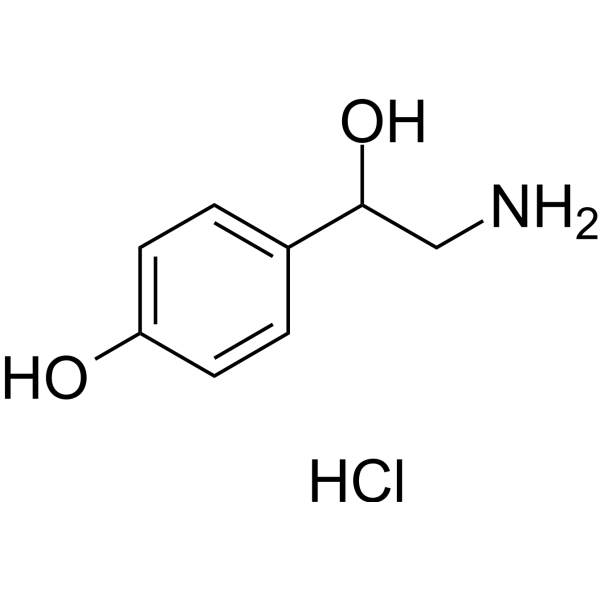
Octopamine hydrochloride ((±)-p-Octopamine hydrochloride) is an orally active neurotransmitter and neuromodulator that can cross the blood-brain barrier. Octopamine hydrochloride activates Octopamine hydrochloride receptors (Octopamine hydrochloride receptor), G protein-coupled/Gαs-coupled receptors (G protein-coupled/Gαs-coupled receptor), adenylyl cyclase (adenylyl cyclase)/cAMP, calcium, and hyperpolarizing conductance increases. Octopamine hydrochloride can be used in research on various neurological diseases, metabolic diseases, and cardiovascular and cerebrovascular diseases.
For research use only. We do not sell to patients.
- Purity : 99.61%
- CAS No.: 770-05-8
- Formula: C8H12ClNO2
- Molecular Weight:189.64
-
Storage:
4°C, sealed storage, away from moisture
* In solvent : -80°C, 6 months; -20°C, 1 month (sealed storage, away from moisture)

To place orders, for customer services and technical support, please contact: MedChemExpress USA
Tel: 609-228-6898 E-mail: [email protected] [email protected]


-
 Biological Activity
-
Chemical Information
-
Solvent & Solubility
- Purity & Documentation
- References
-
 Help & FAQs


-
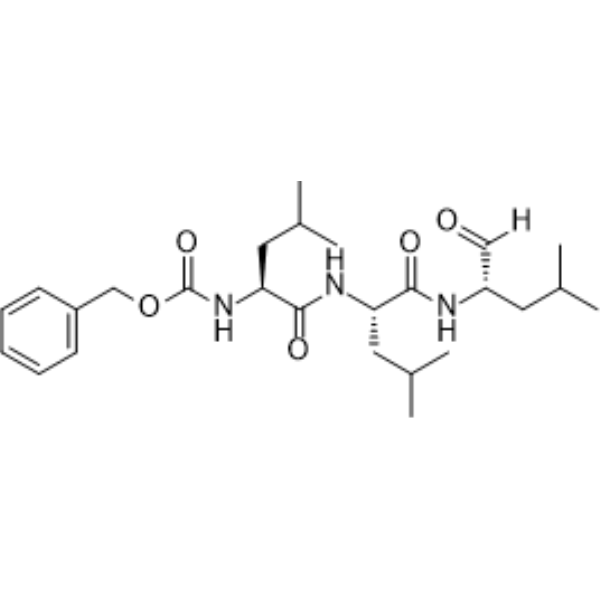
HY-13259
MG-132Proteasome Inhibitor -
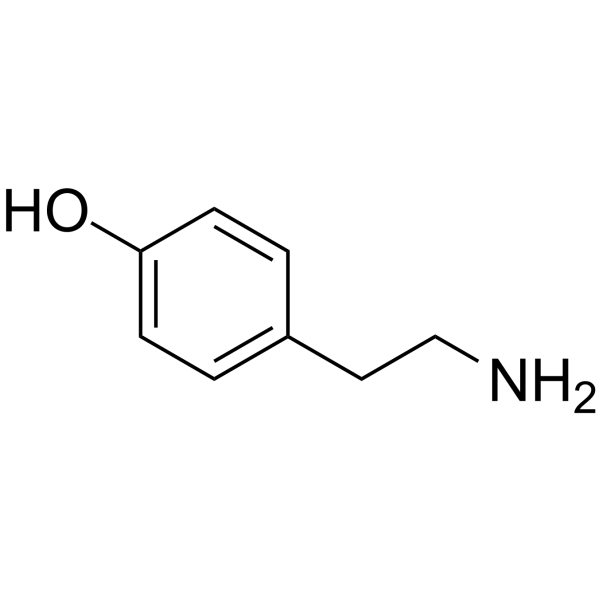
HY-W007606
Tyramine -
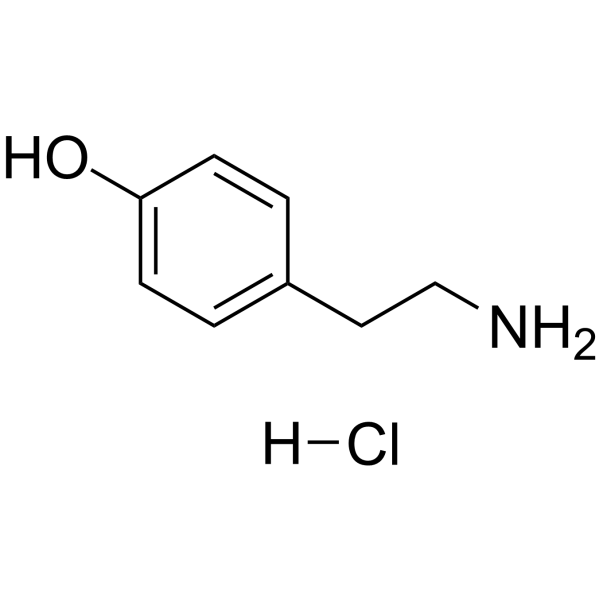
HY-W016823
Tyramine hydrochloride -
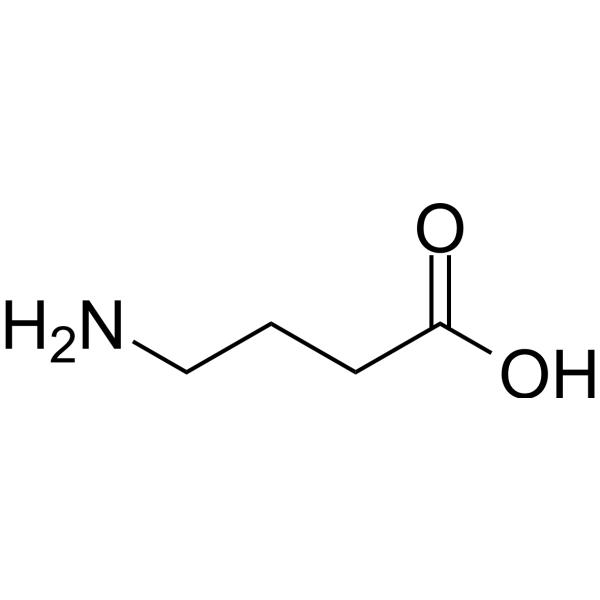
HY-N0067
γ-Aminobutyric acidNeurotransmitter -
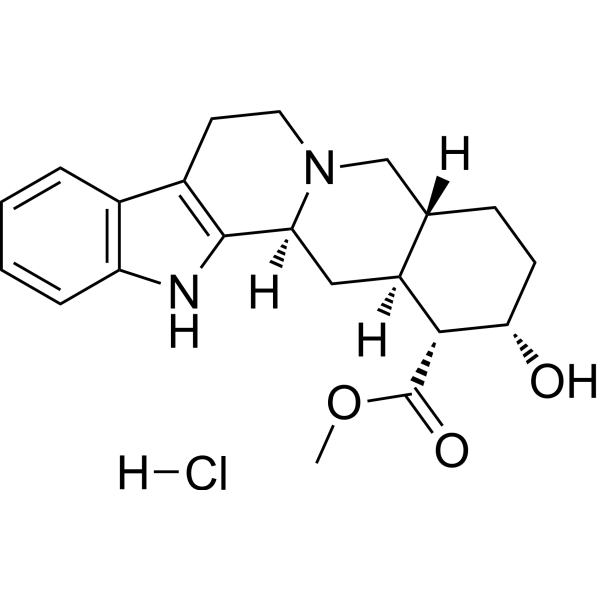
HY-N0127
Yohimbine HydrochlorideAdrenergic Receptor Antagonist -

HY-B0528AR
Octopamine hydrochloride (Standard)Endogenous Metabolite -
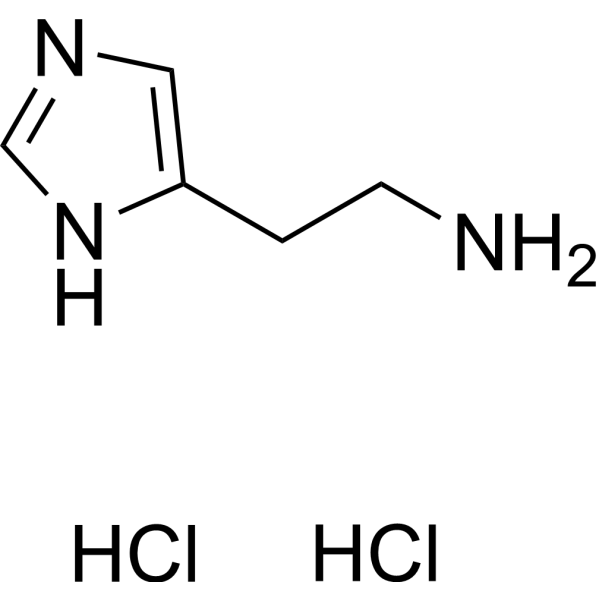
HY-B0722
Histamine dihydrochlorideNeurotransmitter -
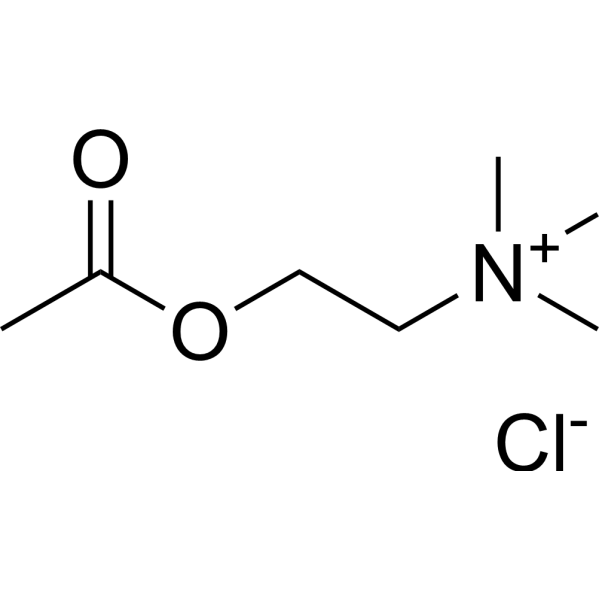
HY-B0282
Acetylcholine chlorideCholinergic Agonist -
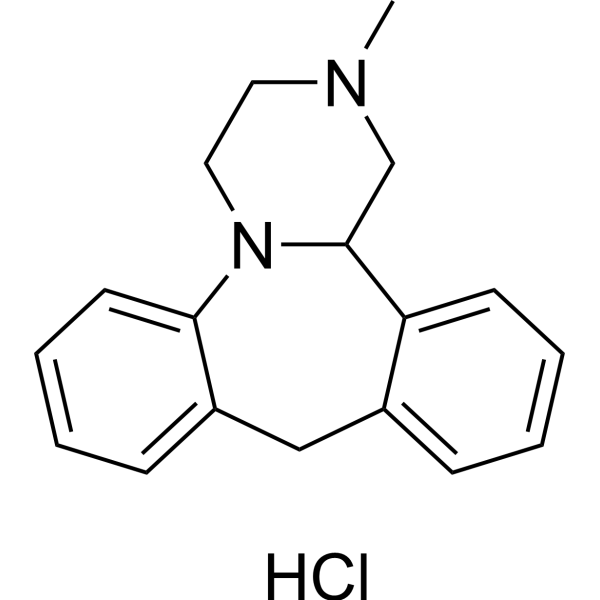
HY-B0188A
Mianserin hydrochlorideHistamine Receptor Inhibitor -
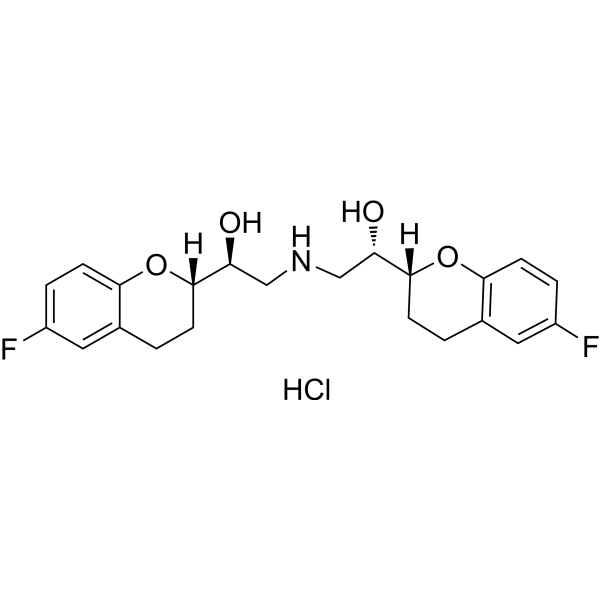
HY-B0203A
Nebivolol hydrochlorideβ Receptor Blocker -
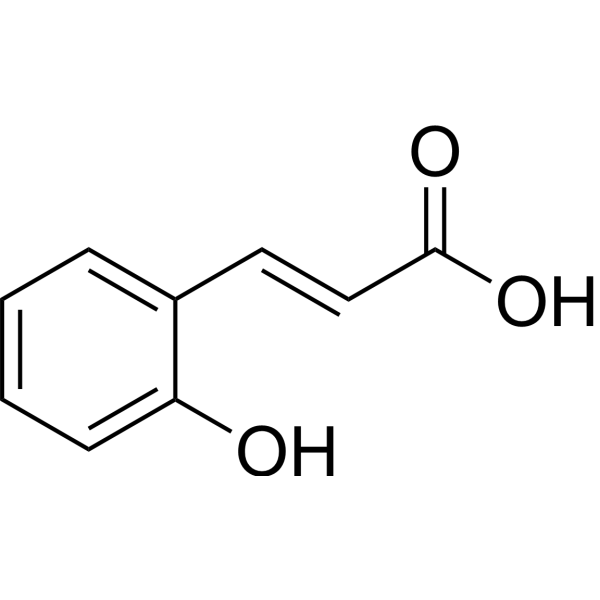
HY-W012531
2-Hydroxycinnamic acidAntibacterial agent -
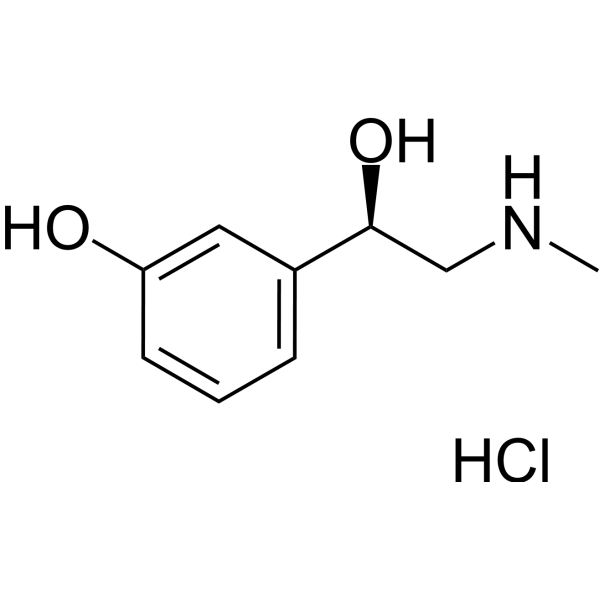
HY-B0471
Phenylephrine hydrochlorideEndogenous Metabolite
Publications Citing Use of MedChemExpress (MCE) Octopamine hydrochloride
MoreAll Endogenous Metabolite Isoforms
MoreAll Calcium Channel Isoforms
More

Biological Activity
Description
|
Human Endogenous Metabolite |
α2-adrenergic receptor |
Cellular Effect
|
Cell Line

|
Type | Value | Description | References |
|---|---|---|---|---|
| HEK293 | EC50 |
978 nM
Compound: OA
|
Agonist activity at Chilo suppressalis (rice stem borer) tyramine receptor TyR1 expressed in HEK293 cells assessed as reduction in forskolin-induced cAMP accumulation incubated for 20 min
Agonist activity at Chilo suppressalis (rice stem borer) tyramine receptor TyR1 expressed in HEK293 cells assessed as reduction in forskolin-induced cAMP accumulation incubated for 20 min
|
[PMID: 23129510] |
In Vitro
Octopamine hydrochloride activates sensitizing receptors and elevates cyclic adenosine monophosphate in the nervous system of Aplysia californica[1].
Octopamine hydrochloride increases cyclic adenosine monophosphate, elicits light flashing, and inhibits muscle contraction in insect tissues, including cockroach nerve cord, firefly lantern, and locust/grasshopper muscle[1].
Octopamine (0.01 M) hydrochloride increases pyruvate concentration in isolated honeybee dorsolongitudinal flight muscle, indicating enhanced glycolysis[2].
MedChemExpress (MCE) has not independently confirmed the accuracy of these methods. They are for reference only. .
In Vivo
MedChemExpress (MCE) has not independently confirmed the accuracy of these methods. They are for reference only.
-
Animal Model:worker bees (female; forager and nurse bees)[2]
-
Dosage:0.01 M
-
Administration:injection into flight muscles; single administration; 120 min at 34 °C
-
Result:Reversed reserpine-induced hypothermia.
No difference from controls was observable.
Increased flight muscle cAMP.
Increased AmGAPDH expression.


Chemical Information
-
CAS No. 770-05-8
-
Appearance Solid
-
Molecular Weight 189.64
-
Formula C8H12ClNO2
-
Color White to off-white
-
SMILES
OC(C1=CC=C(O)C=C1)CN.Cl
-
Synonyms
(±)-p-Octopamine hydrochloride
-
Structure Classification
-
Initial Source
-
Shipping
Room temperature in continental US; may vary elsewhere.
-
Storage
4°C, sealed storage, away from moisture
* In solvent : -80°C, 6 months; -20°C, 1 month (sealed storage, away from moisture)


Publications (5)
-
Journal Impact Factor
-
Most Recent
-
Cell Res
Light sensing enhances thermotolerance and competitive fitness via serotonergic signaling in an eyeless organism. [Abstract]2026 Apr;36(4):286-299. PMID: 41764323 -
Nat Commun
2025 Dec 18;16(1):11196. PMID: 41413037 -
Insect Mol Biol
2022 Oct;31(5):647-658. PMID: 35652818 -
-


Solvent & Solubility
In Vitro:
DMSO : ≥ 100 mg/mL (527.31 mM; Hygroscopic DMSO has a significant impact on the solubility of product, please use newly opened DMSO)
H2O : ≥ 50 mg/mL (263.66 mM)
* "≥" means soluble, but saturation unknown.
Please refer to the solubility information to select the appropriate solvent. Once prepared, please aliquot and store the solution to prevent product inactivation from repeated freeze-thaw cycles.
Storage method and period of stock solution: -80°C, 6 months; -20°C, 1 month (sealed storage, away from moisture). When stored at -80°C, please use it within 6 months. When stored at -20°C, please use it within 1 month.
* Note: If you choose water as the stock solution, please dilute it to the working solution, then filter and sterilize it with a 0.22 μm filter before use.
Please refer to the solubility information to select the appropriate solvent. Once prepared, please aliquot and store the solution to prevent product inactivation from repeated freeze-thaw cycles.
Storage method and period of stock solution: -80°C, 6 months; -20°C, 1 month (sealed storage, away from moisture). When stored at -80°C, please use it within 6 months. When stored at -20°C, please use it within 1 month.
* Note: If you choose water as the stock solution, please dilute it to the working solution, then filter and sterilize it with a 0.22 μm filter before use.
Concentration (start) × Volume (start) = Concentration (final) × Volume (final)
In Vivo:
For the following dissolution methods, please prepare the working solution directly:
It is recommended to prepare fresh solutions and use them promptly within a short period of time.
The percentages shown for the solvents indicate their volumetric ratio in the final prepared solution. If precipitation or phase separation occurs during preparation, heat and/or sonication can be used to aid dissolution.
Add each solvent one by one: PBS
Solubility: 100 mg/mL (527.31 mM); Clear solution; Need ultrasonic


Purity & Documentation
-
Data Sheet (281 KB)
-
SDS (393 KB)
- English - EN (393 KB)
- Français - FR (393 KB)
- Deutsch - DE (393 KB)
- Norwegian - NO (393 KB)
- Español - ES (393 KB)
- Swedish - SV (393 KB)
- Italian - IT (393 KB)
- Korean - KR (393 KB)
- Portuguese - PT (393 KB)
-
Handling Instructions (2659 KB)
References
[1]. Axelrod J, et al. Octopamine. Nature. 1977 Feb 10;265(5594):501-4. [Content Brief]
[2]. Kaya-Zeeb S, et al. Octopamine drives honeybee thermogenesis. eLife. 2022 Mar 15;11:e74334.
[3]. Farooqui T, et al. Octopamine-mediated neuromodulation of insect senses. Neurochemical research. 2007 Sep;32(9):1511-29. [Content Brief]


Complete Stock Solution Preparation Table
Please refer to the solubility information to select the appropriate solvent. Once prepared, please aliquot and store the solution to prevent product inactivation from repeated freeze-thaw cycles.
Storage method and period of stock solution: -80°C, 6 months; -20°C, 1 month (sealed storage, away from moisture). When stored at -80°C, please use it within 6 months. When stored at -20°C, please use it within 1 month.
| Optional Solvent | Concentration Solvent Mass | 1 mg | 5 mg | 10 mg | 25 mg |
|---|---|---|---|---|---|
| H2O / DMSO | 1 mM | 5.2731 mL | 26.3657 mL | 52.7315 mL | 131.8287 mL |
| 5 mM | 1.0546 mL | 5.2731 mL | 10.5463 mL | 26.3657 mL | |
| 10 mM | 0.5273 mL | 2.6366 mL | 5.2731 mL | 13.1829 mL | |
| 15 mM | 0.3515 mL | 1.7577 mL | 3.5154 mL | 8.7886 mL | |
| 20 mM | 0.2637 mL | 1.3183 mL | 2.6366 mL | 6.5914 mL | |
| 25 mM | 0.2109 mL | 1.0546 mL | 2.1093 mL | 5.2731 mL | |
| 30 mM | 0.1758 mL | 0.8789 mL | 1.7577 mL | 4.3943 mL | |
| 40 mM | 0.1318 mL | 0.6591 mL | 1.3183 mL | 3.2957 mL | |
| 50 mM | 0.1055 mL | 0.5273 mL | 1.0546 mL | 2.6366 mL | |
| 60 mM | 0.0879 mL | 0.4394 mL | 0.8789 mL | 2.1971 mL | |
| 80 mM | 0.0659 mL | 0.3296 mL | 0.6591 mL | 1.6479 mL | |
| 100 mM | 0.0527 mL | 0.2637 mL | 0.5273 mL | 1.3183 mL |
* Note: If you choose water as the stock solution, please dilute it to the working solution, then filter and sterilize it with a 0.22 μm filter before use.


Octopamine hydrochloride Related Classifications
HY-B0528A Related Classifications
 Powered by Bioz
Keywords
- Octopamine
- 770-05-8
- (±)-p-Octopamine
- Endogenous Metabolite
- G Protein-coupled Receptor Kinase (GRK)
- Adenylate Cyclase
- Calcium Channel
- G protein-coupled receptors
- adenylyl cyclase
- blood-brain barrier
- cAMP
- calcium
- monoamine oxidase
- neuromodulator
- neurotransmitter
- Octopamine hydrochloride
- Octopamine hydrochloride receptors
- Inhibitor
- inhibitor
- inhibit