



Pan-RAS-IN-1
Based on 7 publication(s) in Google Scholar
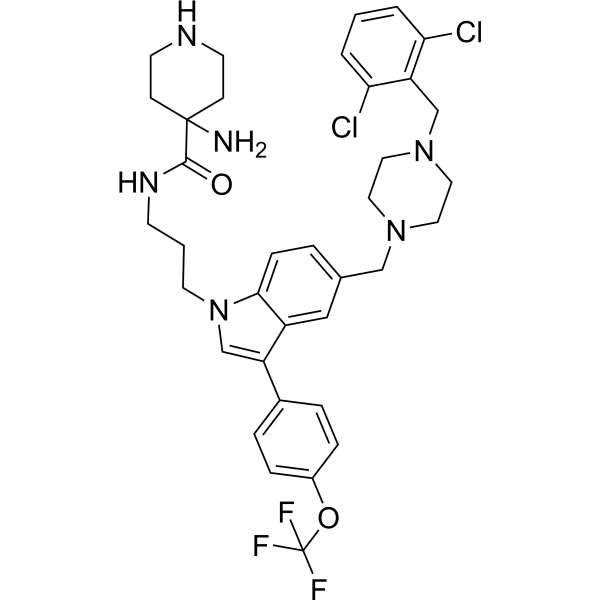
Pan-RAS-IN-1 is a pan-Ras inhibitor that disrupts the interaction of Ras proteins and their effectors.
For research use only. We do not sell to patients.
- Purity : 98.78%
- CAS No.: 1835283-94-7
- Formula: C36H41Cl2F3N6O2
- Molecular Weight:717.65
-
Storage:Powder -20°C, 3 years , 4°C, 2 years ; In solvent -80°C, 2 years , -20°C, 1 year

To place orders, for customer services and technical support, please contact: MedChemExpress USA
Tel: 609-228-6898 E-mail: [email protected] [email protected]


-
 Biological Activity
-
Chemical Information
-
Solvent & Solubility
- Purity & Documentation
- References
-
 Help & FAQs


-
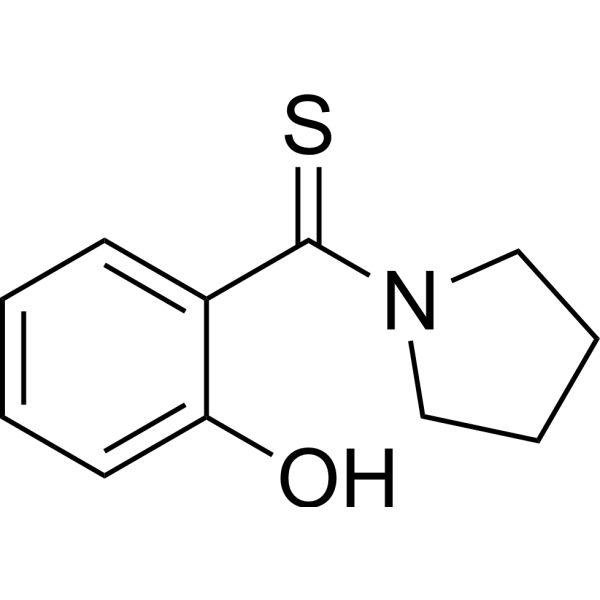
HY-18674
K-Ras-IN-1K-Ras Inhibitor -
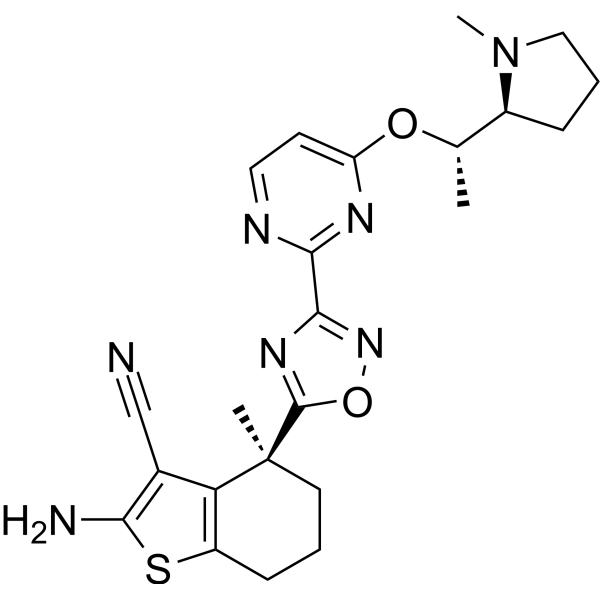
HY-153724
BI-2865Pan-KRAS Inhibitor -
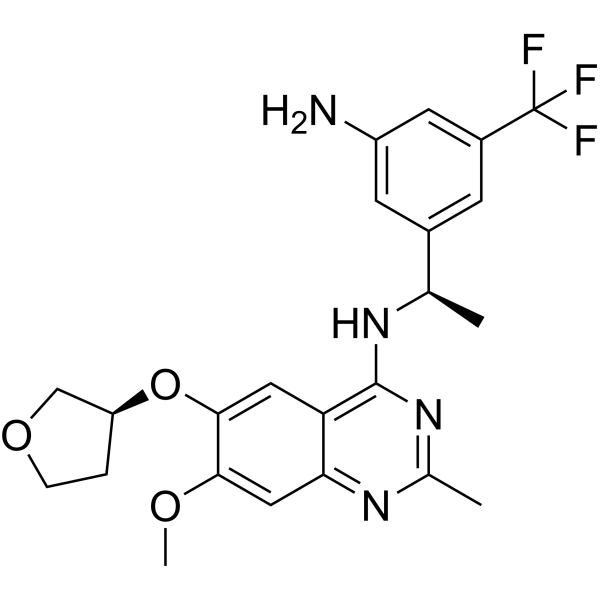
HY-125817
BI-3406SOS1-KRAS Inhibitor -
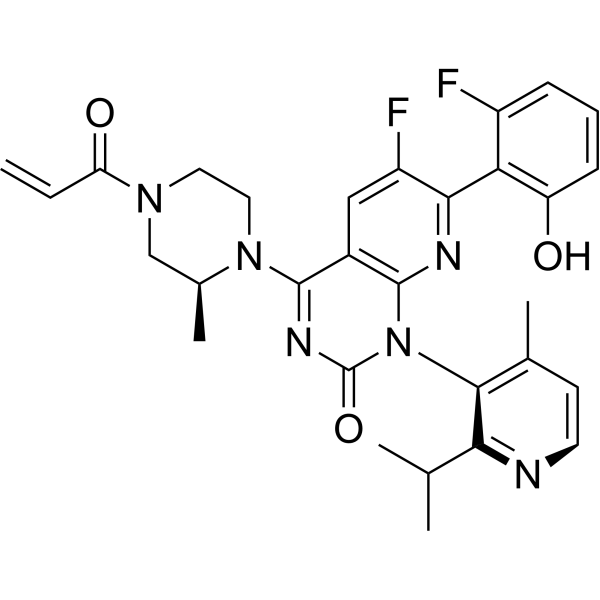
HY-114277
SotorasibKRAS G12C Inhibitor -
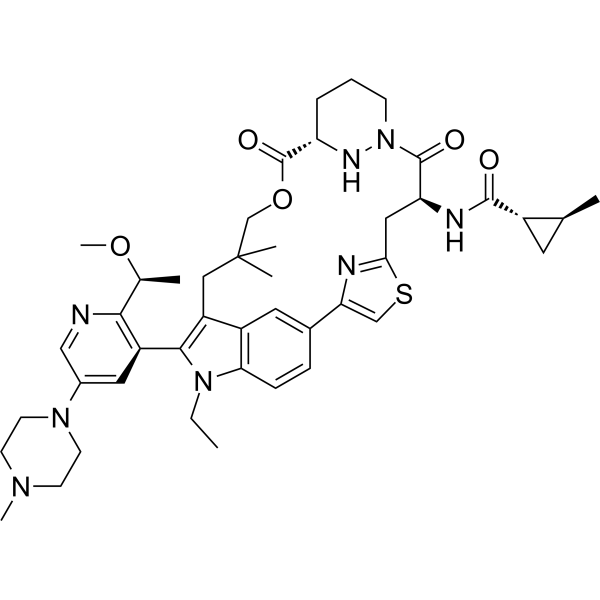
HY-148439
DaraxonrasibRAS(ON) Inhibitor -
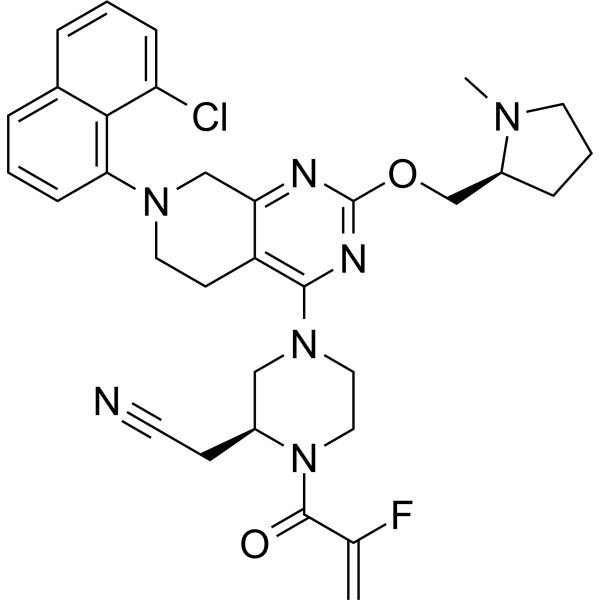
HY-130149
AdagrasibKRAS G12C Inhibitor -
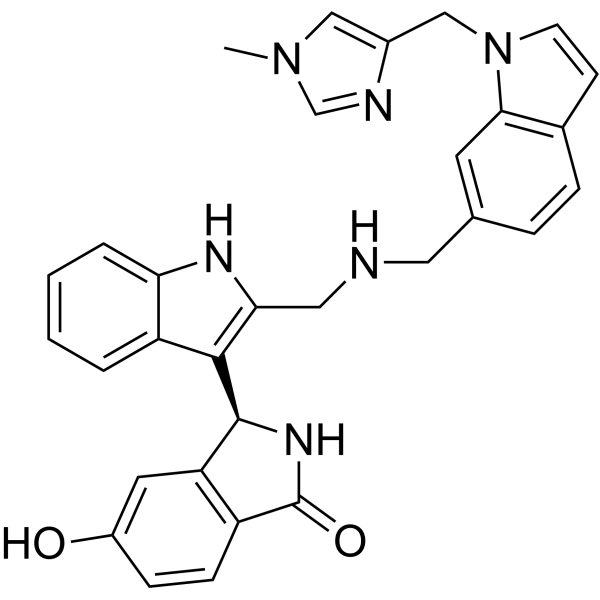
HY-126247
BI-2852KRAS Switch I/II Pocket Inhibitor -
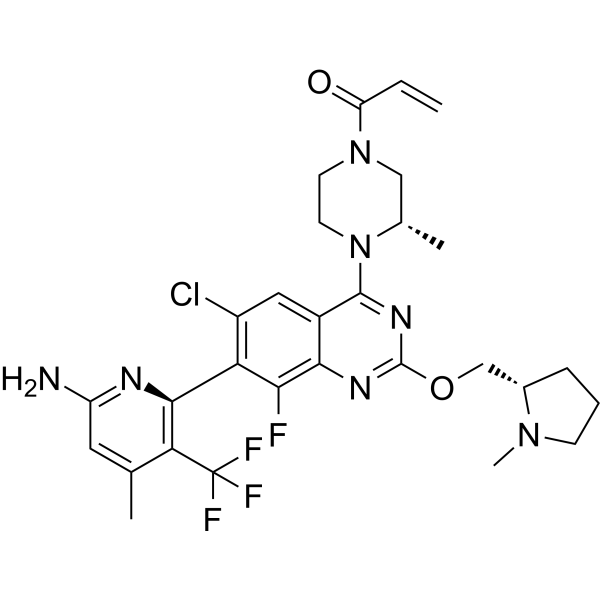
HY-145928
DivarasibKRAS G12C Inhibitor -
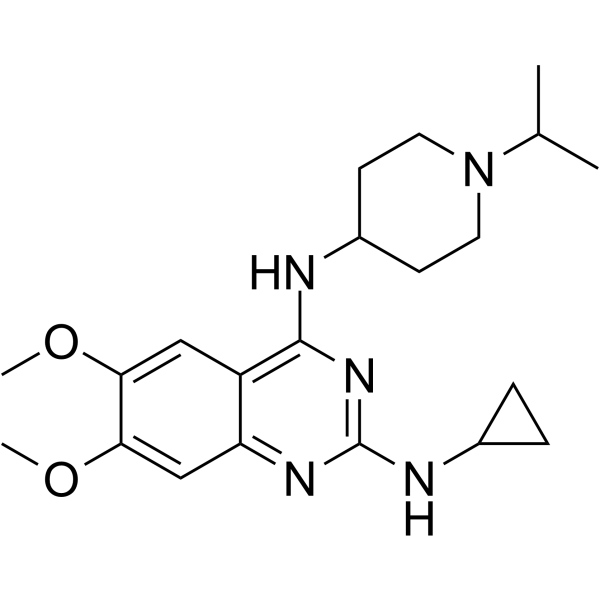
HY-122866
ZT-12-037-01STK19 Inhibitor -
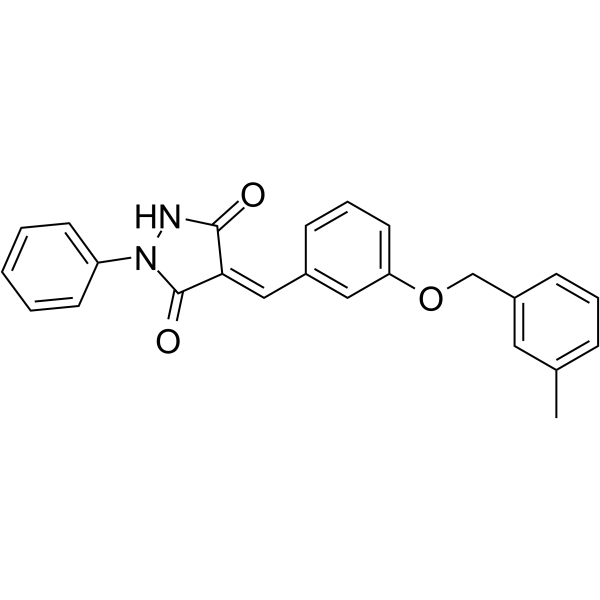
HY-12649
Y16GEF-Rho GTPase Inhibitor -
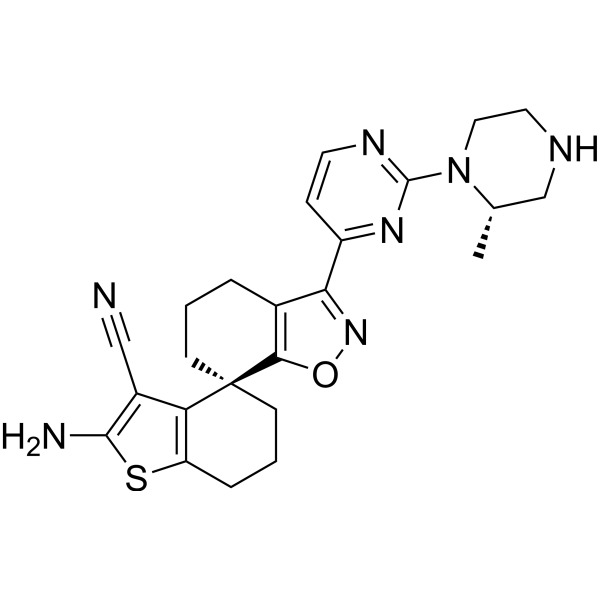
HY-153723
BI-2493KRAS Inhinitor -
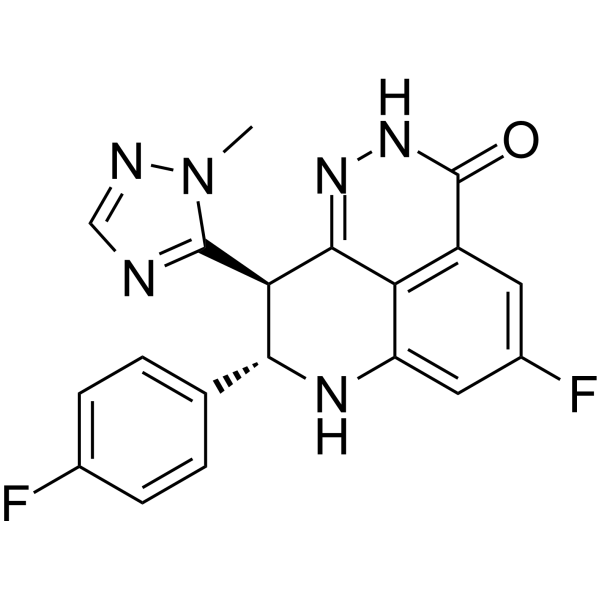
HY-16106
TalazoparibPARP Inhibitor
Publications Citing Use of MedChemExpress (MCE) Pan-RAS-IN-1
More- Neuron. 2025 Aug 27:S0896-6273(25)00591-4. [Abstract]
- Cell Chem Biol. 2021 Nov 18;28(11):1581-1589.e6. [Abstract]
- Cell Rep. 2021 Jul 6;36(1):109315. [Abstract]
- Neurooncol Adv. 2021 Dec 31;4(1):vdab194. [Abstract]
- Antiviral Res. 2021 Jul:191:105082. [Abstract]
- Dis Model Mech. 2022 Feb 1;15(2):dmm049093. [Abstract]
- Res Sq. 2024 Aug 04.


Biological Activity
Description
Cellular Effect
|
Cell Line

|
Type | Value | Description | References |
|---|---|---|---|---|
| DLD-1 | IC50 |
8.8 μM
Compound: 42; 3144
|
Antiproliferative activity against human DLD-1 cells
Antiproliferative activity against human DLD-1 cells
|
[PMID: 33225706] |
In Vitro
Pan-RAS-IN-1 binds to KRasG12D-GppNHp with an affinity less than 20 μM. Pan-RAS-IN-1 binds to Ras proteins and exhibits lethality in cells partially dependent on expression of Ras proteins. The potency of pan-RAS-IN-1 correlates with the degree of dependency on the mutated isoform over a 5-fold concentration range. At some concentrations, pan-RAS-IN-1 is cytostatic, possibly due to pan-RAS inhibition. Pan-RAS-IN-1 is evaluated in primary T cell acute lymphoblastic leukemia (T-ALL) cells. Selective lethality is observed, with mutant NRAS cells retaining only 20%-40% viability after 5 μM treatment[1].
MedChemExpress (MCE) has not independently confirmed the accuracy of these methods. They are for reference only.
In Vivo
MedChemExpress (MCE) has not independently confirmed the accuracy of these methods. They are for reference only.


Chemical Information
-
CAS No. 1835283-94-7
-
Appearance Solid
-
Molecular Weight 717.65
-
Formula C36H41Cl2F3N6O2
-
Color White to yellow
-
SMILES
O=C(C1(N)CCNCC1)NCCCN2C3=CC=C(CN4CCN(CC5=C(Cl)C=CC=C5Cl)CC4)C=C3C(C6=CC=C(OC(F)(F)F)C=C6)=C2
-
Shipping
Room temperature in continental US; may vary elsewhere.
-
Storage
Powder -20°C 3 years 4°C 2 years In solvent -80°C 2 years -20°C 1 year


Publications (7)
-
Journal Impact Factor
-
Most Recent
-
Neuron
Aberrant coupling of glutamate and tyrosine kinase receptors enables neuronal control of brain-tumor growth. [Abstract]2025 Aug 27:S0896-6273(25)00591-4. PMID: 40897174 -
Cell Chem Biol
2021 Nov 18;28(11):1581-1589.e6. PMID: 33964212 -
Cell Rep
Patient-derived iPSC-cerebral organoid modeling of the 17q11.2 microdeletion syndrome establishes CRLF3 as a critical regulator of neurogenesis. [Abstract]2021 Jul 6;36(1):109315. PMID: 34233200 -
Neurooncol Adv
Immune deconvolution and temporal mapping identifies stromal targets and developmental intervals for abrogating murine low-grade optic glioma formation. [Abstract]2021 Dec 31;4(1):vdab194. PMID: 35187488 -
Antiviral Res
2021 Jul:191:105082. PMID: 33961904 -
Dis Model Mech
Ras signaling and RREB1 are required for the dissociation of medial edge epithelial cells in murine palatogenesis. [Abstract]2022 Feb 1;15(2):dmm049093. PMID: 34897389 -


Solvent & Solubility
In Vitro:
DMSO : ≥ 50 mg/mL (69.67 mM; Hygroscopic DMSO has a significant impact on the solubility of product, please use newly opened DMSO)
* "≥" means soluble, but saturation unknown.
Please refer to the solubility information to select the appropriate solvent. Once prepared, please aliquot and store the solution to prevent product inactivation from repeated freeze-thaw cycles.
Storage method and period of stock solution: -80°C, 2 years; -20°C, 1 year. When stored at -80°C, please use it within 2 years. When stored at -20°C, please use it within 1 year.
Please refer to the solubility information to select the appropriate solvent. Once prepared, please aliquot and store the solution to prevent product inactivation from repeated freeze-thaw cycles.
Storage method and period of stock solution: -80°C, 2 years; -20°C, 1 year. When stored at -80°C, please use it within 2 years. When stored at -20°C, please use it within 1 year.
Concentration (start) × Volume (start) = Concentration (final) × Volume (final)
In Vivo:
Select the appropriate dissolution method based on your experimental animal and administration route.
- For the following dissolution methods, please ensure to first prepare a clear stock solution using an In Vitro approach and then sequentially add co-solvents:
- To ensure reliable experimental results, the clarified stock solution can be appropriately stored based on storage conditions. As for the working solution for In Vivo experiments, it is recommended to prepare freshly and use it on the same day.
- The percentages shown for the solvents indicate their volumetric ratio in the final prepared solution. If precipitation or phase separation occurs during preparation, heat and/or sonication can be used to aid dissolution.
Add each solvent one by one: 10% DMSO 40% PEG300 5% Tween-80 45% Saline
Solubility: ≥ 2.5 mg/mL (3.48 mM); Clear solution
This protocol yields a clear solution of ≥ 2.5 mg/mL (saturation unknown).
Taking 1 mL working solution as an example, add 100 μL DMSO stock solution (25.0 mg/mL) to 400 μL PEG300, and mix evenly; then add 50 μL Tween-80 and mix evenly; then add 450 μL Saline to adjust the volume to 1 mL.
Preparation of Saline: Dissolve 0.9 g sodium chloride in ddH₂O and dilute to 100 mL to obtain a clear Saline solution.
Add each solvent one by one: 10% DMSO 90% (20% SBE-β-CD in Saline)
Solubility: ≥ 2.5 mg/mL (3.48 mM); Clear solution
This protocol yields a clear solution of ≥ 2.5 mg/mL (saturation unknown).
Taking 1 mL working solution as an example, add 100 μL DMSO stock solution (25.0 mg/mL) to 900 μL 20% SBE-β-CD in Saline, and mix evenly.
Preparation of 20% SBE-β-CD in Saline (4°C, storage for one week): 2 g SBE-β-CD powder is dissolved in 10 mL Saline, completely dissolve until clear.
In Vivo Dissolution Calculator
Please enter the basic information of animal experiments:
-
-
-
-
Recommended: Prepare an additional quantity of animals to account for potential losses during experiments.
Please enter your animal formula composition:
-
%DMSO +
Recommended: Keep the proportion of DMSO in working solution below 2% if your animal is weak.
-
%+
-
+%Tween-80 + +
-
%Saline +
The co-solvents required include: DMSO, . All of co-solvents are available by MedChemExpress (MCE). , Tween 80. All of co-solvents are available by MedChemExpress (MCE).
Working solution concentration: 0.22 mg/mL
Method for preparing stock solution: mg drug dissolved in μL DMSO. Stock solution concentration: mg/mL.
1. Take μL DMSO stock solution;
2. Add μL .
μL , mix evenly;
3. Then add μL Tween 80, mix evenly;
4. Then add μL
Please ensure that the stock solution in the first step is dissolved to a clear state, and add co-solvents in sequence. You can use ultrasonic heating (ultrasonic cleaner, recommended frequency 20-40 kHz), vortexing, etc. to assist dissolution.


Purity & Documentation
-
Data Sheet (279 KB)
-
SDS (254 KB)
- English - EN (254 KB)
- Français - FR (254 KB)
- Deutsch - DE (254 KB)
- Norwegian - NO (254 KB)
- Español - ES (254 KB)
- Swedish - SV (254 KB)
- Italian - IT (254 KB)
- Korean - KR (254 KB)
- Portuguese - PT (254 KB)
-
Handling Instructions (2659 KB)
References


Complete Stock Solution Preparation Table
Please refer to the solubility information to select the appropriate solvent. Once prepared, please aliquot and store the solution to prevent product inactivation from repeated freeze-thaw cycles.
Storage method and period of stock solution: -80°C, 2 years; -20°C, 1 year. When stored at -80°C, please use it within 2 years. When stored at -20°C, please use it within 1 year.
| Optional Solvent | Concentration Solvent Mass | 1 mg | 5 mg | 10 mg | 25 mg |
|---|---|---|---|---|---|
| DMSO | 1 mM | 1.3934 mL | 6.9672 mL | 13.9344 mL | 34.8359 mL |
| 5 mM | 0.2787 mL | 1.3934 mL | 2.7869 mL | 6.9672 mL | |
| 10 mM | 0.1393 mL | 0.6967 mL | 1.3934 mL | 3.4836 mL | |
| 15 mM | 0.0929 mL | 0.4645 mL | 0.9290 mL | 2.3224 mL | |
| 20 mM | 0.0697 mL | 0.3484 mL | 0.6967 mL | 1.7418 mL | |
| 25 mM | 0.0557 mL | 0.2787 mL | 0.5574 mL | 1.3934 mL | |
| 30 mM | 0.0464 mL | 0.2322 mL | 0.4645 mL | 1.1612 mL | |
| 40 mM | 0.0348 mL | 0.1742 mL | 0.3484 mL | 0.8709 mL | |
| 50 mM | 0.0279 mL | 0.1393 mL | 0.2787 mL | 0.6967 mL | |
| 60 mM | 0.0232 mL | 0.1161 mL | 0.2322 mL | 0.5806 mL |


Pan-RAS-IN-1 Related Classifications
HY-101295 Related Classifications
 Powered by Bioz