



Pancreatic Polypeptide, rat
Pancreatic Polypeptide, rat (Rat pancreatic polypeptide) is a rat-derived Pancreatic Polypeptide. Pancreatic Polypeptide is a preferential agonist of NPYR4. Pancreatic Polypeptide, rat protects cells against Streptozotocin (HY-13753)-induced DNA damage. Pancreatic Polypeptide, rat inhibits glucose-stimulated insulin secretion. Pancreatic Polypeptide, rat (TFA) can be used in diabetes-related research.
For research use only. We do not sell to patients.
- CAS No.: 90419-12-8
- Formula: C195H298N58O57S
- Molecular Weight:4398.87
-
Storage:
Please store the product under the recommended conditions in the Certificate of Analysis.

To place orders, for customer services and technical support, please contact: MedChemExpress USA
Tel: 609-228-6898 E-mail: [email protected] [email protected]


-
 Biological Activity
-
Chemical Information
- Protocol
- Purity & Documentation
- References
-
 Help & FAQs


-
HY-P0198
Neuropeptide Y (human,rat,mouse) -
HY-P1514
Peptide YY (PYY), human -
HY-P2543
Neuropeptide Y (3-36) (human, rat) -

HY-P1480
Neuropeptide Y (13-36), amide, human -
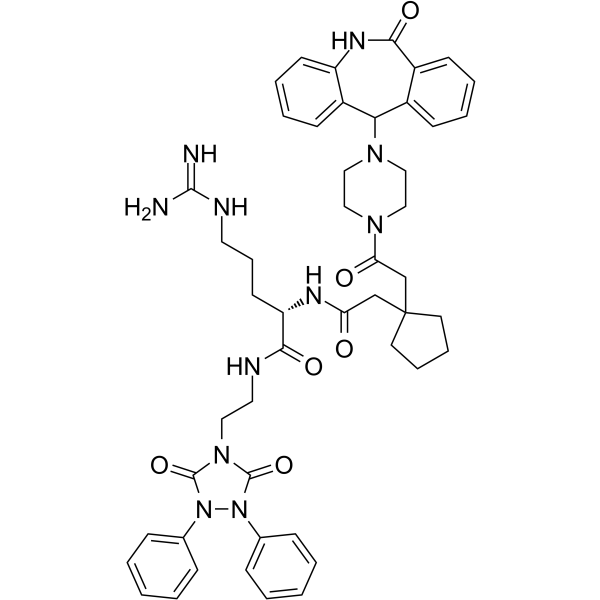
HY-101986
BIIE-0246 -
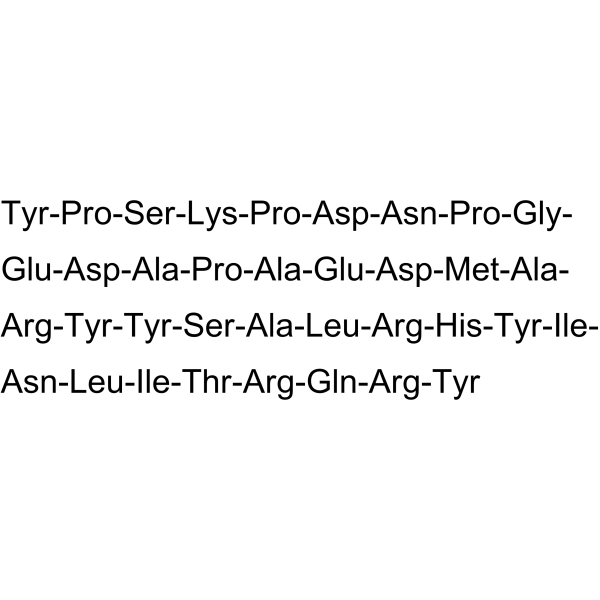
HY-P1601
Neuropeptide Y(29-64) -
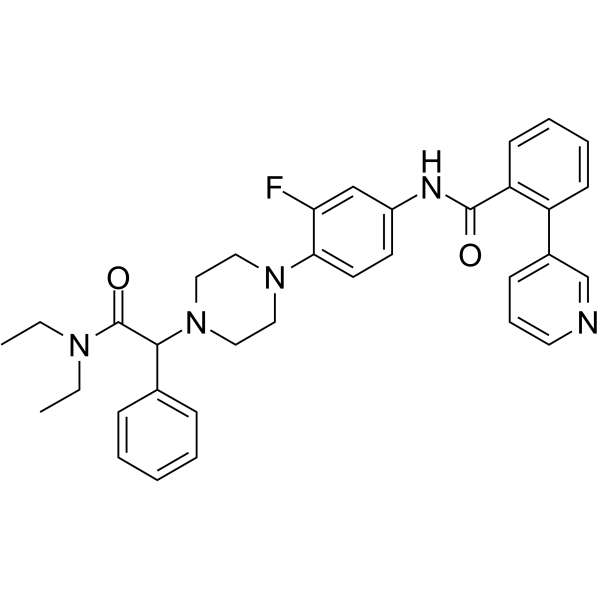
HY-14450
JNJ-31020028 -
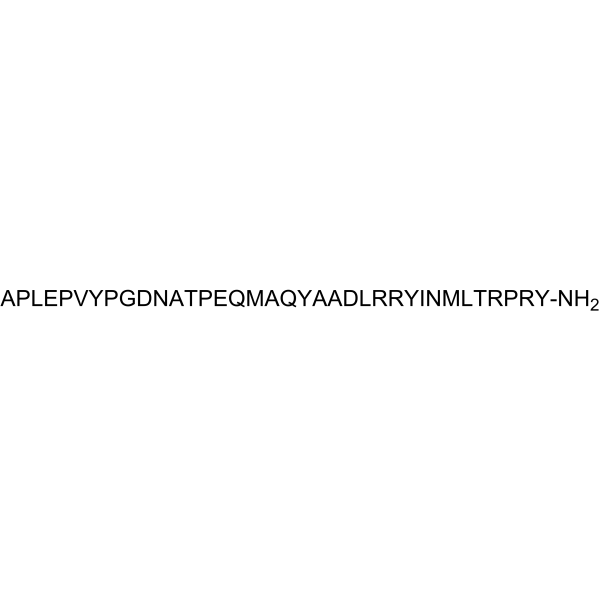
HY-P0199
Pancreatic Polypeptide, human -
![[cPP1-7,NPY19-23,Ala31,Aib32,Gln34]-hPancreatic Polypeptide](https://file.medchemexpress.com/product_pic/hy-p1324.gif)
HY-P1324
[cPP1-7,NPY19-23,Ala31,Aib32,Gln34]-hPancreatic Polypeptide -
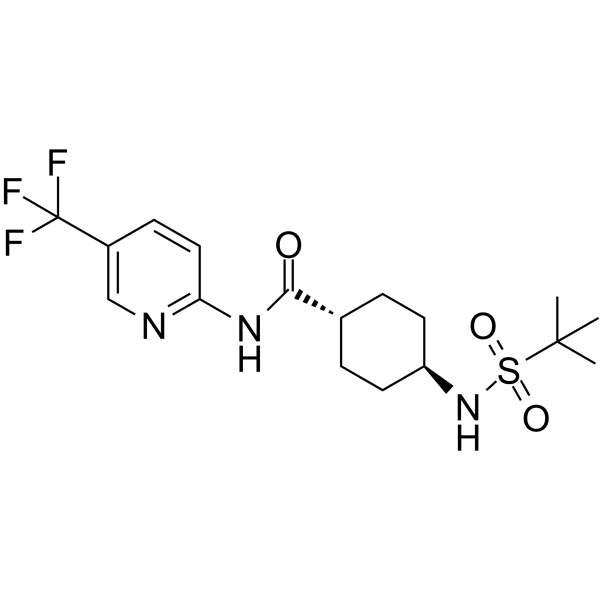
HY-14423
Velneperit -
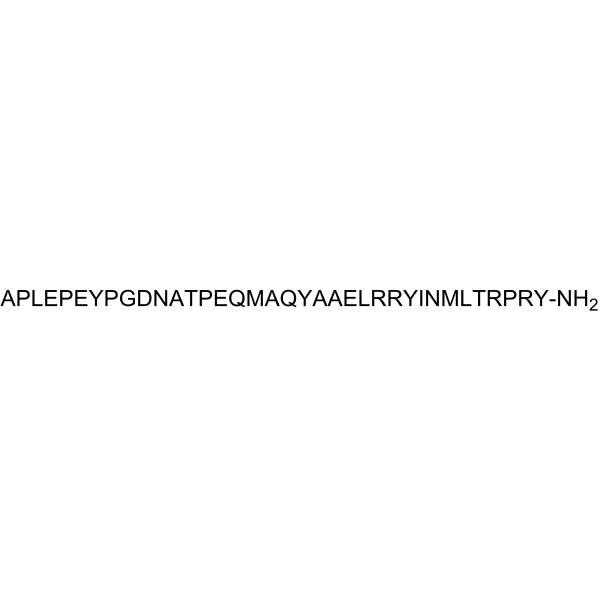
HY-P1537
Pancreatic Polypeptide, bovine -
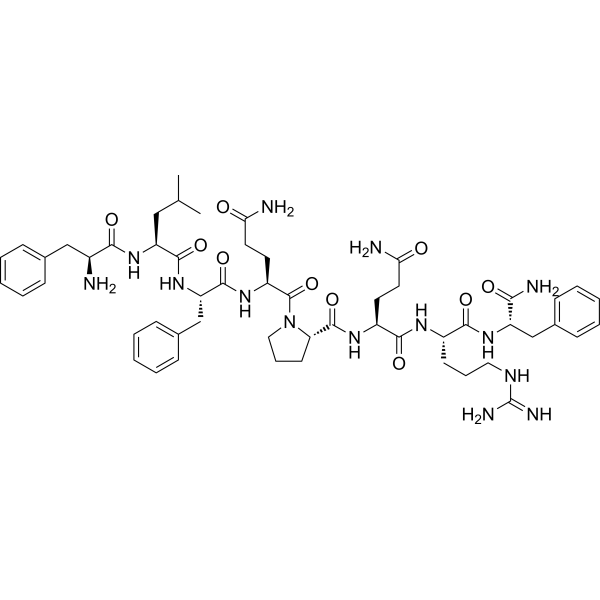
HY-P1248
Neuropeptide FF


Biological Activity
Description
IC50 & Target
|
NPY Y4 receptor |
In Vitro
Pancreatic Polypeptide, rat (0.1 μM-1 μM) inhibits glucose-stimulated insulin secretion in rat BRIN BD11 β-cells, with no effect at lower concentrations or under basal glucose levels[2].
Pancreatic Polypeptide, rat (1 μM; 2 h) completely protects rat BRIN BD11 β-cells against Streptozotocin (HY-13753)-induced DNA damage[2].
MedChemExpress (MCE) has not independently confirmed the accuracy of these methods. They are for reference only.


Chemical Information
-
CAS No. 90419-12-8
-
Molecular Weight 4398.87
-
Formula C195H298N58O57S
-
Synonyms
Rat pancreatic polypeptide
-
Sequence
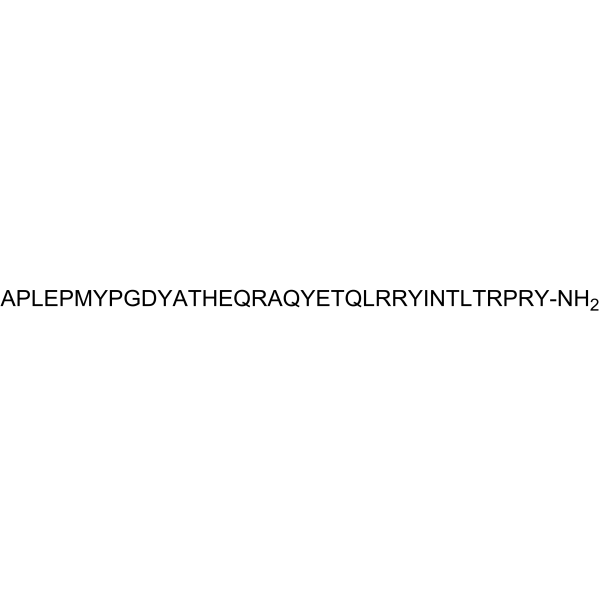
Ala-Pro-Leu-Glu-Pro-Met-Tyr-Pro-Gly-Asp-Tyr-Ala-Thr-His-Glu-Gln-Arg-Ala-Gln-Tyr-Glu-Thr-Gln-Leu-Arg-Arg-Tyr-Ile-Asn-Thr-Leu-Thr-Arg-Pro-Arg-Tyr-NH2
-
Sequence Shortening
APLEPMYPGDYATHEQRAQYETQLRRYINTLTRPRY-NH2
-
Shipping
Room temperature in continental US; may vary elsewhere.
-
Storage
Please store the product under the recommended conditions in the Certificate of Analysis.

Protocol
Cell Assay[1]
To assess the effects of NPY and Pancreatic Polypeptide on rodent BRIN-BD11 and human 1.1B4 beta-cell proliferation, cells are seeded at a density of 150,000 cells per well and cultured overnight in the presence of NPY or Pancreatic Polypeptide (1 μM), and compared to positive control GLP-1 (1 μM). Cells are washed with PBS and fixed using 4% paraformaldehyde. After antigen retrieval with citrate buffer at 95°C for 20 min, tissue is blocked using 2% BSA for 45 min. The slides are then incubated with rabbit anti-Ki-67 primary antibody, and subsequently with Alexa Fluor® 594 secondary antibody. Slides are viewed using fluorescent microscope and photographed by DP70 camera adapter system. Proliferation frequency is determined in a blinded fashion and expressed as % of total cells analysed. Approximately 150 cells per replicate are analysed. For analysis of ability of NPY and Pancreatic Polypeptide to protect against streptozotocin-induced DNA damage, BRIN-BD11 and 1.1B4 cells are seeded. Cells are then exposed to streptozotocin (5 mM) in the presence or absence of NPY or Pancreatic Polypeptide (1 μM) for 2 h, with GLP-1 (1 μM) as positive control. Cells are then harvested and a comet assay is performed. Resulting gels are stained using DAPI (4′,6-diamidino-2-phenylindole) (100 μg/mL) and slides are viewed under appropriate filter. Comet score software is used for the analysis of % tail DNA (100 cells per gel) and olive tail moment[1].
MedChemExpress (MCE) has not independently confirmed the accuracy of these methods. They are for reference only.
Animal Administration[1]
Mice[1]
Plasma glucose and insulin responses are evaluated after intraperitoneal (i.p.) injection of glucose alone (18 mmol/kg body weight) or in combination with test peptides (Pancreatic Polypeptide, etc.; 25 nmol/kg body weight) in overnight (18 h) fasted C57BL/6 mice. In a second series of experiments, 18 h fasted mice are used to assess the effects of respective test peptides on food intake. Mice receive an i.p. injection of saline alone (0.9% (w/v) NaCl) or in combination with test peptides (25 nmol/kg body weight) and food intake measured at 30 min intervals for 180 min. A dose of 25 nmol/kg is chosen with other NPYR modulators on glucose homeostasis, insulin secretion and feeding at this dose[1].
MedChemExpress (MCE) has not independently confirmed the accuracy of these methods. They are for reference only.


Purity & Documentation
References
[1]. Kimmel JR, et al. Pancreatic polypeptide from rat pancreas. Endocrinology. 1984 May;114(5):1725-31.
[2]. Khan D, et al. Influence of neuropeptide Y and pancreatic polypeptide on islet function and beta-cell survival. Biochimica et biophysica acta. General subjects. 2017 Apr;1861(4):749-758. [Content Brief]

Calculators
Concentration (start) × Volume (start) = Concentration (final) × Volume (final)


Pancreatic Polypeptide, rat Related Classifications
HY-P1532 Related Classifications
 Powered by Bioz
Keywords
- Pancreatic Polypeptide, rat
- 90419-12-8
- Rat pancreatic polypeptide
- Neuropeptide Y Receptor
- DNA/RNA Synthesis
- NPYR4
- beta-cell
- C57BL/6 mouse islets
- glucose-stimulated insulin secretion
- pancreatic polypeptide
- neuropeptide Y receptor 4
- rat BRIN BD11 beta-cells
- human 1.1B4 beta-cells
- diabetes
- streptozotocin
- Inhibitor
- inhibitor
- inhibit