



Pantoprazole sodium
Based on 4 publication(s) in Google Scholar
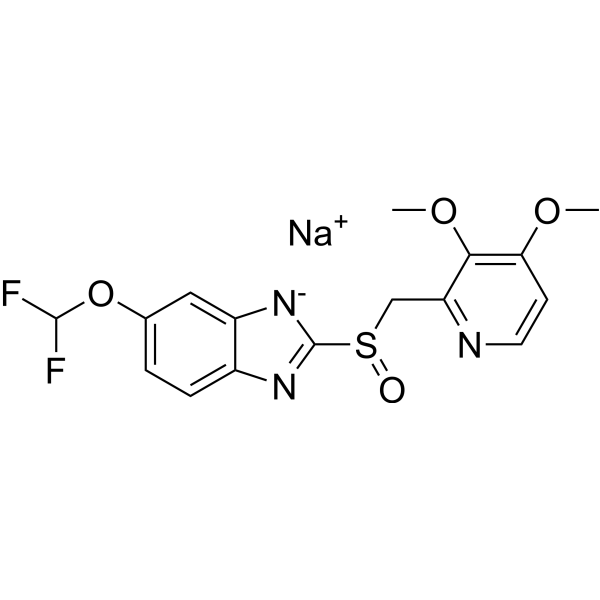
Pantoprazole sodium (BY10232 sodium) is an orally active and potent proton pump inhibitor (PPI). Pantoprazole sodium, a substituted benzimidazole, is a potent H+/K+-ATPase inhibitor with an IC50 of 6.8 μM. Pantoprazole sodium improves pH stability and has anti-secretory, anti-ulcer activities. Pantoprazole sodium significantly increased tumor growth delay combined with Doxorubicin (HY-15142).
For research use only. We do not sell to patients.
- Purity : 99.84%
- CAS No.: 138786-67-1
- Formula: C16H14F2N3NaO4S
- Molecular Weight:405.35
-
Storage:
4°C, sealed storage, away from moisture and light
* In solvent : -80°C, 6 months; -20°C, 1 month (sealed storage, away from moisture and light)

To place orders, for customer services and technical support, please contact: MedChemExpress USA
Tel: 609-228-6898 E-mail: [email protected] [email protected]


-
 Biological Activity
-
Chemical Information
-
Solvent & Solubility
- Protocols
- Purity & Documentation
- References
-
 Help & FAQs


-
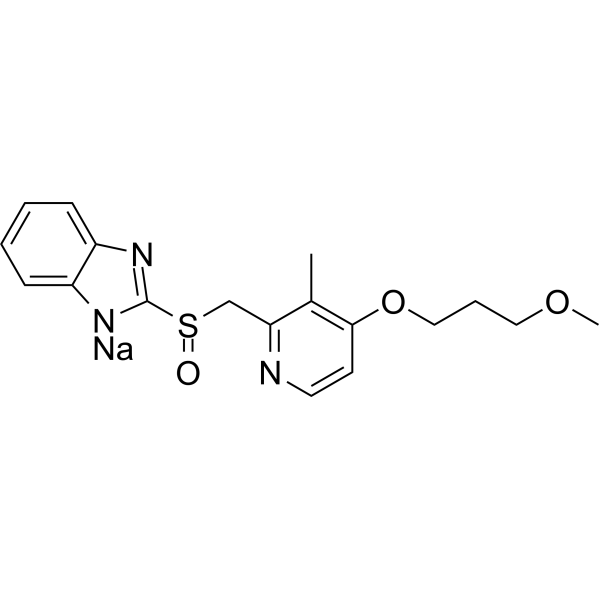
HY-B0656A
Rabeprazole sodiumPump Inhibitor -
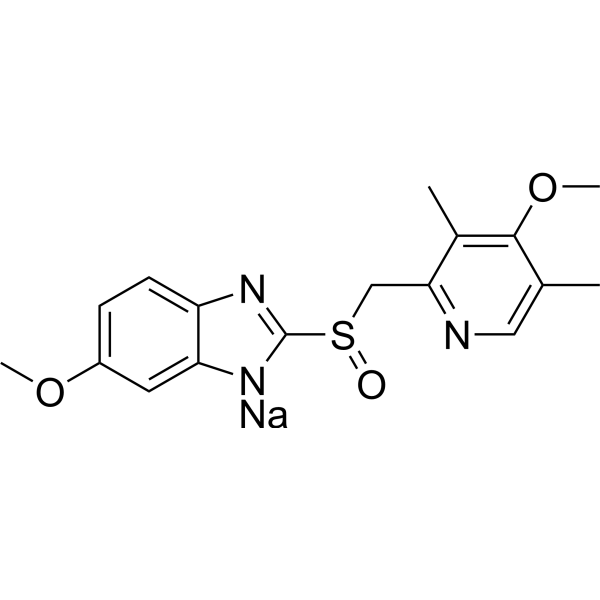
HY-B0113A
Omeprazole sodiumProton Pump Inhibitor -
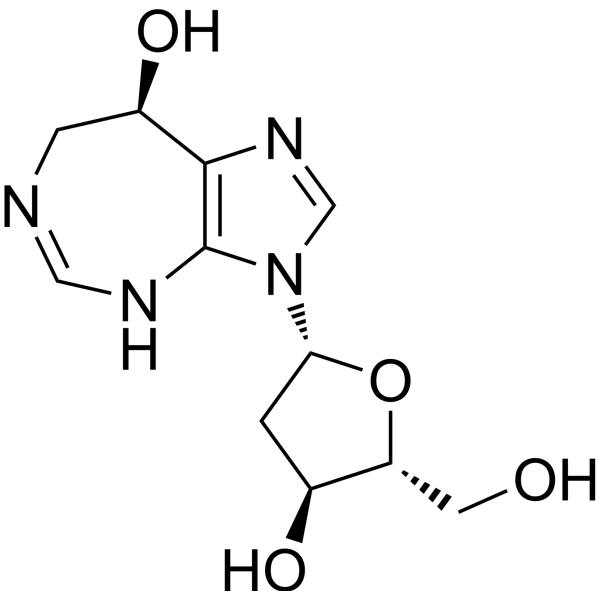
HY-A0006
PentostatinAntibiotic -
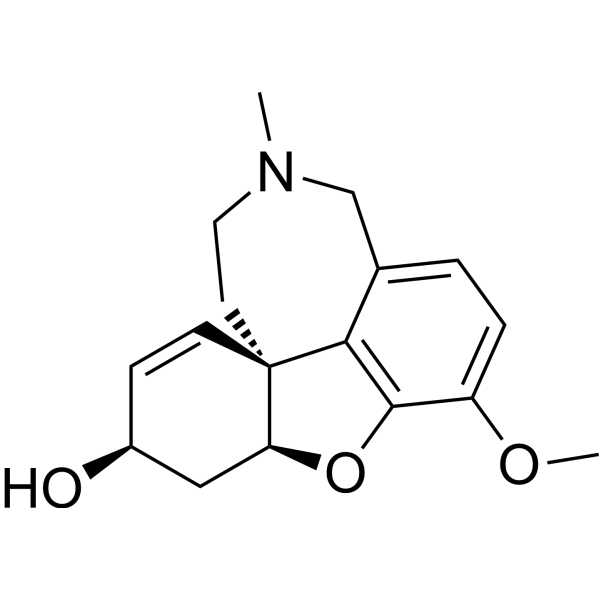
HY-76299
GalanthamineCholinesterase (ChE) Inhibitor -
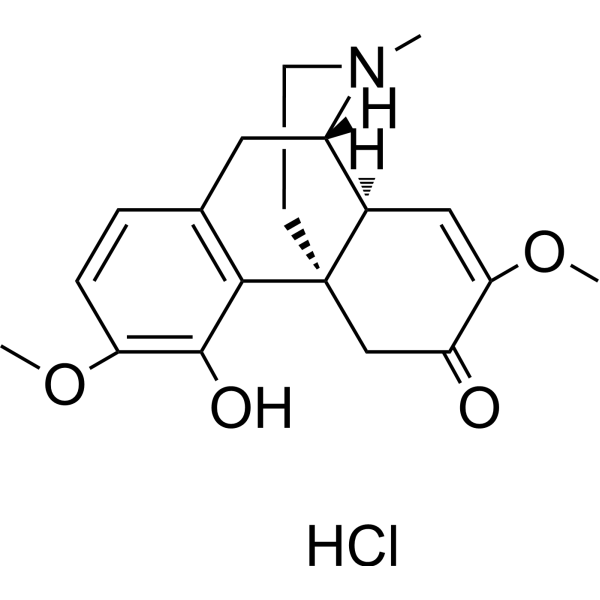
HY-15122A
Sinomenine hydrochlorideAutophagy Inducer -
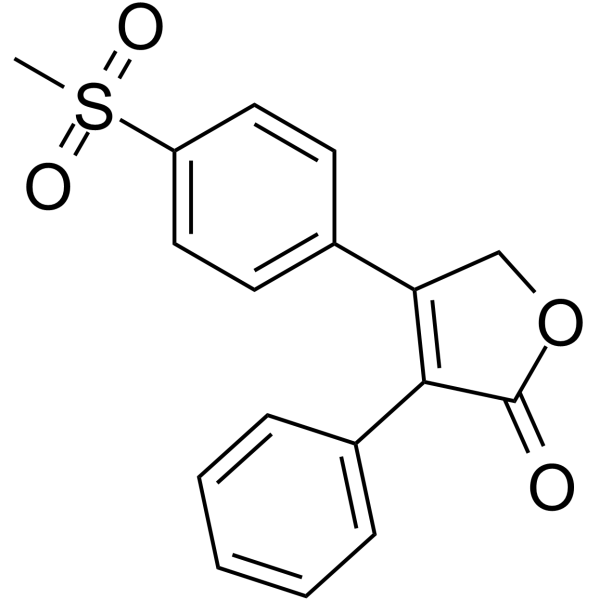
HY-17372
Rofecoxib -
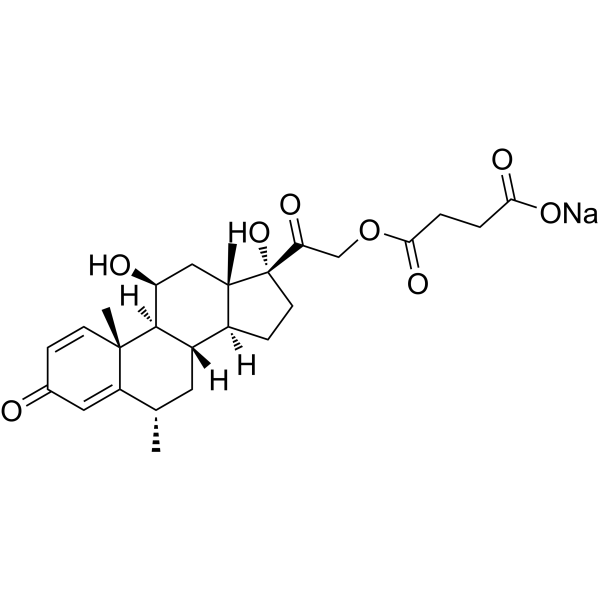
HY-B1060
Methylprednisolone succinate sodiumGlucocorticoid Agonist -
HY-12009
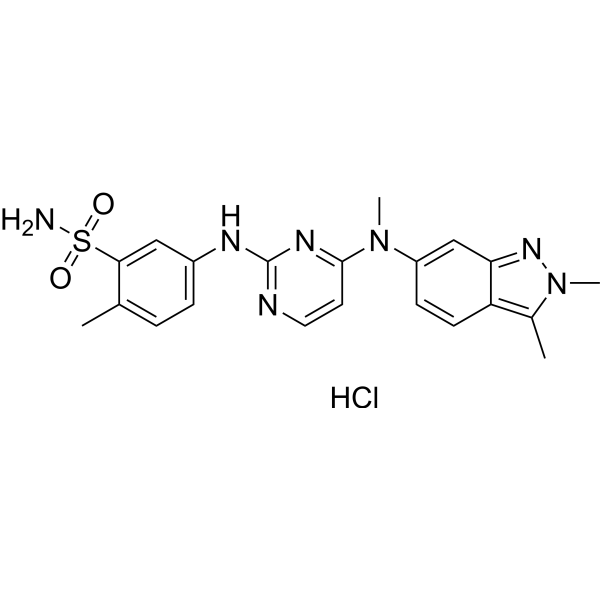
Pazopanib Hydrochloridec-Kit Inhibitor -
HY-17507AR
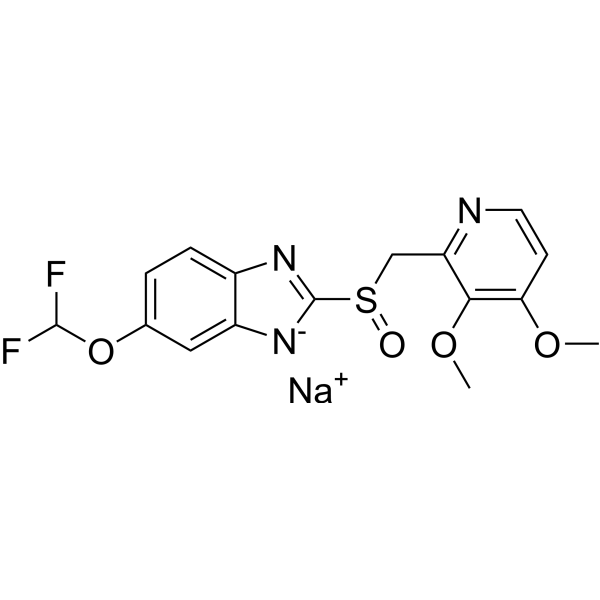
Pantoprazole sodium (Standard)Proton Pump Inhibitor -
HY-B1446
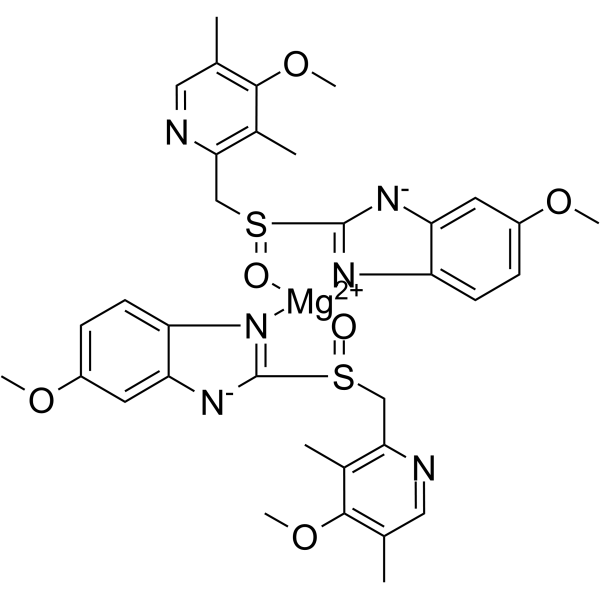
Esomeprazole magnesiumH+, K+-ATPase Inhibitor -
HY-100558
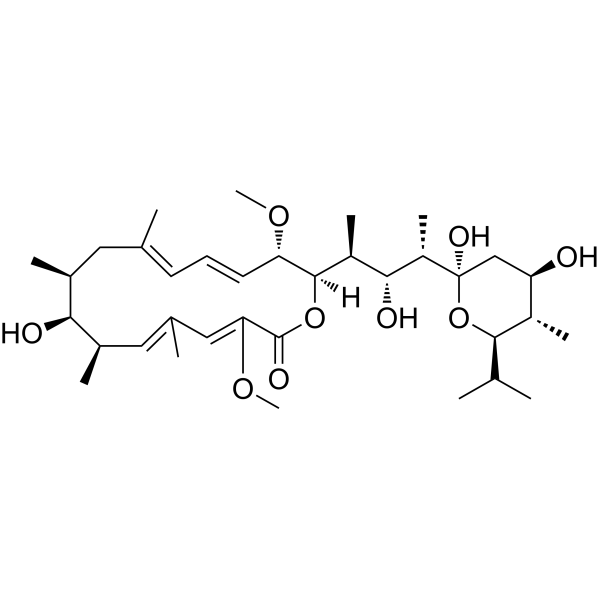
Bafilomycin A1V-ATPase Inhibitor -
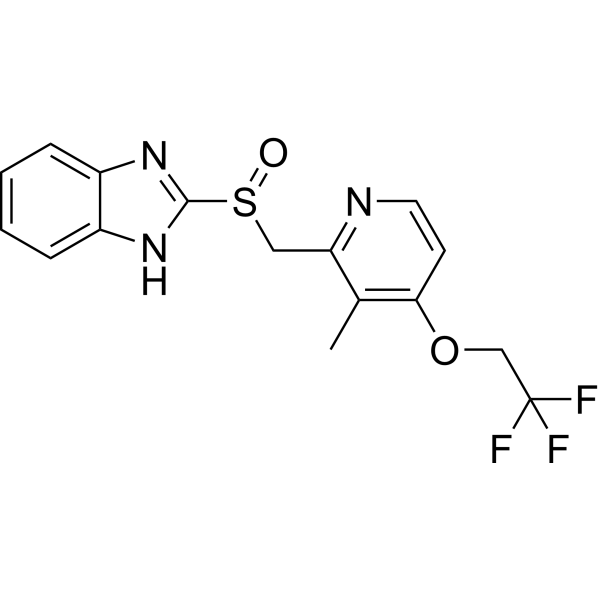
HY-13662
LansoprazoleProton Pump Inhibitor
Publications Citing Use of MedChemExpress (MCE) Pantoprazole sodium
More

Biological Activity
Description
IC50 & Target
proton pump
In Vitro
Pantoprazole sodium (BY1023 sodium; 1-10000 μM) leads to concentration-dependent increases in endosomal pH in EMT-6 and MCF7 cells[1].
Pantoprazole sodium can block exosome release. Pantoprazole sodium inhibits the activity of V-H+-ATPase and impaires the ability of tumour cells (melanomas, adenocarcinomas, and lymphoma cell lines) to acidify the extracellular medium[2]
MedChemExpress (MCE) has not independently confirmed the accuracy of these methods. They are for reference only. Further protocols information, click here.
In Vivo
Pantoprazole sodium (0.3-3 mg/kg, p.o.) dose-dependently decreases both basal acid secretion in pylorus-ligated rats and the stimulated acid secretion induced by mepirizole in acute fistula rats[4].
MedChemExpress (MCE) has not independently confirmed the accuracy of these methods. They are for reference only.
-
Animal Model:Mice bearing MCF-7 or A431 xenografts[1]
-
Dosage:200 mg/kg
-
Administration:IP; once a week for 3 weeks; alone or 2 hours before Doxorubicin (6 mg/kg i.v.)
-
Result:Showed even greater growth delay of MCF-7 xenografts with Doxorubicin compared with the single-dose combination.
Significantly increased tumor growth delay with a single dose with Doxorubicin.
There is no effect on growth delay alone.


Chemical Information
-
CAS No. 138786-67-1
-
Appearance Solid
-
Molecular Weight 405.35
-
Formula C16H14F2N3NaO4S
-
Color White to off-white
-
SMILES
O=S(C1=NC2=CC=C(OC(F)F)C=C2[N-]1)CC3=NC=CC(OC)=C3OC.[Na+]
-
Synonyms
BY1023 sodium; SKF96022 sodium
-
Shipping
Room temperature in continental US; may vary elsewhere.
-
Storage
4°C, sealed storage, away from moisture and light
* In solvent : -80°C, 6 months; -20°C, 1 month (sealed storage, away from moisture and light)


Publications (4)
-
Journal Impact Factor
-
Most Recent
-
Cell Metab
Imatinib and methazolamide ameliorate COVID-19-induced metabolic complications via elevating ACE2 enzymatic activity and inhibiting viral entry. [Abstract]2022 Mar 1;34(3):424-440.e7. PMID: 35150639 -
Nat Commun
2023 Jul 14;14(1):4217. PMID: 37452028 -
Sci Rep
2026 Mar 20;16(1):14300. PMID: 41862552 -
Front Oncol
Drug Repurposing of Pantoprazole and Vitamin C Targeting Tumor Microenvironment Conditions Improves Anticancer Effect in Metastatic Castration-Resistant Prostate Cancer. [Abstract]2021 Jul 7:11:660320. PMID: 34307134


Solvent & Solubility
In Vitro:
DMSO : ≥ 100 mg/mL (246.70 mM; Hygroscopic DMSO has a significant impact on the solubility of product, please use newly opened DMSO)
H2O : 3.85 mg/mL (9.50 mM; Need ultrasonic)
* "≥" means soluble, but saturation unknown.
Please refer to the solubility information to select the appropriate solvent. Once prepared, please aliquot and store the solution to prevent product inactivation from repeated freeze-thaw cycles.
Storage method and period of stock solution: -80°C, 6 months; -20°C, 1 month (sealed storage, away from moisture and light). When stored at -80°C, please use it within 6 months. When stored at -20°C, please use it within 1 month.
* Note: If you choose water as the stock solution, please dilute it to the working solution, then filter and sterilize it with a 0.22 μm filter before use.
Please refer to the solubility information to select the appropriate solvent. Once prepared, please aliquot and store the solution to prevent product inactivation from repeated freeze-thaw cycles.
Storage method and period of stock solution: -80°C, 6 months; -20°C, 1 month (sealed storage, away from moisture and light). When stored at -80°C, please use it within 6 months. When stored at -20°C, please use it within 1 month.
* Note: If you choose water as the stock solution, please dilute it to the working solution, then filter and sterilize it with a 0.22 μm filter before use.
Concentration (start) × Volume (start) = Concentration (final) × Volume (final)
In Vivo:
Select the appropriate dissolution method based on your experimental animal and administration route.
- For the following dissolution methods, please ensure to first prepare a clear stock solution using an In Vitro approach and then sequentially add co-solvents:
- To ensure reliable experimental results, the clarified stock solution can be appropriately stored based on storage conditions. As for the working solution for In Vivo experiments, it is recommended to prepare freshly and use it on the same day.
- The percentages shown for the solvents indicate their volumetric ratio in the final prepared solution. If precipitation or phase separation occurs during preparation, heat and/or sonication can be used to aid dissolution.
Add each solvent one by one: 10% DMSO 40% PEG300 5% Tween-80 45% Saline
Solubility: ≥ 2.5 mg/mL (6.17 mM); Clear solution
This protocol yields a clear solution of ≥ 2.5 mg/mL (saturation unknown).
Taking 1 mL working solution as an example, add 100 μL DMSO stock solution (25.0 mg/mL) to 400 μL PEG300, and mix evenly; then add 50 μL Tween-80 and mix evenly; then add 450 μL Saline to adjust the volume to 1 mL.
Preparation of Saline: Dissolve 0.9 g sodium chloride in ddH₂O and dilute to 100 mL to obtain a clear Saline solution.
Add each solvent one by one: 10% DMSO 90% (20% SBE-β-CD in Saline)
Solubility: ≥ 2.5 mg/mL (6.17 mM); Clear solution
This protocol yields a clear solution of ≥ 2.5 mg/mL (saturation unknown).
Taking 1 mL working solution as an example, add 100 μL DMSO stock solution (25.0 mg/mL) to 900 μL 20% SBE-β-CD in Saline, and mix evenly.
Preparation of 20% SBE-β-CD in Saline (4°C, storage for one week): 2 g SBE-β-CD powder is dissolved in 10 mL Saline, completely dissolve until clear.
For the following dissolution methods, please prepare the working solution directly:
It is recommended to prepare fresh solutions and use them promptly within a short period of time.
The percentages shown for the solvents indicate their volumetric ratio in the final prepared solution. If precipitation or phase separation occurs during preparation, heat and/or sonication can be used to aid dissolution.
Add each solvent one by one: PBS
Solubility: 8.33 mg/mL (20.55 mM); Clear solution; Need ultrasonic and warming and heat to 60°C
In Vivo Dissolution Calculator
Please enter the basic information of animal experiments:
-
-
-
-
Recommended: Prepare an additional quantity of animals to account for potential losses during experiments.
Please enter your animal formula composition:
-
%DMSO +
Recommended: Keep the proportion of DMSO in working solution below 2% if your animal is weak.
-
%+
-
+%Tween-80 + +
-
%Saline +
The co-solvents required include: DMSO, . All of co-solvents are available by MedChemExpress (MCE). , Tween 80. All of co-solvents are available by MedChemExpress (MCE).
Working solution concentration: 0.22 mg/mL
Method for preparing stock solution: mg drug dissolved in μL DMSO. Stock solution concentration: mg/mL. * In solvent : -80°C, 6 months; -20°C, 1 month (sealed storage, away from moisture and light)
1. Take μL DMSO stock solution;
2. Add μL .
μL , mix evenly;
3. Then add μL Tween 80, mix evenly;
4. Then add μL
Please ensure that the stock solution in the first step is dissolved to a clear state, and add co-solvents in sequence. You can use ultrasonic heating (ultrasonic cleaner, recommended frequency 20-40 kHz), vortexing, etc. to assist dissolution.

Protocols
-
Cell Cytotoxicity Assay
Cytotoxicity assays are usually based on the assessment of cell membrane damage, which can also be indirectly detected by measuring cell viability. Detection methods include MTT assay, CKK-8 assay, LDH assay and ATP assay, etc.
-
Patient-Derived Xenograft (PDX)
Patient-derived xenograft (PDX) models are generated by engrafting primary human tumor tissue directly into immunodeficient mice, allowing in vivo propagation of patient tumor biology without initial in vitro adaptation. These models are used to preserve key histopathological and molecular characteristics of the original tumor and enable assessment of tumor growth dynamics and therapeutic response in a living organism. The biological readout is tumor engraftment and subsequent growth in the murine host, which reflects the ability of human tumor cells to survive, vascularize, and expand in an immunocompromised microenvironment.
-
Patient-Derived Orthotopic Xenograft (PDOX)
Patient-derived orthotopic xenograft (PDOX) modeling implants fresh patient tumor tissue or patient-derived tumor cells into the anatomically corresponding organ or tissue site of immunodeficient mice, usually by surgical orthotopic implantation, to preserve patient tumor histology, local microenvironmental context, invasion, metastatic behavior, and treatment-response features better than subcutaneous implantation. PDOX readouts include tumor engraftment, orthotopic tumor growth, local invasion, metastasis, recurrence after resection, histologic similarity to the donor tumor, biomarker retention, molecular concordance, survival, and response or resistance to therapy. PDOX models are used for preclinical drug testing and individualized therapy evaluation, but engraftment success varies by tumor type and specimen quality.
-
Subcutaneous Cell-Line-Derived Xenograft
Subcutaneous cell-line-derived xenograft (CDX) models are established by implanting cultured human cancer cell lines into immunodeficient mice, where the injected cells form localized tumors that can be monitored in vivo as a measure of tumorigenic potential, growth kinetics, and treatment response. These models are widely used in oncology research because they allow reproducible tumor formation and enable comparative assessment of tumor growth between different cell lines or genetic manipulations in a controlled in vivo microenvironment. Subcutaneous implantation of cancer cells in immunodeficient mice is a standard approach for evaluating tumor growth behavior and therapeutic response across multiple cancer types, including prostate, esophageal, pancreatic, and colon cancer models.
-
Orthotopic Cell-Line Xenograft
Orthotopic cell-line xenograft models involve implantation of human cancer cell lines into the anatomically corresponding organ of immunodeficient mice to reproduce tumor growth within a native microenvironment, enabling more clinically relevant tumor behavior compared with subcutaneous models. These models are widely used because orthotopic placement better recapitulates tumor progression, including invasion and metastatic spread, which are often underrepresented in heterotopic implantation systems. Compared with conventional xenografts, orthotopic implantation is described as more technically complex but provides improved simulation of tumor-microenvironment interactions and metastatic behavior, making it particularly valuable for translational oncology research. Surgical orthotopic implantation approaches have been emphasized as enabling faithful reproduction of clinical cancer features, including metastasis and disease progression patterns that align with the tumor’s organ of origi


Purity & Documentation
-
Data Sheet (277 KB)
-
SDS (393 KB)
- English - EN (393 KB)
- Français - FR (393 KB)
- Deutsch - DE (393 KB)
- Norwegian - NO (393 KB)
- Español - ES (393 KB)
- Swedish - SV (393 KB)
- Italian - IT (393 KB)
- Korean - KR (393 KB)
- Portuguese - PT (393 KB)
-
Handling Instructions (2659 KB)
References
[1]. Krupa J Patel, et al. Use of the proton pump inhibitor pantoprazole to modify the distribution and activity of doxorubicin: a potential strategy to improve the therapy of solid tumors. Clin Cancer Res. 2013 Dec 15;19(24):6766-76. [Content Brief]
[2]. Huarui Zhang, et al. Advances in the discovery of exosome inhibitors in cancer. J Enzyme Inhib Med Chem. 2020 Dec;35(1):1322-1330. [Content Brief]
[3]. W Beil, et al. Pantoprazole: a novel H+/K(+)-ATPase inhibitor with an improved pH stability. Eur J Pharmacol. 1992 Aug 6;218(2-3):265-71. [Content Brief]
[4]. K Takeuchi, et al. Effects of pantoprazole, a novel H+/K+-ATPase inhibitor, on duodenal ulcerogenic and healing responses in rats: a comparative study with omeprazole and lansoprazole. J Gastroenterol Hepatol. 1999 Mar;14(3):251-7. [Content Brief]


Complete Stock Solution Preparation Table
Please refer to the solubility information to select the appropriate solvent. Once prepared, please aliquot and store the solution to prevent product inactivation from repeated freeze-thaw cycles.
Storage method and period of stock solution: -80°C, 6 months; -20°C, 1 month (sealed storage, away from moisture and light). When stored at -80°C, please use it within 6 months. When stored at -20°C, please use it within 1 month.
| Optional Solvent | Concentration Solvent Mass | 1 mg | 5 mg | 10 mg | 25 mg |
|---|---|---|---|---|---|
| H2O / DMSO | 1 mM | 2.4670 mL | 12.3350 mL | 24.6700 mL | 61.6751 mL |
| 5 mM | 0.4934 mL | 2.4670 mL | 4.9340 mL | 12.3350 mL | |
| DMSO | 10 mM | 0.2467 mL | 1.2335 mL | 2.4670 mL | 6.1675 mL |
| 15 mM | 0.1645 mL | 0.8223 mL | 1.6447 mL | 4.1117 mL | |
| 20 mM | 0.1234 mL | 0.6168 mL | 1.2335 mL | 3.0838 mL | |
| 25 mM | 0.0987 mL | 0.4934 mL | 0.9868 mL | 2.4670 mL | |
| 30 mM | 0.0822 mL | 0.4112 mL | 0.8223 mL | 2.0558 mL | |
| 40 mM | 0.0617 mL | 0.3084 mL | 0.6168 mL | 1.5419 mL | |
| 50 mM | 0.0493 mL | 0.2467 mL | 0.4934 mL | 1.2335 mL | |
| 60 mM | 0.0411 mL | 0.2056 mL | 0.4112 mL | 1.0279 mL | |
| 80 mM | 0.0308 mL | 0.1542 mL | 0.3084 mL | 0.7709 mL | |
| 100 mM | 0.0247 mL | 0.1234 mL | 0.2467 mL | 0.6168 mL |
* Note: If you choose water as the stock solution, please dilute it to the working solution, then filter and sterilize it with a 0.22 μm filter before use.


Pantoprazole sodium Related Classifications
HY-17507A Related Classifications
 Powered by Bioz