Inflammation/Immunology
-
Inflammation/Immunology Related Products (20729)
Related Products (20729)

-
Antibodies (115)
-
Related Compound Screening Libraries (4)

-
Tomentin
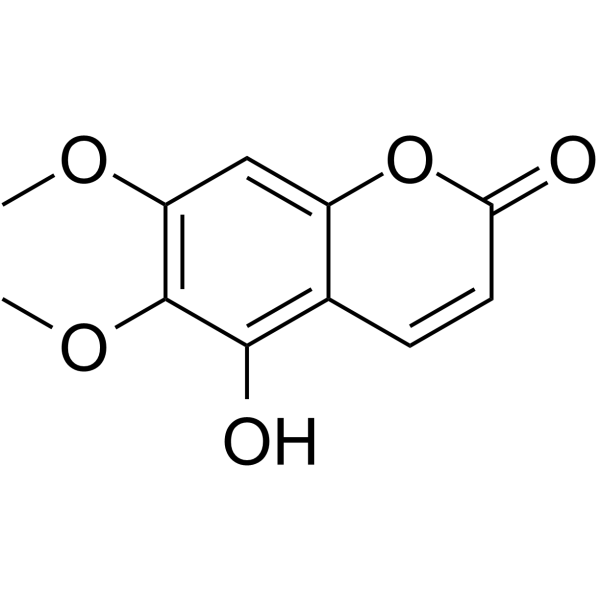 0 ImagesCat. No.: HY-N1143CAS No.: 28449-62-9
Tomentin is a compound isolated from Sphaeralcea angustifolia. Tomentin inhibits the formation of λ-carrageenan footpad edema at 58 %. Tomentin inhibits the phorbol ester-induced auricular edema formation by 57 %.
-
LXRβ agonist-2
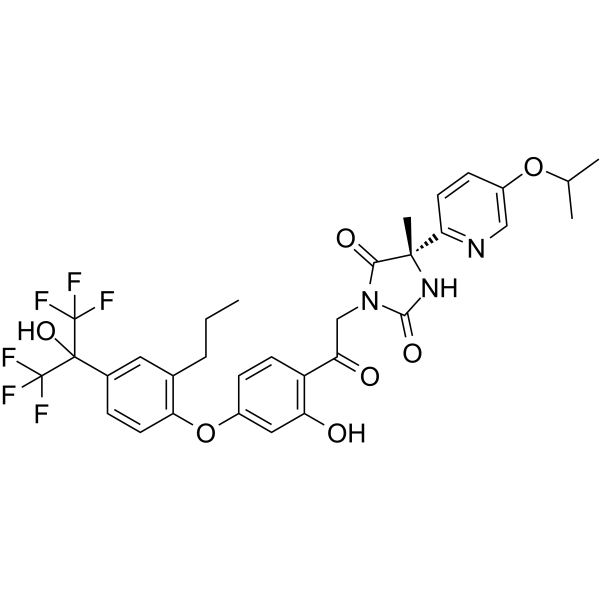 0 ImagesCat. No.: HY-100469CAS No.: 1949801-52-8
LXRβ agonist-2 is an orally active and selective LXRβ agonist. LXRβ agonist-2 increases high-density lipoprotein cholesterol levels without elevating plasma triglyceride levels. LXRβ agonist-2 decreases lipid accumulation area in the aortic arch. LXRβ agonist-2 can be used for the research of atherosclerosis.
-
AChE/BChE-IN-31
 0 ImagesCat. No.: HY-W272207CAS No.: 6338-81-4
AChE/BChE-IN-31 (Compound 3c) is a cholinesterase inhibitor. AChE/BChE-IN-31 exhibits certain inhibitory activity against hAChE and eqBChE. AChE/BChE-IN-31 also possesses antioxidant properties with an IC50 value of 105.04 μM against DPPH. AChE/BChE-IN-31 can be used in the research of diseases such as Alzheimer’s disease.
-
Pulchinenoside K
 0 ImagesCat. No.: HY-N19122CAS No.: 1257378-28-1
Pulchinenoside K (Compound 4) is a triterpenoid saponin. Pulchinenoside K can be isolated from the roots of *Pulsatilla koreana*. Pulchinenoside K inhibits NO production. Pulchinenoside K can be used for the research of inflammatory diseases.
-
Ac-WEHD-AFC
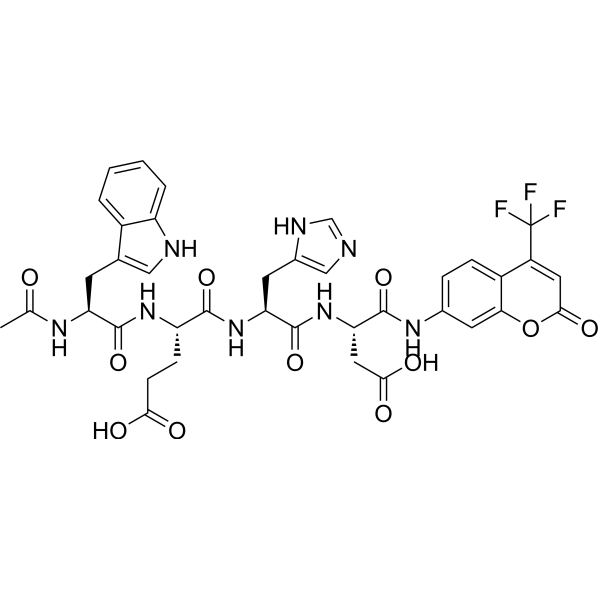 0 ImagesCat. No.: HY-P2617CAS No.: 210344-99-3
-
KRES peptide
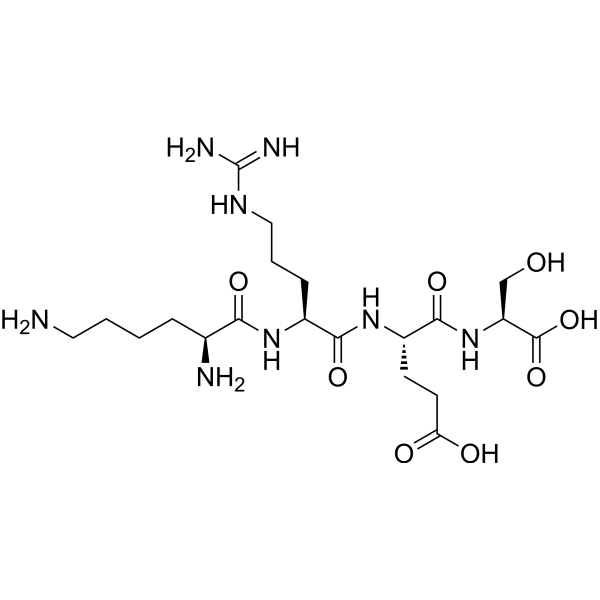 0 ImagesCat. No.: HY-P10258CAS No.: 867376-23-6
KRES peptide is an apolipoprotein with 4 amino acid residues. KRES peptide interacts with lipids, reduces lipoprotein lipid hydroperoxides (LOOH), activates antioxidant enzymes associated with high-density lipoprotein. KRES peptide exhibits anti-inflammatory and anti-atherogenic properties. KRES peptide is orally active.

-
FAM labled AZD8701 sodium
 0 ImagesCat. No.: HY-159692D
FAM labled AZD8701 sodiumis a FAM labled AZD8701 sodium.
-
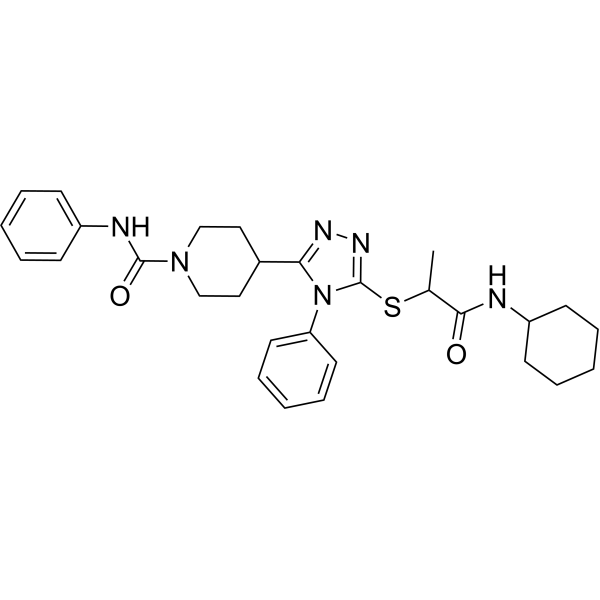
Cacospongionolide B
 0 ImagesCat. No.: HY-N21818CAS No.: 172854-76-1
Cacospongionolide B is an orally active sesterterpene compound that can be isolated from Fasciospongia cavernosa. Cacospongionolide B is a secreted phospholipase A2 (sPLA2) inhibitor with an IC50 of 4.3 μM. Cacospongionolide B exhibits antibacterial activity. Cacospongionolide B downregulates the expression of iNOS, COX-2 and TNF-α by inhibiting NF-κB nuclear translocation and its DNA binding, and simultaneously selectively and irreversibly inhibits sPLA2 enzymatic activity. Cacospongionolide B can be used in studies related to bacterial infection and adjuvant arthritis.
-
BAY-3153
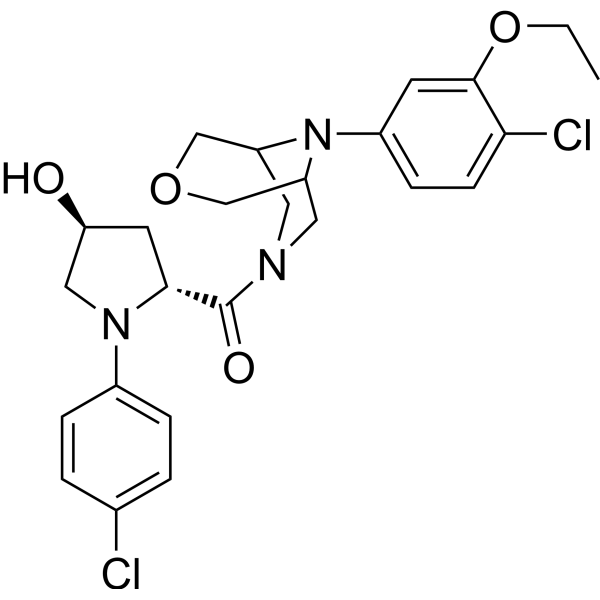 0 ImagesCat. No.: HY-148232CAS No.: 2771319-69-6
BAY-3153, a chemical probe, is a selective CCR1 (C-C motif chemokine receptor 1) antagonist (human IC50=3 nM; rat IC50=11 nM; mice IC50=81 nM).
-
cGAS-IN-8
 0 ImagesCat. No.: HY-180211
cGAS-IN-8 is an indazole cyclic GMP-AMP synthase (cGAS) inhibitor with an IC50 of 6 nM for human cGAS. cGAS-IN-8 inhibits cGAMP production in THP-1 cells with an IC50 of 0.12 µM. cGAS-IN-8 does not inhibits hERG activity. cGAS-IN-8 can be used for the research of autoimmune diseases.
-
JAK3/BTK-IN-4
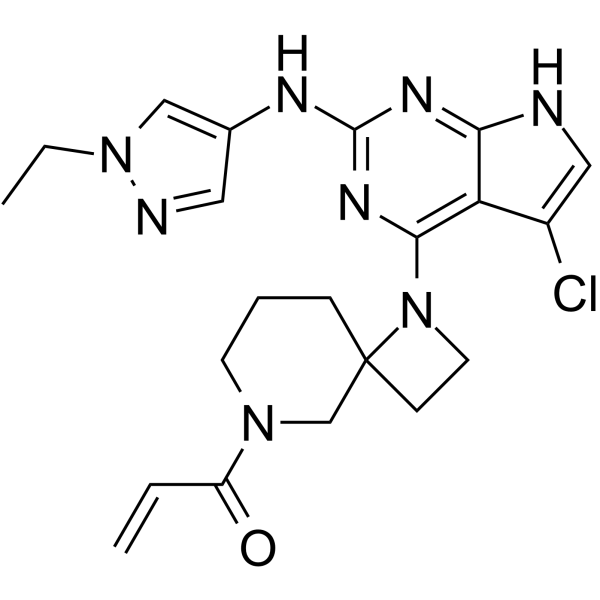 0 ImagesCat. No.: HY-143719CAS No.: 2673196-38-6
JAK3/BTK-IN-4 is a potent inhibitor of JAK3/BTK. BTK and JAK3 are two important targets for autoimmune diseases. Simultaneous inhibition of the BTK/JAK3 signalling pathway exhibits synergistic effects. JAK3/BTK-IN-4 has the potential for the research of JAK3 kinase and/or BTK-related diseases (extracted from patent WO2021147953A1, compound 003)
-
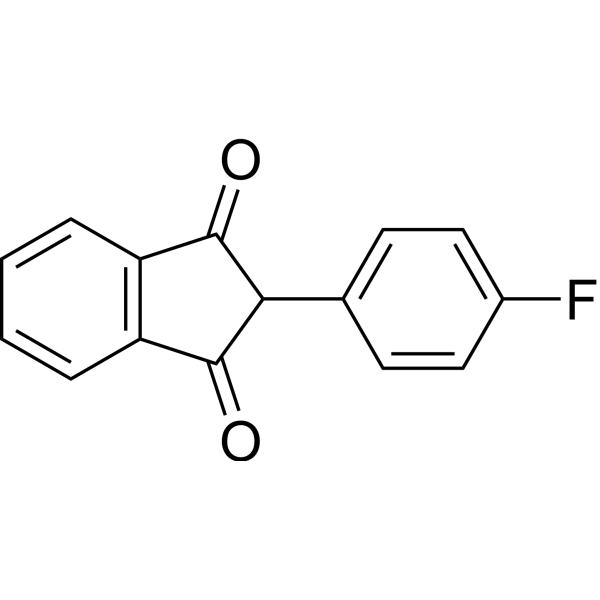
4-Methoxychalcone-1
 0 Images
4-Methoxychalcone is a naturally occurring chalcone compound. 4-Methoxychalcone has antioxidant activity, anti-inflammatory activity, antitumor activity and antibacterial activity. 4-Methoxychalcone can be used to study inflammation and tumor models.
-
IKKβ-IN-1
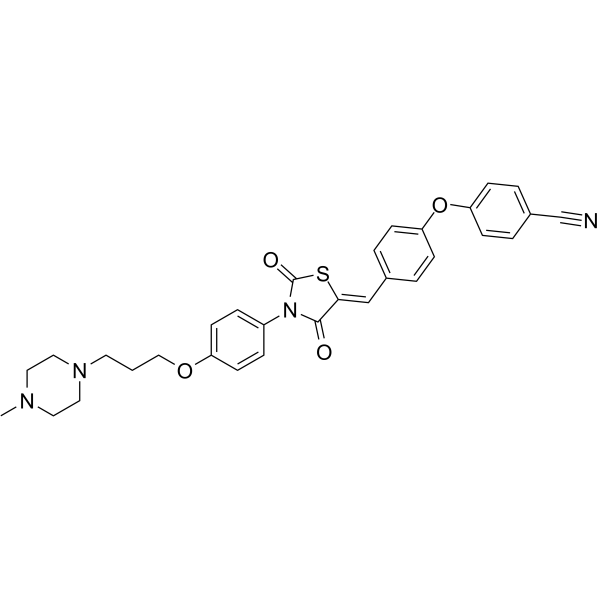 0 ImagesCat. No.: HY-146723CAS No.: 2410423-31-1
IKKβ-IN-1 is a potent and orally active IkappaB (IKK-β) inhibitor with IC50 of 0.20 μM. IKKβ-IN-1 can reduce PGE2 and TNF-α production in mouse macrophage cells. IKKβ-IN-1 has the ability to protect mice against septic shock induced mortality.
-
Daturaolone
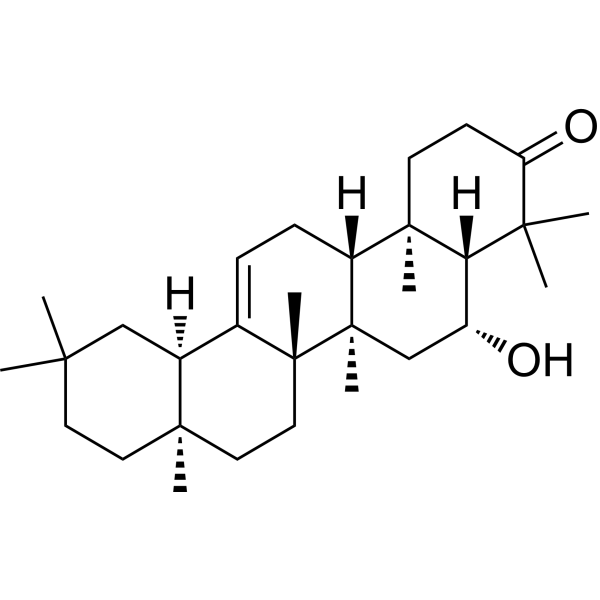 0 ImagesCat. No.: HY-122953CAS No.: 41498-80-0
Daturaolone is a natural triterpenoid with anti-inflammatory and antinociceptive potentials. Daturaolone displays a COX-1 inhibitory activity.
-
Betavulgaroside III
 0 ImagesCat. No.: HY-N17332CAS No.: 168111-48-6
Betavulgaroside III is a triterpene seco-glycoside plant saponin. Betavulgaroside III exhibits anti-inflammatory activity.
-
LJ-2698
 0 ImagesCat. No.: HY-153149CAS No.: 945457-84-1Synonyms: FM101
LJ-2698 (FM101) is an orally active adenosine A3 receptor (Adenosine A3 Receptor) antagonist. LJ-2698 blocks adenosine A3 receptor-dependent pro-inflammatory JNK, ERK, and NF-κB signaling pathways. LJ-2698 prevents alveolar cavity enlargement, restores pulmonary function, and inhibits matrix metalloproteinase activity and pulmonary cell apoptosis (apoptosis) in mice. LJ-2698 induces mitochondrial dysfunction, necroptosis, and intrinsic apoptosis. LJ-2698 ameliorates renal injury in mice with diabetic nephropathy, and alleviates diet-induced hepatic inflammation and fibrosis. LJ-2698 can be used in the research of emphysema, diabetic nephropathy, and metabolic dysfunction-associated steatotic liver disease.