Inflammation/Immunology
-
Inflammation/Immunology Related Products (20727)
Related Products (20727)

-
Antibodies (115)
-
Related Compound Screening Libraries (4)

-
Ofloxacin-OVA
 0 ImagesCat. No.: HY-NP0251A
Ofloxacin-OVA is a conjugate of Ofloxacin (HY-B0125) and Ovalbumin (OVA). By conjugating the antigen with protein adjuvants, the production of antigen-specific antibodies in vaccine models can be enhanced. The conjugate does not affect protein folding or disrupt the primary epitopes, and it can enhance cross-presentation and the generation of antigen-specific T cells.
-
PD-L1/CD-73-IN-1
 0 ImagesCat. No.: HY-161677CAS No.: 3048634-84-7

-
Xanthine oxidase-IN-6
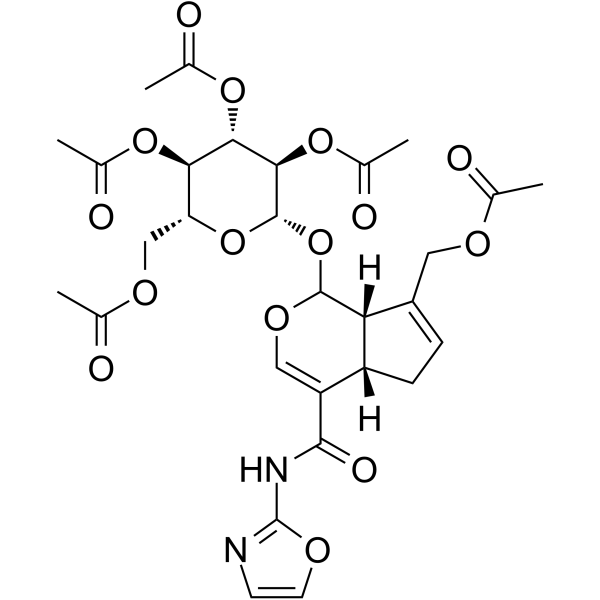 0 ImagesCat. No.: HY-146560
Xanthine oxidase-IN-6 (Compound 6c) is a potent, orally active, mixed-type xanthine oxidase (XOD) inhibitor with an IC50 value of 1.37 µM. Xanthine oxidase-IN-6 shows strong anti-hyperuricemia and renal protective activity.

-
Antileukinate
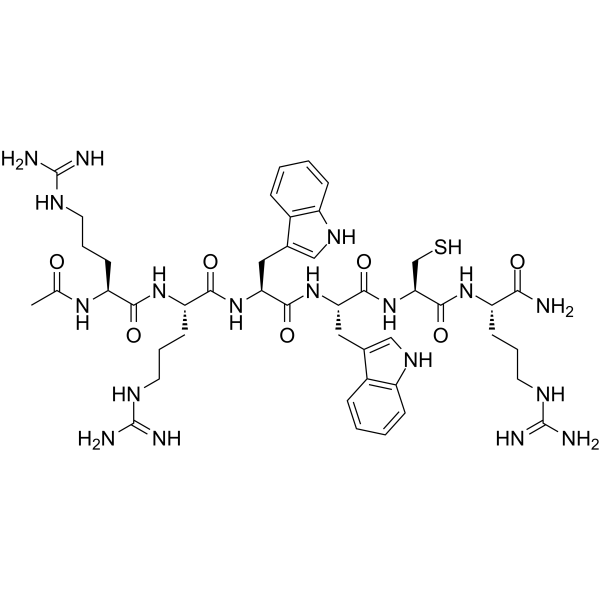 0 ImagesCat. No.: HY-125567CAS No.: 138559-60-1
Antileukinate, a hexapeptide, is a potent inhibitor of CXC-chemokine receptor (CXCR). Antileukinate inhibits neutrophil chemotaxis and activation. Antileukinate can be used for the research of acute inflammation and injury.
-
Galectin-8-IN-2
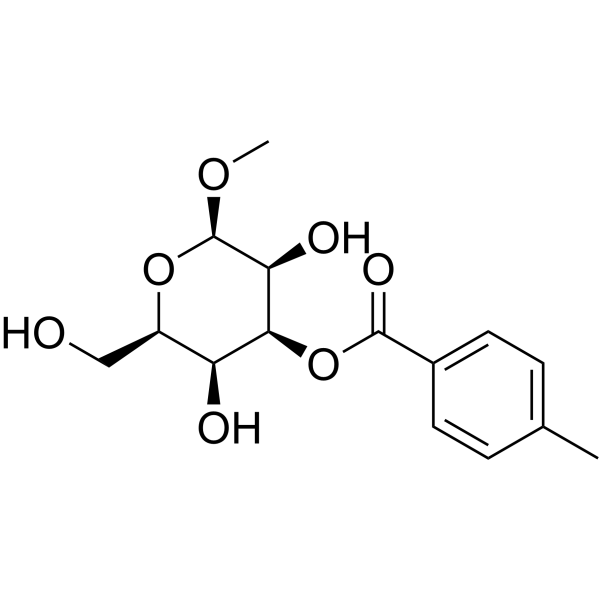 0 ImagesCat. No.: HY-157822CAS No.: 1044566-24-6
Galectin-8-IN-2 (Compound 10) is a galectin-8N inhibitor.
-
GR 89696 free base
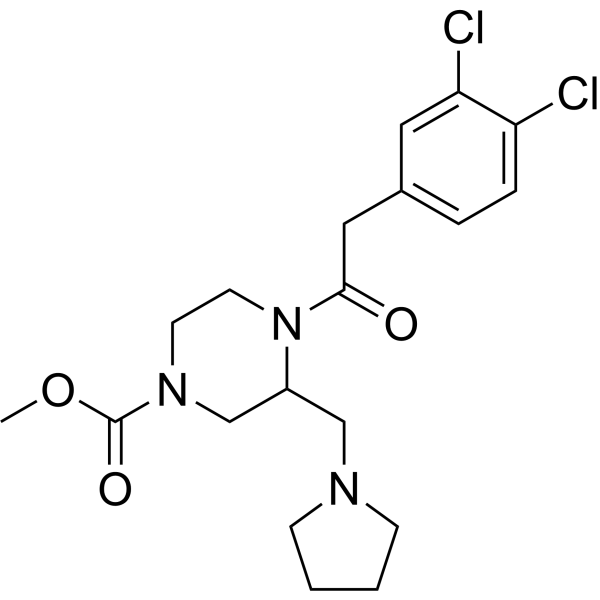 0 ImagesCat. No.: HY-107747ACAS No.: 126766-31-2
GR 89696 free base is a highly selective κ2 opioid receptor agonist with potential to prevent pruritus.
-
KDEL
 0 ImagesCat. No.: HY-P2674CAS No.: 113516-56-6
-
Anti-CXCL13 Antibody
 0 ImagesCat. No.: HY-P992222
-
Benzoylgomisin P
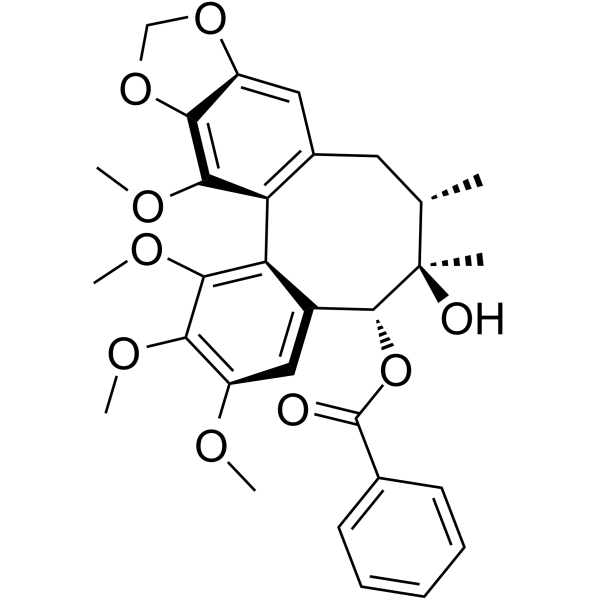 0 ImagesCat. No.: HY-N2988ACAS No.: 129445-43-8
Benzoylgomisin P is an anti-inflammatory agent.
-
Allolithocholic acid (Standard)
 0 ImagesCat. No.: HY-143712RCAS No.: 2276-94-0
Allolithocholic acid (Standard) is the analytical standard of Allolithocholic acid (HY-143712). This product is intended for research and analytical applications. Allolithocholic acid is an orally active metabolite of Lithocholic acid (HY-B0172). Allolithocholic acid is a dual GPBAR1 agonist (EC50 = 2.7 μM) and RORγt inverse agonist (IC50 = 3.4 μM). Allolithocholic acid modulates immune and metabolic pathways, regulates immune cell polarization, prevents M1 macrophage and Th17 CD4 cell polarization. Allolithocholic acid improves insulin sensitivity, reduces liver lipid accumulation, reverses liver immunological, inflammatory and metabolic signaling dysregulation, restores bile acid homeostasis, adipose tissue histopathology/function, and intestinal microbiota composition, modulates intestinal immunity. Allolithocholic acid can be used for the researches of cancer, inflammayion, immunology and metabolic disease.
-
MAO-B-IN-30
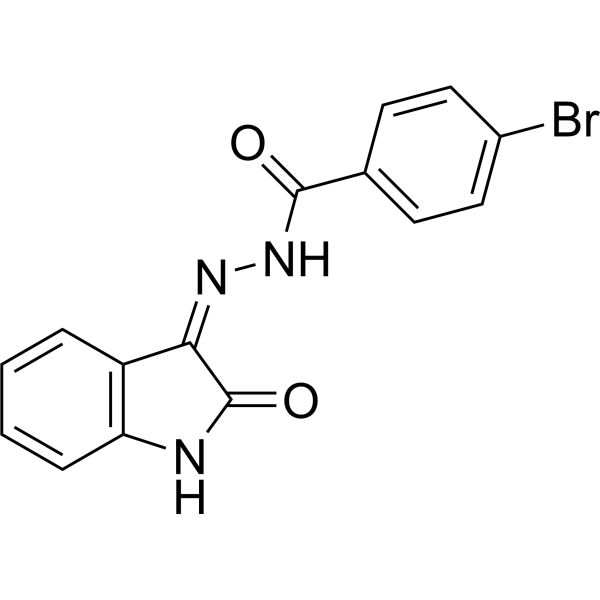 0 Images
MAO-B-IN-30 (compound IS7) is a potent, selective and cross the blood-brain barrier MAO-B inhibitor with IC50 values of 19.176, 0.082 µM for MAO-A and MAO-B, respectively. MAO-B-IN-30 shows antiproliferative activity and non-cytotoxic. MAO-B-IN-30 reduces TNF-alpha, IL-6, NF-kB levels. MAO-B-IN-30 has the potential for the research of Parkinson's disease.
-
PiF
 0 ImagesCat. No.: HY-D3174CAS No.: 2688758-23-6
PiF is a fluorescent probe with high specificity for pancreatic β-cells (Ex/Em = 535 nm/565 nm), and its fluorescence signal increases significantly with elevated insulin concentrations in in vitro experiments. PiF enables visualization of rat and human islets transplanted via the portal vein in mouse livers with low liver background signals. The fluorine atom of PiF can be replaced by radioactive 18F to prepare a PET tracer. PiF can be used for research on type 1 diabetes.
-
Dexchlorpheniramine
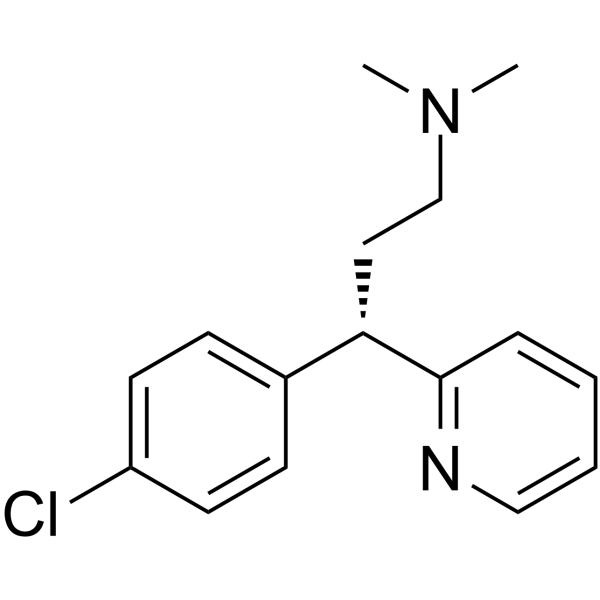 0 ImagesCat. No.: HY-117501CAS No.: 25523-97-1
Dexchlorpheniramine is an potent and blood-brain barrier (BBB) penetrant histamine 1 (H1) receptor antagonist with anticholinergic properties. Dexchlorpheniramine can be used for researching allergies.

-
Daucosterol (Standard)
 0 ImagesSynonyms: Eleutheroside A (Standard); β-Sitosterol β-D-glucoside (Standard)
Daucosterol (Standard) is the analytical standard of Daucosterol. This product is intended for research and analytical applications. Daucosterol is an orally active natural sterol compound, which has anti-inflammatory, anticancer and immunomodulatory activities. Daucosterol inhibits cancer cell proliferation by inducing autophagy through ROS-dependent manner. Daucosterol also inhibits colon cancer growth by inducing apoptosis, inhibiting cell migration and invasion and targeting caspase signalling pathway.
-
Cy3 labled Cevolisiran sodium
 0 ImagesCat. No.: HY-177621D
Cy3 labled Cevolisiran sodium is a Cy3 labled Cevolisiran sodium.