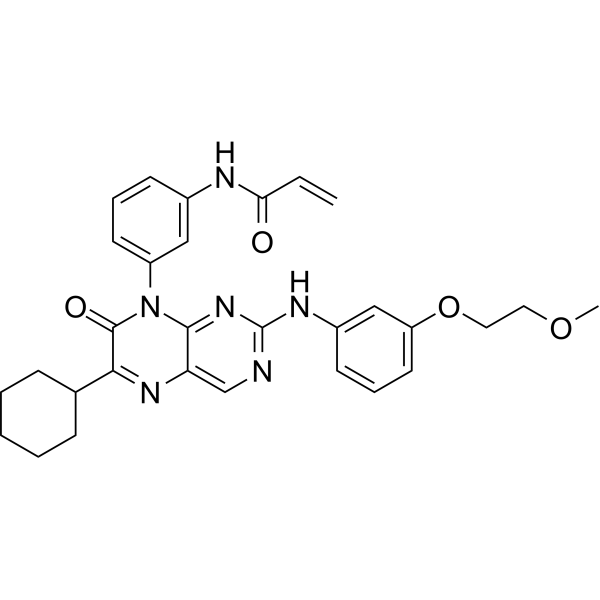
Inflammation/Immunology
-
Inflammation/Immunology Related Products (20741)
Related Products (20741)

-
Antibodies (115)
-
Related Compound Screening Libraries (4)
-
α5β1 integrin-IN-1
 0 ImagesCat. No.: HY-180057CAS No.: 2649899-08-9
α5β1 integrin-IN-1 is a potent and selective α5β1 integrin inhibitor with an IC50 value of approximately 0.4 nM (pIC50 = 9.4 M). α5β1 integrin-IN-1 disrupts the interaction between α5β1 integrin and fibronectin, thereby blocking smooth muscle tension transmission and α5β1 integrin-mediated cell adhesion. α5β1 integrin-IN-1 can be used in the research of asthma and allergic asthma.
-
2-Chlorohexadecanoic acid (Standard)
 0 ImagesCat. No.: HY-131688RCAS No.: 19117-92-1
Neomycin (sulfate) (Standard) is the analytical standard of Neomycin (sulfate). This product is intended for research and analytical applications. Neomycin sulfate, an aminoglycoside antibiotic, exerts antibacterial activity through irreversible binding of the nuclear 30S ribosomal subunit, thereby blocking bacterial protein synthesis. Neomycin sulfate is a known phospholipase C (PLC) inhibitor. Neomycin sulfate potently inhibits both nuclear translocation of angiogenin and angiogenin-induced cell proliferation and angiogenesis.
-
Anti-TAT226 Antibody
 0 ImagesCat. No.: HY-P990514
Anti-TAT226 Antibody is a CHO-expressed humanized antibody targeting TAT226. The Anti-TAT226 Antibody contains huIgG1 heavy chain and huκ light chain, with a predicted molecular weight (MW) of 150 kDa. For the isotype control of Anti-TAT226 Antibody, you can refer to Human IgG1 kappa, Isotype Control (HY-P99001).
-
PI3Kδ-IN-25
 0 ImagesCat. No.: HY-175369
PI3Kδ-IN-25 is an orally active selective PI3Kδ inhibitor (IC50 = 2.1 nM). PI3Kδ-IN-25 has IC50s of 272, 285, and 1171 nM for PI3Kα, PI3Kγ, and PI3Kβ, respectively. PI3Kδ-IN-25 inhibits AKT Ser473 phosphorylation, suppresses Treg cell proliferation, and downregulates PD-L1 expression in B16F10 cells. PI3Kδ-IN-25 exhibits anticancer effects in B16F10 melanoma and Lewis lung cancer mouse models by reducing tumor-infiltrating Treg cells and enhancing immune responses. PI3Kδ-IN-25 is potentially useful in the study of melanoma, lung cancer, and other cancers.
-
HG2
 0 ImagesCat. No.: HY-P5706
HG2 is a fast-acting antimicrobial peptide. HG2 shows anti-biofilm and anti-inflammatory activities. HG2 is active against Gram-positive pathogens, especially against MRSA strains (MIC: 16-32 μg/mL). HG2 can bind to bacterial lipids and reduces ATP concentration in S. aureus MRSA USA300 cells.
-
Anti-OSCAR Antibody
 0 ImagesCat. No.: HY-P992285
-
COX-2-IN-52
 0 ImagesCat. No.: HY-168888
COX-2-IN-52 (Compound 5l) is an orally active and selective COX-2 inhibitor with an IC50 of 54 nM. COX-2-IN-52 can inhibit the release of NO in cells and has anti-inflammatory activity. COX-2-IN-52 has high gastrointestinal safety and can be used in the research of oral anti-inflammatory drugs.
-
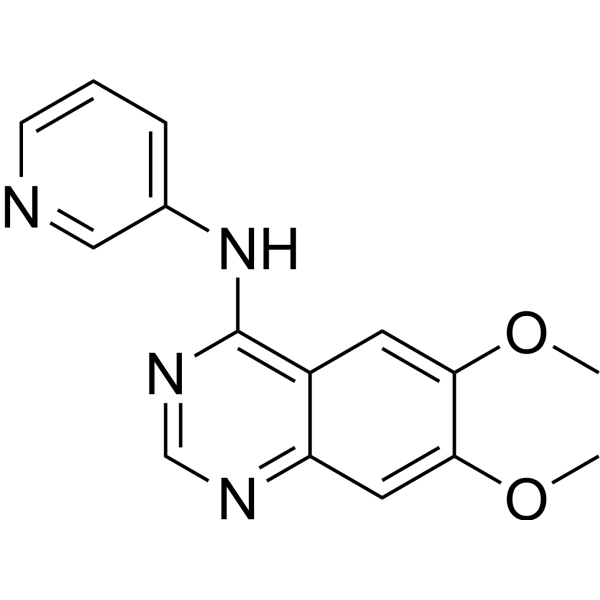
BTK-IN-16
 0 Images
BTK-IN-16 is a dual inhibitor of BTK wild type and C481S mutant of Bruton’s tyrosine kinase (BTK) with IC50s of 5.1 and 4.1 μM. BTK-IN-16 can be used for the research of autoimmune diseases and chronic lymphocytic leukemia.
-
Deucravacitinib-13C,d3
 0 ImagesCat. No.: HY-166594S
Deucravacitinib-13C,d3 is the 13C- and deuterium labeled Deucravacitinib. Deucravacitinib (BMS-986165) is a highly selective, orally bioavailable allosteric TYK2 inhibitor for the treatment of autoimmune diseases, which selectively binds to TYK2 pseudokinase (JH2) domain (IC50=1.0 nM) and blocks receptor-mediated Tyk2 activation by stabilizing the regulatory JH2 domain. Deucravacitinib inhibits IL-12/23 and type I IFN pathways. Deucravacitinib, the FDA's world first de novo deuterium, is available for study in moderate to severe plaque psoriasis.

-
Juglone (Standard)
 0 ImagesSynonyms: 5-Hydroxy-1,4-naphthalenedione (Standard)
Juglone (Standard) is the analytical standard of Juglone. This product is intended for research and analytical applications. Juglone (5-hydroxy-1,4-naphthalenedione) is a yellow dye that can be extracted from Juglans regia. Juglone induces apoptosis through the mitochondrial pathway. Juglone has antibacterial and antitumor activity .
-
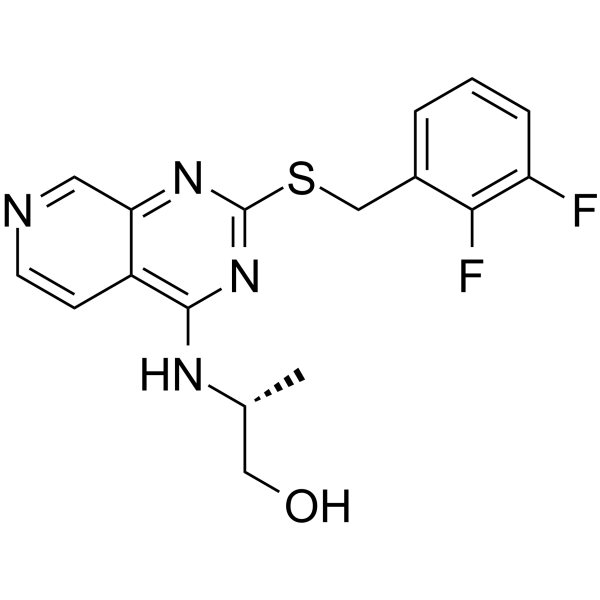
CXCR2 antagonist 6
 0 ImagesCat. No.: HY-144783
CXCR2 antagonist 6 (compound 35c) is a potent CXCR2 antagonist. CXCR2 antagonist 6 shows potent CXCR2 binding affinity (IC50=0.044 µM) and calcium mobilization (IC50=0.66 µM)[ 1].
-
Anti-Protein S Antibody
 0 ImagesCat. No.: HY-P992295
-
Suc-YVAD-pNA
 0 ImagesCat. No.: HY-P2630CAS No.: 208264-84-0
Suc-YVAD-pNA is a substrate of ICE. Interleukin-1β-converting enzyme (ICE) is a cysteine protease responsible for the cleavage of pre-interleukin-1β (pre-IL-1β) to the mature cytokine and a member of a family of related proteases (the caspases).
-
(±)-Epicatechin-13C3
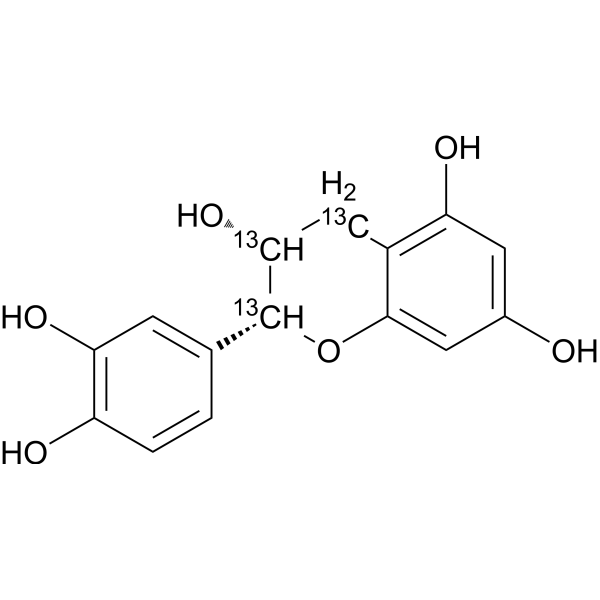 0 ImagesCat. No.: HY-N0001SCAS No.: 1217780-28-3
(±)-Epicatechin-13C3 is the 13C labeled (±)-Epicatechin. (-)-Epicatechin (HY-N0001) inhibits cyclooxygenase-1 (COX-1) with an IC50 of 3.2 μM. (-)-Epicatechin inhibits the IL-1β-induced expression of iNOS by blocking the nuclear localization of the p65 subunit of NF-κB.
-
TH023
 0 ImagesCat. No.: HY-168207
TH023 is an inhibitor for the TLR4 signaling pathway, that targets especially the formation of TLR4 homodimer. TH023 inhibits secreted embryonic alkaline phosphatase in cell HEK-Blue hTLR4 with an IC50 of 0.354 μM, and inhibits the NO expression in RAW264.7 with an IC50 of 1.61μM. TH023 also inhibits the activation of NF-κB, reduces the nuclear translocation of NF-κB p65. TH023 exhibits anti-inflammatory efficacy in LPS (HY-D1056)-induced mouse acute sepsis model, and ameliorates the mouse lung injury.
-
ATX inhibitor 25
 0 ImagesCat. No.: HY-168930CAS No.: 2951100-44-8
ATX inhibitor 25 (Compound 29) is an orally active Autotaxin inhibitor with an IC50 of 1.08 nM. ATX inhibitor 25 exhibits excellent in vitro metabolic stability, with a t1/2 of more than 170 minutes. In the bleomycin (HY-108345)-induced pulmonary fibrosis mouse model, orally administered ATX inhibitor 25 shows anti-fibrotic effects.
-
Angelol B
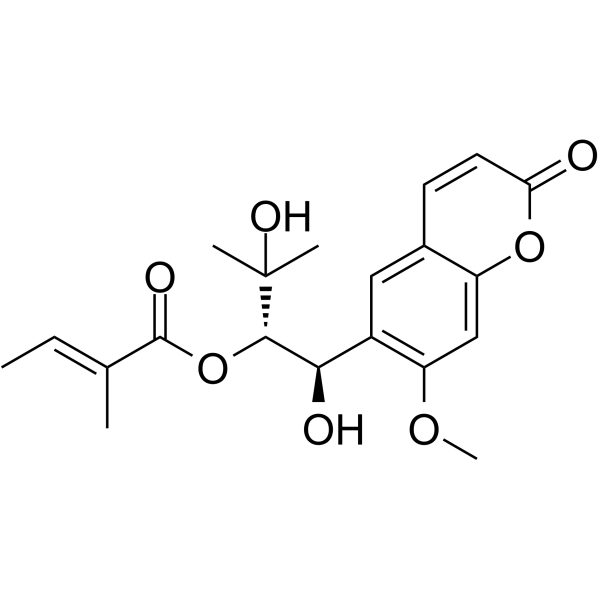 0 ImagesCat. No.: HY-N4235CAS No.: 83156-04-1
Angelol B is a coumarin isolated from the roots of Angelica pubescens f. biserrata, which is passive diffusion as the dominating process in Caco-2 cell monolayer model.