



Sapacitabine

Based on 1 Customer Validation
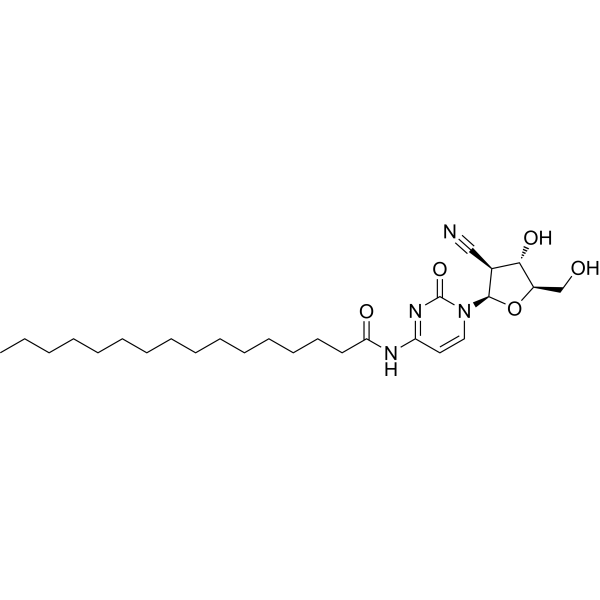
Sapacitabine is an orally available nucleoside analog proagent that is structurally related to cytarabine.
For research use only. We do not sell to patients.
- Purity : 98.69%
- CAS No.: 151823-14-2
- Formula: C26H42N4O5
- Molecular Weight:490.64
-
Storage:Powder -20°C, 3 years , 4°C, 2 years ; In solvent -80°C, 2 years , -20°C, 1 year

To place orders, for customer services and technical support, please contact: MedChemExpress USA
Tel: 609-228-6898 E-mail: [email protected] [email protected]


-
 Biological Activity
-
Chemical Information
-
Solvent & Solubility
- Purity & Documentation
- References
-
 Help & FAQs


-
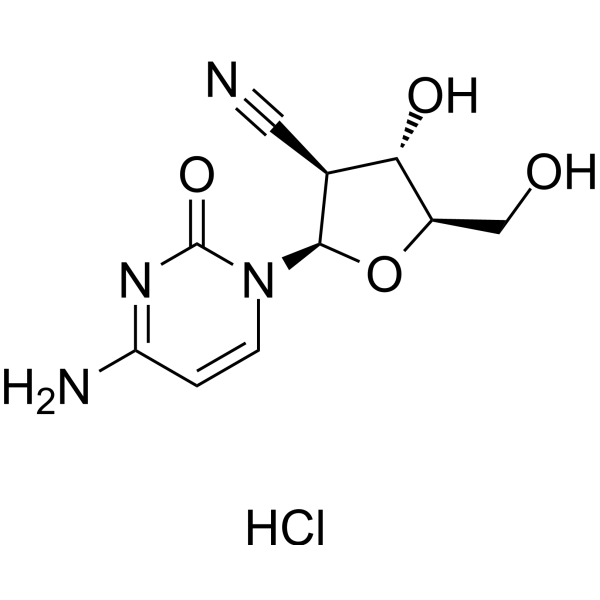
HY-16445B
CNDAC hydrochlorideNucleoside Analog -
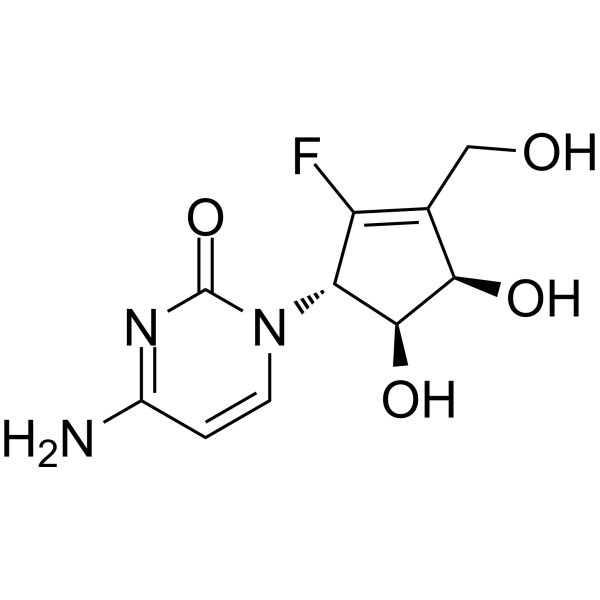
HY-15228
RX-3117Anticancer Agent -
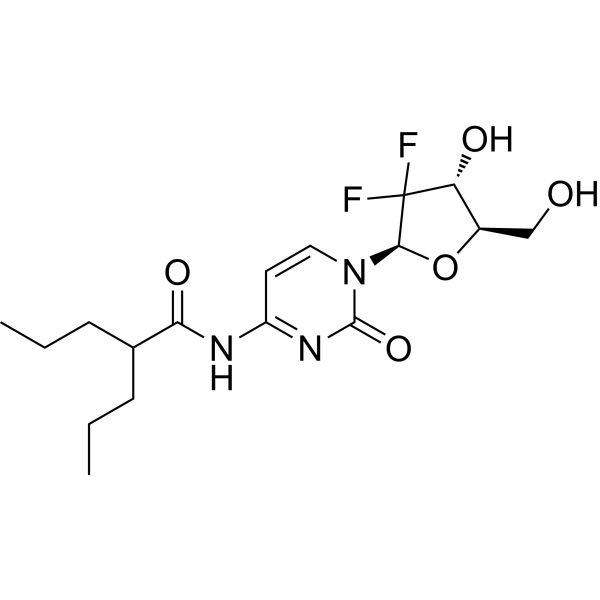
HY-13672
LY2334737Nucleoside Antimetabolite/Analog Inhibitor -
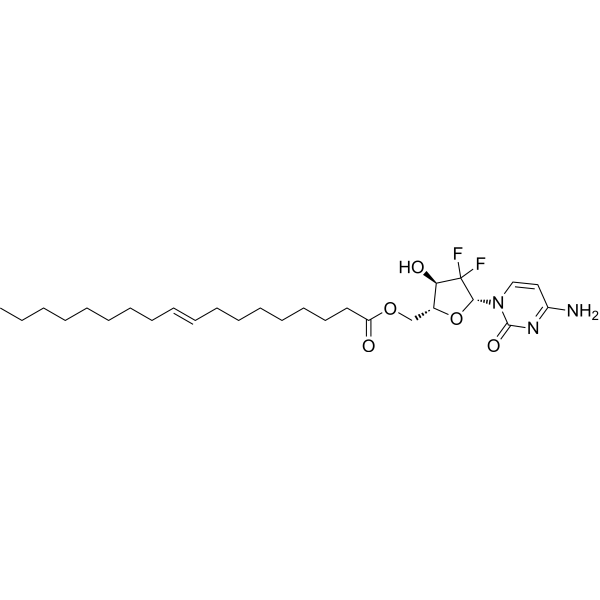
HY-13538
Gemcitabine elaidateGemcitabine Prodrug -
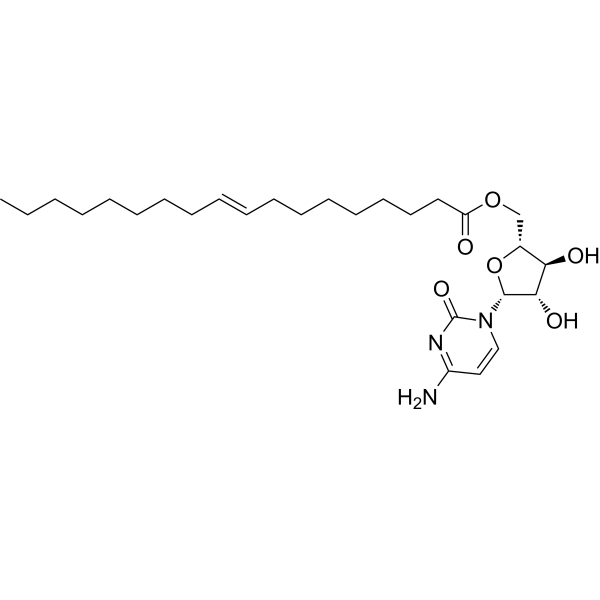
HY-14941
ElacytarabineAnticancer Agent -
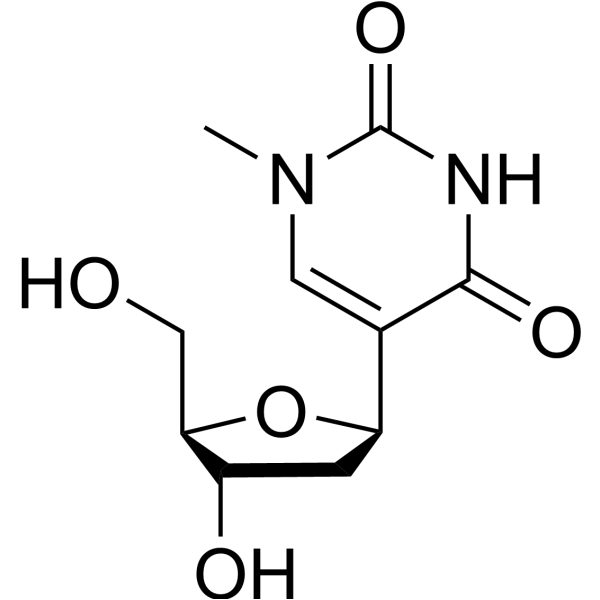
HY-101969
PseudothymidineC-nucleoside Analog -

HY-16445BR
CNDAC hydrochloride (Standard)Nucleoside Analog -

HY-101969R
Pseudothymidine (Standard)Reference Standard


Biological Activity
Description
IC50 & Target
nucleoside analog[1]
In Vitro
Concentrations of Sapacitabine required to achieve an IC50 range from 3±0.6 μM for the colon cancer cell line HCT116 to 67±14 μM for the breast cancer cell line MDA-MB-435. Cell cycle analysis shows that 35% Sapacitabine-treated cells are arrested in late-S phase and 41% in G2/M phase. L1210 cells with deoxycytidine kinase (dCK) activity are sensitive to Sapacitabine, (IC50 20±6 μM). In the docetaxel/Sapacitabine combinations, synergistic effects (CI<1) are observed when docetaxel is given before Sapacitabine in both cell lines[1].
MedChemExpress (MCE) has not independently confirmed the accuracy of these methods. They are for reference only.
In Vivo
MedChemExpress (MCE) has not independently confirmed the accuracy of these methods. They are for reference only.
Clinical Trial
| NCT Number | Sponsor | Condition | Start Date |
Phase

|
|---|---|---|---|---|
| NCT01329991 | 2011-05 | PHASE1 |


Chemical Information
-
CAS No. 151823-14-2
-
Appearance Solid
-
Molecular Weight 490.64
-
Formula C26H42N4O5
-
Color White to off-white
-
SMILES
O=C(N=C(NC(CCCCCCCCCCCCCCC)=O)C=C1)N1[C@H]2[C@@H](C#N)[C@H](O)[C@@H](CO)O2
-
Synonyms
CS682; CYC682
-
Shipping
Room temperature in continental US; may vary elsewhere.
-
Storage
Powder -20°C 3 years 4°C 2 years In solvent -80°C 2 years -20°C 1 year


Solvent & Solubility
In Vitro:
DMSO : 33.33 mg/mL (67.93 mM; Need ultrasonic; Hygroscopic DMSO has a significant impact on the solubility of product, please use newly opened DMSO)
Please refer to the solubility information to select the appropriate solvent. Once prepared, please aliquot and store the solution to prevent product inactivation from repeated freeze-thaw cycles.
Storage method and period of stock solution: -80°C, 2 years; -20°C, 1 year. When stored at -80°C, please use it within 2 years. When stored at -20°C, please use it within 1 year.
Please refer to the solubility information to select the appropriate solvent. Once prepared, please aliquot and store the solution to prevent product inactivation from repeated freeze-thaw cycles.
Storage method and period of stock solution: -80°C, 2 years; -20°C, 1 year. When stored at -80°C, please use it within 2 years. When stored at -20°C, please use it within 1 year.
Concentration (start) × Volume (start) = Concentration (final) × Volume (final)


Purity & Documentation
-
Data Sheet (270 KB)
-
SDS (393 KB)
- English - EN (393 KB)
- Français - FR (393 KB)
- Deutsch - DE (393 KB)
- Norwegian - NO (393 KB)
- Español - ES (393 KB)
- Swedish - SV (393 KB)
- Italian - IT (393 KB)
- Korean - KR (393 KB)
- Portuguese - PT (393 KB)
-
Handling Instructions (2659 KB)
References
[1]. Serova M, et al. Antiproliferative effects of sapacitabine (CYC682), a novel 2'-deoxycytidine-derivative, in human cancer cells. Br J Cancer. 2007 Sep 3;97(5):628-36. [Content Brief]
[2]. Green SR, et al. Combination of sapacitabine and HDAC inhibitors stimulates cell death in AML and other tumour types. Br J Cancer. 2010 Oct 26;103(9):1391-9. [Content Brief]


Complete Stock Solution Preparation Table
Please refer to the solubility information to select the appropriate solvent. Once prepared, please aliquot and store the solution to prevent product inactivation from repeated freeze-thaw cycles.
Storage method and period of stock solution: -80°C, 2 years; -20°C, 1 year. When stored at -80°C, please use it within 2 years. When stored at -20°C, please use it within 1 year.
| Optional Solvent | Concentration Solvent Mass | 1 mg | 5 mg | 10 mg | 25 mg |
|---|---|---|---|---|---|
| DMSO | 1 mM | 2.0382 mL | 10.1908 mL | 20.3815 mL | 50.9539 mL |
| 5 mM | 0.4076 mL | 2.0382 mL | 4.0763 mL | 10.1908 mL | |
| 10 mM | 0.2038 mL | 1.0191 mL | 2.0382 mL | 5.0954 mL | |
| 15 mM | 0.1359 mL | 0.6794 mL | 1.3588 mL | 3.3969 mL | |
| 20 mM | 0.1019 mL | 0.5095 mL | 1.0191 mL | 2.5477 mL | |
| 25 mM | 0.0815 mL | 0.4076 mL | 0.8153 mL | 2.0382 mL | |
| 30 mM | 0.0679 mL | 0.3397 mL | 0.6794 mL | 1.6985 mL | |
| 40 mM | 0.0510 mL | 0.2548 mL | 0.5095 mL | 1.2738 mL | |
| 50 mM | 0.0408 mL | 0.2038 mL | 0.4076 mL | 1.0191 mL | |
| 60 mM | 0.0340 mL | 0.1698 mL | 0.3397 mL | 0.8492 mL |


Sapacitabine Related Classifications
HY-16445 Related Classifications
 Powered by Bioz