



Sevelamer hydrochloride
Based on 1 publication(s) in Google Scholar
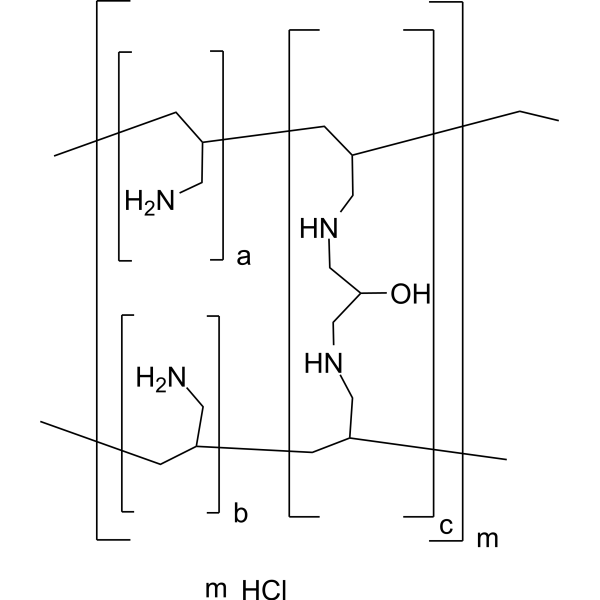
Sevelamer hydrochloride is an orally active polymeric phosphate binder and bile acid sequestrant. Sevelamer hydrochloride binds dietary phosphate in the gastrointestinal tract, reducing phosphate absorption and serum phosphorus levels, and reduces urinary phosphate excretion. Sevelamer hydrochloride binds polyanion bile acids, increases bile acid faecal excretion, and reduces total cholesterol and LDL cholesterol levels. Sevelamer hydrochloride can be used for the research of hyperphosphataemia, hyperparathyroidism, chronic renal failure, kidney disease, and type 2 diabetes.
For research use only. We do not sell to patients.
- Purity : 98.0%
- CAS No.: 152751-57-0
- Formula: [(C3H7N)a+b·(C9H18N2O)c]n·xHCl
- Molecular Weight:186.08 (monomer)
-
Storage:
4°C, sealed storage, away from moisture
* In solvent : -80°C, 6 months; -20°C, 1 month (sealed storage, away from moisture)

To place orders, for customer services and technical support, please contact: MedChemExpress USA
Tel: 609-228-6898 E-mail: [email protected] [email protected]


-
 Biological Activity
-
Chemical Information
-
Solvent & Solubility
- Protocols
- Purity & Documentation
- References
-
 Help & FAQs


-
HY-13995B
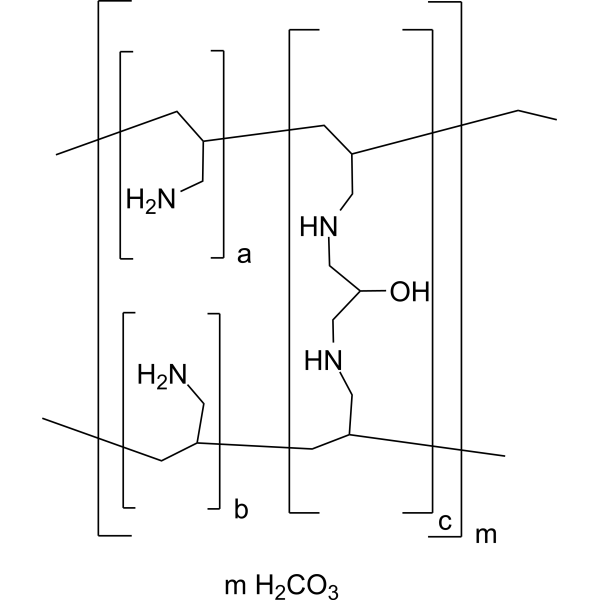
Sevelamer carbonatePhosphate Binding Agent -
HY-12222
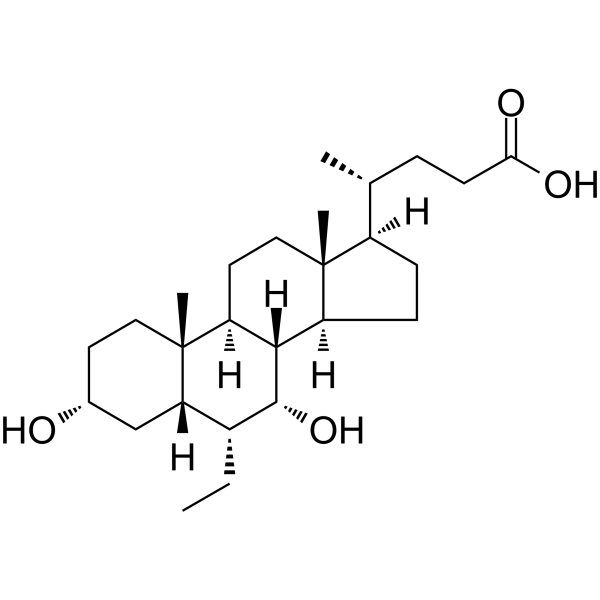
Obeticholic acidFXR Agonist -
HY-50108
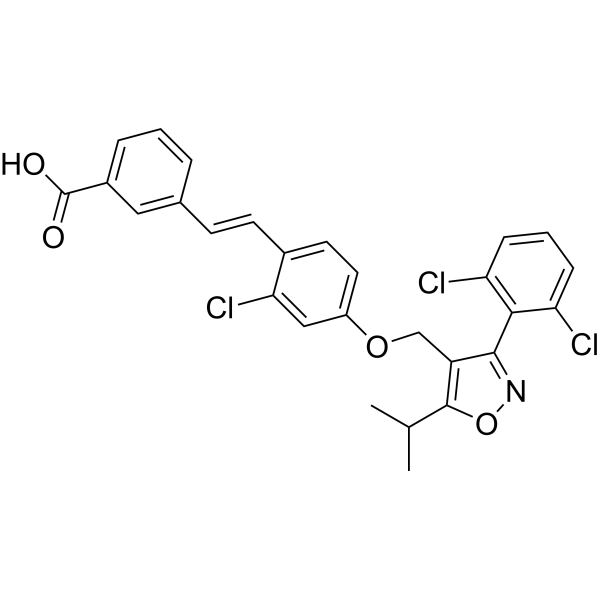
GW 4064FXR Agonist -
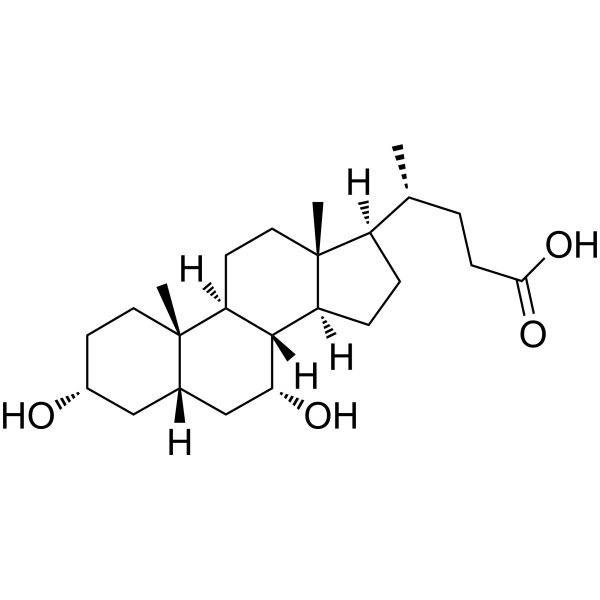
HY-76847
Chenodeoxycholic AcidEndogenous Metabolite -
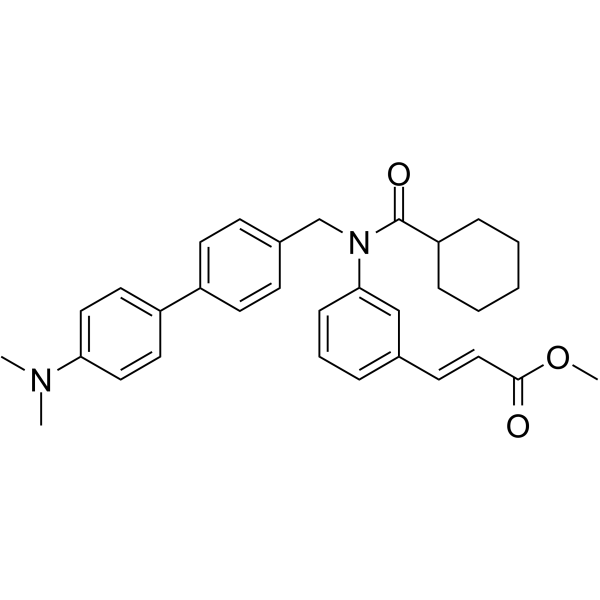
HY-10912
FexaramineFXR Agonist -
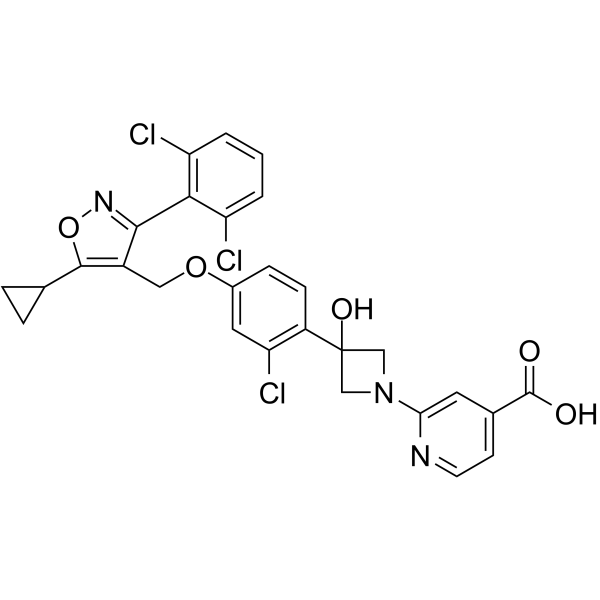
HY-109083
CilofexorFXR Agonist -
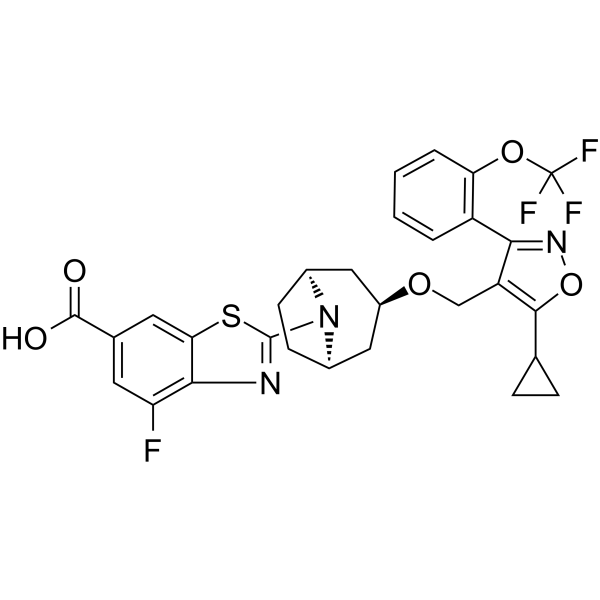
HY-107418
Tropifexor -
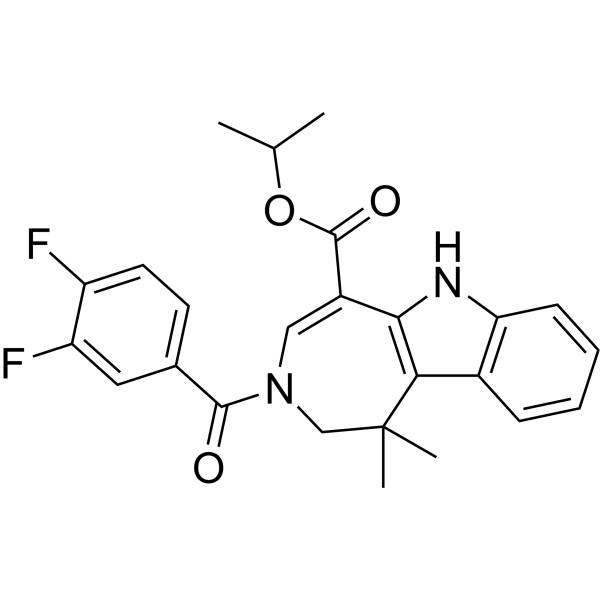
HY-50911
Turofexorate isopropylFXR Agonist -

HY-12222R
Obeticholic acid (Standard)FXR Agonist -
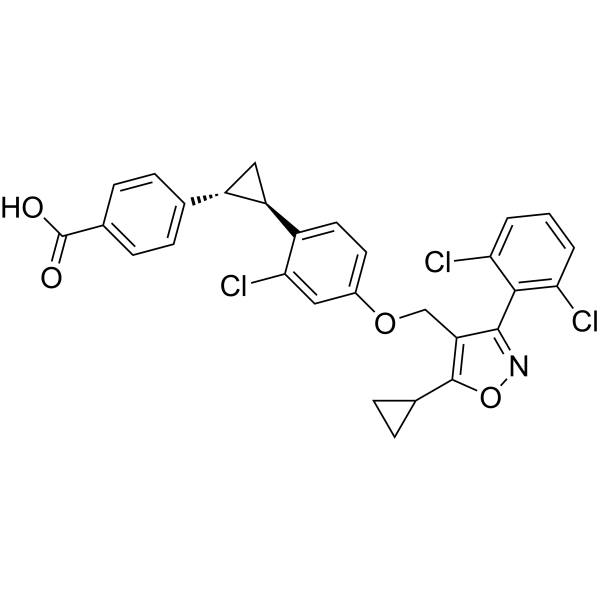
HY-100443A
trans-PX20606FXR Agonist -
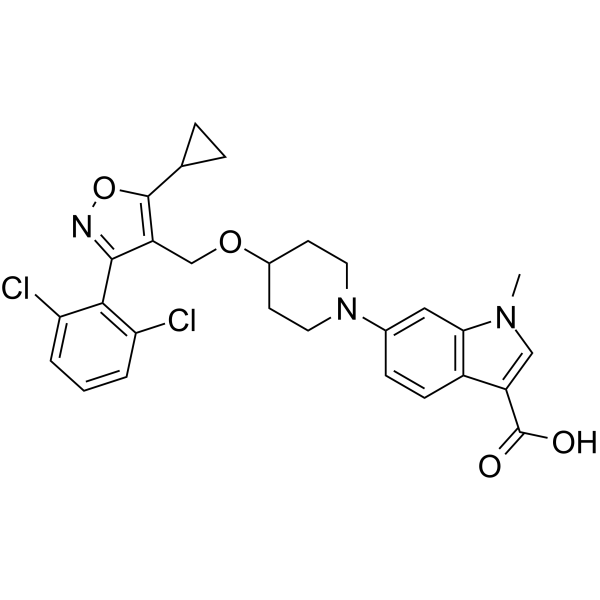
HY-103704
LY2562175FXR Activator -
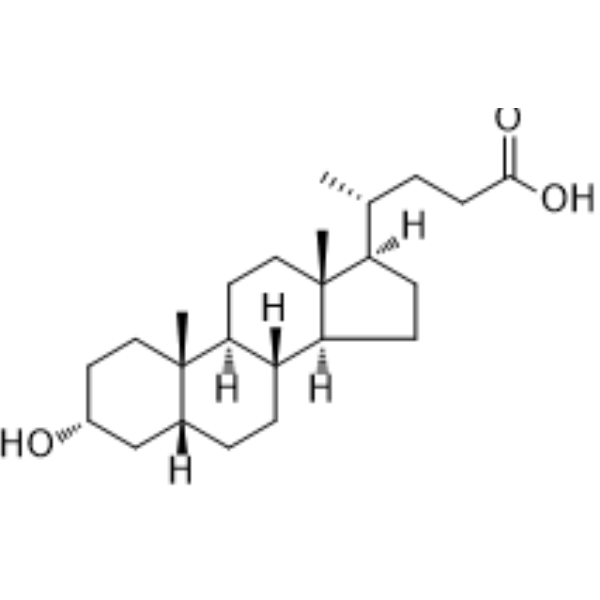
HY-B0172
Lithocholic acidAutophagy Inducer
Publications Citing Use of MedChemExpress (MCE) Sevelamer hydrochloride
More

Biological Activity
Description
In Vitro
Sevelamer hydrochloride exhibits pH-dependent, reversible binding of AGE-BSA, with >80% binding at intestinal pH (7.0) and less than 5% binding at stomach pH (1.0), while showing minimal binding to unmodified BSA[6].
Sevelamer (15 mg/mL; pH=6 or 8) hydrochloride decreases serum levels of gut-derived uremic toxins (such as IAA) or limits the elevation of gut-derived uremic toxins (initial concentration=1 μg/mL or 10 μg/mL)[7].
MedChemExpress (MCE) has not independently confirmed the accuracy of these methods. They are for reference only. Further protocols information, click here.
In Vivo
Sevelamer hydrochloride improves renal function in a rat model of long-term uraemia by reducing renal calcification[1].
Sevelamer (1% mixed in diet; p.o.; 2-3 weeks) hydrochloride does not alter serum phosphate levels in uremic WT mice, but further decreased serum phosphate levels in uremic Npt2b / mice in uremic mouse model[8].
MedChemExpress (MCE) has not independently confirmed the accuracy of these methods. They are for reference only.
-
Animal Model:WT and Npt2b−/− CKD mice model[8]
-
Dosage:1% mixed in diet
-
Administration:p.o.; 2-3 weeks
-
Result:Attenuated chronic hyperphosphatemia in mice.


Chemical Information
-
CAS No. 152751-57-0
-
Appearance Solid
-
Molecular Weight 186.08 (monomer)
-
Formula [(C3H7N)a+b·(C9H18N2O)c]n·xHCl
-
Color White to off-white
-
SMILES
NCC(CC(CC)CNCC(O)CNCC(C)CC(CC)CN)CC.[x].Cl.[n].[c].[b].[a]
-
Shipping
Room temperature in continental US; may vary elsewhere.
-
Storage
4°C, sealed storage, away from moisture
* In solvent : -80°C, 6 months; -20°C, 1 month (sealed storage, away from moisture)


Publications (1)
-
Journal Impact Factor
-
Most Recent


Solvent & Solubility
In Vitro:
DMSO : < 1 mg/mL (insoluble or slightly soluble)

Protocols
-
Research Protocol for Metabolic Diseases
AMP-activated protein kinase, AMPK, is a conserved cellular energy sensor that responds to reduced cellular energy status and coordinates metabolism by increasing ATP-generating catabolic pathways while suppressing ATP-consuming anabolic processes. In metabolic disease research, the AMPK pathway is experimentally relevant because it regulates hepatic lipid synthesis, fatty acid oxidation, glucose production, skeletal-muscle glucose disposal, mTORC1-linked biosynthesis, autophagy, mitochondrial homeostasis, and whole-body energy balance. The central pathway logic is that energy stress, metformin, exercise-like stimulation, or direct AMPK activators increase AMPKα Thr172 phosphorylation and downstream substrate phosphorylation, including ACC and RAPTOR. Phosphorylation of ACC suppresses lipogenesis and supports fatty acid oxidation, whereas phosphorylation of RAPTOR suppresses mTORC1 signaling and links cellular energy status to growth and protein synthesis control. The pathway is linked


Purity & Documentation
-
Data Sheet (276 KB)
-
SDS (393 KB)
- English - EN (393 KB)
- Français - FR (393 KB)
- Deutsch - DE (393 KB)
- Norwegian - NO (393 KB)
- Español - ES (393 KB)
- Swedish - SV (393 KB)
- Italian - IT (393 KB)
- Korean - KR (393 KB)
- Portuguese - PT (393 KB)
-
Handling Instructions (2659 KB)
References
[1]. Henderson J, et al. Sevelamer. Nephron Clin Pract. 2003;94(3):c53-c58. [Content Brief]
[2]. Chertow GM, et al. Sevelamer attenuates the progression of coronary and aortic calcification in hemodialysis patients. Kidney Int. 2002;62(1):245-252. [Content Brief]
[3]. Tonelli M, et al. Systematic review of the clinical efficacy and safety of sevelamer in dialysis patients. Nephrol Dial Transplant. 2007;22(10):2856-2866. [Content Brief]
[4]. Block GA, et al. Effects of sevelamer and calcium on coronary artery calcification in patients new to hemodialysis. Kidney Int. 2005 Oct;68(4):1815-24. [Content Brief]
[5]. Chue CD, et al. Cardiovascular effects of sevelamer in stage 3 CKD. J Am Soc Nephrol. 2013;24(5):842-852. [Content Brief]
[6]. Vlassara H, et al. Effects of sevelamer on HbA1c, inflammation, and advanced glycation end products in diabetic kidney disease. Clin J Am Soc Nephrol. 2012;7(6):934-942. [Content Brief]
[7]. Bennis Y, et al. The Effect of Sevelamer on Serum Levels of Gut-Derived Uremic Toxins: Results from In Vitro Experiments and A Multicenter, Double-Blind, Placebo-Controlled, Randomized Clinical Trial. Toxins (Basel). 2019 May 17;11(5):279. [Content Brief]
[8]. Susan C Schiavi, et al. Npt2b deletion attenuates hyperphosphatemia associated with CKD. J Am Soc Nephrol. 2012 Oct;23(10):1691-700. [Content Brief]

Calculators
Concentration (start) × Volume (start) = Concentration (final) × Volume (final)


Sevelamer hydrochloride Related Classifications
HY-13995A Related Classifications
 Powered by Bioz