



Amyloid-β
β-amyloid peptide; Aβ; Abeta
Amyloid-β (Aβ) denotes peptides of 36–43 amino acids that are crucially involved in Alzheimer's disease as the main component of theamyloid plaques found in the brains of Alzheimer patients. The peptides result from the amyloid precursor protein (APP), which is being cut by certain enzymes to yield Aβ. Amyloid-β molecules can aggregate to form flexible soluble oligomers which may exist in several forms. Amyloid-β peptide is due to overproduction of Aβ and/or the failure of clearance mechanisms. Amyloid-β self-aggregates into oligomers, which can be of various sizes, and forms diffuse and neuritic plaques in the parenchyma and blood vessels. Amyloid-β oligomers and plaques are potent synaptotoxins, block proteasome function, inhibit mitochondrial activity, alter intracellular Ca2+levels and stimulate inflammatory processes. Loss of the normal physiological functions of Aβ is also thought to contribute to neuronal dysfunction.
All Product Categories
-
Amyloid-β Inhibitors
(481)
View all products
-
Amyloid-β Agonists
(2)
View all products
-
Amyloid-β Antagonists
(5)
View all products
-
Amyloid-β Activators
(5)
View all products
-
Amyloid-β Modulators
(4)
View all products
-
Amyloid-β Chemicals
(7)
View all products
-
Amyloid-β Inducers
(5)
View all products
-
Amyloid-β Degraders
(6)
View all products
-
Amyloid-β Controls
(3)
View all products
-
Amyloid-β Substrate
(1)
View all products
-
Amyloid-β Ligands
(11)
View all products
-
Amyloid-β Related Products (757)
Related Products (757)

-
Antibodies (9)
-
Phenchlobenpyrrone
 0 ImagesCat. No.: HY-119492CAS No.: 215036-81-0Phenchlobenpyrrone is a highly selective neuronal calcium antagonist that crosses the blood-brain barrier. Phenchlobenpyrrone mildly inhibits AChE activity. Phenchlobenpyrrone inhibits Aβ aggregation and promotes the clearance of Aβ oligomers. Phenchlobenpyrrone reduces abnormal phosphorylation of Tau protein. Phenchlobenpyrrone may be used in research on Alzheimer's disease.
-
CDy11
 0 ImagesCat. No.: HY-D3192CAS No.: 2028316-07-4CDy11 is a fluorescent probe and amyloid-binding dye (λex=590 nm; λem=612 nm), with a Ka of 29 μM for Pseudomonas aeruginosa Fap. CDy11 specifically recognizes amyloid fibrils in bacterial biofilms and exhibits significantly enhanced fluorescence upon binding to the target. CDy11 shows no staining effect on amyloid-deficient mutant strains, planktonic cells or protein monomers. CDy11 supports in vivo imaging of Pseudomonas aeruginosa biofilms in mouse implant and corneal infection models. CDy11 is widely used in studies of Staphylococcus aureus biofilm infections, dental caries, and Pseudomonas aeruginosa-associated implant and corneal infections.
-
D-687
 0 ImagesCat. No.: HY-169196CAS No.: 2276762-06-0D-687 is an inhibitor of Tau and Aβ. D-687 can reverse Aβ1–42-induced toxicity in SH-SH5Y cells and has significant neuroprotective properties.
-
Glutaminyl Cyclase Inhibitor 5
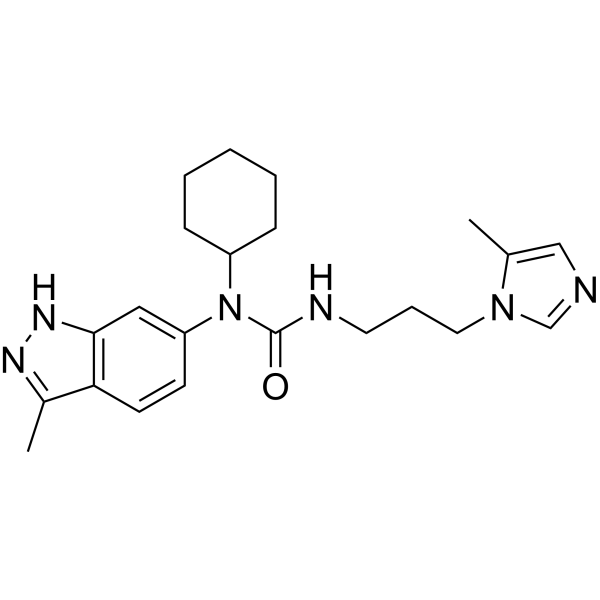 0 ImagesCat. No.: HY-152031CAS No.: 3033553-63-5Glutaminyl Cyclase Inhibitor 5 (Compound 71) is a potent and selective human glutaminyl cyclase (hQC) inhibitor with an IC50 of 3.2 nM.
-
β-Amyloid-15N (1-42), human TFA
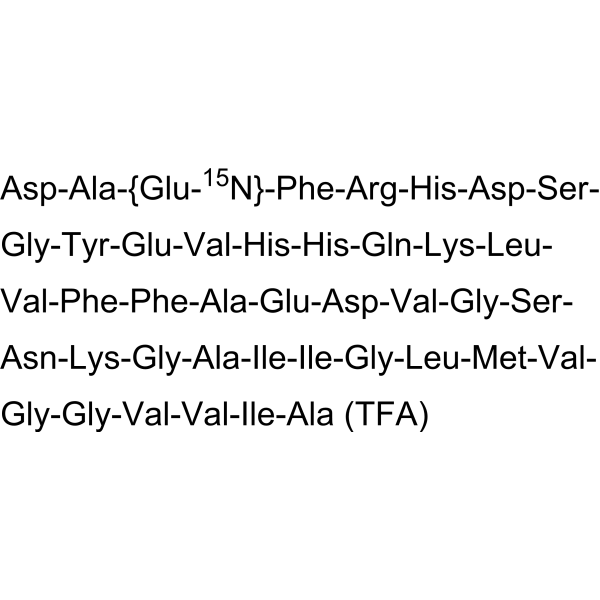 0 ImagesCat. No.: HY-P1363SSynonyms: Amyloid β-peptide-15N (1-42) (human) TFAβ-Amyloid-15N (1-42), human (TFA) is the 15N-labledβ-Amyloid (1-42) (TFA). β-Amyloid (1-42), human TFA (Amyloid β-Peptide (1-42) (human) TFA) is a 42-amino acid peptide which plays a key role in the pathogenesis of Alzheimer disease.
-
Scyllo-Inositol-d6
 0 ImagesCat. No.: HY-W707693CAS No.: 115268-26-3Scyllo-Inositol-d6 is the deuterium labeled Scyllo-Inositol (HY-W010041). Scyllo-Inositol is an inhibitor that targets the aggregation of misfolded proteins (such as α-synuclein and Amyloid-β), is orally effective, and can cross the blood-brain barrier. Scyllo-Inositol can selectively bind to and stabilize non-toxic oligomers, preventing them from converting into toxic fibers, exerting protein homeostasis regulation and neuroprotective activity. Scyllo-Inositol binds to the hydrophobic region of pathogenic proteins, inhibits protein aggregation, and promotes lysosome- and proteasome-mediated degradation pathways, thereby reducing neurotoxicity. Scyllo-Inositol can be used in the study of neurodegenerative diseases such as Parkinson's disease, Alzheimer's disease, and Huntington's disease.
-
Ginsenoside Re (Standard)
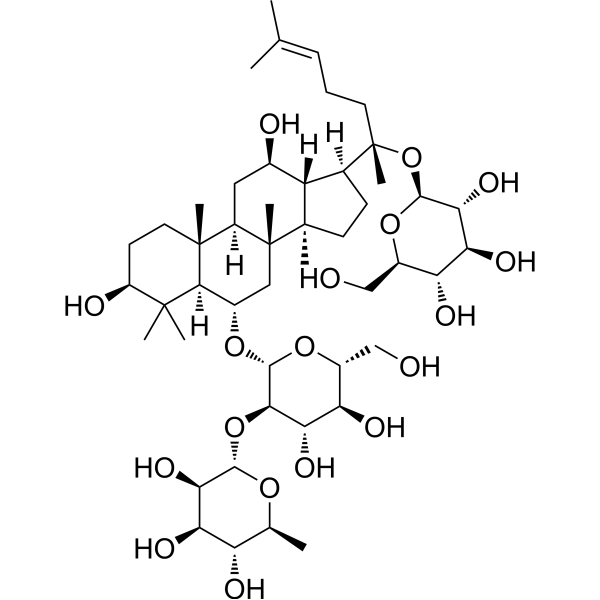 0 ImagesSynonyms: Ginsenoside B2(Standard); Panaxoside Re(Standard); Sanchinoside Re (Standard)Ginsenoside Re (Standard) is the analytical standard of Ginsenoside Re. This product is intended for research and analytical applications. Ginsenoside Re (Ginsenoside B2) is an extract from Panax notoginseng. Ginsenoside Re decreases the β-amyloid protein (Aβ). Ginsenoside Re plays a role in antiinflammation through inhibition of JNK and NF-κB.
-
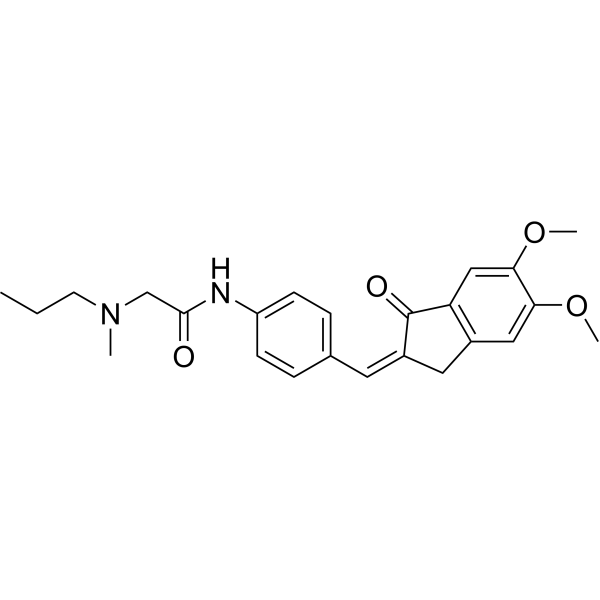
β-Amyloid/A4 Protein Precusor (319-335)
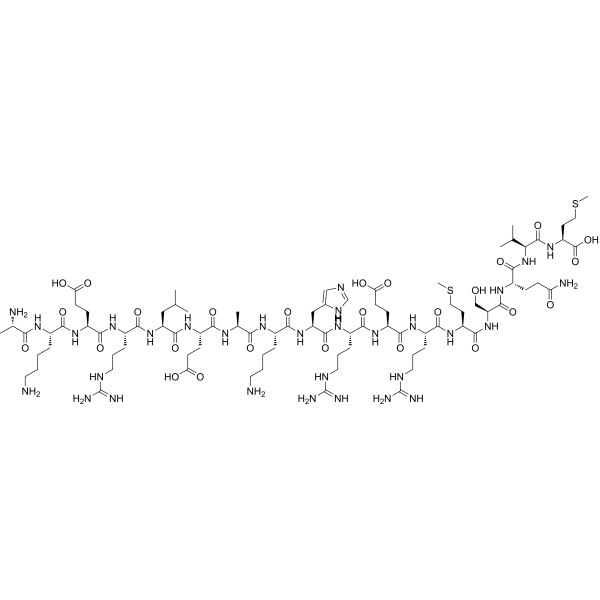 0 ImagesCat. No.: HY-P10180CAS No.: 148914-01-6Synonyms: APP (319-335)β-Amyloid/A4 Protein Precusor (319-335) (APP (319-335)) is a peptide fragment of β-Amyloid/A4 protein precursor (APP). β-Amyloid/A4 Protein Precusor (319-335) can recognize the heparinase-insensitive site that contains the neuritotropic activity of APP.
-
Cy3 labled Lepodisiran sodium
 0 ImagesCat. No.: HY-177640DCy3 labled Lepodisiran (LY3819469) sodium is a Cy3 labled Lepodisiran sodium. Lepodisiran sodium is a GalNAc-conjugated small interfering RNA lipid-lowering agent. Lepodisiran sodium targets the hepatic LPA gene and degrades apolipoprotein (a) mRNA to silence its expression, thereby effectively reducing the production of apolipoprotein (a) and serum lipoprotein (a) in a dose-dependent manner. Lepodisiran sodium can be used in studies related to atherosclerotic cardiovascular disease.
-
Glimepiride-d8
 0 ImagesCat. No.: HY-B0104S2CAS No.: 2012598-49-9Synonyms: Glimperide-d8; HOE-490-d8
-
β-Amyloid Protein Precursor 770 (135-155)
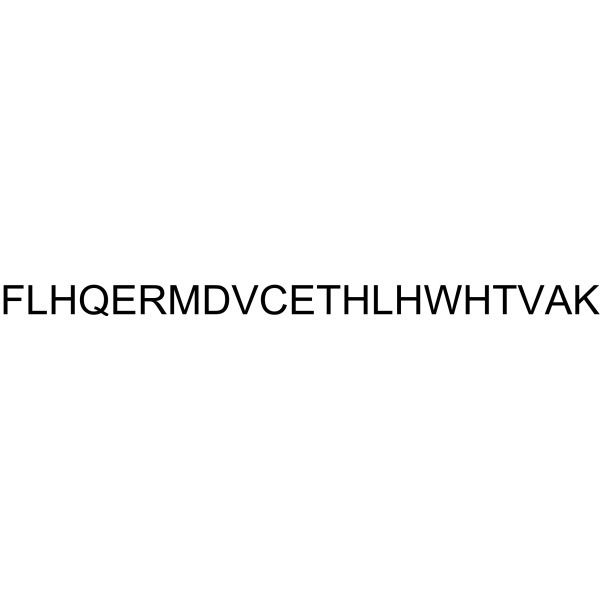 0 ImagesCat. No.: HY-P1894CAS No.: 315229-44-8β-Amyloid Protein Precursor 770 (135-155) is a peptide of amyloid precursor protein isoform (APP 770). APP 770 produces Aβ40/42.
-
D-688
 0 ImagesCat. No.: HY-169197CAS No.: 2276762-07-1D-688 is an inhibitor of Tau and Aβ. D-688 can reverse Aβ1–42-induced toxicity in SH-SH5Y cells and has significant neuroprotective properties. D-688 can improve the survival rate of Drosophila melanogaster expressing the human tau protein isoform (2N4R).
-
LPYFD-NH2
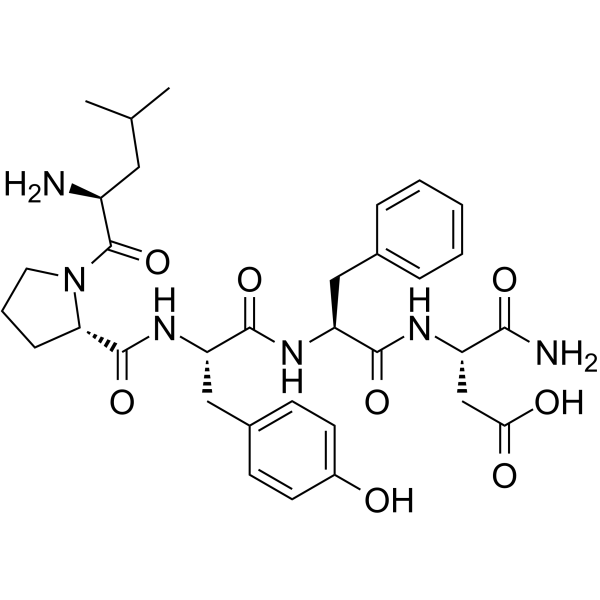 0 ImagesCat. No.: HY-P1060CAS No.: 700361-48-4LPYFD-NH2, a pentapeptide, exerts some inhibitory effect on the aggregation of Aβ(1-42). LPYFD-NH2 can be used for the research of Alzheimer’s disease.
-
MAO-B-IN-10
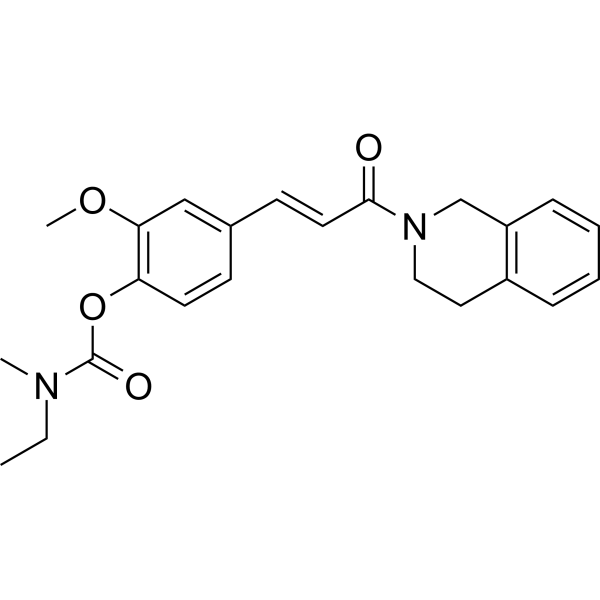 0 ImagesCat. No.: HY-146347CAS No.: 2376710-36-8MAO-B-IN-10 (compound 4f) is a potent, selective, BBB-penetrated MAO-B (monoamine oxidase-B) inhibitor, with IC50 of 5.3 μM. MAO-B-IN-10 can inhibit (58.2%) and disaggregate (43.3%) self-mediated Aβ (amyloid β) aggregation. MAO-B-IN-10 can be use for Alzheimer’s disease research.
-
Cys-Gly-Lys-Arg-Amyloid β-Protein (1-42)
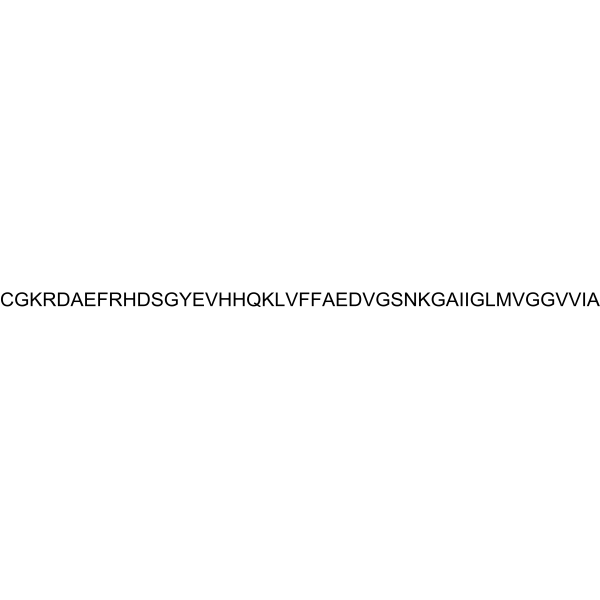 0 ImagesCat. No.: HY-P3859CAS No.: 1802086-21-0Cys-Gly-Lys-Arg-Amyloid β-Protein (1-42) is a peptide fragment of amyloid β-protein (Aβ). Cys-Gly-Lys-Arg-Amyloid β-Protein (1-42) can be used in research of Alzheimer's disease.
-
BuChE-IN-6
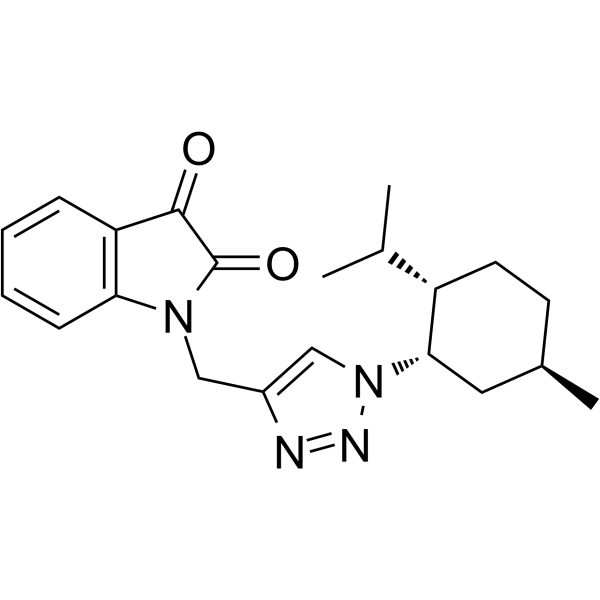 0 ImagesCat. No.: HY-146251CAS No.: 2003213-07-6BuChE-IN-6 (compound 1b) is a potent and selective BuChE (butyrylcholinesterase) inhibitor, with IC50 values of 0.46 and 0.51 μM for eqBuChE and hBuChE, respectively. BuChE-IN-6 also inhibits Aβ42 self-aggregation.
-
Cy5-β-Amyloid (42-1), human TFA
 0 ImagesCat. No.: HY-P1362FASynonyms: Cy5-Amyloid β Peptide (42-1)(human) (TFACy5-β-Amyloid (42-1), human is a Cy5 fluorescently-labelled β-Amyloid (42-1, human) peptide (λex= 633 nm and λem= 670 nm). β-Amyloid (42-1), human is the inactive form of Amyloid β Peptide (1-42). Its active form, β-Amyloid (1-42), may play a key role in the pathogenesis of Alzheimer's disease.
-
GSK-933776
 0 ImagesCat. No.: HY-P990595
-
SJ-300
 0 ImagesCat. No.: HY-179459CAS No.: 1210357-06-4SJ-300 is a potent and selective, orally active and brain-penetrat DKK3-LRP1 interaction inhibitor. SJ-300 restores Aβ clearance in AD models. SJ 300 binds to mLRPIV with a Kd of 7.9 μM, inhibits the DKK3 mLRPIV complex with an IC50 of 3.2 μM, and does not disrupt the binding of Aβ to LRP1. SJ 300 rescues cognitive function and ameliorates neuropathology (Aβ plaque reduction ≈ 73.3 %) in vivo. SJ 300 can be employed for research in Alzheimer’s disease.




