



Skp2
Skp2 (S-phase kinase-associated protein 2) is an F-box protein that functions as the substrate-recognition component of the SCF (SKP1-CUL1-F-box) E3 ubiquitin ligase complex and regulates proteasome-dependent turnover of key cell-cycle regulators, most notably the cyclin-dependent kinase inhibitor p27^Kip1^[1][1]. Mechanistically, Skp2 promotes ubiquitination and degradation of phosphorylated p27, thereby facilitating G1/S transition and sustained cellular proliferation[1][2]. Through its E3 ligase activity, Skp2 has emerged as a central regulator of cell-cycle progression and oncogenic signaling pathways that influence tumor growth, survival, and stem-cell-associated phenotypes[1][3]. In cancer models, genetic or pharmacological inhibition of Skp2 suppresses tumor cell survival, impairs cancer stem cell maintenance, and reduces tumor progression, supporting its utility as an experimental target for mechanistic and translational studies[1]. Compared with related F-box proteins, Skp2 is distinguished by its requirement for the accessory protein Cks1 during efficient recognition and ubiquitination of p27, highlighting a unique substrate-recruitment mechanism within the SCF ubiquitin ligase family[2]. This functional specificity has motivated the development of Skp2-directed inhibitors and chemical probes designed to disrupt Skp2-mediated p27 ubiquitination and degradation[4][5]. Therefore, Skp2 represents an important molecular node linking ubiquitin-mediated proteolysis, cell-cycle control, and cancer-associated biological processes, making it a valuable target for experimental research and therapeutic investigation[1][3].
References:
- [1]. Rabezanahary H, et al. Live virus neutralizing antibodies against pre and post Omicron strains in food and retail workers in Québec, Canada. Heliyon. 2024 May 21;10(10):e31026. [Content Brief]
- [2]. Kiros M, et al. Trends in HIV-1 pretreatment drug resistance and HIV-1 variant dynamics among antiretroviral therapy-naive Ethiopians from 2003 to 2018: a pooled sequence analysis. Virol J. 2023 Oct 25;20(1):243. [Content Brief]
- [3]. Cai Z, et al. The Skp2 Pathway: A Critical Target for Cancer Therapy. Semin Cancer Biol. 2020 Dec;67(Pt 2):16-33. [Content Brief]
- [4]. Aye Y, et al. Clofarabine targets the large subunit (α) of human ribonucleotide reductase in live cells by assembly into persistent hexamers. Chem Biol. 2012 Jul 27;19(7):799-805. [Content Brief]
- [5]. Lough L, et al. Chemical probes of Skp2-mediated p27 ubiquitylation and degradation. Medchemcomm. 2018 Jun 11;9(7):1093-1104. [Content Brief]
-
Skp2 Related Products (7)
Related Products (7)

-
Hederagenin
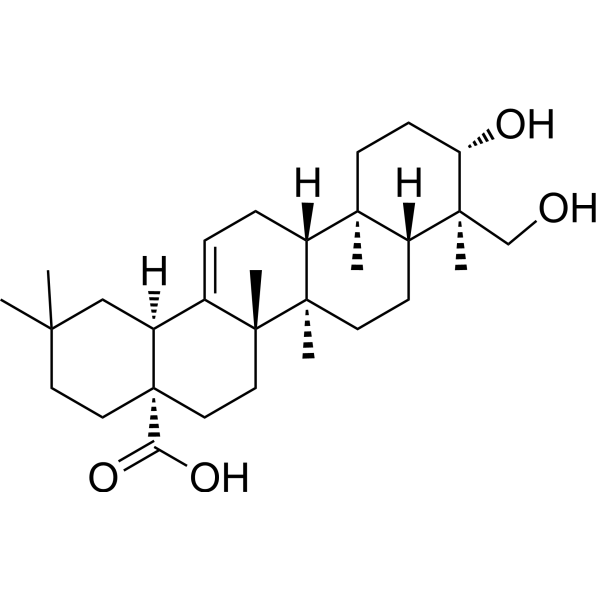 0 ImagesHederagenin is a triterpenoid saponin with orally active and antitumor activity. Hederagenin can inhibit the expression of iNOS, COX-2, and NF-κB in cells induced by LPS stimulation. Hederagenin also increases ROS production in cancer cells, disrupts mitochondrial membrane potential, and induces apoptosis. Hederagenin also sensitizes cancer cells to Cisplatin (HY-17394) and Paclitaxel (HY-B0015), enhancing induced apoptosis. Hederagenin can also bind to SKP2, with KD = 67.9 μM. Hederagenin also has preventive potential against alcoholic liver injury.
-
Skp2 inhibitor 3
 0 ImagesSkp2 inhibitor 3 is an orally active inhibitor of the Skp2-Cks1 complex, with an IC50 of 4.86 μM. Skp2 inhibitor 3 reduces Skp2 protein expression while upregulating the expression of p21 and p27. Skp2 inhibitor 3 inhibits colony formation and migration of cancer cells, and induces cell cycle arrest at the S phase. Skp2 inhibitor 3 suppresses tumor growth in xenograft mice. Skp2 inhibitor 3 can be used in the research of gastric cancer and prostate cancer.
-
Skp2 inhibitor 2
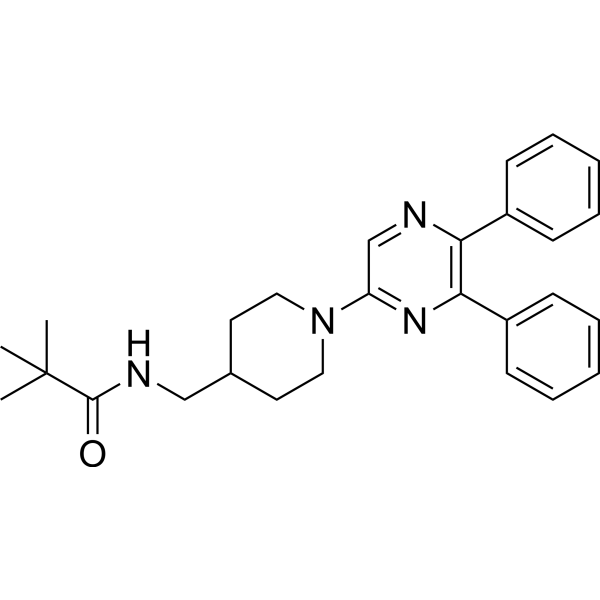 0 ImagesSkp2 inhibitor 2 is a Skp2-Cks1 protein-protein interaction inhibitor with a human IC50 of 0.57 μM. Skp2 inhibitor 2 binds to Skp2 at the interaction interface to block Skp2-Cks1 complex formation. Skp2 inhibitor 2 can be used for the research of gastric cancer, non-small cell lung cancer, breast cancer, prostate cancer.
-
PROTAC SKP2 Degrader-1
 0 ImagesPROTAC SKP2 Degrader-1 is a PROTAC degrader targeting SKP2, with a Kd value of 6.28 μM. PROTAC SKP2 Degrader-1 induces targeted degradation of SKP2 via the ubiquitin-proteasome system. PROTAC SKP2 Degrader-1 stabilizes the expression of SOCS1 and regulates the expression of immunoproteasomes through the JAK/STAT pathway, thereby inhibiting tumor cell proliferation. PROTAC SKP2 Degrader-1 is applicable for cancer-related research.
-
9-cis-UAB30
 0 ImagesCat. No.: HY-129108CAS No.: 205252-57-9Synonyms: (9Z)-UAB-309-cis-UAB30 is a rexinoid agonist. 9-cis-UAB30 significantly decreases the proliferation, viability, and motility of both patient-derived xenografts (PDXs). 9-cis-UAB30 induced cell-cycle arrest as demonstrated by the significant increase in the percentage of cells in G1 and a decrease in the percentage of cells in S phase by downregulating SKP2 and/or 20S proteasome activity, which leads to increased p27kip1 protein stability. 9-cis-UAB30 downregulates the abundance of stem cell marker mRNAs (Oct4, Nanog, Sox2, nestin) and upregulates the abundance of differentiation marker mRNAs (β3-tubulin, NSE, HOXC9, GAP43). 9-cis-UAB30 has no adverse effects on the central nervous system and cardiovascular system at the tested dose. 9-cis-UAB30 can be used for the study of neuroblastoma, cutaneous T-cell lymphomas, and breast cancer.
-
CP2-CPP
 0 ImagesCat. No.: HY-P11792CP2-CPP is a conjugate of p27 Analogue CP2 (HY-P11020) and Antennapedia Peptide (HY-P0307). CP2-CPP crosses cell membranes and localizes to live cell cytosol. CP2-CPP blocks SCFSkp2/Cks1-p27 interaction to inhibit p27 ubiquitination and degradation, restoring p27 levels and inhibiting cell proliferation. CP2-CPP can be used for the research of cancer, such as breast cancer.
-
p27 Analogue CP2
 0 ImagesCat. No.: HY-P11020p27 Analogue CP2 is a macrocyclic peptide inhibitor targeting the Cks1-Skp2-Skp1 complex (Kd = 32 nM). p27 Analogue CP2 blocks SCFSkp2/Cks1-mediated ubiquitylation and degradation of p27, restoring p27 levels and inhibiting cell proliferation. p27 Analogue CP2 is promising for research of cancers dependent on Skp2 overexpression such as breast cancer.



