



Fungal
An antifungal agent is a drug that selectively eliminates fungal pathogens from a host with minimal toxicity to the host.
Classes: 1. Polyene Antifungal Drugs: Amphotericin, nystatin, and pimaricin interact with sterols in the cell membrane (ergosterol in fungi, cholesterol in humans) to form channels through which small molecules leak from the inside of the fungal cell to the outside. 2. Azole Antifungal Drugs: Fluconazole, itraconazole, and ketoconazole inhibit cytochrome P450-dependent enzymes (particularly C14-demethylase) involved in the biosynthesis of ergosterol, which is required for fungal cell membrane structure and function. 3. Allylamine and Morpholine Antifungal Drugs: lylamines (naftifine, terbinafine) inhibit ergosterol biosynthesis at the level of squalene epoxidase. The morpholine drug, amorolfine, inhibits the same pathway at a later step. 4. Antimetabolite Antifungal Drugs: 5-Fluorocytosine acts as an inhibitor of both DNA and RNA synthesis via the intracytoplasmic conversion of 5-fluorocytosine to 5-fluorouracil.
All Product Categories
-
Fungal Related Products (2741)
Related Products (2741)

-
Antibodies (1)
-
Related Compound Screening Libraries (1)
-
Guaiazulene (Standard)
 0 ImagesGuaiazulene (Standard) is the analytical standard of Guaiazulene (HY-N6951). This product is intended for research and analytical applications. Guaiazulene is a bicyclic sesquiterpene that can cross the blood-brain barrier. Guaiazulene exhibits various biological activities such as anti-inflammatory, antioxidant, hepatoprotective, antibacterial, and anti-tumor properties. Guaiazulene is also commonly used as a colorant in cosmetics. Guaiazulene shows in vitro cytotoxicity to rat neuronal cells and N2a neuroblastoma cells at high concentrations.
-
5-Geranoxy-7-methoxycoumarin
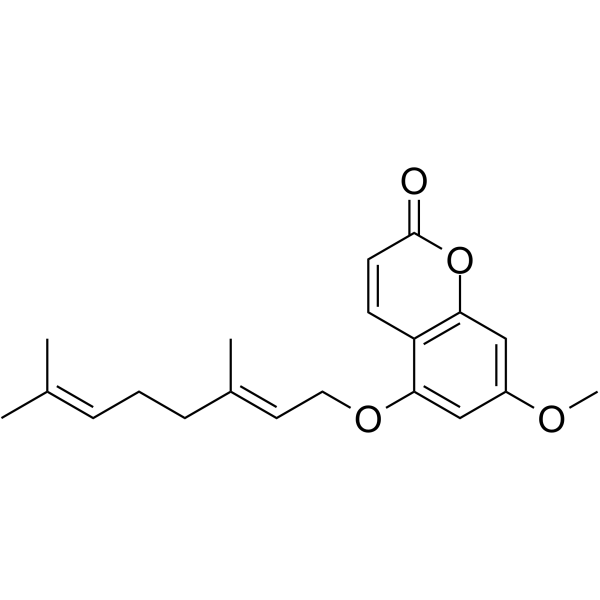 0 Images5-Geranoxy-7-methoxycoumarin is a coumarin with anti-cancer, antifungal, and ?antibacterial?activities. 5-Geranoxy-7-methoxycoumarin induces cell apoptosis.
-
Ossamycin
 0 ImagesCat. No.: HY-N14853CAS No.: 2057463-74-6Ossamycin is a macrolide antibiotic. Ossamycin has anti-fungal effect, and it has weaker anti-Gram-positive bacterial effect. Ossamycin inhibits L cells, Epstein-Barr ascites cancer cells, KB cells, sarcoma-180 cells, L-1210 cells, HeLa cells in cell culture with IC50s (μg/mL) of 0.007, 0.008, 0.005, 0.008, 0.003, 0.005, respectively.
-
Fusacandin B
 0 ImagesCat. No.: HY-N14472CAS No.: 166407-34-7Fusacandin B inhibits (1,3)-β-glucan synthetase and has antifungal properties.
-
2-Methoxybenzaldehyde (Standard)
 0 Images2-Methoxybenzaldehyde (Standard) is the analytical standard of 2-Methoxybenzaldehyde. This product is intended for research and analytical applications. 2-Methoxybenzaldehyde (o-Anisaldehyde) is a bacterial/fungal inhibitor with a BA50 value of 0.19 for Salmonella. 2-Methoxybenzaldehyde can be used for the study of bacterial and fungal infectious diseases.
-
Cladosporide C
 0 ImagesCat. No.: HY-N14123CAS No.: 376368-82-0Cladosporide C is found in the strain of Cladosporium sp. IFM 49190. Cladosporide C has no antifungal activity.
-
(+)-Tuberine
 0 ImagesCat. No.: HY-187580CAS No.: 97400-75-4(+)-Tuberine is an alkaloid found in Haplophyllum tuberculatum, with antibacterial and antifungal activities. (+)-Tuberine can be used in studies on antimicrobial natural products and microbial growth inhibition.
-
Phaseollidin
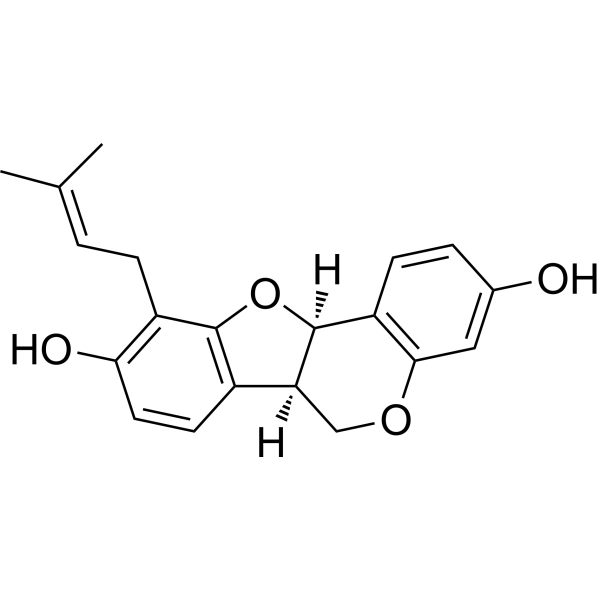 0 ImagesCat. No.: HY-N3089CAS No.: 37831-70-2Phaseollidin is an antifungal agent that can be isolated from Phaseolus vulgaris L..
-
Dihydroniphimycin
 0 ImagesCat. No.: HY-N14554CAS No.: 157536-03-3Dihydroniphimycin has anti-fungal, yeast and Gram-positive bacteria action.
-
Poly diallyldimethylammonium chloride
 0 ImagesCat. No.: HY-W110755CAS No.: 26062-79-3Poly diallyldimethylammonium chloride is a cationic polymer with quaternary ammonium side groups, which exhibits excellent flocculation performance and thermal stability. Poly diallyldimethylammonium chloride also possesses microbicidal activity. Poly diallyldimethylammonium chloride can be used in studies on bacterial and fungal infections, as well as in research related to water treatment, textile printing and dyeing, papermaking chemical industry and other fields, with a wide range of applications.
-
Diniconazole (Standard)
 0 ImagesSynonyms: S 3308 (Standard)Diniconazole (Standard) is the analytical standard of Diniconazole (HY-B1948). This product is intended for research and analytical applications. Diniconazole (S-3308) is a newly developed fungicide. Diniconazole exhibits fungicidal activity against Bolrytis cintrca, Sordaria fumicola, Fusarium graminearum, Sclerotium cepivornm, and Bipolaris sorokiniana with IC50 values of 0.012, <0.001, 0.008, 0.02, and 0.06 mg/L, respectively. Diniconazole can be used in research related to the prevention and control of plant fungal diseases and plant growth regulation.
-
RK-286D
 0 ImagesCat. No.: HY-116060CAS No.: 140429-37-4RK-286D is an antibiotic and a PKC inhibitor with antimicrobial activity. RK-286D shows inhibitory activities against bleb formation induced by PDBu (HY-18985) and in vitro PKC activity.
-
Episterol
 0 ImagesEpisterol is an Ergosterol (HY-N0181) biosynthetic intermediate. Episterol replaces Ergosterol as the major sterol in Saccharomyces cerevisiae Δerg3 mutants, confers resistance to combined lethal and vacuole-disruptive actions of Amphotericin B (HY-B0221) and MC12 (HY-175024).
-
Pseudolaric Acid A (Standard)
 0 ImagesCat. No.: HY-N0673RCAS No.: 82508-32-5Pseudolaric Acid A (Standard) is the analytical standard of Pseudolaric Acid A. This product is intended for research and analytical applications. Pseudolaric Acid A is a diterpene acid isolated from Pseudolarix kaempferi, has antifungal, cytotoxic and antifertile activities.
-
Dermaseptin-S5
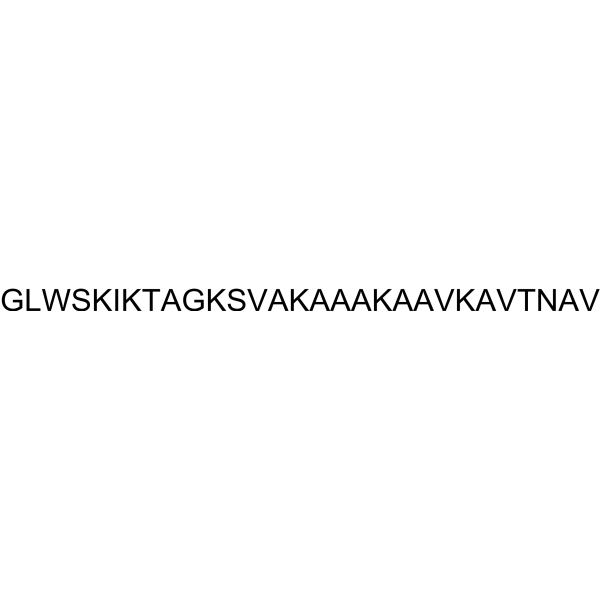 0 ImagesCat. No.: HY-P5587CAS No.: 151896-16-1Dermaseptin-S5 is an antimicrobial peptide derived from frog skin against filamentous fungi.
-
Chlorquinaldol (Standard)
 0 ImagesChlorquinaldol (Standard) is the analytical standard of Chlorquinaldol. This product is intended for research and analytical applications. Chlorquinaldol (Chloquinan) is an antibacterial agent with the potential use in topical skin conditions and vaginal infections. Chlorquinaldol is a β-catenin/TCF4 inhibitor, showing anti-proliferation, anti-migration, and apoptosis-inducing activity in cancer cells.
-
Fluconazole hydrate
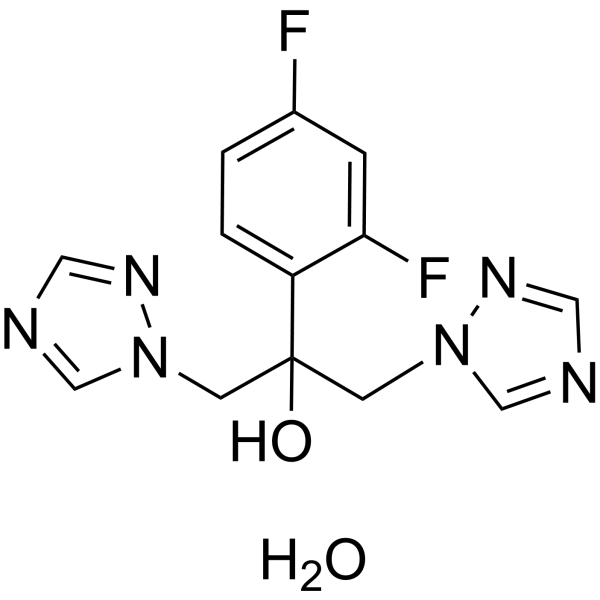 0 ImagesCat. No.: HY-B0101ACAS No.: 155347-36-7Synonyms: UK 49858 hydrateFluconazole (UK-49858) hydrate is a triazole antifungal agent with excellent activities against a broad range of fungi, especially against Candida albicans. Fluconazole hydrate inhibits C. albicans and Candida kefyr with IC99s range from 0.20 μg/mL to 0.39 μg/mL.
-
Rubiadin (Standard)
 0 ImagesRubiadin (Standard) is the analytical standard of Rubiadin (HY-N0444). This product is intended for research and analytical applications. Rubiadin is an orally active free radical scavenger that inhibits the activation of the NF-κB pathway. Rubiadin inhibits osteoclast formation, bone resorption, lipid peroxidation, HBV DNA replication and cancer cell proliferation; reduces pro-inflammatory cytokine levels; induces cancer cell apoptosis; and possesses antifungal, antimalarial, antibacterial and anticonvulsant activities. Rubiadin can be used in the research of osteoporosis, acute inflammation, chronic inflammation, carbon tetrachloride-induced liver injury, Alzheimer's disease, breast cancer, iron overload disorders, hepatitis B virus infection, colon cancer, liver cancer, T-lymphocytic leukemia, cervical cancer, diabetic nephropathy, epileptic seizures, fungal infections, malaria and bacterial infections.
-
Valifenalate (Standard)
 0 ImagesSynonyms: IR5885 (Standard); Valiphenal (Standard)Valifenalate (Standard) is the analytical standard of Valifenalate. This product is intended for research and analytical applications. Valifenalate (IR5885; Valiphenal) is an insecticide agent and fungicide, which is approved for application on high-value crops such as grapes, tomatoes and other vegetables. Valifenalate interferes with cell-wall synthesisValifenalate is effective against various types of mildew. Valifenalate can be used against crown rot of rose cuased by Phytophthora citrophthora. Valifenalate induces non-adverse thyroid changes via adaptive induction of uridine 5’-diphosphoglucuronosyltransferase (UGT) in the liver of dogs and rats.
-
Shizukanolide F
 0 ImagesCat. No.: HY-N1300CAS No.: 120061-96-3Shizukanolide F is a dimeric sesquiterpene, which is derivated from Chloranthus japonicus Sieb. Shizukanolide F exhibits potent antifungal activities against various plant pathogenic fungi and anti-metastasis breast cancer.




