



Fungal
An antifungal agent is a drug that selectively eliminates fungal pathogens from a host with minimal toxicity to the host.
Classes: 1. Polyene Antifungal Drugs: Amphotericin, nystatin, and pimaricin interact with sterols in the cell membrane (ergosterol in fungi, cholesterol in humans) to form channels through which small molecules leak from the inside of the fungal cell to the outside. 2. Azole Antifungal Drugs: Fluconazole, itraconazole, and ketoconazole inhibit cytochrome P450-dependent enzymes (particularly C14-demethylase) involved in the biosynthesis of ergosterol, which is required for fungal cell membrane structure and function. 3. Allylamine and Morpholine Antifungal Drugs: lylamines (naftifine, terbinafine) inhibit ergosterol biosynthesis at the level of squalene epoxidase. The morpholine drug, amorolfine, inhibits the same pathway at a later step. 4. Antimetabolite Antifungal Drugs: 5-Fluorocytosine acts as an inhibitor of both DNA and RNA synthesis via the intracytoplasmic conversion of 5-fluorocytosine to 5-fluorouracil.
All Product Categories
-
Fungal Related Products (2751)
Related Products (2751)

-
Antibodies (1)
-
Related Compound Screening Libraries (1)
-
CDA-IN-3
 0 ImagesCat. No.: HY-172523CAS No.: 932889-57-1CDA-IN-3 (NCDI) is an inhibitor of chitin deacetylase (CDA) with anti-parasitic activity. CDA-IN-3 disrupts the chitin metabolism of nematodes, leading to an increase in the level of ROS in nematodes and causing cell damage. CDA-IN-3 has a significant inhibitory effect on all developmental stages of Caenorhabditis elegans. CDA-IN-3 can be used in the research of the anti-infection field .
-
Antifungal agent 37
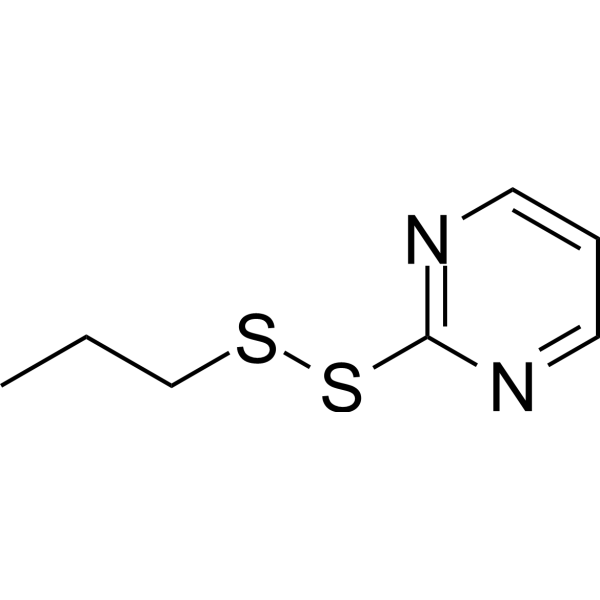 0 ImagesCat. No.: HY-151280CAS No.: 2833772-92-0Antifungal agent 37 is a geterocyclic disulfide, with antifungal activity.
-
Geministatin D
 0 ImagesCat. No.: HY-N20676CAS No.: 3131756-58-3Geministatin D is a derivative of Geministatin A that retains the C17 (Z,Z)-diene alkyl side chain but lacks the complete diester backbone. As a chemical degradation fragment of the parent compound, Geministatin D shows weak antibacterial activity against Gram-positive bacteria but exerts mild inhibitory effects on Saccharomyces cerevisiae. Geministatin D can be used in studies on fungal infections caused by Saccharomyces cerevisiae.
-
Monocerin
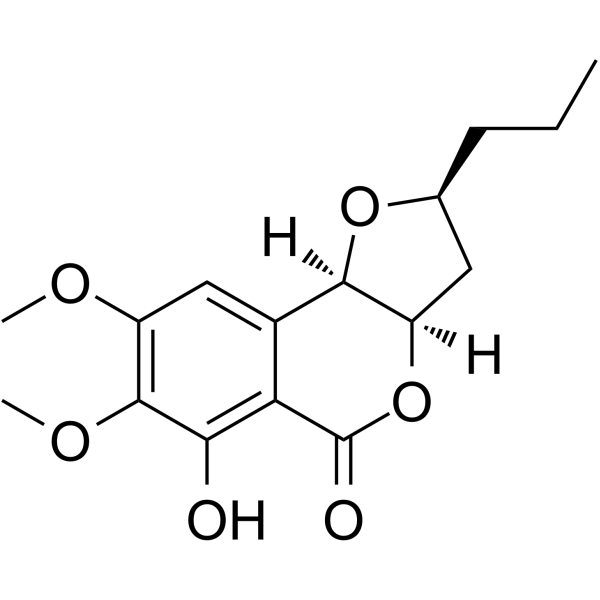 0 ImagesCat. No.: HY-N6294CAS No.: 30270-60-1Monocerin is an isocoumarin derivative. Monocerin is isolated from Microdochium bolleyi, an endophytic fungus from Fagonia cretica. Monocerin shows good antifungal, antibacterial, and antialgal activities against Microbotryum violaceum, Escherichia coli, Bacillus megaterium, and Chlorella fusca.
-
Hepcidin-20 (human)
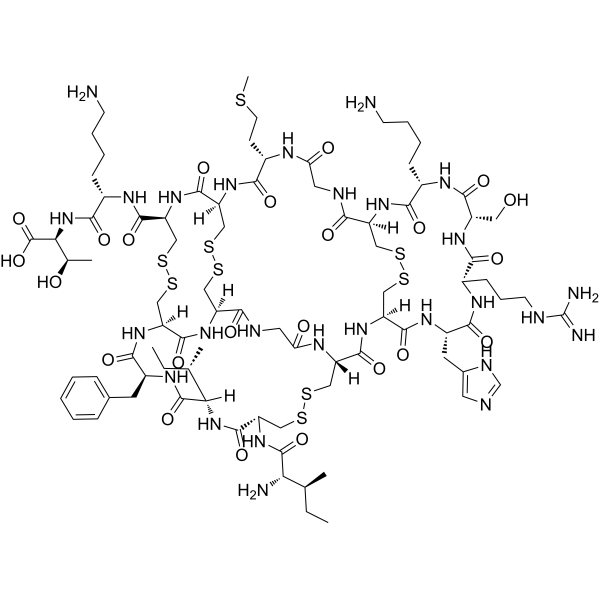 0 ImagesCat. No.: HY-P4370CAS No.: 342790-23-2Hepcidin-20 (human) is a histidine-containing, cysteine-rich, β-sheet structured peptide. Hepcidin-20 (human) shows antifungal activity. Hepcidin-20 (human) inhibits biofilm formation and bacterial cell metabolism of polysaccharide intercellular adhesin (PIA)-positive and PIA-negative strains.
-
CZx-243
 0 ImagesCat. No.: HY-187376CZx-243 is an orally active broad-spectrum antifungal agent. CZx-243 binds to the active site of fungal CYP51 and interferes with ergosterol biosynthesis by depleting ergosterol and causing the accumulation of upstream sterol intermediates. CZx-243 blocks yeast-to-hypha transition; it inhibits the membrane integrity of fungi such as Candida glabrata and Cryptococcus neoformans. CZx-243 significantly reduces renal fungal burden in a systemic mouse model of invasive fungal infection resistant to Fluconazole (HY-B0101). CZx-243 can be used in the research of fungal infections.
-
Hunnemanine
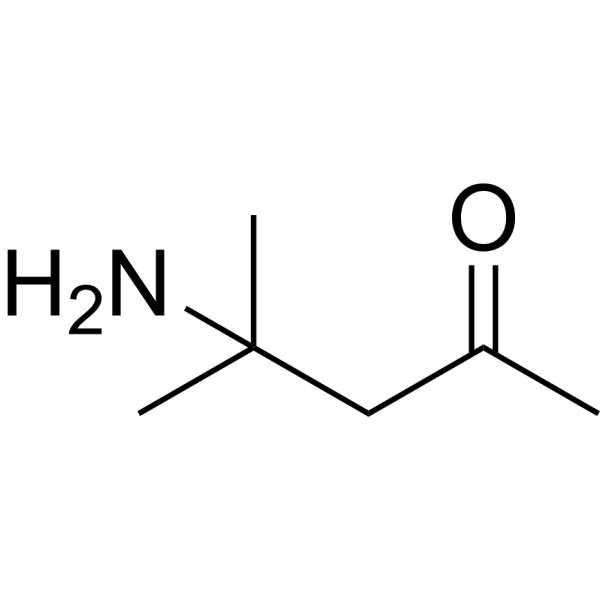
 0 ImagesHunnemanine is a protoberberine-type isoquinoline alkaloid with significant antifungal activity. At a concentration of 1000 ppm, Hunnemanine completely inhibits spore germination of a variety of phytopathogenic fungi, including Alternaria brassicae, Helminthosporium pennisetti, and Fusarium lini. Hunnemanine can be applied to studies on the infection mechanisms of phytopathogenic fungi and related control strategies.
-
Arborcandin F
 0 ImagesCat. No.: HY-N5165CAS No.: 223465-81-4Arborcandin F is a 1,3-β-glucan synthase inhibitor that serves as an antifungal antibiotic. Arborcandin F exhibits IC50 values of 0.012 μg/mL against both Candida albicans and Aspergillus fumigatus. Additionally, Arborcandin F has an MIC of 2-4 μg/mL against the genus Candida.
-
Chitin synthase inhibitor 7
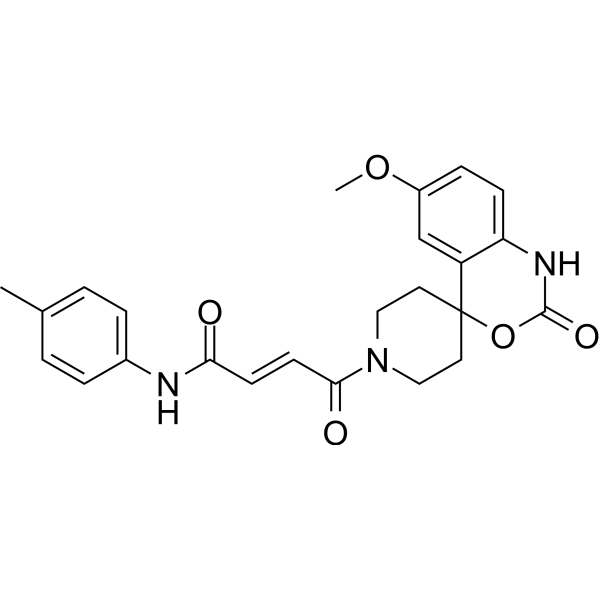 0 ImagesCat. No.: HY-151417CAS No.: 3033645-30-3Chitin synthase inhibitor 7 (compound 9c) is a potent chitin synthase (CHS) inhibitor with an IC50 value of 0.37 mM. Chitin synthase inhibitor 7 has broad-spectrum antifungal activity against drug-resistant fungi. Chitin synthase inhibitor 7 can be used in the research of fungi infection.
-
Ochratoxin A-D4
 0 ImagesCat. No.: HY-108385CAS No.: 1448049-50-0Ochratoxin A-D4 (Phe-OTA-D4) is the deuterium labeled Ochratoxin A. Ochratoxin A is an orally active food-borne mycotoxin that can cross the blood-brain barrier. Ochratoxin A is a secondary metabolite of fungi belonging to the genera Aspergillus and Penicillium, and is classified as a Group 2B carcinogen. Ochratoxin A exerts its effects through multiple pathways, including inducing oxidative stress, inhibiting mitochondrial respiration, causing oxidative DNA damage, disrupting the PPAR-γ-CD36 axis, inducing immunosuppression, generating ROS, mediating mitochondria-dependent apoptosis, inhibiting glutamate uptake, triggering demyelination and neuroinflammation, inducing DNA hypomethylation, and inhibiting cell proliferation. Ochratoxin A can induce nephrotoxicity, hepatotoxicity, immunotoxicity, and neurotoxicity, and also exhibits mutagenicity, teratogenicity, and carcinogenicity.
-
Aureonitol
 0 ImagesCat. No.: HY-165142CAS No.: 71774-51-1Aureonitol is a compound isolated from fungi that has anti-influenza activity by inhibiting the surface glycoprotein hemagglutinin of influenza virus and has potential value for compound development.
-
Citaldoxime
 0 ImagesCat. No.: HY-N17390CAS No.: 117091-61-9Citaldoxime (Compound 7) is a γ-radiation-induced antifungal stress metabolite that can be found in Citrus plants.
-
Enfumafungin (Standard)
 0 ImagesCat. No.: HY-N8537RCAS No.: 260979-95-1Enfumafungin (Standard) is the analytical standard of Enfumafungin. This product is intended for research and analytical applications. Enfumafungin, a triterpene glycoside, is isolated from extracts derived from fungus Hormonema carpetanum. Enfumafungin is an antifungal compound that is acting on the fungal cell wall, as the (1,3)-beta-D-glucan synthase inhibitor. Enfumafungin is specific for yeasts and fungi (excluding Cryptococcus) and does not inhibit the growth of Bacillus subtilis[1][2].
-
CYP51/PD-L1-IN-2
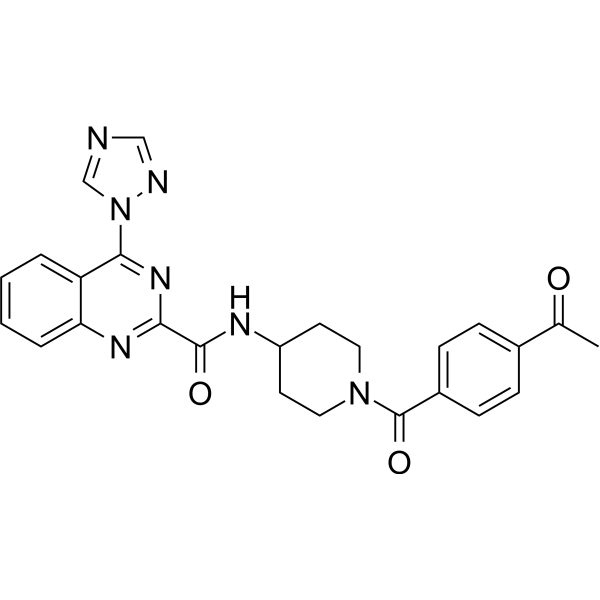 0 ImagesCat. No.: HY-156150CAS No.: 3032386-58-3CYP51/PD-L1-IN-2 (compound L20) is a quinazoline compound with antifungal activity. CYP51/PD-L1-IN-2 is a dual inhibitor of CYP51 (IC50: 0.263 μM) and PD-L1 (IC50: 0.017 μM), which can induce early apoptosis of fungal cells in the cell cycle. CYP51/PD-L1-IN-2 also significantly reduced intracellular IL-2, NLRP3, and NF-κBp65 protein levels, induced mitochondrial damage and ROS accumulation, and ultimately led to fungal lysis and death.
-
(±)-Coladonin
 0 ImagesCat. No.: HY-179212CAS No.: 10070-33-4(±)-Coladonin (Compound (±)-12), Coumarin (HY-N0709) derivative, is an antifungal agent. (±)-Coladonin exhibits potent inhibitory effect on the plant pathogenic fungus Botrytis cinerea. (±)-Coladonin is mainly used for the research on the prevention and control of gray mold disease in crops.
-
Benalaxyl-d5
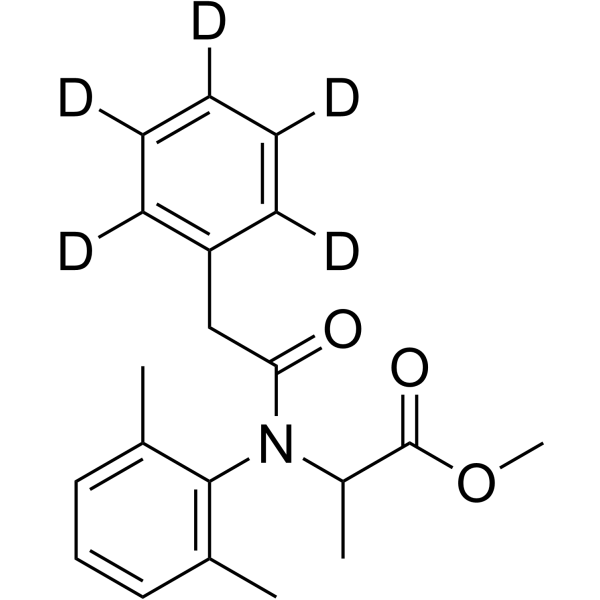 0 ImagesCat. No.: HY-121109SCAS No.: 2714421-66-4
-
trans-β-Bergamotene
 0 ImagesCat. No.: HY-N18251CAS No.: 55123-21-2trans-β-Bergamotene is a sesquiterpene hydrocarbon and antifungal agent found in the essential oil of Bixa orellana L. leaves. trans-β-Bergamotene possesses antiungal and anti-inflammatory properties. trans-β-Bergamotene can be used for the research of Candida albicans infection.
-
7-Amino-4-methylcoumarin-d4
 0 ImagesCat. No.: HY-D0027S1Synonyms: Coumarin 120-d4; AMC-d47-Amino-4-methylcoumarin-d4 (Coumarin 120-d4) is the deuterium labeled 7-Amino-4-methylcoumarin (HY-D0027). 7-Amino-4-methylcoumarin belongs to the coumarin class, can be isolated from the endophytic fungus Xylaria sp. and has a broad spectrum of antibacterial activity. 7-Amino-4-methylcoumarin is also commonly used as an important laser dye that emits in the blue region, capable of analyzing glycoprotein monosaccharides and N-linked oligosaccharides, and is also utilized in tissue pathology analysis, enzyme activity measurement, and copper ion detection. The excitation wavelength and emission wavelength are 351 nm and 430 nm, respectively.
-
N-Decyl-N,N-dimethyldecan-1-aminium-d6 chloride
 0 ImagesCat. No.: HY-W042181SSynonyms: Didecyldimethylammonium-d6 chloride; DDAC-d6N-Decyl-N,N-dimethyldecan-1-aminium-d6 (chloride) is a deuterated labeled N-Decyl-N,N-dimethyldecan-1-aminium (chloride). N-Decyl-N,N-dimethyldecan-1-aminium chloride (Didecyldimethylammonium chloride) is a dialkyl-quaternary ammonium compound that is used in numerous products for its bactericidal, virucidal and fungicidal properties.




