



Fungal
An antifungal agent is a drug that selectively eliminates fungal pathogens from a host with minimal toxicity to the host.
Classes: 1. Polyene Antifungal Drugs: Amphotericin, nystatin, and pimaricin interact with sterols in the cell membrane (ergosterol in fungi, cholesterol in humans) to form channels through which small molecules leak from the inside of the fungal cell to the outside. 2. Azole Antifungal Drugs: Fluconazole, itraconazole, and ketoconazole inhibit cytochrome P450-dependent enzymes (particularly C14-demethylase) involved in the biosynthesis of ergosterol, which is required for fungal cell membrane structure and function. 3. Allylamine and Morpholine Antifungal Drugs: lylamines (naftifine, terbinafine) inhibit ergosterol biosynthesis at the level of squalene epoxidase. The morpholine drug, amorolfine, inhibits the same pathway at a later step. 4. Antimetabolite Antifungal Drugs: 5-Fluorocytosine acts as an inhibitor of both DNA and RNA synthesis via the intracytoplasmic conversion of 5-fluorocytosine to 5-fluorouracil.
All Product Categories
-
Fungal Related Products (2768)
Related Products (2768)

-
Antibodies (1)
-
Related Compound Screening Libraries (1)
-
3-Nitrobenzoic acid-d4
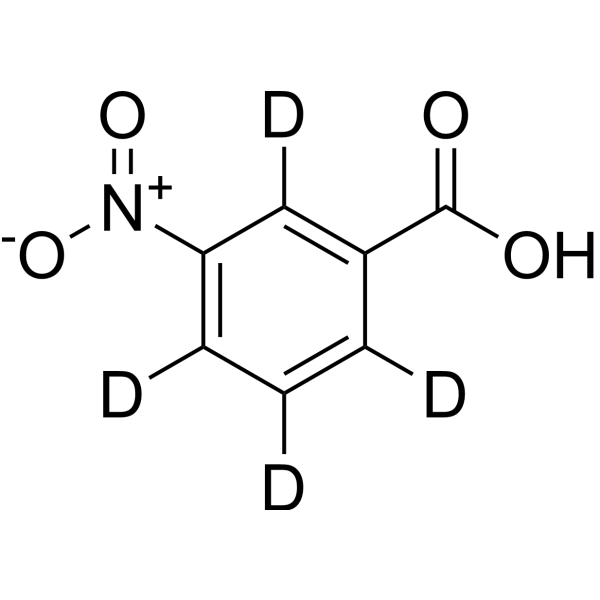 0 ImagesCat. No.: HY-Y1313SCAS No.: 78399-78-7Synonyms: m-Carboxynitrobenzene-d4; m-Nitrobenzenecarboxylic acid-d4; m-Nitrobenzoic acid-d43-Nitrobenzoic acid-d4 (m-Carboxynitrobenzene-d4; m-Nitrobenzenecarboxylic acid-d4; m-Nitrobenzoic acid-d4) is the deuterium labeled 3-Nitrobenzoic acid (HY-Y1313). 3-Nitrobenzoic acid is an antioxidant and antibacterial agent that can kill bacteria and fungi. 3-Nitrobenzoic acid can be degraded or reduced by certain bacteria (such as Pseudomonas) and fungi (such as white rot fungi) into aldehydes and alcohols.
-
Antifungal agent 62
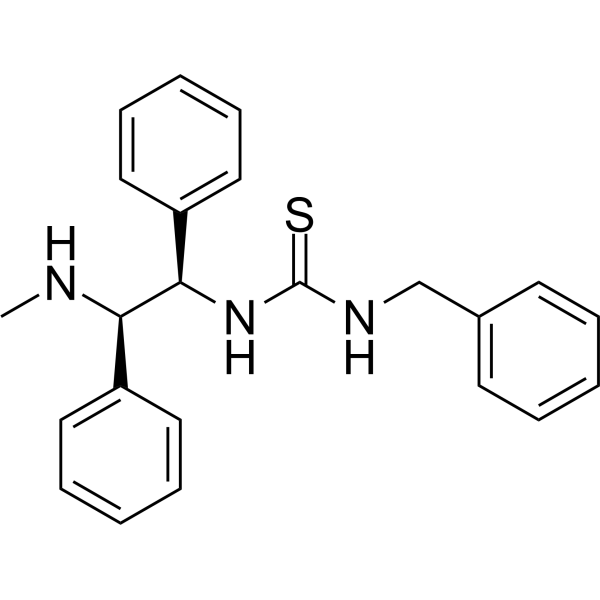 0 ImagesCat. No.: HY-155658Antifungal agent 62 (Compound 3a) is a fungicidal agent with excellent fungicidal activities against Fusarium oxysporum f.sp. cucumerinum. Antifungal agent 62 can be used for antiviral and fungicidal research.
-
Antifungal agent 77
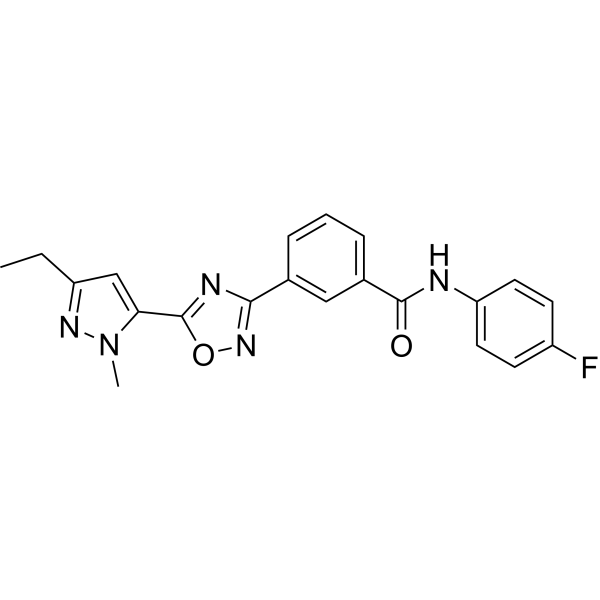 0 ImagesCat. No.: HY-155331CAS No.: 2863678-89-9Antifungal agent 77 (Compound 13h) is an antifungal agent. Antifungal agent 77 (500 μg/mL) also shows good insecticidal activity against Mythimna separate, Helicoverpa armigera, Ostrinia nubilalis, and Spodoptera frugiperda with a death rate of 30%, 25%, 40%, and 25%. Antifungal agent 77 shows toxicity in zebrafish embryo with a LC50 of 2.43 μg/mL.
-
Oleylphosphocholine
 0 ImagesCat. No.: HY-114219CAS No.: 257925-44-3Oleylphosphocholine is an orally active antifungal and antiparasitic agent. Oleylphosphocholine is promising for research of invasive fungal diseases (e.g., aspergillosis) and visceral leishmaniasis.
-
Antifungal agent 43
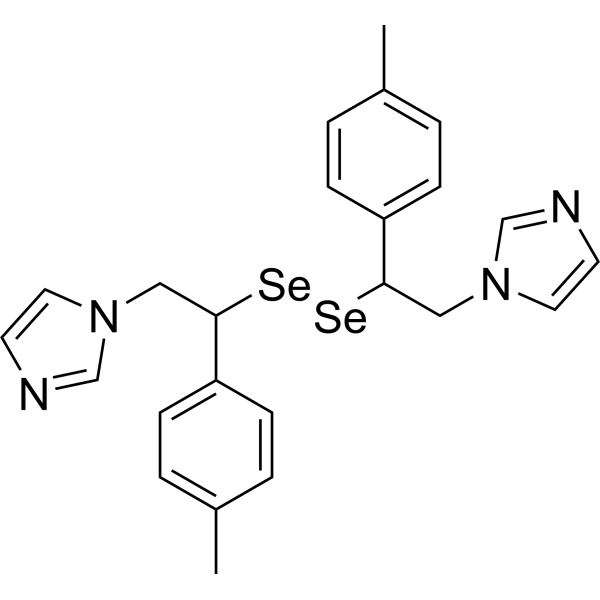 0 ImagesCat. No.: HY-151442CAS No.: 3033703-29-3Antifungal agent 43 (compound B05) is an antifungal agent. Antifungal agents 43 has antifungal activity by inhibiting biofilm formation. Antifungal agent 43 has low toxicity in human cancer cell lines.
-
Isodihydroauroglaucin
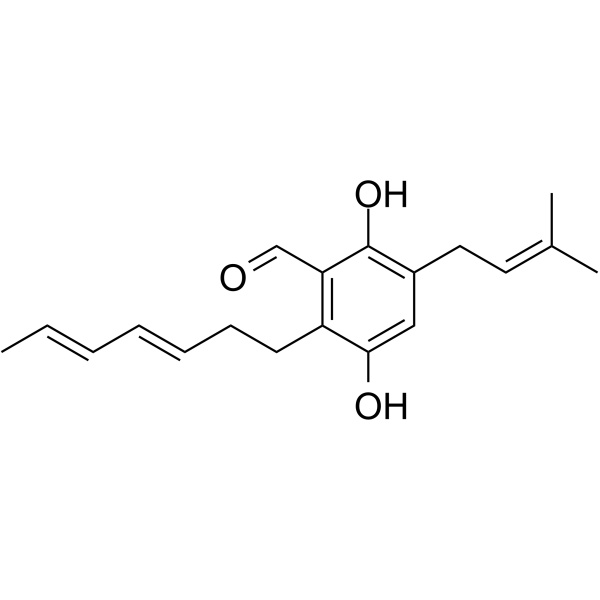 0 ImagesCat. No.: HY-N10282CAS No.: 74886-31-0Isodihydroauroglaucin, a fungal metabolite, shows antibacterial activity.
-
Antifungal agent 25
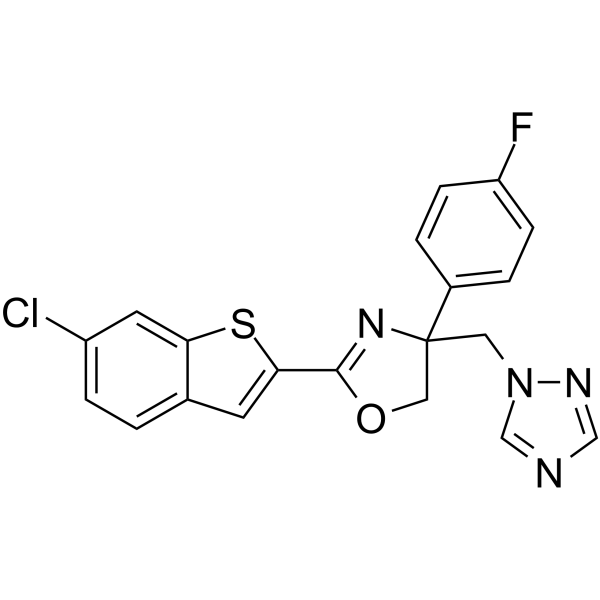 0 ImagesCat. No.: HY-143406CAS No.: 2566522-50-5Antifungal agent 25 is a potent broad-spectrum antifungal agent. Antifungal agent 25 shows antifungal effect against Candida albicans and fluconazole-resistant strain of Candida albicans. Antifungal agent 25 stable metabolic property in vivo.
-
Kanosamine hydrochloride (Standard)
 0 ImagesCat. No.: HY-112176RCAS No.: 57649-10-26-Hydroxytropinone (Standard) is the analytical standard of 6-Hydroxytropinone. This product is intended for research and analytical applications. 6-Hydroxytropinone is a Alkaloids product that can be isolated from the roots of Atropa belladonna.
-
Antibacterial agent 232
 0 ImagesCat. No.: HY-162687CAS No.: 2694805-94-0Antibacterial agent 232 (compound Y41) is a potent antibacterial agent. Antibacterial agent 232 disrupts the cell membrane integrity by inducing cell peroxidation.
-
N-(2-hydroxy-2-phenylethyl)acetamide
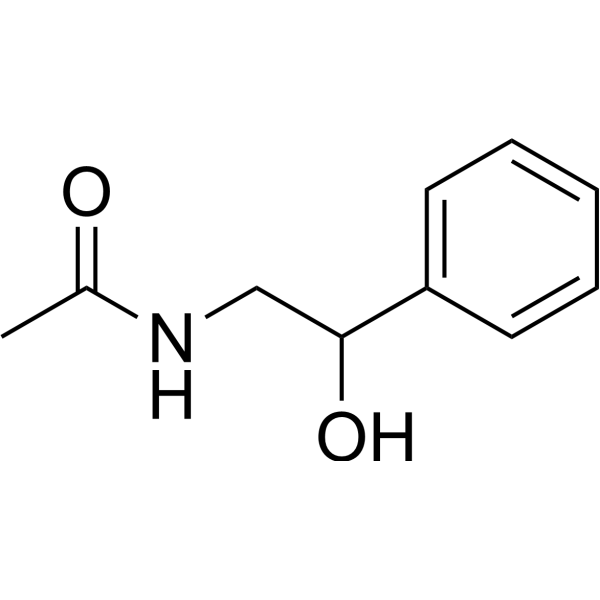 0 ImagesCat. No.: HY-W164451CAS No.: 3306-05-6N-(2-hydroxy-2-phenylethyl)acetamide is isolated from the solid rice cultures of the endophytic fungus Diaporthe eucalyptorum KY-9. N-(2-hydroxy-2-phenylethyl)acetamide exhibits antifungal activities against Alternaria solani.
-
[6]-Gingerdiol
![[6]-Gingerdiol](https://file.medchemexpress.com/product_pic/hy-n16519.gif "Click to View [6]-Gingerdiol Product Detail") 0 ImagesCat. No.: HY-N16519CAS No.: 154905-69-8[6]-Gingerdiol is an antifungal agent. [6]-Gingerdiol can be isolated from Zingiber officinale. [6]-Gingerdiol shows antifungal activity against M. gypseum with a MLC value of 422 μg/mL.
0 ImagesCat. No.: HY-N16519CAS No.: 154905-69-8[6]-Gingerdiol is an antifungal agent. [6]-Gingerdiol can be isolated from Zingiber officinale. [6]-Gingerdiol shows antifungal activity against M. gypseum with a MLC value of 422 μg/mL.
-
1β-Acetoxypolygodial
 0 ImagesCat. No.: HY-138229CAS No.: 1818425-44-31β-Acetoxypolygodial is a sesquiterpenoid found in Tasmannia lanceolata. 1β-Acetoxypolygodial is promising for research of cancers and fungal infections.
-
Nerolidol-d4
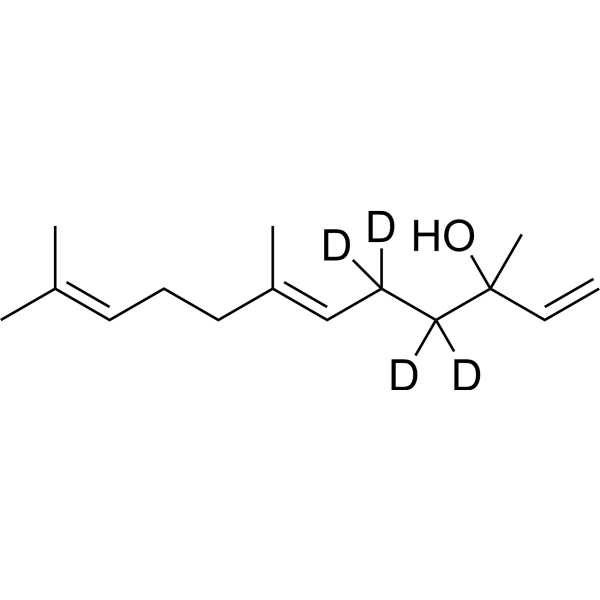 0 ImagesCat. No.: HY-N1944SNerolidol-d4 is deuterated labeled Nerolidol (HY-N1944). Nerolidol has multiple natural membrane activities, possesses anti-cancer, anti-inflammatory, antibacterial and anti-insect activity. Nerolidol Suppresses parasitic activity, suppresses bloodsucking diseases, bloodworm diseases, and other diseases. Nerolidol can protect the cells from lipid and protein properties, damage to DNA, and protect the cells from damage.
-
Bitertanol
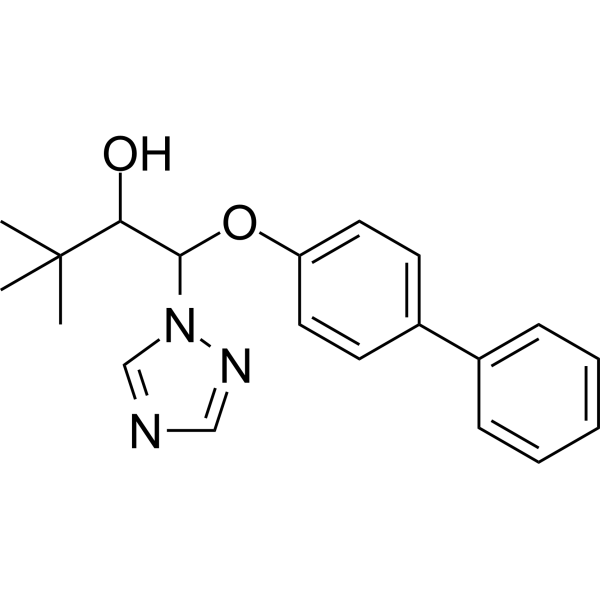 0 ImagesSynonyms: BiloxazolBitertanol (Biloxazol) is a potent antifungal agent. Bitertanol also is an CYP1A1, CYP2B, and CYP3A inducer in vivo and an CYP1A inhibitor in vitro.
-
LW3
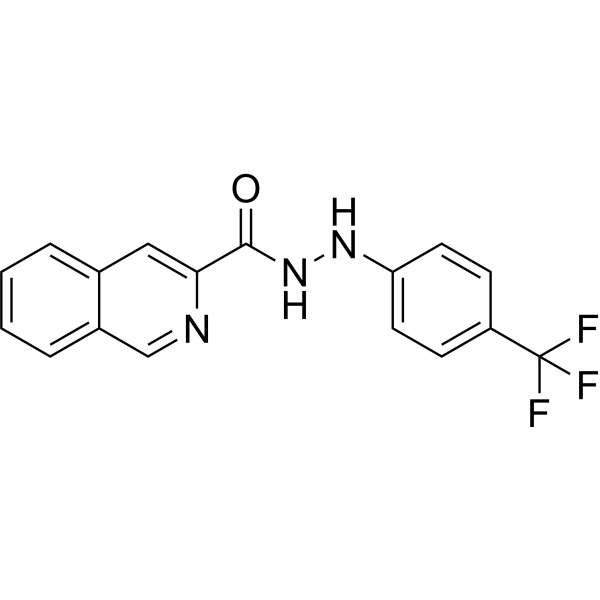 0 ImagesLW3 is a potent antifungal agent. LW3 has antifungal activity with EC50 values of 0.54, 0.09, 1.52, and 2.65 mg/L against B. cinerea, R. solani, S. sclerotiorum, and F. graminearum, respectively.
-
Savirin
 0 ImagesCat. No.: HY-177881CAS No.: 2163006-04-8Savirin exhibits in vitro antibacterial and antibiofilm activity. Savirin can prevent skin infections induced by S. aureus in vivo. Savirin shows enhanced activity when combined with antibiotics.
-
Ethyl nonanoate-d17
 0 ImagesCat. No.: HY-178409SEthyl nonanoate-d17 is the deuterated-labeled Ethyl nonanoate (HY-129623). Ethyl nonanoate is an orally active medium-chain fatty acid ethyl ester and aroma compound present in Laimao baijiu, cachaca, and distilled spirits. Ethyl nonanoate is catalytically converted to azelaic acid as a nonanoic acid precursor derivative with cytotoxicity. Ethyl nonanoate is used as a food flavoring agent. Ethyl nonanoate exhibits antifungal activity.
-
Iodopropynyl butylcarbamate-d9
 0 ImagesCat. No.: HY-W740833CAS No.: 1246815-08-6Synonyms: IPBC-d9Iodopropynyl butylcarbamate-d9 (IPBC-d9) is the deuterated-labeled Iodopropynyl butylcarbamate (HY-W009335). Iodopropynyl butylcarbamate (IPBC) is a broad-spectrum antibacterial agent. Iodopropynyl butylcarbamate disrupts bacterial membranes and inhibits V. parahaemolyticus and S. aureus biofilms. Iodopropynyl butylcarbamate exhibits antimold activity and displays broad-spectrum antifungal/antialgal activity involving iodine-thiol protein disruption. Iodopropynyl butylcarbamate can be used in research related to bacterial and fungal infections.
-
Antimicrobial agent-24
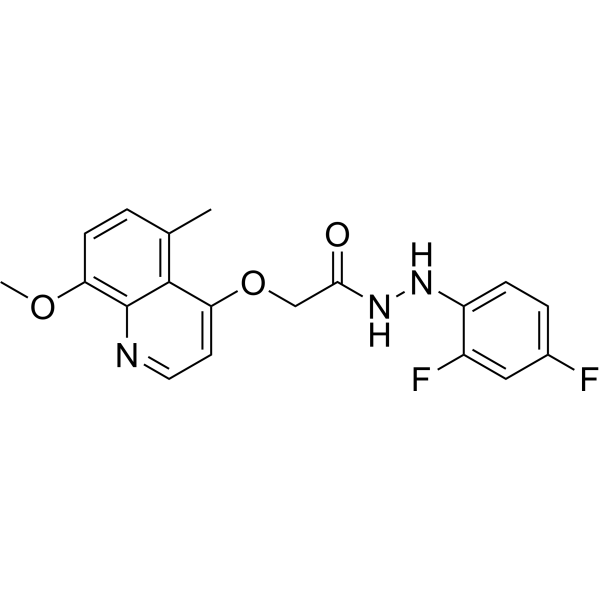 0 ImagesCat. No.: HY-155769Antimicrobial agent-24 (compound E8) is a hydrazide compound with excellent and broad-spectrum fungicidal activities. Antimicrobial agent-24 affects the normal function of the plasma membrane, further generating changes in the morphology and subcellular structure of mycelia.
-
TAN 950A
 0 ImagesCat. No.: HY-105476CAS No.: 127607-88-9TAN 950A is antifungal amino acid antibiotic. TAN 950A has affinity for three excitatory amino acid (EAA) receptor and can inhibit [3H]AMPA, [3H]kainite and [3H]CPP binding competitively. TAN 950A can be used for the researches of infection and neurological disease.




