



IL-6 Inducer
- 1
-
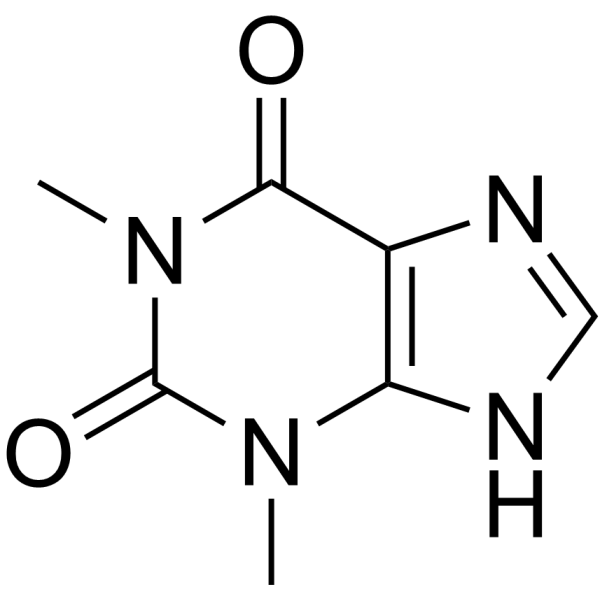
Theophylline
 0 Images
Theophylline (1,3-Dimethylxanthine) is a potent phosphodiesterase (PDE) inhibitor, adenosine receptor antagonist, and histone deacetylase (HDAC) activator. Theophylline (1,3-Dimethylxanthine) inhibits PDE3 activity to relax airway smooth muscle. Theophylline (1,3-Dimethylxanthine) has anti-inflammatory activity by increase IL-10 and inhibit NF-κB into the nucleus. Theophylline (1,3-Dimethylxanthine) induces apoptosis. Theophylline (1,3-Dimethylxanthine) can be used for asthma and chronic obstructive pulmonary disease (COPD) research.
-
Golimumab
 0 ImagesSynonyms: CNTO-148
Golimumab (CNTO-148) is a potent human IgG1 TNFα antagonist monoclonal antibody. Golimumab has anti-inflammation activitity and inhibits IL-6 and IL-1β production. Golimumab acts via targeting and neutralizing TNF to prevent inflammation and destruction of cartilage and bone. Golimumab has the anticancer activity and induces cell apoptosis. Golimumab can be used for rheumatoid arthritis, Crohn's disease and cancer research.
-
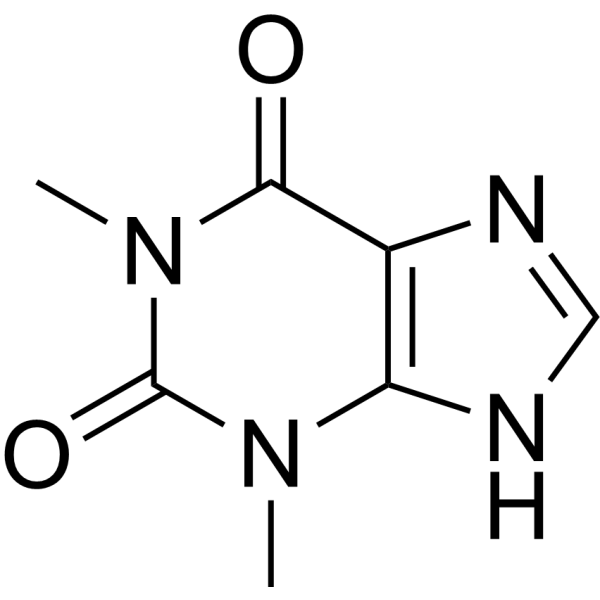
Theophylline (Standard)
 0 ImagesSynonyms: 1,3-Dimethylxanthine(Standard); Theo-24 (Standard)
Theophylline (Standard) is the analytical standard of Theophylline. This product is intended for research and analytical applications. Theophylline (1,3-Dimethylxanthine) is a potent phosphodiesterase (PDE) inhibitor, adenosine receptor antagonist, and histone deacetylase (HDAC) activator. Theophylline (1,3-Dimethylxanthine) inhibits PDE3 activity to relax airway smooth muscle. Theophylline (1,3-Dimethylxanthine) has anti-inflammatory activity by increase IL-10 and inhibit NF-κB into the nucleus. Theophylline (1,3-Dimethylxanthine) induces apoptosis. Theophylline (1,3-Dimethylxanthine) can be used for asthma and chronic obstructive pulmonary disease (COPD) research.
-
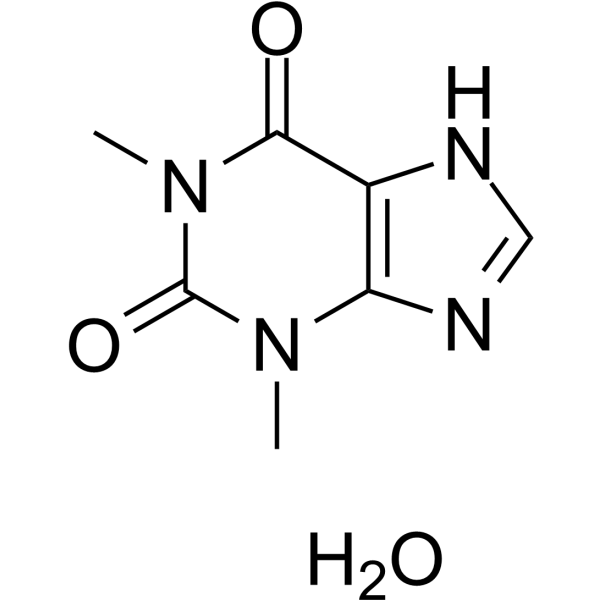
Theophylline monohydrate
 0 ImagesSynonyms: 1,3-Dimethylxanthine monohydrate; Theo-24 monohydrate
Theophylline (1,3-Dimethylxanthine) monohydrate is a potent phosphodiesterase (PDE) inhibitor, adenosine receptor antagonist, and histone deacetylase (HDAC) activator. Theophylline (1,3-Dimethylxanthine) monohydrate inhibits PDE3 activity to relax airway smooth muscle. Theophylline (1,3-Dimethylxanthine) monohydrate has anti-inflammatory activity by increase IL-10 and inhibit NF-κB into the nucleus. Theophylline (1,3-Dimethylxanthine) monohydrate induces apoptosis. Theophylline (1,3-Dimethylxanthine) monohydrate can be used for asthma and chronic obstructive pulmonary disease (COPD) research.
-
1Z105
 0 Images
1Z105 is an orally active TLR4/MD2 agonist, immunostimulant and vaccine adjuvant. 1Z105 activates NF-κB via the MyD88/TRIF pathway in a CD14-independent manner, with EC50 values of 0.63 µM and 0.77 µM for inducing IL-6 and IL-12 in mBMDCs, respectively. 1Z105 promotes dendritic cell maturation, antigen uptake and cross-presentation; when used alone, it induces Th2-IgG1, while combined with the TLR7 agonist 1V270, it synergistically induces balanced Th1/Th2 responses and provides low-reactogenic protection against homologous, heterologous and heterosubtypic influenza. 1Z105 prevents LPS (HY-D1056A1)- and galactosamine-induced liver injury as well as autoantibody-driven arthritis in mice. 1Z105 can be used in studies related to influenza virus infection, inflammation, and LPS/galactosamine-induced liver injury.
-
a15:0-i15:0 PE
 0 ImagesCat. No.: HY-N15936CAS No.: 2936622-21-6
a15:0-i15:0 PE is an atypical TLR2 agonist, and its immune signaling strictly depends on the TLR2-TLR1 heterodimer. a15:0-i15:0 PE induces dendritic cells to produce TNFα and IL-6, but does not induce the production of IL-10 or IL-12p70. At low doses, a15:0-i15:0 PE resets the activation threshold of immune cells to suppress or regulate immune responses against specific agonists.
-
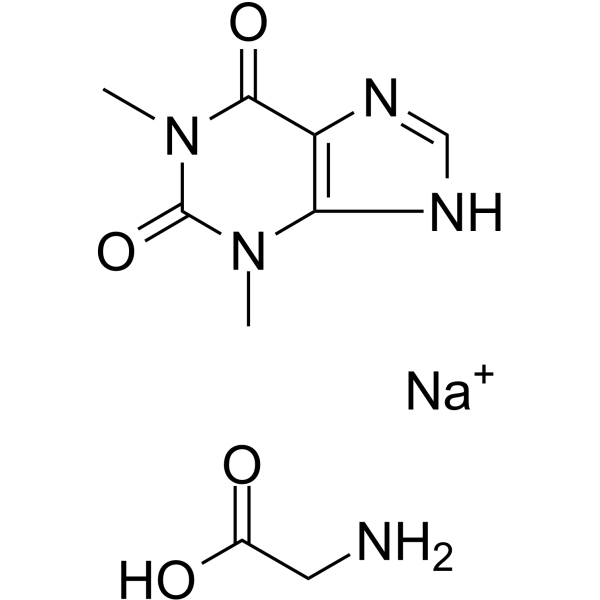
Theophylline (sodium glycinate)
 0 ImagesSynonyms: 1,3-Dimethylxanthine (sodium glycinate); Theo-24 (sodium glycinate)
Theophylline (1,3-Dimethylxanthine) sodium glycinate is a potent phosphodiesterase (PDE) inhibitor, adenosine receptor antagonist, and histone deacetylase (HDAC) activator. Theophylline sodium glycinate inhibits PDE3 activity to relax airway smooth muscle. Theophylline sodium glycinate has anti-inflammatory activity by increase IL-10 and inhibit NF-κB into the nucleus. Theophylline sodium glycinate induces apoptosis. Theophylline sodium glycinate can be used for asthma and chronic obstructive pulmonary disease (COPD) research.
-
Theophylline L-lysine
 0 ImagesCat. No.: HY-130054CAS No.: 83920-54-1Synonyms: Lysine theophyllinate
Theophylline L-lysine (Lysine theophyllinate) is a soluble derivative of Theophylline (HY-B0809). Theophylline L-lysine is a potent phosphodiesterase (PDE) inhibitor, adenosine receptor antagonist, and histone deacetylase (HDAC) activator. Theophylline L-lysine inhibits PDE3 activity to relax airway smooth muscle. Theophylline L-lysine has anti-inflammatory activity by increasing IL-10 and inhibiting NF-κB into the nucleus. Theophylline L-lysine induces apoptosis. Theophylline L-lysine can be used for asthma and chronic obstructive pulmonary disease (COPD) research.
-
LDDN-0003499
 0 ImagesCat. No.: HY-112369CAS No.: 331662-51-2
LDDN-0003499 is a Src family tyrosine kinase inhibitor and anti-inflammatory agent. LDDN-0003499 reduces basal and Aβ-stimulated levels of active, phosphorylated Lyn and Src kinases, and attenuates Aβ-stimulated secretion of pro-inflammatory cytokines TNFα and IL-6 in microglial cells. LDDN-0003499 can be used for the research of Alzheimer's disease.
-
2-Hydroxy Imiquimod
 0 ImagesCat. No.: HY-W744192CAS No.: 112668-45-8Synonyms: R-842
2-Hydroxy Imiquimod (R-842), a hydroxylated metabolite of Imiquimod (HY-B0180), is an immunomodulating agent. 2-Hydroxy Imiquimod can induce IFN-α, TNF-α, IL-1, IL-6 and IL-8 in human blood cells. 2-Hydroxy Imiquimod exhibits antivirus and antitumor activities. 2-Hydroxy Imiquimod can be used for the researches of cancer, infection and immunology.
-
Theophylline sodium acetate
 0 ImagesSynonyms: 1,3-Dimethylxanthine sodium acetate; Theo-24 sodium acetate
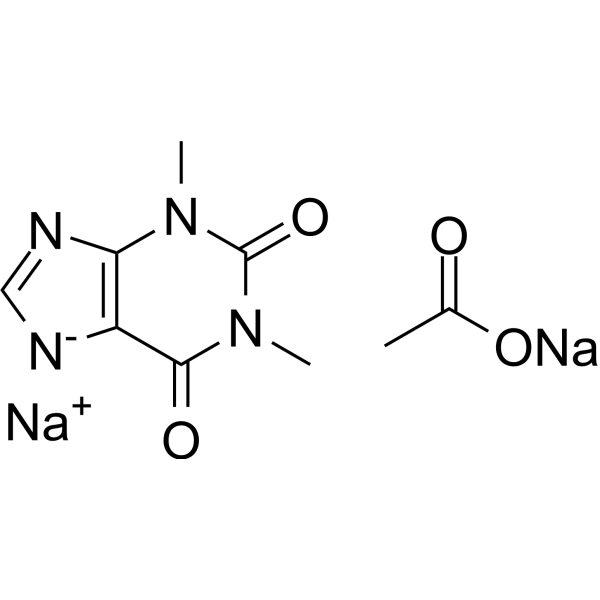
Theophylline (1,3-Dimethylxanthine) sodium acetate is a potent phosphodiesterase (PDE) inhibitor, adenosine receptor antagonist, and histone deacetylase (HDAC) activator. Theophylline (1,3-Dimethylxanthine) sodium acetate inhibits PDE3 activity to relax airway smooth muscle. Theophylline (1,3-Dimethylxanthine) sodium acetate has anti-inflammatory activity by increase IL-10 and inhibit NF-κB into the nucleus. Theophylline (1,3-Dimethylxanthine) sodium acetate induces apoptosis. Theophylline (1,3-Dimethylxanthine) sodium acetate can be used for asthma and chronic obstructive pulmonary disease (COPD) research.
-
P53/TLR2 modulator-1
 0 ImagesCat. No.: HY-173309
P53/TLR2 modulator-1 (Compound Z9) is a modulator that targets both the P53 pathway and TLR2 simultaneously, exhibiting anti-radiation activity. P53/TLR2 modulator-1 reduces apoptosis by inhibiting the radiation-induced expression of P53 and Bax. At the same time, it activates the TLR2 pathway, upregulates the expression of downstream proteins MyD88 and P65, and promotes the secretion of cytokines such as IL-6, thus exerting an anti-radiation effect. P53/TLR2 modulator-1 shows significant anti-radiation activity against both AHH-1 cells and HUVECs. It can also increase the survival rate of C57BL/6J mice irradiated with a lethal dose of radiation and reduce the damage to their hematopoietic system, the villous structure of the small intestine, and the spleen caused by radiation. P53/TLR2 modulator-1 can be used in the research of radiation injury-related diseases.
-
TLR7 agonist 8
 0 ImagesCat. No.: HY-153073CAS No.: 2380231-81-0
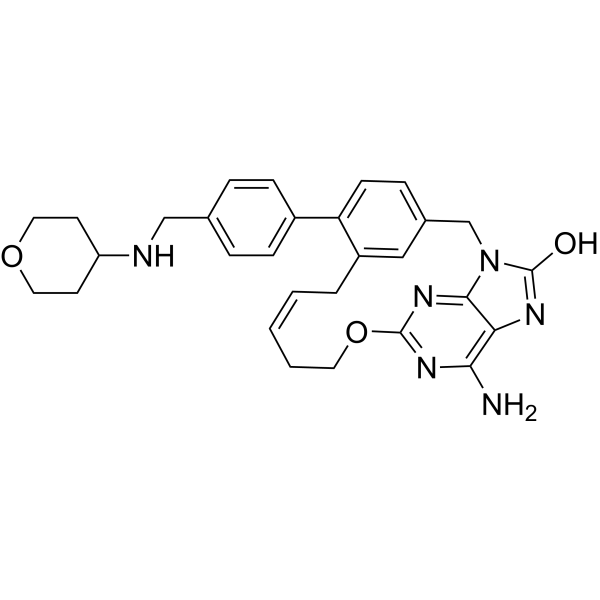
TLR7 agonist 8 is a TLR7 agonist with an EC50 of 0.12 nM for TLR7 and an EC50 of 0.76 nM for IL-6 induction. TLR7 agonist 8 can be used for research on diseases such as fibrosis, inflammatory diseases, cancer, or pathogen infections.
- 1



