



JAK
Janus kinase
Janus kinase (JAK) is a family of intracellular, nonreceptor tyrosine kinases that transduce cytokine-mediated signals via the JAK-STAT pathway. Since members of the type I and type II cytokine receptor families possess no catalytic kinase activity, they rely on the JAK family of tyrosine kinases to phosphorylate and activate downstream proteins involved in their signal transduction pathways. The receptors exist as paired polypeptides, thus exhibiting two intracellular signal-transducing domains. JAKs associate with a proline-rich region in each intracellular domain, which is adjacent to the cell membrane and called a box1/box2 region. After the receptor associates with its respective cytokine/ligand, it goes through a conformational change, bringing the two JAKs close enough to phosphorylate each other. The JAK autophosphorylation induces a conformational change within itself, enabling it to transduce the intracellular signal by further phosphorylating and activating transcription factors called STATs. The activated STATs dissociate from the receptor and form dimers before translocating to the cell nucleus, where they regulate transcription of selected genes.
JAK Isoform Specific Products
All Product Categories
-
JAK Inhibitors
(553)
View all products
-
JAK Agonists
(2)
View all products
-
JAK Antagonists
(4)
View all products
-
JAK Activators
(26)
View all products
-
JAK Modulators
(8)
View all products
-
JAK Degraders
(14)
View all products
-
JAK Control
(1)
View all products
-
JAK Substrate
(1)
View all products
-
JAK Ligands
(5)
View all products
-
Janus Kinase 1 (JAK1) Proteins
(4)
View all products
-
JAK Related Products (648)
Related Products (648)

-
Recombinant Proteins (4)
-
Antibodies (7)
-
JAK Isoform Comparison
-
JAK2-IN-10
 0 ImagesCat. No.: HY-161684CAS No.: 3035735-18-0JAK2-IN-10 is a selective JAK2 V617F inhibitor with an IC50 value of ≤10 nM. JAK2-IN-10 can be used for the research of myeloproliferative neoplasms and other related diseases.
-
Pumecitinib
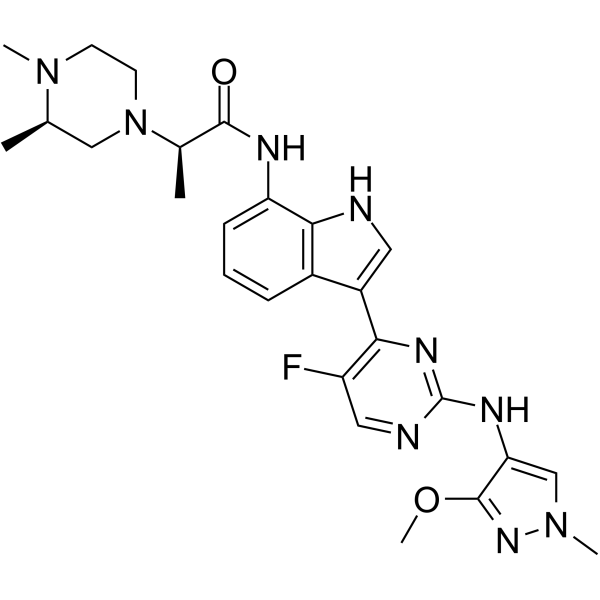
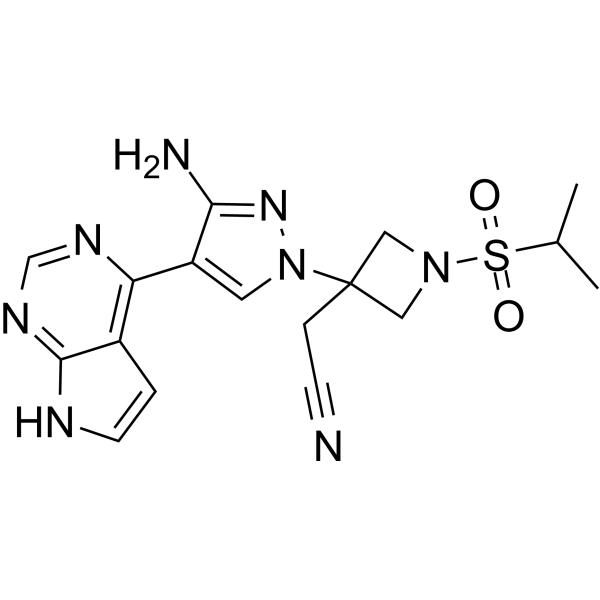 0 ImagesSynonyms: PG-011Pumecitinib is a Janus kinase (JAK) inhibitor. Pumecitinib shows anti-inflammatory activity.
-
6-Demethoxytangeretin
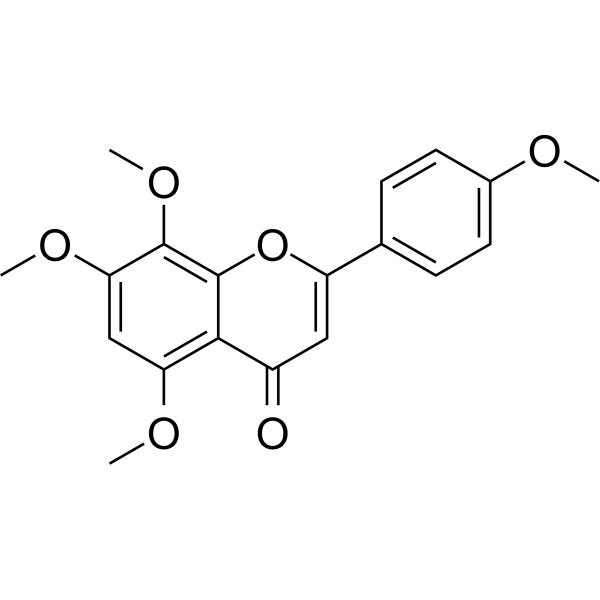 0 Images6-Demethoxytangeretin is a flavonoid compound that can be isolated from Citrus reticulata. 6-Demethoxytangeretin has anti-inflammatory and anti-allergic activities and can inhibit the production of IL-6 and the expression of related genes in human mast cells through the ALK and MAPK pathways. 6-Demethoxytangeretin can promote CRE-mediated transcription in hippocampal neurons.

-
HDAC/JAK/BRD4-IN-1
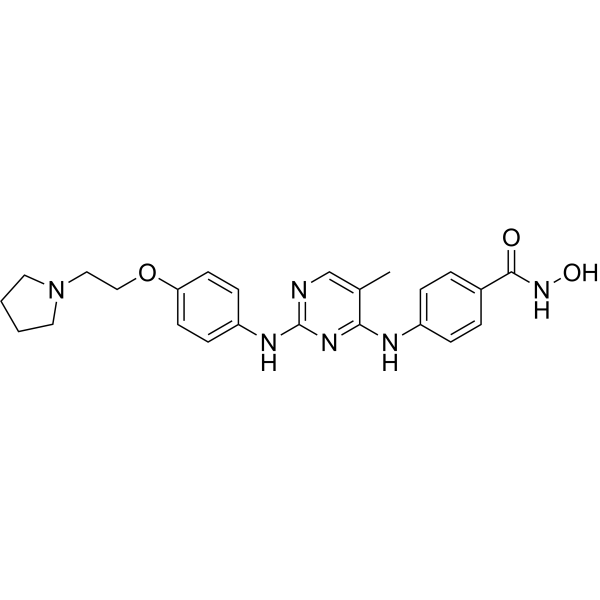 0 ImagesCat. No.: HY-156273CAS No.: 2755325-84-7HDAC/JAK/BRD4-IN-1(compound 25ap) is a potent HDAC/JAK/BRD4 triple inhibitor. HDAC/JAK/BRD4-IN-1 inhibit cell growth and induces apoptosis in MDA-MB-231 cells, and shows anticancer activity in vivo.
-
Tubulin/JAK2-IN-1
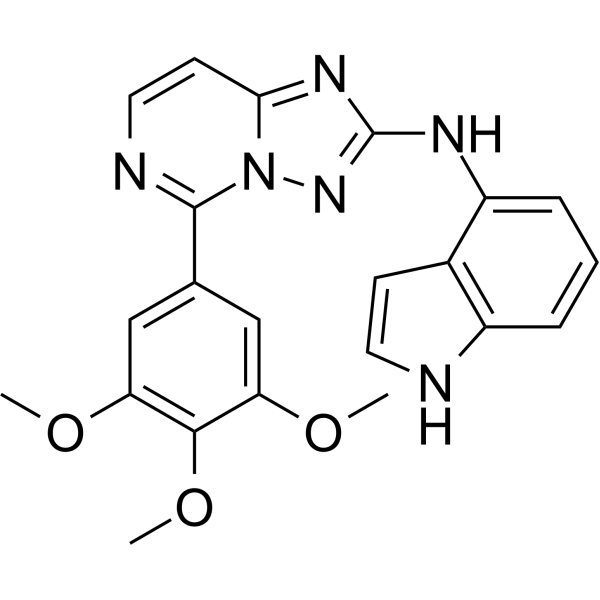 0 ImagesTubulin/JAK2-IN-1 (compound 7g) is a dual inhibitor of Janus kinase 2 (JAK2) and microtubule. Tubulin/JAK2-IN-1 has potent antiproliferative activity against the cancer cells.
-
Baricitinib-d5
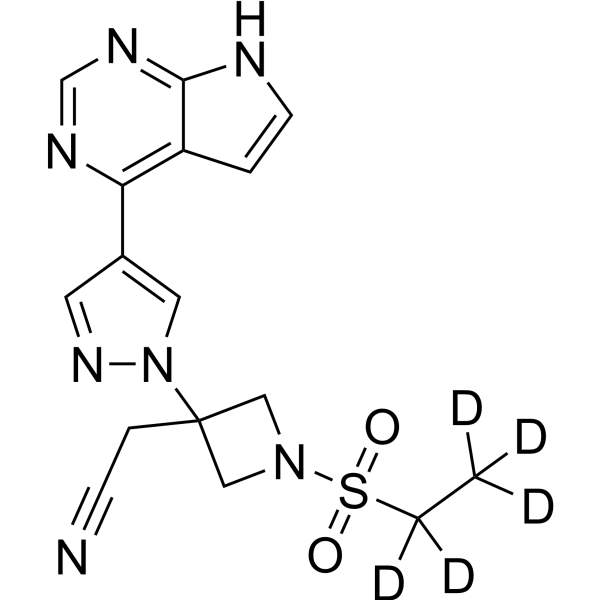 0 ImagesSynonyms: LY3009104-d5; INCB028050-d5Baricitinib-d5 is the deuterium labeled Baricitinib. Baricitinib (LY3009104; INCB028050) is a selective and orally bioavailable JAK1 and JAK2 inhibitor with IC50s of 5.9 nM and 5.7 nM, respectively.
-
Blovacitinib
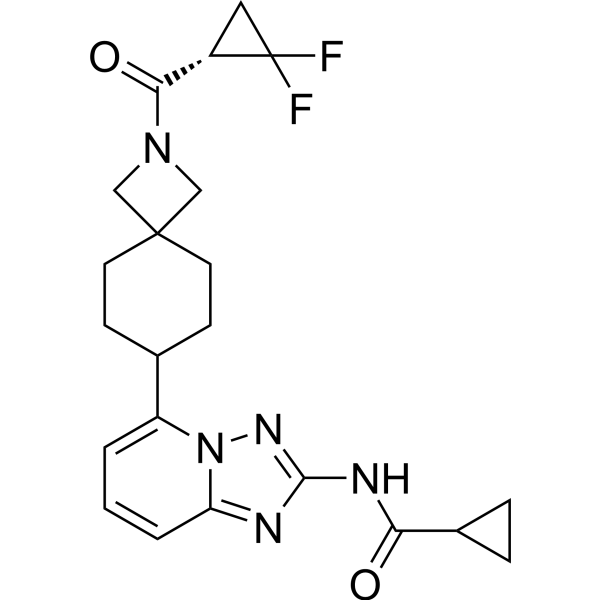 0 ImagesSynonyms: TUL01101
-
Cyclanoline chloride
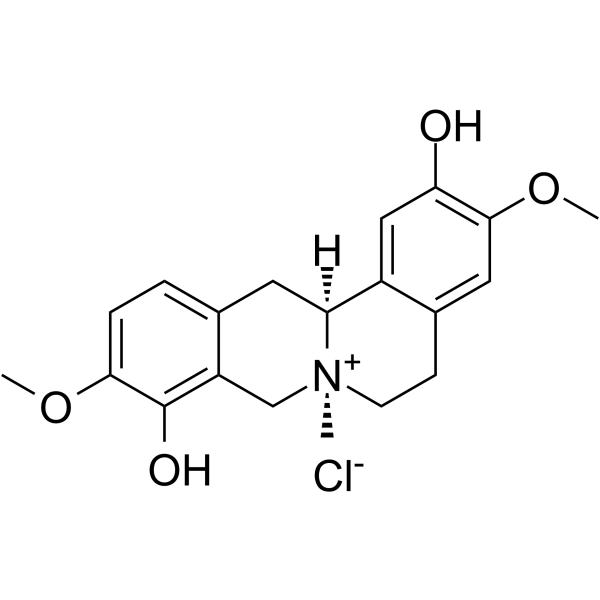 0 ImagesCat. No.: HY-120692CAS No.: 17472-50-3Cyclanoline chloride is an alkaloid. Cyclanoline chloride can be isolated from Fangji. Cyclanoline (chloride) inhibits the phosphorylation of JAK2 and STAT3, and induces Apoptosis. Cyclanoline chloride suppresses tumor growth in subcutaneous bladder cancer xenograft models of nude mice. Cyclanoline chloride reverses cisplatin resistance in bladder cancer cells and enhances the efficacy of Cisplatin (HY-17394). Cyclanoline chloride can be used for research related to bladder cancer.
-
Filgotinib-d4
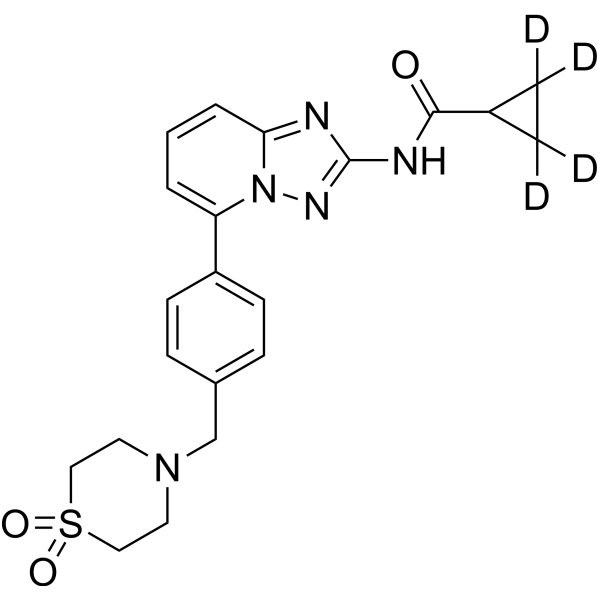 0 ImagesCat. No.: HY-18300SCAS No.: 2041095-50-3Synonyms: GLPG0634-d4Filgotinib-d4 is the deuterium labeled Filgotinib. Filgotinib (GLPG0634) is a selective JAK1 inhibitor with IC50 of 10 nM, 28 nM, 810 nM, and 116 nM for JAK1, JAK2, JAK3, and TYK2, respectively.

-
Nimucitinib
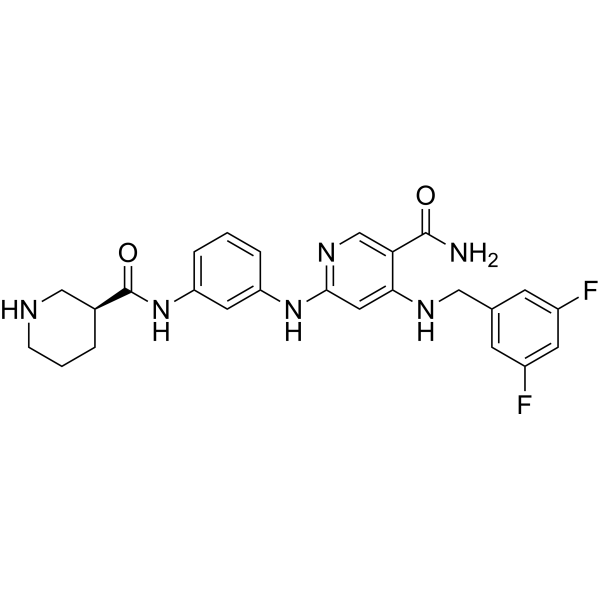 0 ImagesNimucitinib is a selective JAK inhibitor with potent tear secretion-promoting activity. Nimucitinib downregulates relevant signal transduction pathways by inhibiting the catalytic activity of JAK family tyrosine kinases. Nimucitinib promotes tear secretion in rabbits and inhibits corneal injury in rats. Nimucitinib can be used in dry eye-related research.
-
Pacritinib-d4
 0 ImagesCat. No.: HY-16379SPurity: 98.42%Synonyms: SB1518-d4Pacritinib-d8 (SB1518-d8) is the deuterium labeled Pacritinib (HY-16379). Pacritinib (SB1518) is a potent inhibitor of both wild-type JAK2 (IC50=23 nM) and JAK2V617F mutant (IC50=19 nM). Pacritinib also inhibits FLT3 (IC50=22 nM) and its mutant FLT3D835Y (IC50=6 nM).
-
WCY-8-67
 0 ImagesCat. No.: HY-178500CAS No.: 3052618-54-6WCY-8-67 is an orally active and selective USP5 inhibitor, with an IC50 value of 1.33 μM. WCY-8-67 induces apoptosis and suppresses JAK/STAT3 and PI3K/AKT signaling pathways in vitro. WCY-8-67 inhibits proliferation of AE-positive AML cells, induces G1 phase arrest and differentiation of AML cells. WCY-8-67 demonstrates potent anti-leukemic efficacy in mice. WCY-8-67 can be used for the study of acute myeloid leukemia.




