



Keap1-Nrf2 Inhibitor
-
Keap1-IN-2
 0 ImagesCat. No.: HY-174287CAS No.: 3066895-41-5
Keap1-IN-2 (Compound 164) is a KEAP1 inhibitor (IC50: 2 nM). Keap1-IN-2 indirectly activates Nrf2 by inhibiting KEAP1, thereby enhancing the antioxidant capacity of cells. Keap1-IN-2 promotes the accumulation and nuclear translocation of Nrf2 by blocking KEAP1-mediated Nrf2 degradation. Keap1-IN-2 can be used to study diseases associated with oxidative stress, such as inflammatory bowel disease, Crohn's disease, and immune diseases such as ulcerative colitis.
-
Mycosporine 2 glycine
 0 ImagesCat. No.: HY-161612CAS No.: 149092-45-5
Mycosporine 2 glycine is an anti-inflammatory agent and TYRP1 inhibitor. Mycosporine 2 glycine inhibits the expression of inflammatory genes and reduces nitric oxide production. Mycosporine 2 glycine binds tightly to the active pocket of TYRP1 and inhibits the activity of melanogenesis-related enzymes. Mycosporine 2 glycine can be used in the research of hyperpigmentation and inflammation-related diseases.
-
KI696 (Standard)
 0 ImagesCat. No.: HY-101140RCAS No.: 1799974-70-1
KI696 (Standard) is the analytical standard of KI696 (HY-101140). This product is intended for research and analytical applications. KI696 is a selective KEAP1/NRF2 protein-protein interaction inhibitor with a human Kd value of 1.3 nM. KI696 acts by competitively occupying the NRF2-binding pocket of the KEAP1 Kelch domain. KI696 blocks KEAP1-mediated ubiquitination and degradation of NRF2, promotes the translocation of NRF2 to the nucleus, activates the expression of downstream antioxidant genes, increases intracellular glutathione levels, and alleviates oxidative stress-induced cell damage and inflammatory cell infiltration in the lungs. KI696 reduces ozone-induced pulmonary oxidative damage and inflammatory cell accumulation in rats, and upregulates pulmonary antioxidant genes. KI696 can be used in research related to chronic obstructive pulmonary disease, oxidative stress and inflammation.
-
Cephaeline (Standard)
 0 ImagesSynonyms: (-)-Cephaeline (Standard); NSC 32944 free base (Standard)
Cephaeline ((-)-Cephaeline), a desmethyl analog of Emetine, is a phenolic alkaloid in Indian Ipecac roots isolated from the Cephaelis ipecacuanha. Cephaeline exhibits potent inhibition of both Zika virus (ZIKV) and Ebola virus (EBOV) infections. Cephaeline is an inductor of histone H3 acetylation and an inhibitor of mucoepidermoid carcinoma cancer stem cells (MEC), which promotes ferroptosis by inhibiting NRF2 to exert anti-lung cancer efficacy.
-
K67 (Standard)
 0 ImagesCat. No.: HY-111126RCAS No.: 2046250-48-8
K67 (Standard) is the analytical standard of K67 (HY-111126). This product is intended for research and analytical applications. K67 is a selective the interaction between Keap1 and S349 phosphorylated p62 inhibitor, with an IC50 of 1.5 μM. K67 has a weaker inhibitory effect on the interaction between Keap1 and Nrf2 (IC50 is 6.2 μM). K67 competitively binds to the binding site of Keap1 with p-p62, blocKing the abnormal activation of the p62-dependent Nrf2 pathway. K67 inhibits tumor cell proliferation and enhances the sensitivity of hepatocellular carcinoma (HCC) to chemotherapeutic drugs by restoring Keap1-mediated ubiquitination and degradation of Nrf2.
-
Hinokitiol (Standard)
 0 Images
Hinokitiol (Standard) is the analytical standard of Hinokitiol. This product is intended for research and analytical applications. Hinokitiol is a component of essential oils isolated from Chymacyparis obtusa, reduces Nrf2 expression, and decreases DNMT1 and UHRF1 mRNA and protein expression, with anti-infective, anti-oxidative, and anti-tumor activities.
-
Diphenyl disulfide (Standard)
 0 Images
Diphenyl disulfide (Standard) is an analytical standard for diphenyl disulfide (HY-Y1177). This product is intended for research and analytical applications. Diphenyl disulfide (Phenyl disulfide) is an organic disulfide compound. Diphenyl disulfide inhibits the PI3K/AKT/mTOR pathway, and induces ferroptosis (ferroptosis), apoptosis (apoptosis) and autophagy (autophagy) in cancer cells. Diphenyl disulfide downregulates GPX4 expression, inhibits NRF2 phosphorylation, induces lipid peroxidation, promotes xCT ubiquitination, induces proteolytic cleavage of p21 Bax into p18 Bax, and suppresses cell proliferation and viability. Diphenyl disulfide can be used in research related to melanoma and breast cancer.
-
ML385 (Standard)
 0 Images
ML385 (Standard) is the analytical standard of ML385 (HY-100523). This product is intended for research and analytical applications. ML385 is a potent and selective Nrf2 inhibitor with an IC50 of 1.9 μM. ML385 directly binds to the Neh1 domain of NRF2, interferes with the binding of the MAFG-NRF2 protein complex to the antioxidant response element (ARE) DNA sequence, thereby blocking the expression of downstream target genes of NRF2. ML385 can be used in studies related to adult T-cell leukemia, breast cancer, myocardial ischemia/reperfusion injury, non-small cell lung cancer, esophageal squamous cell carcinoma, head and neck squamous cell carcinoma, and lung squamous cell carcinoma.
-
Keap1-Nrf2-IN-17
 0 ImagesCat. No.: HY-162096CAS No.: 3042821-85-9
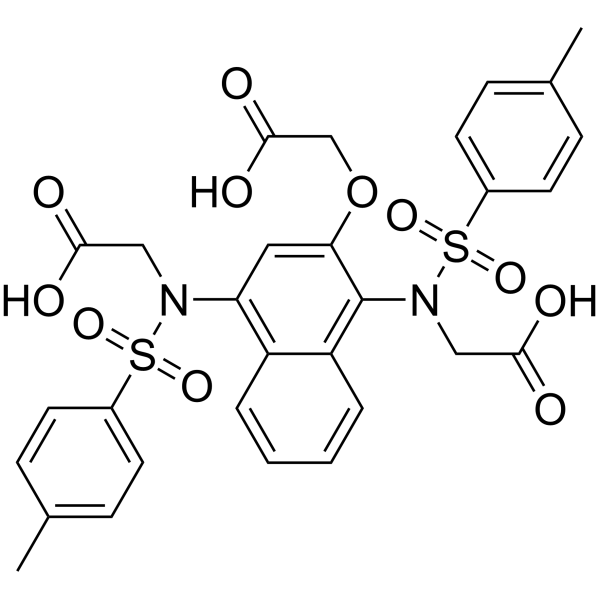
Keap1-Nrf2-IN-17 (compound 18) is a potent inhibitor of Keap1-Nrf2 protein-protein interaction.
-
Pectolinarigenin (Standard)
 0 Images
Pectolinarigenin (Standard) is the analytical standard of Pectolinarigenin. This product is intended for research and analytical applications. Pectolinarigenin is an orally active dual inhibitor of COX-2/5-LOX with anti-inflammatory, antioxidant, antitumor and neuroprotective activities. Pectolinarigenin exerts neuroprotective and anti-inflammatory effects on astrocyte inflammation via the NFκB and MAPK pathways. Pectolinarigenin inhibits LPS-induced phosphorylation of ERK1/2, N-FκB and p38MAPK, directly inhibits the enzymatic activity or binding of COX-2, 5-LOX and HIF-1α, and reduces the level of XIAP. Pectolinarigenin modifies Keap1 to promote nuclear accumulation of Nrf2, induces ARE-mediated antioxidant enzyme expression, and possesses direct free radical scavenging activity. Pectolinarigenin reduces the release of NO, proinflammatory mediators and leukotrienes, and increases the level of IL-10. Pectolinarigenin induces G2/M cell cycle arrest, apoptosis (Apoptosis) and autophagy (Autophagy) via the PI3K/AKT/mTOR signaling pathway. Pectolinarigenin reduces renal crystal deposition and inhibits melanin synthesis. Pectolinarigenin inhibits inflammation and alleviates allergy in mouse models of inflammation. Pectolinarigenin alleviates renal injury, inflammation and oxidative stress in mice by inhibiting HIF-1α activity. Pectolinarigenin can be used for the research of neurodegenerative diseases, inflammatory/allergic diseases, calcium oxalate nephrocalcinosis, gastric cancer, melasma, post-inflammatory diseases and chloasma.
-
Hippuric acid-13C6
 0 ImagesCat. No.: HY-W747703CAS No.: 1163160-18-6Synonyms: Benzoylglycine-13C6
Hippuric acid-13C6 (Benzoylglycine-13C6) is 13C labeled Hippuric acid. Hippuric Acid is an orally active metabolite. Hippuric Acid can be produced by intestinal microorganisms from the metabolism of polyphenols, benzoic acid. Hippuric Acid decreases NRF2, MMP9 and leads to ROS accumulation. Hippuric Acid activates TGFβ/SMAD signaling. Hippuric Acid improves hyperuricemia and colitis. Hippuric Acid can also be used in cardiovascular disease research. .
-
2"-O-Galloylhyperin (Standard)
 0 ImagesCat. No.: HY-N0526RCAS No.: 53209-27-1
2"-O-Galloylhyperin (Standard) is the analytical standard of 2"-O-Galloylhyperin (HY-N0526). This product is intended for research and analytical applications. 2''-O-Galloylhyperin is an active natural compound with anti‑inflammatory, antioxidant, anti‑adipogenic, antifibrotic, and cytostatic activities. 2''-O-Galloylhyperin upregulates SIRT1/Nrf2 signaling, inhibits NF-κB and MAPK (ERK1/2, p38, JNK) phosphorylation, suppresses TSHR activation, reduces ROS accumulation, and enhances SOD and GSH-Px activities. 2''-O-Galloylhyperin protects against LPS-induced tissue injury, enhances survival, and inhibits adipogenesis and fibrosis. 2"-O-Galloylhyperin can be used for the research of sepsis, acute lung injury, and thyroid eye disease.



