



PPARα Modulator
-
Ceruloplasmin
 0 Images
Ceruloplasmin is a copper-binding ferroxidase and serum copper carrier. Ceruloplasmin promotes FPN1-mediated iron export by catalyzing ferrous iron oxidation, maintains the protein stability of ferroportin, and assists transferrin and lactoferrin in completing iron binding; it regulates HIF, AMPK, PPARα, and PGC1α, exerting antioxidant effects and inhibiting ferroptosis (Ferroptosis). Ceruloplasmin can be used in research on posthemorrhagic anemia, hemolytic anemia, neurodegenerative diseases, NAFLD, metabolic diseases, hereditary aceruloplasminemia, hepatocellular carcinoma, and ischemia-reperfusion injury.
-
ABP/PPAR modulator 1
 0 ImagesCat. No.: HY-172883CAS No.: 3104894-76-7
ABP/PPAR modulator 1 is an orally active FABP and PPAR multiple modulator (IC50s of 0.65 μM and 1.08 μM for FABP1 and FABP4, EC50 s of 9.19 μM, 2.20 μM and 1.58 μM for PPARα, PPARγ and PPARδ). ABP/PPAR modulator 1 has potent anti-metabolic dysfunction-associated steatohepatitis (MASH) activity. ABP/PPAR modulator 1 dose-dependently ameliorates multiple pathological characteristics of fatty liver in WD + Carbon tetrachloride-induced MASH mice model.
-
Acanthoic acid
 0 ImagesCat. No.: HY-116136CAS No.: 119290-87-8Synonyms: NP1302
Acanthoic acid (NP1302) is an orally active pimarane-type diterpenoid. Acanthoic acid is isolated from the root bark of Araliaceae family plant Eleutherococcus senticosus (Siberian ginseng). Acanthoic acid activates LXR and FXR. Acanthoic acid activates the AMPK-LKB1, SIRT1, and p38 MAPK signaling pathways and increases the phosphorylation level of ACC. Acanthoic acid downregulates the expression of SREBP-1, CYP2E1, HIF-1α, and PPARγ, and upregulates the expression of PPARα. Acanthoic acid induces Apoptosis by activating Caspase-3, promoting PARP cleavage, and downregulating Bcl-xL. Acanthoic acid exhibits antioxidant, anti-fibrotic, and hepatoprotective effects. It reduces lipid accumulation and lipogenesis. Acanthoic acid is used in studies on non-alcoholic fatty liver disease, alcoholic liver disease, acute promyelocytic leukemia, and Acetaminophen-induced hepatotoxicity.
-
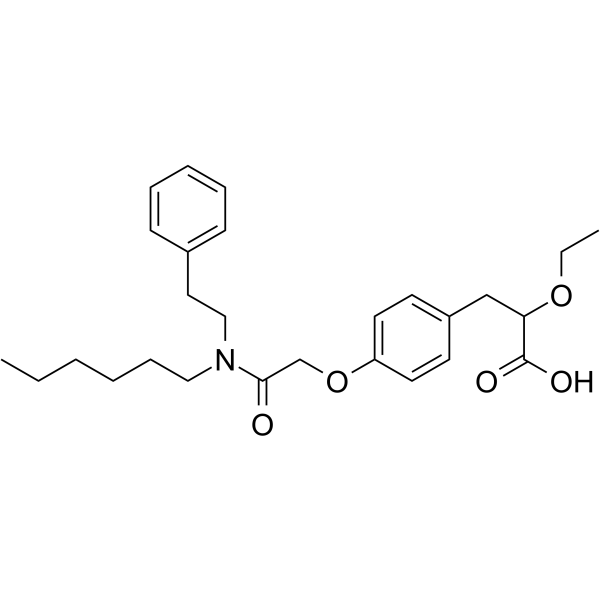
PPARα-MO-1
 0 ImagesCat. No.: HY-U00068CAS No.: 810677-36-2
PPARα-MO-1 is a potent PPARα modulator extracted from patent WO/2004/110982A1, formula I.



