



Antibiotic
Antibiotics are a class of secondary metabolites produced from microorganisms, animals or plants. Some of them exhibit anti-bacterial, anti-fungal, anthelmintic, anti-tumor or immunosuppressive activities with a wealth of structural classes such as β-lactams, macrolide and polyether. As major sources of antibiotics, streptomycetes, penicillium and marine organisms produce a wide variety of commercially important polyketide compounds including the well-known macrolide, polyene and polyether antibiotics with wide range of activities. Antibiotics such as penicillin, cephalosporin, streptomycin, and tetracycline can be used in the treatment of human and veterinary diseases. However, antibiotic resistance is also a growing threat to global public health.
Antibiotic Isoform Specific Products
-
Antibiotic
(2773)
View all products
-
Aminoglycoside
(46)
View all products
-
Glycopeptide
(20)
View all products
-
Lipopeptide
(7)
View all products
-
Macrolide
(76)
View all products
-
Oxazolidinone
(16)
View all products
-
Quinolone
(101)
View all products
-
Tetracycline
(42)
View all products
-
β-lactam
(200)
View all products
All Product Categories
-
Antibiotic Related Products (3536)
Related Products (3536)

-
Related Compound Screening Libraries (1)
-
Antibiotic Isoform Comparison
-
Lankacidinol A
 0 ImagesCat. No.: HY-125618CAS No.: 23498-36-4Synonyms: T-2636 DLankacidinol A (T-2636 D) is an antibiotic, and shows antibacterial activity against Gram-positive bacteria.
-
Tebipenem (Standard)
 0 ImagesSynonyms: LJC 11036 (Standard)Tebipenem (Standard) is the analytical standard of Tebipenem. This product is intended for research and analytical applications. Tebipenem is an orally available carbapenem antibiotic, shows broad-spectrum activity against Gram-positive and -negative bacteria, except for Pseudomonas aeruginosa.
-
Nothramicin
 0 ImagesCat. No.: HY-165483CAS No.: 205752-47-2Nothramicin is an anthracycline antibiotic with anti-mycobacterial activity .
-
Arylomycin A3
 0 ImagesCat. No.: HY-N13956CAS No.: 459844-21-4Arylomycin A3 is a lipohexapeptide antibiotic against Gram-positive bacteria.
-
Lenapenem hydrochloride hydrate
 0 ImagesCat. No.: HY-105180ACAS No.: 149882-71-3Synonyms: BO-2727 hydrochloride hydrateLenapenem (BO-2727) hydrochloride hydrate, a carbapenem antibiotic, has potent antibacterial activity against Gram-positive and Gram-negative bacteria including P. aeruginosa.
-
Basacv
 0 ImagesCat. No.: HY-136991CAS No.: 95676-71-4Basacv is a DNA-polyintercalating bifunctional compound with DNA-high affinity. Basacv is structurally analogous to the antibiotic anti-tumour drug Triostin A and act as a bis-intercalator.
-
Tedizolid-13C,d3
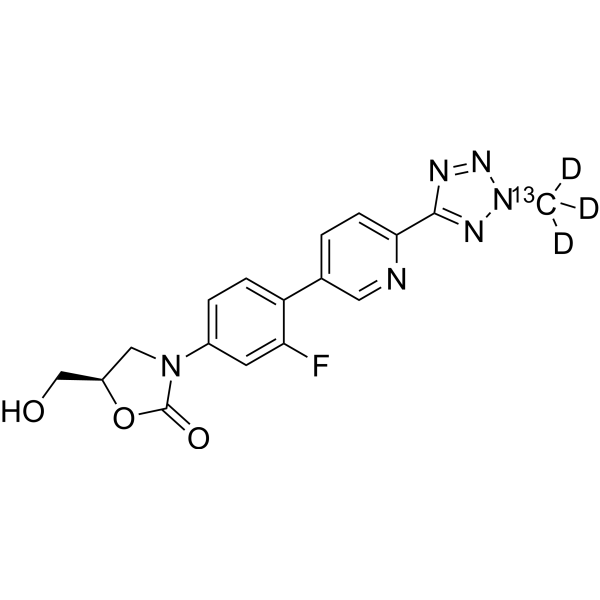 0 ImagesCat. No.: HY-14855SCAS No.: 2931763-72-1Synonyms: TR 700-13C,d3; Torezolid-13C,d3; DA-7157-13C,d3Tedizolid-13C,d3 is the 13C- and deuterium labeled Tedizolid. Tedizolid (TR 700; Torezolid; DA-7157) is a novel oxazolidinone, acting through inhibition of bacterial protein synthesis by binding to 23S ribosomal RNA (rRNA) of the 50S subunit of the ribosome.
-
Ampicillin trihydrate (Standard)
 0 ImagesCat. No.: HY-B0522BRCAS No.: 7177-48-2Synonyms: D-(-)-α-Aminobenzylpenicillin trihydrate (Standard)Ampicillin (trihydrate) (Standard) is the analytical standard of Ampicillin (trihydrate). This product is intended for research and analytical applications. Ampicillin trihydrate (D-(-)-α-Aminobenzylpenicillin trihydrate) is a broad-spectrum beta-lactam antibiotic against a variety of gram-positive and gram-negative bacteria.
-
Ciprofloxacin-d4
 0 ImagesCat. No.: HY-B0356S2Synonyms: Bay-09867-d4Ciprofloxacin-d4 (Bay-09867-d4) is deuterium labeled Ciprofloxacin. Ciprofloxacin (Bay-09867) is a potent, orally active topoisomerase IV inhibitor. Ciprofloxacin induces mitochondrial DNA and nuclear DNA damage and lead to mitochondrial dysfunction, ROS production. Ciprofloxacin has anti-proliferative activity and induces apoptosis. Ciprofloxacin is a fluoroquinolone antibiotic, exhibiting potent antibacterial activity.
-
Gatifloxacin sesquihydrate (Standard)
 0 ImagesCat. No.: HY-10581CRCAS No.: 180200-66-2Synonyms: AM-1155 sesquihydrate (Standard); BMS-206584 sesquihydrate (Standard); PD135432 sesquihydrate (Standard)Gatifloxacin (sesquihydrate) (Standard) is the analytical standard of Gatifloxacin (sesquihydrate). This product is intended for research and analytical applications. Gatifloxacin sesquihydrate (AM-1155; BMS-206584; PD135432) is a potent fluoroquinolone antibiotic with broad-spectrum antibacterial activity. Gatifloxacin sesquihydrate inhibits bacterial type II topoisomerases (IC50=13.8 μg/ml for S. aureus topoisomerase IV) and E. coli DNA gyrase (IC50 = 0.109 μg/ml). Gatifloxacin sesquihydrate can be used to treat bacterial conjunctivitis?in vivo.
-
Antimicrobial agent-39
 0 ImagesCat. No.: HY-170993Antimicrobial agent-39 (Compound 8i) is an antibiotic that targets 50S ribosomal subunit and inhibits bacterial protein synthesis. Antimicrobial agent-39 disrupts bacterial cell membranes, leads to leakage of cell contents, thereby exhibiting board-spectrum actibacterial activity. Antimicrobial agent-39 targets organic cation transporters (OCTs), accumulates in infected kidneys, thereby ameliorating pyelonephritis in mouse models.
-
Demycarosyl platenomycin
 0 ImagesCat. No.: HY-N14732CAS No.: 52044-89-0Synonyms: DM-PLMDemycarosylplatenomycin (DM-PLM) is an antibiotic with weak activity against Gram-positive bacteria.
-
Epoxyquinomicin C
 0 ImagesCat. No.: HY-N14977CAS No.: 200496-85-1Epoxyquinomicin C is an antibiotic that can be isolated from Amycolatopsis sp. Epoxyquinomicin C exhibits anti-inflammatory effects against collagen-induced arthritis. Epoxyquinomicin C can be designed for synthesis of the NF-κB Inhibitor DHMEQ.
-
Pneumocandin B2
 0 ImagesCat. No.: HY-N14468CAS No.: 138530-80-0Pneumocandin B2 is a lipopeptide antibiotic. Pneumocandin B2 has a strong anti-Candida effect. Pneumocandin B2 has the effect of inhibiting the synthesis of 1,3 early-glucan in vitro, with an IC50 of 0.07-0.5 μg/mL.
-
Cefsulodin sodium (Standard)
 0 ImagesCat. No.: HY-13588RCAS No.: 52152-93-9Synonyms: SCE-129 sodium (Standard)Cefsulodin (sodium) (Standard) is the analytical standard of Cefsulodin (sodium). This product is intended for research and analytical applications. Cefsulodin (SCE-129) sodium is a third generation β lactam antibiotic and member of the cephems subgroup of antibiotics. Cefsulodin sodium inhibits cell wall synthesis by competitively inhibiting penicillin binding protein (PBP) cross-linking and transpeptidation of peptidogly. Cefsulodin sodium is a potent tyrosine phosphatase inhibitor against mPTPB, a virulent phosphatase from Mycobacterium tuberculosis, with an IC50 value of 16 μM.
-
13-Deoxycarminomycin
 0 ImagesCat. No.: HY-126954CAS No.: 76034-18-913-Deoxycarminomycin is an antibiotic with antibacterial activity. 13-Deoxycarminomycin also exhibits cytotoxicity against tumor cells such as HeLa and P388, and can play an anti-tumor role.
-
Cedarmycin B
 0 ImagesCat. No.: HY-N14012CAS No.: 363624-70-8Cedarmycin B has activities against Candida, Cryptococcus neoforme and Aspergillus fumigatus, with the MIC values of 12.5-50 μg/mL.
-
Furazolidone (Standard)
 0 ImagesFurazolidone (Standard) is the analytical standard of Furazolidone. This product is intended for research and analytical applications. Furazolidone is a nitrofuran derivative with antiprotozoal and antibacterial activity. It inhibits AML1-ETO transformed cells with an IC50 of 12.7 μM.
-
Erythromycin-d6
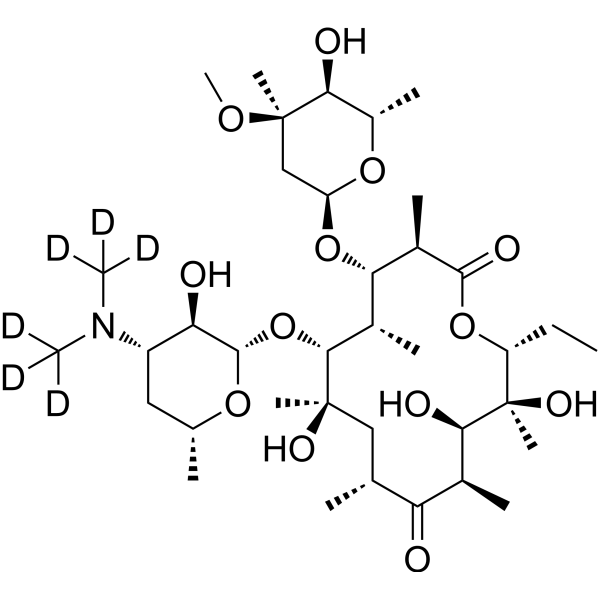 0 ImagesCat. No.: HY-B0220SCAS No.: 959119-25-6Erythromycin-d6 is the deuterium labeled Erythromycin. Erythromycin is a macrolide antibiotic produced by actinomycete?Streptomyces erythreus?with a broad spectrum of antimicrobial activity. Erythromycin acts by binding to bacterial 50S ribosomal subunits and inhibits?RNA-dependent protein synthesis?by blockage of transpeptidation and/or translocation reactions, without affecting synthesis of nucleic acid.
-
Aureonuclemycin
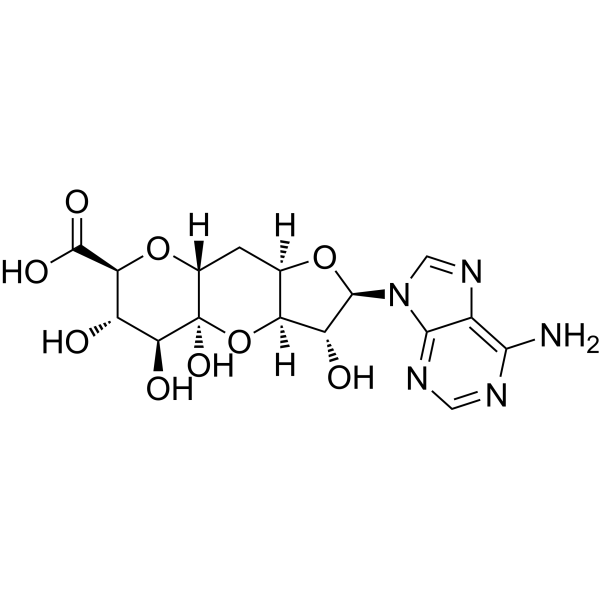 0 ImagesCat. No.: HY-N12498CAS No.: 123970-01-4Aureonuclemycin can be isolated from Staphylococcus aureus to obtain its biosynthetic gene cluster. Aureonuclemycin exists in two forms: Type A and Type B. Aureonuclemycin A is a nucleoside antibiotic that is structurally similar to herbicides and contains adenine. Aureonuclemycin B contains 5′-deoxyadenosine and exhibits antibacterial activity. Aureonuclemycin can be used in the research of bacterial leaf blight in rice, citrus canker, and bacterial leaf spot in rice. .



