



Antibiotic
Antibiotics are a class of secondary metabolites produced from microorganisms, animals or plants. Some of them exhibit anti-bacterial, anti-fungal, anthelmintic, anti-tumor or immunosuppressive activities with a wealth of structural classes such as β-lactams, macrolide and polyether. As major sources of antibiotics, streptomycetes, penicillium and marine organisms produce a wide variety of commercially important polyketide compounds including the well-known macrolide, polyene and polyether antibiotics with wide range of activities. Antibiotics such as penicillin, cephalosporin, streptomycin, and tetracycline can be used in the treatment of human and veterinary diseases. However, antibiotic resistance is also a growing threat to global public health.
Antibiotic Isoform Specific Products
-
Antibiotic
(2777)
View all products
-
Aminoglycoside
(46)
View all products
-
Glycopeptide
(20)
View all products
-
Lipopeptide
(7)
View all products
-
Macrolide
(76)
View all products
-
Oxazolidinone
(16)
View all products
-
Quinolone
(101)
View all products
-
Tetracycline
(42)
View all products
-
β-lactam
(200)
View all products
All Product Categories
-
Antibiotic Related Products (3540)
Related Products (3540)

-
Related Compound Screening Libraries (1)
-
Antibiotic Isoform Comparison
-
Monamycin H2
 0 ImagesCat. No.: HY-N14083CAS No.: 31556-83-9Monamycin H2 is an ester peptide antibiotic. Monamycin H2 has activity against Gram-positive bacteria.
-
Neocryptolepine-Cl
 0 ImagesCat. No.: HY-173342CAS No.: 1150313-15-7Synonyms: Cryptotackieine-ClNeocryptolepine-Cl (compound Z24) is an inhibitor of Bcthi4 and exhibits excellent antifungal activity against B. cinerea with EC50 value of 0.56 μg/mL.
-
Laidlomycin phenylcarbamate
 0 ImagesCat. No.: HY-113562CAS No.: 101191-83-7Laidlomycin phenylcarbamate is a semisynthetic polyether antibiotic with antiparasitic activity.
-
Cefuroxime sodium (Standard)
 0 ImagesCefuroxime (sodium) (Standard) is the analytical standard of Cefuroxime (sodium). This product is intended for research and analytical applications. Cefuroxime sodium is an orally active second-generation cephalosporin antibiotic with increased stability to β-lactamase. Cefuroxime sodium has a broad spectrum activity against Gram-positive and Gram-negative bacteria.
-
Paldimycin B
 0 ImagesCat. No.: HY-113602CAS No.: 101411-71-6Synonyms: Antibiotic 273 A1-betaPaldimycin B (Antibiotic 273 A1-beta) is a powerful semi-synthetic antibiotic with antibacterial activity against S. aureus and coagulase-negative staphylococci.
-
Pradimicinone I
 0 ImagesCat. No.: HY-N15368CAS No.: 116276-03-0Pradimicinone I (Compound 10), a Pradimicin A (HY-132191) analog, is an antibiotic. Pradimicinone I is promising for research of antibacterial agents.
-
Destomycin B
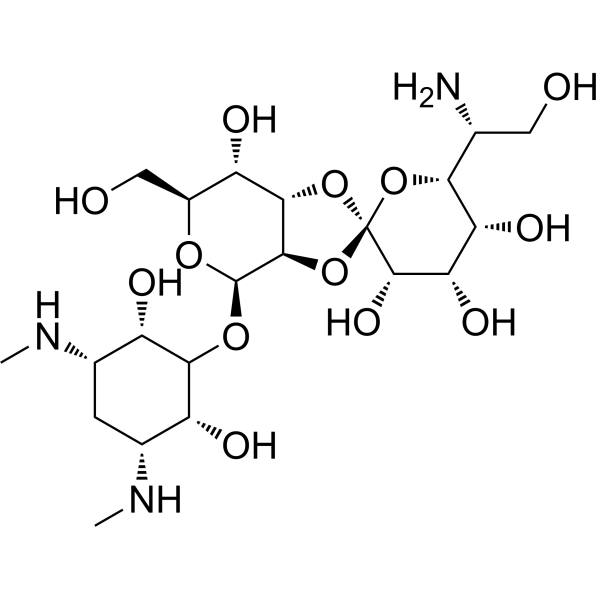 0 ImagesCat. No.: HY-138194CAS No.: 11005-98-4Synonyms: A-16316-CDestomycin B (A-16316-C) is an antibiotic, and is active against fungi. Destomycin B also has anthelmintic activity.
-
Aphidicolin (Standard)
 0 ImagesCat. No.: HY-N6733RCAS No.: 38966-21-1Aphidicolin (Standard) is the analytical standard of Aphidicolin. This product is intended for research and analytical applications. Aphidicolin is an inhibitor of DNA polymerase α and δ, prevents mitotic cell division by interfering DNA polymerase activity. Aphidicolin is an antibiotic produced by mold Cephalosporium aphidicola, inhibits cellular deoxyribonucleic acid synthesis and the growth of herpes simplex virus. Aphidicolin exhibits anti-orthopoxvirus activity and potentiates apoptosis induced by arabinosyl nucleosides in a human promyelocytic leukemia cell line.
-
Desacetylcephalothin sodium
 0 ImagesDesacetylcephalothin sodium is a metabolite of Cephalothin (HY-B1275A). Desacetylcephalothin sodium exhibits a weak antimicrobial activity.
-
Aranochlor A
 0 ImagesCat. No.: HY-N13951CAS No.: 208466-05-1Aranochlor A is an antibiotic found in Pseudoarachniotus roseus (HIL Y-30499). Aranochlor A exhibits antibacterial and antifungal activities.
-
Arginomycin
 0 ImagesCat. No.: HY-N13890CAS No.: 106133-33-9Arginomycin is a nucleoside antibiotic that inhibits the growth of Gram-positive bacteria and fungi in vitro.
-
Pneumocandin A4
 0 ImagesCat. No.: HY-N14467CAS No.: 135882-23-4Pneumocandin A4 is a lipopeptide antibiotic. Pneumocandin A4 has a strong anti-Candida effect. Pneumocandin A4 has the effect of inhibiting the synthesis of 1,3 early-glucan in vitro, with an IC50 of 0.07-0.5 μg/mL.
-
Arisostatin B
 0 ImagesCat. No.: HY-N13900CAS No.: 271574-42-6Arisostatin B is a Tetrocarcin class of antibiotic against Gram-positive bacteria and antitumor activity.
-
Pyrrolomycin B
 0 ImagesCat. No.: HY-N14575CAS No.: 79763-00-1Pyrrolomycin B is a pyrrole antibiotic. Pyrrolomycin B has anti-Gram-positive bacteria, anti-Gram-negative bacteria and anti-individual fungi activity.
-
LB 11058
 0 ImagesCat. No.: HY-183459CAS No.: 591207-81-7LB 11058 is a Cephalosporin Antibacterial agent. LB 11058 inhibits the growth of pathogenic bacteria, including multidrug-resistant staphylococci and streptococci, but shows weak activity against Enterococcus faecium, Corynebacterium species, Enterobacteriaceae and non-fermenting Gram-negative bacilli. LB 11058 can be used in bacterial infection research.
-
Doxycycline fosfatex
 0 ImagesCat. No.: HY-N0565DCAS No.: 83038-87-3Doxycycline fosfatex is an orally active highly lipophilic, tissue-permeable MMP inhibitor with broad-spectrum antibacterial activity. Doxycycline fosfatex is also a semi-synthetic antibiotic with chelating properties, which blocks bacterial protein synthesis and inhibits extracellular matrix degradation through interactions with zinc and fosfatex atoms. Doxycycline fosfatex also inhibits mitochondrial biogenesis, translation, and the expression of respiratory chain proteins. Doxycycline fosfatex induces apoptosis, inhibits autophagy and EMT, downregulates stem cell markers, and activates the PI3K-AKT pathway, thereby effectively inhibiting the viability and proliferation of cancer cells such as breast cancer cells. Doxycycline fosfatex also promotes the survival and self-renewal of embryonic stem cells and neural stem cells, and reduces the frequency of medium changes in culture. Doxycycline fosfatex has been applied in studies related to breast cancer, prostate cancer, bladder cancer, and other cancers.
-
Anti-MRSA agent 12
 0 ImagesCat. No.: HY-161803CAS No.: 2314380-76-0Anti-MRSA agent 12 (Compound SM-5) is an antibiotic, which exhibits antibacterial activity against Staphylococcus aureus, S. epidermidis and Escherichia coli with MIC of 7.81, 7.81 and 62.5 μM. Anti-MRSA agent 12 inhibits the methicillin-resistant S. aureus (MRSA) through inhibition of biofilm formation.
-
Indometacin-d7
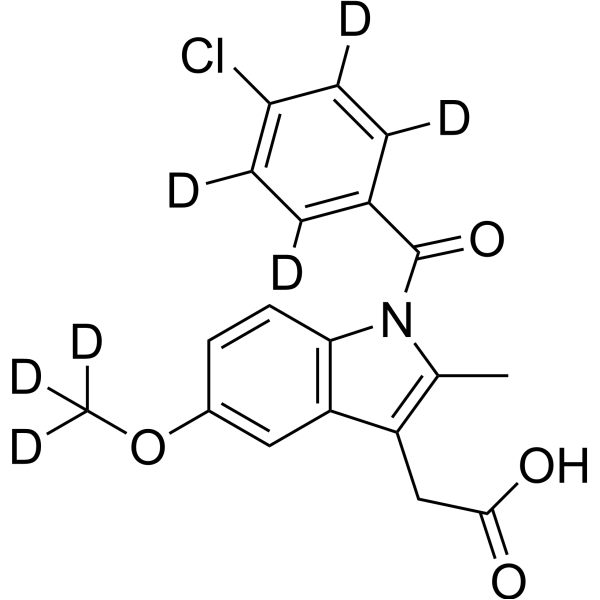 0 ImagesCat. No.: HY-14397S2Indometacin-d7 is deuterated labeled Indomethacin (HY-14397). Indomethacin (Indometacin) is a potent, orally active COX1/2 inhibitor with IC50 values of 18 nM and 26 nM for COX-1 and COX-2, respectively. Indomethacin has anticancer activity and anti-infective activity. Indomethacin can be used for cancer, inflammation and viral infection research.
-
Azidocillin sodium
 0 ImagesCat. No.: HY-B2091ACAS No.: 35334-12-4Azidocillin sodium, a semi-synthetic Penicillin, is an orally active β-lactam antibiotic. Azidocillin sodium bears an azide functionality and retains on-target activity within bacteria. Azidocillin sodium can be used to research osteitis caused by dental surgery, otitis media, enterococcal septicemia and other bacterial infectious diseases. Azidocillin sodium is a click chemistry reagent, it contains an Azide group and can undergo copper-catalyzed azide-alkyne cycloaddition reaction (CuAAc) with molecules containing Alkyne groups. It can also undergo strain-promoted alkyne-azide cycloaddition (SPAAC) reactions with molecules containing DBCO or BCN groups.
-
Oxytetracycline-13C,d3 hydrochloride
 0 ImagesCat. No.: HY-W755036Oxytetracycline-13C,d3 hydrochloride is the 13C- and deuterium labeled Oxytetracycline hydrochloride (HY-B0275A). Oxytetracycline hydrochloride is an antibiotic that exhibits board-spectrum antibacterial activity. Oxytetracycline hydrochloride is a protein synthesis inhibitor and prevents the binding from aminoacil-tRNA to the complex m-ribosomal RNA. Oxytetracycline hydrochloride also possesses anti-HSV-1 activity.



