



Fluorescent Dye
Fluorescence is a phenomenon of photoluminescence in luminescence. When an atom is irradiated by light, some electrons around the nucleus jump from their original orbitals to higher energy orbitals under the influence of light energy, i.e., from the ground state to the first or second excited single-line state, etc. Due to the instability of the first or second excited singlet state, the electron returns from the excited singlet state to the ground state accompanied by released energy, resulting in fluorescence.
Fluorescent dyes can be covalently bound or physically adsorbed in the structure of the substance. The fluorescence properties allow for the characterization, localization and quantitative analysis of the labeled object. Fluorescent dyes have shown great potential for the detection of proteins, nucleic acids, cells, and immunoassays, attributed to the advantages in non-radioactive contamination, simple experimental operation and easy observation.
Fluorescent dyes have penetrated many fields such as pharmacology, physiology, environmental science, and information science, as well as functional studies of proteins and drug screening.
All Product Categories
-
Fluorescent Dye Related Products (4914)
Related Products (4914)

-
Antibodies (4)
-
DiOC14(3) (hydroxyethanesulfonate)
 0 ImagesCat. No.: HY-D3421CAS No.: 3083251-08-2DiOC14 (3) (hydroxyethanesulfonate) is a water-soluble lipophilic carbocyanine green fluorescent membrane dye used as a fluorescent probe for living cell membranes and lipid bilayers. DiOC14 (3) (hydroxyethanesulfonate) acts as a lipophilic tracer that integrates into cell membranes, with its fluorescence generated upon membrane integration independent of enzymatic hydrolysis, pH, or membrane potential. The Ex/Em of DiOC14 (3) (hydroxyethanesulfonate) is 477/525 nm.

-
Lycopersicon esculentum (Tomato) Lectin-Cy3
 0 ImagesCat. No.: HY-NP071JSynonyms: LEL-Cy3Lycopersicon esculentum (Tomato) Lectin-Cy3 (LEL-Cy3) is Lycopersicon esculentum lectin (LEL) labeled with the Cy3 fluorescent dye. Lycopersicon esculentum (Tomato) lectin specifically recognizes and binds to glycan structures, primarily targeting N-acetyl-β-D-glucosamine residues. Lycopersicon esculentum (Tomato) Lectin-Cy3 can be used to study glycosylation and localize glycan structures on cell surfaces and in tissue sections (Ex/Em = 554/568 nm).
-
Sulfo-Cyanine5.5 azide tripotassium
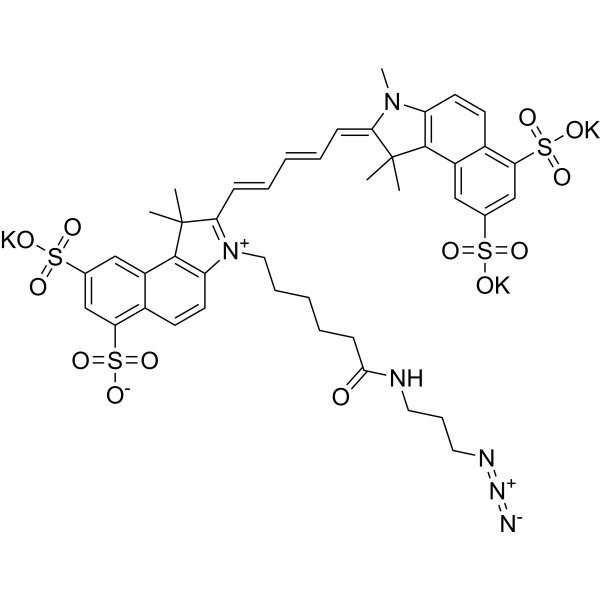 0 ImagesCat. No.: HY-D1308CAS No.: 2382994-65-0Sulfo-Cyanine5.5 azide tripotassium, a near-infrared (NIR) fluorescent dye, is an azide-functionalized Sulfo-Cyanine5.5 (Ex=678 nm, Em=694 nm). Sulfo-Cyanine5.5 azide tripotassium can react with alkynes for Click Chemistry labeling. It contains an azide group and can undergo copper-catalyzed azide-alkyne cycloaddition (CuAAc) with molecules containing alkyne groups. It can also undergo ring strain-promoted alkyne-azide cycloaddition (SPAAC) with molecules containing DBCO or BCN groups.
-
Ulex Europaeus Agglutinin I-AF680
 0 ImagesCat. No.: HY-NP090JSynonyms: UEA I-AF680Ulex Europaeus Agglutinin I-AF680 (UEA I-AF680) is an AF680-labeled glehnia littoralis lectin I (UEA-I). Ulex Europaeus Agglutinin I exhibits specificity for cell surface glycoconjugates containing α-L-fucosylate. Ulex Europaeus Agglutinin I-AF680 can be used for vascular endothelial labeling, glycan imaging, and tissue staining studies (Ex/Em = 684/707 nm).
-
Boc-Ala-Gly-Pro-Arg-AMC
 0 ImagesCat. No.: HY-P11367CAS No.: 118850-78-5Boc-Ala-Gly-Pro-Arg-AMC is a synthetic fluorescent substrate, widely used for the detection of protease activity. Boc-Ala-Gly-Pro-Arg-AMC can be used to detect the activity of serine proteases and the oligopeptide enzyme B of Trypanosoma brucei.
-
Z-VDVAD-AFC
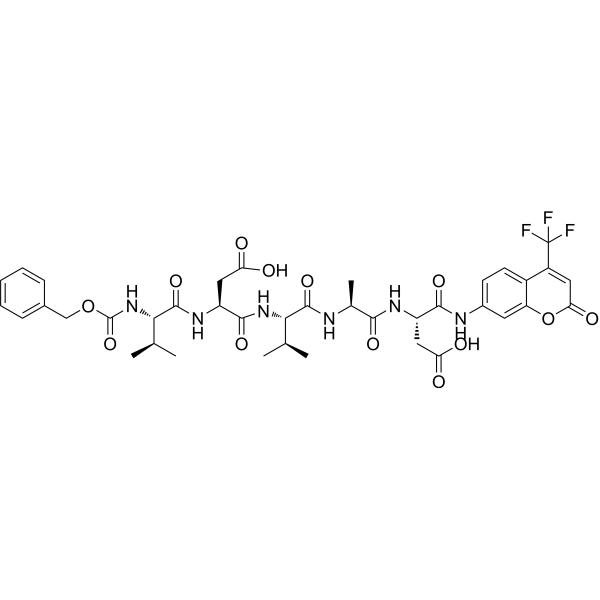 0 ImagesCat. No.: HY-P4400CAS No.: 219138-08-6Z-VDVAD-AFC is a fluorogenic substrate. Z-VDVAD-AFC is used to measure the activity of cysteine protease 3 (Caspase-3). Z-VDVAD-AFC undergoes hydrolysis to release 7-amino-4-trifluoromethylcoumarin (AFC). AFC is fluorescent under ultraviolet light and can emit fluorescent signals.
-
Disulfo-ICG-NHS disodium
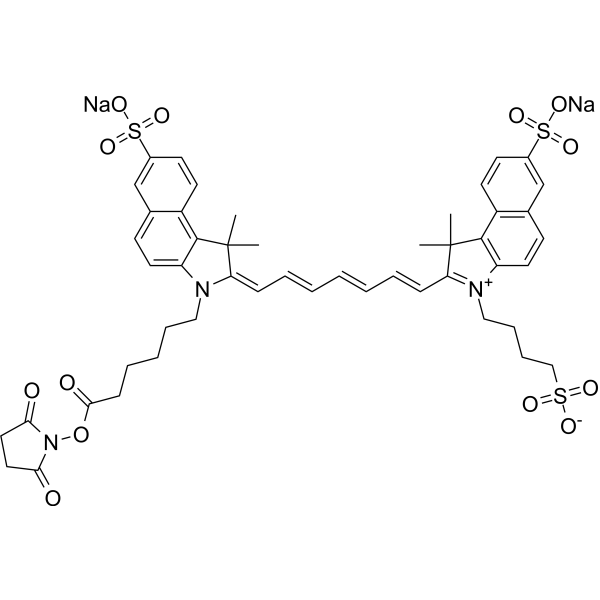 0 ImagesCat. No.: HY-D2238Disulfo-ICG-NHS disodium is a fluorescent dye.
-
Rhodamine B-Chitosan (MW 100000)
 0 ImagesCat. No.: HY-D3048ERhodamine B-Chitosan (MW 100000) is a Rhodamine B (HY-Y0016)-labeled chitosan with a molecular weight of 100,000. Rhodamine B-Chitosan (MW 100000) combines the polysaccharide properties of chitosan with the fluorescence properties of Rhodamine B, playing an important role in fields such as fluorescent labeling, cell imaging, and drug delivery research (Ex/Em = 546/610 nm).
-
N-Succinyl-Ile-Ile-Trp-AMC
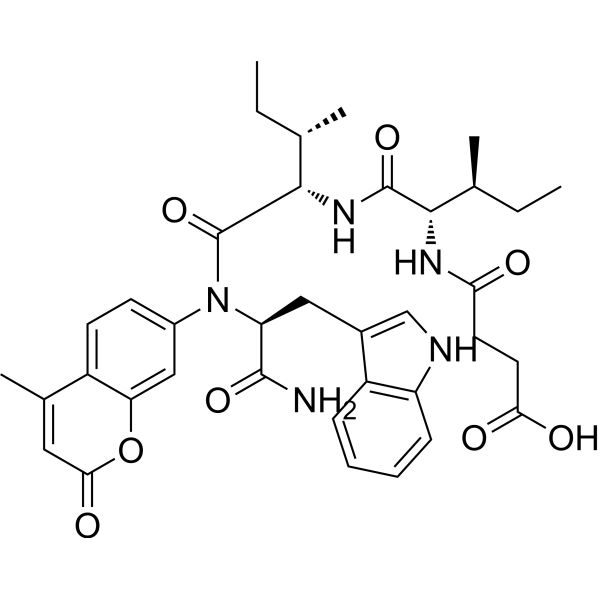 0 ImagesCat. No.: HY-P3791CAS No.: 133525-12-9N-Succinyl-Ile-Ile-Trp-AMC is a peptide-based fluorescent substrate or probe for carboxypeptidase Y (CPY).
-
Azure A eosinate
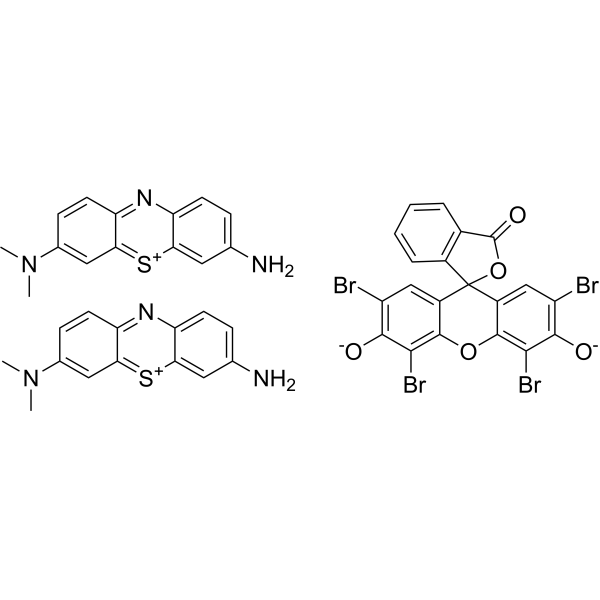 0 ImagesCat. No.: HY-D1472CAS No.: 62298-43-5Azure A eosinate is a dye for hematological and histological applications. Azure A eosinate can be used as new photosensitizer prototypes to determine growth inhibition of Candida albicans.
-
Rhodamine picolyl azide
 0 ImagesCat. No.: HY-D3348Rhodamine picolyl azide is a fluorescent dye that enables visualization of protein labeling via click chemistry. The detection mechanism of Rhodamine picolyl azide is based on bioorthogonal click chemistry: Rhodamine picolyl azide reacts with the alkyne group on affinity-based protein profiling probes (ABPs) attached to labeled target proteins; this conjugation allows subsequent fluorescence imaging of proteins separated by SDS-PAGE.
-
C-HBrO-GGT
 0 ImagesCat. No.: HY-D3170C-HBrO-GGT is a dual-target fluorescent indicator with specificity for γ-glutamyl transpeptidase (GGT) and hypobromous acid (HBrO). C-HBrO-GGT acts as a substrate for GGT and HBrO, undergoing enzymatic or chemical modification to trigger channel-specific fluorescence, with sequential activation requiring initial GGT hydrolysis. C-HBrO-GGT enables simultaneous in vitro and in vivo fluorescence detection of GGT and HBrO. C-HBrO-GGT identifies mature atherosclerotic plaque positions and provides early warning of plaque formation before visual or classical immunofluorescent detection. C-HBrO-GGT can be used for the research of atherosclerosis (Ex/Em = 370 nm/500 nm).
-
Fluorescein Di-β-D-Glucopyranoside
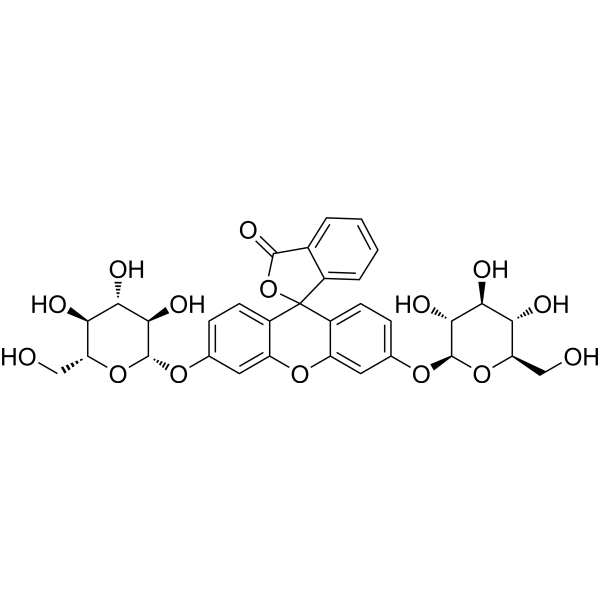 0 ImagesCat. No.: HY-D1461CAS No.: 129787-66-2Fluorescein Di-β-D-Glucopyranoside is a specific β-glucocerebrosidase substrate that can be used for the intralysosomal β-galactosidase.
-
RB-PEG600-Biotin
 0 ImagesCat. No.: HY-D2889ASynonyms: Rhodamine B-PEG600-BiotinRB-PEG600-Biotin (Rhodamine B-PEG600-Biotin) is a fluorescent dye composed of Rhodamine B (HY-Y0016), PEG and a Biotin. Biotin can bind with high affinity to streptavidin or avidin. RB-PEG600-Biotin plays an important role in the specific capture and detection of biomolecules (Ex/Em=546/610 nm).
-
Fluorescein octadecyl ester
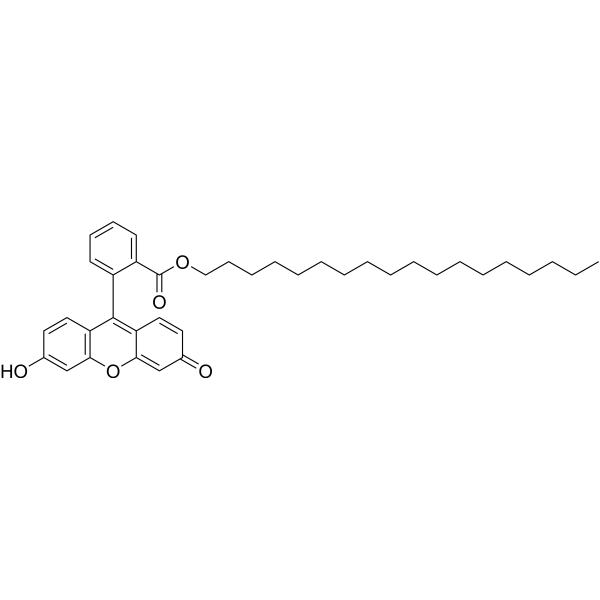 0 ImagesCat. No.: HY-134564CAS No.: 138833-46-2Fluorescein octadecyl ester is a lipophilic fluorescent reagent is immobilized in a plasticized PVC membrane. Fluorescein octadecyl ester can reversibly recognize alcohol molecules and can be used to determine the concentration of ethanol in alcoholic drinks. Fluorescein octadecyl ester can be used as acceptor to make optrode membrane for the determination of picric acid.
-
Janelia Fluor® 585
 0 ImagesSynonyms: JF585Janelia Fluor® 585 (JF585) is a fluorescent dye with high brightness, cell permeability, and blood-brain barrier permeability. Janelia Fluor® 585 can be used in combination with other Janelia Fluor dyes to support multicolor cell imaging experiments. Its excitation peak is at 585 nM and emission peak is at 609 nM.
-
Photoacoustic contrast agent-2 perchlorate
 0 ImagesCat. No.: HY-D1292ACAS No.: 2255329-09-8Photoacoustic contrast agent-2 (perchlorate) is a multifunctional dye. Dyes are important tools in biological experiments. They can help researchers observe and analyze cell structures, track biomolecules, evaluate cell functions, distinguish cell types, detect biomolecules, study tissue pathology and monitor microorganisms. Their applications range from basic scientific research to clinical A wide range of diagnostics. Dyes are also widely used in traditional fields such as textile dyeing, as well as in emerging fields such as functional textile processing, food pigments and dye-sensitized solar cells.
-
BODIPY R6G NHS ester
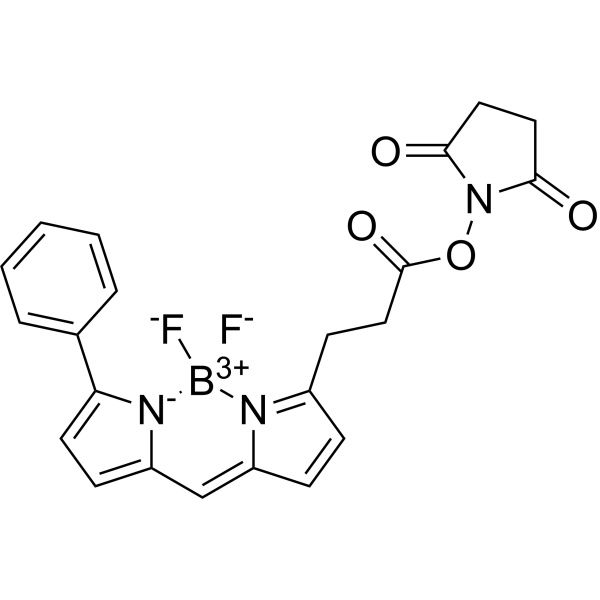 0 ImagesCat. No.: HY-D1239CAS No.: 335193-70-9BODIPY R6G NHS ester is a borondipyrromethene dye. BODIPY R6G NHS ester can be conjugated with proteins. BODIPY R6G NHS ester can be used for intracellular traces.
-
hMSCs-Neu perchlorate
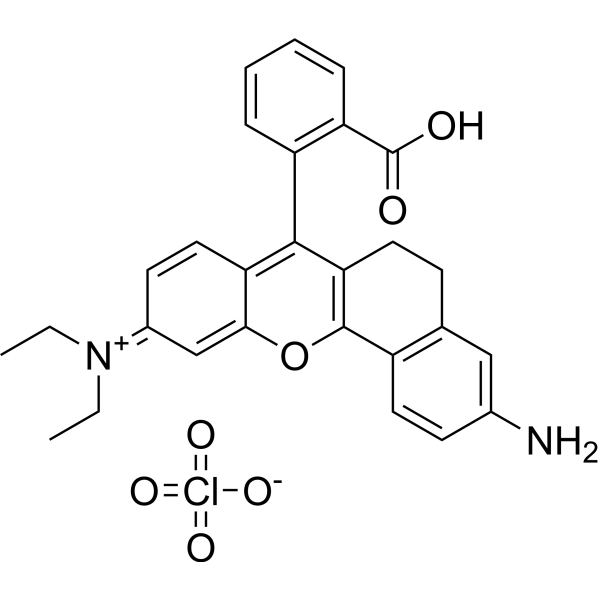 0 ImagesCat. No.: HY-D2260CAS No.: 2320522-38-9hMSCs-Neu perchlorate (Compound 4) is a fluorescent probe that converts hMSCs into neurons in the presence of fibroblast growth factor (FGF). hMSCs-Neu perchlorate may have important applications in neuropathology and neurodegeneration research.




