



Platelet-activating Factor Receptor (PAFR)
The platelet-activating factor receptor (PAFR) is a G-protein-coupled receptor involved in both normal physiological and numerous pathophysiological processes. PAFR responds to platelet-activating factor (PAF), a phospholipid mediator of cell-to-cell communication that exhibits diverse physiological effects. Stimulation of the PAFR via binding of platelet-activating factor (PAF) elicits diverse and potent biological activities and plays a profound role in acute inflammation, allergic disorders, endotoxic shock, and anaphylaxis. PAF is a potent and versatile mediator of inflammation that is produced by numerous cell types and tissues, and particularly by leukocytes.
All Product Categories
-
Platelet-activating Factor Receptor (PAFR) Inhibitors
(16)
View all products
-
Platelet-activating Factor Receptor (PAFR) Agonists
(7)
View all products
-
Platelet-activating Factor Receptor (PAFR) Antagonists
(51)
View all products
-
Platelet-activating Factor Receptor (PAFR) Activator
(1)
View all products
-
Platelet-activating Factor Receptor (PAFR) Control
(1)
View all products
-
Platelet-activating Factor Receptor (PAFR) Related Products (108)
Related Products (108)

-
Antibodies (2)
-
WF-5239
 0 ImagesCat. No.: HY-N19876CAS No.: 91224-36-1WF-5239 is a fungal metabolite can be found in Aspergillus fumigatus Fresenius. WF-5239 potently inhibits platelet aggregation. WF-5239 can be used for the research of pulmonary thrombosis.
-
(rel)-MK 287
 0 ImagesCat. No.: HY-106899ACAS No.: 143445-03-8Synonyms: (rel)-L-680573(rel)-MK 287 ((rel)-L-680573) is a relative configuration of MK 287. MK 287 is a potent, selective and orally active antagonist of platelet-activating factor receptor (PAFR). MK 287 can inhibit [3H]C18-PAF binding to human platelet, polymorphonuclear leukocyte (PMN) and lung membranes with K1 values of 6.1, 3.2, and 5.49 nM, respectively. MK 287 can inhibit PAF-induced aggregation of platelets in plasma or gel-filtered platelets and elastase release from PMNs with ED50 values of 56, 1.5 and 4.4 nM. MK 287 can be used for the research of cardiovascular disease, such as thrombosis.
-
E-6123
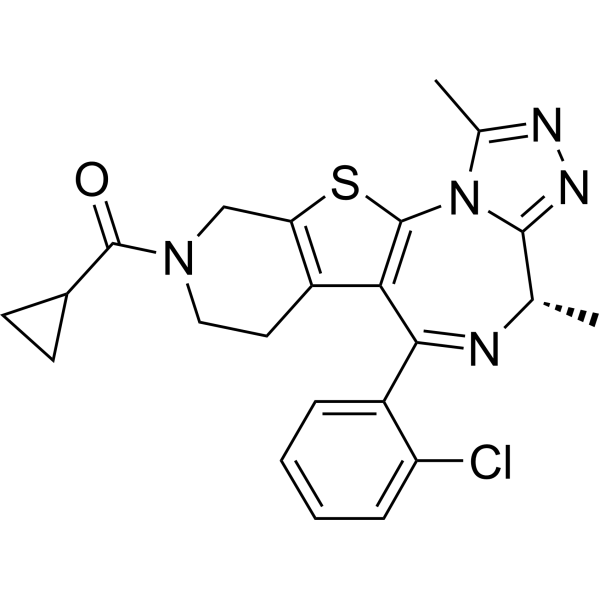 0 ImagesCat. No.: HY-10164CAS No.: 131614-02-3E-6123 is a platelet-activating factor (PAF) receptor antagonist.
-
F-0401
 0 ImagesCat. No.: HY-177598CAS No.: 123852-99-3F-0401 is a calcium antagonist with platelet-activating factor receptor (PAFR) antagonistic action. F-0401 can be used for the research of neurological disease, such as stroke.
-
Bepafant
 0 ImagesCat. No.: HY-121007CAS No.: 114776-28-2Synonyms: Web2170Bepafant (Web2170) is a platelet-activating factor (PAF) antagonist that protects against anaphylactic lethality in active and passive anaphylaxis models in mice and guinea pigs in a dose-dependent manner and attenuates bronchoconstriction and blood pressure changes in anaphylaxis.
-
Setipafant
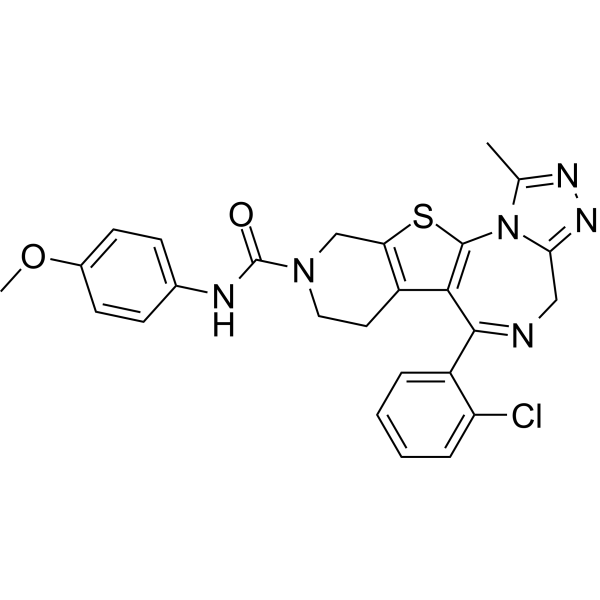 0 ImagesCat. No.: HY-101675CAS No.: 132418-35-0Synonyms: BN-50727Setipafant is a platelet-activating factor (PAF) antagonist.
-
SDZ-62-434
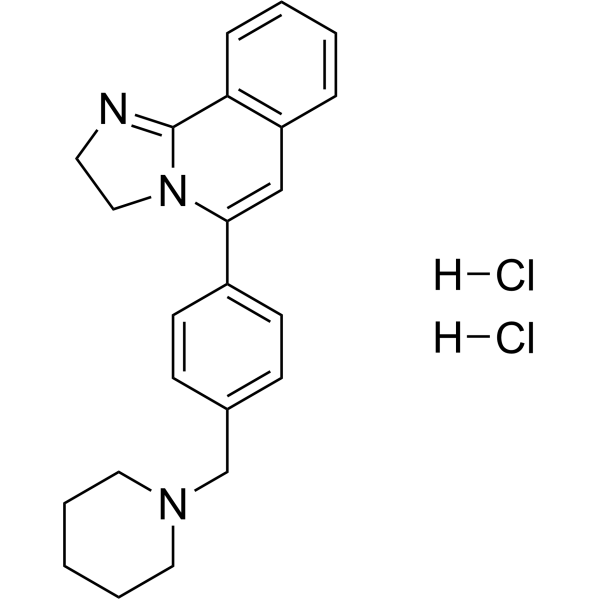 0 ImagesCat. No.: HY-106833ACAS No.: 115621-95-9SDZ-62-434 is a platelet-activating factor (PAF) antagonist. SDZ-62-434 has antiproliferative activity in human solid and haematological malignancies.
-
Scandenolide
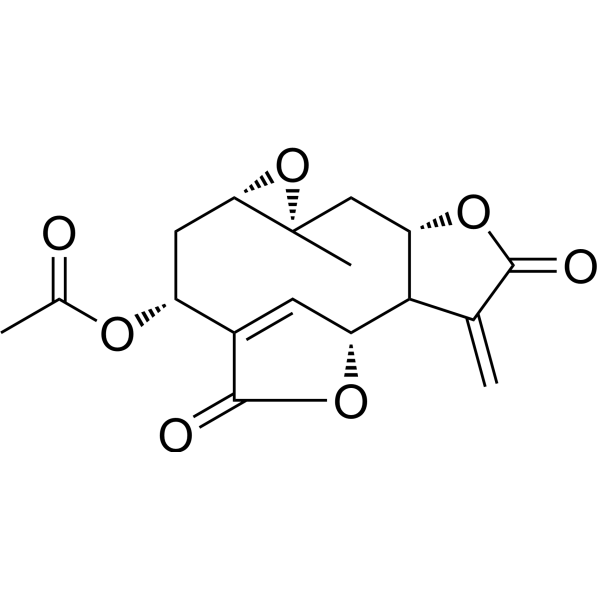 0 ImagesCat. No.: HY-118019CAS No.: 23758-16-9Scandenolide is a sesquiterpene lactone that can be found in Philippines medicinal plant Mikania cordata. Scandenolide inhibits leukotriene and platelet activating factor synthesis in leukocytes.
-
Butenoyl-PAF
 0 ImagesCat. No.: HY-126551CAS No.: 474944-25-7Butenoyl-PAF is a phospholipid analog of platelet activating factor (PAF-like) that is generated in oxidized low-density lipoprotein (DLDR). Butenoyl-PAF can activate cells that express human PAF receptors, such as neutrophils, monocytes, and platelets, and it stimulates an increase in intracellular calcium ion concentration.
-
Dersalazine
 0 ImagesCat. No.: HY-167719CAS No.: 188913-58-8Synonyms: UR-12746 free baseDersalazine (UR-12746 free base) is an inhibitor of platelet-activating factor, exhibiting intestinal anti-inflammatory activity and potential efficacy in treating ulcerative colitis.
-
Ro 19-1400
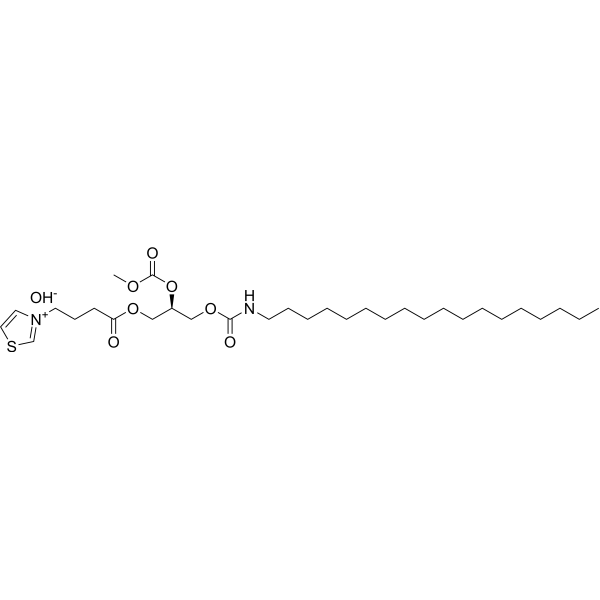 0 ImagesCat. No.: HY-123399CAS No.: 122937-55-7Ro 19-1400 is a platelet-activating factor antagonist that directly inhibits immunoglobulin E-dependent mediator release.
-
1-Cinnamoylpyrrolidine
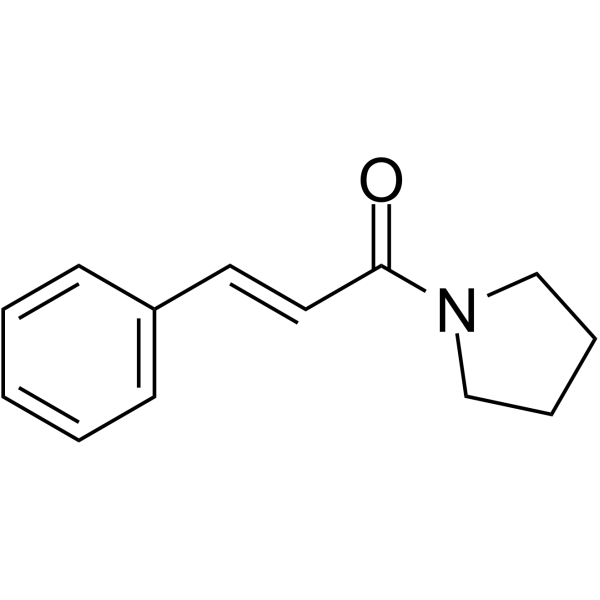 0 ImagesCat. No.: HY-N1620CAS No.: 52438-21-81-Cinnamoylpyrrolidine (Compound 3), a crude extract prepared from Piper caninum, is a DNA strand scission agent, induces the relaxation of supercoiled pBR322 plasmid DNA. 1-Cinnamoylpyrrolidine (Compound 4) inhibits platelet aggregation induced by PAF with an IC50 of 37.3 μM.
-
L 651142
 0 ImagesCat. No.: HY-124887CAS No.: 99046-40-9L 651142 is a weak platelet activating factor (PAF) receptor antagonist. L 651142 inhibits the binding of [3H]PAF to rabbit platelet, human platelet or human lung membranes with Kis of 0.839 μM, 1.82 μM, 3.64 μM, respectively.
-
Acopafant
 0 ImagesCat. No.: HY-106038CAS No.: 125372-33-0Synonyms: Dacopafant; RP 55778
-
ABT-299
 0 ImagesCat. No.: HY-125309CAS No.: 161395-35-3ABT-299 is a prodrug of a platelet-activating factor (PAF) antagonist that exhibits significant inhibitory activity on PAF-induced β-platelet globulin release in vitro after in vivo administration in humans, an effect that may be partially attributed to the pyridine-N-oxide metabolite.
-
CV 3988
 0 ImagesCat. No.: HY-106062CAS No.: 85703-73-7CV 3988 is a specific inhibitor of platelet-activating factor (PAF).
-
Piperulin A
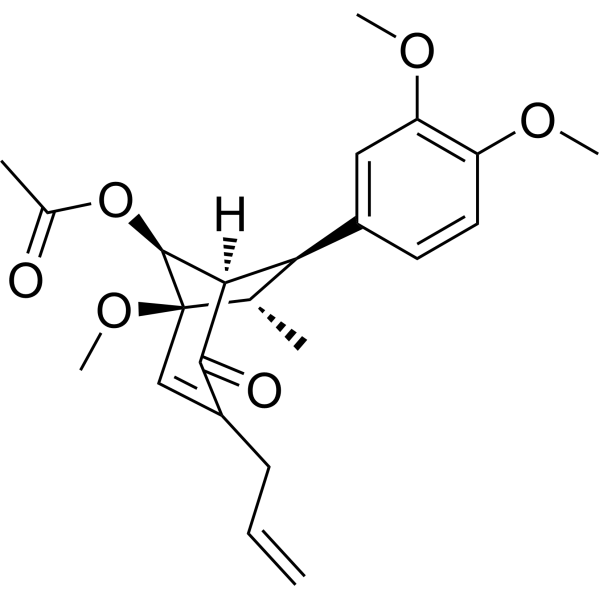 0 ImagesCat. No.: HY-N11932CAS No.: 164268-04-6Piperulin A is a potent inhibitor of PAFR. Piperulin A inhibits the specific binding of PAFR on isolated rabbit platelet plasma membranes with an IC50 of 7.3 μM.
-
Pinusolidic acid
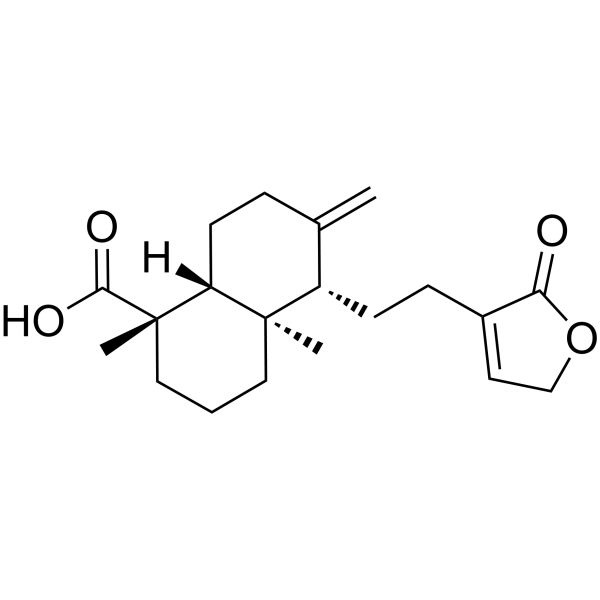 0 ImagesCat. No.: HY-N3054CAS No.: 40433-82-7Pinusolidic acid is a platelet-activating factor (PAF) inhibitor with an IC50 of 23 μM.
-
Apafant (Standard)
 0 ImagesCat. No.: HY-108634RCAS No.: 105219-56-5Synonyms: WEB 2086 (Standard)Apafant (Standard) is the analytical standard of Apafant (HY-108634). This product is intended for research and analytical applications. Apafant (WEB 2086), a chemical probe, is a potent platelet-activating factor (PAF) antagonist, inhibits PAF binding to human PAF receptors with a Ki of 9.9 nM. Apafant increases the gene expression of PAF-r, α-globin, β-globin, decreases the c-myb gene expression. Apafant shows a protective effect on alkyl-PAF-mediated lethalit.
-
Pinusolide
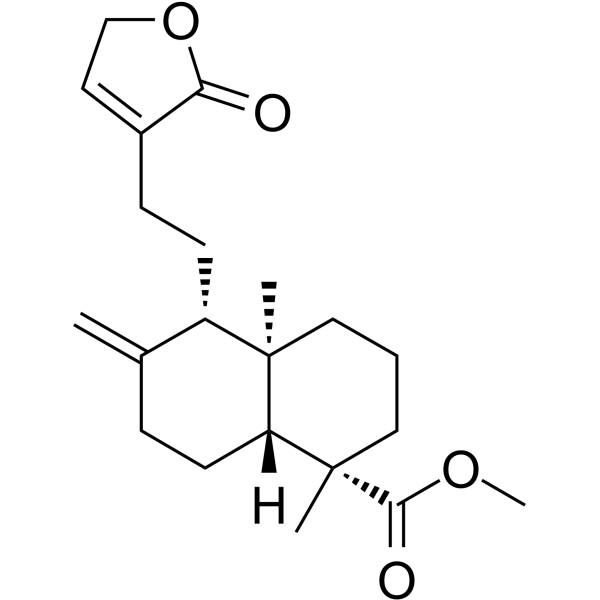 0 ImagesPinusolide is an AMPK activator and PAF receptor antagonist. Pinusolide activates AMPK, phosphorylates ACC, enhances IRS-1 tyrosine phosphorylation, boosts glucose uptake, and modulates insulin signaling. Pinusolide inhibits caspase-3/7 activation, intracellular calcium elevation, reactive oxygen species overproduction, lipid peroxidation, and tumor cell proliferation. Pinusolide stabilizes superoxide dismutase activity, reduces apoptotic hallmarks, induces mitochondrial pathway apoptosis, and triggers DNA fragmentation. Pinusolide can be used for the research of type 2 diabetes, neurodegenerative diseases, acute lymphoblastic leukemia, acute myeloid leukemia, and Burkitt lymphoma.




