



α-synuclein
α-Synuclein is a presynaptic neuronal protein that associates with synaptic vesicle membranes and participates in the regulation of neurotransmitter release, vesicle trafficking, and synaptic vesicle organization[1][2][3]. Mechanistically, α-synuclein binds membrane phospholipids, promotes vesicle clustering, and facilitates processes linked to synaptic vesicle integrity and SNARE-dependent neurotransmission, thereby contributing to normal synaptic function[1][2][4]. Dysregulation of these physiological activities is closely associated with abnormal protein folding, oligomerization, and fibrillization, which disrupt cellular homeostasis and impair pathways including vesicle trafficking, lysosomal function, and mitochondrial integrity[5][6][7]. In disease contexts, α-synuclein is the major constituent of Lewy bodies and represents a central pathogenic factor in Parkinson’s disease and related synucleinopathies, where aggregated species accumulate in vulnerable neuronal populations and contribute to progressive neurodegeneration[6][8][9]. Experimental studies further indicate that abnormal or mutant α-synuclein alters lipid homeostasis and presynaptic trafficking, providing mechanistic links between protein aggregation and neuronal dysfunction[7]. Compared with the related synuclein family members β-synuclein and γ-synuclein, α-synuclein has received particular attention because its aggregation propensity and pathological deposition are directly associated with Lewy body pathology and disease progression[8][9]. For experimental applications, α-synuclein aggregation models, oligomer-based assays, and aggregation-targeting modulators are widely used to investigate pathogenic mechanisms and evaluate potential therapeutic strategies for synucleinopathies[5][10].
References:
- [1]. Sharma M, et al. α-Synuclein in synaptic function and dysfunction. Trends Neurosci. 2023 Feb;46(2):153-166. [Content Brief]
- [2]. Burré J. The Synaptic Function of α-Synuclein. J Parkinsons Dis. 2015;5(4):699-713. doi: 10.3233/JPD-150642. PMID: 26407041; PMCID: PMC4927875. et al. The Synaptic Function of α-Synuclein. J Parkinsons Dis. 2015;5(4):699-713. [Content Brief]
- [3]. Huang M, et al. α-Synuclein: A Multifunctional Player in Exocytosis, Endocytosis, and Vesicle Recycling. Front Neurosci. 2019 Jan 28;13:28. [Content Brief]
- [4]. Treviño M, et al. Synaptic Vesicle Disruption in Parkinson's Disease: Dual Roles of α-Synuclein and Emerging Therapeutic Targets. Brain Sci. 2025 Dec 20;16(1):7. [Content Brief]
- [5]. Xu L, et al. Alpha-Synuclein in Parkinson's Disease: From Pathogenetic Dysfunction to Potential Clinical Application. Parkinsons Dis. 2016;2016:1720621. [Content Brief]
- [6]. Meade RM, et al. Alpha-synuclein structure and Parkinson's disease - lessons and emerging principles. Mol Neurodegener. 2019 Jul 22;14(1):29. [Content Brief]
- [7]. Calabresi P, et al. Advances in understanding the function of alpha-synuclein: implications for Parkinson's disease. Brain. 2023 Sep 1;146(9):3587-3597. [Content Brief]
- [8]. Calabresi P, et al. Alpha-synuclein in Parkinson's disease and other synucleinopathies: from overt neurodegeneration back to early synaptic dysfunction. Cell Death Dis. 2023 Mar 1;14(3):176. [Content Brief]
- [9]. Negi S, et al. The misfolding mystery: α-synuclein and the pathogenesis of Parkinson's disease. Neurochem Int. 2024 Jul;177:105760. [Content Brief]
- [10]. Kalia LV, et al. α-Synuclein oligomers and clinical implications for Parkinson disease. Ann Neurol. 2013 Feb;73(2):155-69. [Content Brief]
-
α-synuclein Related Products (89)
Related Products (89)

-
α-Synuclein (34-45) (human)
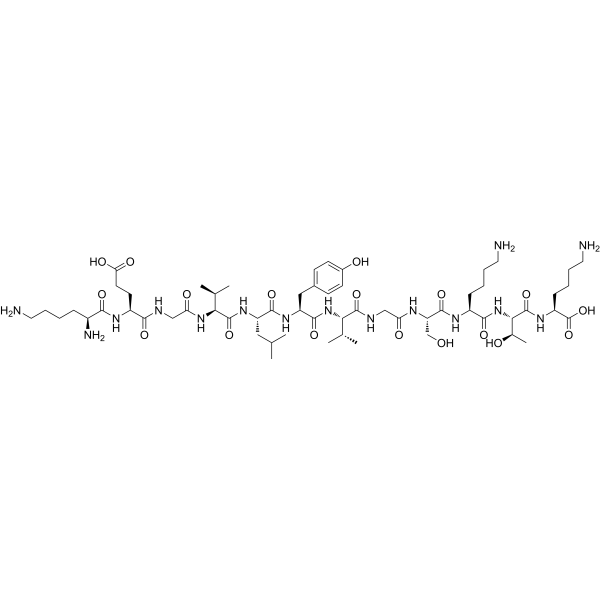 0 ImagesCat. No.: HY-P5041CAS No.: 2170181-52-7α-Synuclein (34-45) (human) is the 34-45 fragment of α-Synuclein. α-Synuclein is an abundant neuronal protein that is highly abundant in presynaptic nerve terminals. α-Synuclein is a Parkinson's disease (PD) biomarker.
-
α-Synuclein (71-82) (human)
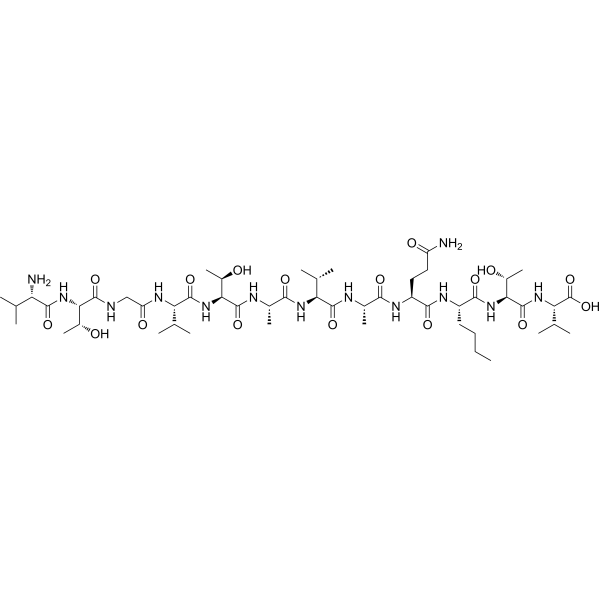 0 ImagesCat. No.: HY-P5046CAS No.: 332867-16-0α-Synuclein (71-82) (human) is the 71-82 fragment of α-Synuclein. α-Synuclein is an abundant neuronal protein that is highly abundant in presynaptic nerve terminals. α-Synuclein is a biomarker for Parkinson's disease (PD).
-
Tat-βsyn-degron
 0 ImagesCat. No.: HY-P10360CAS No.: 2816095-52-8Tat-βsyn-degron is an α-synuclein knockdown peptide that effectively degrades α-synuclein protein via the proteasome pathway. Tat-βsyn-degron effectively reduces α-synuclein protein levels in primary rat cortical neuron cultures. In a Parkinson's mouse toxicity model, Tat-βsyn-degron can alleviate parkinsonian toxin-induced neuronal damage and movement disorders.
-
MNP2
 0 ImagesCat. No.: HY-P11581MNP2 is a NLRP3-ASC interaction inhibitor. MNP2 selectively binds to the PYD domain of ASC (Ka=149 nM) and blocks ASC-PYM binding (Ka=58 nM), thereby inhibiting the interaction between ASC and NLRP3 and suppressing the formation of the NLRP3 inflammasome. MNP2 inhibits IL-1β release and caspase-1 maturation, and reduces the efflux of potassium and chloride ions. MNP2 prevents mitochondrial damage and reactive oxygen species production, and significantly decreases NLRP3 inflammasome formation in neurodegenerative pathologies induced by β-amyloid, Tau protein and α-synuclein. MNP2 is applicable for the research of neurodegenerative diseases.
-
DA5-CH
 0 ImagesCat. No.: HY-P12141CAS No.: 2227651-65-0Synonyms: KP405DA5-CH (KP405) is a blood-brain barrier-permeable GLP-1/GIP receptor agonist. DA5-CH activates GLP-1 and GIP receptors, inhibits the NF-κB inflammatory pathway, reduces α-synuclein (α-synuclein) levels, restores the expression of tyrosine hydroxylase and neurotrophic factors, improves motor function, decreases amyloid plaques and phosphorylated tau protein levels in the hippocampus, restores synaptic plasticity, regulates the PI3K/AKT/GSK3β and CREB signaling pathways, and alleviates mitochondrial stress. DA5-CH can be used for research on Parkinson's disease and Alzheimer's disease.
-
PROTAC α-synuclein degrader 1
 0 ImagesCat. No.: HY-135999CAS No.: 2412273-73-3PROTAC α-synuclein degrader 1 is a α-synuclein PROTAC degrader that can recruit VHL. PROTAC α-synuclein degrader 1 induces ubiquitination and degradation of α-synuclein, and is applicable to researches on Parkinson's disease, Alzheimer's disease, dementia with Lewy bodies, multiple system atrophy, etc.
-
α-Synuclein (67-78) (human)
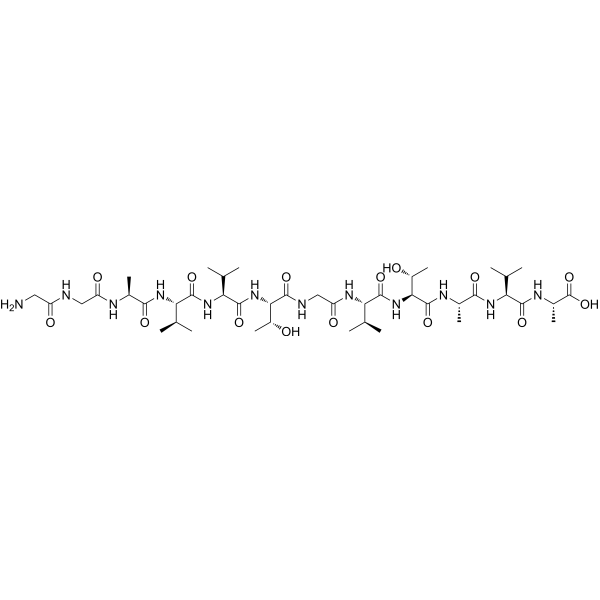 0 ImagesCat. No.: HY-P5043CAS No.: 2243206-99-5α-Synuclein (67-78) (human) is the 67-78 fragment of α-Synuclein. α-Synuclein (67-78) (human) promotes network activity drive and blocks KCl-induced syt1L-ab uptake.
-
α-Synuclein (61-75)
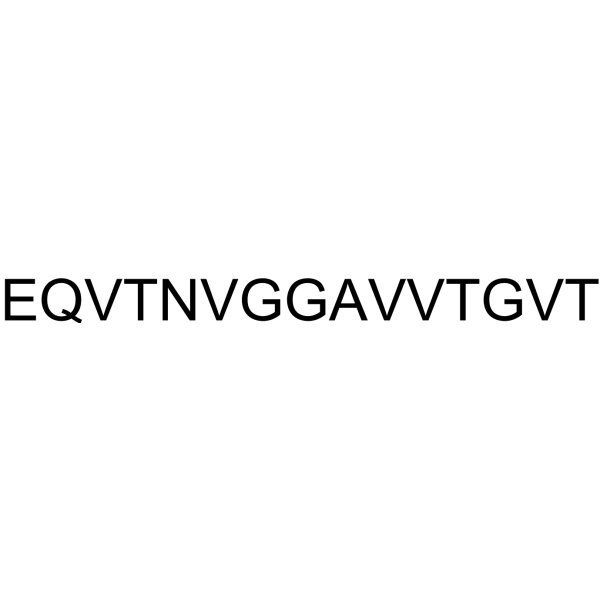 0 ImagesCat. No.: HY-P3140CAS No.: 440645-08-9α-Synuclein (61-75) is the 61-75 fragment of α-Synuclein. α-Synuclein is an abundant neuronal protein that is highly enriched in presynaptic nerve terminals. α-Synuclein is a potential biomarker for Parkinson's disease (PD).
-
SK-129
 0 ImagesCat. No.: HY-182893CAS No.: 1919889-97-6SK-129 is a blood-brain barrier-permeable inhibitor of α-synuclein (αS) oligomers with a Kd of 221 nM. SK-129 preferentially binds to neurotoxic αS oligomers over physiological αS monomers, inhibits αS aggregation, blocks the interaction and co-aggregation of αS with tau protein, and prevents the maturation of αS-tau condensates into amyloid aggregates. SK-129 reduces ROS production, rescues dopaminergic neuron degeneration, improves motor function, restores endogenous dopamine synthesis, increases the number of Tyrosine Hydroxylase-positive neurons, prevents brain histopathological changes, alleviates neuroinflammation, and improves survival rates in relevant models. SK-129 can be used in research related to Parkinson's disease (PD) and Lewy body dementia (LBD).
-
α-synuclein-IN-16
 0 ImagesCat. No.: HY-175737α-synuclein-IN-16 (Compound H1) is a α-synuclein inhibitor. α-synuclein-IN-16 significantly inhibits the secondary nucleation in α-synuclein aggregation. α-synuclein-IN-16 can be used for Parkinson’s disease research.
-
Harmol hydrochloride
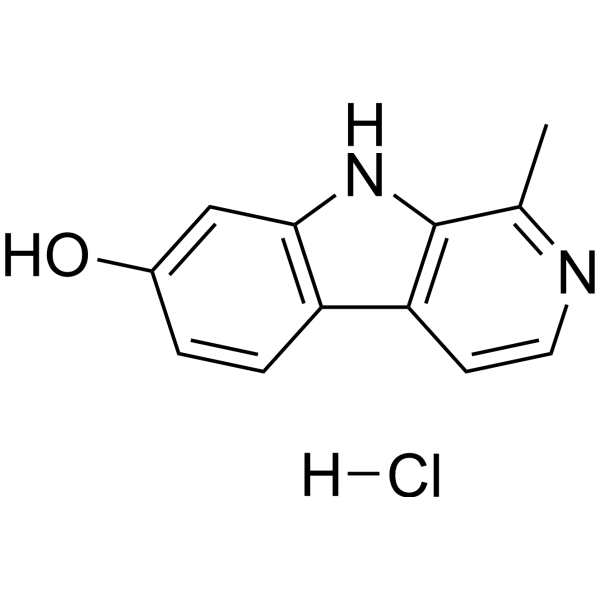 0 ImagesCat. No.: HY-107811ACAS No.: 40580-83-4Harmol hydrochloride is an orally active β-carboline alkaloid. Harmol hydrochloride is a TFEB activator and monoamine oxidase inhibitor. Harmol hydrochloride can induce cell mitosis, Autophagy and Apoptosis. Harmol hydrochloride promotes the degradation of α-synuclein by regulating the autophagy-lysosomal pathway. Harmol hydrochloride has anti-tumor, anti-depressant and anti-aging activities. Harmol hydrochloride improves motor impairment in a mouse Parkinson's disease model.
-
α-Synuclein ligand-1
 0 ImagesCat. No.: HY-187000CAS No.: 749927-21-7α-Synuclein ligand-1 is a α-Synuclein ligand, which can be used for the synthesis of PROTACs, such as PROTAC α-synuclein degrader 5 (HY-155021).
-
D-Trp-Aib
 0 ImagesCat. No.: HY-114613CAS No.: 1123071-24-8D-Trp-Aib is a dipeptide and amyloid-β inhibitor with a Kd of 29.6 nM. D-Trp-Aib triggers formation of non-toxic, non-β-sheet, amorphous amyloid β clusters from misfolded amyloid β monomers and toxic amyloid β oligomers, and reduces toxic amyloid β1-42 deposits. D-Trp-Aib inhibits amyloid fibril formation of α‑synuclein, IAPP and calcitonin. D-Trp-Aib can be used for the research of Alzheimer's disease.
-
Dopal-d5
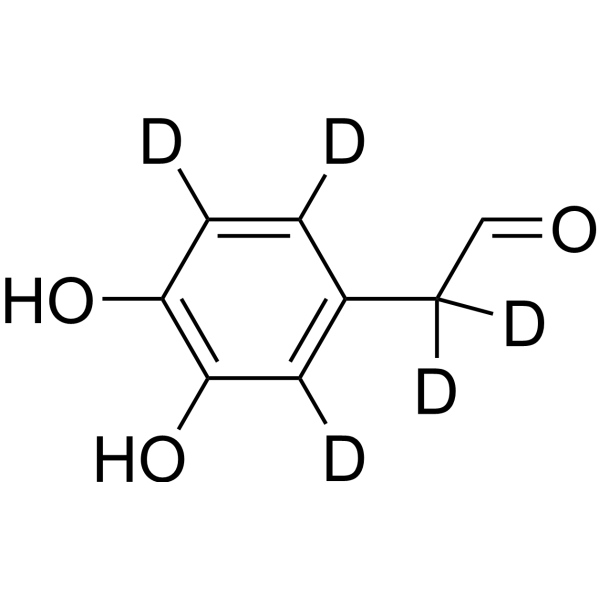 0 ImagesCat. No.: HY-121252SDopal-d5 is the deuterium labeled Dopal (HY-121252). Dopal is a metabolite and aldehyde neurotoxin of Dopamine (HY-B0451). Dopal exhibits cytotoxicity, induces α-synuclein oligomerization and aggregation, and is closely associated with the pathogenesis of Parkinson's disease. Dopal can be used in research related to Parkinson's disease.
-
Scyllo-Inositol-d6
 0 ImagesCat. No.: HY-W707693CAS No.: 115268-26-3Scyllo-Inositol-d6 is the deuterium labeled Scyllo-Inositol (HY-W010041). Scyllo-Inositol is an inhibitor that targets the aggregation of misfolded proteins (such as α-synuclein and Amyloid-β), is orally effective, and can cross the blood-brain barrier. Scyllo-Inositol can selectively bind to and stabilize non-toxic oligomers, preventing them from converting into toxic fibers, exerting protein homeostasis regulation and neuroprotective activity. Scyllo-Inositol binds to the hydrophobic region of pathogenic proteins, inhibits protein aggregation, and promotes lysosome- and proteasome-mediated degradation pathways, thereby reducing neurotoxicity. Scyllo-Inositol can be used in the study of neurodegenerative diseases such as Parkinson's disease, Alzheimer's disease, and Huntington's disease.
-
HUP-46
 0 ImagesCat. No.: HY-176749CAS No.: 3007689-83-7
-
Hordenine (Standard)
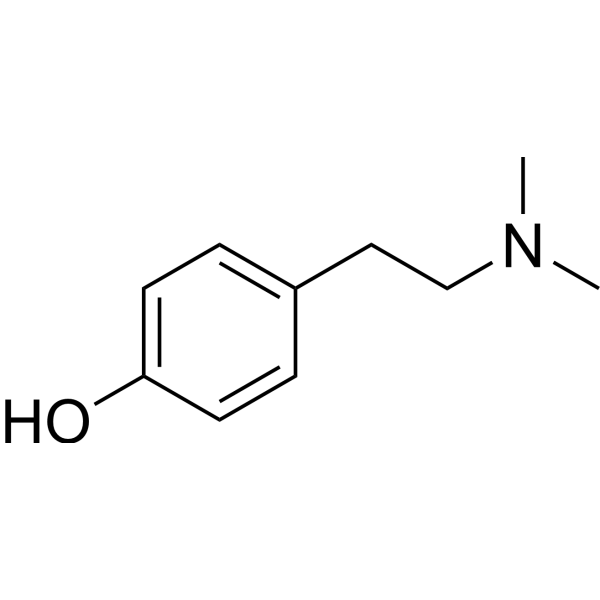 0 ImagesSynonyms: Ordenina (Standard); Peyocactine (Standard)Hordenine (Standard) (Ordenina (Standard); Peyocactine (Standard)) is the analytical standard of Hordenine (HY-N0113). This product is intended for research and analytical applications. Hordenine (Ordenina; Peyocactine) is a multifunctional alkaloid with oral activity and blood-brain barrier penetration. Hordenine inhibits LPS-induced phosphorylation of p38, JNK, ERK1/2, p65, IκB, and AKT, prevents p65 nuclear translocation, and suppresses inflammatory cytokines and mediators. Hordenine promotes M2 macrophage polarization, restores blood-milk barrier integrity, alleviates oxidative stress by reducing ROS and MDA, and attenuates LPS-induced lung injury and pulmonary edema. Hordenine inhibits cAMP production, CREB phosphorylation, and MITF expression, thereby suppressing melanin synthesis in melanocytes and reconstructed epidermis. Hordenine activates the Wnt/β-catenin signaling pathway, promotes dermal papilla cell proliferation and hair shaft elongation, and accelerates hair regeneration. Hordenine activates DRD2, acts as a D3R partial agonist, α2A-AR full agonist, and 5-HT2A-R antagonist, and inhibits SERT and DAT. Hordenine inhibits α-synuclein accumulation and ameliorates motor deficits in Parkinson's disease models. Hordenine limits alcohol intake, reduces relapse drinking behavior, and modulates alcohol-induced conditioned place preference. Hordenine can be used for research on mastitis, skin pigmentation, acute lung injury, foodborne diseases, hair loss, Parkinson's disease, bacterial infections, and alcohol use disorder.
-
FTY720-C2
 0 ImagesFTY720-C2 is a derivative of FTY72 (HY-12005). FTY720-C2 promotes the expression of brain-derived neurotrophic factor (BDNF) and glial cell-derived neurotrophic factor (GDNF) in multiple system atrophy (MSA) models, without causing immunosuppression. FTY720-C2 improves motor dysfunction and reduces the levels of insoluble alpha-synuclein (αSyn) in MSA mouse models. FTY720-C2 is blood-brain barrier penetrate.
-
Synucleozid-2.0
 0 ImagesSynucleozid-2.0 is a blood-brain barrier-permeable inhibitor that binds to the IRE of SNCA mRNA, with a EC50 of 2.9 µM and a Kd value of 1.8 µM. Synucleozid-2.0 selectively binds to and stabilizes the A bulge and adjacent closed base pairs in the 5' UTR IRE of SNCA mRNA, blocks the translation process and reduces intracellular levels of α-synuclein. Synucleozid-2.0 exerts cytoprotective effects against cytotoxicity induced by α-synuclein preformed fibrils. Synucleozid-2.0 is applicable to the research of Parkinson's disease.
-
PQK7
 0 ImagesCat. No.: HY-P11908PQK7 is an α-synuclein (α-synuclein) binder with a Kd value of 4 μM. PQK7 binds to key residues in the NAC region of ⍺-Syn, enhances the fluctuation of ⍺-Syn, reduces β-sheet content, maintains the solubility of ⍺-Syn monomers, and preserves the normal function of the protein. PQK7 reduces the toxicity of ⍺-Syn aggregates, restores cell cycle progression, decreases apoptosis (apoptosis), and inhibits ROS production. PQK7 can be used for the research of Parkinson's disease.



