



Acetyl Coenzyme A trisodium
Based on 7 publication(s) in Google Scholar
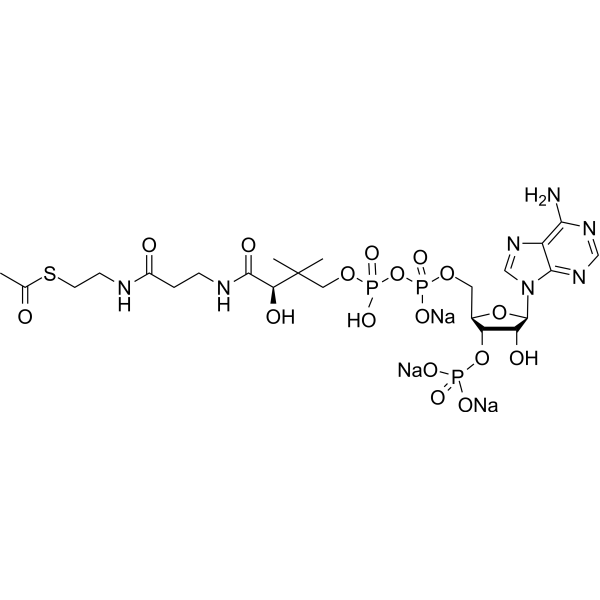
Acetyl-coenzyme A (Acetyl-CoA) trisodium is a membrane-impermeant central metabolic intermediate, participates in the TCA cycle and oxidative phosphorylation metabolism. Acetyl-coenzyme A trisodium, regulates various cellular mechanisms by providing (sole donor) acetyl groups to target amino acid residues for post-translational acetylation reactions of proteins. Acetyl Coenzyme A trisodium is also a key precursor of lipid synthesis.
For research use only. We do not sell to patients.
- Purity : 99.22%
- CAS No.: 102029-73-2
- Formula: C23H35N7Na3O17P3S
- Molecular Weight:875.52
-
Storage:
4°C, sealed storage, away from moisture
* In solvent : -80°C, 6 months; -20°C, 1 month (sealed storage, away from moisture)

To place orders, for customer services and technical support, please contact: MedChemExpress USA
Tel: 609-228-6898 E-mail: [email protected] [email protected]


-
 Biological Activity
-
Chemical Information
-
Solvent & Solubility
- Protocols
- Purity & Documentation
- References
-
 Help & FAQs


-
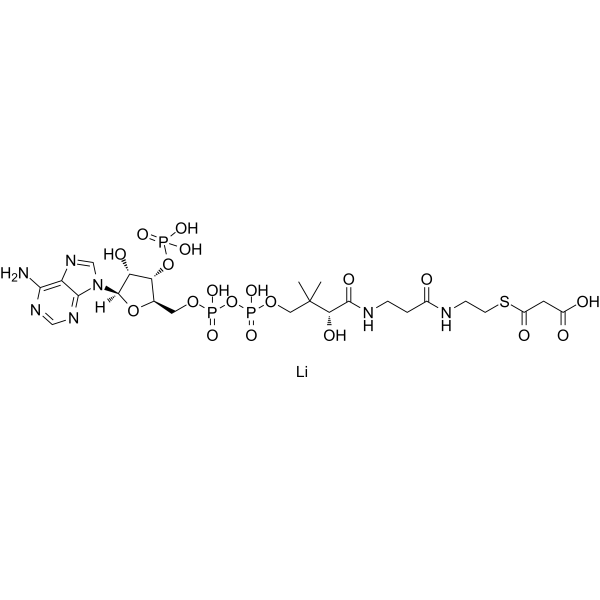
HY-136408
Malonyl CoA lithiumCPT1 Inhibitor -
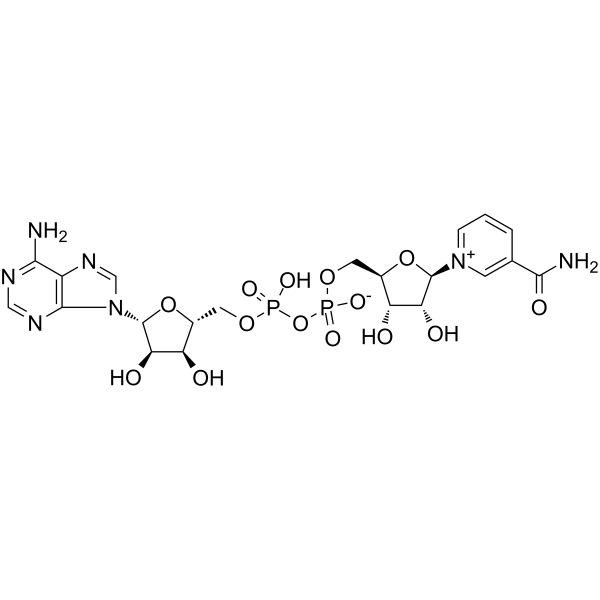
HY-B0445
NAD+Endogenous Metabolite -
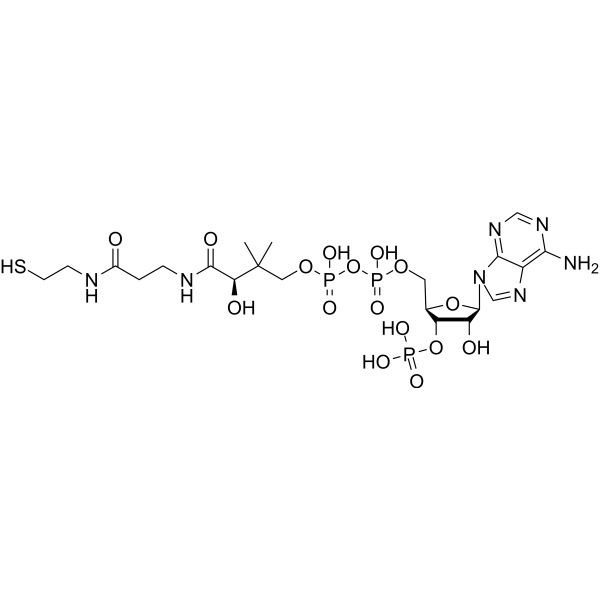
HY-128851
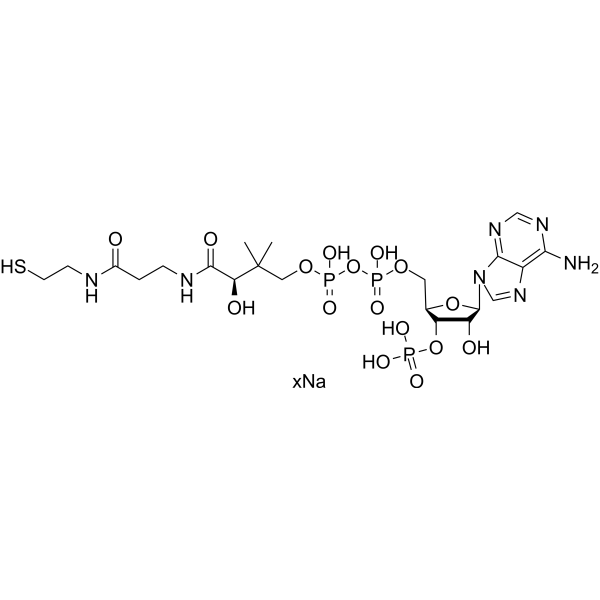
Coenzyme ACofactor -
HY-128851B
Coenzyme A sodiumCofactor -
HY-15915
DTNBThiol Reactant -
HY-B2176
ATPEndogenous Metabolite -
HY-B2227
Lactic acidGlycolysis Production -
HY-137808
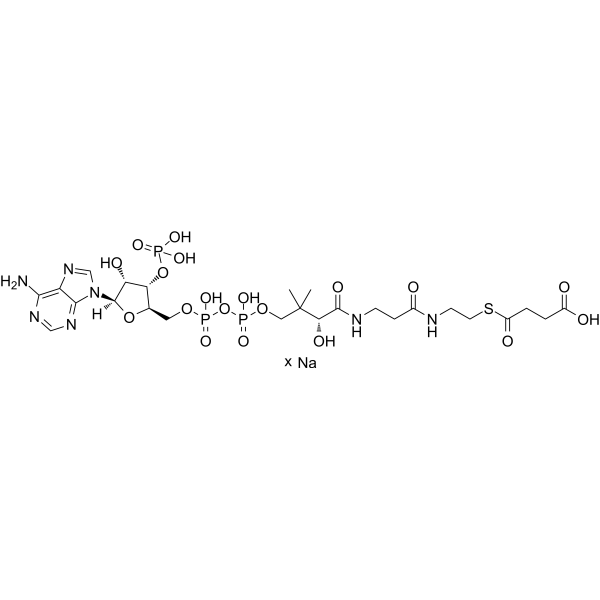
Succinyl-Coenzyme A sodiumCoenzyme A Derivative -
HY-W010382
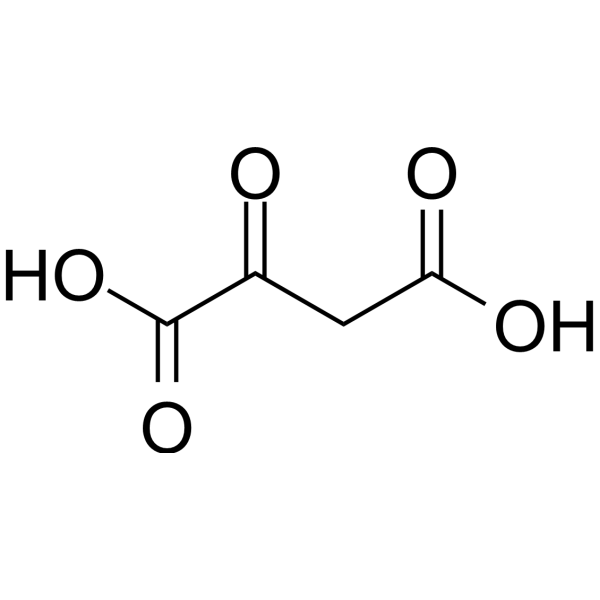
Oxaloacetic acidEndogenous Metabolite -

HY-113324
NADPHReducing Agent -
HY-141540
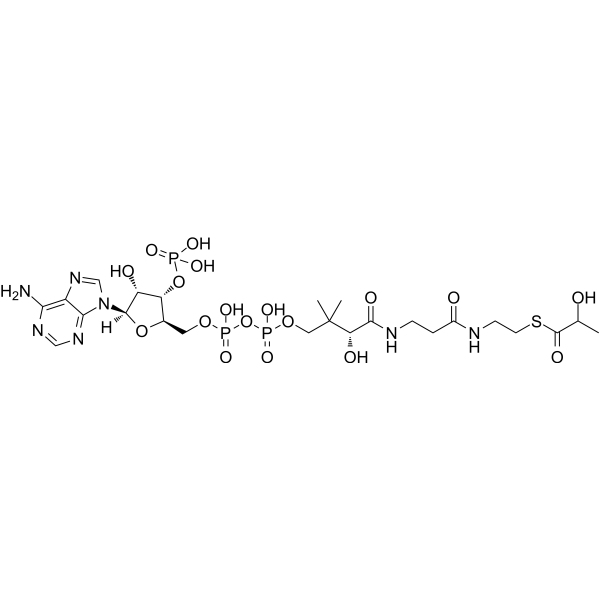
Lactyl-CoAAcyl-CoA -
HY-134424
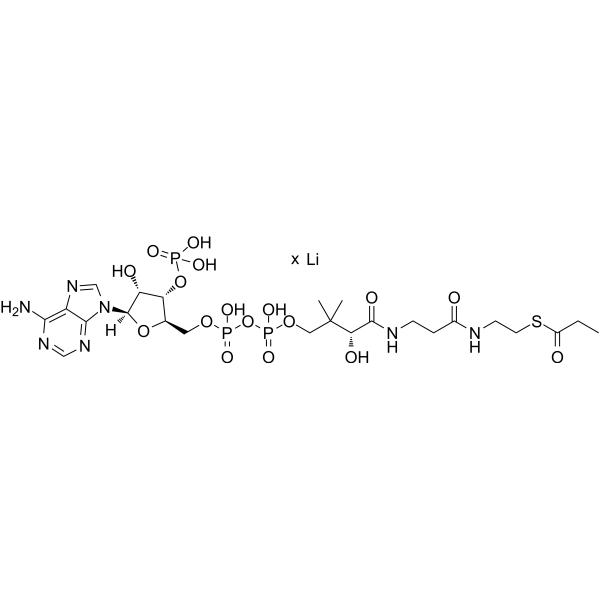
Propionyl coenzyme A lithiumPropionyl Coenzyme A Derivative
Publications Citing Use of MedChemExpress (MCE) Acetyl Coenzyme A trisodium
More- Cancer Res. 2025 Sep 3. [Abstract]
- Bone Res. 2024 Aug 28;12(1):49. [Abstract]
- Sci Adv. 2026 May 15;12(20):eadz3835. [Abstract]
- Cell Rep. 2025 Jan 10;44(1):115203. [Abstract]
- Chin Med. 2026 Jun 8;21(1):162. [Abstract]
- J Cell Physiol. 2023 Mar;238(3):610-630. [Abstract]
- bioRxiv. 2026 May 20:2026.05.19.726225. [Abstract]
All Endogenous Metabolite Isoforms
More

Biological Activity
Description
IC50 & Target
|
Human Endogenous Metabolite |
In Vitro
Acetyl coenzyme A trisodium increases cytoplasmic protein acetylation in starved U2OS cells while reducing starvation-induced autophagic fluxes. (U2OS cells stably expressing GFP-LC3 and are microinjected with Acetyl coenzyme A trisodium; incubated in nutrient-free conditions in the presence of 100 nM BafA1 and fixed after 3 h)[2].
MedChemExpress (MCE) has not independently confirmed the accuracy of these methods. They are for reference only. Further protocols information, click here.
In Vivo
MedChemExpress (MCE) has not independently confirmed the accuracy of these methods. They are for reference only.


Chemical Information
-
CAS No. 102029-73-2
-
Appearance Solid
-
Molecular Weight 875.52
-
Formula C23H35N7Na3O17P3S
-
Color White to off-white
-
SMILES
O=P(OCC([C@@H](O)C(NCCC(NCCSC(C)=O)=O)=O)(C)C)(O)OP(OC[C@@H]1[C@@H](OP(O[Na])(O[Na])=O)[C@@H](O)[C@H](N2C3=NC=NC(N)=C3N=C2)O1)(O[Na])=O
-
Synonyms
Acetyl-CoA trisodium
-
Structure Classification
-
Initial Source
-
Shipping
Room temperature in continental US; may vary elsewhere.
-
Storage
4°C, sealed storage, away from moisture
* In solvent : -80°C, 6 months; -20°C, 1 month (sealed storage, away from moisture)


Publications (7)
-
Journal Impact Factor
-
Most Recent
-
Cancer Res
A Citrate Synthase Splice Variant Rewires the TCA Cycle to Promote Colorectal Cancer Progression. [Abstract]2025 Sep 3. PMID: 40900036 -
Bone Res
2024 Aug 28;12(1):49. PMID: 39198395 -
Sci Adv
mTOR-NAA10-C7orf50 axis senses nutritional status to coordinate ribosome biogenesis and autophagy. [Abstract]2026 May 15;12(20):eadz3835. PMID: 42139339 -
Cell Rep
Ergosterol alleviates hepatic steatosis and insulin resistance via promoting fatty acid β-oxidation by activating mitochondrial ACSL1. [Abstract]2025 Jan 10;44(1):115203. PMID: 39799570 -
Chin Med
Chuangling Ye mitigates diabetic foot ulcer through suppressing keratinocyte ferroptosis via inhibiting ACSS2/ACSL4 axis. [Abstract]2026 Jun 8;21(1):162. PMID: 42260608 -
J Cell Physiol
Identification of key events and regulatory networks in the formation process of primordial germ cell based on proteomics. [Abstract]2023 Mar;238(3):610-630. PMID: 36745473 -
bioRxiv
A liquid chromatography-mass spectrometry method to quantify total Coenzyme A concentration and isotopic labeling. [Abstract]2026 May 20:2026.05.19.726225. PMID: 42239474


Solvent & Solubility
In Vitro:
H2O : 83.33 mg/mL (95.18 mM; Need ultrasonic)
Please refer to the solubility information to select the appropriate solvent. Once prepared, please aliquot and store the solution to prevent product inactivation from repeated freeze-thaw cycles.
Storage method and period of stock solution: -80°C, 6 months; -20°C, 1 month (sealed storage, away from moisture). When stored at -80°C, please use it within 6 months. When stored at -20°C, please use it within 1 month.
* Note: If you choose water as the stock solution, please dilute it to the working solution, then filter and sterilize it with a 0.22 μm filter before use.
Please refer to the solubility information to select the appropriate solvent. Once prepared, please aliquot and store the solution to prevent product inactivation from repeated freeze-thaw cycles.
Storage method and period of stock solution: -80°C, 6 months; -20°C, 1 month (sealed storage, away from moisture). When stored at -80°C, please use it within 6 months. When stored at -20°C, please use it within 1 month.
* Note: If you choose water as the stock solution, please dilute it to the working solution, then filter and sterilize it with a 0.22 μm filter before use.
Concentration (start) × Volume (start) = Concentration (final) × Volume (final)
In Vivo:
For the following dissolution methods, please prepare the working solution directly:
It is recommended to prepare fresh solutions and use them promptly within a short period of time.
The percentages shown for the solvents indicate their volumetric ratio in the final prepared solution. If precipitation or phase separation occurs during preparation, heat and/or sonication can be used to aid dissolution.
Add each solvent one by one: PBS
Solubility: 100 mg/mL (114.22 mM); Clear solution; Need ultrasonic

Protocols
-
Kinase activity and phosphorylation assays
Kinase activity assays measure the ability of kinases to transfer phosphate groups from ATP to specific substrates, while phosphorylation assays detect the presence and levels of phosphorylated proteins. Common methods include radiolabeled ATP incorporation (e. g. ,), ADP release detection via bioluminescence (e. g. ,[3]), enzyme-linked immunosorbent assays (ELISA) for phospho-specific epitopes (e. g. ,[6]), and microtiter-based formats for high-throughput screening (e. g. ,[8]). The ADP-Glo assay quantifies kinase activity by measuring ADP produced during phosphorylation using a luciferase-based system. Radiometric assays involve autoradiography or scintillation counting after incorporation of 32P-labeled ATP into substrate proteins. ELISA-based approaches rely on phospho-specific antibodies to detect activated kinases in cell lysates or purified samples.
-
Western Blot
Western blotting (WB) is a commonly used experimental method in molecular biology, biochemistry, and immunogenetics for identifying and quantifying target proteins. It combines gel electrophoresis with immunoassay, enabling researchers to analyze protein expression, post-translational modifications, and molecular weight.
-
Protocol for Kinase activity and phosphorylation assays
Kinase activity assays measure transfer of phosphate from ATP to a protein or peptide substrate, generating phosphorylated substrate, ADP, or incorporated radiolabeled phosphate as the readout; phosphorylation assays measure site-specific phosphorylation in cells or tissues as a proxy for kinase-pathway activation, inhibition, or substrate regulation. Phosphorylation can be detected by phospho-specific Western blot, immunoprecipitation kinase assay, phospho-immunofluorescence, phospho-flow cytometry, luminescent ADP detection, radiolabeled ATP incorporation, or reporter-based pathway assays, and these readouts can be applied to cancer cells, primary neurons, mouse tumors, organoids, inflammatory macrophages, ferroptosis studies, and mitophagy studies when the kinase target is biologically relevant.


Purity & Documentation
-
Data Sheet (275 KB)
-
SDS (393 KB)
- English - EN (393 KB)
- Français - FR (393 KB)
- Deutsch - DE (393 KB)
- Norwegian - NO (393 KB)
- Español - ES (393 KB)
- Swedish - SV (393 KB)
- Italian - IT (393 KB)
- Korean - KR (393 KB)
- Portuguese - PT (393 KB)
-
Handling Instructions (2659 KB)
References
[1]. Choudhary C, et al. The growing landscape of lysine acetylation links metabolism and cell signalling. Nat Rev Mol Cell Biol. 2014 Aug;15(8):536-50. [Content Brief]
[2]. Mariño G, et al. Regulation of autophagy by cytosolic acetyl-coenzyme A. Mol Cell. 2014 Mar 6;53(5):710-25. [Content Brief]
[3]. Zhu H, et al. Cardiac autophagy is a maladaptive response to hemodynamic stress. J Clin Invest. 2007 Jul;117(7):1782-93. [Content Brief]
[4]. Pietrocola F, et al. Acetyl coenzyme A: a central metabolite and second messenger. Cell Metab. 2015 Jun 2;21(6):805-21. [Content Brief]


Complete Stock Solution Preparation Table
Please refer to the solubility information to select the appropriate solvent. Once prepared, please aliquot and store the solution to prevent product inactivation from repeated freeze-thaw cycles.
Storage method and period of stock solution: -80°C, 6 months; -20°C, 1 month (sealed storage, away from moisture). When stored at -80°C, please use it within 6 months. When stored at -20°C, please use it within 1 month.
| Optional Solvent | Concentration Solvent Mass | 1 mg | 5 mg | 10 mg | 25 mg |
|---|---|---|---|---|---|
| H2O | 1 mM | 1.1422 mL | 5.7109 mL | 11.4218 mL | 28.5545 mL |
| 5 mM | 0.2284 mL | 1.1422 mL | 2.2844 mL | 5.7109 mL | |
| 10 mM | 0.1142 mL | 0.5711 mL | 1.1422 mL | 2.8554 mL | |
| 15 mM | 0.0761 mL | 0.3807 mL | 0.7615 mL | 1.9036 mL | |
| 20 mM | 0.0571 mL | 0.2855 mL | 0.5711 mL | 1.4277 mL | |
| 25 mM | 0.0457 mL | 0.2284 mL | 0.4569 mL | 1.1422 mL | |
| 30 mM | 0.0381 mL | 0.1904 mL | 0.3807 mL | 0.9518 mL | |
| 40 mM | 0.0286 mL | 0.1428 mL | 0.2855 mL | 0.7139 mL | |
| 50 mM | 0.0228 mL | 0.1142 mL | 0.2284 mL | 0.5711 mL | |
| 60 mM | 0.0190 mL | 0.0952 mL | 0.1904 mL | 0.4759 mL | |
| 80 mM | 0.0143 mL | 0.0714 mL | 0.1428 mL | 0.3569 mL |
* Note: If you choose water as the stock solution, please dilute it to the working solution, then filter and sterilize it with a 0.22 μm filter before use.


Acetyl Coenzyme A trisodium Related Classifications
HY-113596 Related Classifications
 Powered by Bioz