



Acetylcarnitine

Based on 1 Customer Validation
Acetylcarnitine is a CNS-penetrant endogenous metabolite. Acetylcarnitine shuttling links mitochondrial metabolism to histone acetylation and lipogenesis. Acetylcarnitine attenuates oxidative stress and neuroinflammation. Acetylcarnitine can be used for fatigue-associated diseases research. Acetylcarnitine can be used as a candidate diagnostic and prognostic biomarker of hepatocellular carcinoma.
For research use only. We do not sell to patients.
- Purity : 98.0%
- CAS No.: 14992-62-2
- Formula: C9H17NO4
- Molecular Weight:203.24
-
Storage:
4°C, protect from light, stored under nitrogen
* In solvent : -80°C, 6 months; -20°C, 1 month (protect from light, stored under nitrogen)

To place orders, for customer services and technical support, please contact: MedChemExpress USA
Tel: 609-228-6898 E-mail: [email protected] [email protected]


-
 Biological Activity
-
Chemical Information
-
Solvent & Solubility
- Protocols
- Purity & Documentation
- References
-
 Help & FAQs


-
HY-B0399
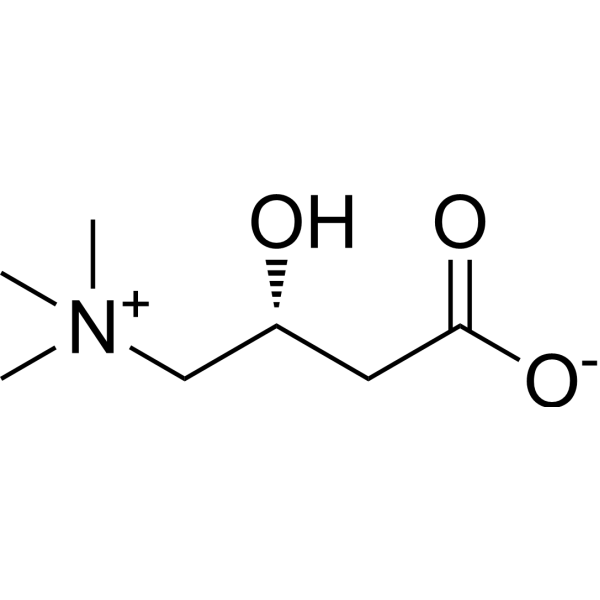
L-CarnitineCo-factor for β-oxidation -
HY-B0932
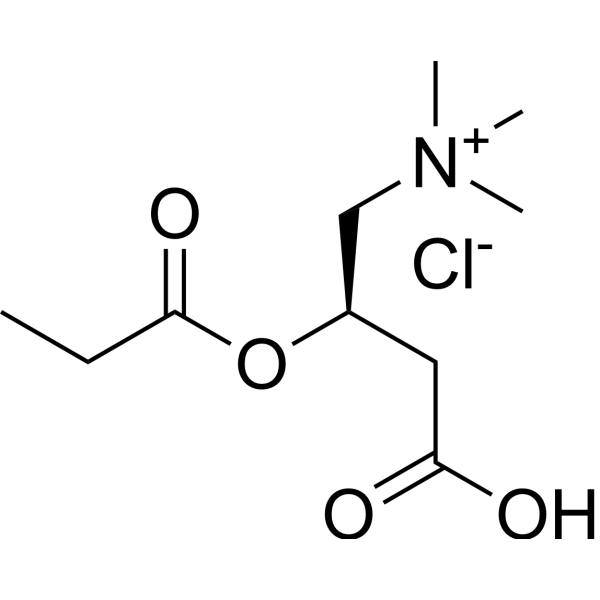
Levocarnitine propionate hydrochlorideSynthesis Intermediate -
HY-B0932S
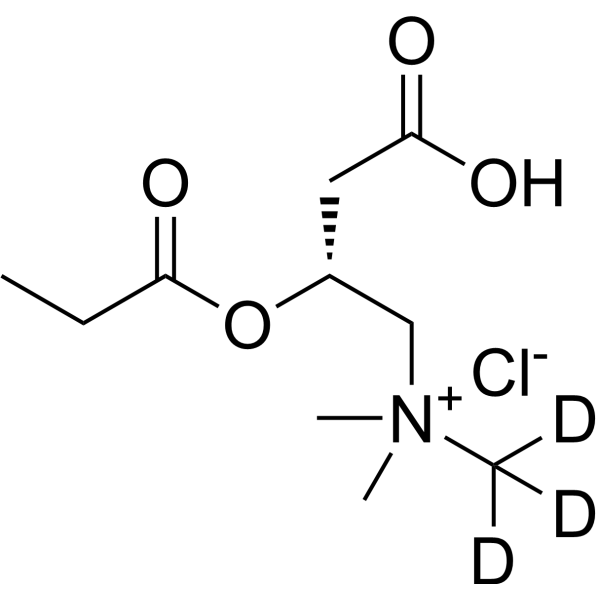
Levocarnitine propionate-d3 hydrochlorideStable Isotope -
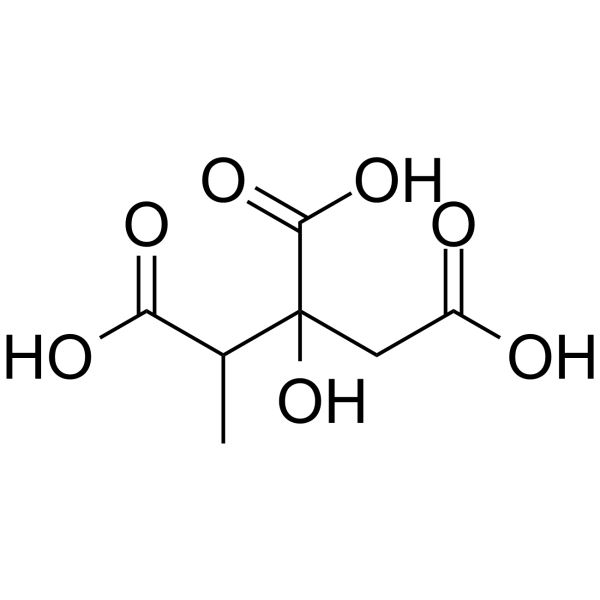
HY-113371
2-Methylcitric acidEndogenous Metabolite -
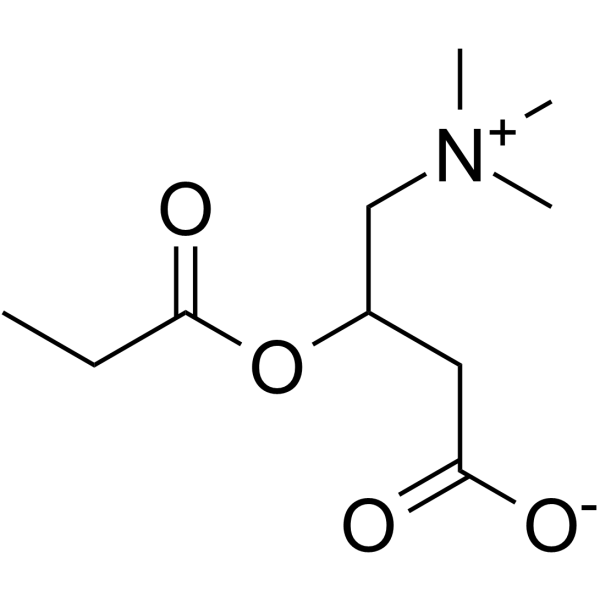
HY-113092
PropionylcarnitineCarnitine Acetyltransferase Metabolite -
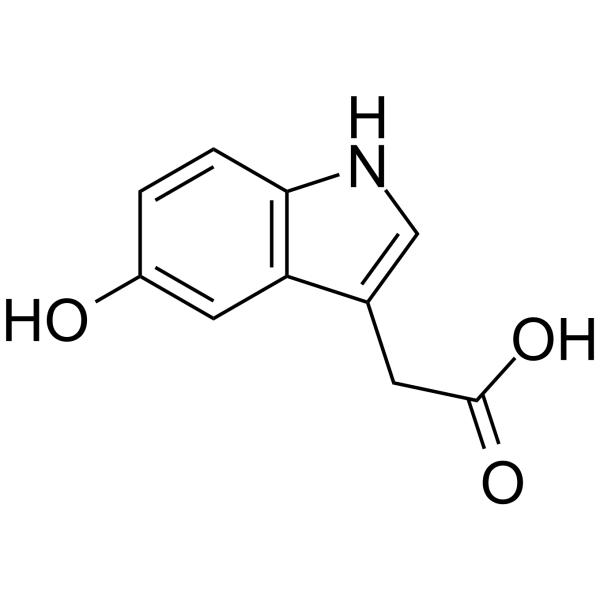
HY-W008253
5-Hydroxyindole-3-acetic acid -
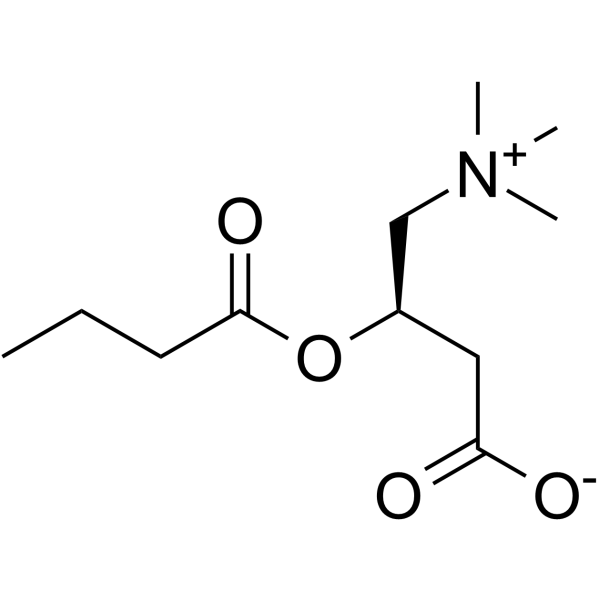
HY-113168
ButyrylcarnitineEndogenous Metabolite -
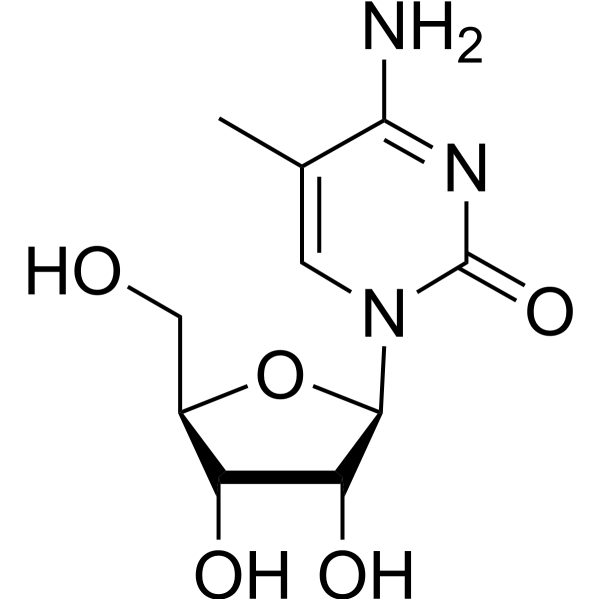
HY-113135
5-MethylcytidinePyrimidine Nucleoside -
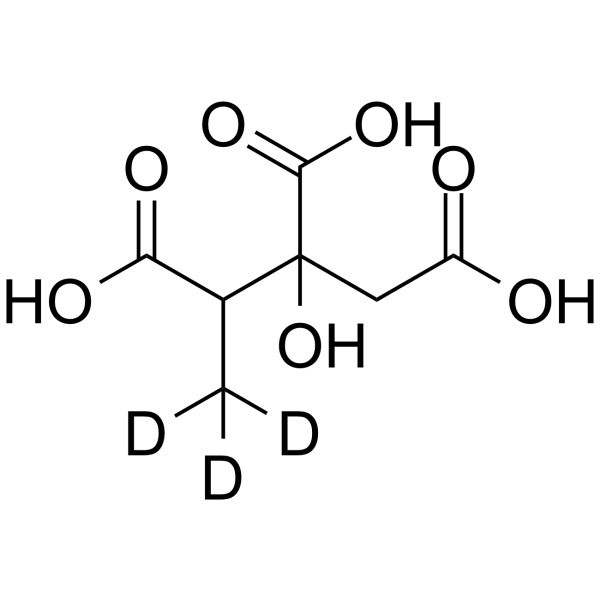
HY-113371S
2-Methylcitric acid-d3Stable Isotope
All Endogenous Metabolite Isoforms
More

Biological Activity
Description
In Vitro
Acetylcarnitine (10 mM, 48 h) suppresses glucose-dependent labeling, particularly in ATP-citrate lyase (ACLY) KO cells[2].
Acetylcarnitine (10 mM, 24-96 h) rescues histone acetylation and cell proliferation in ACLY/ACSS2 double knockout (DKO) cells under lipid-depleted conditions[2].
Acetylcarnitine (10 mM, 24 h) boosts histone acetylation in ACLY KO cells in a carnitine acetyltransferase (CrAT)-independent manner, and increases total de novo lipogenesis (DNL) in ACLY KO CrAT KO cells, suggesting that acetylcarnitine can generate lipogenic acetyl-CoA without CrAT[2].
Acetylcarnitine (10 mM, 24-96 h) promotes p300/CBP-dependent protein acetylation, as its pro-proliferative effect in DKO cells is blocked by the p300/CBP inhibitor A-485 (HY-107455)[2].
MedChemExpress (MCE) has not independently confirmed the accuracy of these methods. They are for reference only. Further protocols information, click here.
-
Cell Line:ACLY/ACSS2 DKO cells
-
Concentration:10 mM
-
Incubation Time:96 h
-
Result:Rescued cell proliferation in DKO cells under lipid-depleted conditions.
The pro-proliferative effect of acetylcarnitine under lipid-depleted conditions was blocked by co-treatment with the p300/CBP inhibitor A-485.
-
Cell Line:ACLY/ACSS2 DKO cells, ACLY KO cells, ACLY KO CrAT KO cells
-
Concentration:10 mM
-
Incubation Time:24 h
-
Result:Rescued histone acetylation in ACLY/ACSS2 double knockout (DKO) cells under lipid-depleted conditions.
Promoted p300/CBP-dependent histone acetylation, specifically at H3K27.
Enhanced histone acetylation in ACLY KO cells in a CrAT-independent manner.
Clinical Trial
| NCT Number | Sponsor | Condition | Start Date |
Phase

|
|---|---|---|---|---|
| NCT01329991 | Plexxikon| | 2011-05 | PHASE1 |


Chemical Information
-
CAS No. 14992-62-2
-
Appearance Solid
-
Molecular Weight 203.24
-
Formula C9H17NO4
-
Color White to off-white
-
SMILES
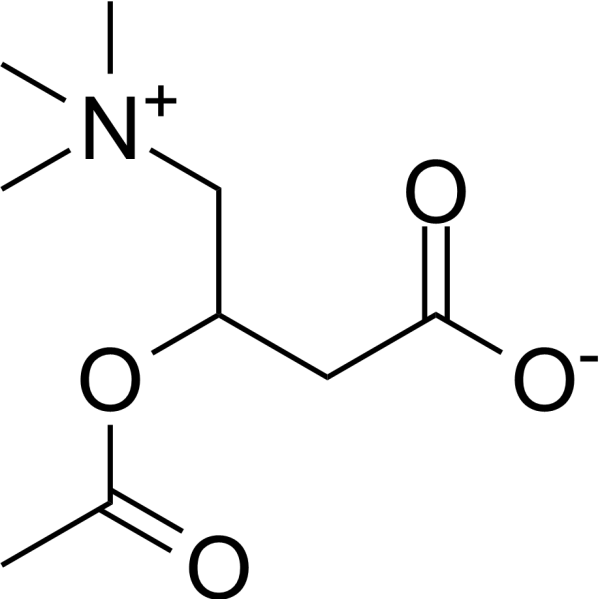
C[N+](C)(C)CC(OC(C)=O)CC([O-])=O
-
Structure Classification
-
Initial Source
-
Shipping
Room temperature in continental US; may vary elsewhere.
-
Storage
4°C, protect from light, stored under nitrogen
* In solvent : -80°C, 6 months; -20°C, 1 month (protect from light, stored under nitrogen)


Solvent & Solubility
In Vitro:
H2O : 250 mg/mL (1230.07 mM; Need ultrasonic)
Please refer to the solubility information to select the appropriate solvent. Once prepared, please aliquot and store the solution to prevent product inactivation from repeated freeze-thaw cycles.
Storage method and period of stock solution: -80°C, 6 months; -20°C, 1 month (protect from light, stored under nitrogen). When stored at -80°C, please use it within 6 months. When stored at -20°C, please use it within 1 month.
* Note: If you choose water as the stock solution, please dilute it to the working solution, then filter and sterilize it with a 0.22 μm filter before use.
Please refer to the solubility information to select the appropriate solvent. Once prepared, please aliquot and store the solution to prevent product inactivation from repeated freeze-thaw cycles.
Storage method and period of stock solution: -80°C, 6 months; -20°C, 1 month (protect from light, stored under nitrogen). When stored at -80°C, please use it within 6 months. When stored at -20°C, please use it within 1 month.
* Note: If you choose water as the stock solution, please dilute it to the working solution, then filter and sterilize it with a 0.22 μm filter before use.
Concentration (start) × Volume (start) = Concentration (final) × Volume (final)

Protocols
-
ROS/oxidative-stress fluorescent staining
ROS/oxidative-stress fluorescent staining uses cell-permeant fluorogenic probes that become fluorescent after oxidation inside cells or tissues; commonly used examples include DCFH-DA/DCFDA for broad cellular oxidant detection, DHE for superoxide-related signal detection, MitoSOX for mitochondrial superoxide-related signal detection, and CellROX probes for oxidative-stress-associated fluorescence readouts. The assay detects probe oxidation rather than a single ROS species unless the probe and analysis method have been chemically validated for that species. DCFH-DA enters cells, is deacetylated by intracellular esterases to DCFH, and produces fluorescent DCF after oxidation, so the readout is used as an operational measure of total cellular oxidative stress rather than a species-specific ROS measurement. DHE and MitoSOX can report superoxide-related oxidation, but red fluorescence alone can include non-specific ethidium-like oxidation products; HPLC or optimized spectral approaches are
-
Liver Cancer Modeling
Liver cancer can be classified into primary liver cancer and secondary liver cancer. Secondary liver cancer is the metastatic liver cancer. Primary liver cancer includes hepatocellular carcinoma (HCC), intrahepatic cholangiocarcinoma (ICC) and fibrolamellar HCC, of which HCC is the most common form, accounting for approximately 90% of primary liver cancers[1]. HCC mouse models include chemical agent-induced models, transplanted tumor models, and genetic engineered models.
-
Research Protocol for Neurological Diseases
PINK1/Parkin-mediated mitophagy pathway is a mitochondrial quality-control signaling axis in which mitochondrial depolarization stabilizes PINK1 on damaged mitochondria, activates Parkin recruitment and E3 ubiquitin ligase activity, promotes ubiquitination of outer mitochondrial membrane proteins, recruits selective autophagy adaptors, and drives lysosomal degradation of damaged mitochondria. In neurological disease research, this pathway is experimentally important because neurons, especially dopaminergic neurons, are highly dependent on mitochondrial integrity, and defective mitochondrial turnover can lead to mitochondrial dysfunction, oxidative stress, impaired neuronal survival, α-synuclein accumulation, and neuroinflammatory damage-associated signals. The genetic disease link is strongest in Parkinson’s disease because mutations in PRKN/parkin cause autosomal recessive juvenile parkinsonism, mutations in PINK1 cause hereditary early-onset Parkinson’s disease, and Drosophila studie


Purity & Documentation
-
Data Sheet (276 KB)
-
SDS (393 KB)
- English - EN (393 KB)
- Français - FR (393 KB)
- Deutsch - DE (393 KB)
- Norwegian - NO (393 KB)
- Español - ES (393 KB)
- Swedish - SV (393 KB)
- Italian - IT (393 KB)
- Korean - KR (393 KB)
- Portuguese - PT (393 KB)
-
Handling Instructions (2659 KB)
References
[1]. Helbing DL, et al. Conceptual foundations of acetylcarnitine supplementation in neuropsychiatric long COVID syndrome: a narrative review. Eur Arch Psychiatry Clin Neurosci. 2024 Dec;274(8):1829-1845. [Content Brief]
[2]. Izzo LT, et al. Acetylcarnitine shuttling links mitochondrial metabolism to histone acetylation and lipogenesis. Sci Adv. 2023 May 3;9(18):eadf0115. [Content Brief]
[3]. Lu Y, et al. Acetylcarnitine Is a Candidate Diagnostic and Prognostic Biomarker of Hepatocellular Carcinoma. Cancer Res. 2016 May 15;76(10):2912-20. [Content Brief]


Complete Stock Solution Preparation Table
Please refer to the solubility information to select the appropriate solvent. Once prepared, please aliquot and store the solution to prevent product inactivation from repeated freeze-thaw cycles.
Storage method and period of stock solution: -80°C, 6 months; -20°C, 1 month (protect from light, stored under nitrogen). When stored at -80°C, please use it within 6 months. When stored at -20°C, please use it within 1 month.
| Optional Solvent | Concentration Solvent Mass | 1 mg | 5 mg | 10 mg | 25 mg |
|---|---|---|---|---|---|
| H2O | 1 mM | 4.9203 mL | 24.6015 mL | 49.2029 mL | 123.0073 mL |
| 5 mM | 0.9841 mL | 4.9203 mL | 9.8406 mL | 24.6015 mL | |
| 10 mM | 0.4920 mL | 2.4601 mL | 4.9203 mL | 12.3007 mL | |
| 15 mM | 0.3280 mL | 1.6401 mL | 3.2802 mL | 8.2005 mL | |
| 20 mM | 0.2460 mL | 1.2301 mL | 2.4601 mL | 6.1504 mL | |
| 25 mM | 0.1968 mL | 0.9841 mL | 1.9681 mL | 4.9203 mL | |
| 30 mM | 0.1640 mL | 0.8200 mL | 1.6401 mL | 4.1002 mL | |
| 40 mM | 0.1230 mL | 0.6150 mL | 1.2301 mL | 3.0752 mL | |
| 50 mM | 0.0984 mL | 0.4920 mL | 0.9841 mL | 2.4601 mL | |
| 60 mM | 0.0820 mL | 0.4100 mL | 0.8200 mL | 2.0501 mL | |
| 80 mM | 0.0615 mL | 0.3075 mL | 0.6150 mL | 1.5376 mL | |
| 100 mM | 0.0492 mL | 0.2460 mL | 0.4920 mL | 1.2301 mL |
* Note: If you choose water as the stock solution, please dilute it to the working solution, then filter and sterilize it with a 0.22 μm filter before use.


Acetylcarnitine Related Classifications
HY-126358 Related Classifications
 Powered by Bioz