



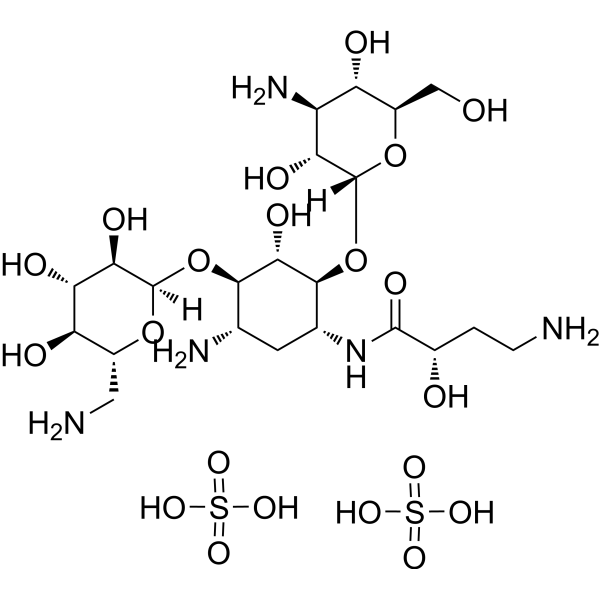
Amikacin disulfate (Standard)
Amikacin (disulfate) (Standard) is the analytical standard of Amikacin (disulfate). This product is intended for research and analytical applications. Amikacin disulfate (BAY 41-6551 dissulfate) is an aminoglycoside antibiotic and a semisynthetic analog of kanamycin. Amikacin disulfate is bactericidal, acting directly on the 30S and 50S bacerial ribosomal subunits to inhibit protein synthesis. Amikacin disulfate is very active against most Gram-negative bacteria including gentamicin-and tobramycin-resistant strains. Amikacin disulfate also inhibits the infections caused by susceptible Nocardia and nontuberculous mycobacteria.
For research use only. We do not sell to patients.
- Purity : 95%
- CAS No.: 39831-55-5
- Formula: C22H47N5O21S2
- Molecular Weight:781.76
-
Storage:
Please store the product under the recommended conditions in the Certificate of Analysis.


To place orders, for customer services and technical support, please contact: MedChemExpress USA
Tel: 609-228-6898 E-mail: [email protected] [email protected]


-
 Product Information
-
Chemical Information
- Purity & Documentation
-
 Help & FAQs


-
HY-B0509B
Amikacin disulfateAminoglycoside Antibiotic -
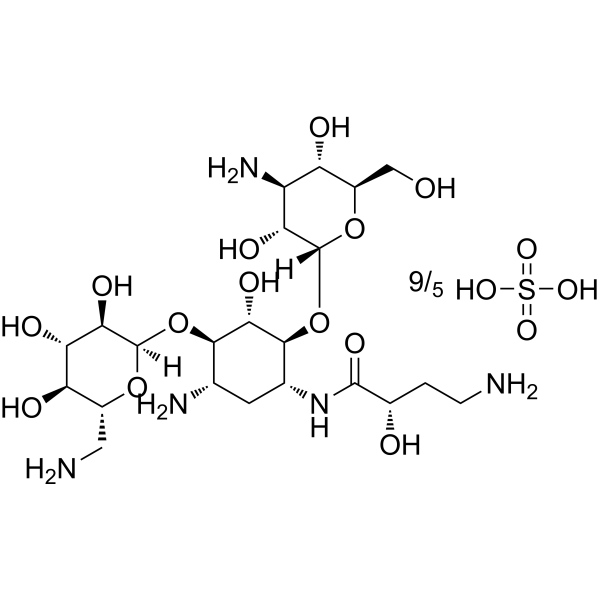
HY-107813
Amikacin sulfateAminoglycoside Antibiotic -
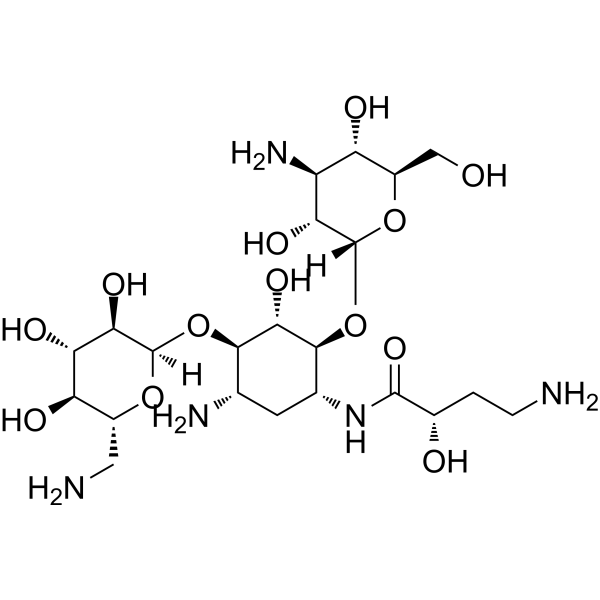
HY-B0509A
AmikacinAntibiotic -
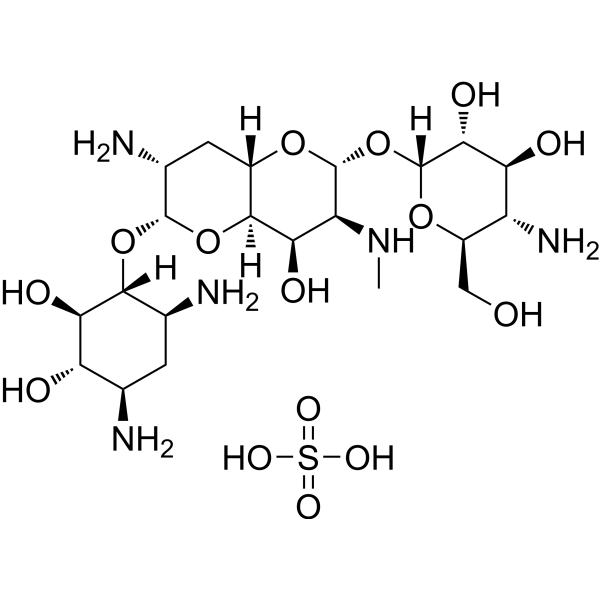
HY-B1329
Apramycin sulfateAntibiotic -
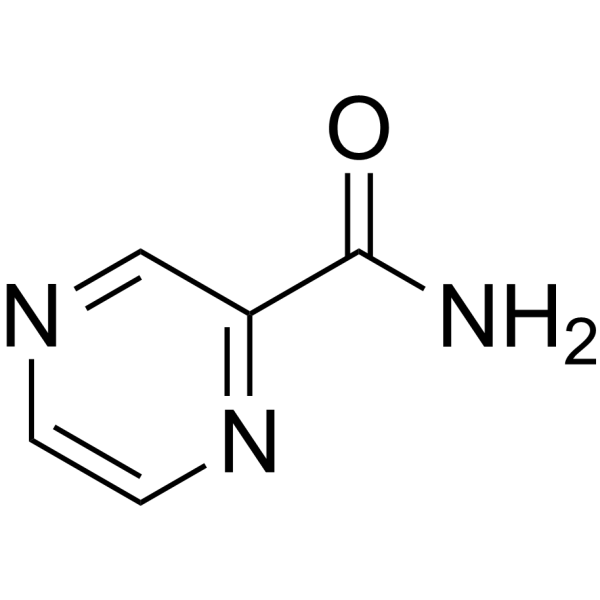
HY-B0271
PyrazinamideAntitubercular Antibiotic -

HY-B0509AR
Amikacin (Standard)Antibiotic -

HY-B0271R
Pyrazinamide (Standard)Antitubercular Antibiotic -
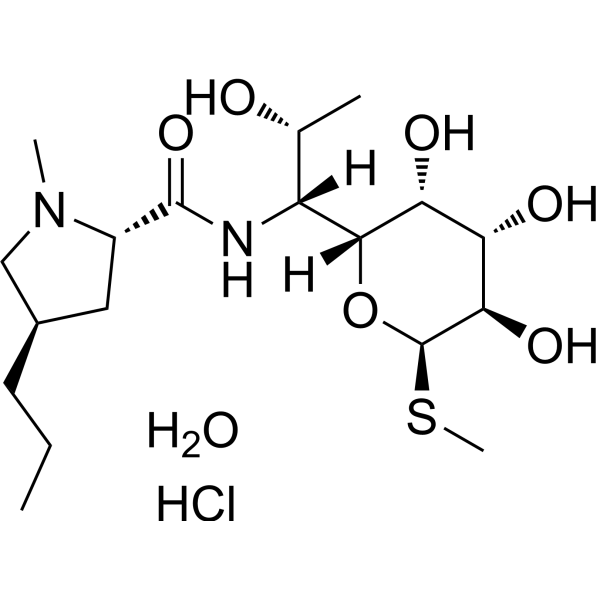
HY-B1358
Lincomycin hydrochloride monohydrateRibosome Inhibitor -
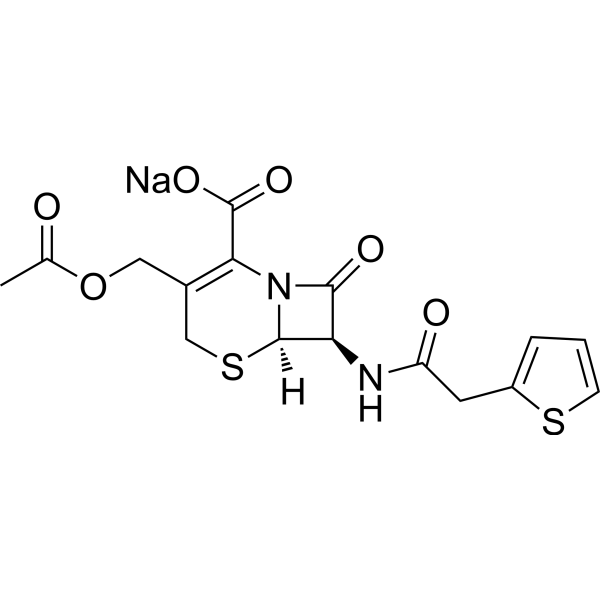
HY-B1275
Cephalothin sodiumβ-Lactam Antibiotic -

HY-B1329R
Apramycin sulfate (Standard)Antibiotic -

HY-107813R
Amikacin sulfate (Standard)Aminoglycoside Antibiotic -

HY-B1358R
Lincomycin hydrochloride monohydrate (Standard)Standard of Lincomycin hydrochloride monohydrate


Product Information
Information
Application
The compound is the grade of analytical standard, which is the reference standard supplied assay. It is commonly used in qualitative, quantitative and methodological research experiments in HPLC, GC and MS.


Chemical Information
-
CAS No. 39831-55-5
-
Molecular Weight 781.76
-
Formula C22H47N5O21S2
-
SMILES
OS(O)(=O)=O.OS(O)(=O)=O.O[C@@H]1[C@H]([C@@H](C[C@H](N)[C@H]1O[C@@]([C@@H]([C@@H](O)[C@@H]2O)O)([H])O[C@@H]2CN)NC([C@@H](O)CCN)=O)O[C@@]([C@@H]([C@@H](N)[C@@H]3O)O)([H])O[C@@H]3CO
-
Synonyms
BAY 41-6551 disulfate (Standard)
-
Shipping
Room temperature in continental US; may vary elsewhere.
-
Storage
Please store the product under the recommended conditions in the Certificate of Analysis.


Purity & Documentation
References
[1]. Edson, R.S. and C.L. Terrell, The aminoglycosides. Mayo Clin Proc, 1999. 74(5): p. 519-28. [Content Brief]
[2]. Ristuccia AM, et al. An overview of amikacin. Ther Drug Monit. 1985;7(1):12-25. [Content Brief]
[3]. Siân R Kitcher, et al. ORC-13661 Protects Sensory Hair Cells From Aminoglycoside and Cisplatin Ototoxicity. JCI Insight. 2019 Aug 8;4(15):e126764. [Content Brief]

Calculators
Concentration (start) × Volume (start) = Concentration (final) × Volume (final)


Amikacin disulfate (Standard) Related Classifications
HY-B0509BR Related Classifications
 Powered by Bioz