



CD47 Antibody (YA531)
(Synonyms: CD47, MER6, Leukocyte surface antigen CD47, Antigenic surface determinant protein OA3, Integrin-associated protein, Protein MER6, IAP)Based on 1 Customer Validation
CD47 Antibody (YA531) is a Rabbit-derived and non-conjugated IgG monoclonal antibody, targeting to CD47.
-
Host:
Rabbit
-
Isotype:
IgG
-
Application:
IHC-P
-
Reactivity :
Human
-
Formulation:
Supplied in 1*PBS (pH7.4), 0.1% BSA, 40% Glycerol. Preservative: 0.05% Sodium Azide
-
Conjugation:
Non-conjugated


To place orders, for customer services and technical support, please contact: MedChemExpress USA
Tel: 609-228-6898 E-mail: [email protected] [email protected]





Applications
| Application |
IHC-P

IHC-P: Immunohistochemistry-Paraffin
|
|---|---|
| Dilution Ratio | 1:1000 |


Product Details
CD47 Antibody (YA531) is a Rabbit-derived and non-conjugated IgG monoclonal antibody, targeting to CD47.
-
Host Rabbit

-
Clonality Recombinant,Monoclonal

-
Species ReactivityHuman
-
Observed Molecular WeightObserved band size: 55 kDa
Note: Due to possible protein modifications or aggregation, the molecular weight should be confirmed by actual measurement, and the predicted value is for reference only.

-
Calculated Molecular Weight Predicted band size: 35 kDa

Synthetic peptide corresponding to Human CD47.AA range:50-150.
Endogenous
Protein A affinity purified.
Non-conjugated
Unmodified
IgG


Product Properties
-
Appearance
Solution
-
Formulation
Supplied in 1*PBS (pH7.4), 0.1% BSA, 40% Glycerol. Preservative: 0.05% Sodium Azide
-
Concentration
Batch-dependent, Please check the COA for the concentration of each lot. Check Lot Concentration
-
Storage & Stability
Stored at -20°C for 1 year. Avoid repeated freeze / thaw cycles.
-
Shipping
Shipping with blue ice.


Verification Images
-
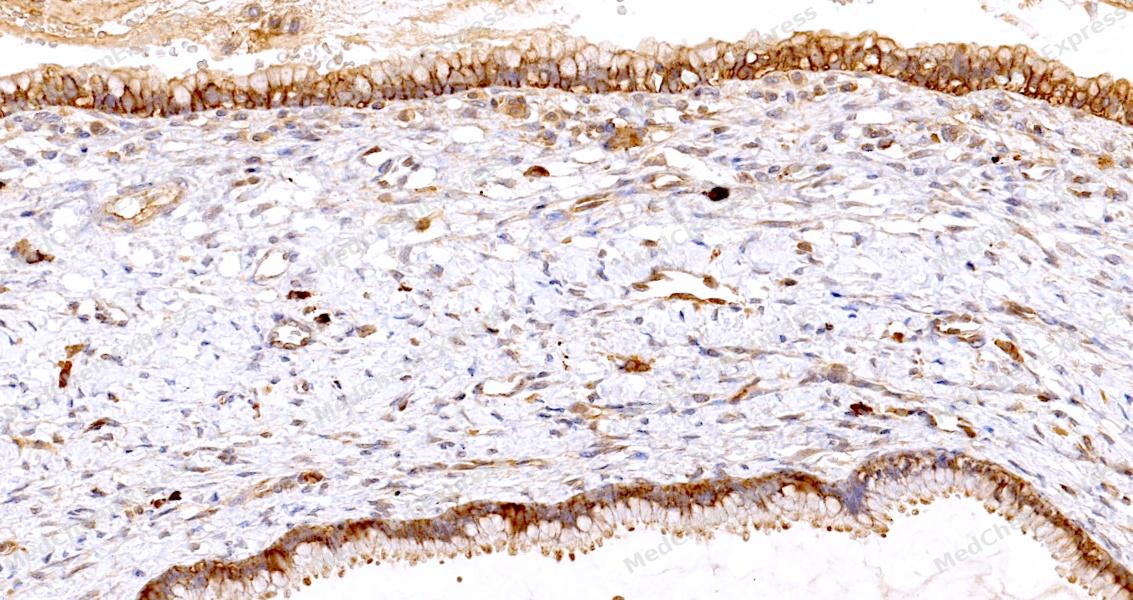 Immunohistochemical analysis of paraffin-embedded human cervix tissue using CD47 Antibody (HY-P80065, 1/1000). The section was pretreated using heat mediated antigen retrieval with sodium citrate buffer (pH 6.0) for 8 minutes. The tissues were blocked with quick block buffer for 0.5 hours at room temperature, washed with PBS and PBST, and then incubated with the primary antibody overnight at 4℃. The detection was performed using an HRP conjugated compact polymer system. DAB was used as the chromogen. Tissues were counterstained with hematoxylin and mounted with DPX.
 -
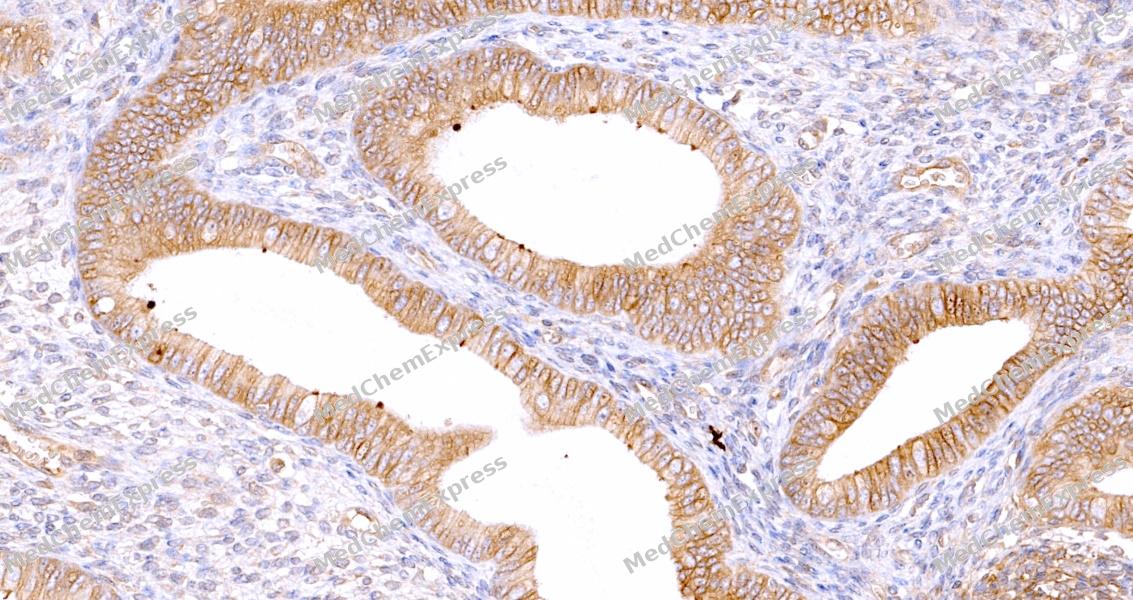 Immunohistochemical analysis of paraffin-embedded human endometrium tissue using CD47 Antibody (HY-P80065, 1/1000). The section was pretreated using heat mediated antigen retrieval with sodium citrate buffer (pH 6.0) for 8 minutes. The tissues were blocked with quick block buffer for 0.5 hours at room temperature, washed with PBS and PBST, and then incubated with the primary antibody overnight at 4℃. The detection was performed using an HRP conjugated compact polymer system. DAB was used as the chromogen. Tissues were counterstained with hematoxylin and mounted with DPX.
 -
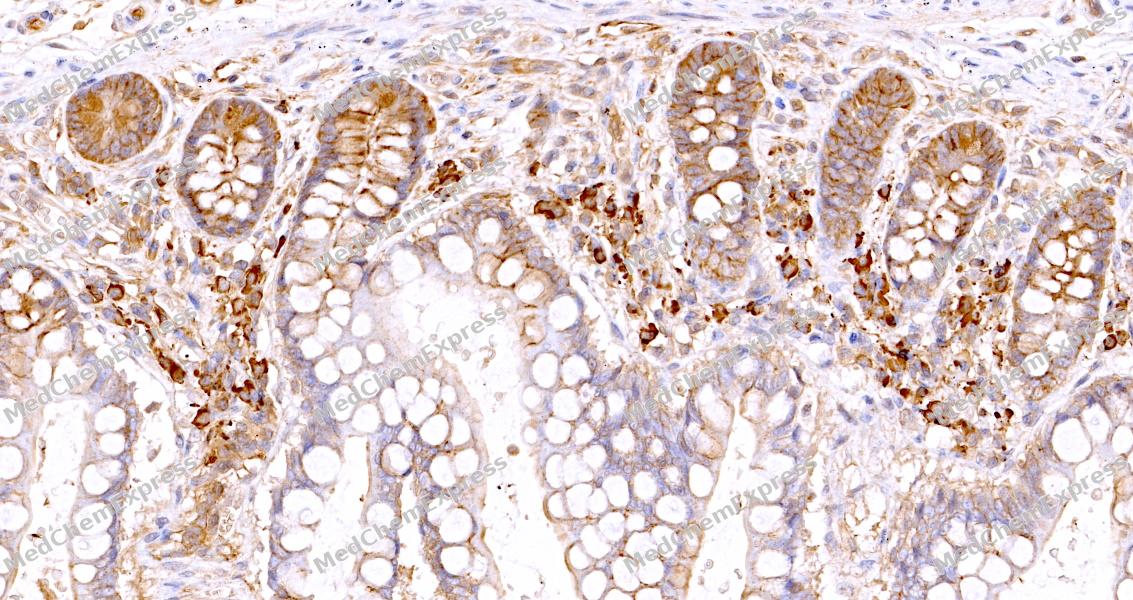 Immunohistochemical analysis of paraffin-embedded human small intestine tissue using CD47 Antibody (HY-P80065, 1/1000). The section was pretreated using heat mediated antigen retrieval with sodium citrate buffer (pH 6.0) for 8 minutes. The tissues were blocked with quick block buffer for 0.5 hours at room temperature, washed with PBS and PBST, and then incubated with the primary antibody overnight at 4℃. The detection was performed using an HRP conjugated compact polymer system. DAB was used as the chromogen. Tissues were counterstained with hematoxylin and mounted with DPX.
 -
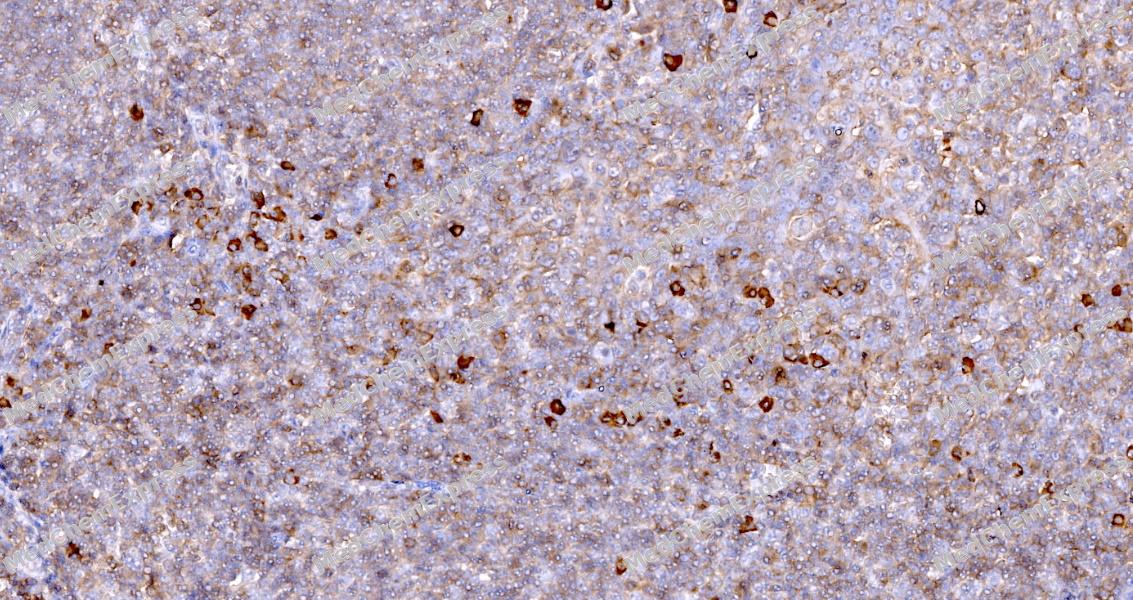 Immunohistochemical analysis of paraffin-embedded human tonsil tissue using CD47 Antibody (HY-P80065, 1/1000). The section was pretreated using heat mediated antigen retrieval with sodium citrate buffer (pH 6.0) for 8 minutes. The tissues were blocked with quick block buffer for 0.5 hours at room temperature, washed with PBS and PBST, and then incubated with the primary antibody overnight at 4℃. The detection was performed using an HRP conjugated compact polymer system. DAB was used as the chromogen. Tissues were counterstained with hematoxylin and mounted with DPX.
 -
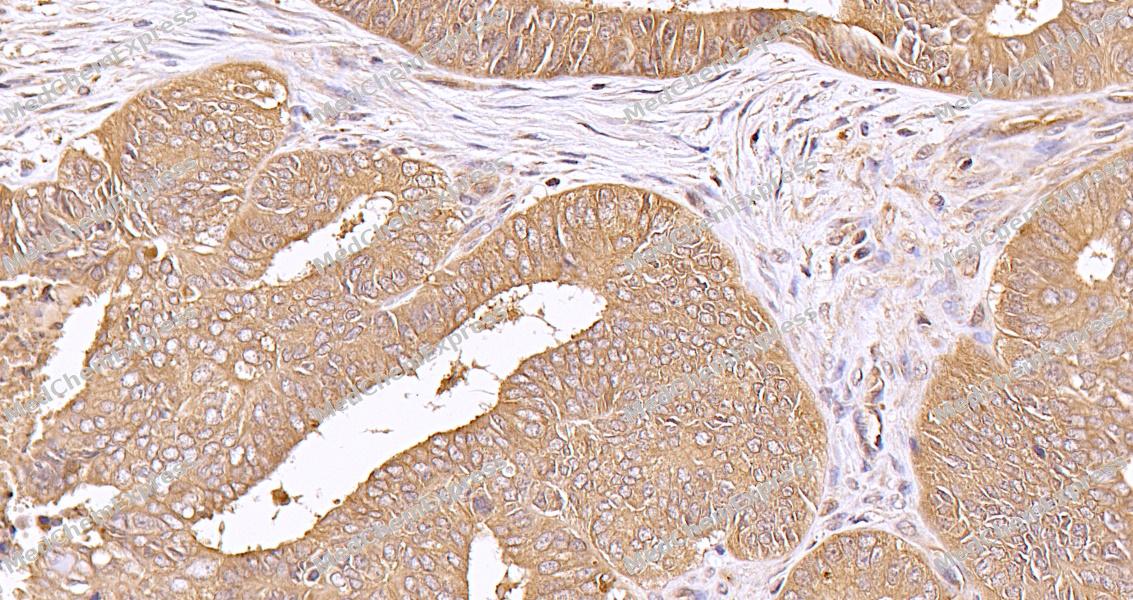 Immunohistochemical analysis of paraffin-embedded human ovarian cancer using CD47 Antibody (HY-P80065, 1/1000). The section was pretreated using heat mediated antigen retrieval with sodium citrate buffer (pH 6.0) for 8 minutes. The tissues were blocked with quick block buffer for 0.5 hours at room temperature, washed with PBS and PBST, and then incubated with the primary antibody overnight at 4℃. The detection was performed using an HRP conjugated compact polymer system. DAB was used as the chromogen. Tissues were counterstained with hematoxylin and mounted with DPX.
 -
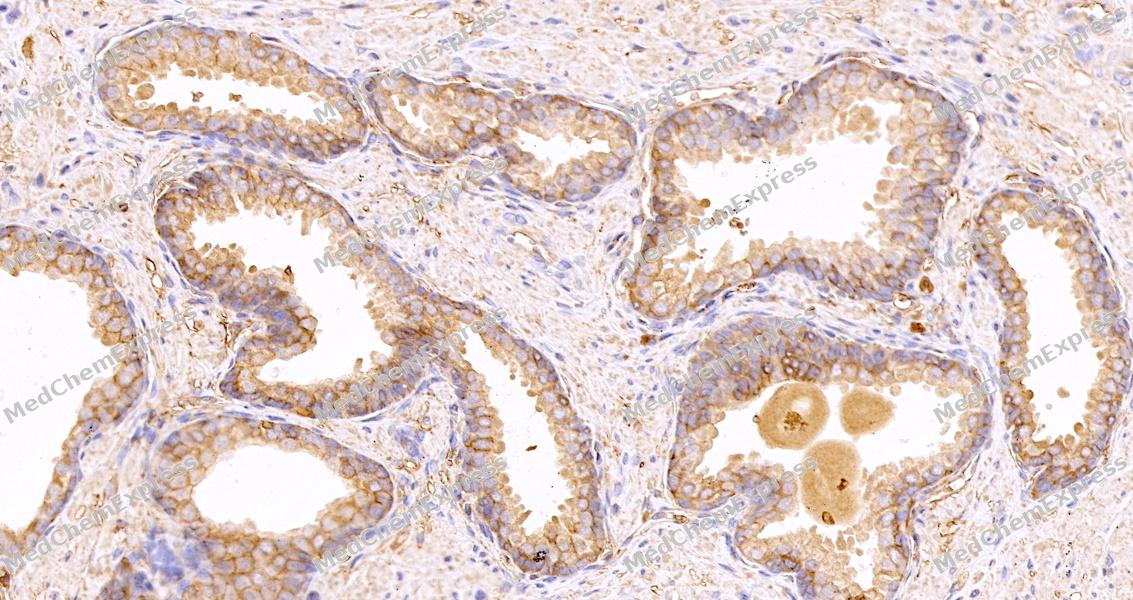 Immunohistochemical analysis of paraffin-embedded human prostate cancer using CD47 Antibody (HY-P80065, 1/1000). The section was pretreated using heat mediated antigen retrieval with sodium citrate buffer (pH 6.0) for 8 minutes. The tissues were blocked with quick block buffer for 0.5 hours at room temperature, washed with PBS and PBST, and then incubated with the primary antibody overnight at 4℃. The detection was performed using an HRP conjugated compact polymer system. DAB was used as the chromogen. Tissues were counterstained with hematoxylin and mounted with DPX.


Background
-
Function
CD47 is a glycoprotein that was first identified in 1990 as a protein that associates with integrins, hence its original name integrin-associated protein. CD47 interacts with SIRPα (CD172a or SHPS-1) and its family member SIRPγ, CD47 also interacts with integrins and secreted glycoprotein extracellular matrix protein thrombospondin-1 (TSP-1) . Signaling through the CD47/SIRPα axis plays a role in various homeostatic processes, such as maintenance of erythrocytes, innate immune cells and T cells. Moreover, cancer cells and virus-infected and bacteria-infected cells can upregulate CD47 protein expression to prevent immune-mediated elimination.
-
Subcellular Localization
Cell membrane; Multi-pass membrane protein
-
Expression
Tissue_specificity:They are widely distributed in normal adult tissues and ovarian tumors, especially abundant in certain epithelial tissues and brain tissues. Macrophages (PubMed: 39121194)
Induction:Induced in pulmonary artery and lung parenchyma following injury or stress (PubMed:27742621) . Expression in arteries increases in normal aging (PubMed:32679764) -
Isoforms & Post-Translational Modification
Q08722 has 4 isomers: Q08722-1: 35214 Da (predicted); Q08722-2: 31743 Da (predicted); Q08722-3: 33192 Da (predicted); Q08722-4: 33845 Da (predicted).
-
Subunit
Monomer (PubMed:18657508). Interacts with THBS1 (via the C-terminal domain) (PubMed:19004835, PubMed:8550562). Interacts with SIRPA (PubMed:11509594). Interacts with FAS/CD95; interaction may be enhanced by functional activation (PubMed:15917238). Interacts with SIRPG, UBQLN1 and UBQLN2 (PubMed:10549293, PubMed:15383453, PubMed:18657508). May interact with fibrinogen (PubMed:22079249). Interacts with Aedes aegypti neutrophil-stimulating factor 1; the interaction results in inhibition of phagocytosis activity of macrophages (PubMed:39121194)
-
SwissProt ID
-
Synonyms
CD47, MER6, Leukocyte surface antigen CD47, Antigenic surface determinant protein OA3, Integrin-associated protein, Protein MER6, IAP
-
Research Field
Immunology


Documentation
-
Data Sheet (235 KB)
-
SDS (251 KB)
- English - EN (251 KB)
- Français - FR (251 KB)
- Deutsch - DE (251 KB)
- Norwegian - NO (251 KB)
- Español - ES (251 KB)
- Swedish - SV (251 KB)
- Italian - IT (251 KB)
- Korean - KR (251 KB)
- Portuguese - PT (251 KB)
-
User Guide for Antibodies (1077 KB)

 Powered by Bioz
