



MCL1 Antibody (YA303)
(Synonyms: BCL2L3, MCL1, Induced myeloid leukemia cell differentiation protein Mcl-1, Bcl-2-like protein 3, Bcl-2-related protein EAT/mcl1, mcl1/EAT, Bcl2-L-3)
Based on 1 Customer Validation
MCL1 Antibody (YA303) is a Rabbit-derived and non-conjugated IgG monoclonal antibody, targeting to MCL1.
-
Host:
Rabbit
-
Isotype:
IgG
-
Application:
WB, ICC/IF, IHC-P, IP, FC
-
Reactivity :
Human, Mouse
-
Formulation:
Supplied in 1*TBS (pH7.4), 0.05% BSA and 40% Glycerol. Preservative: 0.05% Sodium Azide.
-
Conjugation:
Non-conjugated


To place orders, for customer services and technical support, please contact: MedChemExpress USA
Tel: 609-228-6898 E-mail: [email protected] [email protected]





Applications
| Application |
WB

WB: Western Blot
|
ICC/IF
ICC/IF: Immunocytochemistry/
Immunofluorescence |
IHC-P
IHC-P: Immunohistochemistry-Paraffin
|
FC
FC: Flow Cytometry
|
IP
IP: Immunoprecipitation
|
|---|---|---|---|---|---|
| Dilution Ratio | 1:500-1:1000 | 1:50-1:200 | 1:50-1:200 | 1:50-1:100 | Use at an assay dependent concentration. |


Product Details
MCL1 Antibody (YA303) is a Rabbit-derived and non-conjugated IgG monoclonal antibody, targeting to MCL1.
-
Host Rabbit

-
Clonality Recombinant,Monoclonal

-
Species ReactivityHuman, Mouse
-
Observed Molecular WeightObserved band size: 40 kDa
Note: Due to possible protein modifications or aggregation, the molecular weight should be confirmed by actual measurement, and the predicted value is for reference only.

-
Calculated Molecular Weight Predicted band size: 37 kDa

Synthetic peptide corresponding to Human MCL1.AA range:101-150.
Endogenous
Protein A affinity purified.
Non-conjugated
Unmodified
IgG


Product Properties
-
Appearance
Solution
-
Formulation
Supplied in 1*TBS (pH7.4), 0.05% BSA and 40% Glycerol. Preservative: 0.05% Sodium Azide.
-
Concentration
Batch-dependent, Please check the COA for the concentration of each lot. Check Lot Concentration
-
Storage & Stability
Stored at -20°C for 1 year. Avoid repeated freeze / thaw cycles.
-
Shipping
Shipping with blue ice.


Verification Images
-
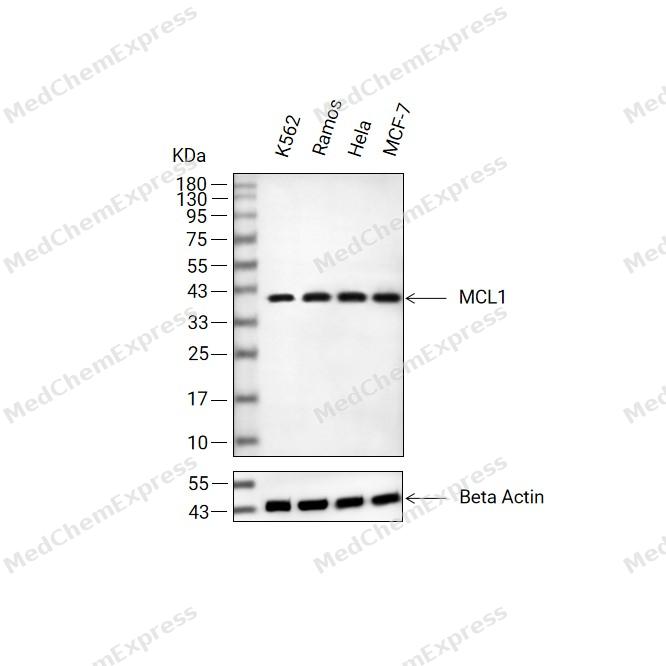 Western blot analysis of extracts from K562(lane 2(20μg) , Ramos (lane 3(20μg) ,Hela(lane 4(20μg)and MCF-7( lane 5(20μg) using MCL1 Antibody (HY-P80508). Proteins were transferred to a PVDF membrane and blocked with 5% non-fat milk in TBST for 2 hour at room temperature. The primary antibody ( 1/1000) and Loading control antibody (Beta Actin, HY-P80993,1/10000) was used in 5% non-fat milk in TBST at 4°C overnight. Goat Anti-Rabbit IgG-HRP Secondary Antibody (HY-P8001,1/10,000) was used for 1 hour at room temperature.
 -
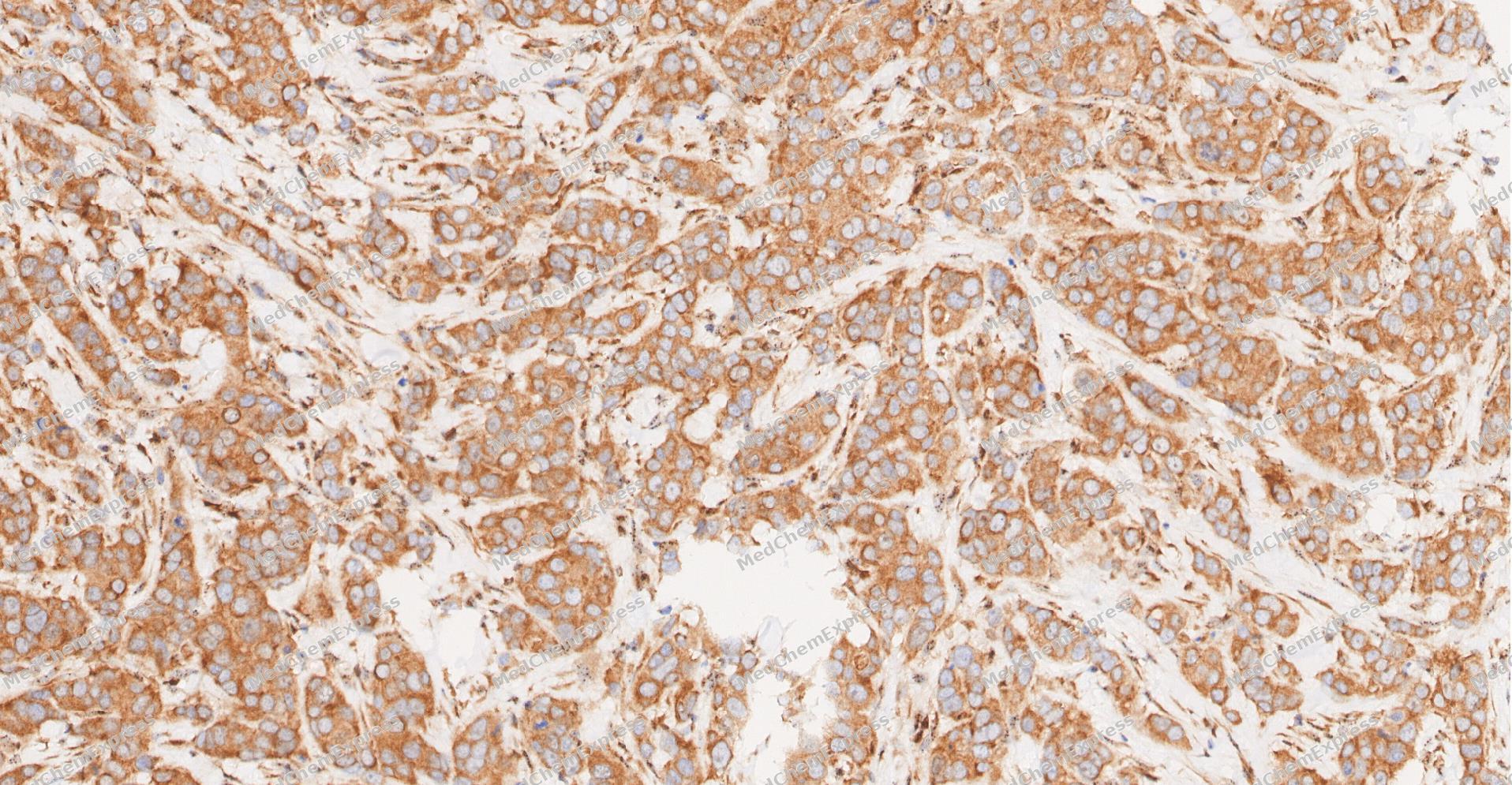 Immunohistochemical analysis of paraffin-embedded human Breast Cancer tissue using MCL1 antibody was performed. The section was pretreated using high-temperature and high-pressure mediated EDTA antigen retrieval buffer (pH 9.0), for 5 minutes. The tissues were incubated with primary antibody (HY-P80508, 1:100 dilution) at room temperature for 60 minutes. Detection was performed using an HRP conjugated compact polymer system. DAB was used as the chromogen. The tissues were counterstained with hematoxylin and mounted with neutral balsam mounting medium.
 -
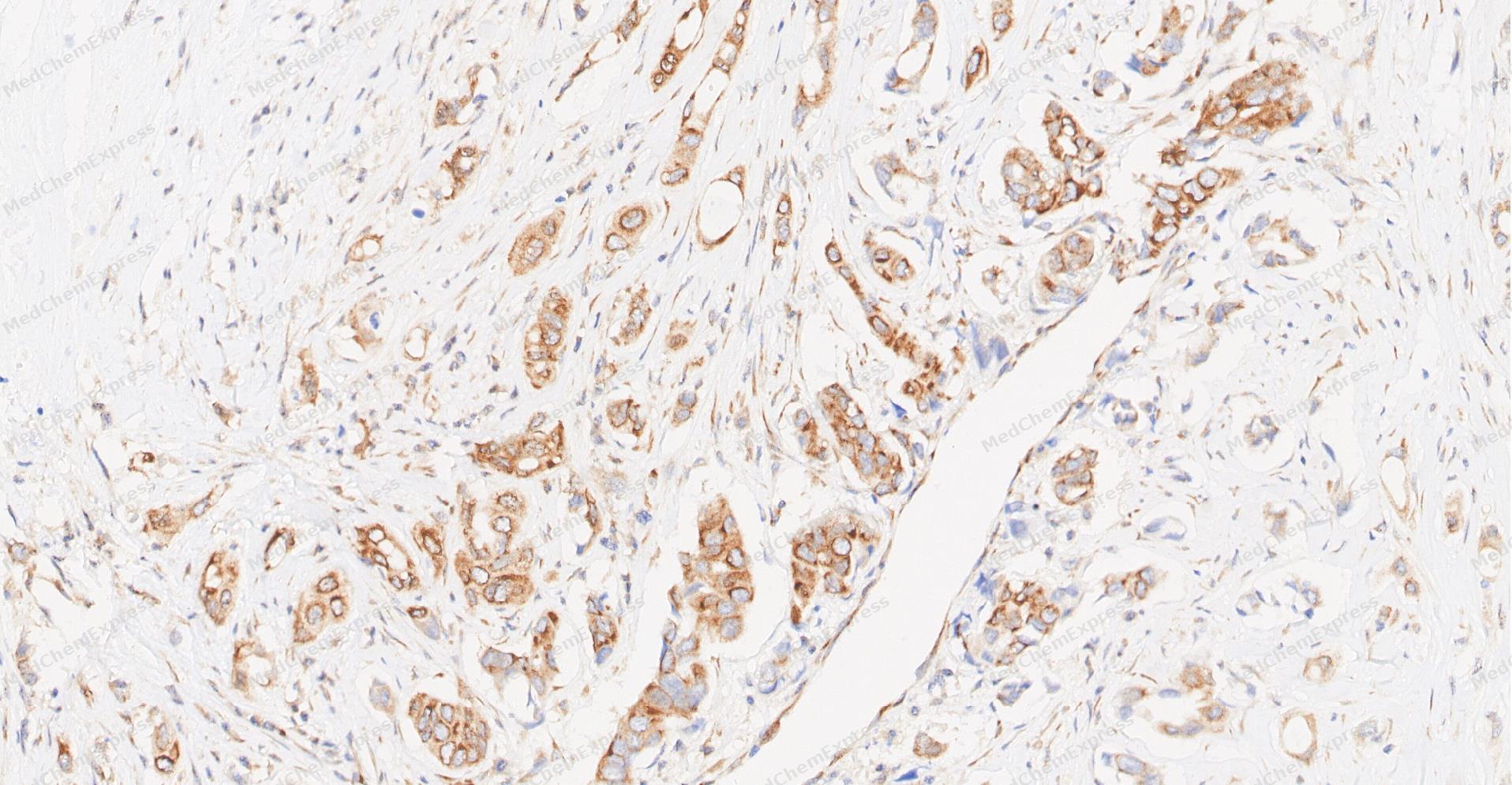 Immunohistochemical analysis of paraffin-embedded human Breast Cancer tissue using MCL1 antibody was performed. The section was pretreated using high-temperature and high-pressure mediated EDTA antigen retrieval buffer (pH 9.0), for 5 minutes. The tissues were incubated with primary antibody (HY-P80508, 1:100 dilution) at room temperature for 60 minutes. Detection was performed using an HRP conjugated compact polymer system. DAB was used as the chromogen. The tissues were counterstained with hematoxylin and mounted with neutral balsam mounting medium.
 -
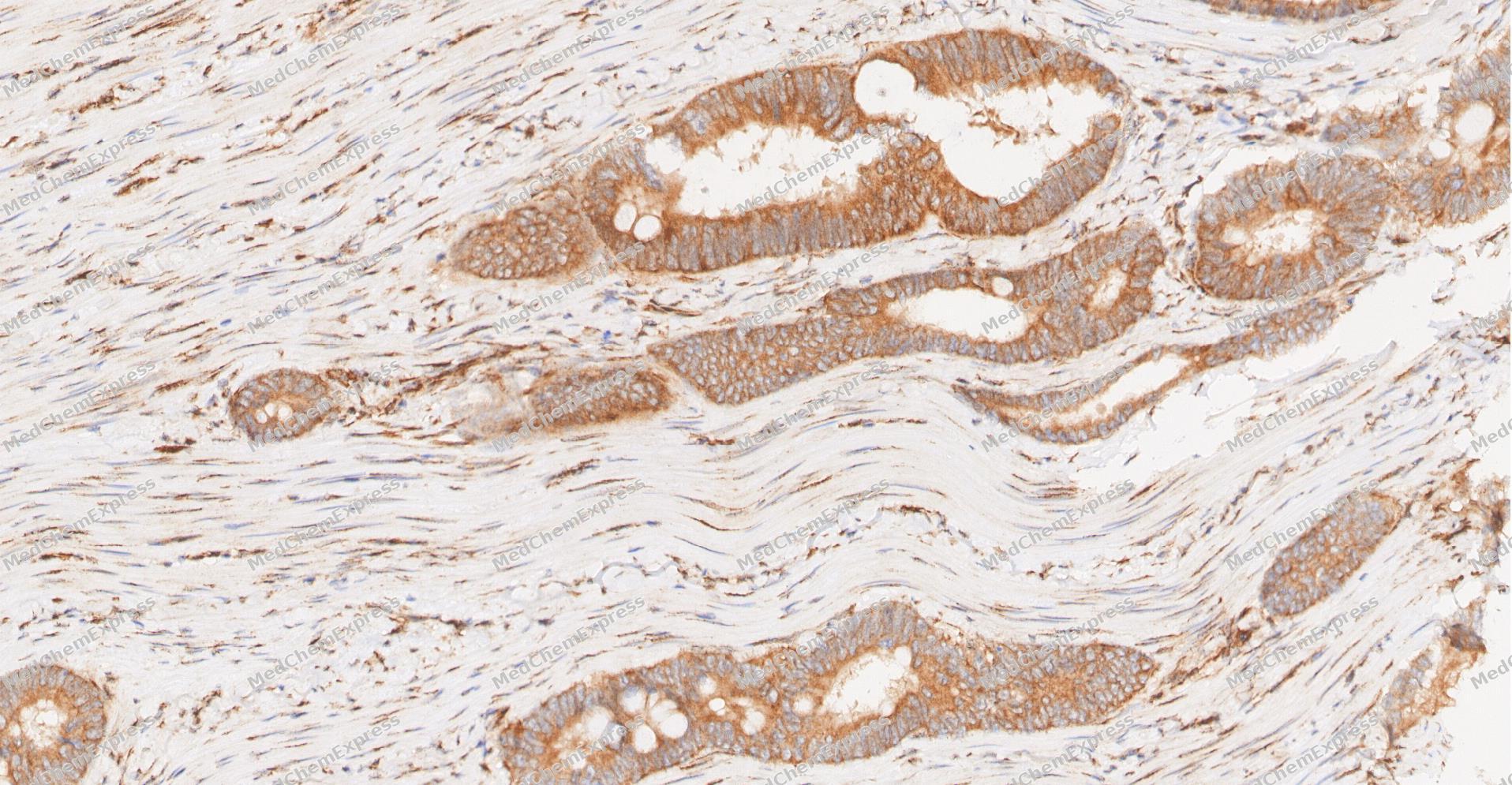 Immunohistochemical analysis of paraffin-embedded human Colon cancer tissue using MCL1 antibody was performed. The section was pretreated using high-temperature and high-pressure mediated EDTA antigen retrieval buffer (pH 9.0), for 5 minutes. The tissues were incubated with primary antibody (HY-P80508, 1:100 dilution) at room temperature for 60 minutes. Detection was performed using an HRP conjugated compact polymer system. DAB was used as the chromogen. The tissues were counterstained with hematoxylin and mounted with neutral balsam mounting medium.
 -
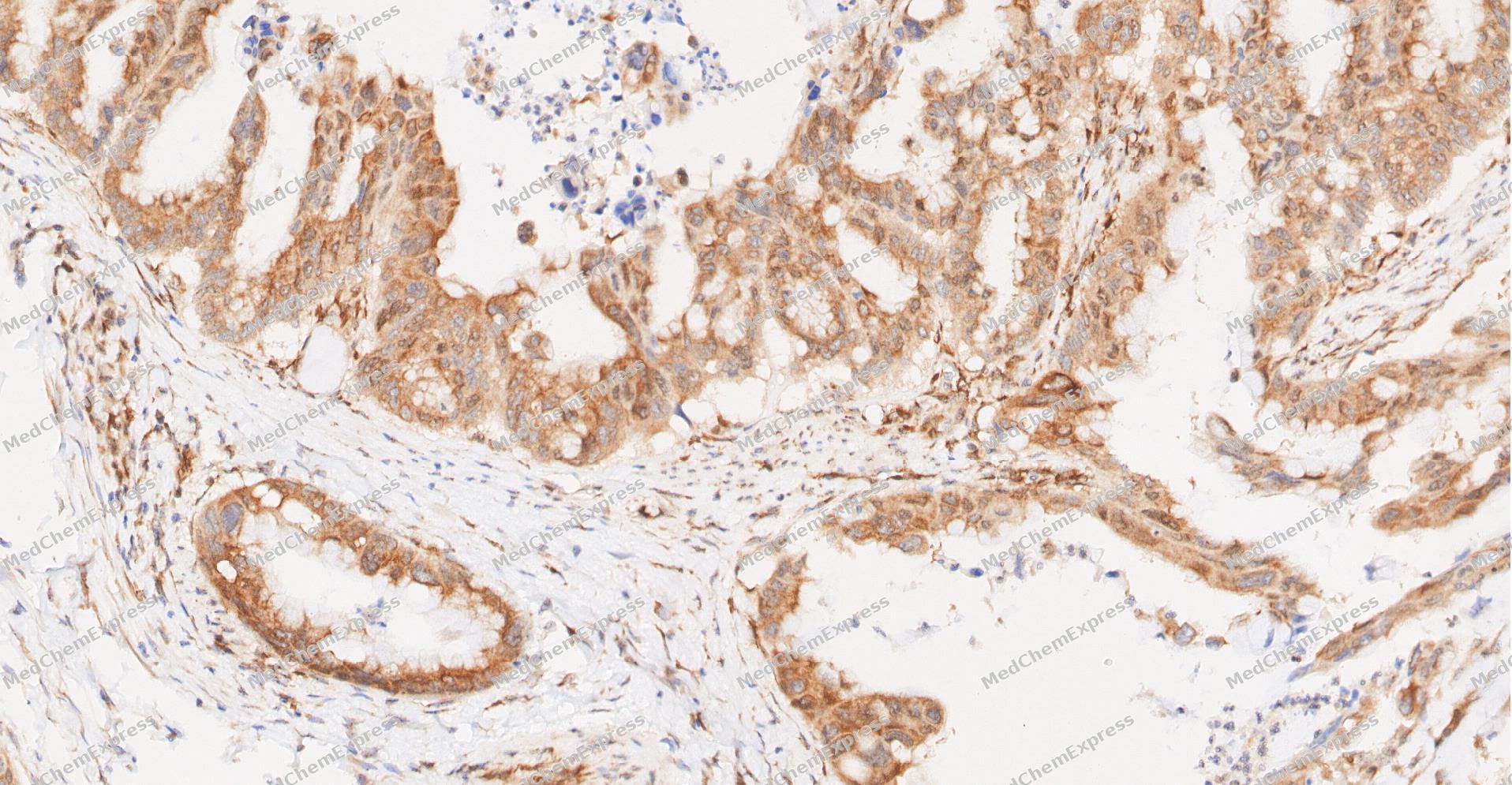 Immunohistochemical analysis of paraffin-embedded human Gastric Cancer tissue using MCL1 antibody was performed. The section was pretreated using high-temperature and high-pressure mediated EDTA antigen retrieval buffer (pH 9.0), for 5 minutes. The tissues were incubated with primary antibody (HY-P80508, 1:100 dilution) at room temperature for 60 minutes. Detection was performed using an HRP conjugated compact polymer system. DAB was used as the chromogen. The tissues were counterstained with hematoxylin and mounted with neutral balsam mounting medium.
 -
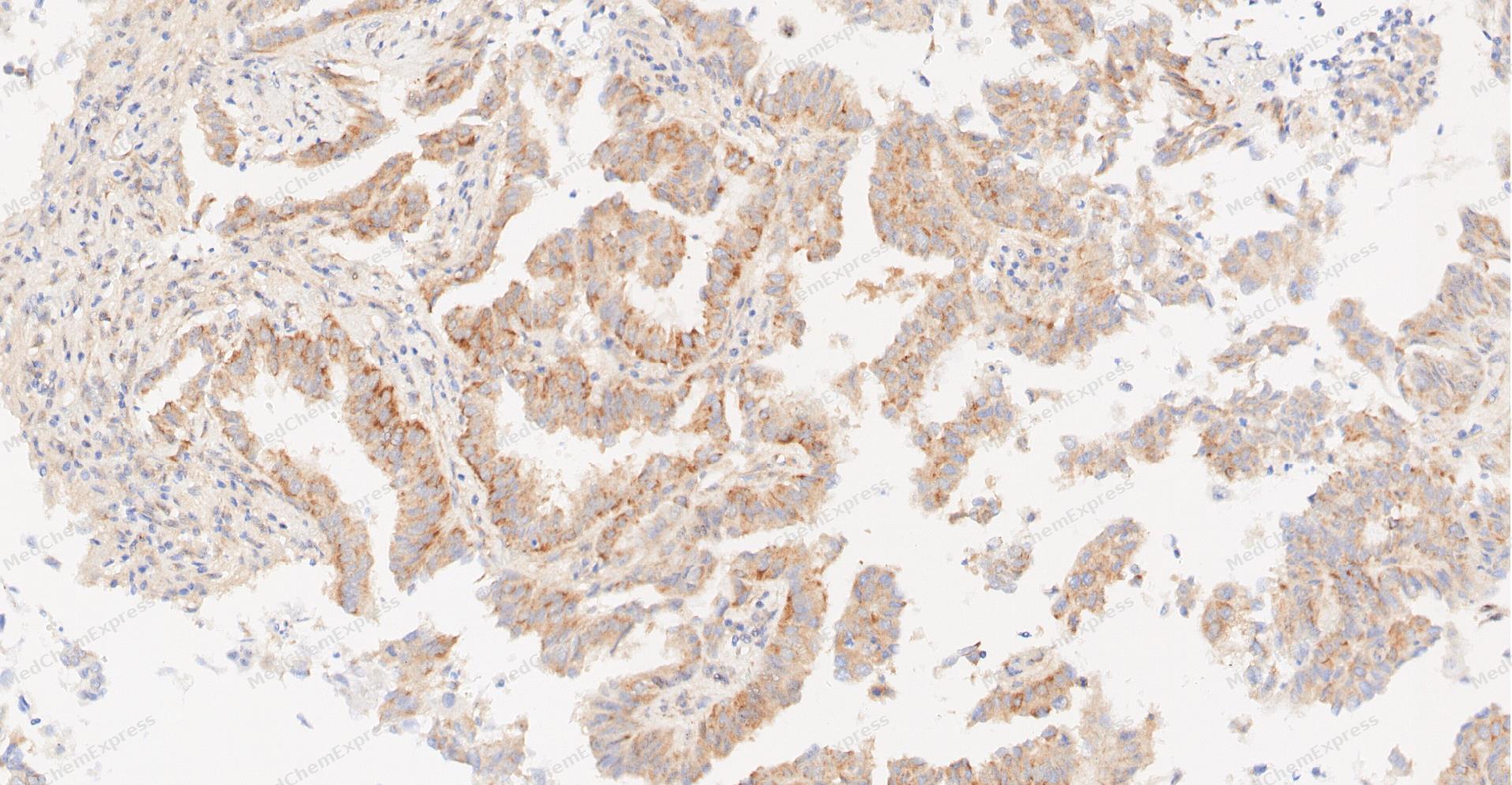 Immunohistochemical analysis of paraffin-embedded human Lung Adenocarcinoma tissue using MCL1 antibody was performed. The section was pretreated using high-temperature and high-pressure mediated EDTA antigen retrieval buffer (pH 9.0), for 5 minutes. The tissues were incubated with primary antibody (HY-P80508, 1:100 dilution) at room temperature for 60 minutes. Detection was performed using an HRP conjugated compact polymer system. DAB was used as the chromogen. The tissues were counterstained with hematoxylin and mounted with neutral balsam mounting medium.
 -
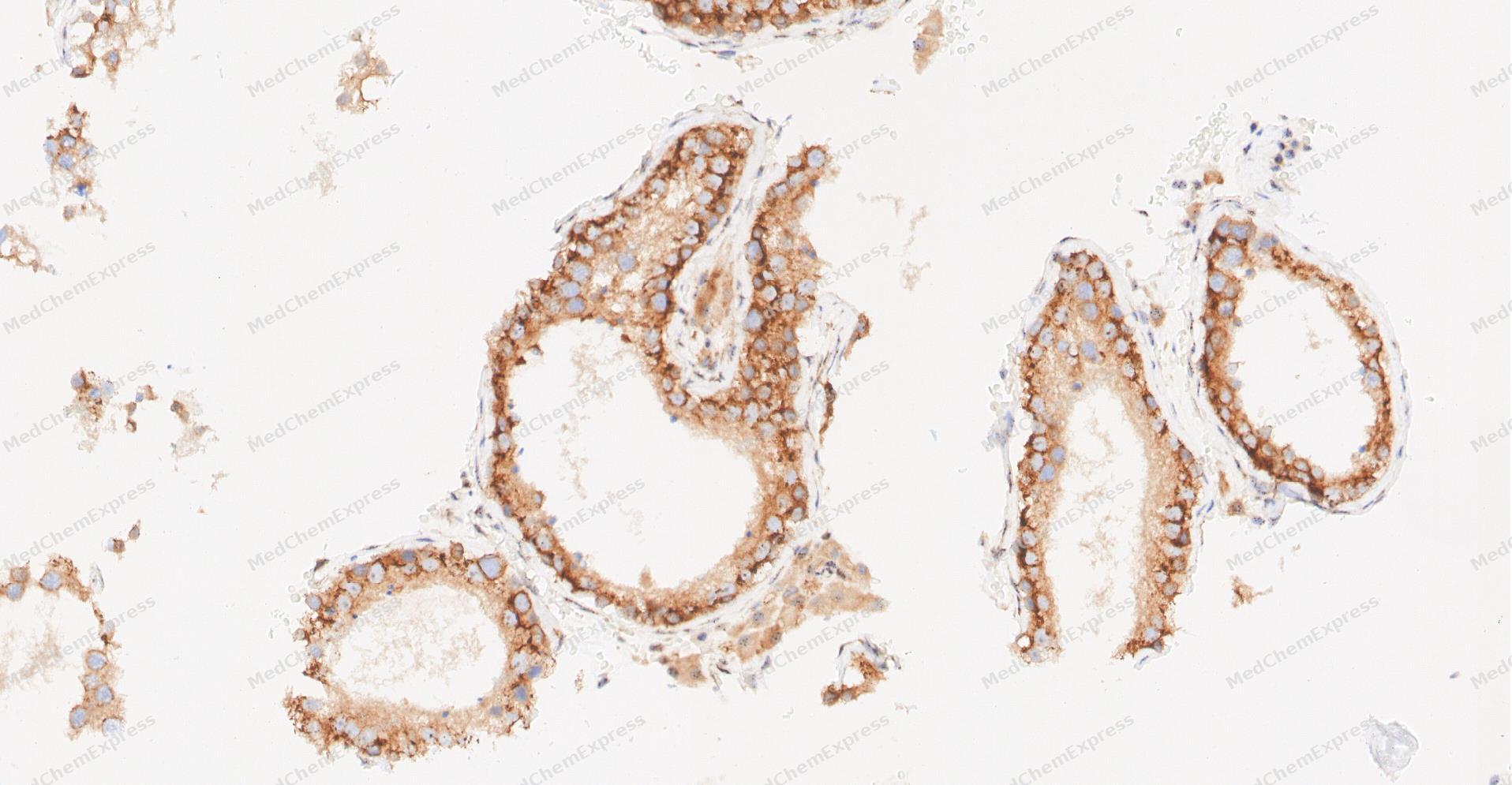 Immunohistochemical analysis of paraffin-embedded human Testis tissue using MCL1 antibody was performed. The section was pretreated using high-temperature and high-pressure mediated EDTA antigen retrieval buffer (pH 9.0), for 5 minutes. The tissues were incubated with primary antibody (HY-P80508, 1:100 dilution) at room temperature for 60 minutes. Detection was performed using an HRP conjugated compact polymer system. DAB was used as the chromogen. The tissues were counterstained with hematoxylin and mounted with neutral balsam mounting medium.
 -
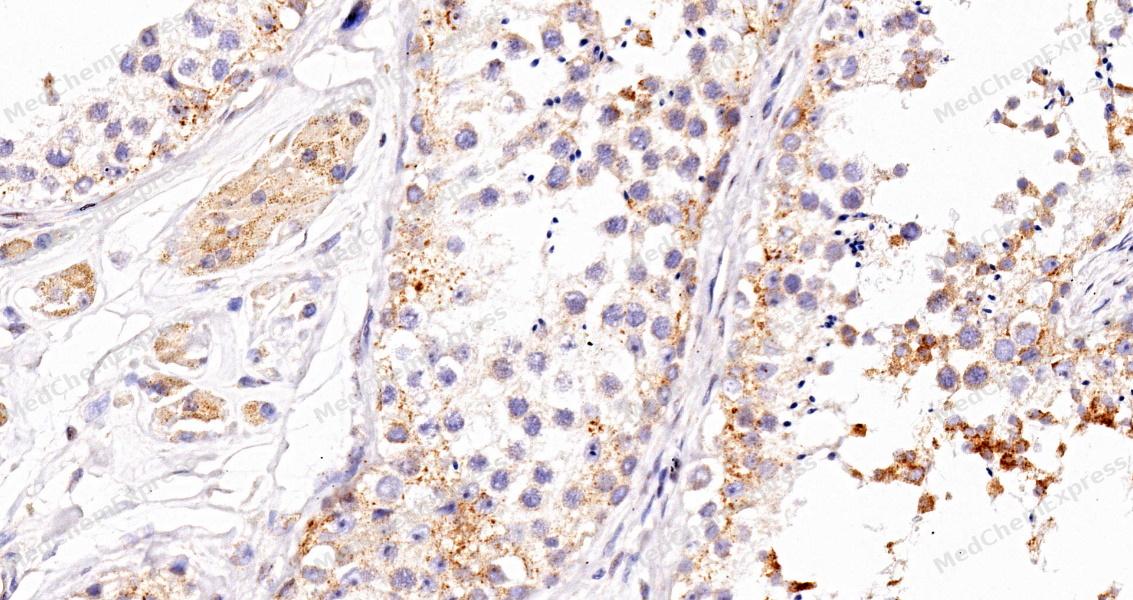 Immunohistochemical analysis of paraffin-embedded Human testis tissue using MCL1 Antibody (HY-P80508, 1/200) . The section was pretreated using heat mediated antigen retrieval with sodium citrate buffer (PH 6.0)for 8 minutes. The tissues were blocked with quick block buffer for 0.5 hours at room temperature, washed with PBS and PBST, and then incubated with the primary antibody overnight at 4℃. The detection was performed using an HRP conjugated compact polymer system. DAB was used as the chromogen. Tissues were counterstained with hematoxylin and mounted with DPX.
 -
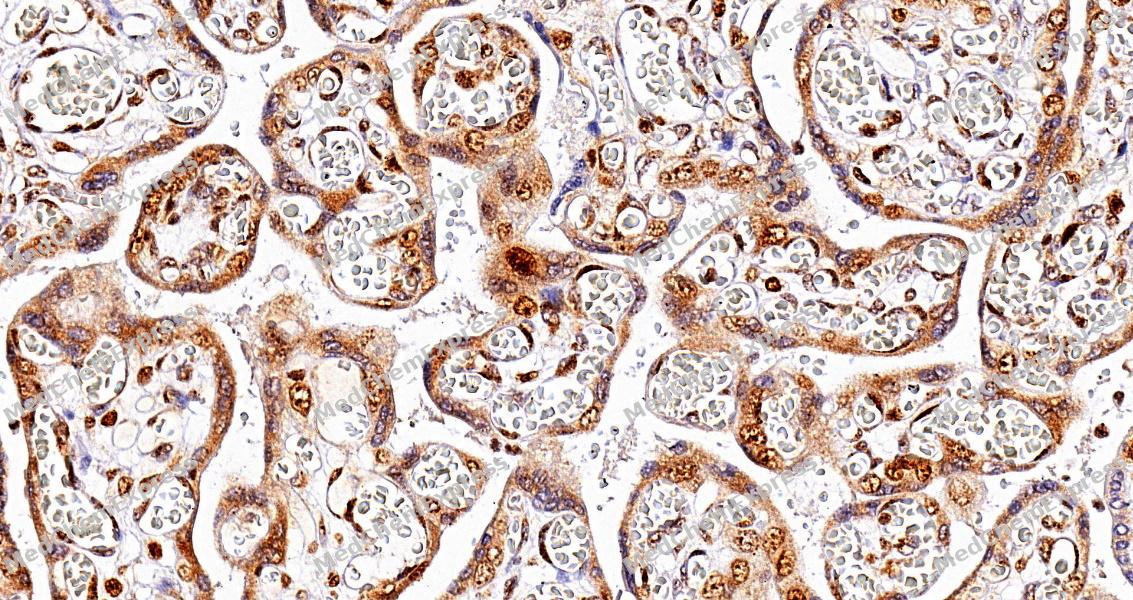 Immunohistochemical analysis of paraffin-embedded Human placenta tissue using MCL1 Antibody (HY-P80508, 1/200). The section was pretreated using heat mediated antigen retrieval with sodium citrate buffer (PH 6.0)for 8 minutes. The tissues were blocked with quick block buffer for 0.5 hours at room temperature, washed with PBS and PBST, and then incubated with the primary antibody overnight at 4℃. The detection was performed using an HRP conjugated compact polymer system. DAB was used as the chromogen. Tissues were counterstained with hematoxylin and mounted with DPX.
 -
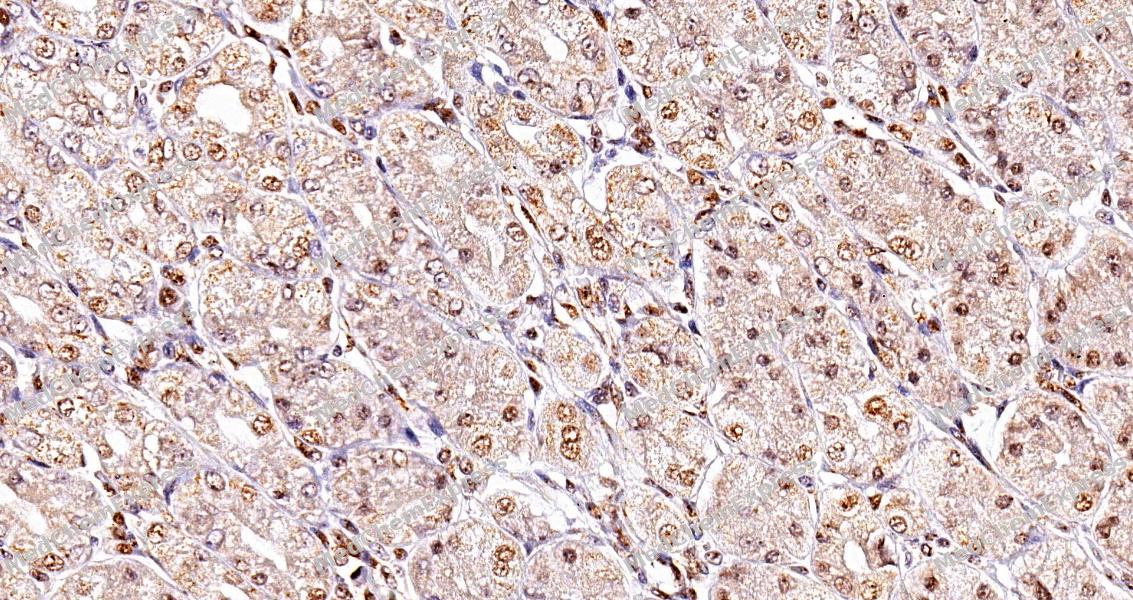 Immunohistochemical analysis of paraffin-embedded Human stomach tissue using MCL1 Antibody (HY-P80508, 1/200). The section was pretreated using heat mediated antigen retrieval with sodium citrate buffer (PH 6.0)for 8 minutes. The tissues were blocked with quick block buffer for 0.5 hours at room temperature, washed with PBS and PBST, and then incubated with the primary antibody overnight at 4℃. The detection was performed using an HRP conjugated compact polymer system. DAB was used as the chromogen. Tissues were counterstained with hematoxylin and mounted with DPX.
 -
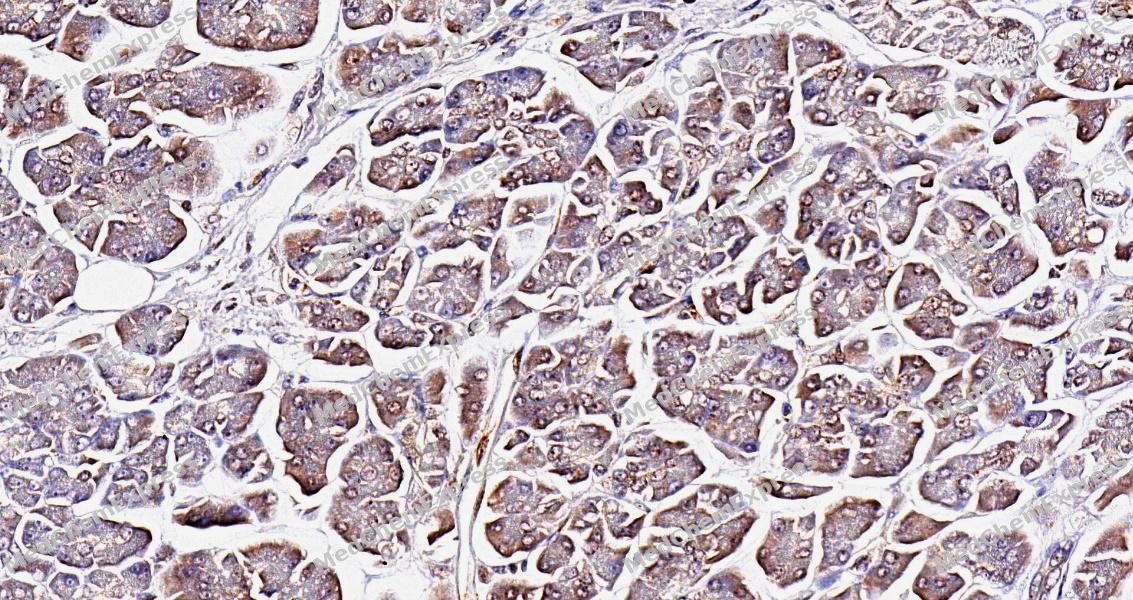 Immunohistochemical analysis of paraffin-embedded Human pancreas using MCL1 Antibody (HY-P80508, 1/200). The section was pretreated using heat mediated antigen retrieval with sodium citrate buffer (PH 6.0)for 8 minutes. The tissues were blocked with quick block buffer for 0.5 hours at room temperature, washed with PBS and PBST, and then incubated with the primary antibody overnight at 4℃. The detection was performed using an HRP conjugated compact polymer system. DAB was used as the chromogen. Tissues were counterstained with hematoxylin and mounted with DPX.
 -
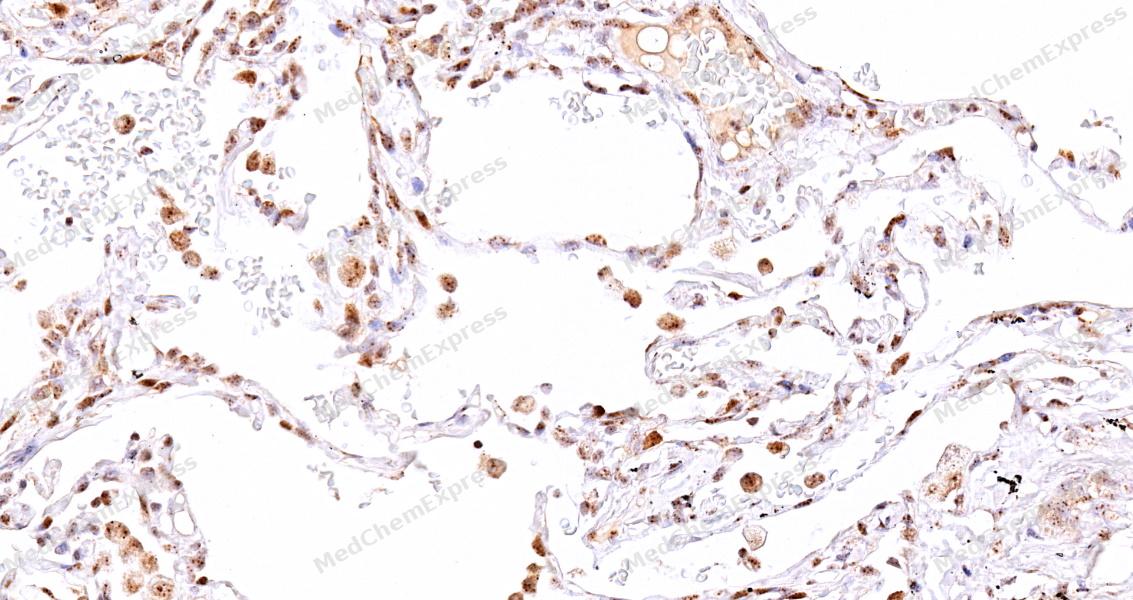 Immunohistochemical analysis of paraffin-embedded Human lung tissue using MCL1 Antibody (HY-P80508, 1/200). The section was pretreated using heat mediated antigen retrieval with sodium citrate buffer (PH 6.0)for 8 minutes. The tissues were blocked with quick block buffer for 0.5 hours at room temperature, washed with PBS and PBST, and then incubated with the primary antibody overnight at 4℃. The detection was performed using an HRP conjugated compact polymer system. DAB was used as the chromogen. Tissues were counterstained with hematoxylin and mounted with DPX.
 -
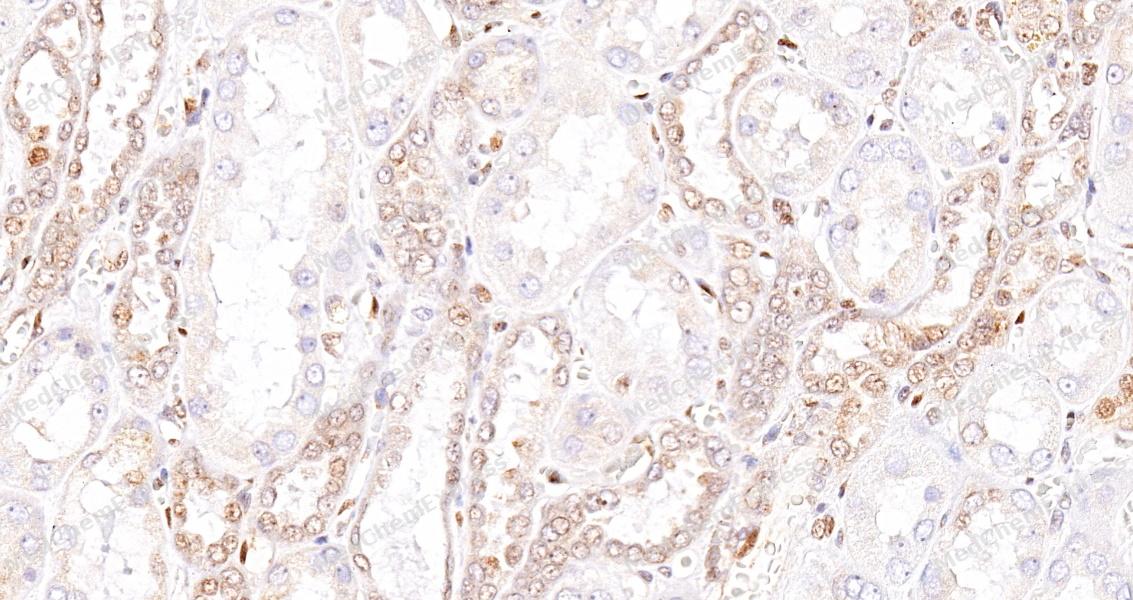 Immunohistochemical analysis of paraffin-embedded Human kidney tissue using MCL1 Antibody (HY-P80508, 1/200). The section was pretreated using heat mediated antigen retrieval with sodium citrate buffer (PH 6.0)for 8 minutes. The tissues were blocked with quick block buffer for 0.5 hours at room temperature, washed with PBS and PBST, and then incubated with the primary antibody overnight at 4℃. The detection was performed using an HRP conjugated compact polymer system. DAB was used as the chromogen. Tissues were counterstained with hematoxylin and mounted with DPX.
 -
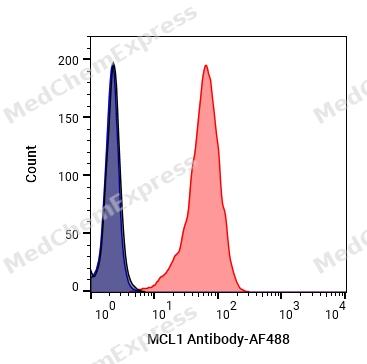 Flow cytometric analysis of 1X10⁶ Hela cells labeling MCL1 Antibody (HY-P80508, red). Cells were fixed with 4% paraformaldehyde and permeabilised with 90% methanol. Then stained with the primary antibody at 1/100 dilution for an hour at 4℃. AF488-conjugated Goat Anti-Rabbit IgG H&L (HY-P8002) was used as the secondary antibody at 1/1,000 dilution for 30 minutes at 4℃. Rabbit IgG Isotype Control (HY-P80879, blue) was used as the isotype control, cells without incubation with primary antibody were used as the unlabeled control (black).
 -
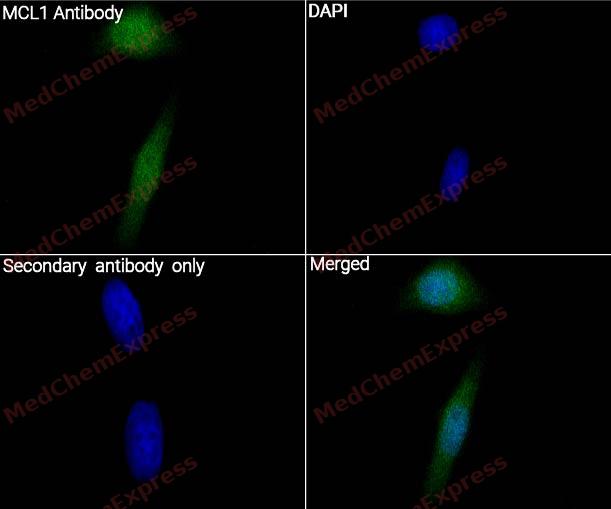 Immunocytochemistry analysis of HepG2 cells labeling MCL1 with MCL1 Antibody (HY-P80508) at 1/100 dilution. Cells were fixed in 4% paraformaldehyde for 15 minutes at room temperature, permeabilized with 0.1% Triton X-100 in PBS for 15 minutes at room temperature, then blocked with quick block buffer for 10 minutes at room temperature. Cells were then incubated with MCL1 Antibody (HY-P80508) at 1/100 dilution in quick block buffer overnight at 4 ℃. AF488-conjugated Goat Anti-Rabbit IgG H&L(HY-P8002, Green) was used as the secondary antibody at 1/1,000 dilution. PBS instead of the primary antibody was used as the secondary antibody only control. The Nuclear counterstain was DAPI (Blue).
 -
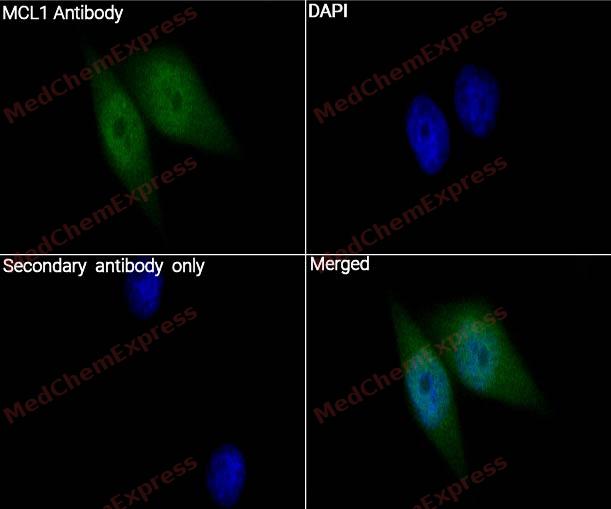 Immunocytochemistry analysis of SK-BR-3 cells labeling MCL1 with MCL1 Antibody (HY-P80508) at 1/100 dilution. Cells were fixed in 4% paraformaldehyde for 15 minutes at room temperature, permeabilized with 0.1% Triton X-100 in PBS for 15 minutes at room temperature, then blocked with quick block buffer for 10 minutes at room temperature. Cells were then incubated with MCL1 Antibody (HY-P80508) at 1/100 dilution in quick block buffer overnight at 4 ℃. AF488-conjugated Goat Anti-Rabbit IgG H&L(HY-P8002, Green) was used as the secondary antibody at 1/1,000 dilution. PBS instead of the primary antibody was used as the secondary antibody only control. The Nuclear counterstain was DAPI (Blue).


Background
-
Function
Mcl-1 (myeloid cell leukemia-1) is a critical anti-apoptotic member of the BCL-2 protein family that preserves mitochondrial integrity by restraining the pro-apoptotic effectors BAK and BAX and preventing mitochondrial outer membrane permeabilization (MOMP) [1][2]. Mechanistically, Mcl-1 contains a hydrophobic BH3-binding groove that sequesters pro-apoptotic proteins and suppresses stress-induced apoptosis, thereby maintaining cell survival under physiological and pathological conditions[1][3]. Within the intrinsic apoptotic pathway, BH3-only proteins including NOXA, BIM, PUMA, and BID antagonize anti-apoptotic BCL-2 family members, and NOXA displays notable selectivity toward Mcl-1, promoting apoptotic signaling through Mcl-1 neutralization and degradation[4][5][6]. In cancer models, Mcl-1 overexpression contributes to tumor progression, chemoresistance, and disease relapse, highlighting its role as a major survival factor in malignant cells[7][8]. Compared with related anti-apoptotic isoforms such as BCL-2 and BCL-xL, Mcl-1 exhibits distinct binding preferences and plays a particularly important role in restraining BAK-dependent apoptosis, indicating non-redundant functions within the BCL-2 family network[9][10]. For experimental applications, selective Mcl-1 inhibitors and BH3 mimetics, including MCL-1 SAHB and S63845, disrupt Mcl-1-BAK interactions and induce apoptosis in MCL-1-dependent cancer cells, providing valuable tools for mechanistic studies and therapeutic target validation[11][12].
-
Subcellular Localization
Membrane; Single-pass membrane protein; Cytoplasm; Mitochondrion; Nucleus, nucleoplasm
-
Expression
Induction:Expression increases early during phorbol ester-induced differentiation along the monocyte/macrophage pathway in myeloid leukemia cell line ML-1. Rapidly up-regulated by CSF2 in ML-1 cells. Up-regulated by heat shock-induced differentiation. Expression increases early during retinoic acid-induced differentiation -
Subunit
Interacts with HIF3A (via C-terminus domain) (By similarity). Interacts with BAD, BOK, BIK and BMF (By similarity). Interacts with PMAIP1 (PubMed:17389404). Interacts with BBC3 (By similarity). Isoform 1 interacts with BAX, BAK1 and TPT1 (PubMed:10837489, PubMed:12149273, PubMed:15077116). Heterodimer of isoform 1 and isoform 2. Homodimers of isoform 1 or isoform 2 are not detected. Isoform 2 does not interact with pro-apoptotic BCL2-related proteins (PubMed:10837489). Interacts with RTL10/BOP (PubMed:23055042). Interacts with BCL2L11; may sequester BCL2L11 to prevent its pro-apoptotic activity (PubMed:10837489, PubMed:17389404, PubMed:20562877, PubMed:27013495). Interacts with GIMAP5 and HSPA8/HSC70; the interaction between HSPA8 and MCL1 is impaired in the absence of GIMAP5 (By similarity)
-
SwissProt ID
-
Synonyms
BCL2L3, MCL1, Induced myeloid leukemia cell differentiation protein Mcl-1, Bcl-2-like protein 3, Bcl-2-related protein EAT/mcl1, mcl1/EAT, Bcl2-L-3
-
Research Field
Cell Biology


Documentation
-
Data Sheet (262 KB)
-
SDS (252 KB)
- English - EN (252 KB)
- Français - FR (252 KB)
- Deutsch - DE (252 KB)
- Norwegian - NO (252 KB)
- Español - ES (252 KB)
- Swedish - SV (252 KB)
- Italian - IT (252 KB)
- Korean - KR (252 KB)
- Portuguese - PT (252 KB)
-
User Guide for Antibodies (1077 KB)
References
[1]. Chipuk JE, et al. How do BCL-2 proteins induce mitochondrial outer membrane permeabilization? Trends Cell Biol. 2008 Apr;18(4):157-64. [Content Brief]
[3]. Huang K, et al. BH3-only proteins target BCL-xL/MCL-1, not BAX/BAK, to initiate apoptosis. Cell Res. 2019 Nov;29(11):942-952. [Content Brief]
[9]. Zhai D, et al. Differential regulation of Bax and Bak by anti-apoptotic Bcl-2 family proteins Bcl-B and Mcl-1. J Biol Chem. 2008 Apr 11;283(15):9580-6. [Content Brief]
[10]. Willis SN, et al. Life in the balance: how BH3-only proteins induce apoptosis. Curr Opin Cell Biol. 2005 Dec;17(6):617-25. [Content Brief]
[11]. Stewart ML, et al. The MCL-1 BH3 helix is an exclusive MCL-1 inhibitor and apoptosis sensitizer. Nat Chem Biol. 2010 Aug;6(8):595-601. [Content Brief]

 Powered by Bioz
