



PSD95 Antibody (YA120)
(Synonyms: Dlgh4, Psd95, Dlg4, Disks large homolog 4, Postsynaptic density protein 95, Synapse-associated protein 90, PSD-95, SAP-90, SAP90)
Based on 1 Customer Validation
PSD95 Antibody (YA120) is a Rabbit-derived and non-conjugated IgG monoclonal antibody, targeting to PSD95.
-
Host:
Rabbit
-
Isotype:
IgG
-
Application:
WB, ICC/IF, IHC-P, FC, IP
-
Reactivity :
Human, Mouse, Rat
-
Formulation:
Supplied in 1*TBS (pH7.4), 0.05% BSA and 40% Glycerol. Preservative: 0.05% Sodium Azide.
-
Conjugation:
Non-conjugated


To place orders, for customer services and technical support, please contact: MedChemExpress USA
Tel: 609-228-6898 E-mail: [email protected] [email protected]





Applications
| Application |
WB

WB: Western Blot
|
ICC/IF
ICC/IF: Immunocytochemistry/
Immunofluorescence |
IHC-P
IHC-P: Immunohistochemistry-Paraffin
|
FC
FC: Flow Cytometry
|
IP
IP: Immunoprecipitation
|
|---|---|---|---|---|---|
| Dilution Ratio | 1:500 | 1:50 | 1:200 | 1:50 | Use at an assay dependent concentration. |


Product Details
PSD95 Antibody (YA120) is a Rabbit-derived and non-conjugated IgG monoclonal antibody, targeting to PSD95.
-
Host Rabbit

-
Clonality Recombinant,Monoclonal

-
Species ReactivityHuman, Mouse, Rat
-
Observed Molecular WeightObserved band size: 90-95 kDa
Note: Due to possible protein modifications or aggregation, the molecular weight should be confirmed by actual measurement, and the predicted value is for reference only.

-
Calculated Molecular Weight Predicted band size: 80 kDa

Entrez Gene: 1742 Human ; 13385 Mouse ; 29495 Rat
SwissProt: P78352 Human ; Q62108 Mouse ; P31016 Rat
OMIM: 618793 Human
Synthetic peptide corresponding to Human PSD95.AA range:1-40.
Endogenous
Protein A affinity purified.
Non-conjugated
Unmodified
IgG


Product Properties
-
Appearance
Solution
-
Formulation
Supplied in 1*TBS (pH7.4), 0.05% BSA and 40% Glycerol. Preservative: 0.05% Sodium Azide.
-
Concentration
Batch-dependent, Please check the COA for the concentration of each lot. Check Lot Concentration
-
Storage & Stability
Stored at -20°C for 1 year. Avoid repeated freeze / thaw cycles.
-
Shipping
Shipping with blue ice.


Verification Images
-
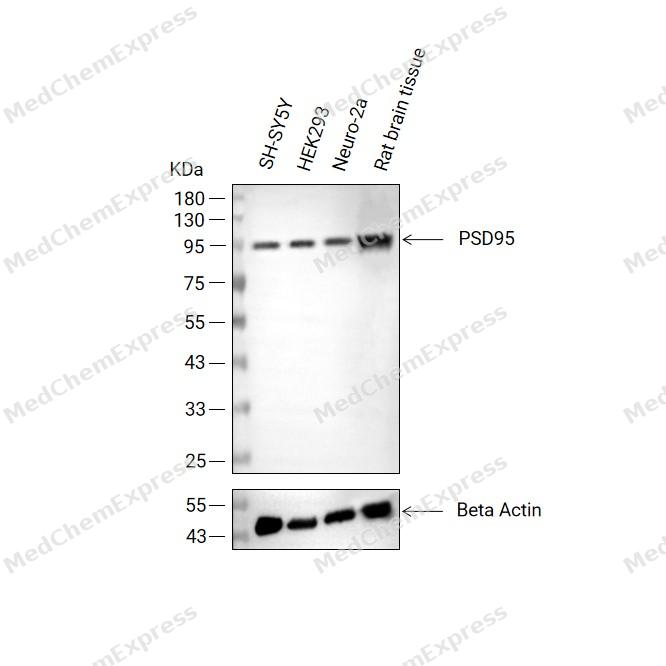 Western blot analysis of extracts from SH-SY5Y (lane2(20μg), HEK293 (lane3(20μg), Neuro-2a (lane4(20μg) and Rat brain tissue (lane5(20μg) using PSD95 Antibody (HY-P80285). Proteins were transferred to a PVDF membrane and blocked with 5% non-fat milk in TBST at 4°C overnight. The primary antibody (1/500) and Loading control antibody (Beta Actin, HY-P80993, 1/10,000) was used in 5% non-fat milk in TBST for 2 hour at room temperature. Goat Anti-Rabbit IgG-HRP Secondary Antibody (HY-P8001, 1/10,000) was used for 1 hour at room temperature.
 -
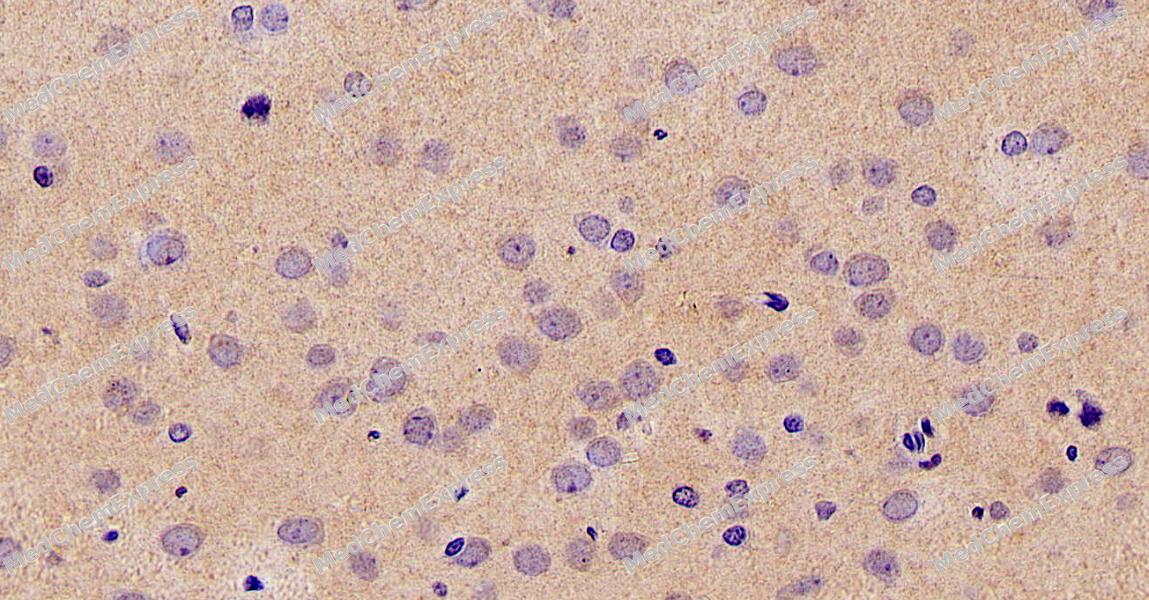 Immunohistochemical analysis of paraffin-embedded Rat brain tissue using PSD95 Antibody. The section was pre-treated using heat mediated antigen retrieval with Tris-EDTA buffer (pH 9.0) for 8 minutes. The tissues were blocked in QuickBlock for 20 minutes at room temperature, washed with ddH2O and PBS, and then probed with the primary antibody (HY-P80285, 1:2000) in 4℃ overnight. The detection was performed using an HRP conjugated compact polymer system. DAB was used as the chromogen. Tissues were counterstained with hematoxylin and mounted with DPX.
 -
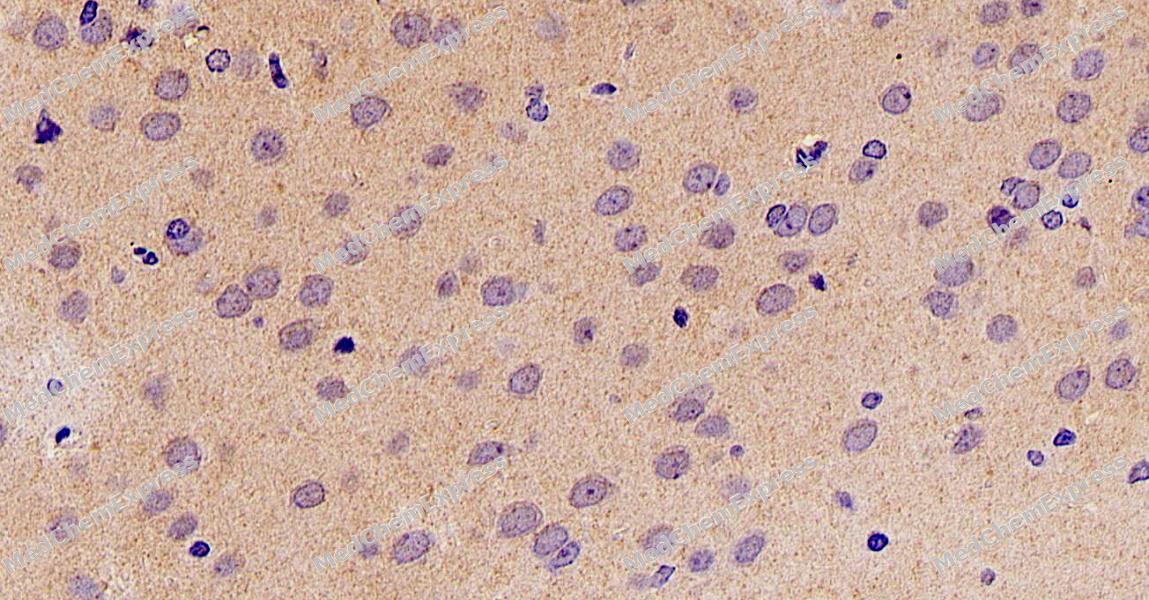 Immunohistochemical analysis of paraffin-embedded Rat brain tissue using PSD95 Antibody. The section was pre-treated using heat mediated antigen retrieval with Tris-EDTA buffer (pH 9.0) for 8 minutes. The tissues were blocked in QuickBlock for 20 minutes at room temperature, washed with ddH2O and PBS, and then probed with the primary antibody (HY-P80285, 1:2000) in 4℃ overnight. The detection was performed using an HRP conjugated compact polymer system. DAB was used as the chromogen. Tissues were counterstained with hematoxylin and mounted with DPX.
 -
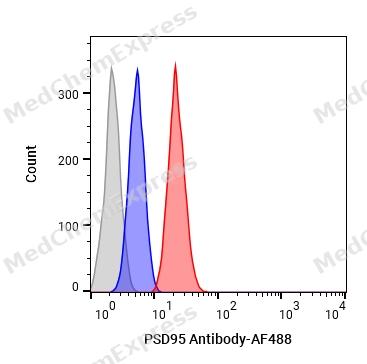 Flow cytometric analysis of 1X10⁶ SH-SY5Y cells labeling PSD95 Antibody(HY-P80285, red). Cells were fixed with 4% paraformaldehyde and permeabilised with 90% methanol. Then stained with the primary antibody at 1/50 dilution for an hour at 4℃. AF488-conjugated Goat Anti-Rabbit IgG H&L (HY-P8002) was used as the secondary antibody at 1/1,000 dilution for 30 minutes at 4℃. Rabbit IgG Isotype Control (HY-P80879, blue) was used as the isotype control, cells without incubation with primary antibody were used as the unlabeled control (black).
 -
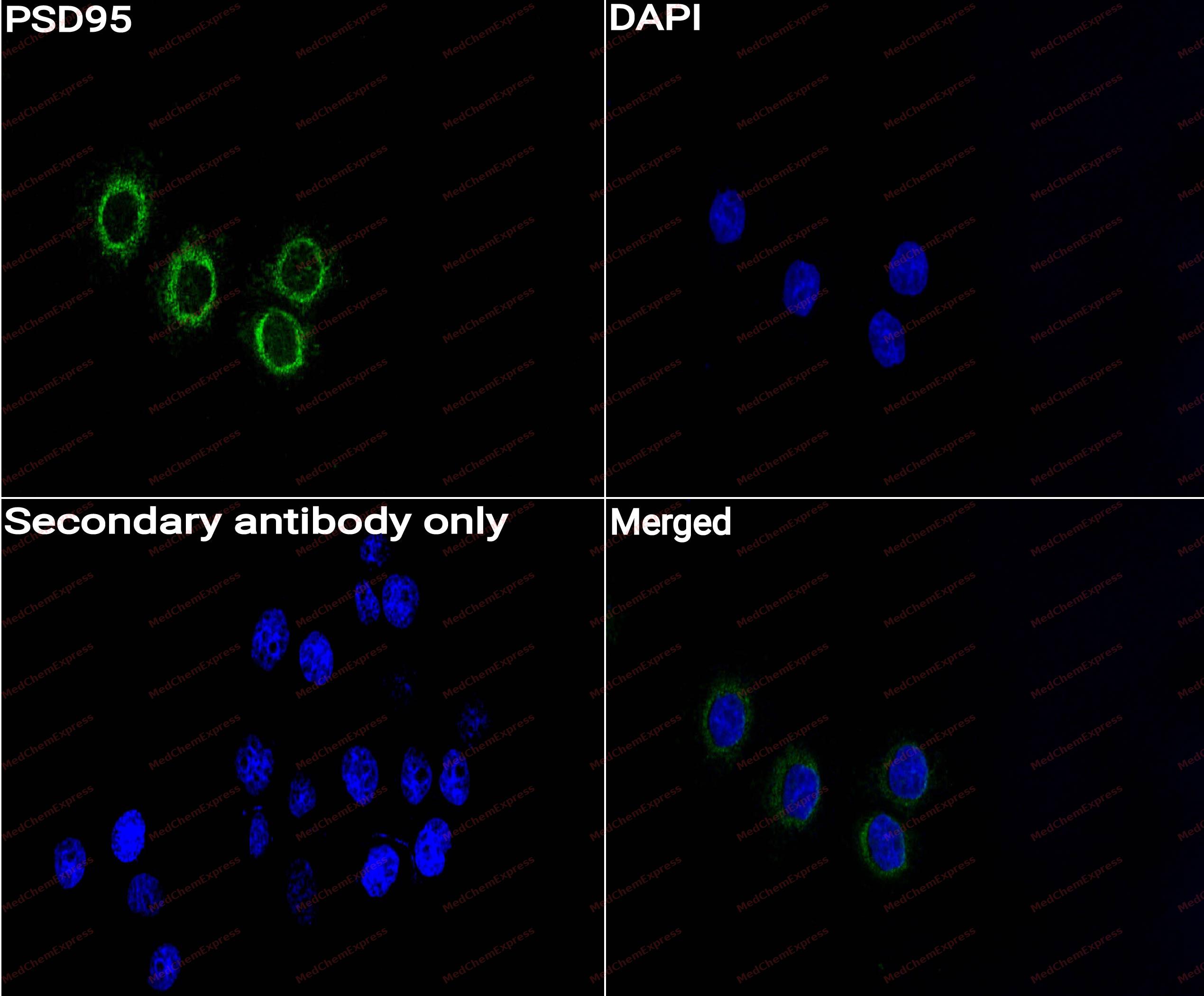 Immunocytochemistry analysis of Hela cells labeling PSD95 with PSD95 Antibody (HY-P80285) at 1/50 dilution. Cells were fixed in 4% paraformaldehyde for 15 minutes at room temperature, permeabilized with 0.1% Triton X-100 for 10 minutes at room temperature, then blocked with QuickBlock™ Blocking Buffer for Immunol Staining for 10 min at room temperature. Cells were then incubated with PSD95 Antibody (HY-P80285) at 1/50 dilution in QuickBlock™ Blocking Buffer for Immunol Staining at 4 ℃. Alexa Fluor® 488-conjugated AffiniPure Goat Anti-Rabbit IgG H&L(HY-P8002, Green) was used as the secondary antibody at 1/1,000 dilution. PBS instead of the primary antibody was used as the secondary antibody only control. The Nuclear counterstain was DAPI (Blue).
 -
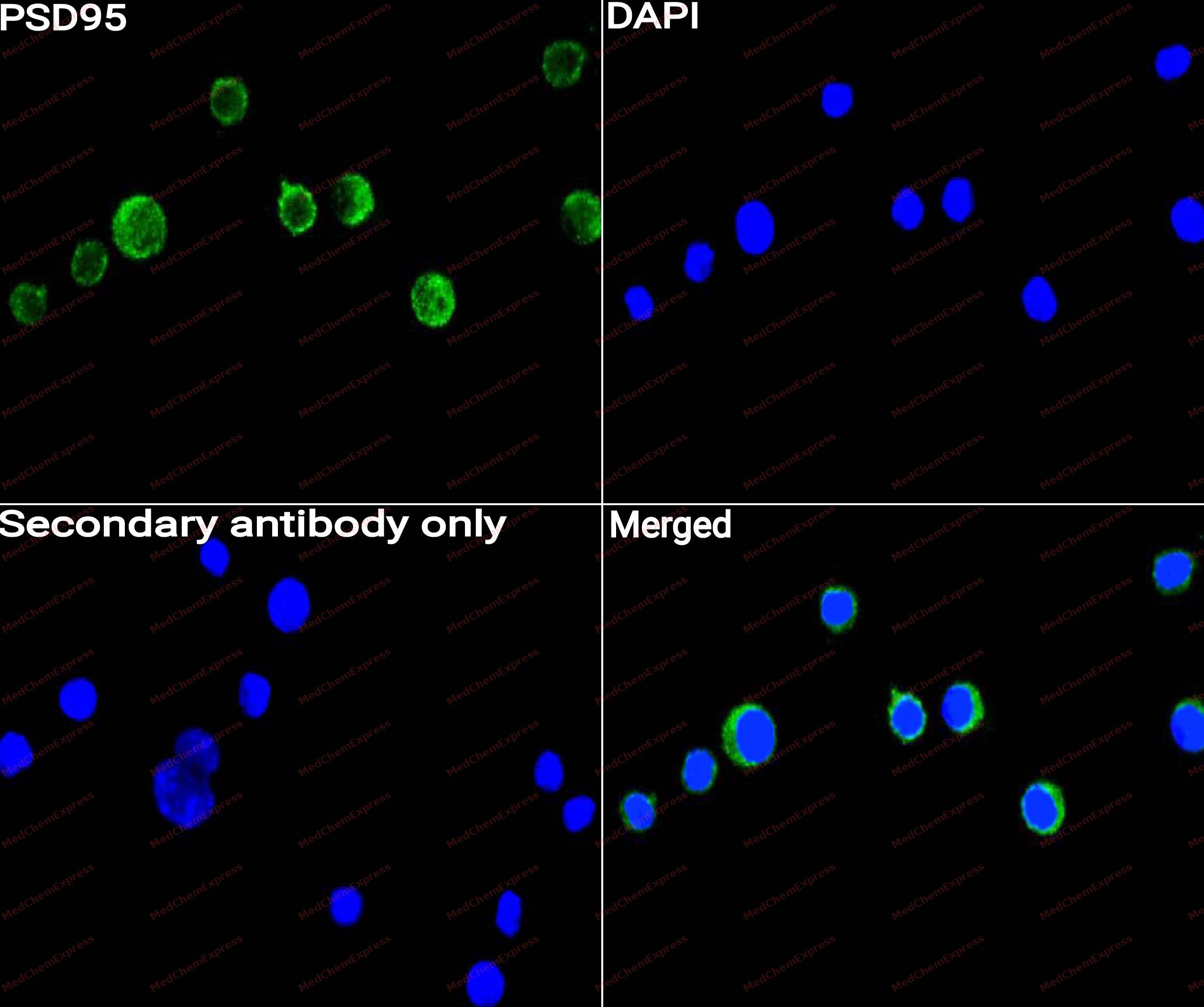 Immunocytochemistry analysis of SHSY5Y cells labeling PSD95 with PSD95 Antibody (HY-P80285) at 1/50 dilution. Cells were fixed in 4% paraformaldehyde for 15 minutes at room temperature, permeabilized with 0.1% Triton X-100 for 10 minutes at room temperature, then blocked with QuickBlock™ Blocking Buffer for Immunol Staining for 10 min at room temperature. Cells were then incubated with PSD95 Antibody (HY-P80285)at 1/50 dilution in QuickBlock™ Blocking Buffer for Immunol Staining at 4 ℃. Alexa Fluor® 488-conjugated AffiniPure Goat Anti-Rabbit IgG H&L(HY-P8002,Green) was used as the secondary antibody at 1/1,000 dilution. PBS instead of the primary antibody was used as the secondary antibody only control. The Nuclear counterstain was DAPI (Blue).


Background
-
Function
PSD95 is a Postsynaptic scaffolding protein that plays a critical role in synaptogenesis and synaptic plasticity by providing a platform for the postsynaptic clustering of crucial synaptic proteins. Interacts with the cytoplasmic tail of NMDA receptor subunits and shaker-type potassium channels. Required for synaptic plasticity associated with NMDA receptor signaling. Overexpression or depletion of DLG4 changes the ratio of excitatory to inhibitory synapses in hippocampal neurons. May reduce the amplitude of ASIC3 acid-evoked currents by retaining the channel intracellularly. May regulate the intracellular trafficking of ADR1B. Also regulates AMPA-type glutamate receptor (AMPAR) immobilization at postsynaptic density keeping the channels in an activated state in the presence of glutamate and preventing synaptic depression. Under basal conditions, cooperates with FYN to stabilize palmitoyltransferase ZDHHC5 at the synaptic membrane through FYN-mediated phosphorylation of ZDHHC5 and its subsequent inhibition of association with endocytic proteins[1].
-
Subcellular Localization
Cell membrane; Lipid-anchor; Cytoplasmic side; Postsynaptic density; Synapse; Cytoplasm; Cell projection, axon; Cell projection, dendritic spine; Cell projection, dendrite; Presynapse
-
Expression
Tissue_specificity:brain -
Subunit
Interacts through its PDZ domains with ANO2 and NETO1 (By similarity). Interacts through its first two PDZ domains with GRIN2A, GRIN2B, GRIN2C, GRIN2D (By similarity). Interacts with ASIC3 (By similarity). Interacts with SEMA4C (By similarity). Interacts with CXADR (By similarity). Interacts with KCND2 (By similarity). Interacts with SYNGAP1 (By similarity). Interacts with LRRC4 and LRRC4B (By similarity). Interacts with ERBB4 (PubMed:10725395). Interacts with KCNA1, KCNA2, KCNA3 and KCNA4 (PubMed:7477295). Interacts through its first PDZ domain with GRIK2, KCNA4 and CRIPT (PubMed:11744724). Interacts through its second PDZ domain with the PDZ domain of NOS1 or the C-terminus of CAPON (By similarity). Interacts through its third PDZ domain with NLGN1 and CRIPT, and probably with NLGN2 and NLGN3 (PubMed:9278515). Interacts through its guanylate kinase-like domain with KIF13B (PubMed:10859302). Interacts through its guanylate kinase-like domain with DLGAP1/GKAP, DLGAP2, DLGAP3, DLGAP4, MAP1A, BEGAIN and SIPA1L1 (By similarity). Isoform 2 interacts through an L27 domain with HGS/HRS and the first L27 domain of CASK (PubMed:12151521). Interacts with ADR1B and ANKS1B (By similarity). May interact with HTR2A (By similarity). Interacts with ADAM22 (PubMed:27066583). Interacts with KLHL17 and LGI1 (By similarity). Interacts with FRMPD4 (via C-terminus) (PubMed:19118189). Interacts with LRFN1, LRFN2 and LRFN4 (PubMed:16630835). Interacts (via N-terminal tandem pair of PDZ domains) with GPER1 (via C-terminus tail motif); the interaction is direct and induces the increase of GPER1 protein levels residing at the plasma membrane surface in a estradiol-independent manner (By similarity). Interacts (via N-terminus tandem pair of PDZ domains) with NOS1 (via N-terminal domain) (By similarity). Interacts with SHANK3 (By similarity). Interacts with KCNJ4 (By similarity). Interacts with GPR85 (PubMed:25780553). Interacts with CACNG2 and MPP2 (via the SH3-Guanylate kinase-like sub-module) (By similarity). Interacts with ADGRB1 (PubMed:23782696). Found in a complex with PRR7 and GRIN1 (By similarity). Interacts (via PDZ3 domain and to lesser degree via PDZ2 domain) with PRR7 (By similarity). Component of the postsynaptic hippocampal AMPA-type glutamate receptor (AMPAR) complex, at least composed of pore forming AMPAR subunits GRIA1, GRIA2 and GRIA3 and AMPAR auxiliary proteins SHISA6 and SHISA7. Interacts (via its first two PDZ domains) with SHISA6 and SHISA7 (via PDZ-binding motif); the interaction is direct (By similarity). Interacts with RPH3A and GRIN2A; this ternary complex regulates NMDA receptor composition at postsynaptic membranes (By similarity). Interacts with ABR and BCR (PubMed:20962234). Interacts with DGKI (via PDZ-binding motif); controls the localization of DGKI to the synapse (PubMed:21119615). Interacts with C9orf72, SMCR8 and RAB39B (By similarity). Interacts with ZDHHC5 (PubMed:26334723). Interacts with PTEN (via PDZ domain-binding motif); the interaction is induced by NMDA and is required for PTEN location at postsynaptic density (By similarity). Found in a complex with GRIA1, GRIA2, GRIA3, GRIA4, CACNG8 and CNIH2 (By similarity). Interacts with FAM81A; the interaction facilitates condensate formation via liquid-liquid phase separation (By similarity). Interacts with ADGRL3 (By similarity). Interacts with SORCS3 (By similarity)
-
SwissProt ID
-
Synonyms
Dlgh4, Psd95, Dlg4, Disks large homolog 4, Postsynaptic density protein 95, Synapse-associated protein 90, PSD-95, SAP-90, SAP90
-
Research Field
Neuroscience


Documentation
-
Data Sheet (261 KB)
-
SDS (252 KB)
- English - EN (252 KB)
- Français - FR (252 KB)
- Deutsch - DE (252 KB)
- Norwegian - NO (252 KB)
- Español - ES (252 KB)
- Swedish - SV (252 KB)
- Italian - IT (252 KB)
- Korean - KR (252 KB)
- Portuguese - PT (252 KB)
-
User Guide for Antibodies (1077 KB)
References

 Powered by Bioz
