



Src Antibody (YA061)
(Synonyms: SRC1, SRC, Proto-oncogene tyrosine-protein kinase Src, Proto-oncogene c-Src, pp60c-src, p60-Src)
Based on 1 Customer Validation
Src Antibody (YA061) is a Rabbit-derived and non-conjugated IgG monoclonal antibody, targeting to Src.
-
Host:
Rabbit
-
Isotype:
IgG
-
Application:
WB, ICC/IF, IHC-P, FC
-
Reactivity :
Human, Mouse, Rat
-
Formulation:
Supplied in 1*TBS (pH7.4), 0.05% BSA and 40% Glycerol. Preservative: 0.05% Sodium Azide.
-
Conjugation:
Non-conjugated


To place orders, for customer services and technical support, please contact: MedChemExpress USA
Tel: 609-228-6898 E-mail: [email protected] [email protected]



-

HY-P80514
Phospho-Src (Tyr419) Antibody (YA150) -
HY-P80460
Phospho-FAK (Tyr397) Antibody (YA198) -
HY-P80125
FAK Antibody (YA448) -
HY-13805
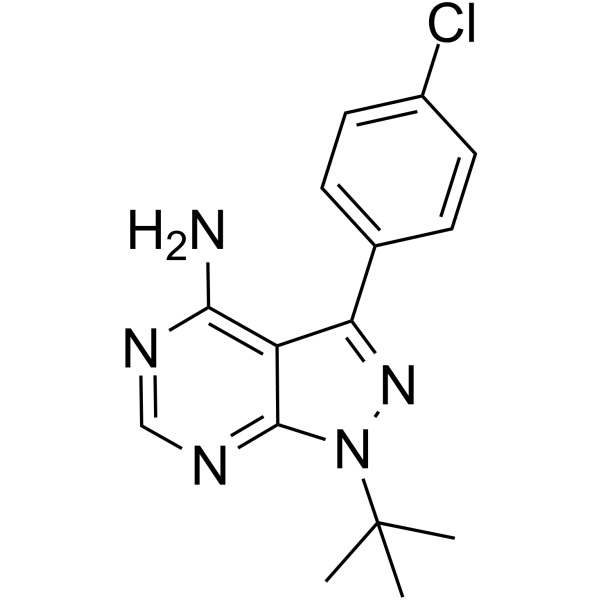
PP2Src Inhibitor -
HY-P86105
Phospho-Src Family(Tyr416) Antibody (YA5797) -
HY-101053
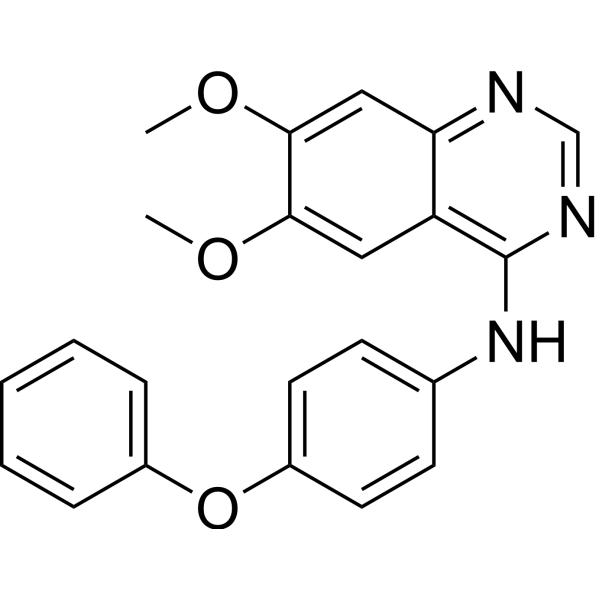
Src Inhibitor 1Src Inhibitor -
HY-P80137
GAPDH Antibody (YA418) -

HY-P701321
Src Protein, Human (Active, His)


Applications
| Application |
WB

WB: Western Blot
|
ICC/IF
ICC/IF: Immunocytochemistry/
Immunofluorescence |
IHC-P
IHC-P: Immunohistochemistry-Paraffin
|
FC
FC: Flow Cytometry
|
|---|---|---|---|---|
| Dilution Ratio | 1:1000-1:5000 | 1:100-1:500 | 1:50-1:200 | 1:50-1:100 |


Product Details
Src Antibody (YA061) is a Rabbit-derived and non-conjugated IgG monoclonal antibody, targeting to Src.
-
Host Rabbit

-
Clonality Recombinant,Monoclonal

-
Species ReactivityHuman, Mouse, Rat
-
Observed Molecular WeightObserved band size: 60 kDa
Note: Due to possible protein modifications or aggregation, the molecular weight should be confirmed by actual measurement, and the predicted value is for reference only.

-
Calculated Molecular Weight Predicted band size: 60 kDa

Entrez Gene: 6714 Human ; 20779 Mouse ; 83805 Rat
SwissProt: P12931 Human ; P05480 Mouse ; Q9WUD9 Rat
OMIM: 616937 Human
Synthetic peptide corresponding to Human Src.AA range:20-60.
Endogenous
Protein A affinity purified.
Non-conjugated
Unmodified
IgG


Product Properties
-
Appearance
Solution
-
Formulation
Supplied in 1*TBS (pH7.4), 0.05% BSA and 40% Glycerol. Preservative: 0.05% Sodium Azide.
-
Concentration
Batch-dependent, Please check the COA for the concentration of each lot. Check Lot Concentration
-
Storage & Stability
Stored at -20°C for 1 year. Avoid repeated freeze / thaw cycles.
-
Livraison
Shipping with blue ice.


Verification Images
-
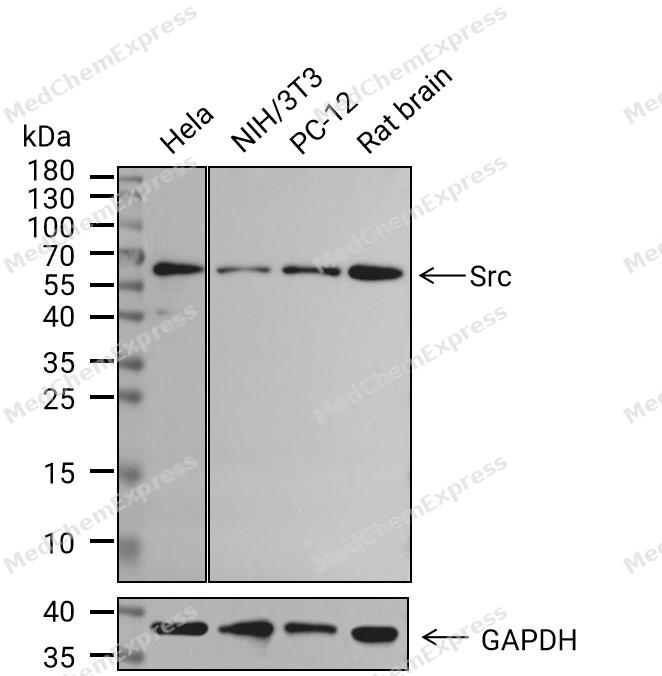 Western blot analysis of extracts from Hela(lane 1(20μg)) 、NIH/3T3(lane 2(20μg)) 、PC-12(lane 3(20μg))and Rat brain(lane 4(20μg) using Src Antibody(HY-P80338). Proteins were transferred to a PVDF membrane and blocked with 5%BSA in TBST for 1.5 hour at room temperature. The primary antibody ( 1/2000) and Loading control antibody (GAPDH, 1/1000) was used in 5% BSA in TBST at 4℃ overnight. Goat Anti-Rabbit IgG-HRP Secondary Antibody (1/10,000) was used for 1 hour at room temperature.
 -
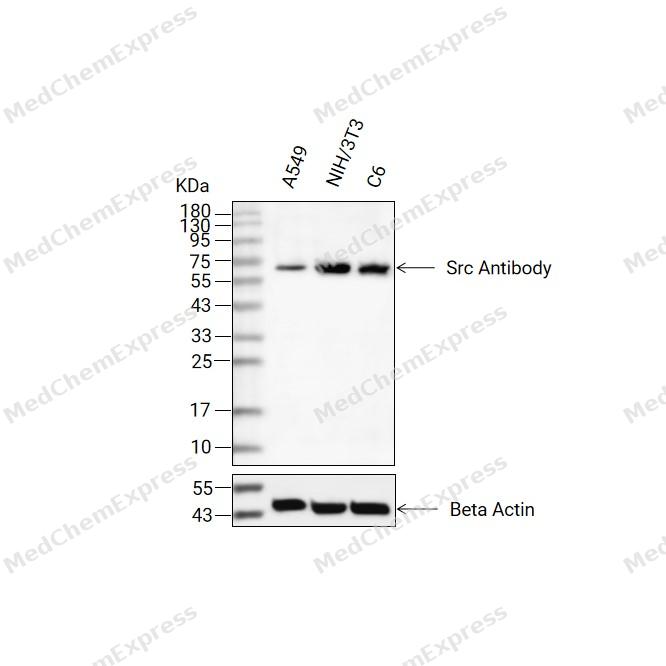 Western blot analysis of extracts from A549(lane 2(20ug) , NIH/3T3(lane 3(20ug) and C6(lane 4(20ug) using Src Antibody (HY-P80338) Rabbit mAb. Proteins were transferred to a PVDF membrane and blocked with 5% non-fat milk in TBST for 2 hour at room temperature. The primary antibody (1/1000) and Loading control antibody (Beta Actin, HY-P83730, 1/10000) was used in 5% non-fat milk in TBST at 4°C overnight. Goat Anti-Mouse/Rabbit IgG-HRP Secondary Antibody (1/10000) was used for 1 hour at room temperature.
 -
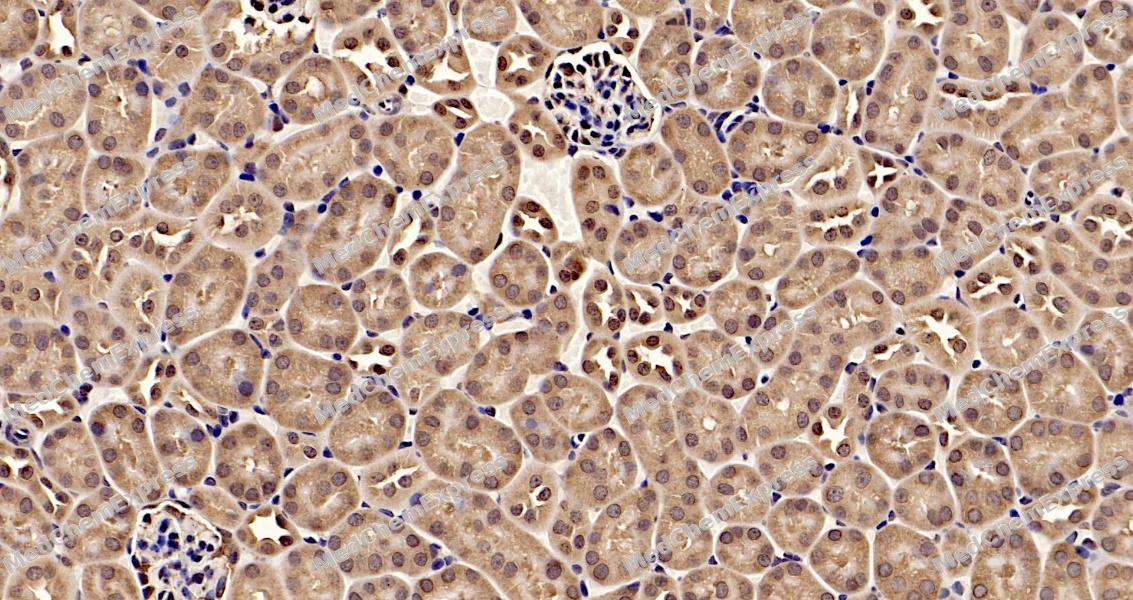 Immunohistochemical analysis of paraffin-embedded mouse kidney tissue using Src Antibody. The section was pre-treated using heat mediated antigen retrieval with sodium citrate buffer (pH 6.0) for 8 minutes. The tissues were blocked in QuickBlock for 20 minutes at room temperature, washed with ddH2O and PBS, and then probed with the primary antibody at 1/100 dilution in 4℃ overnight. The detection was performed using an HRP conjugated compact polymer system. DAB was used as the chromogen. Tissues were counterstained with hematoxylin and mounted with DPX.
 -
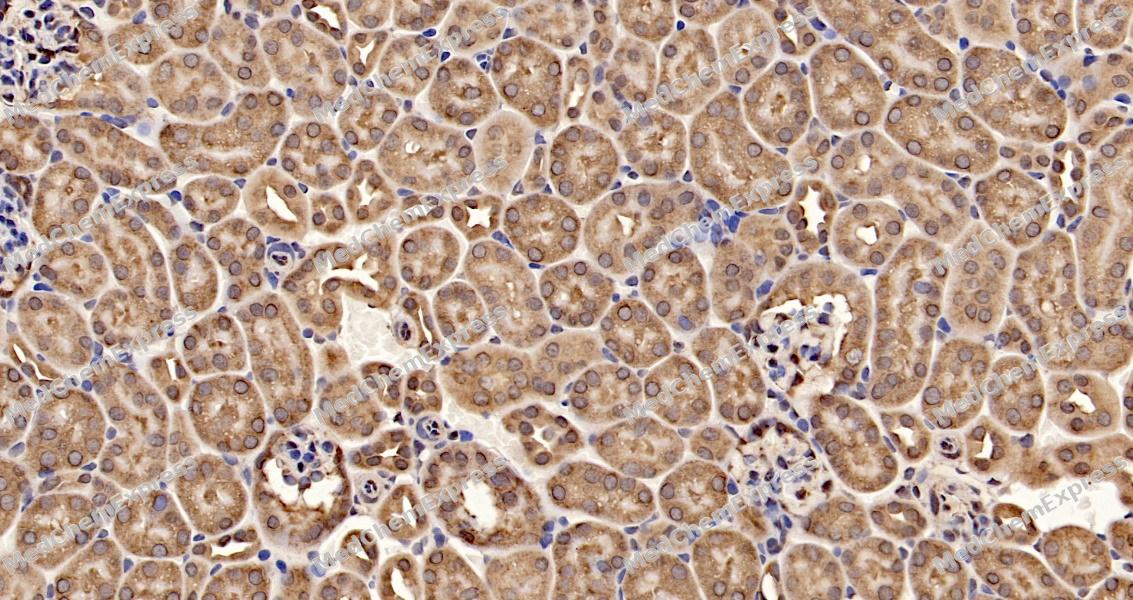 Immunohistochemical analysis of paraffin-embedded mouse kidney tissue using Src Antibody. The section was pre-treated using heat mediated antigen retrieval with sodium citrate buffer (pH 6.0) for 8 minutes. The tissues were blocked in QuickBlock for 20 minutes at room temperature, washed with ddH2O and PBS, and then probed with the primary antibody at 1/100 dilution in 4℃ overnight. The detection was performed using an HRP conjugated compact polymer system. DAB was used as the chromogen. Tissues were counterstained with hematoxylin and mounted with DPX.
 -
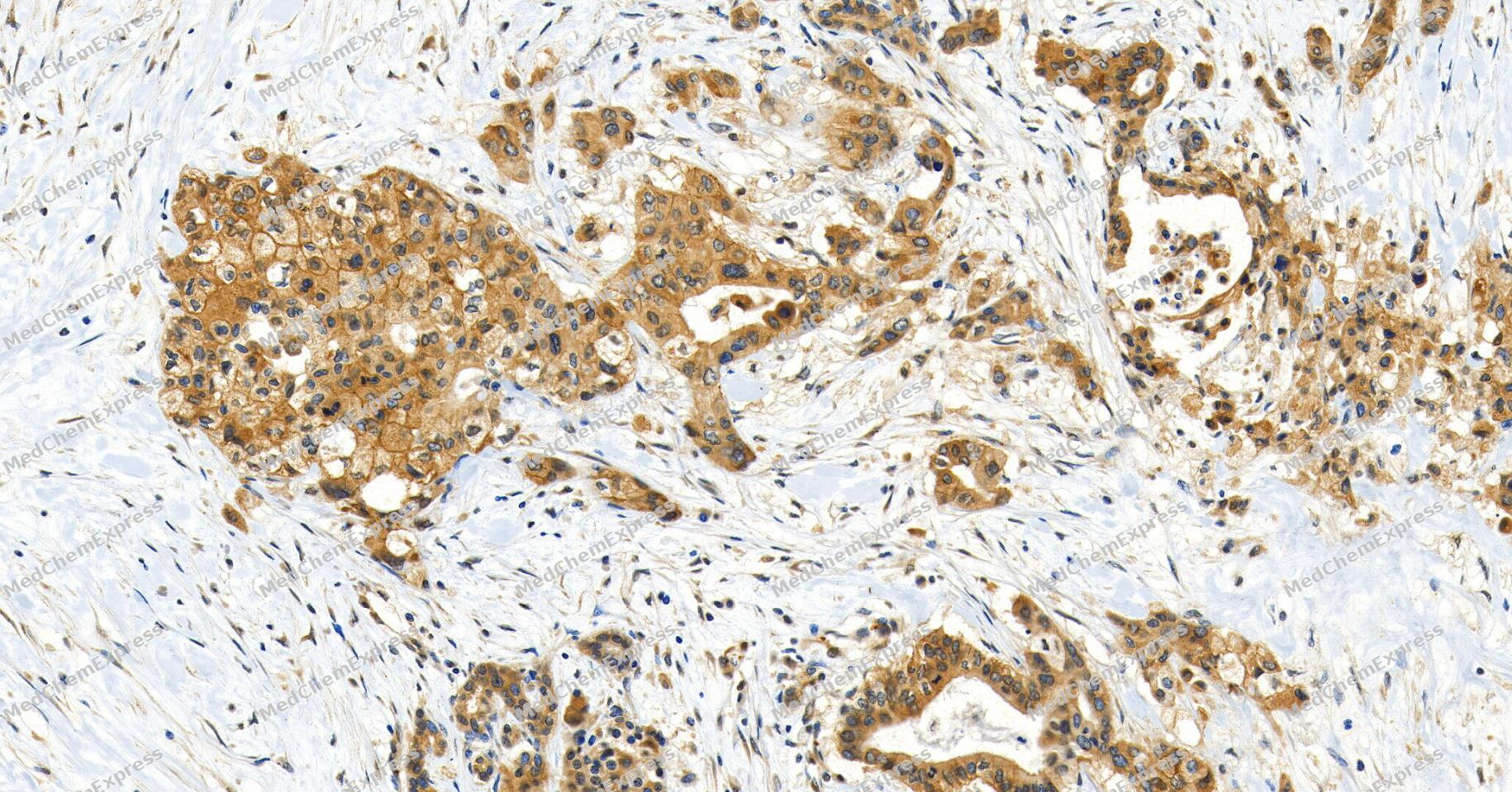 Immunohistochemical analysis of paraffin-embedded human prostate cancer tissue using Src antibody. The section was pre-treated using heat mediated antigen retrieval with Tris/EDTA buffer (pH 9.0) for 20 minutes. The tissues were probed with the primary antibody (HY-P80338, 1/100) overnight at 4℃. The detection was performed using an HRP conjugated compact polymer system. DAB was used as the chromogen. Tissues were counterstained with hematoxylin and mounted with neutral balsam.
 -
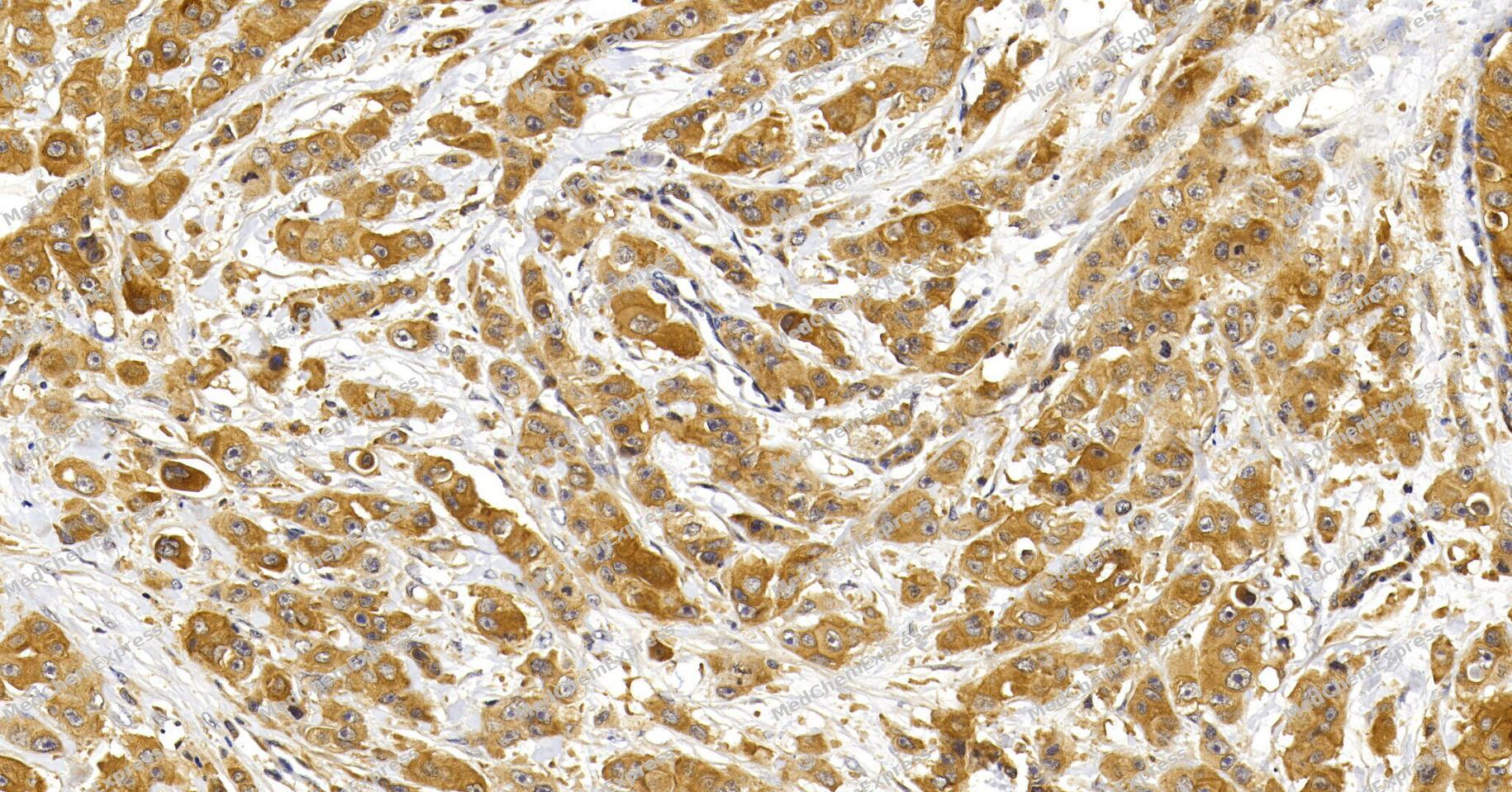 Immunohistochemical analysis of paraffin-embedded human gastric cancer tissue using Src antibody. The section was pre-treated using heat mediated antigen retrieval with Tris/EDTA buffer (pH 9.0) for 20 minutes. The tissues were probed with the primary antibody (HY-P80338, 1/100) overnight at 4℃. The detection was performed using an HRP conjugated compact polymer system. DAB was used as the chromogen. Tissues were counterstained with hematoxylin and mounted with neutral balsam.
 -
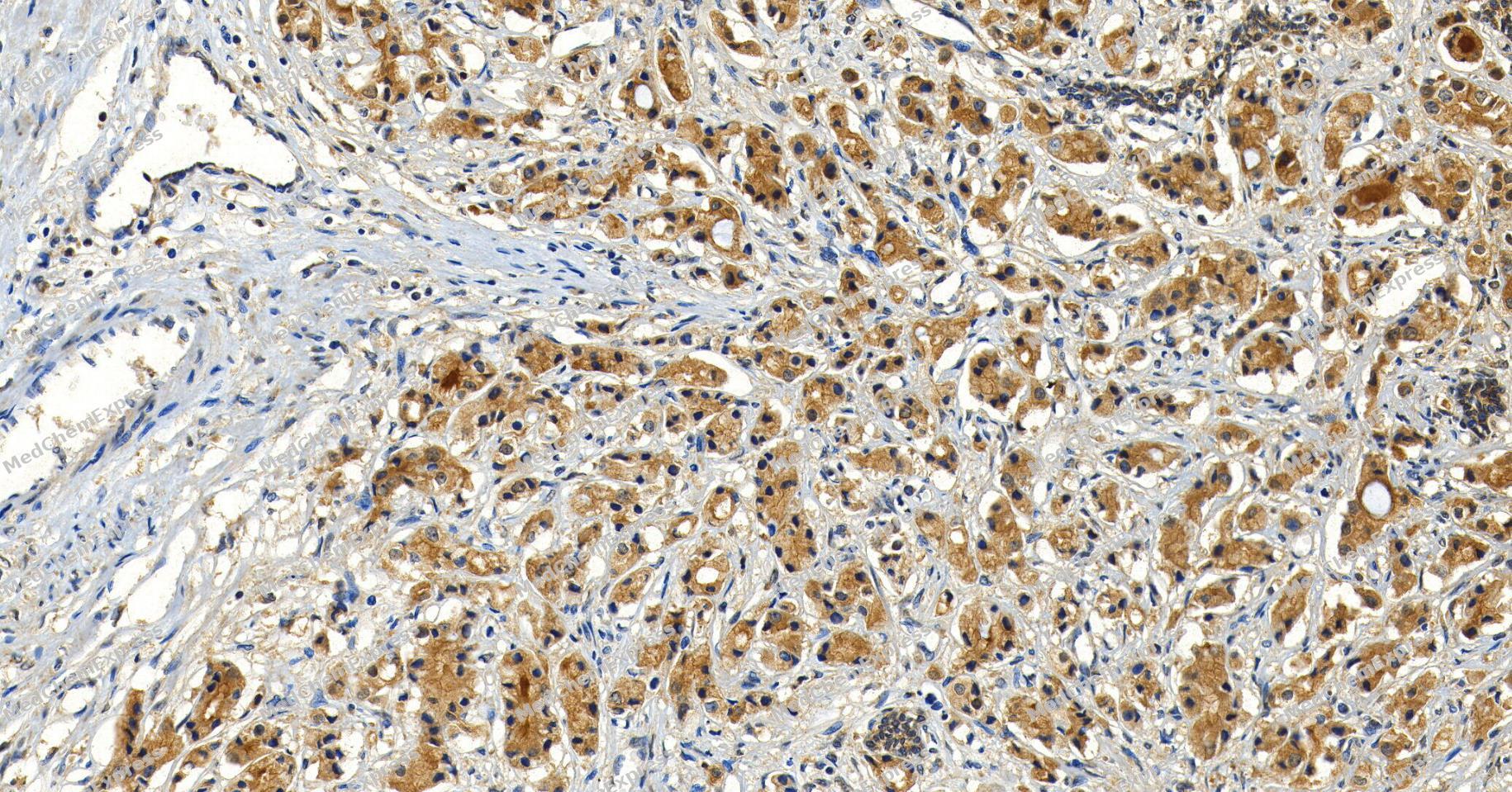 Immunohistochemical analysis of paraffin-embedded human pancreatic cancer tissue using Src antibody. The section was pre-treated using heat mediated antigen retrieval with Tris/EDTA buffer (pH 9.0) for 20 minutes. The tissues were probed with the primary antibody (HY-P80338, 1/100) overnight at 4℃. The detection was performed using an HRP conjugated compact polymer system. DAB was used as the chromogen. Tissues were counterstained with hematoxylin and mounted with neutral balsam.
 -
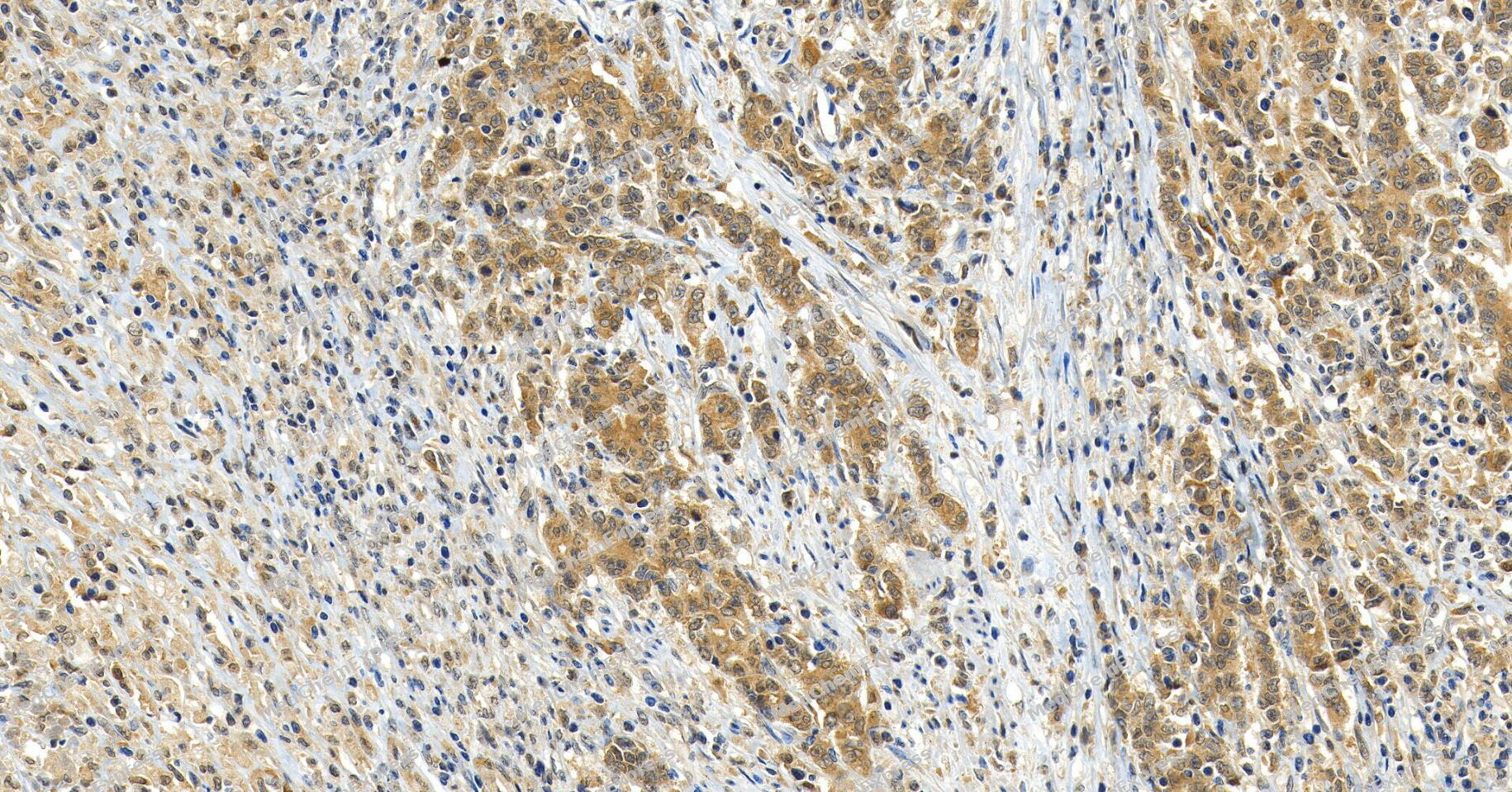 Immunohistochemical analysis of paraffin-embedded human bladder cancer tissue using Src antibody. The section was pre-treated using heat mediated antigen retrieval with Tris/EDTA buffer (pH 9.0) for 20 minutes. The tissues were probed with the primary antibody (HY-P80338, 1/100) overnight at 4℃. The detection was performed using an HRP conjugated compact polymer system. DAB was used as the chromogen. Tissues were counterstained with hematoxylin and mounted with neutral balsam.
 -
 Immunocytochemistry analysis of U2OS cells labeling Src with Src Antibody (HY-P80338) at 1/100 dilution. Cells were fixed in 4% paraformaldehyde for 15 minutes at room temperature, permeabilized with 0.1% Triton X-100 in PBS for 15 minutes at room temperature, then blocked with quick block buffer for 10 minutes at room temperature. Cells were then incubated with Src Antibody (HY-P80338) at 1/100 dilution in quick block buffer overnight at 4 ℃. AF488-conjugated Goat Anti-Rabbit IgG H&L(HY-P8002, Green) was used as the secondary antibody at 1/1,000 dilution. PBS instead of the primary antibody was used as the secondary antibody only control. The Nuclear counterstain was DAPI (Blue).
 -
 Immunocytochemistry analysis of U2OS cells labeling Src with Src Antibody (HY-P80338) at 1/300 dilution. Cells were fixed in 4% paraformaldehyde for 15 minutes at room temperature, permeabilized with 0.1% Triton X-100 in PBS for 15 minutes at room temperature, then blocked with quick block buffer for 10 minutes at room temperature. Cells were then incubated with Src Antibody (HY-P80338) at 1/300 dilution in quick block buffer overnight at 4 ℃. AF488-conjugated Goat Anti-Rabbit IgG H&L(HY-P8002, Green) was used as the secondary antibody at 1/1,000 dilution. PBS instead of the primary antibody was used as the secondary antibody only control. The Nuclear counterstain was DAPI (Blue).


Background
-
Function
Src family kinase (SFK) is a family of non-receptor tyrosine kinases including nine members: Src, Yes, Fyn, and Fgr, forming the SrcA subfamily, Lck, Hck, Blk, and Lyn in the SrcB subfamily, and Frk in its own subfamily. In immune cells, Src-family kinases (SFKs) have been implicated as critical regulators of a large number of intracellular signaling pathways. Src-family kinases (SFKs) occupy a proximal position in numerous signaling transduction cascades including those emanating from the T and B cell antigen receptors, Fc receptors, growth factor receptors, cytokine receptors, and integrins. In addition to these positive regulatory roles, Src-family kinases (SFKs) can also function as negative regulators of cellular signaling by phosphorylating immunoreceptor tyrosine-based inhibitory motifs (ITIMs) on inhibitory receptors, resulting in recruitment and activation of inhibitory molecules such as the phosphatases SHP-1 and SH2 containing 5′ inositol phosphatase (SHIP-1) .
-
Subcellular Localization
Cell membrane; Lipid-anchor; Mitochondrion inner membrane; Nucleus; Cytoplasm, cytoskeleton; Cytoplasm, perinuclear region; Cell junction, focal adhesion; Cell junction
-
Expression
Tissue_specificity:Widely expressed. Expressed in skin (protein level) (PubMed:22294297) . Expression levels in platelets, neurons, and osteoclasts are 5 to 200 times higher than in most other tissues; expressed in the spleen and liver; expressed in the brain; expressed in the brain. -
Subunit
Part of a complex comprised of PTPRA, BCAR1, BCAR3 (via SH2 domain) and SRC; the formation of the complex is dependent on integrin mediated-tyrosine phosphorylation of PTPRA (PubMed:22801373). Interacts with DDEF1/ASAP1; via the SH3 domain (By similarity). Interacts with CCPG1 (By similarity). Identified in a complex containing FGFR4, NCAM1, CDH2, PLCG1, FRS2, SRC, SHC1, GAP43 and CTTN (By similarity). Interacts with ERBB2, STAT1 and PNN (By similarity). Interacts with DDR1, DDR2 and DAB2 (By similarity). Interacts with CDCP1, TGFB1I1 and TOM1L2 (PubMed:15851033, PubMed:16479011, PubMed:17202804). Interacts with the cytoplasmic domain of MUC1, phosphorylates it and increases binding of MUC1 with beta-catenin (PubMed:11152665). Interacts with RALGPS1; via the SH3 domain (PubMed:10747847). Interacts with CAV2 (tyrosine phosphorylated form) (PubMed:12091389, PubMed:15504032). Interacts (via the SH3 domain and the protein kinase domain) with ARRB1; the interaction is independent of the phosphorylation state of SRC C-terminus (By similarity). Interacts with ARRB1 and ARRB2 (PubMed:10753943, PubMed:9924018). Interacts with SRCIN1 (PubMed:17525734). Interacts with NDFIP2 and more weakly with NDFIP1 (PubMed:20534535). Interacts with PIK3CA and/or PIK3C2B, PTK2/FAK1 and ESR1 (dimethylated on arginine) (PubMed:18657504, PubMed:21411625). Interacts with FASLG (PubMed:19807924). Interacts (via SH2 domain) with the 'Tyr-402' phosphorylated form of PTK2B/PYK2 (PubMed:14585963). Interacts (via SH2 domain) with FLT3 (tyrosine phosphorylated) (By similarity). Interacts with PDGFRA (tyrosine phosphorylated) (By similarity). Interacts with CSF1R (By similarity). Interacts (via SH2 and SH3 domain) with TNK2 (PubMed:21309750). Interacts (via protein kinase domain) with the tyrosine phosphorylated form of RUNX3 (via runt domain) (PubMed:20100835). Interacts with TRAF3 (via RING-type zinc finger domain) (PubMed:19419966). Interacts with RIGI, MAVS and TBK1 (PubMed:19419966). Interacts (via SH2 domain) with RACK1; the interaction is enhanced by tyrosine phosphorylation of RACK1 and inhibits SRC activity (PubMed:11279199, PubMed:9584165). Interacts with EPHB1; activates the MAPK/ERK cascade to regulate cell migration (PubMed:12925710). Interacts with FCAMR (PubMed:8759729). Interacts (via SH2 domain) with the 'Tyr-9' phosphorylated form of PDPK1 (PubMed:18024423). Interacts with AMOTL2; this interaction regulates the translocation of phosphorylated SRC to peripheral cell-matrix adhesion sites (PubMed:17293535). Interacts with TRAP1 (PubMed:23564345). Interacts with CBLC; the interaction is enhanced when SRC is phosphorylated at Tyr-419 (PubMed:14661060, PubMed:22888118). Interacts with ARHGEF5 (By similarity). Interacts (via cytoplasmic domain) with CEACAM1 (via SH2 domain); this interaction is regulated by trans-homophilic cell adhesion (PubMed:7478590). Interacts with MPP2 (PubMed:19665017). Interacts with PRR7 (PubMed:21460222). Interacts (via kinase domain and to a lesser extent the SH2 domain) directly with PDLIM4; this interaction results in PTPN13-mediated dephosphorylation of this protein leading to its inactivation (PubMed:19307596). Interacts with P85 (PIK3R1 or PIK3R2) (PubMed:28903391). Interacts with HNRNPA2B1 (PubMed:31320558). Interacts with IL6ST/gp130 (PubMed:25731159). Interacts (via SH3 domain) with PELP1 in the presence of 17-beta-estradiol. Interacts with AMBRA1 (By similarity)
-
SwissProt ID
-
Synonyms
SRC1, SRC, Proto-oncogene tyrosine-protein kinase Src, Proto-oncogene c-Src, pp60c-src, p60-Src
-
Research Field
Signal Transduction


Documentation
-
Fiche technique (235 KB)
-
SDS (252 KB)
- English - EN (252 KB)
- Français - FR (252 KB)
- Deutsch - DE (252 KB)
- Norwegian - NO (252 KB)
- Español - ES (252 KB)
- Swedish - SV (252 KB)
- Italian - IT (252 KB)
- Korean - KR (252 KB)
- Portuguese - PT (252 KB)
-
User Guide for Antibodies (1077 KB)

 Powered by Bioz
