



4-Epidoxycycline
4-Epidoxycycline is a liver metabolite of the antibiotic doxycycline (doxycycline, HY-N0565) and doesn't have antibiotic properties in mice. 4-Epidoxycycline’s ability to regulate HER2 gene expression in vitro and in live mouse models is similar to that of doxycycline, and it shows comparable high efficacy in tumor tissues, achieving over 95% tumor regression rates.
Nur für Forschungszwecke. Wir verkaufen nicht an Patienten.
- CAS. Nr.: 6543-77-7
- Formel: C22H24N2O8
- Molecular Weight:444.43
-
Speicherung:
Please store the product under the recommended conditions in the Certificate of Analysis.


To place orders, for customer services and technical support, please contact: MedChemExpress USA
Tel: 609-228-6898 E-mail: [email protected] [email protected]


-
 Biologische Aktivität
-
Chemical Information
- Protokoll
- Reinheit & Dokumentation
- Verweise
-
 Help & FAQs


-

HY-125156
Dapagliflozin-3-O-β-D-glucuronideEndogenous Metabolite -

HY-145531
Mirtazapine N-oxideMirtazapine Metabolite -
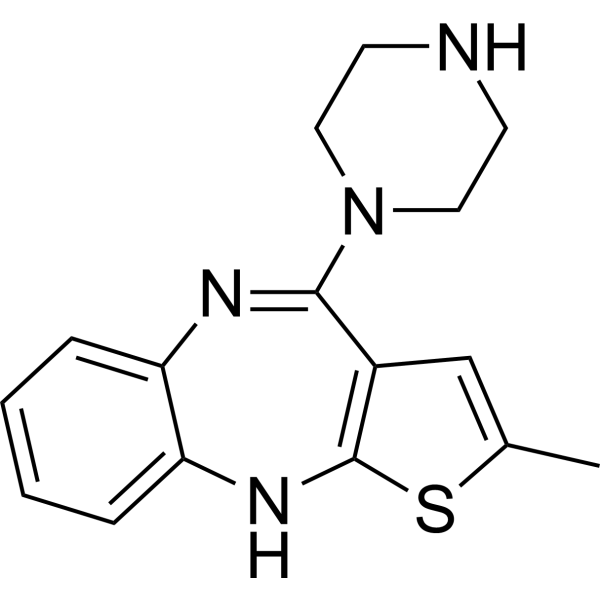
HY-W009247
N-DesmethylolanzapineAntipsychotic Agent -

HY-120201
7-Hydroxy coumarin glucuronide sodium7-hydroxy Coumarin Metabolite -
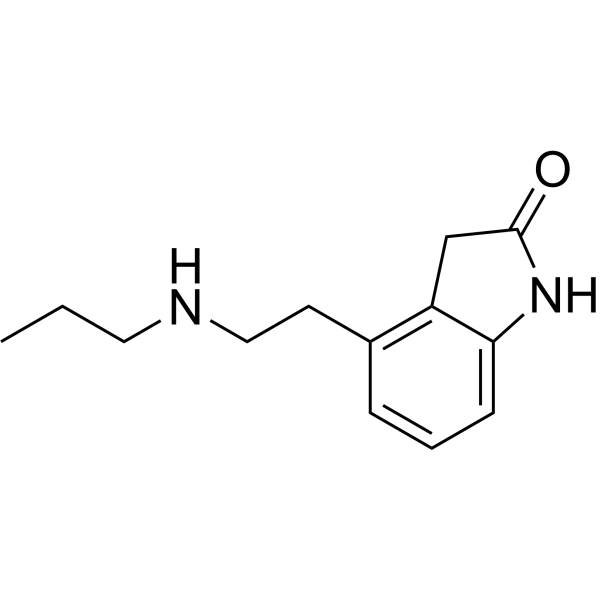
HY-W329175
N-Despropyl RopiniroleD2/D3 Receptor Agonist -
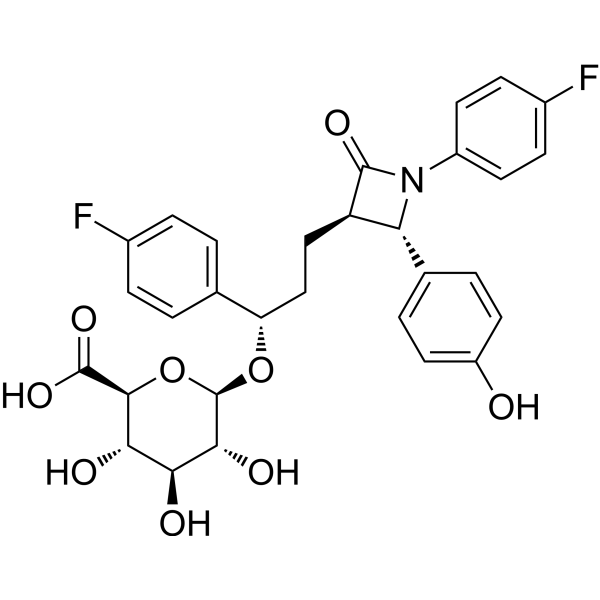
HY-135245
Ezetimibe hydroxy glucuronideEzetimibe Metabolite -

HY-Z8537
Desmethyl mirtazapine hydrochlorideMirtazapine Metabolite -

HY-W741575
Iloperidone carboxylic acid5-HT2A Receptor Ligand -

HY-120927A
Alvimopan metabolite hydrochlorideOpioid Receptor Antagonist -

HY-W009247R
N-Desmethylolanzapine (Standard)Antipsychotic Agent -
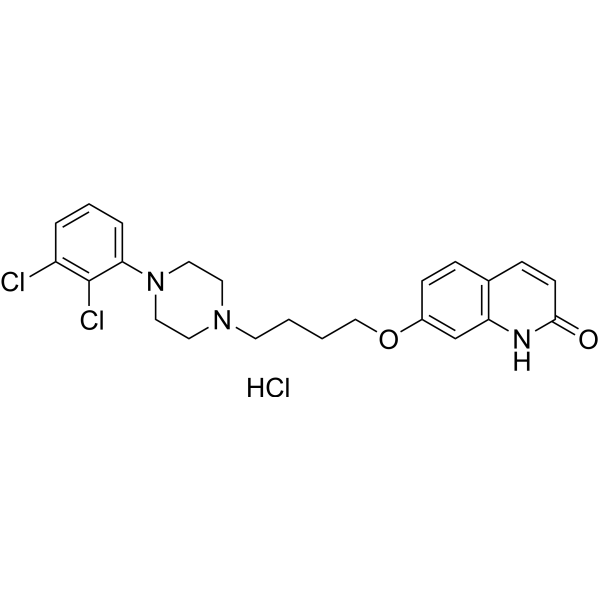
HY-113575
Dehydroaripiprazole hydrochlorideAntipsychotic Agent -

HY-114736
Hydroxy Varenicline
Alle EGFR Isoform-spezifische Produkte anzeigen
More

Biologische Aktivität
Beschreibung


Chemical Information
-
CAS. Nr. 6543-77-7
-
Molecular Weight 444.43
-
Formel C22H24N2O8
-
SMILES
O=C(C(C1=O)=C(O)[C@H](N(C)C)[C@]2([H])[C@@H](O)[C@]3([H])[C@@H](C)C4=C(C(C3=C(O)[C@@]21O)=O)C(O)=CC=C4)N
-
Versand
Room temperature in continental US; may vary elsewhere.
-
Speicherung
Please store the product under the recommended conditions in the Certificate of Analysis.

Protokoll
-
RT-PCR
Reverse transcription technology uses RNA as a template to synthesize DNA. RT-PCR is simple, specific and sensitive, and can be used to detect gene expression levels and expression differences in cells; detect RNA virus content; clone cDNA sequences of specific genes.
-
RNA extraction experimental
By lysing cells, releasing RNA, and removing impurities such as proteins and DNA, high-purity RNA products are finally obtained. The commonly used traditional method is the guanidine isothiocyanate/phenol/chloroform method (Trizol), which is suitable for a variety of animal materials including animal tissues, microorganisms, cultured cells, etc., and most plant materials.
-
Real Time qPCR (Q-PCR)
Real-time quantitative PCR (qPCR) quantifies an amplifiable nucleic-acid target by monitoring fluorescence during PCR cycling rather than measuring product only after amplification. The increase in fluorescence tracks accumulation of PCR product, and the quantification cycle (Cq; historically also Ct/CP) is related to the initial amount of target: samples containing more starting target generally reach the defined fluorescence threshold in fewer cycles.


Reinheit & Dokumentation
Verweise

Calculators
Konzentration (Stammlösung) × Volumen (Stammlösung) = Konzentration (Ziellösung) × Volumen (Ziellösung)


4-Epidoxycycline Related Classifications
HY-126850 Related Classifications
 Powered by Bioz