



PAP-1
Based on 14 publication(s) in Google Scholar
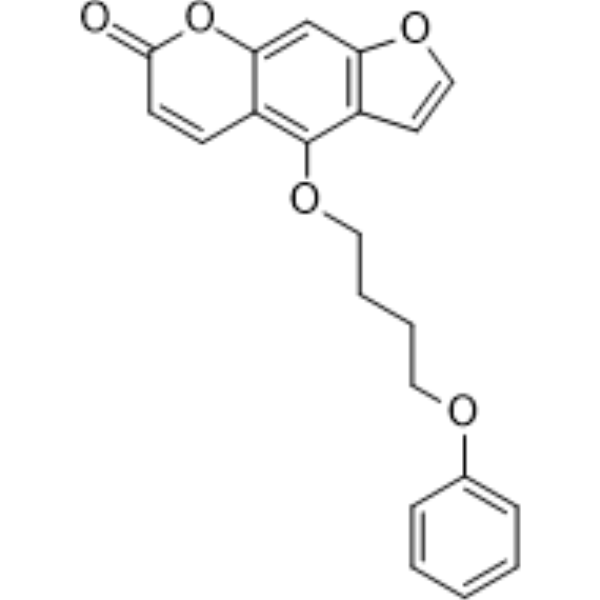
PAP-1 (5-(4-Phenoxybutoxy)psoralen) is a potent, selective, and orally active Kv1.3 blocker (EC50=2 nM). PAP-1 blocks Kv1.3 in a use-dependent manner and acts by preferentially binding to the C-type inactivated state of the channel. PAP-1 exhibits 23-fold selectivity over Kv1.5 (EC50=45 nM), and further displays 33- to 125-fold selectivity over all other Kv1-family channels. PAP-1 does not exhibit cytotoxic or phototoxic effects.
Nur für Forschungszwecke. Wir verkaufen nicht an Patienten.
- Reinheit : 99.75%
- CAS. Nr.: 870653-45-5
- Formel: C21H18O5
- Molecular Weight:350.36
-
Speicherung:Powder -20°C, 3 years , 4°C, 2 years ; In solvent -80°C, 1 year , -20°C, 6 months

To place orders, for customer services and technical support, please contact: MedChemExpress USA
Tel: 609-228-6898 E-mail: [email protected] [email protected]


-
 Biologische Aktivität
-
Chemical Information
-
Lösungsmittel & Löslichkeit
- Protokoll
- Reinheit & Dokumentation
- Verweise
-
 Help & FAQs


-
HY-13519
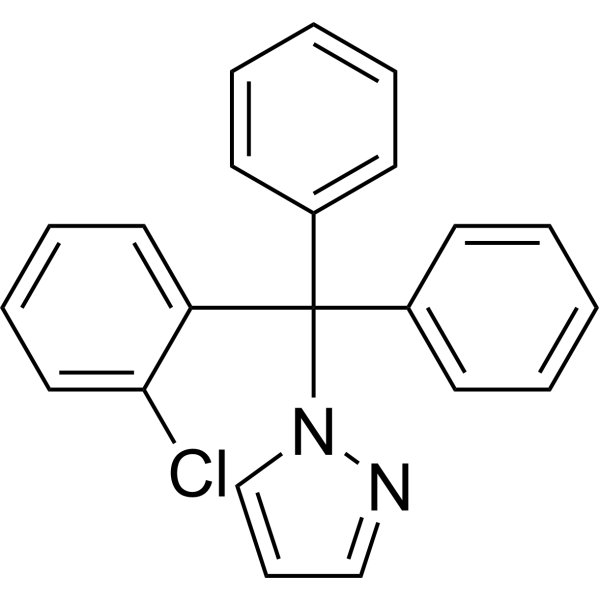
TRAM-34Potassium Channel Inhibitor -
HY-108583
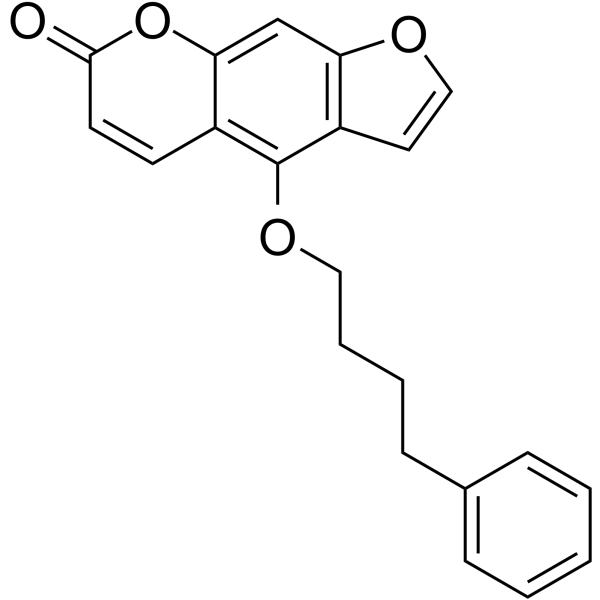
Psora-4Kv1.3 Blocker -
HY-15640
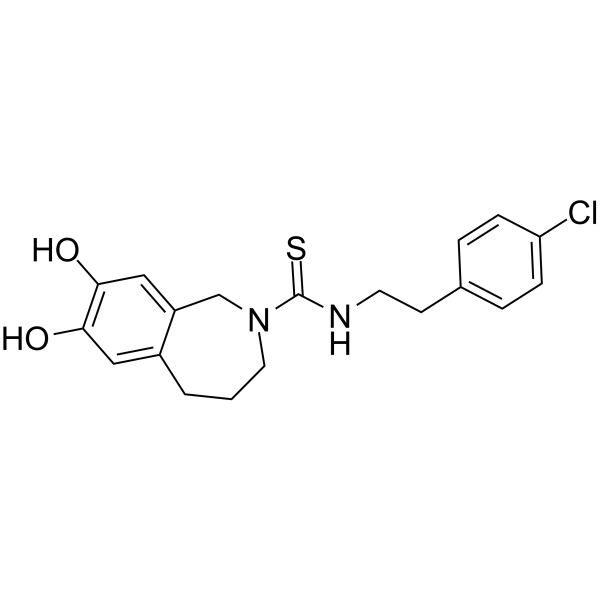
CapsazepineTRPV1 Antagonist -
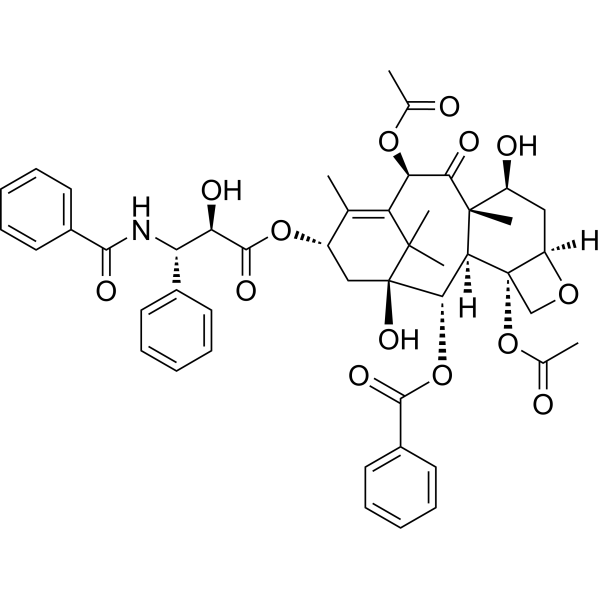
HY-B0015
PaclitaxelAntitumor Agent -
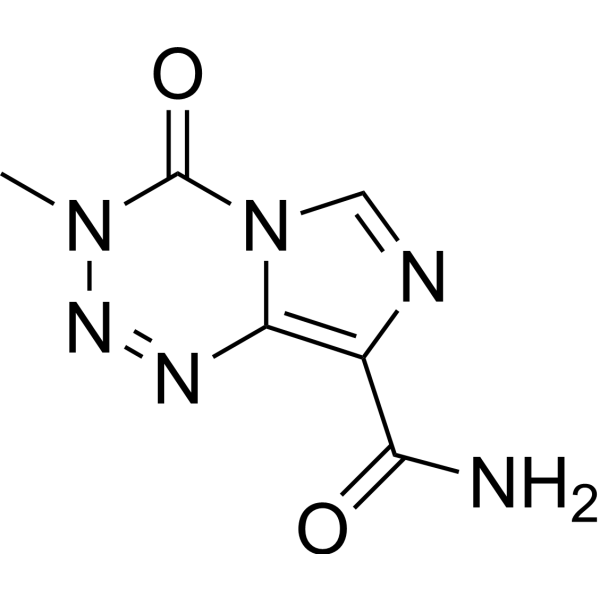
HY-17364
TemozolomideDNA Alkylator -
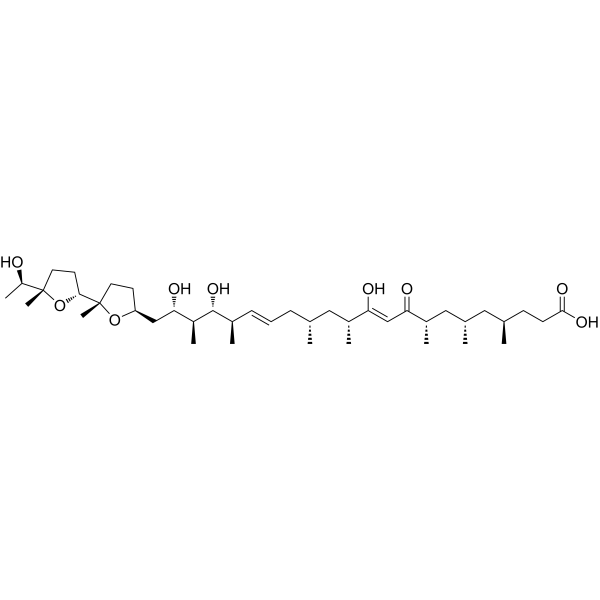
HY-13434
IonomycinCalcium Ionophore -
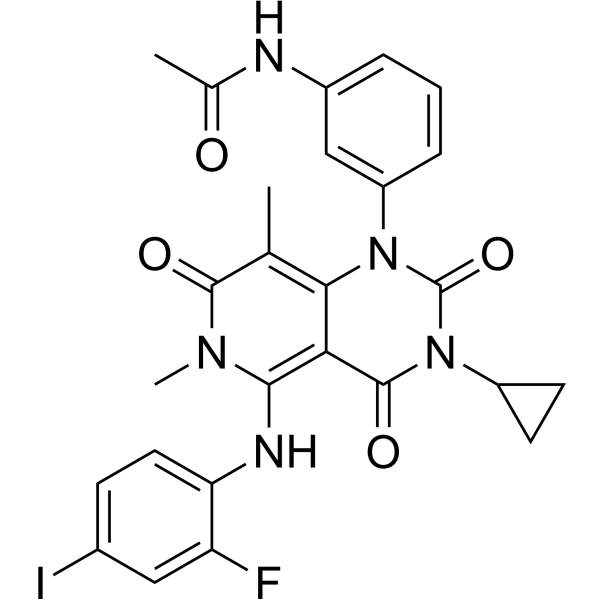
HY-10999
TrametinibMEK Inhibitor -
HY-15141
StaurosporinePKC/PKA Inhibitor -
HY-D0083
DiIFluorescent Dye -
HY-10108
LY294002PI3K Inhibitor -
HY-15772
OsimertinibMutant-Selective EGFR Inhibitor -

HY-P3507
DalazatideKv1.3 Inhibitor
Publications Citing Use of MedChemExpress (MCE) PAP-1
More- Cell Res. 2026 Jan 28. [Abstract]
- Cell Mol Immunol. 2020 Mar;17(3):283-299. [Abstract]
- Nat Commun. 2022 Jun 21;13(1):3544. [Abstract]
- Drug Deliv. 2025 Dec;32(1):2490269. [Abstract]
- J Ethnopharmacol. 2023 Oct 5:314:116624. [Abstract]
- Neurobiol Dis. 2025 Dec:217:107185. [Abstract]
- Int J Mol Sci. 2022 Oct 19;23(20):12565. [Abstract]
- Sci Rep. 2025 Dec 1;15(1):45756. [Abstract]
- Exp Neurol. 2020 Oct:332:113399. [Abstract]
- Brain Res Bull. 2025 Jun 1:225:111351. [Abstract]
- FASEB J. 2021 Feb;35(2):e20995. [Abstract]
- J Integr Neurosci. 2023 Dec 5;22(6):171. [Abstract]
- Vet World. 2026 Aug 31;19(8):3474-3497.
- Research Square Print. November 28th, 2022.
 Customer Validation & Images

-
Cell Proliferation/Viability Assay

-
IF

-
In Vivo Efficacy Study

-
Histological Imaging/Staining

-
In Vivo Efficacy Study


Biologische Aktivität
Beschreibung
IC50 & Target
EC50: 2 nM (Kv1.3), 45 nM (Kv1.5)[1]
Cellular Effect
|
Cell Line

|
Type | Value | Description | References |
|---|---|---|---|---|
| CHO | IC50 |
3.45 μM
Compound: PAP-1
|
Inhibition of human Kv1.5 ion channel expressed in CHO K1 cells
Inhibition of human Kv1.5 ion channel expressed in CHO K1 cells
|
[PMID: 20974533] |
| COS-7 | IC50 |
10 μM
Compound: PAP-1
|
Inhibition of human cloned IK1 expressed in african green monkey COS7 cells by whole cell patch clamp assay
Inhibition of human cloned IK1 expressed in african green monkey COS7 cells by whole cell patch clamp assay
|
[PMID: 19282171] |
| L929 | IC50 |
0.002 μM
Compound: 2, PAP-1
|
Inhibition of Kv1.3 potassium channel expressed in mouse L929 cells by whole cell patch clamp
Inhibition of Kv1.3 potassium channel expressed in mouse L929 cells by whole cell patch clamp
|
[PMID: 19056148] |
| L929 | IC50 |
2 nM
Compound: PAP-1
|
Inhibition of Kv1.3 expressed in mouse L929 cells exposed to depolarizing step pulses from -80 mV to +40 mV by whole cell patch clamp method
Inhibition of Kv1.3 expressed in mouse L929 cells exposed to depolarizing step pulses from -80 mV to +40 mV by whole cell patch clamp method
|
[PMID: 23084278] |
| PBMC | EC50 |
0.4 μM
Compound: PAP-1
|
Immunosuppressant activity in human effector memory T cells of PBMC assessed as inhibition of anti-CD3 antibody-induced cell proliferation by ELISA in presence of 5 uM IK1-blocker 5-(Toluene-4-sulfonyl)-5,6-dihydro-dibenzo[b,d]azepin-7-one
Immunosuppressant activity in human effector memory T cells of PBMC assessed as inhibition of anti-CD3 antibody-induced cell proliferation by ELISA in presence of 5 uM IK1-blocker 5-(Toluene-4-sulfonyl)-5,6-dihydro-dibenzo[b,d]azepin-7-one
|
[PMID: 19282171] |
| PBMC | EC50 |
0.43 μM
Compound: PAP-1
|
Immunosuppressant activity in human effector memory T cells of PBMC assessed as inhibition of anti-CD3 antibody-induced cell proliferation by ELISA in presence of 5 uM IK1-blocker TRAM34
Immunosuppressant activity in human effector memory T cells of PBMC assessed as inhibition of anti-CD3 antibody-induced cell proliferation by ELISA in presence of 5 uM IK1-blocker TRAM34
|
[PMID: 19282171] |
| PBMC | EC50 |
0.5 μM
Compound: PAP-1
|
Immunosuppressant activity in human effector memory T cells of PBMC assessed as inhibition of anti-CD3 antibody-induced cell proliferation by ELISA in presence of 16.7 uM IK1-blocker 5-(4-Chloro-benzenesulfonyl)-5,6-dihydro-dibenzo[b,d]azepin-7-one
Immunosuppressant activity in human effector memory T cells of PBMC assessed as inhibition of anti-CD3 antibody-induced cell proliferation by ELISA in presence of 16.7 uM IK1-blocker 5-(4-Chloro-benzenesulfonyl)-5,6-dihydro-dibenzo[b,d]azepin-7-one
|
[PMID: 19282171] |
| PBMC | EC50 |
1.2 μM
Compound: PAP-1
|
Immunosuppressant activity in human effector memory T cells of PBMC assessed as inhibition of anti-CD3 antibody-induced cell proliferation by ELISA in presence of 5 uM IK1-blocker 5-(4-Chloro-benzenesulfonyl)-5,6-dihydro-dibenzo[b,d]azepin-7-one
Immunosuppressant activity in human effector memory T cells of PBMC assessed as inhibition of anti-CD3 antibody-induced cell proliferation by ELISA in presence of 5 uM IK1-blocker 5-(4-Chloro-benzenesulfonyl)-5,6-dihydro-dibenzo[b,d]azepin-7-one
|
[PMID: 19282171] |
| PBMC | EC50 |
25 μM
Compound: PAP-1
|
Immunosuppressant activity in human effector memory T cells of PBMC assessed as inhibition of anti-CD3 antibody-induced cell proliferation by ELISA
Immunosuppressant activity in human effector memory T cells of PBMC assessed as inhibition of anti-CD3 antibody-induced cell proliferation by ELISA
|
[PMID: 19282171] |
In Vitro
PAP-1 (2-100 nM; 30 minutes) suppresses the proliferation of CCR7-TEM cells with IC50 of 10 nM[1].
MedChemExpress (MCE) has not independently confirmed the accuracy of these methods. They are for reference only. Further protocols information, click here.
-
Cell Line:CCR7-TEM cells (anti-CD3 Ab stimulated)
-
Concentration:2, 10, 25, 100 nM
-
Incubation Time:30 minutes
-
Result:Suppresses the Proliferation of CCR7-TEM cells with IC50 of 10 nM.
In Vivo
MedChemExpress (MCE) has not independently confirmed the accuracy of these methods. They are for reference only.
-
Animal Model:9- to 11- week-old female Lewis rats[1]
-
Dosage:Intraperitoneal injection; three times daily for 48 hours
-
Administration:0.3, 1, 3 mg/kg
-
Result:Dose-dependently suppressed the DTH reaction.


Chemical Information
-
CAS. Nr. 870653-45-5
-
Appearance Solid
-
Molecular Weight 350.36
-
Formel C21H18O5
-
Color White to yellow
-
SMILES
O=C1C=CC(C(O1)=CC2=C3C=CO2)=C3OCCCCOC4=CC=CC=C4
-
Synonyms
5-(4-Phenoxybutoxy)psoralen
-
Versand
Room temperature in continental US; may vary elsewhere.
-
Speicherung
Powder -20°C 3 years 4°C 2 years In solvent -80°C 1 year -20°C 6 months


Publications (14)
-
Journal Impact Factor
-
Most Recent
-
Cell Res
The axon initial segment-associated microglia regulate neuronal activity and visual perception. [Abstract]2026 Jan 28. PMID: 41593328 -
Cell Mol Immunol
2020 Mar;17(3):283-299. PMID: 31320730 -
Nat Commun
Kir2.1-mediated membrane potential promotes nutrient acquisition and inflammation through regulation of nutrient transporters. [Abstract]2022 Jun 21;13(1):3544. PMID: 35729093 -
Drug Deliv
Reliable high-PAP-1-loaded polymeric micelles for cancer therapy: preparation, characterization, and evaluation of anti-tumor efficacy. [Abstract]2025 Dec;32(1):2490269. PMID: 40207975
PAP-1 purchased from MedChemExpress. Usage Cited in: Drug Deliv. 2025 Dec;32(1):2490269. [Abstract]
Effects of PAP-1 (1-50 μM; 24 h) and different PAP-1 formulations on the viability of Jurkat and B16F10 cells. PAP-1-loaded polymeric micelles reduced cell viability more strongly than free PAP-1.
PAP-1 purchased from MedChemExpress. Usage Cited in: Drug Deliv. 2025 Dec;32(1):2490269. [Abstract]
CLSM images of immunofluorescence, depicting caspase-3 activity and the effect apoptosis on jurkat cells exposed to various PAP-1 formulations at a concentration of 50 μmol/L for 24 hours. PAP-1 and PAP-1 combined with MDRi slightly increased caspase-3 activity, whereas cells treated with PAP-1-loaded PMs showed significant enhancement in caspase-3 activity.
PAP-1 purchased from MedChemExpress. Usage Cited in: Drug Deliv. 2025 Dec;32(1):2490269. [Abstract]
Antitumor effects of diverse PAP-1 formulations (7 or 14 μg/g; i.p.; administered on days 5, 7, 9, and 11 after tumor inoculation) in B16F10 melanoma mouse model. PAP-1 PMs treatment exhibited remarkable tumor suppression, reducing tumor volume by 88.23% and 94.26% in the low and high-dose groups, respectively.
PAP-1 purchased from MedChemExpress. Usage Cited in: Drug Deliv. 2025 Dec;32(1):2490269. [Abstract]
Hematoxylin/eosin staining from the heart, liver, spleen, lung, kidney, small intestine, and brain in the groups treated by different PAP-1 formulations (7 or 14 μg/g; i.p.; administered on days 5, 7, 9, and 11 after tumor inoculation). No discernible histological damage was observed in the examined major organs.
-
J Ethnopharmacol
BmKK2, a thermostable Kv1.3 blocker from Buthus martensii Karsch (BmK) scorpion, inhibits the activation of macrophages via Kv1.3-NF-κB- NLPR3 axis. [Abstract]2023 Oct 5:314:116624. PMID: 37182676
PAP-1 purchased from MedChemExpress. Usage Cited in: J Ethnopharmacol. 2023 Oct 5:314:116624. [Abstract]
Serum TNF-α and IL-1β concentrations in C57BL/6 mice at 2 h after intraperitoneal administration of LPS and PAP-1 (5 mg/kg; single dose; 24 h). PAP-1 significantly inhibited the LPS-induced increases in serum TNF-α and IL-1β levels.
-
Neurobiol Dis
Microglial TREM2 deficiency causes E/I imbalance and triggers ASD-like behaviors by altering potassium channel Kv1.3 activation. [Abstract]2025 Dec:217:107185. PMID: 41213335 -
Int J Mol Sci
2022 Oct 19;23(20):12565. PMID: 36293419 -
Sci Rep
Activation/inactivation of Tregs mediated by Kv1.3 potassium channels synergistically with exosome secretion to regulate myocardial fibrosis. [Abstract]2025 Dec 1;15(1):45756. PMID: 41326524 -
Exp Neurol
Kv1.3 channel blockade alleviates cerebral ischemia/reperfusion injury by reshaping M1/M2 phenotypes and compromising the activation of NLRP3 inflammasome in microglia. [Abstract]2020 Oct:332:113399. PMID: 32652099 -
Brain Res Bull
Pharmacological inhibition of Kv1.3 channel reduces sevoflurane-induced cognitive impairment through NLRP3-dependent microglial modulation. [Abstract]2025 Jun 1:225:111351. PMID: 40252702 -
FASEB J
2021 Feb;35(2):e20995. PMID: 32910509 -
J Integr Neurosci
Kv1.3 Blockade Alleviates White Matter Injury through Reshaping M1/M2 Phenotypes via the NF-κB Signaling Pathway after Intracerebral Hemorrhage. [Abstract]2023 Dec 5;22(6):171. PMID: 38176920 -
-


Lösungsmittel & Löslichkeit
In Vitro:
DMSO : 50 mg/mL (142.71 mM; Need ultrasonic; Hygroscopic DMSO has a significant impact on the solubility of product, please use newly opened DMSO)
Please refer to the solubility information to select the appropriate solvent. Once prepared, please aliquot and store the solution to prevent product inactivation from repeated freeze-thaw cycles.
Storage method and period of stock solution: -80°C, 1 year; -20°C, 6 months. When stored at -80°C, please use it within 1 year. When stored at -20°C, please use it within 6 months.
Please refer to the solubility information to select the appropriate solvent. Once prepared, please aliquot and store the solution to prevent product inactivation from repeated freeze-thaw cycles.
Storage method and period of stock solution: -80°C, 1 year; -20°C, 6 months. When stored at -80°C, please use it within 1 year. When stored at -20°C, please use it within 6 months.
Konzentration (Stammlösung) × Volumen (Stammlösung) = Konzentration (Ziellösung) × Volumen (Ziellösung)
In Vivo:
Select the appropriate dissolution method based on your experimental animal and administration route.
- For the following dissolution methods, please ensure to first prepare a clear stock solution using an In Vitro approach and then sequentially add co-solvents:
- To ensure reliable experimental results, the clarified stock solution can be appropriately stored based on storage conditions. As for the working solution for In Vivo experiments, it is recommended to prepare freshly and use it on the same day.
- The percentages shown for the solvents indicate their volumetric ratio in the final prepared solution. If precipitation or phase separation occurs during preparation, heat and/or sonication can be used to aid dissolution.
Add each solvent one by one: 10% DMSO 40% PEG300 5% Tween-80 45% Saline
Solubility: ≥ 2.5 mg/mL (7.14 mM); Clear solution
This protocol yields a clear solution of ≥ 2.5 mg/mL (saturation unknown).
Taking 1 mL working solution as an example, add 100 μL DMSO stock solution (25.0 mg/mL) to 400 μL PEG300, and mix evenly; then add 50 μL Tween-80 and mix evenly; then add 450 μL Saline to adjust the volume to 1 mL.
Preparation of Saline: Dissolve 0.9 g sodium chloride in ddH₂O and dilute to 100 mL to obtain a clear Saline solution.
Add each solvent one by one: 10% DMSO 90% (20% SBE-β-CD in Saline)
Solubility: 2.5 mg/mL (7.14 mM); Suspended solution; Need ultrasonic
This protocol yields a suspended solution of 2.5 mg/mL. Suspended solution can be used for oral and intraperitoneal injection.
Taking 1 mL working solution as an example, add 100 μL DMSO stock solution (25.0 mg/mL) to 900 μL 20% SBE-β-CD in Saline, and mix evenly.
Preparation of 20% SBE-β-CD in Saline (4°C, storage for one week): 2 g SBE-β-CD powder is dissolved in 10 mL Saline, completely dissolve until clear.
In Vivo Dissolution Calculator
Please enter the basic information of animal experiments:
-
-
-
-
Recommended: Prepare an additional quantity of animals to account for potential losses during experiments.
Please enter your animal formula composition:
-
%DMSO +
Recommended: Keep the proportion of DMSO in working solution below 2% if your animal is weak.
-
%+
-
+%Tween-80 + +
-
%Saline +
The co-solvents required include: DMSO, . All of co-solvents are available by MedChemExpress (MCE). , Tween 80. All of co-solvents are available by MedChemExpress (MCE).
Working solution concentration: 0.22 mg/mL
Method for preparing stock solution: mg drug dissolved in μL DMSO. Stock solution concentration: mg/mL.
1. Take μL DMSO stock solution;
2. Add μL .
μL , mix evenly;
3. Then add μL Tween 80, mix evenly;
4. Then add μL
Please ensure that the stock solution in the first step is dissolved to a clear state, and add co-solvents in sequence. You can use ultrasonic heating (ultrasonic cleaner, recommended frequency 20-40 kHz), vortexing, etc. to assist dissolution.

Protokoll
-
Cell Viability Determination by MTT Colorimetric Assay
The following protocol uses the MTT colorimetric assay as a classic literature-established method for assessing cell viability/metabolic activity in cultured mammalian cells. MTT[3-(4,5-dimethylthiazol-2-yl)-2,5-diphenyltetrazolium bromide] is reduced by metabolically active cells to a colored formazan product; the amount of formazan is quantified spectrophotometrically and provides an indirect measure of metabolically active viable cells. Importantly, MTT reduction reflects cellular oxidoreductase/metabolic activity rather than an absolute direct count of living cells, so changes in cellular metabolism can alter the signal independently of cell number.


Reinheit & Dokumentation
-
Data Sheet (276 KB)
-
SDS (419 KB)
- English - EN (419 KB)
- Français - FR (419 KB)
- Deutsch - DE (419 KB)
- Norwegian - NO (419 KB)
- Español - ES (419 KB)
- Swedish - SV (419 KB)
- Italian - IT (419 KB)
- Korean - KR (419 KB)
- Portuguese - PT (419 KB)
-
Handling Instructions (2659 KB)
Verweise
[1]. Schmitz A, et al. Design of PAP-1, a selective small molecule Kv1.3 blocker, for the suppression of effector memory T cells in autoimmune diseases. Mol Pharmacol. 2005 Nov;68(5):1254-70. [Content Brief]
[2]. Pereira LE, et al. Pharmacokinetics, toxicity, and functional studies of the selective Kv1.3 channel blocker 5-(4-phenoxybutoxy)psoralen in rhesus macaques. Exp Biol Med (Maywood). 2007 Nov;232(10):1338-54. [Content Brief]


Complete Stock Solution Preparation Table
Please refer to the solubility information to select the appropriate solvent. Once prepared, please aliquot and store the solution to prevent product inactivation from repeated freeze-thaw cycles.
Storage method and period of stock solution: -80°C, 1 year; -20°C, 6 months. When stored at -80°C, please use it within 1 year. When stored at -20°C, please use it within 6 months.
| Optional Solvent | Concentration Solvent Mass | 1 mg | 5 mg | 10 mg | 25 mg |
|---|---|---|---|---|---|
| DMSO | 1 mM | 2.8542 mL | 14.2710 mL | 28.5421 mL | 71.3552 mL |
| 5 mM | 0.5708 mL | 2.8542 mL | 5.7084 mL | 14.2710 mL | |
| 10 mM | 0.2854 mL | 1.4271 mL | 2.8542 mL | 7.1355 mL | |
| 15 mM | 0.1903 mL | 0.9514 mL | 1.9028 mL | 4.7570 mL | |
| 20 mM | 0.1427 mL | 0.7136 mL | 1.4271 mL | 3.5678 mL | |
| 25 mM | 0.1142 mL | 0.5708 mL | 1.1417 mL | 2.8542 mL | |
| 30 mM | 0.0951 mL | 0.4757 mL | 0.9514 mL | 2.3785 mL | |
| 40 mM | 0.0714 mL | 0.3568 mL | 0.7136 mL | 1.7839 mL | |
| 50 mM | 0.0571 mL | 0.2854 mL | 0.5708 mL | 1.4271 mL | |
| 60 mM | 0.0476 mL | 0.2379 mL | 0.4757 mL | 1.1893 mL | |
| 80 mM | 0.0357 mL | 0.1784 mL | 0.3568 mL | 0.8919 mL | |
| 100 mM | 0.0285 mL | 0.1427 mL | 0.2854 mL | 0.7136 mL |


PAP-1 Related Classifications
HY-10015 Related Classifications
 Powered by Bioz