



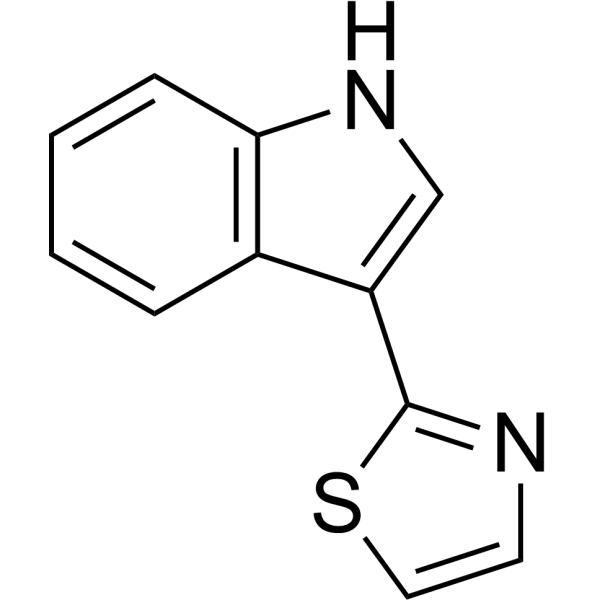
Camalexin
Based on 3 publication(s) in Google Scholar
Camalexin is a phytoalexin isolated from Camelina sativa (Cruciferae) with antibacterial, antifungal, antiproliferative and anticancer activities. Camalexin can induce reactive oxygen species (ROS) production.
Nur für Forschungszwecke. Wir verkaufen nicht an Patienten.
- Reinheit : 99.70%
- CAS. Nr.: 135531-86-1
- Formel: C11H8N2S
- Molecular Weight:200.26
-
Speicherung:Powder -20°C, 3 years , 4°C, 2 years ; In solvent -80°C, 6 months , -20°C, 1 month

To place orders, for customer services and technical support, please contact: MedChemExpress USA
Tel: 609-228-6898 E-mail: [email protected] [email protected]


-
 Biologische Aktivität
-
Chemical Information
-
Lösungsmittel & Löslichkeit
- Protokoll
- Reinheit & Dokumentation
- Verweise
-
 Help & FAQs


-
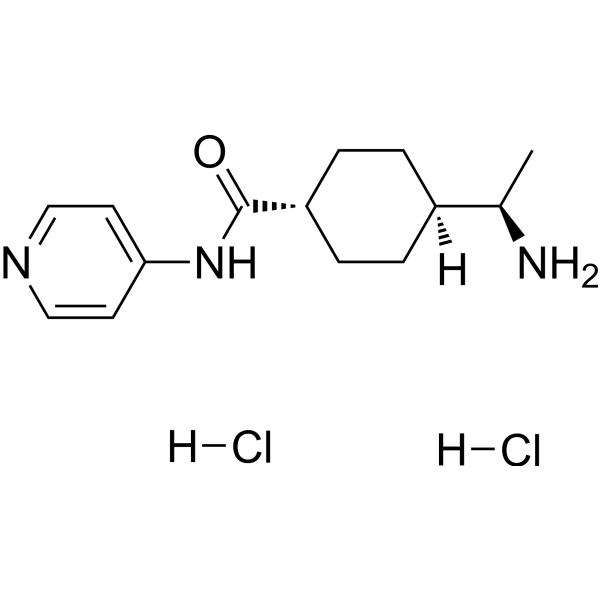
HY-10583
Y-27632 dihydrochlorideROCK Inhibitor -
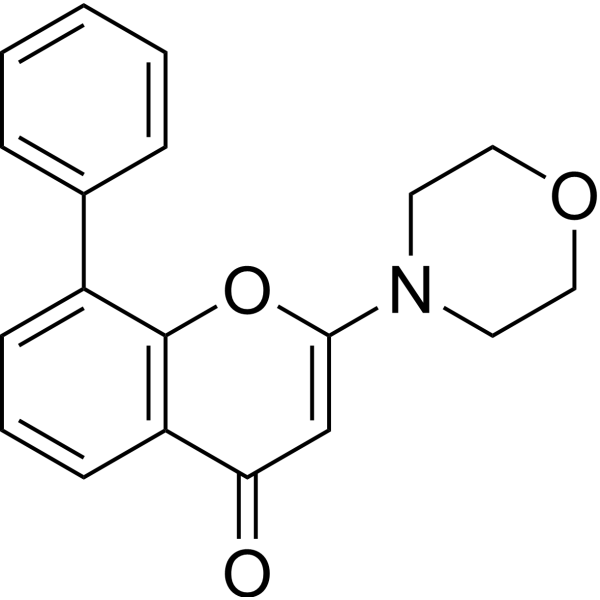
HY-10108
LY294002PI3K Inhibitor -
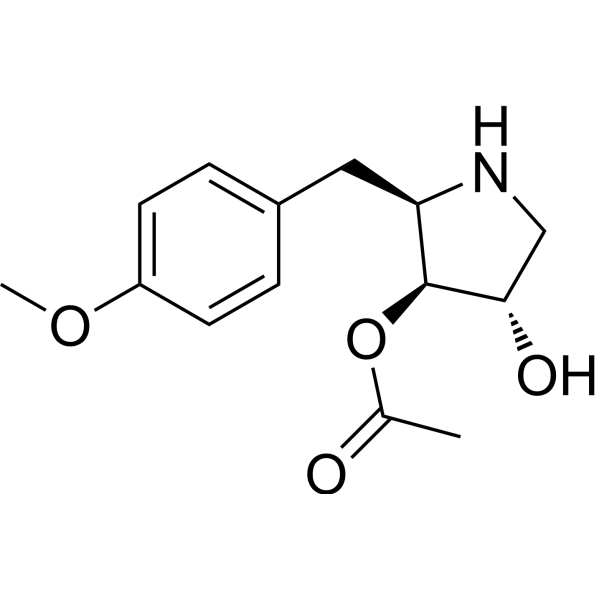
HY-18982
AnisomycinProtein Synthesis Inhibitor -
HY-114421
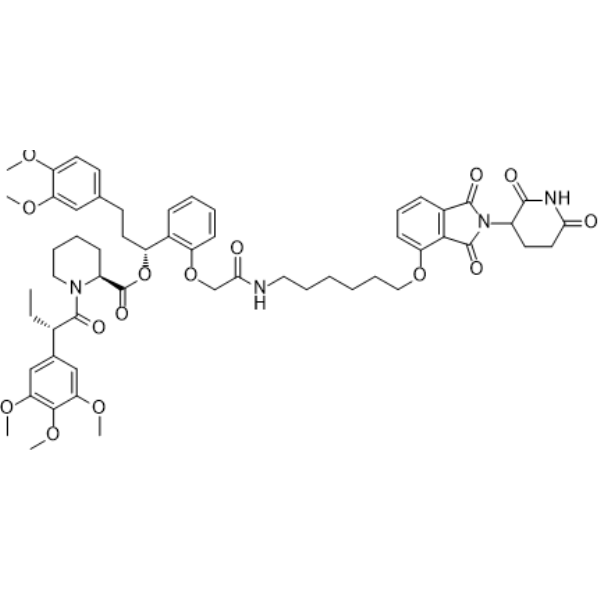
FKBP12 PROTAC dTAG-13FKBP12F36V PROTAC Degrader -

HY-119502R
Camalexin (Standard)Phytoalexin -
HY-N6972
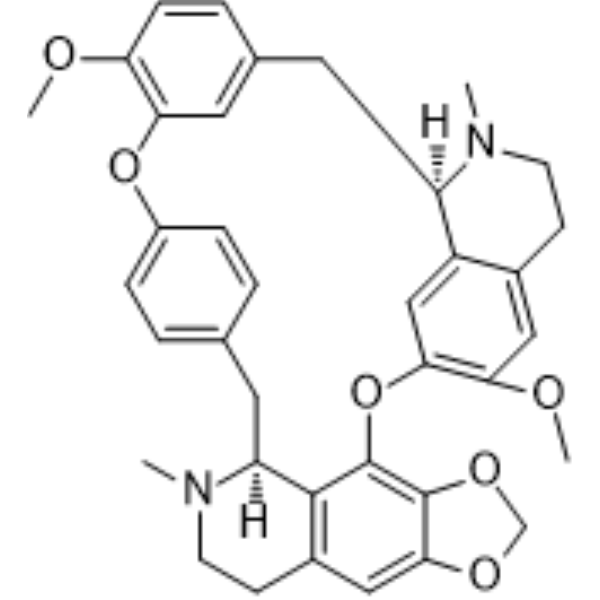
CepharanthineAnti-infection Agent -
HY-B0166
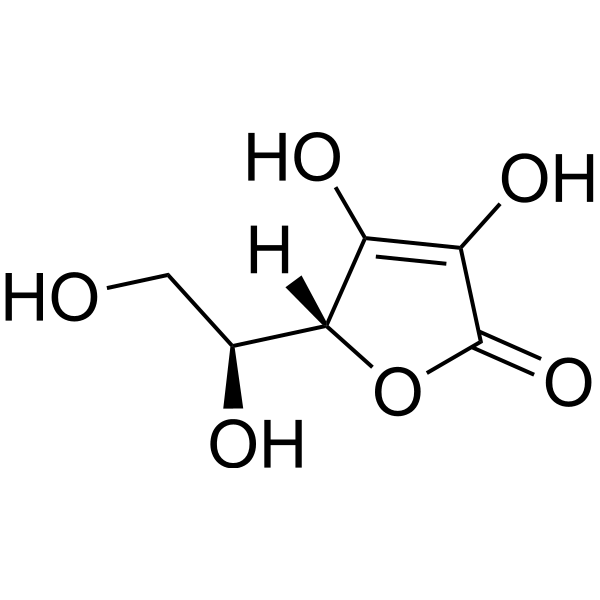
L-Ascorbic acidAntioxidant -
HY-N0439
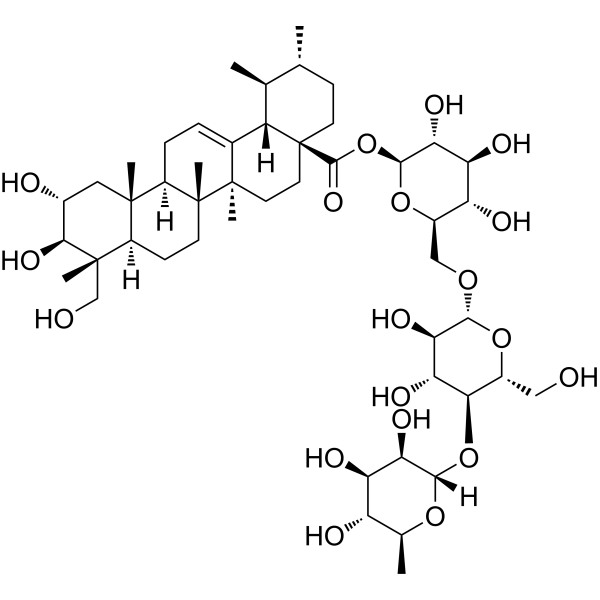
AsiaticosideTriterpene Glycoside -
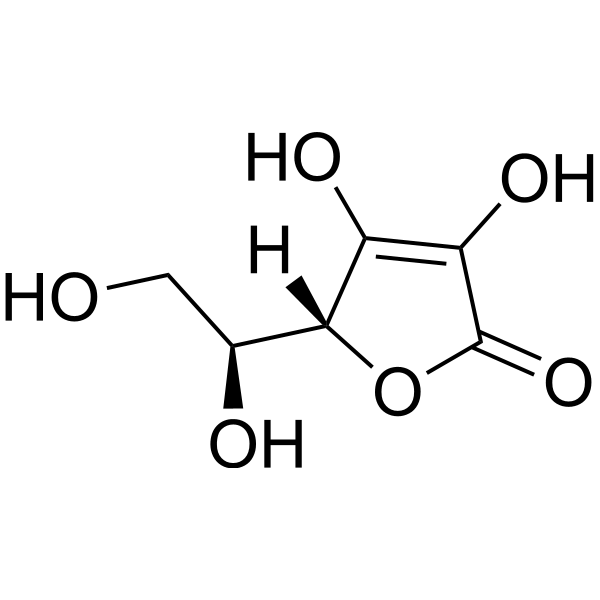
HY-B0166G
L-Ascorbic acid (GMP)Antioxidant -

HY-B0166R
L-Ascorbic acid (Standard)Antioxidant -

HY-N0439R
Asiaticoside (Standard)Triterpene Glycoside -

HY-N6972R
Cepharanthine (Standard)Anti-infection Agent
Publications Citing Use of MedChemExpress (MCE) Camalexin
More

Biologische Aktivität
Beschreibung
IC50 & Target
In Vitro
Camalexin shows antiproliferative activity against a human breast cancer cell line[2].
For the oomycetes Phytophthora and Pythium Nep1-like proteins (necrosis and ethylene-inducing peptide 1-like proteins) are the initial triggers of Camalexin synthesis and formation of reactive oxygen species (ROS). ROS appear to be of general relevance for Camalexin formation. Chemical induction of ROS, such as by application of acifluorfen, coincided with Camalexin synthesis. In a screen for enhanced susceptibility to Alternaria brassicicola the esa1 mutant is identified, which shows delayed Camalexin induction. Particularly in response to ROS inducing agents reduced Camalexin levels are synthesized. This crucial role for ESA1 is confirmed by the inability of esa1 mutants to synthesize Camalexin in response to Leptosphaeria maculans. An additional mutant that exhibits greatly reduced Camalexin accumulation is ups1, which is isolated on the basis of diminished expression of a tryptophan biosynthetic enzyme[2].
MedChemExpress (MCE) has not independently confirmed the accuracy of these methods. They are for reference only. Further protocols information, click here.


Chemical Information
-
CAS. Nr. 135531-86-1
-
Appearance Solid
-
Molecular Weight 200.26
-
Formel C11H8N2S
-
Color White to yellow
-
SMILES
C12=C(C=CC=C2)NC=C1C3=NC=CS3
-
Structure Classification
-
Versand
Room temperature in continental US; may vary elsewhere.
-
Speicherung
Powder -20°C 3 years 4°C 2 years In solvent -80°C 6 months -20°C 1 month


Publications (3)
-
Journal Impact Factor
-
Most Recent
-
Adv Sci (Weinh)
2026 Mar;13(16):e13310. PMID: 41589654 -
Sci China Life Sci
Promotion of Arabidopsis immune responses by a rhizosphere fungus via supply of pipecolic acid to plants and selective augment of phytoalexins. [Abstract]2023 May;66(5):1119-1133. PMID: 36449213 -
Cell Physiol Biochem
2017;41(2):731-741. PMID: 28222420


Lösungsmittel & Löslichkeit
In Vitro:
DMSO : 175 mg/mL (873.86 mM; Need ultrasonic; Hygroscopic DMSO has a significant impact on the solubility of product, please use newly opened DMSO)
Please refer to the solubility information to select the appropriate solvent. Once prepared, please aliquot and store the solution to prevent product inactivation from repeated freeze-thaw cycles.
Storage method and period of stock solution: -80°C, 6 months; -20°C, 1 month. When stored at -80°C, please use it within 6 months. When stored at -20°C, please use it within 1 month.
Please refer to the solubility information to select the appropriate solvent. Once prepared, please aliquot and store the solution to prevent product inactivation from repeated freeze-thaw cycles.
Storage method and period of stock solution: -80°C, 6 months; -20°C, 1 month. When stored at -80°C, please use it within 6 months. When stored at -20°C, please use it within 1 month.
Konzentration (Stammlösung) × Volumen (Stammlösung) = Konzentration (Ziellösung) × Volumen (Ziellösung)

Protokoll
-
Research Protocol for Infectious Diseases
Infectious-disease experiments test how pathogens interact with host barriers, innate immune receptors, inflammatory signaling, pathogen replication, and tissue injury; pattern-recognition receptors such as TLRs, RIG-I-like receptors, NOD-like receptors, and inflammasomes detect microbial molecules and activate NF-κB, interferon, and cytokine responses. The central hypothesis is that infection severity reflects the balance between pathogen burden and host response: protective inflammation restricts pathogen growth, whereas excessive or mislocalized inflammation contributes to tissue damage and disease phenotype. Unresolved questions include which host pathways are protective versus pathogenic, why some infection models fail to translate to human disease, and which combined readouts best predict clinically relevant infection outcomes.
-
ROS/oxidative-stress fluorescent staining
ROS/oxidative-stress fluorescent staining uses cell-permeant fluorogenic probes that become fluorescent after oxidation inside cells or tissues; commonly used examples include DCFH-DA/DCFDA for broad cellular oxidant detection, DHE for superoxide-related signal detection, MitoSOX for mitochondrial superoxide-related signal detection, and CellROX probes for oxidative-stress-associated fluorescence readouts. The assay detects probe oxidation rather than a single ROS species unless the probe and analysis method have been chemically validated for that species. DCFH-DA enters cells, is deacetylated by intracellular esterases to DCFH, and produces fluorescent DCF after oxidation, so the readout is used as an operational measure of total cellular oxidative stress rather than a species-specific ROS measurement. DHE and MitoSOX can report superoxide-related oxidation, but red fluorescence alone can include non-specific ethidium-like oxidation products; HPLC or optimized spectral approaches are
-
Cell Viability Determination by MTT Colorimetric Assay
The following protocol uses the MTT colorimetric assay as a classic literature-established method for assessing cell viability/metabolic activity in cultured mammalian cells. MTT[3-(4,5-dimethylthiazol-2-yl)-2,5-diphenyltetrazolium bromide] is reduced by metabolically active cells to a colored formazan product; the amount of formazan is quantified spectrophotometrically and provides an indirect measure of metabolically active viable cells. Importantly, MTT reduction reflects cellular oxidoreductase/metabolic activity rather than an absolute direct count of living cells, so changes in cellular metabolism can alter the signal independently of cell number.


Reinheit & Dokumentation
-
Data Sheet (279 KB)
-
SDS (393 KB)
- English - EN (393 KB)
- Français - FR (393 KB)
- Deutsch - DE (393 KB)
- Norwegian - NO (393 KB)
- Español - ES (393 KB)
- Swedish - SV (393 KB)
- Italian - IT (393 KB)
- Korean - KR (393 KB)
- Portuguese - PT (393 KB)
-
Handling Instructions (2659 KB)
Verweise


Complete Stock Solution Preparation Table
Please refer to the solubility information to select the appropriate solvent. Once prepared, please aliquot and store the solution to prevent product inactivation from repeated freeze-thaw cycles.
Storage method and period of stock solution: -80°C, 6 months; -20°C, 1 month. When stored at -80°C, please use it within 6 months. When stored at -20°C, please use it within 1 month.
| Optional Solvent | Concentration Solvent Mass | 1 mg | 5 mg | 10 mg | 25 mg |
|---|---|---|---|---|---|
| DMSO | 1 mM | 4.9935 mL | 24.9675 mL | 49.9351 mL | 124.8377 mL |
| 5 mM | 0.9987 mL | 4.9935 mL | 9.9870 mL | 24.9675 mL | |
| 10 mM | 0.4994 mL | 2.4968 mL | 4.9935 mL | 12.4838 mL | |
| 15 mM | 0.3329 mL | 1.6645 mL | 3.3290 mL | 8.3225 mL | |
| 20 mM | 0.2497 mL | 1.2484 mL | 2.4968 mL | 6.2419 mL | |
| 25 mM | 0.1997 mL | 0.9987 mL | 1.9974 mL | 4.9935 mL | |
| 30 mM | 0.1665 mL | 0.8323 mL | 1.6645 mL | 4.1613 mL | |
| 40 mM | 0.1248 mL | 0.6242 mL | 1.2484 mL | 3.1209 mL | |
| 50 mM | 0.0999 mL | 0.4994 mL | 0.9987 mL | 2.4968 mL | |
| 60 mM | 0.0832 mL | 0.4161 mL | 0.8323 mL | 2.0806 mL | |
| 80 mM | 0.0624 mL | 0.3121 mL | 0.6242 mL | 1.5605 mL | |
| 100 mM | 0.0499 mL | 0.2497 mL | 0.4994 mL | 1.2484 mL |


Camalexin Related Classifications
HY-119502 Related Classifications
 Powered by Bioz