



Dasatinib (Standard)

Based on 1 Customer Validation
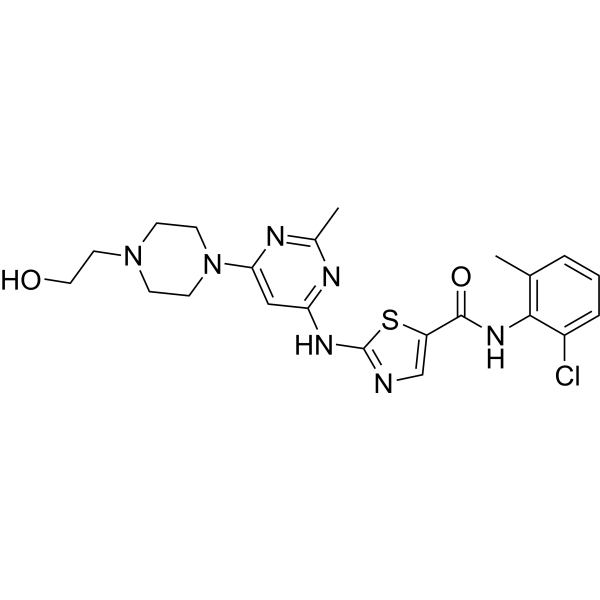
Dasatinib (Standard) is the analytical standard of Dasatinib. This product is intended for research and analytical applications. Dasatinib (BMS-354825) is a highly potent, ATP competitive, orally active dual Src/Bcr-Abl inhibitor with potent antitumor activity. The Kis are 16 pM and 30 pM for Src and Bcr-Abl, respectively. Dasatinib inhibits Bcr-Abl and Src with IC50s of <1.0 nM and 0.5 nM, respectively. Dasatinib also induces apoptosis and autophagy.
Nur für Forschungszwecke. Wir verkaufen nicht an Patienten.
- Reinheit : 99.80%
- CAS. Nr.: 302962-49-8
- Formel: C22H26ClN7O2S
- Molecular Weight:488.01
-
Speicherung:
Please store the product under the recommended conditions in the Certificate of Analysis.


To place orders, for customer services and technical support, please contact: MedChemExpress USA
Tel: 609-228-6898 E-mail: [email protected] [email protected]


-
 Product Information
-
Chemical Information
- Reinheit & Dokumentation
-
 Help & FAQs


-
HY-10181
DasatinibSrc/Bcr-Abl Inhibitor -
HY-10159
NilotinibBcr-Abl Inhibitor -

HY-10181G
Dasatinib (GMP)Dual Src/Bcr-Abl Inhibitor -

HY-10181GL
Dasatinib (GMP Like)Src/Bcr-Abl Inhibitor -
HY-13024
RebastinibKinase Inhibitor -
HY-10234
SaracatinibSrc Inhibitor -
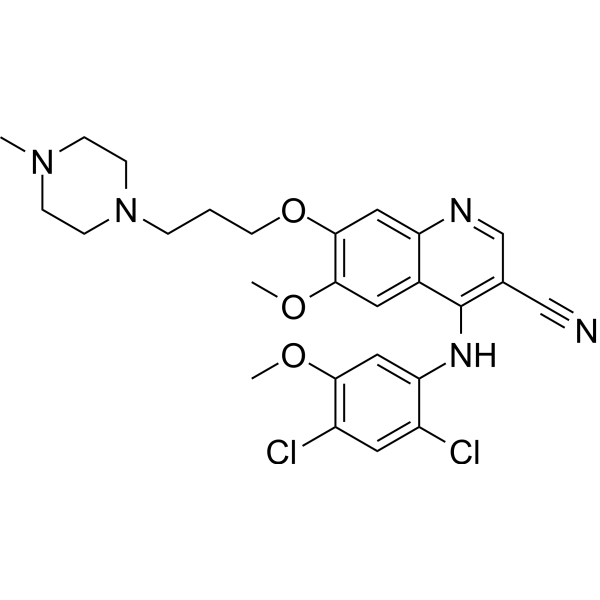
HY-10158
BosutinibSrc/Abl Inhibitor -
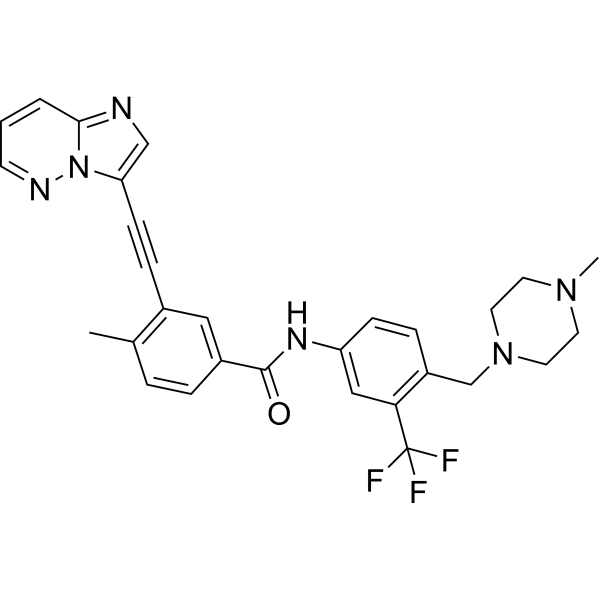
HY-12047
PonatinibMulti-targeted Kinase Inhibitor -
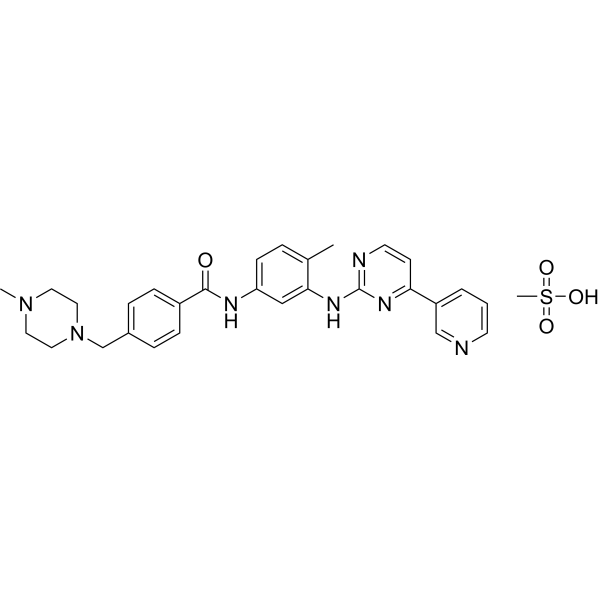
HY-50946
Imatinib Mesylatec-Kit Inhibitor -
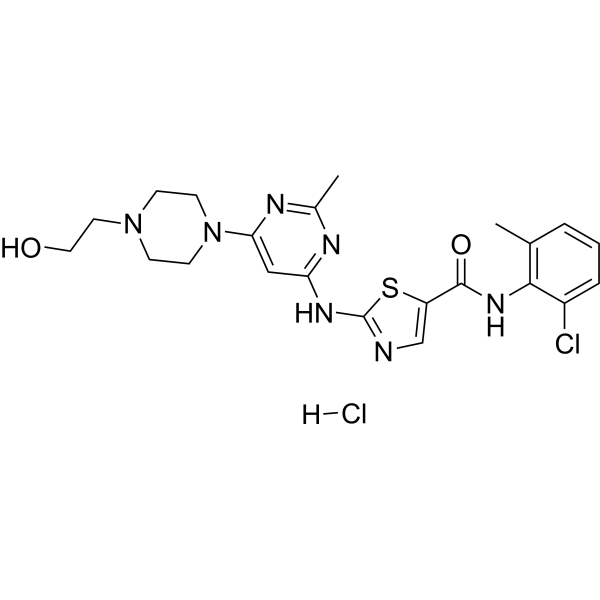
HY-10181A
Dasatinib hydrochlorideSrc/Bcr-Abl Inhibitor -
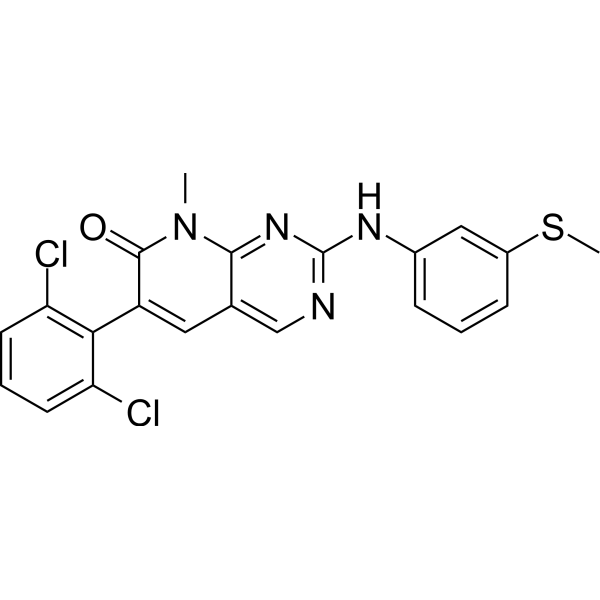
HY-10395
PD173955Src Inhibitor -
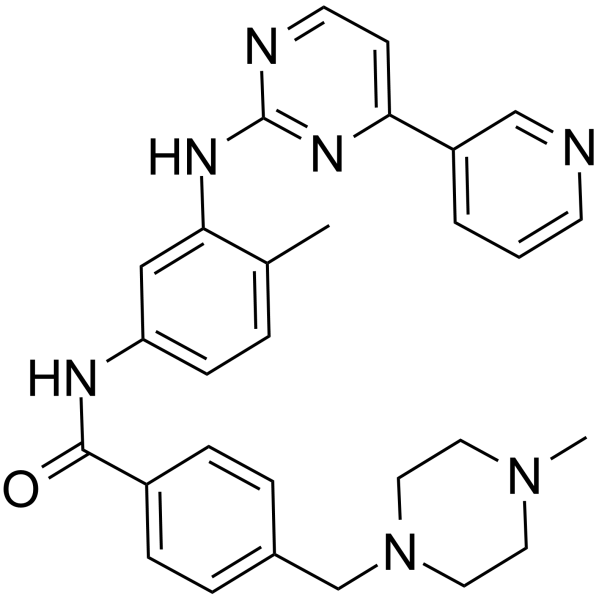
HY-15463
ImatinibTyrosine Kinases Inhibitor


Product Information
Information
Anwendung
The compound is the grade of analytical standard, which is the reference standard supplied assay. It is commonly used in qualitative, quantitative and methodological research experiments in HPLC, GC and MS.


Chemical Information
-
CAS. Nr. 302962-49-8
-
Appearance Solid
-
Molecular Weight 488.01
-
Formel C22H26ClN7O2S
-
Color White to off-white
-
SMILES
O=C(C1=CN=C(S1)NC2=NC(C)=NC(N3CCN(CC3)CCO)=C2)NC4=C(C=CC=C4Cl)C
-
Synonyms
BMS-354825 (Standard)
-
Versand
Room temperature in continental US; may vary elsewhere.
-
Speicherung
Please store the product under the recommended conditions in the Certificate of Analysis.


Reinheit & Dokumentation
-
SDS (394 KB)
- English - EN (394 KB)
- Français - FR (394 KB)
- Deutsch - DE (394 KB)
- Norwegian - NO (394 KB)
- Español - ES (394 KB)
- Swedish - SV (394 KB)
- Italian - IT (394 KB)
- Korean - KR (394 KB)
- Portuguese - PT (394 KB)
-
Handling Instructions (2659 KB)
Verweise
[1]. Lombardo LJ, et al. Discovery of N-(2-chloro-6-methyl- phenyl)-2-(6-(4-(2-hydroxyethyl)- piperazin-1-yl)-2-methylpyrimidin-4- ylamino)thiazole-5-carboxamide (BMS-354825), a dual Src/Abl kinase inhibitor with potent antitumor activity in preclinical assays. J Med Chem. 2004 Dec 30;47(27):6658-61. [Content Brief]

Calculators
Konzentration (Stammlösung) × Volumen (Stammlösung) = Konzentration (Ziellösung) × Volumen (Ziellösung)


Dasatinib (Standard) Related Classifications
HY-10181R Related Classifications
 Powered by Bioz