



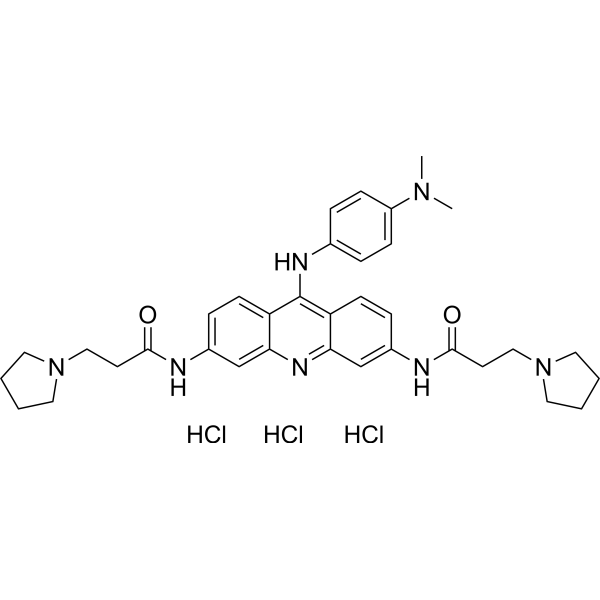
Braco-19 trihydrochloride
Based on 5 publication(s) in Google Scholar
Braco-19 trihydrochloride is a potent telomerase/telomere inhibitor, preventing the capping and catalytic action of telomerase. Braco-19 acts as G-quadruplex (GQ) binding ligand, stabilizing G-quadruplexes formation at the 3V telomeric DNA overhang and produce rapid senescence or selective cell death. Braco-19 is also a HAdV virus replication inhibitor.
For research use only. We do not sell to patients.
- Purity : 99.57%
- CAS No.: 1177798-88-7
- Formula: C35H46Cl3N7O2
- Molecular Weight:703.14
-
Storage:
4°C, sealed storage, away from moisture
* In solvent : -80°C, 6 months; -20°C, 1 month (sealed storage, away from moisture)

To place orders, for customer services and technical support, please contact: MedChemExpress USA
Tel: 609-228-6898 E-mail: [email protected] [email protected]


-
 Biological Activity
-
Chemical Information
-
Solvent & Solubility
- Protocols
- Purity & Documentation
- References
-
 Help & FAQs


-
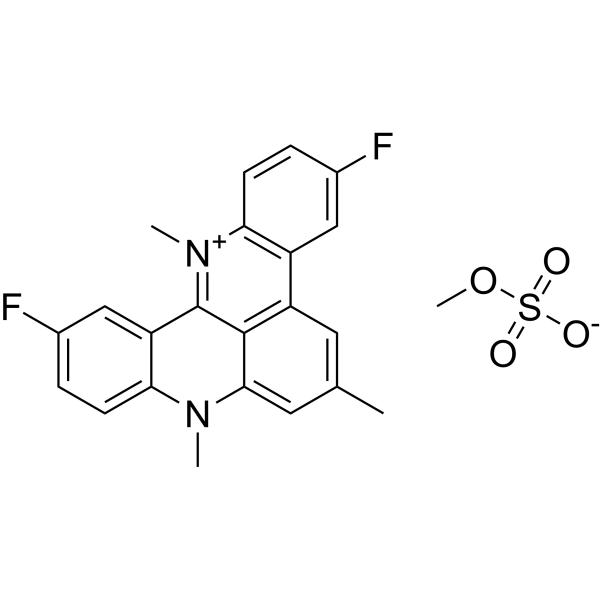
HY-101089
RHPS4Telomerase Inhibitor -
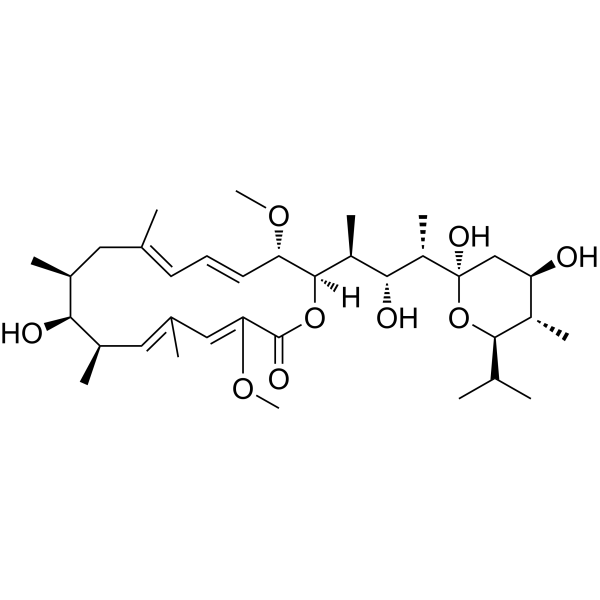
HY-100558
Bafilomycin A1V-ATPase Inhibitor -
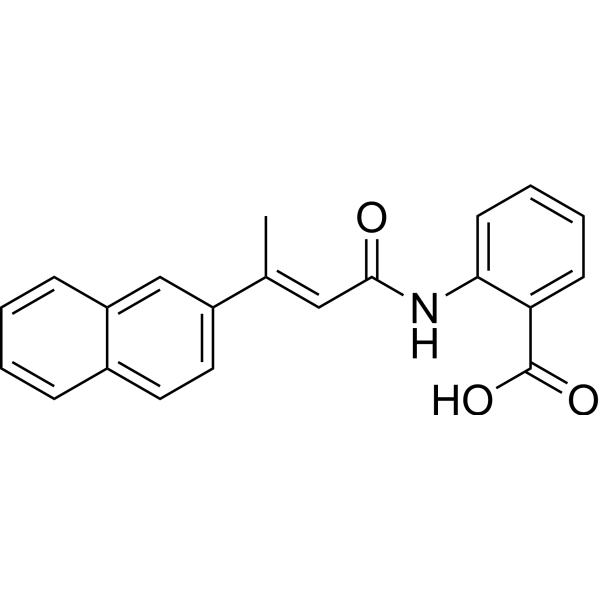
HY-17353
BIBR 1532Apoptosis Inducer -
HY-15594A
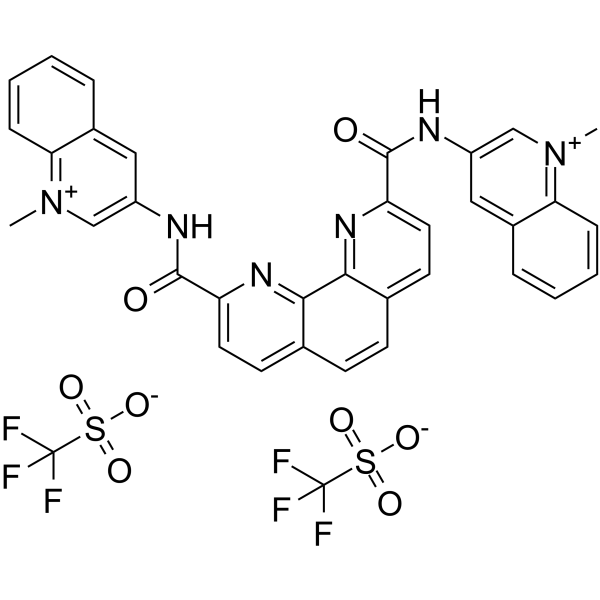
Phen-DC3 TrifluoromethanesulfonateG4 Ligand -
HY-16721
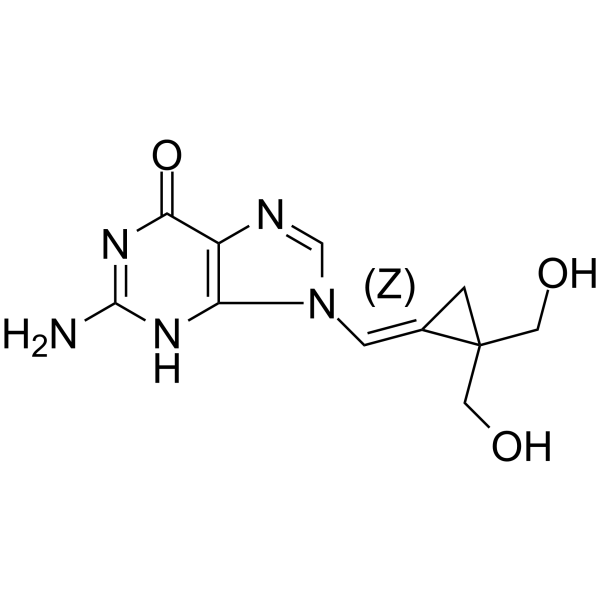
CyclopropavirAnti-herpesvirus Agent -
HY-120145
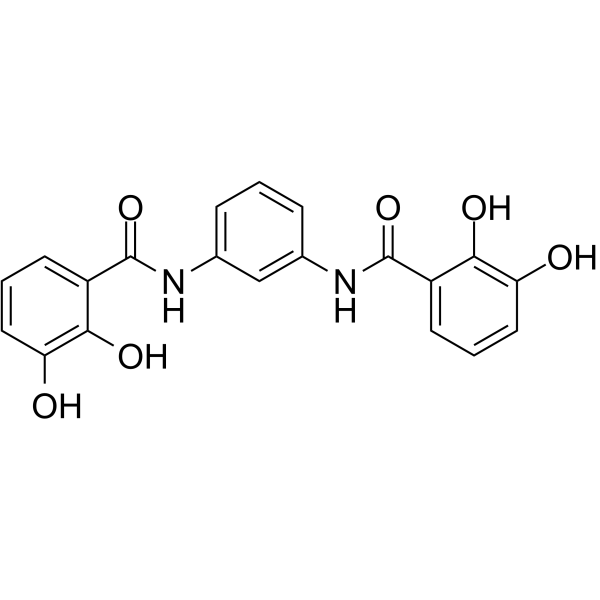
MST-312Telomerase Inhibitor -

HY-101089R
RHPS4 (Standard)Telomerase Inhibitor -
HY-N1127
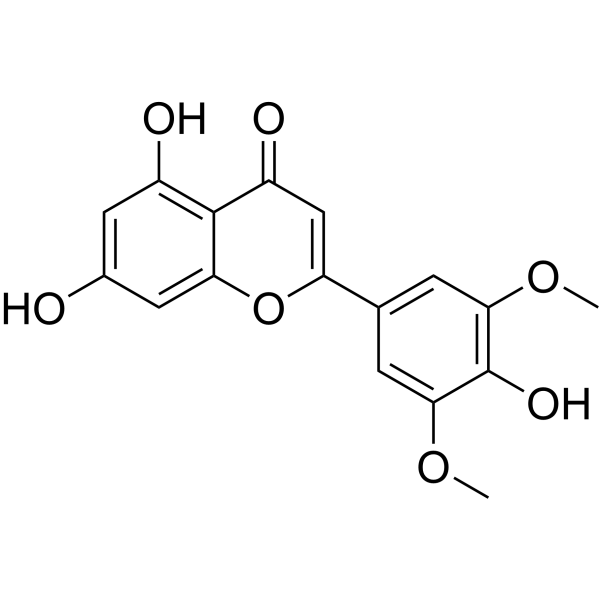
TricinCMV Inhibitor -
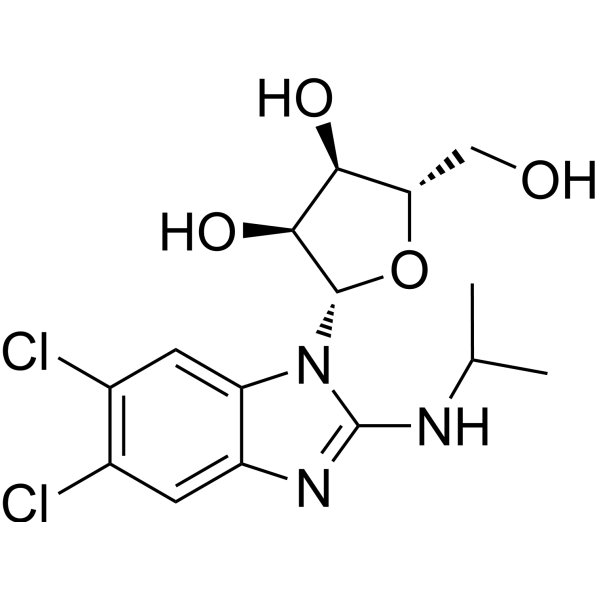
HY-16305
MaribavirAnti-CMV Agent -
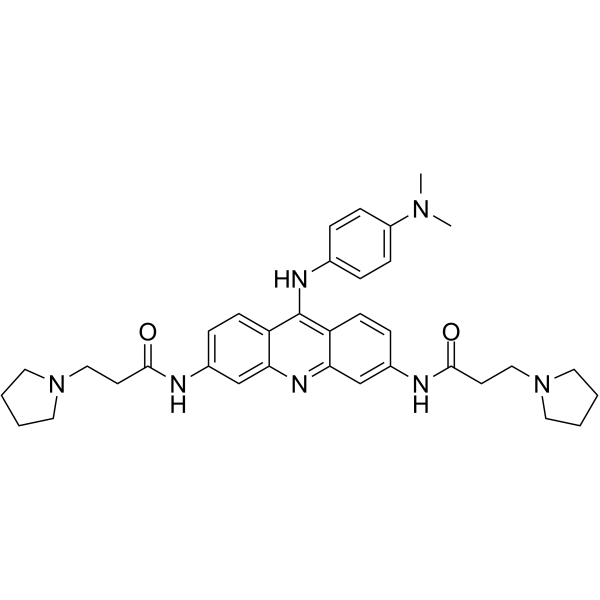
HY-15523
Braco-19Telomerase Inhibitor -
HY-109528
Fomivirsen sodiumCMV Inhibitor -
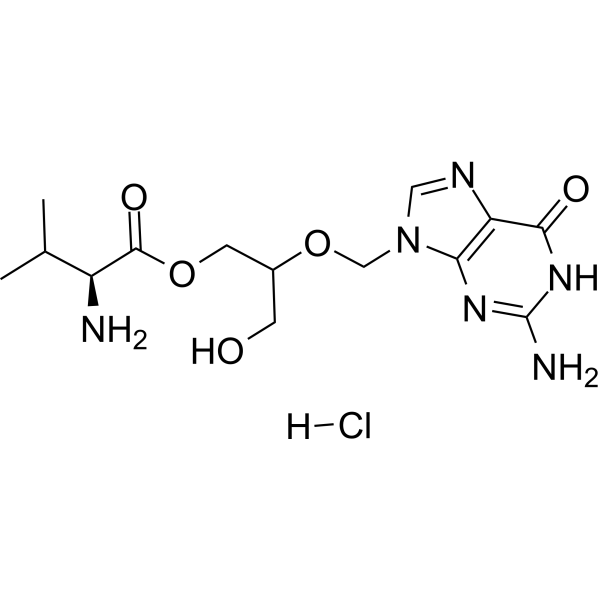
HY-A0032A
Valganciclovir hydrochlorideAntiviral Agent
Publications Citing Use of MedChemExpress (MCE) Braco-19 trihydrochloride
MoreAll DNA/RNA Synthesis Isoforms
More

Biological Activity
Description
IC50 & Target
IC50: telomerase[1]
In Vitro
Braco-19 trihydrochloride, as a well-known GQ binding ligand, interacts specifically with the HAdV GQs and increases their stability, and blocks the HAdV multiplication[2].BRACO-19 trihydrochloride (1 μM; 24 hours) shows dramatically reduced nuclear hTERT expression. However, residual cytoplasmic hTERT staining is observed accompanied by the occurrence of atypical mitoses[1].BRACO-19 trihydrochloride (0-40 μM; 24 hours) decreases the AdV virus growth in a dose-dependent manner in eGFP-transinfected HEK 293 cells[2].BRACO-19 trihydrochloride (0-150 μM; 24 hours) shows a decrease in band intensity in an increasing concentration-dependent manner[2].
MedChemExpress (MCE) has not independently confirmed the accuracy of these methods. They are for reference only. Further protocols information, click here.
-
Cell Line:HEK 293 cells
-
Concentration:20 μM; 40 μM
-
Incubation Time:24 hours
-
Result:Displayed low cytotoxicity and decreased the eGFP fluorescence.
In Vivo
MedChemExpress (MCE) has not independently confirmed the accuracy of these methods. They are for reference only.
-
Animal Model:Established UXF1138LX Xenografts in nude mice[1]
-
Dosage:2 mg/kg
-
Administration:Intraperitoneal injection; 3 weeks; starting 6 days after transplantation of UXF1138LX fragments
-
Result:Showed partial tumor regressions with an optimal T/C on day 28 of 4.1%, equal to 95.9% inhibition of tumor growth compared with control.


Chemical Information
-
CAS No. 1177798-88-7
-
Appearance Solid
-
Molecular Weight 703.14
-
Formula C35H46Cl3N7O2
-
Color Yellow to brown
-
SMILES
CN(C1=CC=C(NC2=C(C=CC(NC(CCN3CCCC3)=O)=C4)C4=NC5=CC(NC(CCN6CCCC6)=O)=CC=C52)C=C1)C.Cl.Cl.Cl
-
Shipping
Room temperature in continental US; may vary elsewhere.
-
Storage
4°C, sealed storage, away from moisture
* In solvent : -80°C, 6 months; -20°C, 1 month (sealed storage, away from moisture)


Publications (5)
-
Journal Impact Factor
-
Most Recent
-
Nat Cell Biol
Targeting specific DNA G-quadruplexes with CRISPR-guided G-quadruplex-binding proteins and ligands. [Abstract]2024 Jul;26(7):1212-1224. PMID: 38961283 -
Biochim Biophys Acta Mol Basis Dis
The sonic hedgehog pathway suppresses oxidative stress and senescence in nucleus pulposus cells to alleviate intervertebral disc degeneration via GPX4. [Abstract]2023 Nov 16;1870(2):166961. PMID: 37979732 -
iScience
Genomic G-quadruplex folding triggers a cytokine-mediated inflammatory feedback loop to aggravate inflammatory diseases. [Abstract]2022 Oct 9;25(11):105312. PMID: 36304116 -
Microbiol Spectr
Characterization of G-Quadruplexes in Enterovirus A71 Genome and Their Interaction with G-Quadruplex Ligands. [Abstract]2022 Apr 21;e0046022. PMID: 35446122 -
SLAS Discov
A high-throughput approach to evaluating NCp7 RNA binding activity for HIV-1 drug discovery. [Abstract]2025 Sep:35:100260. PMID: 40803428


Solvent & Solubility
In Vitro:
DMSO : 50 mg/mL (71.11 mM; ultrasonic and warming and heat to 80°C; Hygroscopic DMSO has a significant impact on the solubility of product, please use newly opened DMSO)
H2O : 22 mg/mL (31.29 mM; Need ultrasonic and warming)
Please refer to the solubility information to select the appropriate solvent. Once prepared, please aliquot and store the solution to prevent product inactivation from repeated freeze-thaw cycles.
Storage method and period of stock solution: -80°C, 6 months; -20°C, 1 month (sealed storage, away from moisture). When stored at -80°C, please use it within 6 months. When stored at -20°C, please use it within 1 month.
* Note: If you choose water as the stock solution, please dilute it to the working solution, then filter and sterilize it with a 0.22 μm filter before use.
Please refer to the solubility information to select the appropriate solvent. Once prepared, please aliquot and store the solution to prevent product inactivation from repeated freeze-thaw cycles.
Storage method and period of stock solution: -80°C, 6 months; -20°C, 1 month (sealed storage, away from moisture). When stored at -80°C, please use it within 6 months. When stored at -20°C, please use it within 1 month.
* Note: If you choose water as the stock solution, please dilute it to the working solution, then filter and sterilize it with a 0.22 μm filter before use.
Concentration (start) × Volume (start) = Concentration (final) × Volume (final)

Protocols
-
Cell Cytotoxicity Assay
Cytotoxicity assays are usually based on the assessment of cell membrane damage, which can also be indirectly detected by measuring cell viability. Detection methods include MTT assay, CKK-8 assay, LDH assay and ATP assay, etc.
-
Mammalian live/dead viability and cytotoxicity staining
Live/dead viability and cytotoxicity staining assays are based on the simultaneous detection of intracellular esterase activity in metabolically active (viable) cells and membrane integrity loss in non-viable cells. In commonly used dual-staining approaches, membrane-permeant fluorogenic substrates are converted by intracellular esterases into fluorescent products in live cells, while impermeant DNA-binding dyes selectively enter cells with compromised plasma membranes and label nucleic acids in dead or dying cells, enabling discrimination between viable and non-viable populations by fluorescence microscopy or flow cytometry.
-
Apoptosis Solutions
Apoptosis is a regulated, generally non-lytic cell-death pathway that removes unwanted, damaged, infected, or abnormal cells through coordinated morphological changes, caspase activation, DNA fragmentation, and membrane remodeling. The intrinsic apoptosis pathway is controlled mainly by mitochondrial outer membrane permeabilization, BCL-2 family proteins, cytochrome c release, apoptosome formation, caspase-9 activation, and downstream executioner caspase-3/7 activation. The extrinsic apoptosis pathway is initiated by death receptors such as Fas, TNFR, and TRAIL receptors, which recruit adaptor proteins and activate caspase-8 before engaging executioner caspases or mitochondrial amplification through BID cleavage. Apoptosis is linked to many phenotypes, including cancer cell killing, tissue homeostasis, immune regulation, neurodegeneration, infection response, and treatment-induced cytotoxicity; unresolved questions include how apoptosis interacts with necroptosis, pyroptosis, ferroptos
-
Senescence-associated β-galactosidase staining
Senescence-associated β-galactosidase staining detects β-galactosidase activity that is histochemically visible at pH 6. 0 in senescent cells, where X-gal cleavage produces an insoluble blue precipitate observable by bright-field microscopy. This activity reflects increased lysosomal β-galactosidase/lysosomal mass rather than a senescence-essential enzyme, because GLB1 depletion or genetic lysosomal β-galactosidase deficiency can abolish SA-β-gal staining while cells still undergo senescence. SA-β-gal was originally reported in senescent but not presenescent fibroblasts and keratinocytes, absent from quiescent fibroblasts and terminally differentiated keratinocytes, and increased with donor age in human skin samples. Because SA-β-gal can also appear in some non-senescent or tissue-specific contexts, interpretation should be paired with experimental controls and, when possible, independent senescence markers.


Purity & Documentation
-
Data Sheet (276 KB)
-
SDS (479 KB)
- English - EN (479 KB)
- Français - FR (479 KB)
- Deutsch - DE (479 KB)
- Norwegian - NO (479 KB)
- Español - ES (479 KB)
- Swedish - SV (479 KB)
- Italian - IT (479 KB)
- Korean - KR (479 KB)
- Portuguese - PT (479 KB)
-
Handling Instructions (2659 KB)
References
[1]. Angelika M Burger, et al. The G-quadruplex-interactive Molecule BRACO-19 Inhibits Tumor Growth, Consistent With Telomere Targeting and Interference With Telomerase Function. Cancer Res. 2005 Feb 15;65(4):1489-96. [Content Brief]
[2]. Prativa Majee, et al. Genome-wide Analysis Reveals a Regulatory Role for G-quadruplexes During Adenovirus Multiplication. Virus Res. . 2020 Jul 2;283:197960. [Content Brief]


Complete Stock Solution Preparation Table
Please refer to the solubility information to select the appropriate solvent. Once prepared, please aliquot and store the solution to prevent product inactivation from repeated freeze-thaw cycles.
Storage method and period of stock solution: -80°C, 6 months; -20°C, 1 month (sealed storage, away from moisture). When stored at -80°C, please use it within 6 months. When stored at -20°C, please use it within 1 month.
| Optional Solvent | Concentration Solvent Mass | 1 mg | 5 mg | 10 mg | 25 mg |
|---|---|---|---|---|---|
| H2O / DMSO | 1 mM | 1.4222 mL | 7.1110 mL | 14.2219 mL | 35.5548 mL |
| 5 mM | 0.2844 mL | 1.4222 mL | 2.8444 mL | 7.1110 mL | |
| 10 mM | 0.1422 mL | 0.7111 mL | 1.4222 mL | 3.5555 mL | |
| 15 mM | 0.0948 mL | 0.4741 mL | 0.9481 mL | 2.3703 mL | |
| 20 mM | 0.0711 mL | 0.3555 mL | 0.7111 mL | 1.7777 mL | |
| 25 mM | 0.0569 mL | 0.2844 mL | 0.5689 mL | 1.4222 mL | |
| 30 mM | 0.0474 mL | 0.2370 mL | 0.4741 mL | 1.1852 mL | |
| DMSO | 40 mM | 0.0356 mL | 0.1778 mL | 0.3555 mL | 0.8889 mL |
| 50 mM | 0.0284 mL | 0.1422 mL | 0.2844 mL | 0.7111 mL | |
| 60 mM | 0.0237 mL | 0.1185 mL | 0.2370 mL | 0.5926 mL |
* Note: If you choose water as the stock solution, please dilute it to the working solution, then filter and sterilize it with a 0.22 μm filter before use.


Braco-19 trihydrochloride Related Classifications
HY-15523A Related Classifications
 Powered by Bioz