



Briakinumab

Based on 1 Customer Validation
Briakinumab (ABT-874) is a fully human anti-IL-12/23p40 monoclonal antibody. Briakinumab targets and neutralizes IL-12 and IL-23. Briakinumab can be used for the research of rheumatoid arthritis, inflammatory bowel disease, and multiple sclerosis.
For research use only. We do not sell to patients.
- Purity : ≥99.0%
- CAS No.: 339308-60-0
- Molecular Weight:143.86 kDa
-
Storage:
Please store the product under the recommended conditions in the Certificate of Analysis.


To place orders, for customer services and technical support, please contact: MedChemExpress USA
Tel: 609-228-6898 E-mail: [email protected] [email protected]


-
 Biological Activity
-
Chemical Information
- Protocols
- Purity & Documentation
- References
-
 Help & FAQs


-

HY-P9909
Ustekinumab -

HY-108852
BasiliximabAnti-IL-2R mAb -

HY-P9945
MepolizumabIL-5 Inhibitor -

HY-P99256
TildrakizumabAnti-IL-23 mAb -

HY-P9907
TrastuzumabHER2 Blocking Antibody -

HY-P9908
AdalimumabTNF-α Inhibitor -

HY-P9956
SiltuximabAnti-IL-6 mAb -

HY-P9925
BrodalumabAnti-IL-17R mAb -

HY-P99737
MirikizumabIL-23 Antibody -

HY-P99112
SatralizumabIL-6R Inhibitor -

HY-P990876
Afimkibart (WT IgG1)Trimeric TL1A Antibody -

HY-P9926
DupilumabIL-4Rα Inhibitor


Biological Activity
Description
Isotype
Human IgG1 lambda2
Recommend Isotype Controls
Species Reactivity
Human
IC50 & Target
[1]|
IL-12 |
IL-23 |
In Vitro
Briakinumab targets the p40 molecule shared by interleukin-12 and interleukin-23[2].
MedChemExpress (MCE) has not independently confirmed the accuracy of these methods. They are for reference only. Further protocols information, click here.
Clinical Trial
| NCT Number | Sponsor | Condition | Start Date |
Phase

|
|---|---|---|---|---|
| NCT01329991 | Plexxikon| | 2011-05 | PHASE1 |
Gene ID
Accession
Conjugated
Unconjugated
Reconsititution
The product can be reconstituted/diluted with sterile PBS or saline.
Format
-
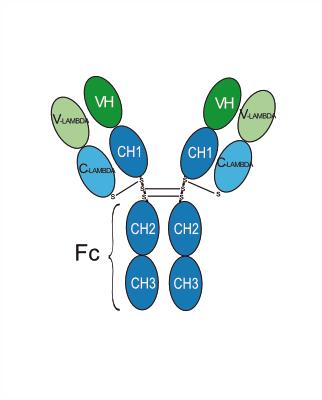
Human IgG1 lambda
Application
ELISA, FACS, Functional assay
Verified Bioactivity
-
 Immobilized IL-12 beta Protein, Human (HEK293, HY-P70617) can bind Briakinumab. The EC50 for this effect is 10.66 ng/mL.


Chemical Information
-
CAS No. 339308-60-0
-
Appearance Liquid
-
Molecular Weight 143.86 kDa
-
Color Colorless to light yellow
-
SMILES
[Briakinumab]
-
Synonyms
ABT-874
-
Shipping
Shipping with dry ice.
-
Formulation
Please refer to the lot-specific COA for specific buffer information.
-
Storage
Please store the product under the recommended conditions in the Certificate of Analysis.

Protocols
-
Collagen-Induced Arthritis
Collagen-induced arthritis (CIA) is an autoimmune murine model of rheumatoid arthritis in which immunization with type II collagen (CII) emulsified in an adjuvant induces a T cell- and autoantibody-driven inflammatory arthritis characterized by synovial hyperplasia, immune cell infiltration, and joint destruction. The model typically relies on genetically susceptible mouse strains (e. g. , DBA/1) and reproduces key features of human rheumatoid arthritis, including anti-collagen immune responses and progressive joint inflammation. Disease onset generally occurs within ~3-4 weeks after immunization, depending on antigen/adjuvant combinations and protocol variation. The immunopathology is driven by adaptive immune activation against CII, leading to systemic and local joint inflammation mediated by pro-inflammatory cytokines and effector immune cells, making CIA a standard preclinical platform for evaluating immunomodulatory and anti-arthritic interventions.
-
DSS-Induced Colitis
Dextran sulfate sodium (DSS)-induced colitis is generated by administering DSS in mouse drinking water, producing epithelial injury, barrier disruption, weight loss, diarrhea, fecal blood, colon shortening, histologic mucosal damage, and inflammatory mediator changes; the model is mainly used to study acute or chronic intestinal inflammation resembling selected features of ulcerative colitis. DSS injury is interpreted through clinical and tissue readouts rather than a single molecular endpoint: daily body weight, stool consistency, and bleeding are combined into a disease activity index, while colon length, histology, cytokines, myeloperoxidase activity, intestinal permeability, and tight-junction markers provide complementary measures of inflammation and barrier damage.
-
TNBS-Induced Colitis
TNBS-induced colitis is produced by intrarectal delivery of 2,4,6-trinitrobenzene sulfonic acid in ethanol, where ethanol disrupts the mucosal barrier and TNBS haptenates colonic proteins, generating immune-mediated colonic inflammation with weight loss, diarrhea, ulceration, transmural injury, inflammatory-cell infiltration, and cytokine responses. The model is used as an experimental intestinal inflammation model with Crohn’s disease–like features, especially when Th1-type responses, IL-12–dependent inflammation, chronic relapsing inflammation, or fibrosis-related endpoints are studied.


Purity & Documentation
-
Data Sheet (256 KB)
-
SDS (251 KB)
- English - EN (251 KB)
- Français - FR (251 KB)
- Deutsch - DE (251 KB)
- Norwegian - NO (251 KB)
- Español - ES (251 KB)
- Swedish - SV (251 KB)
- Italian - IT (251 KB)
- Korean - KR (251 KB)
- Portuguese - PT (251 KB)
-
Inhibitory Antibodies User Guide (603 KB)
References
[1]. Panaccione R, et, al. Briakinumab for treatment of Crohn's disease: results of a randomized trial. Inflamm Bowel Dis. 2015 Jun;21(6):1329-40. [Content Brief]
[2]. Reich K, et, al. A 52-week trial comparing briakinumab with methotrexate in patients with psoriasis. N Engl J Med. 2011 Oct 27;365(17):1586-96. [Content Brief]

Calculators
Concentration (start) × Volume (start) = Concentration (final) × Volume (final)


Briakinumab Related Classifications
HY-P99486 Related Classifications
 Powered by Bioz