



Vemircopan
Based on 2 publication(s) in Google Scholar
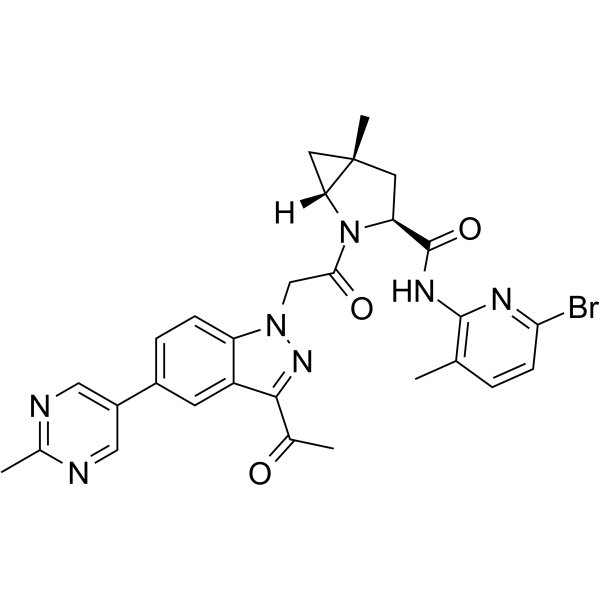
Vemircopan (ALXN2050) is an orally active complement factor D (FD) inhibitor. Vemircopan can be used in the research of diseases such as myasthenia gravis, lupus nephritis, IgA nephropathy, and paroxysmal nocturnal hemoglobinuria.
For research use only. We do not sell to patients.
- Purity : 98.61%
- CAS No.: 2086178-00-7
- Formula: C29H28BrN7O3
- Molecular Weight:602.48
-
Storage:
4°C, sealed storage, away from moisture
* In solvent : -80°C, 6 months; -20°C, 1 month (sealed storage, away from moisture)

To place orders, for customer services and technical support, please contact: MedChemExpress USA
Tel: 609-228-6898 E-mail: [email protected] [email protected]


-
 Biological Activity
-
Chemical Information
-
Solvent & Solubility
- Purity & Documentation
- References
-
 Help & FAQs


-
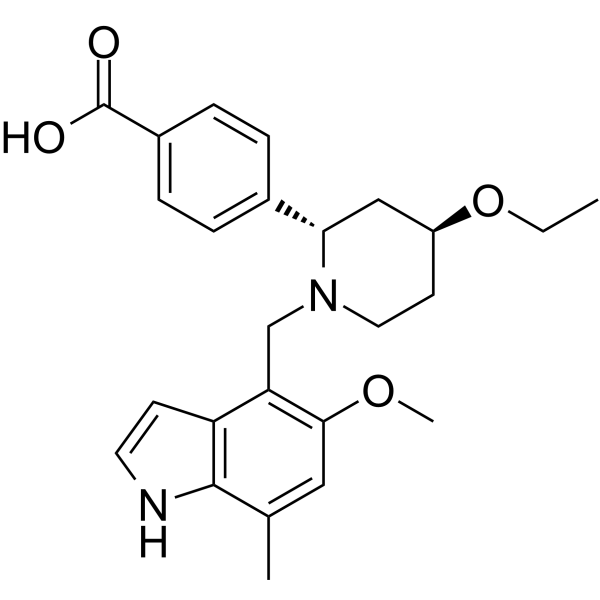
HY-127105
IptacopanFactor B Inhibitor -
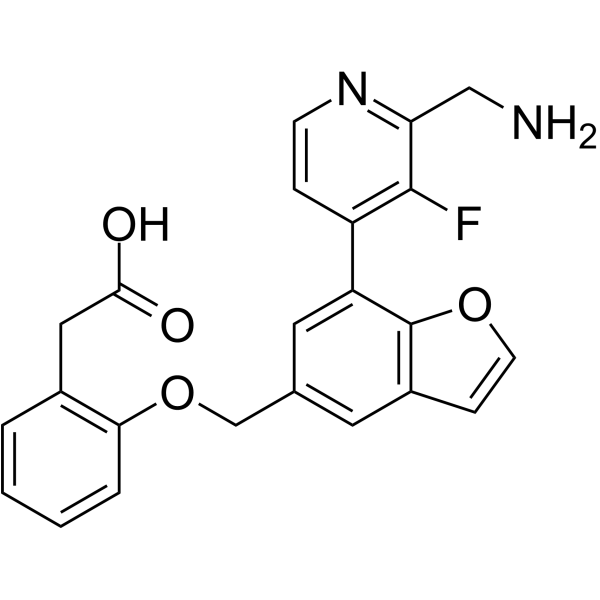
HY-147297
PelecopanComplement factor D Inhibitor -
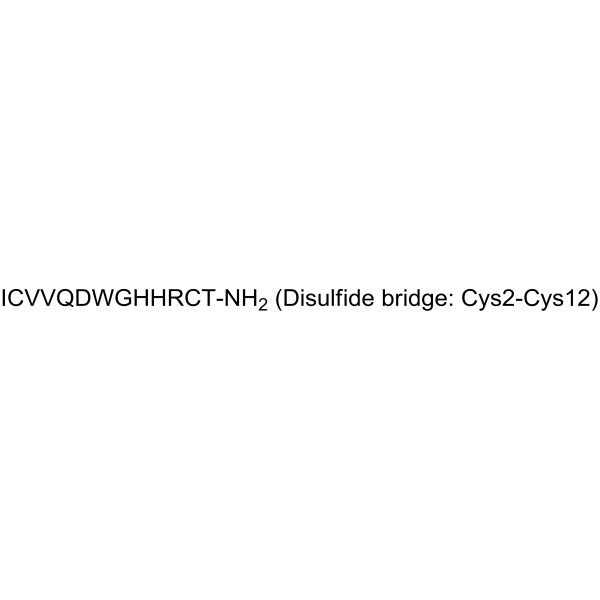
HY-P1036
CompstatinPrimates’ C3 Inhibitor -

HY-P99050
SutimlimabC1s Inhibitor -

HY-P99365
RavulizumabAnti-C5 Antibody -

HY-P9914
EculizumabComplement C5 Antibody -
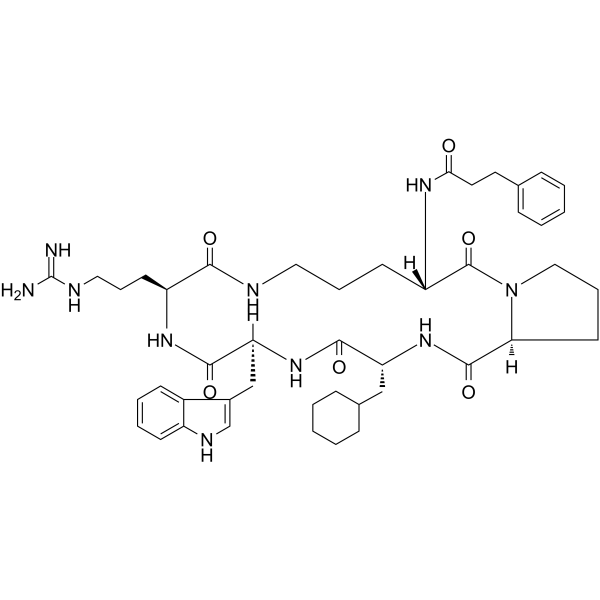
HY-110136
PMX 205Complement System Antagonist -
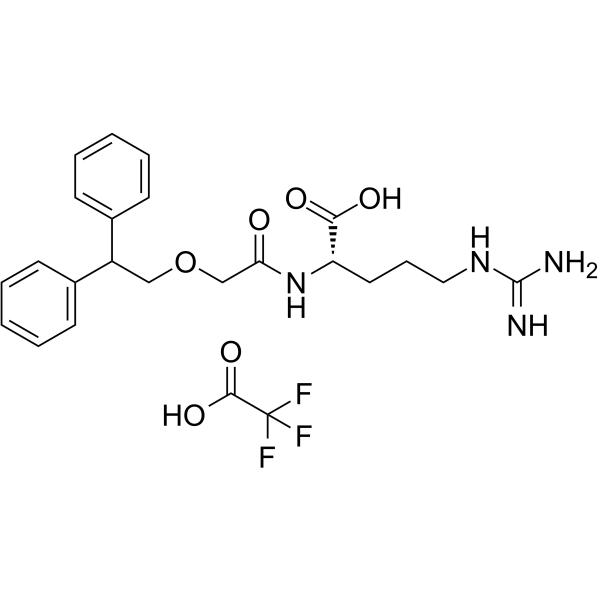
HY-101502A
SB290157 trifluoroacetateC3aR Antagonist -
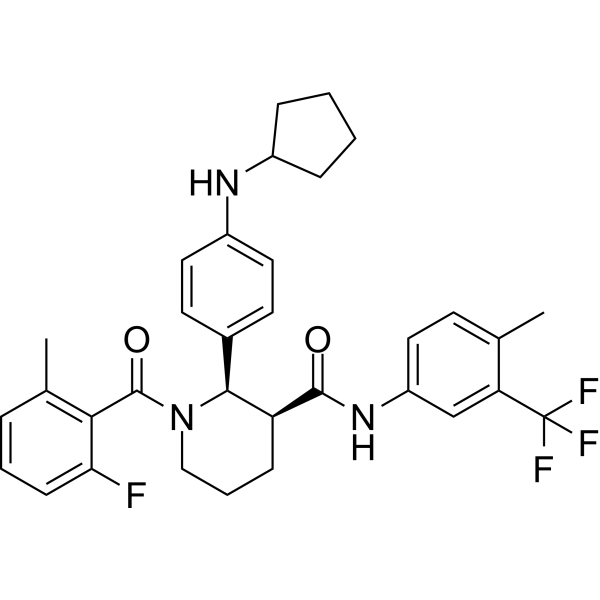
HY-17627
AvacopanC5aR Inhibitor -
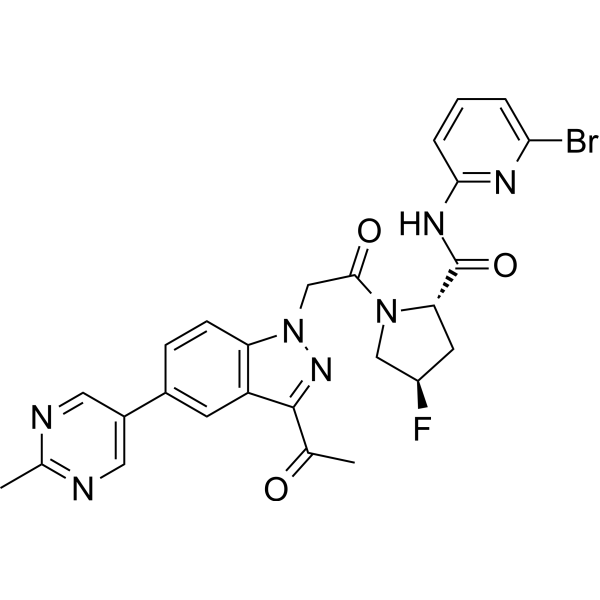
HY-117930
DanicopanFactor D Inhibitor -
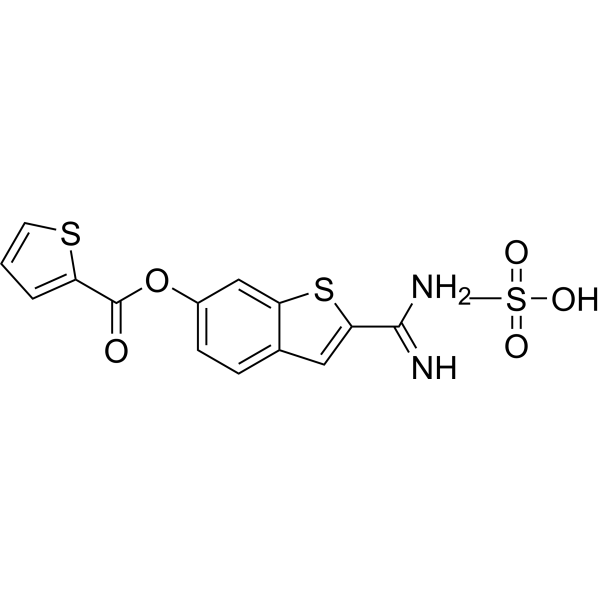
HY-50875
BCX 1470 methanesulfonateFactor D/C1s Inhibitor -
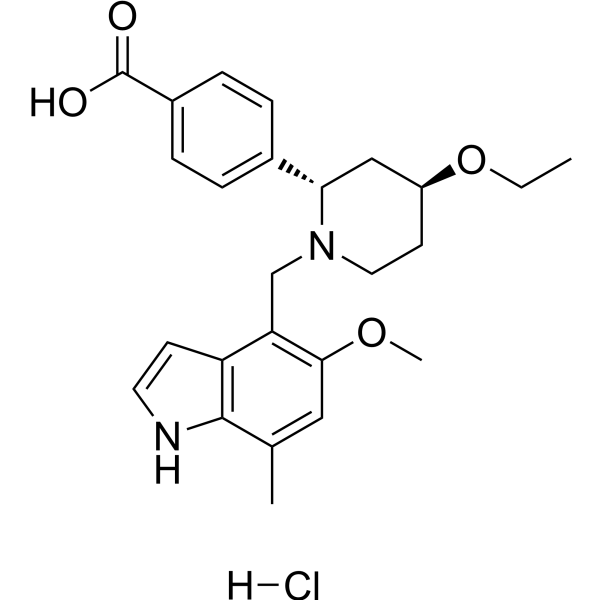
HY-127105A
Iptacopan hydrochlorideFactor B Inhibitor
Publications Citing Use of MedChemExpress (MCE) Vemircopan
More

Biological Activity
Description
IC50 & Target
[4]|
IL-6 |
In Vitro
Vemircopan (10 μM; 24 h) inhibits the activation of CFB and C3 and reduces the expression levels of proinflammatory genes such as MCP1, SDF1, and IL-6 in PH/IPAH fibroblasts[4].
MedChemExpress (MCE) has not independently confirmed the accuracy of these methods. They are for reference only.
-
Cell Line:PH fibroblasts
-
Concentration:10 μM
-
Incubation Time:24 H
-
Result:Reduced the levels of MCP1, SDF1, and IL-6.
Clinical Trial
| NCT Number | Sponsor | Condition | Start Date |
Phase

|
|---|---|---|---|---|
| NCT01329991 | Plexxikon| | 2011-05 | PHASE1 |


Chemical Information
-
CAS No. 2086178-00-7
-
Appearance Solid
-
Molecular Weight 602.48
-
Formula C29H28BrN7O3
-
Color White to off-white
-
SMILES
C[C@]12[C@](C2)([H])N([C@@H](C1)C(NC3=C(C=CC(Br)=N3)C)=O)C(CN4C5=CC=C(C6=CN=C(C)N=C6)C=C5C(C(C)=O)=N4)=O
-
Synonyms
ALXN2050; ACH 0145228; ACH-5228
-
Shipping
Room temperature in continental US; may vary elsewhere.
-
Storage
4°C, sealed storage, away from moisture
* In solvent : -80°C, 6 months; -20°C, 1 month (sealed storage, away from moisture)


Publications (2)
-
Journal Impact Factor
-
Most Recent
-
Blood Adv
Treatment of atypical hemolytic uremic syndrome and C3 glomerulopathy in mice by hepatic expression of factor D. [Abstract]2026 Jan 16:bloodadvances.2025017828. PMID: 41544220 -
JCI Insight
An intracellular complement system drives metabolic and proinflammatory reprogramming of vascular fibroblasts in pulmonary hypertension. [Abstract]2025 Feb 13;10(6):e184141. PMID: 39946184


Solvent & Solubility
In Vitro:
DMSO : 50 mg/mL (82.99 mM; Need ultrasonic; Hygroscopic DMSO has a significant impact on the solubility of product, please use newly opened DMSO)
Please refer to the solubility information to select the appropriate solvent. Once prepared, please aliquot and store the solution to prevent product inactivation from repeated freeze-thaw cycles.
Storage method and period of stock solution: -80°C, 6 months; -20°C, 1 month (sealed storage, away from moisture). When stored at -80°C, please use it within 6 months. When stored at -20°C, please use it within 1 month.
Please refer to the solubility information to select the appropriate solvent. Once prepared, please aliquot and store the solution to prevent product inactivation from repeated freeze-thaw cycles.
Storage method and period of stock solution: -80°C, 6 months; -20°C, 1 month (sealed storage, away from moisture). When stored at -80°C, please use it within 6 months. When stored at -20°C, please use it within 1 month.
Concentration (start) × Volume (start) = Concentration (final) × Volume (final)
In Vivo:
Select the appropriate dissolution method based on your experimental animal and administration route.
- For the following dissolution methods, please ensure to first prepare a clear stock solution using an In Vitro approach and then sequentially add co-solvents:
- To ensure reliable experimental results, the clarified stock solution can be appropriately stored based on storage conditions. As for the working solution for In Vivo experiments, it is recommended to prepare freshly and use it on the same day.
- The percentages shown for the solvents indicate their volumetric ratio in the final prepared solution. If precipitation or phase separation occurs during preparation, heat and/or sonication can be used to aid dissolution.
Add each solvent one by one: 10% DMSO 40% PEG300 5% Tween-80 45% Saline
Solubility: ≥ 1 mg/mL (1.66 mM); Clear solution
This protocol yields a clear solution of ≥ 1 mg/mL (saturation unknown).
Taking 1 mL working solution as an example, add 100 μL DMSO stock solution (10.0 mg/mL) to 400 μL PEG300, and mix evenly; then add 50 μL Tween-80 and mix evenly; then add 450 μL Saline to adjust the volume to 1 mL.
Preparation of Saline: Dissolve 0.9 g sodium chloride in ddH₂O and dilute to 100 mL to obtain a clear Saline solution.
Add each solvent one by one: 10% DMSO 90% (20% SBE-β-CD in Saline)
Solubility: ≥ 1 mg/mL (1.66 mM); Clear solution
This protocol yields a clear solution of ≥ 1 mg/mL (saturation unknown).
Taking 1 mL working solution as an example, add 100 μL DMSO stock solution (10.0 mg/mL) to 900 μL 20% SBE-β-CD in Saline, and mix evenly.
Preparation of 20% SBE-β-CD in Saline (4°C, storage for one week): 2 g SBE-β-CD powder is dissolved in 10 mL Saline, completely dissolve until clear.
In Vivo Dissolution Calculator
Please enter the basic information of animal experiments:
-
-
-
-
Recommended: Prepare an additional quantity of animals to account for potential losses during experiments.
Please enter your animal formula composition:
-
%DMSO +
Recommended: Keep the proportion of DMSO in working solution below 2% if your animal is weak.
-
%+
-
+%Tween-80 + +
-
%Saline +
The co-solvents required include: DMSO, . All of co-solvents are available by MedChemExpress (MCE). , Tween 80. All of co-solvents are available by MedChemExpress (MCE).
Working solution concentration: 0.22 mg/mL
Method for preparing stock solution: mg drug dissolved in μL DMSO. Stock solution concentration: mg/mL. * In solvent : -80°C, 6 months; -20°C, 1 month (sealed storage, away from moisture)
1. Take μL DMSO stock solution;
2. Add μL .
μL , mix evenly;
3. Then add μL Tween 80, mix evenly;
4. Then add μL
Please ensure that the stock solution in the first step is dissolved to a clear state, and add co-solvents in sequence. You can use ultrasonic heating (ultrasonic cleaner, recommended frequency 20-40 kHz), vortexing, etc. to assist dissolution.


Purity & Documentation
-
Data Sheet (277 KB)
-
SDS (252 KB)
- English - EN (252 KB)
- Français - FR (252 KB)
- Deutsch - DE (252 KB)
- Norwegian - NO (252 KB)
- Español - ES (252 KB)
- Swedish - SV (252 KB)
- Italian - IT (252 KB)
- Korean - KR (252 KB)
- Portuguese - PT (252 KB)
-
Handling Instructions (2659 KB)
References
[2]. Peixoto VP, et al. Exploring treatment strategies for paroxysmal nocturnal hemoglobinuria: an overview of registered clinical trials. Curr Med Res Opin. 2024 May 16:1-11. [Content Brief]
[3]. Versino F, et al. Complement inhibition in paroxysmal nocturnal hemoglobinuria: From biology to therapy. Int J Lab Hematol. 2024 May;46 Suppl 1:43-54. [Content Brief]
[4]. Prasad RR, et al. An intracellular complement system drives metabolic and proinflammatory reprogramming of vascular fibroblasts in pulmonary hypertension. JCI Insight. 2025 Feb 13;10(6):e184141. [Content Brief]


Complete Stock Solution Preparation Table
Please refer to the solubility information to select the appropriate solvent. Once prepared, please aliquot and store the solution to prevent product inactivation from repeated freeze-thaw cycles.
Storage method and period of stock solution: -80°C, 6 months; -20°C, 1 month (sealed storage, away from moisture). When stored at -80°C, please use it within 6 months. When stored at -20°C, please use it within 1 month.
| Optional Solvent | Concentration Solvent Mass | 1 mg | 5 mg | 10 mg | 25 mg |
|---|---|---|---|---|---|
| DMSO | 1 mM | 1.6598 mL | 8.2990 mL | 16.5981 mL | 41.4952 mL |
| 5 mM | 0.3320 mL | 1.6598 mL | 3.3196 mL | 8.2990 mL | |
| 10 mM | 0.1660 mL | 0.8299 mL | 1.6598 mL | 4.1495 mL | |
| 15 mM | 0.1107 mL | 0.5533 mL | 1.1065 mL | 2.7663 mL | |
| 20 mM | 0.0830 mL | 0.4150 mL | 0.8299 mL | 2.0748 mL | |
| 25 mM | 0.0664 mL | 0.3320 mL | 0.6639 mL | 1.6598 mL | |
| 30 mM | 0.0553 mL | 0.2766 mL | 0.5533 mL | 1.3832 mL | |
| 40 mM | 0.0415 mL | 0.2075 mL | 0.4150 mL | 1.0374 mL | |
| 50 mM | 0.0332 mL | 0.1660 mL | 0.3320 mL | 0.8299 mL | |
| 60 mM | 0.0277 mL | 0.1383 mL | 0.2766 mL | 0.6916 mL | |
| 80 mM | 0.0207 mL | 0.1037 mL | 0.2075 mL | 0.5187 mL |


Vemircopan Related Classifications
HY-139588 Related Classifications
 Powered by Bioz