



INF39
Based on 11 publication(s) in Google Scholar
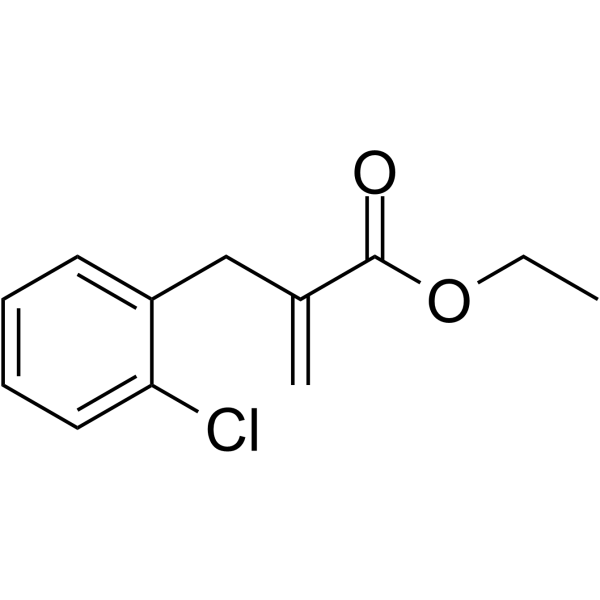
INF39 is an irreversible and noncytotoxic NLRP3 inhibitor.
Nos produits utilisent uniquement pour la recherche. Nous ne vendons pas aux patients.
- Pureté : 99.75%
- CAS No.: 866028-26-4
- Formule: C12H13ClO2
- Masse moléculaire:224.68
-
Stockage:Pure form -20°C, 3 years , 4°C, 2 years ; In solvent -80°C, 6 months , -20°C, 1 month

To place orders, for customer services and technical support, please contact: MedChemExpress USA
Tel: 609-228-6898 E-mail: [email protected] [email protected]


-
 Activité biologique
-
Chemical Information
-
Solvant et solubilité
- Pureté et documentation
- Références
-
 Help & FAQs


-
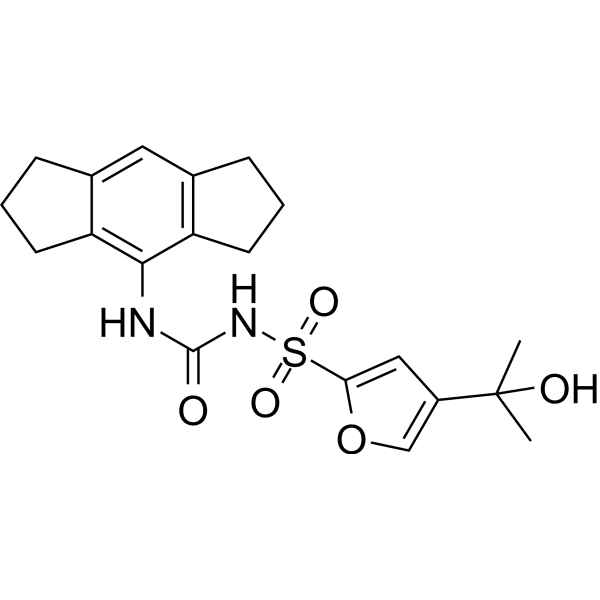
HY-12815
MCC950NLRP3 Inhibitor -
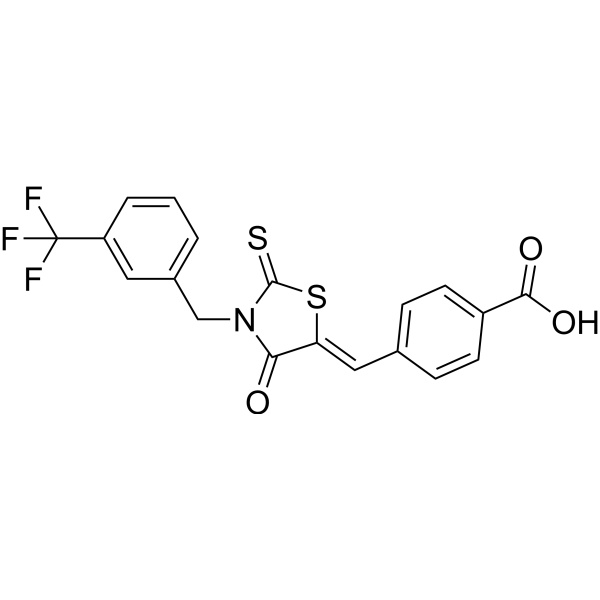
HY-103666
CY-09NLRP3 Inhibitor -
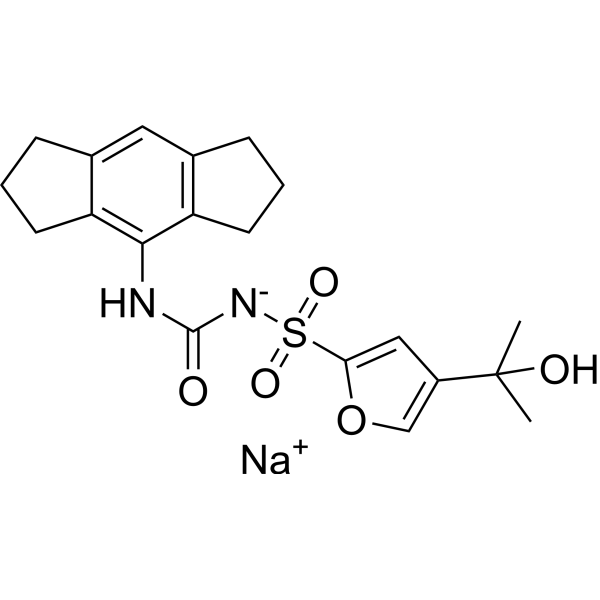
HY-12815A
MCC950 sodiumNLRP3 Inhibitor -
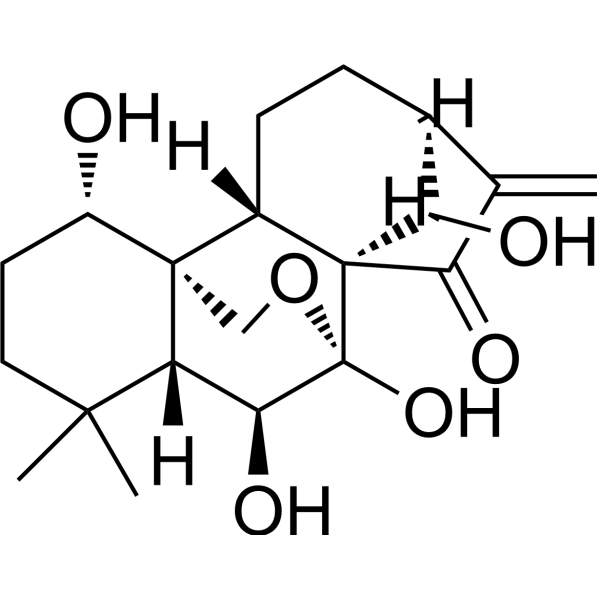
HY-N0004
OridoninBacterial Inhibitor -
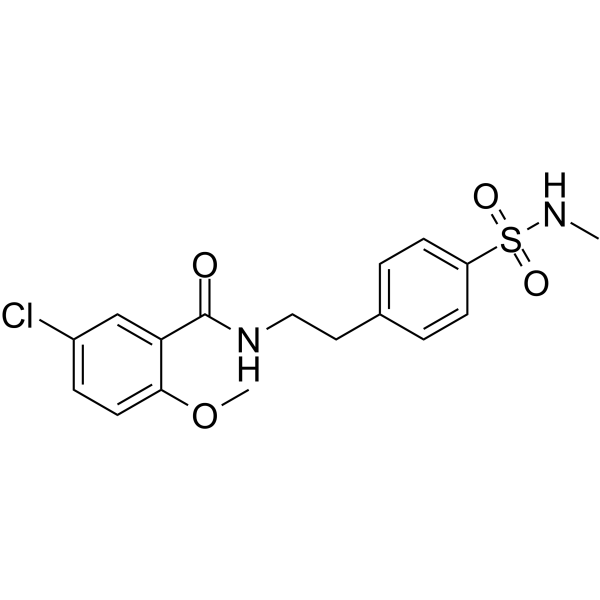
HY-120007
JC124NLRP3 Inhibitor -
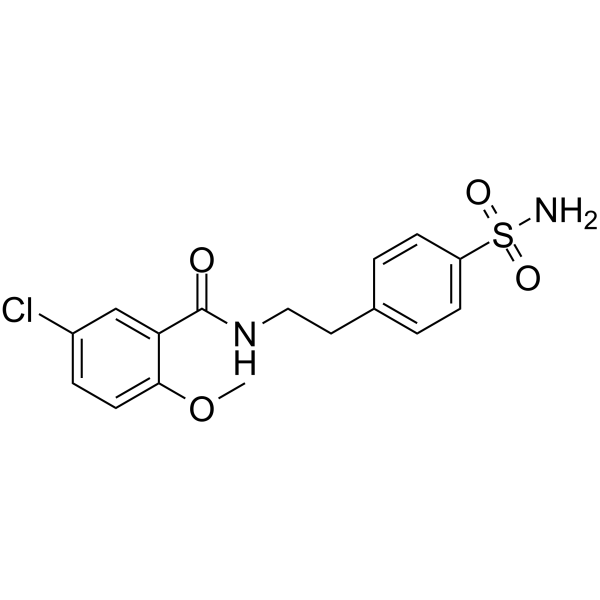
HY-W011082
NLRP3-IN-2NLRP3 Inhibitor -
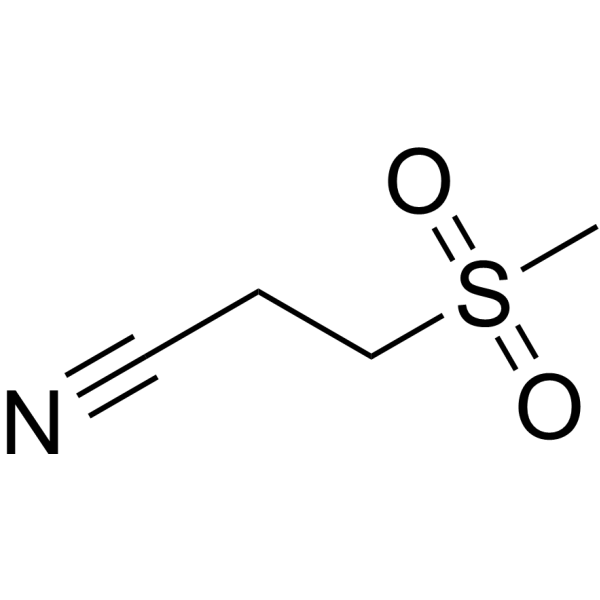
HY-17629
DapansutrileNLRP3 Inhibitor -
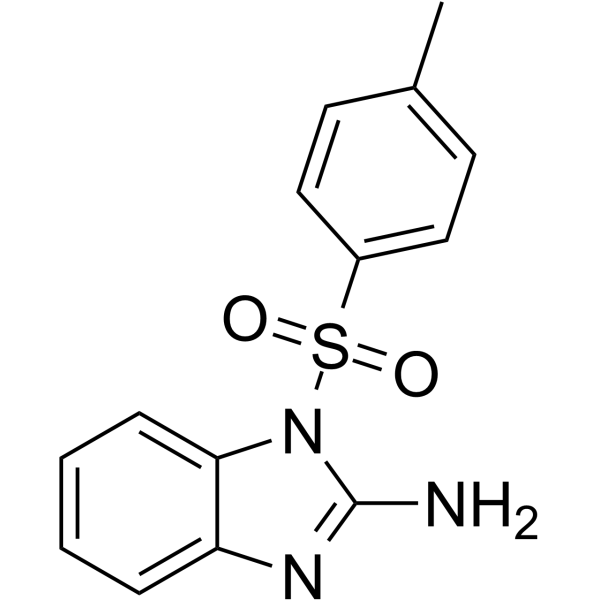
HY-18639
Nodinitib-1NOD-like Receptor (NLR) Inhibitor -
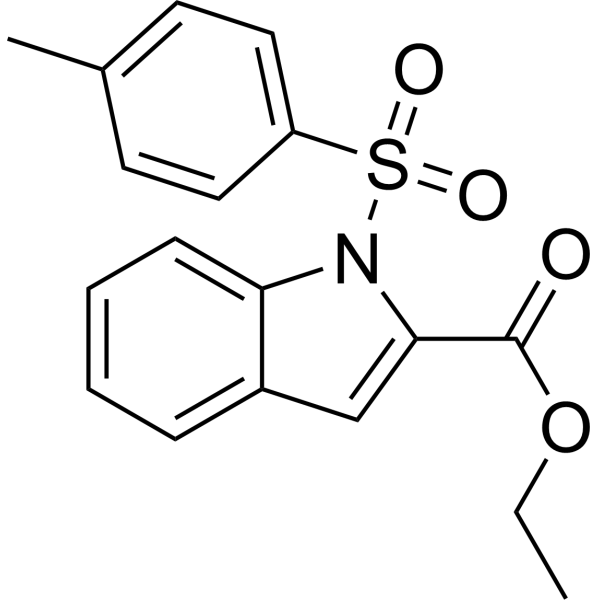
HY-100691
NOD-IN-1NLR Inhibitor -

HY-101868R
INF39 (Standard)Reference Standard -
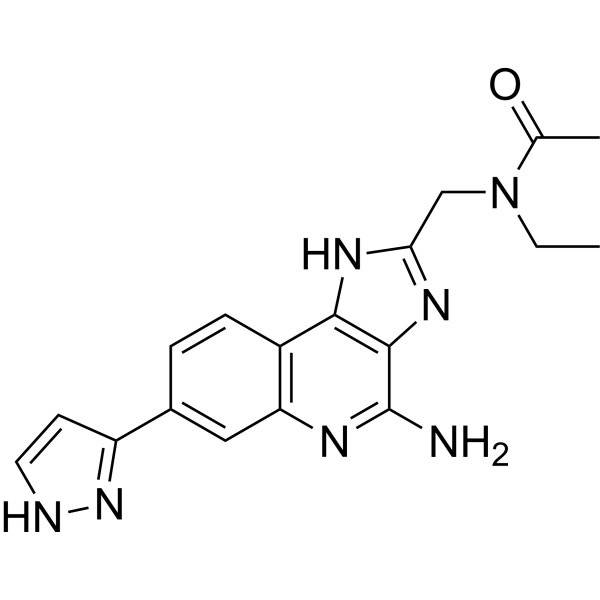
HY-139396
BMS-986299NLRP3 Agonist -
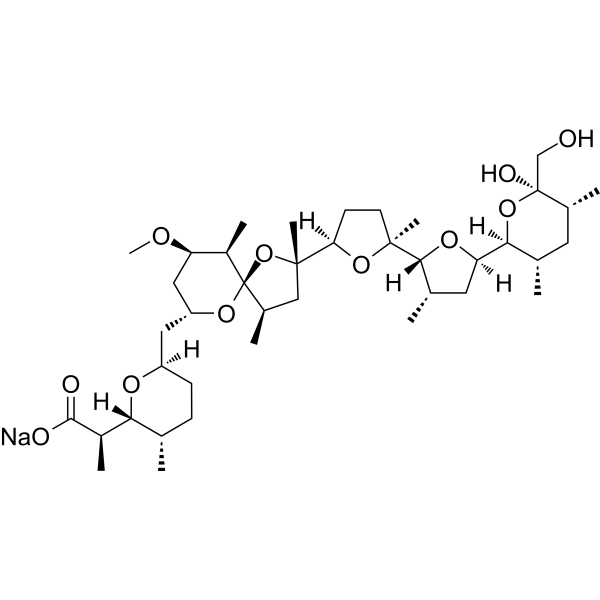
HY-100381
Nigericin sodium saltNLRP3 Activator
Publications Citing Use of MedChemExpress (MCE) INF39
More- Phytomedicine. 2022 Feb:96:153860. [Abstract]
- Am J Chin Med. 2020;48(7):1693-1713. [Abstract]
- Int J Oncol. 2025 Mar;66(3):21. [Abstract]
- Int Immunopharmacol. 2023 Jan:114:109523. [Abstract]
- Int Immunopharmacol. 2022 Sep:110:108910. [Abstract]
- Int Immunopharmacol. 2022 Mar:104:108443. [Abstract]
- Sci Rep. 2025 Apr 11;15(1):12511. [Abstract]
- Immunopharmacol Immunotoxicol. 2024 Oct;46(5):715-726. [Abstract]
- BMC Cardiovasc Disord. 2024 Jan 3;24(1):18. [Abstract]
- Am J Transl Res. 2019 Jul 15;11(7):3992-4009. [Abstract]
- Research Square Preprint. 2020 Nov.


Activité biologique
Description
IC50 & Target
|
NLRP3 |
In Vitro
INF39 is able to significantly inhibit ATP- and nigericin-induced IL-1β release at 10 μM. INF39 reduces caspase-1 activation and pyroptosis in the macrophages. INF39 can block not only NLRP3 activation but also the NF-κB pathway. INF39 potentially reacts with Cys-SH residues in the active site of cysteine protease caspase-1, but does not directly target caspase-1 activity. INF39 is able to reduce the steady state (or basal) BRET signal of NLRP3 without affecting the viability of cells, meaning that it can interfere with the basal NLRP3 conformation. INF39 does not block the initial conformational changes suffered by NLRP3 upon sensing the decrease of intracellular K+; however, it affects a second step of NLRP3 conformational change that could be related with the ATPase activity of the receptor and be independent of the decrease of intracellular K+. INF39 reaches the intestinal epithelium without undergoing chemical modifications. After absorption into epithelial cells, it is likely to act locally at the mucosal epithelial level[1].
MedChemExpress (MCE) has not independently confirmed the accuracy of these methods. They are for reference only. .
In Vivo
MedChemExpress (MCE) has not independently confirmed the accuracy of these methods. They are for reference only.


Chemical Information
-
CAS No. 866028-26-4
-
Appearance Liquid (Density: 1.131±0.06 g/cm3)
-
Masse moléculaire 224.68
-
Formule C12H13ClO2
-
Color Colorless to light yellow
-
SMILES
O=C(OCC)C(CC1=CC=CC=C1Cl)=C
-
Livraison
Room temperature in continental US; may vary elsewhere.
-
Stockage
Pure form -20°C 3 years 4°C 2 years In solvent -80°C 6 months -20°C 1 month


Publications (11)
-
Journal Impact Factor
-
Most Recent
-
Phytomedicine
Tetramethylpyrazine alleviates diabetes-induced high platelet response and endothelial adhesion via inhibiting NLRP3 inflammasome activation. [Abstract]2022 Feb:96:153860. PMID: 34836743 -
Am J Chin Med
Using Network Pharmacology for Systematic Understanding of Geniposide in Ameliorating Inflammatory Responses in Colitis Through Suppression of NLRP3 Inflammasome in Macrophage by AMPK/Sirt1 Dependent Signaling. [Abstract]2020;48(7):1693-1713. PMID: 33202149 -
Int J Oncol
Curcumin inhibits the activity of ubiquitin ligase Smurf2 to promote NLRP3‑dependent pyroptosis in non‑small cell lung cancer cells. [Abstract]2025 Mar;66(3):21. PMID: 39950328 -
Int Immunopharmacol
Trophoblastic mitochondrial DNA induces endothelial dysfunction and NLRP3 inflammasome activation: Implications for preeclampsia. [Abstract]2023 Jan:114:109523. PMID: 36508916 -
Int Immunopharmacol
Mesenchymal stem cells-derived extracellular vesicles-shuttled microRNA-223-3p suppress lipopolysaccharide-induced cardiac inflammation, pyroptosis, and dysfunction. [Abstract]2022 Sep:110:108910. PMID: 35978499 -
Int Immunopharmacol
Down-regulation of TRPM2 attenuates hepatic ischemia/reperfusion injury through activation of autophagy and inhibition of NLRP3 inflammasome pathway. [Abstract]2022 Mar:104:108443. PMID: 35021129 -
Sci Rep
SLC26A4 regulates autophagy and activates the NLRP3 inflammasome to mediate pathological cardiac hypertrophy. [Abstract]2025 Apr 11;15(1):12511. PMID: 40216960 -
Immunopharmacol Immunotoxicol
Ginseng polysaccharide promotes the apoptosis of colon cancer cells via activating the NLRP3 inflammasome. [Abstract]2024 Oct;46(5):715-726. PMID: 39219032 -
BMC Cardiovasc Disord
The molecular mechanism of MiR-26a-5p regulates autophagy and activates NLRP3 inflammasome to mediate cardiomyocyte hypertrophy. [Abstract]2024 Jan 3;24(1):18. PMID: 38172711 -
Am J Transl Res
Systematic understanding of the mechanism and effects of Arctigenin attenuates inflammation in dextran sulfate sodium-induced acute colitis through suppression of NLRP3 inflammasome by SIRT1. [Abstract]2019 Jul 15;11(7):3992-4009. PMID: 31396314 -


Solvant et solubilité
In Vitro:
DMSO : 100 mg/mL (445.08 mM; Need ultrasonic; Hygroscopic DMSO has a significant impact on the solubility of product, please use newly opened DMSO)
Please refer to the solubility information to select the appropriate solvent. Once prepared, please aliquot and store the solution to prevent product inactivation from repeated freeze-thaw cycles.
Storage method and period of stock solution: -80°C, 6 months; -20°C, 1 month. When stored at -80°C, please use it within 6 months. When stored at -20°C, please use it within 1 month.
Please refer to the solubility information to select the appropriate solvent. Once prepared, please aliquot and store the solution to prevent product inactivation from repeated freeze-thaw cycles.
Storage method and period of stock solution: -80°C, 6 months; -20°C, 1 month. When stored at -80°C, please use it within 6 months. When stored at -20°C, please use it within 1 month.
Concentration (start) × Volume (start) = Concentration (final) × Volume (final)
In Vivo:
Select the appropriate dissolution method based on your experimental animal and administration route.
- For the following dissolution methods, please ensure to first prepare a clear stock solution using an In Vitro approach and then sequentially add co-solvents:
- To ensure reliable experimental results, the clarified stock solution can be appropriately stored based on storage conditions. As for the working solution for In Vivo experiments, it is recommended to prepare freshly and use it on the same day.
- The percentages shown for the solvents indicate their volumetric ratio in the final prepared solution. If precipitation or phase separation occurs during preparation, heat and/or sonication can be used to aid dissolution.
Add each solvent one by one: 10% DMSO 40% PEG300 5% Tween-80 45% Saline
Solubility: ≥ 2.5 mg/mL (11.13 mM); Clear solution
This protocol yields a clear solution of ≥ 2.5 mg/mL (saturation unknown).
Taking 1 mL working solution as an example, add 100 μL DMSO stock solution (25.0 mg/mL) to 400 μL PEG300, and mix evenly; then add 50 μL Tween-80 and mix evenly; then add 450 μL Saline to adjust the volume to 1 mL.
Preparation of Saline: Dissolve 0.9 g sodium chloride in ddH₂O and dilute to 100 mL to obtain a clear Saline solution.
Add each solvent one by one: 10% DMSO 90% (20% SBE-β-CD in Saline)
Solubility: ≥ 2.5 mg/mL (11.13 mM); Clear solution
This protocol yields a clear solution of ≥ 2.5 mg/mL (saturation unknown).
Taking 1 mL working solution as an example, add 100 μL DMSO stock solution (25.0 mg/mL) to 900 μL 20% SBE-β-CD in Saline, and mix evenly.
Preparation of 20% SBE-β-CD in Saline (4°C, storage for one week): 2 g SBE-β-CD powder is dissolved in 10 mL Saline, completely dissolve until clear.
In Vivo Dissolution Calculator
Please enter the basic information of animal experiments:
-
-
-
-
Recommended: Prepare an additional quantity of animals to account for potential losses during experiments.
Please enter your animal formula composition:
-
%DMSO +
Recommended: Keep the proportion of DMSO in working solution below 2% if your animal is weak.
-
%+
-
+%Tween-80 + +
-
%Saline +
The co-solvents required include: DMSO, . All of co-solvents are available by MedChemExpress (MCE). , Tween 80. All of co-solvents are available by MedChemExpress (MCE).
Working solution concentration: 0.22 mg/mL
Method for preparing stock solution: mg drug dissolved in μL DMSO. Stock solution concentration: mg/mL.
1. Take μL DMSO stock solution;
2. Add μL .
μL , mix evenly;
3. Then add μL Tween 80, mix evenly;
4. Then add μL
Please ensure that the stock solution in the first step is dissolved to a clear state, and add co-solvents in sequence. You can use ultrasonic heating (ultrasonic cleaner, recommended frequency 20-40 kHz), vortexing, etc. to assist dissolution.


Pureté et documentation
-
Fiche technique (277 KB)
-
SDS (393 KB)
- English - EN (393 KB)
- Français - FR (393 KB)
- Deutsch - DE (393 KB)
- Norwegian - NO (393 KB)
- Español - ES (393 KB)
- Swedish - SV (393 KB)
- Italian - IT (393 KB)
- Korean - KR (393 KB)
- Portuguese - PT (393 KB)
-
Instruction de manipulation (2659 KB)
Références


Complete Stock Solution Preparation Table
Please refer to the solubility information to select the appropriate solvent. Once prepared, please aliquot and store the solution to prevent product inactivation from repeated freeze-thaw cycles.
Storage method and period of stock solution: -80°C, 6 months; -20°C, 1 month. When stored at -80°C, please use it within 6 months. When stored at -20°C, please use it within 1 month.
| Optional Solvent | Concentration Solvent Mass | 1 mg | 5 mg | 10 mg | 25 mg |
|---|---|---|---|---|---|
| DMSO | 1 mM | 4.4508 mL | 22.2539 mL | 44.5077 mL | 111.2694 mL |
| 5 mM | 0.8902 mL | 4.4508 mL | 8.9015 mL | 22.2539 mL | |
| 10 mM | 0.4451 mL | 2.2254 mL | 4.4508 mL | 11.1269 mL | |
| 15 mM | 0.2967 mL | 1.4836 mL | 2.9672 mL | 7.4180 mL | |
| 20 mM | 0.2225 mL | 1.1127 mL | 2.2254 mL | 5.5635 mL | |
| 25 mM | 0.1780 mL | 0.8902 mL | 1.7803 mL | 4.4508 mL | |
| 30 mM | 0.1484 mL | 0.7418 mL | 1.4836 mL | 3.7090 mL | |
| 40 mM | 0.1113 mL | 0.5563 mL | 1.1127 mL | 2.7817 mL | |
| 50 mM | 0.0890 mL | 0.4451 mL | 0.8902 mL | 2.2254 mL | |
| 60 mM | 0.0742 mL | 0.3709 mL | 0.7418 mL | 1.8545 mL | |
| 80 mM | 0.0556 mL | 0.2782 mL | 0.5563 mL | 1.3909 mL | |
| 100 mM | 0.0445 mL | 0.2225 mL | 0.4451 mL | 1.1127 mL |


INF39 Related Classifications
HY-101868 Related Classifications
 Powered by Bioz