



Lecithin
Based on 10 publication(s) in Google Scholar
Lecithin is regarded as a safe, conventional phospholipid source. Phospholipids are reported to alter the fatty acid composition and microstructure of the membranes in animal cells.
Nos produits utilisent uniquement pour la recherche. Nous ne vendons pas aux patients.
- Pureté : 98.0%
- CAS No.: 8002-43-5
-
Stockage:Powder -20°C, 3 years , 4°C, 2 years ; In solvent -80°C, 6 months , -20°C, 1 month

To place orders, for customer services and technical support, please contact: MedChemExpress USA
Tel: 609-228-6898 E-mail: [email protected] [email protected]


-
 Activité biologique
-
Chemical Information
-
Solvant et solubilité
- Pureté et documentation
- Références
-
 Help & FAQs


-
HY-N0322
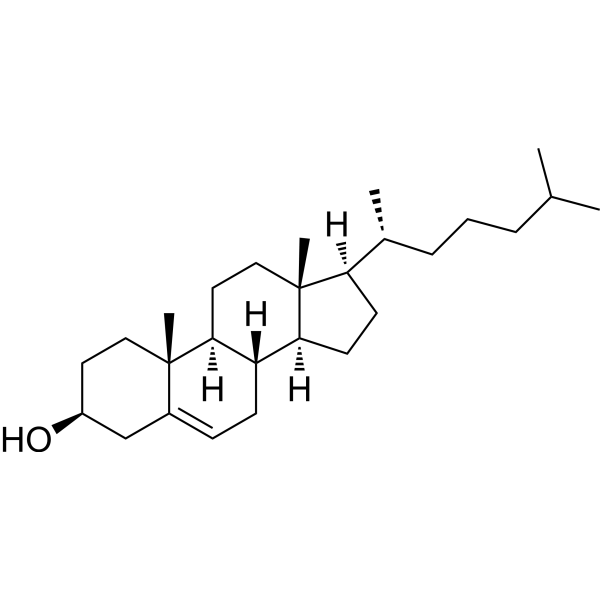
Cholesterol (from animal)ERRα Agonist -

HY-B2235C
L-α-Lecithin (soybean)Lutein Bioavailability Enhancer -
HY-N0729
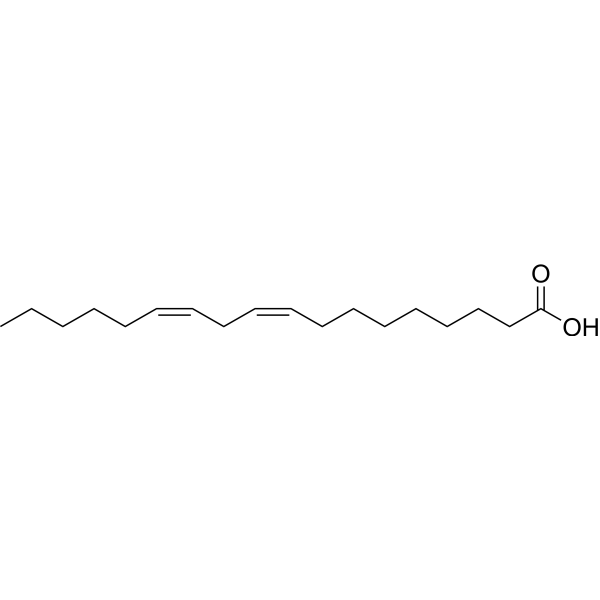
Linoleic acidHuman Endogenous Metabolite -

HY-B2235B
L-α-Lecithin (egg yolk, Type XVI-E), 99%Biochemical Reagent -

HY-B2235A
L-α-Lecithin (egg yolk), 75%Biochemical Reagent -
HY-139414
LysophosphatidylcholinesHemolytic Agent -
HY-113498
SphingomyelinEndogenous Metabolite -
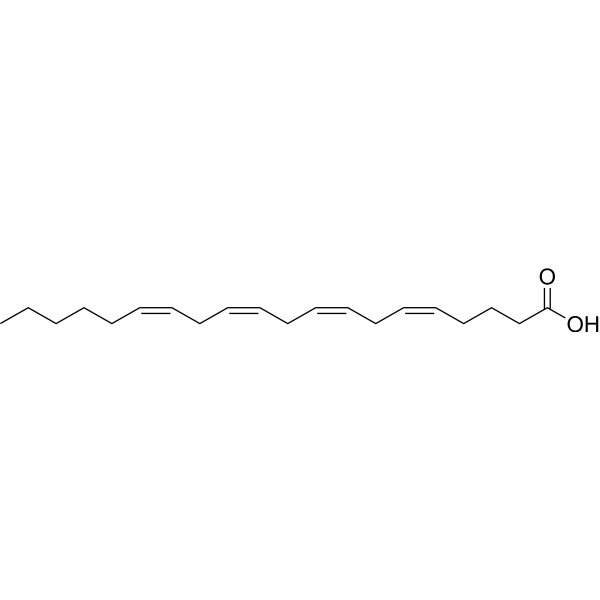
HY-109590
Arachidonic acidPolyunsaturated Fatty Acid -
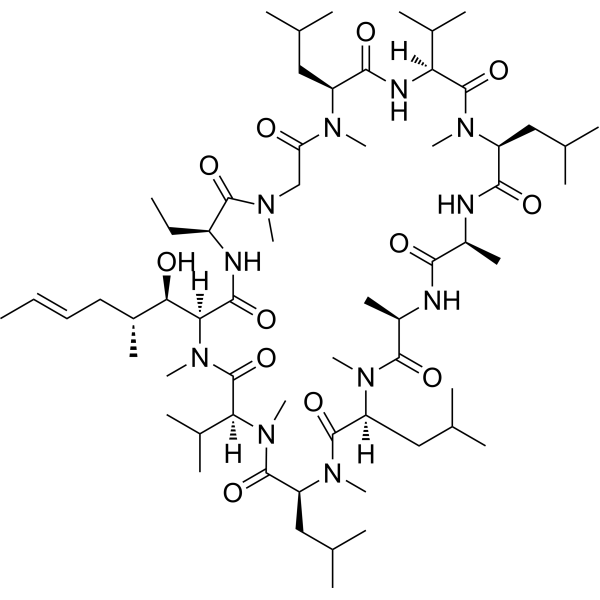
HY-B0579
Cyclosporin ACalcineurin Inhibitor -
HY-125854
Phosphatidylcholines, eggPhosphatidylcholine -
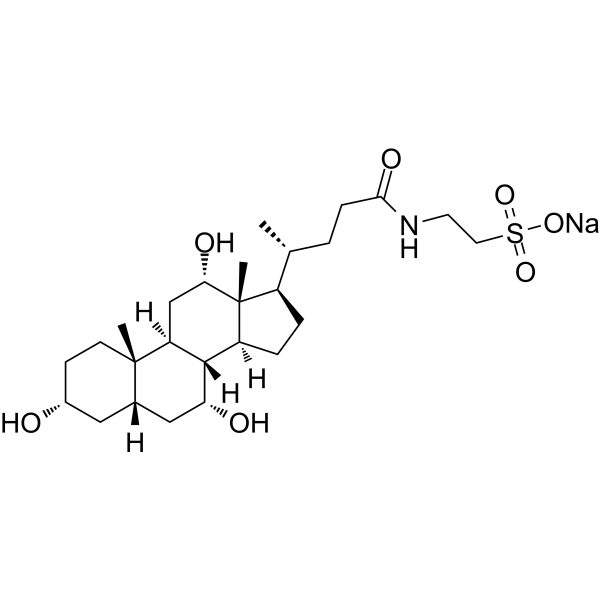
HY-N0545
Taurocholic acid sodiumImmunoregulation Agent -
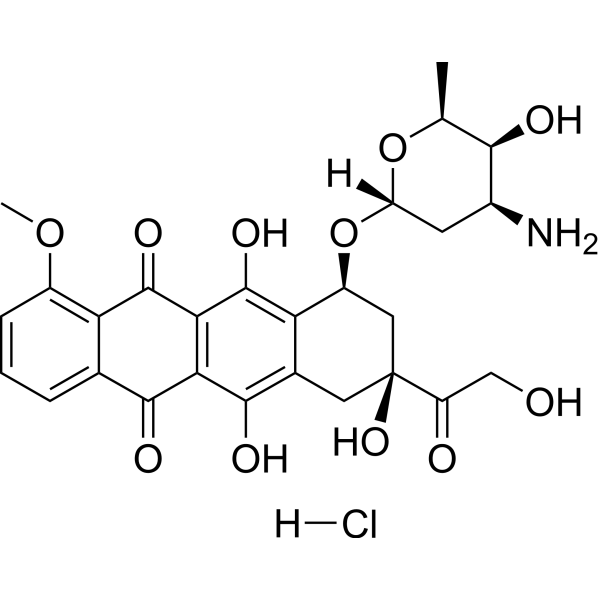
HY-15142
Doxorubicin hydrochlorideTopoisomerase Inhibitor
Publications Citing Use of MedChemExpress (MCE) Lecithin
More- Bioact Mater. 2025 Nov 14:57:305-322. [Abstract]
- Nat Microbiol. 2025 Nov;10(11):2949-2965. [Abstract]
- Autophagy. 2025 Dec;21(12):2730-2749. [Abstract]
- Adv Sci (Weinh). 2025 Nov 14:e17330. [Abstract]
- Adv Sci (Weinh). 2024 Mar;11(12):e2307870. [Abstract]
- Adv Healthc Mater. 2026 Jun;15(22):e05818. [Abstract]
- Biomater Res. 2022 Sep 22;26(1):47. [Abstract]
- Nano Res. 2026 Jul 8.
- J Funct Foods. 2024 Feb, 113, 106041.
- Authorea. 2023 Jul 18.
 Customer Validation & Images

-
Cell Proliferation/Viability Assay
-
In Vivo Efficacy Study
-
In Vivo Efficacy Study
Voir tous les produits spécifiques à Isoform Endogenous Metabolite
More

Activité biologique
Description
IC50 & Target
|
Microbial Metabolite |
Human Endogenous Metabolite |
In Vitro
After culturing in MRS broth with 0.2 to 1.0% soy Lecithin, the survival rate of harvested cells increases significantly (P<0.05) in the 0.3% bile challenge compare with the no added soy Lecithin group. The cells incubated with 0.6% soy Lecithin are able to grow in an MRS broth with a higher bile salt content. The cell surface hydrophobicity is enhanced and the membrane integrity in the bile challenge increases after culturing with soy Lecithin. A shift in the fatty acid composition is also observed, illustrating the cell membrane changes in the soy Lecithin culture[1].
MedChemExpress (MCE) has not independently confirmed the accuracy of these methods. They are for reference only.
Essai clinique
| NCT Number | Sponsor | Condition | Start Date |
Phase

|
|---|---|---|---|---|
| NCT01329991 | 2011-05 | PHASE1 |


Chemical Information
-
CAS No. 8002-43-5
-
Appearance Solid
-
Color Light brown to yellow
-
SMILES
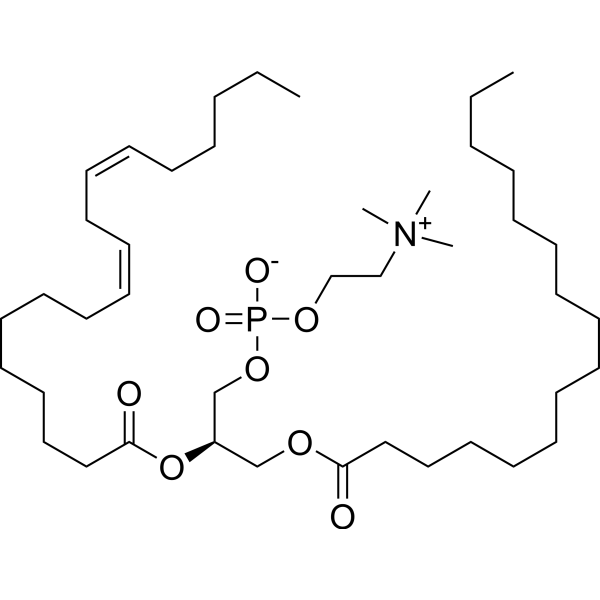
O=P(OCC[N+](C)(C)C)([O-])OC[C@@H](COC([R])=O)OC([R'])=O.[R,R'=fatty acid residues]
-
Synonyms
Polyene phosphatidylcholine
-
Structure Classification
-
Livraison
Room temperature in continental US; may vary elsewhere.
-
Stockage
Powder -20°C 3 years 4°C 2 years In solvent -80°C 6 months -20°C 1 month


Publications (10)
-
Journal Impact Factor
-
Most Recent
-
Bioact Mater
Cell-penetrating peptide-functionalized biomimetic nanovesicles for efficient cataract treatment via enhanced corneal penetration and lens-mitochondria dual targeting. [Abstract]2025 Nov 14:57:305-322. PMID: 41323208 -
Nat Microbiol
Mycobacterium tuberculosis-derived linoleic acid increases regulatory T cell function to promote bacterial survival within macrophages. [Abstract]2025 Nov;10(11):2949-2965. PMID: 41073667 -
Autophagy
2025 Dec;21(12):2730-2749. PMID: 40568844 -
Adv Sci (Weinh)
Obesity-Associated TRIM15 Promotes the Proliferation of Esophageal Adenocarcinoma Through the YY2/FOXRED1 Axis. [Abstract]2025 Nov 14:e17330. PMID: 41237333
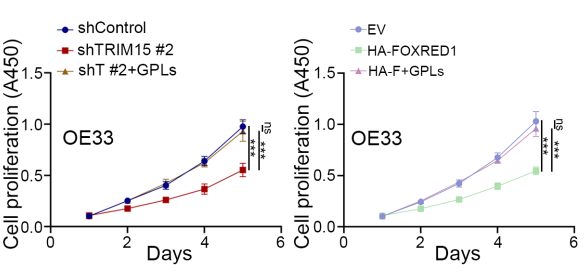
Lecithin purchased from MedChemExpress. Usage Cited in: Adv Sci (Weinh). 2025 Nov 14:e17330. [Abstract]
Addition of GPLs (PCs, PEs, LysoPCs, and LysoPAs; each at 10 µg/mL) to EAC cells for 5 days attenuated the inhibitory effect of TRIM15 knockdown or FOXRED1 overexpression on cell proliferation.
-
Adv Sci (Weinh)
Enhanced Photodynamic Therapy Synergizing with Inhibition of Tumor Neutrophil Ferroptosis Boosts Anti-PD-1 Therapy of Gastric Cancer. [Abstract]2024 Mar;11(12):e2307870. PMID: 38233204 -
Adv Healthc Mater
Liposomal Quercetin-Loaded Biomimetic Scaffolds Manage Mechanical Overload in Maxillofacial Regeneration by Stabilizing the β-Actin/YAP Mechanosensing Axis. [Abstract]2026 Jun;15(22):e05818. PMID: 42027072 -
Biomater Res
Oxygen tank for synergistic hypoxia relief to enhance mitochondria-targeted photodynamic therapy. [Abstract]2022 Sep 22;26(1):47. PMID: 36138489 -
-
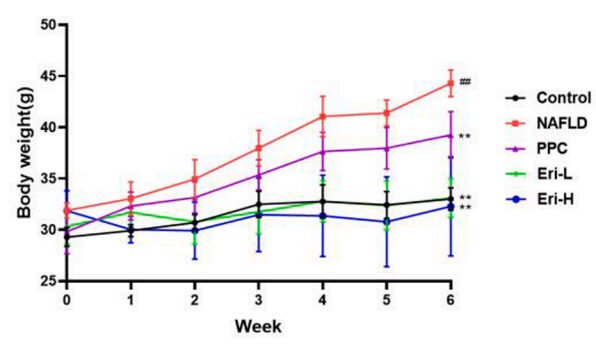
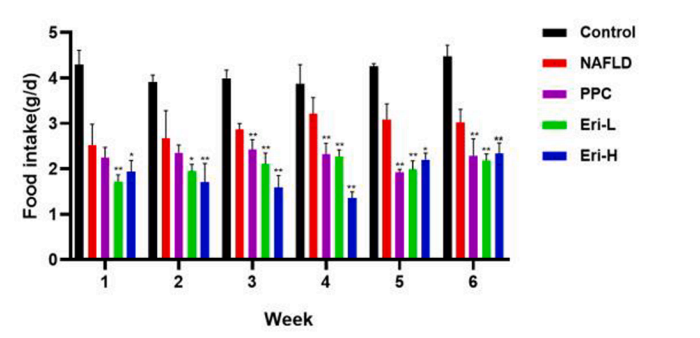
Lecithin purchased from MedChemExpress. Usage Cited in: J Funct Foods. 2024 Feb, 113, 106041.
We measured the body weight of mice weekly and the food intake daily for each group. Compared with the control group, the body weight in NAFLD group was obviously increased after 8 and 10 weeks of HFD. However, after 4 weeks of treatment with Eri, the body weight of mice in the Eri-L and Eri-H groups exhibited a significant reduction; however, no notable decrease was observed in the Lecithin (PPC, 150 mg/kg, oral, daily) group. After 6 weeks of Lecithin and Eri treatment, the body weight of mice in the Lecithin, Eri-L, and Eri-H groups was significantly lower than that of mice in the NAFLD group.
Lecithin purchased from MedChemExpress. Usage Cited in: J Funct Foods. 2024 Feb, 113, 106041.
Compared with that in the NAFLD group, after 4 or 6 weeks of Eri intervention, the food intake in the Lecithin (PPC, 150 mg/kg, oral, daily), Eri-L and Eri-H groups was significantly decreased.
-


Solvant et solubilité
In Vitro:
Ethanol : < 1 mg/mL (insoluble)
In Vivo:
Select the appropriate dissolution method based on your experimental animal and administration route.
- For the following dissolution methods, please ensure to first prepare a clear stock solution using an In Vitro approach and then sequentially add co-solvents:
- To ensure reliable experimental results, the clarified stock solution can be appropriately stored based on storage conditions. As for the working solution for In Vivo experiments, it is recommended to prepare freshly and use it on the same day.
- The percentages shown for the solvents indicate their volumetric ratio in the final prepared solution. If precipitation or phase separation occurs during preparation, heat and/or sonication can be used to aid dissolution.
Add each solvent one by one: 10% DMSO 40% PEG300 5% Tween-80 45% Saline
Solubility: ≥ 0.5 mg/mL; Clear solution
This protocol yields a clear solution of ≥ 0.5 mg/mL (saturation unknown).
Taking 1 mL working solution as an example, add 100 μL DMSO stock solution (5.0 mg/mL) to 400 μL PEG300, and mix evenly; then add 50 μL Tween-80 and mix evenly; then add 450 μL Saline to adjust the volume to 1 mL.
Preparation of Saline: Dissolve 0.9 g sodium chloride in ddH₂O and dilute to 100 mL to obtain a clear Saline solution.
Add each solvent one by one: 10% DMSO 90% (20% SBE-β-CD in Saline)
Solubility: ≥ 0.5 mg/mL; Clear solution
This protocol yields a clear solution of ≥ 0.5 mg/mL (saturation unknown).
Taking 1 mL working solution as an example, add 100 μL DMSO stock solution (5.0 mg/mL) to 900 μL 20% SBE-β-CD in Saline, and mix evenly.
Preparation of 20% SBE-β-CD in Saline (4°C, storage for one week): 2 g SBE-β-CD powder is dissolved in 10 mL Saline, completely dissolve until clear.
In Vivo Dissolution Calculator
Please enter the basic information of animal experiments:
-
-
-
-
Recommended: Prepare an additional quantity of animals to account for potential losses during experiments.
Working solution concentration: 0.22 mg/mL


Pureté et documentation
-
Fiche technique (295 KB)
-
SDS (647 KB)
- English - EN (647 KB)
- Français - FR (647 KB)
- Deutsch - DE (647 KB)
- Norwegian - NO (647 KB)
- Español - ES (647 KB)
- Swedish - SV (647 KB)
- Italian - IT (647 KB)
- Korean - KR (647 KB)
- Portuguese - PT (647 KB)
-
Instruction de manipulation (2659 KB)
Références

Calculators
Concentration (start) × Volume (start) = Concentration (final) × Volume (final)


Lecithin Related Classifications
HY-B2235 Related Classifications
 Powered by Bioz