



Valiltramiprosate
Based on 1 publication(s) in Google Scholar
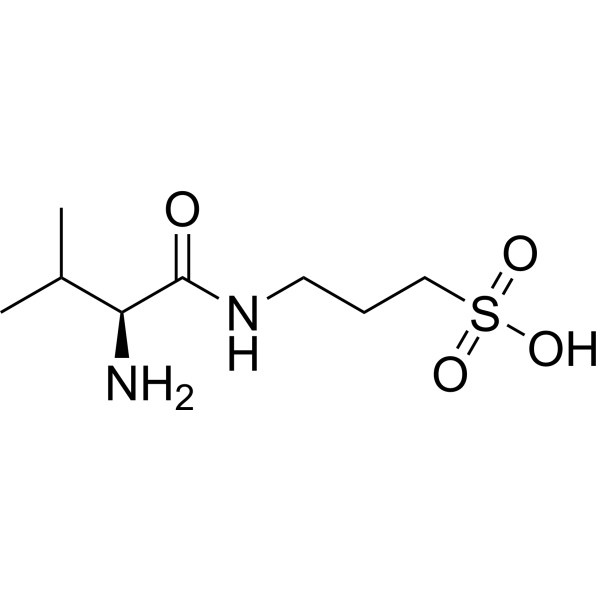
ALZ-801 is a potent and orally available small-molecule β-amyloid (Aβ) anti-oligomer and aggregation inhibitor, valine-conjugated proagent of Tramiprosate with substantially improved PK properties and gastrointestinal tolerability compared with the parent compound. ALZ-801 is an advanced and markedly improved candidate for the treatment of alzheimer’s disease.
Nos produits utilisent uniquement pour la recherche. Nous ne vendons pas aux patients.
- Pureté : 98.83%
- CAS No.: 1034190-08-3
- Formule: C8H18N2O4S
- Masse moléculaire:238.30
-
Stockage:
4°C, sealed storage, away from moisture
* In solvent : -80°C, 6 months; -20°C, 1 month (sealed storage, away from moisture)

To place orders, for customer services and technical support, please contact: MedChemExpress USA
Tel: 609-228-6898 E-mail: [email protected] [email protected]


-
 Activité biologique
-
Chemical Information
-
Solvant et solubilité
- Protocole
- Pureté et documentation
- Références
-
 Help & FAQs


-

HY-14503
MDR-1339Amyloid-β Inhibitor -
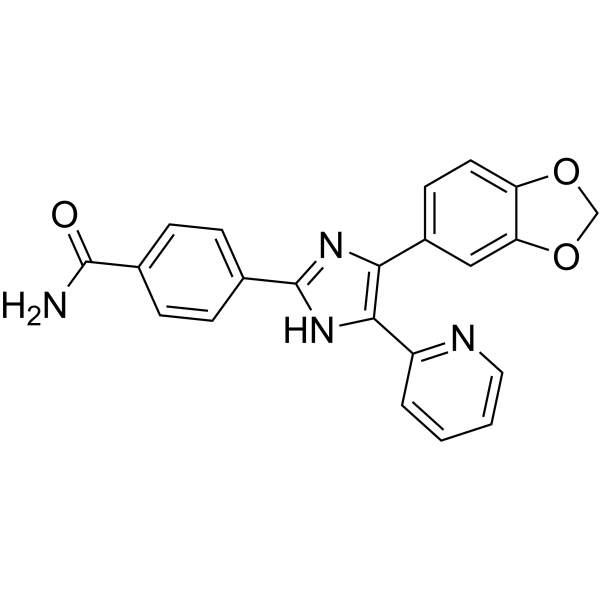
HY-10431
SB-431542TGF-β Receptor Kinase Inhibitor -
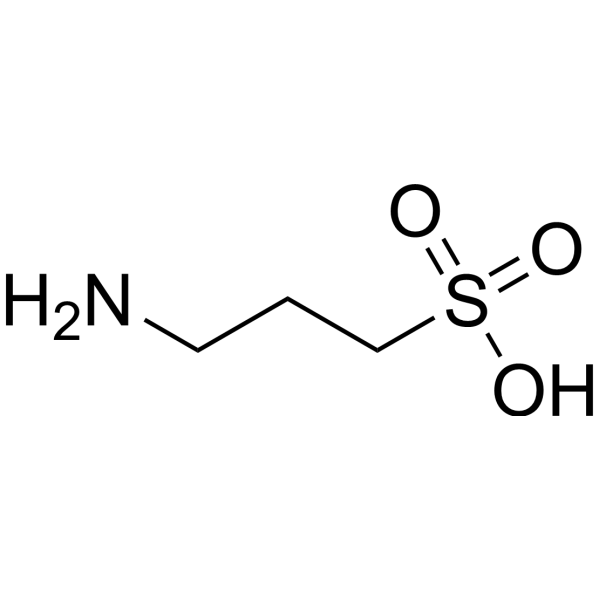
HY-14602
TramiprosateNeuroprotection Agent -
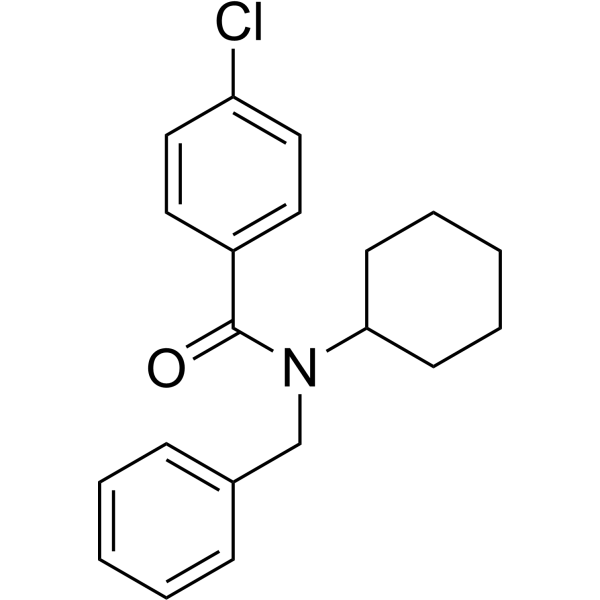
HY-19370
FPS-ZM1Amyloid-β Inhibitor -
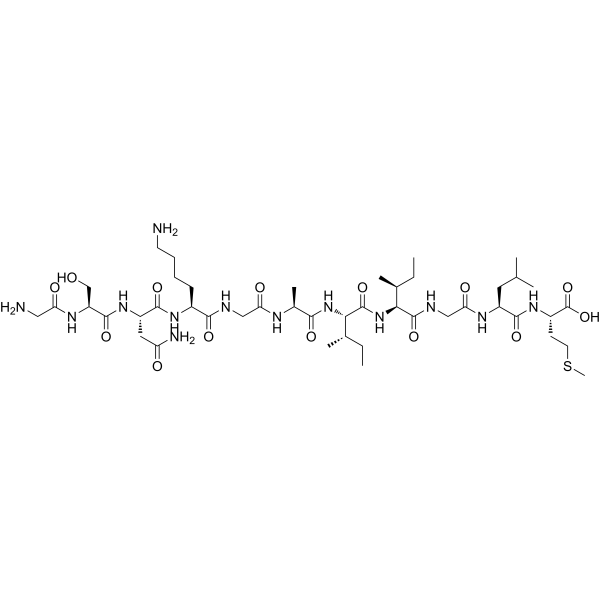
HY-P0128
β-Amyloid (25-35)Amyloid β Peptide -
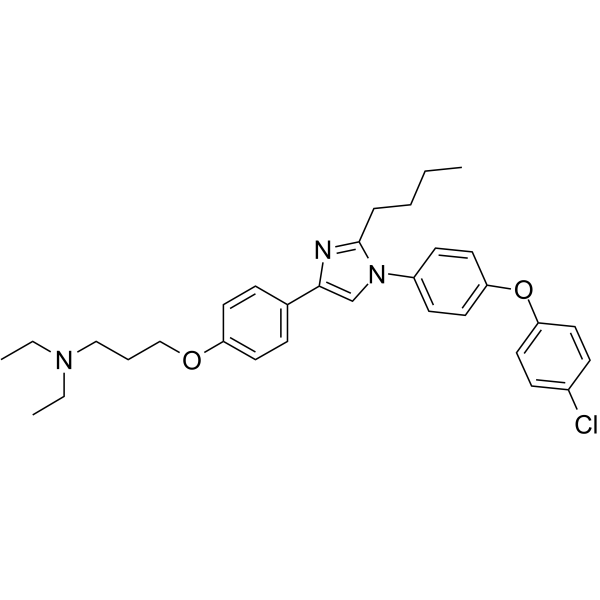
HY-50682
AzeliragonRAGE Inhibitor -
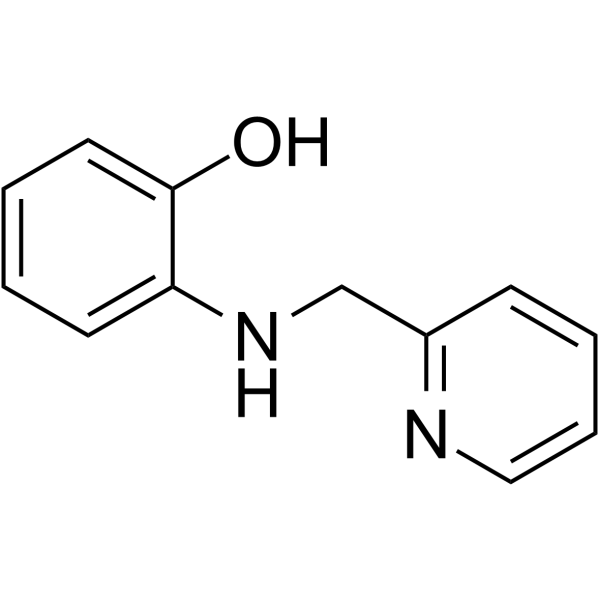
HY-18292
ARN2966APP Translation Modulator -
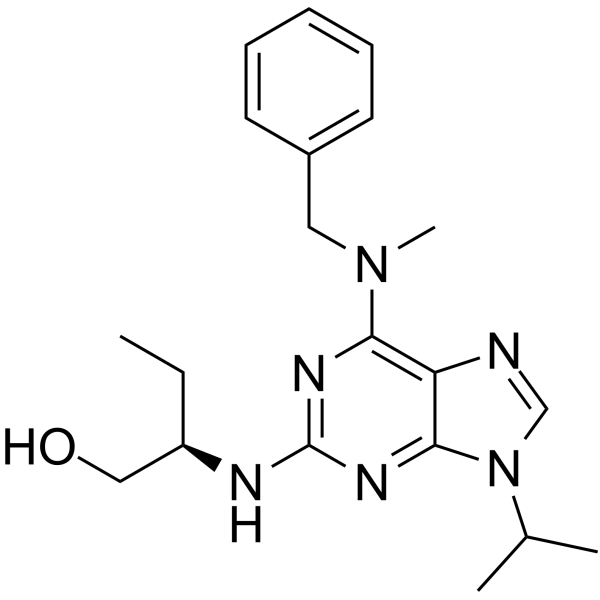
HY-111267
Aftin-4Amyloid-β Agonist -
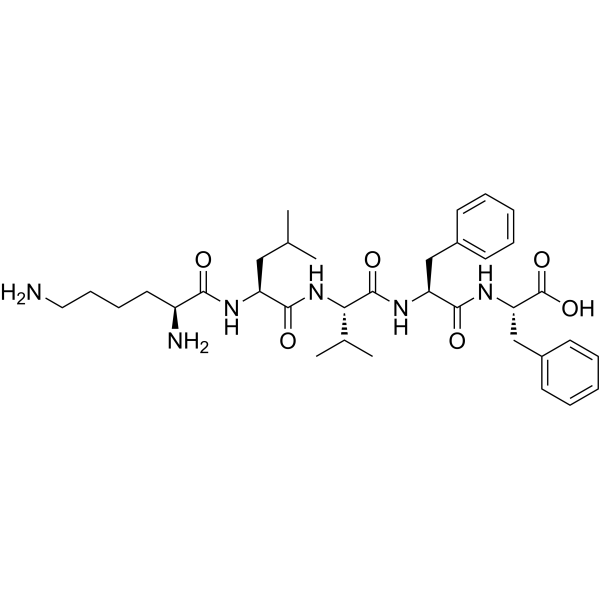
HY-P5124
β-Amyloid peptide(16-20)Abeta Inhibitor -
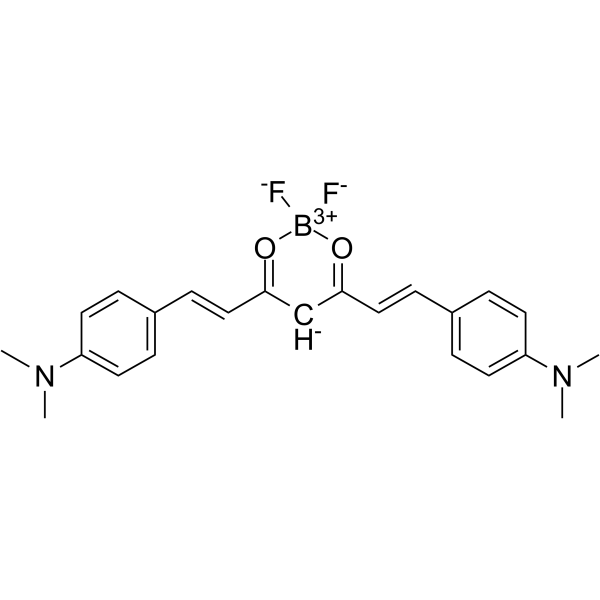
HY-103242
CRANAD-2Fluorescent Probe -
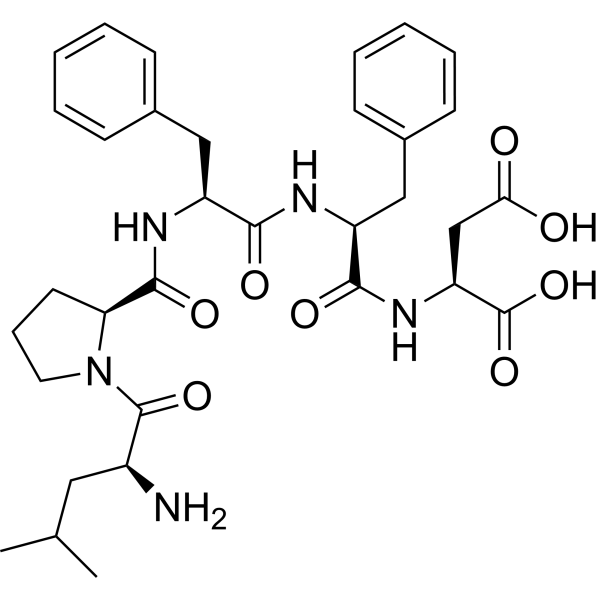
HY-P1047
β-Sheet Breaker Peptide iAβ5Abeta Degrader -
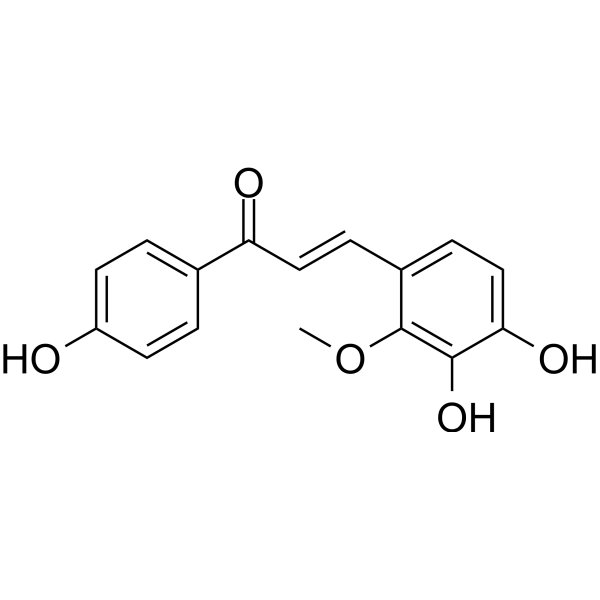
HY-N0373
Licochalcone BApoptosis Inducer
Publications Citing Use of MedChemExpress (MCE) Valiltramiprosate
More

Activité biologique
Description
IC50 & Target
β-amyloid[1]
In Vivo
MedChemExpress (MCE) has not independently confirmed the accuracy of these methods. They are for reference only.
Essai clinique
| NCT Number | Sponsor | Condition | Start Date |
Phase

|
|---|---|---|---|---|
| NCT01329991 | Plexxikon| | 2011-05 | PHASE1 |


Chemical Information
-
CAS No. 1034190-08-3
-
Appearance Solid
-
Masse moléculaire 238.30
-
Formule C8H18N2O4S
-
Color White to off-white
-
SMILES
O=S(CCCNC([C@@H](N)C(C)C)=O)(O)=O
-
Synonyms
ALZ-801
-
Livraison
Room temperature in continental US; may vary elsewhere.
-
Stockage
4°C, sealed storage, away from moisture
* In solvent : -80°C, 6 months; -20°C, 1 month (sealed storage, away from moisture)


Publications (1)
-
Journal Impact Factor
-
Most Recent
-
FASEB J
ALZ-801 prevents amyloid β-protein assembly and reduces cytotoxicity: A preclinical experimental study. [Abstract]2025 Feb 15;39(3):e70382. PMID: 39921439


Solvant et solubilité
In Vitro:
H2O : 30 mg/mL (125.89 mM; ultrasonic and warming and heat to 60°C)
Please refer to the solubility information to select the appropriate solvent. Once prepared, please aliquot and store the solution to prevent product inactivation from repeated freeze-thaw cycles.
Storage method and period of stock solution: -80°C, 6 months; -20°C, 1 month (sealed storage, away from moisture). When stored at -80°C, please use it within 6 months. When stored at -20°C, please use it within 1 month.
* Note: If you choose water as the stock solution, please dilute it to the working solution, then filter and sterilize it with a 0.22 μm filter before use.
Please refer to the solubility information to select the appropriate solvent. Once prepared, please aliquot and store the solution to prevent product inactivation from repeated freeze-thaw cycles.
Storage method and period of stock solution: -80°C, 6 months; -20°C, 1 month (sealed storage, away from moisture). When stored at -80°C, please use it within 6 months. When stored at -20°C, please use it within 1 month.
* Note: If you choose water as the stock solution, please dilute it to the working solution, then filter and sterilize it with a 0.22 μm filter before use.
Concentration (start) × Volume (start) = Concentration (final) × Volume (final)
In Vivo:
For the following dissolution methods, please prepare the working solution directly:
It is recommended to prepare fresh solutions and use them promptly within a short period of time.
The percentages shown for the solvents indicate their volumetric ratio in the final prepared solution. If precipitation or phase separation occurs during preparation, heat and/or sonication can be used to aid dissolution.
Add each solvent one by one: PBS
Solubility: 100 mg/mL (419.64 mM); Clear solution; Need ultrasonic

Protocole
-
Amyloid: Congo Red Amyloid Staining
Congo red amyloid staining is a histochemical method used to detect extracellular amyloid deposits in tissue sections based on the affinity of Congo red dye for β-pleated sheet-rich protein aggregates. When bound to amyloid, Congo red produces characteristic apple-green birefringence under polarized light microscopy, which is widely regarded as a diagnostic feature of amyloid deposition in histopathology. The diagnostic principle relies on the combination of dye binding (congophilia) and optical anisotropy under polarized illumination, which distinguishes amyloid from most non-amyloid eosinophilic extracellular deposits in routine histological evaluation. Amyloid identification by Congo red staining remains a cornerstone in diagnostic pathology despite the availability of adjunct methods such as immunohistochemistry and mass spectrometry, particularly because of its ability to localize deposits directly within tissue architecture. The specificity of Congo red-positive deposits is incre
-
Alzheimer’s Disease Modeling
Alzheimer’s Disease (AD) is a neurodegenerative disorder characterized by a progressive decline in cognitive functions and loss of specific types of neurons and synapses. Alzheimer's symptoms can be simulated in mice by injecting drugs (such as Aβ) or genetically modified.


Pureté et documentation
-
Fiche technique (272 KB)
-
SDS (252 KB)
- English - EN (252 KB)
- Français - FR (252 KB)
- Deutsch - DE (252 KB)
- Norwegian - NO (252 KB)
- Español - ES (252 KB)
- Swedish - SV (252 KB)
- Italian - IT (252 KB)
- Korean - KR (252 KB)
- Portuguese - PT (252 KB)
-
Instruction de manipulation (2659 KB)
Références


Complete Stock Solution Preparation Table
Please refer to the solubility information to select the appropriate solvent. Once prepared, please aliquot and store the solution to prevent product inactivation from repeated freeze-thaw cycles.
Storage method and period of stock solution: -80°C, 6 months; -20°C, 1 month (sealed storage, away from moisture). When stored at -80°C, please use it within 6 months. When stored at -20°C, please use it within 1 month.
| Optional Solvent | Concentration Solvent Mass | 1 mg | 5 mg | 10 mg | 25 mg |
|---|---|---|---|---|---|
| H2O | 1 mM | 4.1964 mL | 20.9820 mL | 41.9639 mL | 104.9098 mL |
| 5 mM | 0.8393 mL | 4.1964 mL | 8.3928 mL | 20.9820 mL | |
| 10 mM | 0.4196 mL | 2.0982 mL | 4.1964 mL | 10.4910 mL | |
| 15 mM | 0.2798 mL | 1.3988 mL | 2.7976 mL | 6.9940 mL | |
| 20 mM | 0.2098 mL | 1.0491 mL | 2.0982 mL | 5.2455 mL | |
| 25 mM | 0.1679 mL | 0.8393 mL | 1.6786 mL | 4.1964 mL | |
| 30 mM | 0.1399 mL | 0.6994 mL | 1.3988 mL | 3.4970 mL | |
| 40 mM | 0.1049 mL | 0.5245 mL | 1.0491 mL | 2.6227 mL | |
| 50 mM | 0.0839 mL | 0.4196 mL | 0.8393 mL | 2.0982 mL | |
| 60 mM | 0.0699 mL | 0.3497 mL | 0.6994 mL | 1.7485 mL | |
| 80 mM | 0.0525 mL | 0.2623 mL | 0.5245 mL | 1.3114 mL | |
| 100 mM | 0.0420 mL | 0.2098 mL | 0.4196 mL | 1.0491 mL |
* Note: If you choose water as the stock solution, please dilute it to the working solution, then filter and sterilize it with a 0.22 μm filter before use.


Valiltramiprosate Related Classifications
HY-117259 Related Classifications
 Powered by Bioz