



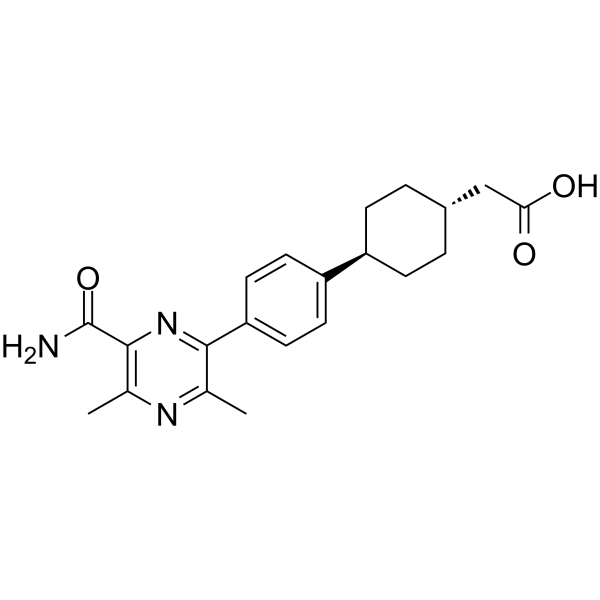
AZD7687
Based on 1 publication(s) in Google Scholar
AZD7687 is a potent, selective, reversible and orally active diacylglycerol acyltransferase 1 (DGAT1) inhibitor with an IC50 of 80 nM for human DGAT1. AZD7687 can be used for type 2 diabetes mellitus and obesity research.
Nos produits utilisent uniquement pour la recherche. Nous ne vendons pas aux patients.
- Pureté : 98.74%
- CAS No.: 1166827-44-6
- Formule: C21H25N3O3
- Masse moléculaire:367.44
-
Stockage:Powder -20°C, 3 years , 4°C, 2 years ; In solvent -80°C, 2 years , -20°C, 1 year

To place orders, for customer services and technical support, please contact: MedChemExpress USA
Tel: 609-228-6898 E-mail: [email protected] [email protected]


-
 Activité biologique
-
Chemical Information
-
Solvant et solubilité
- Protocole
- Pureté et documentation
- Références
-
 Help & FAQs


-
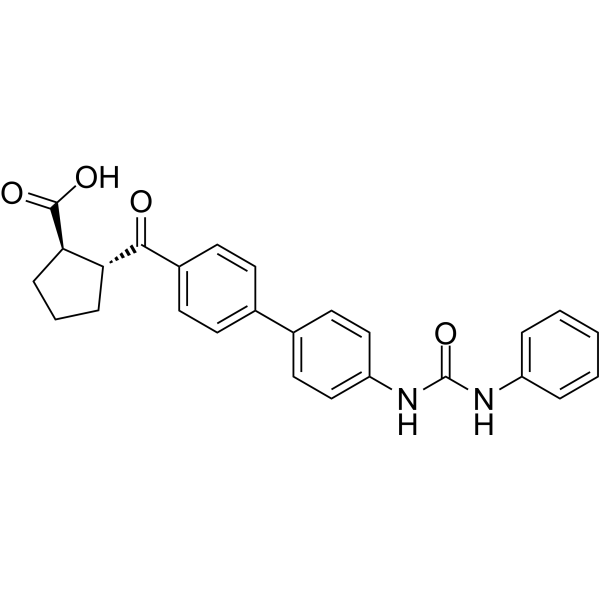
HY-10038
A 922500DGAT-1 Inhibitor -
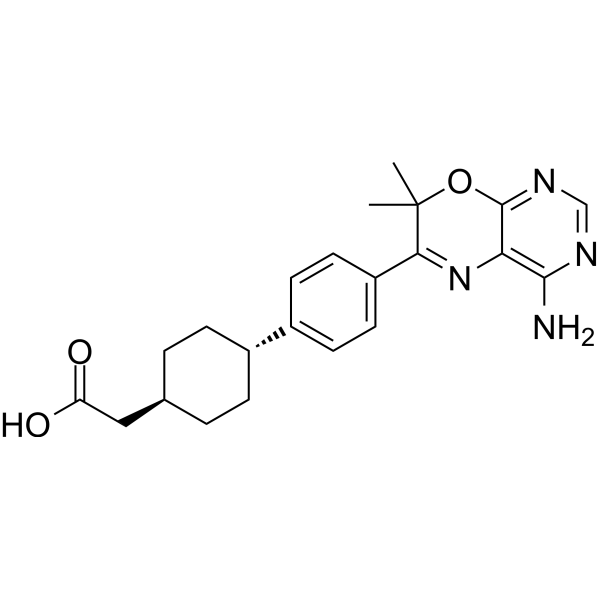
HY-32219
T863DGAT1 Inhibitor -
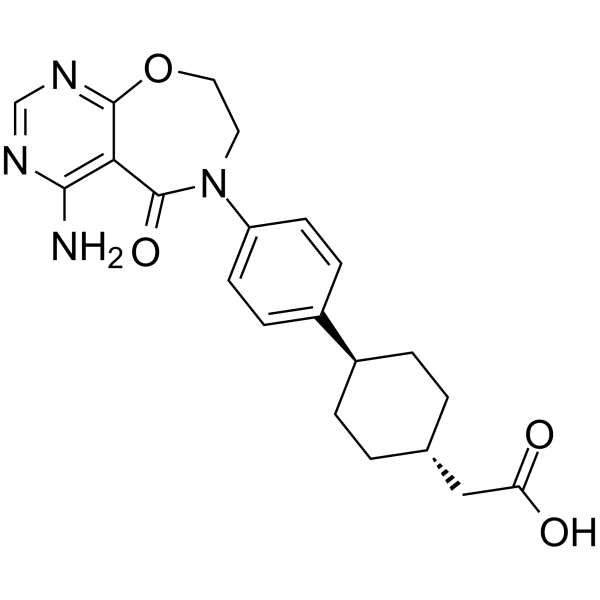
HY-13009
PF-04620110DGAT-1 Inhibitor -
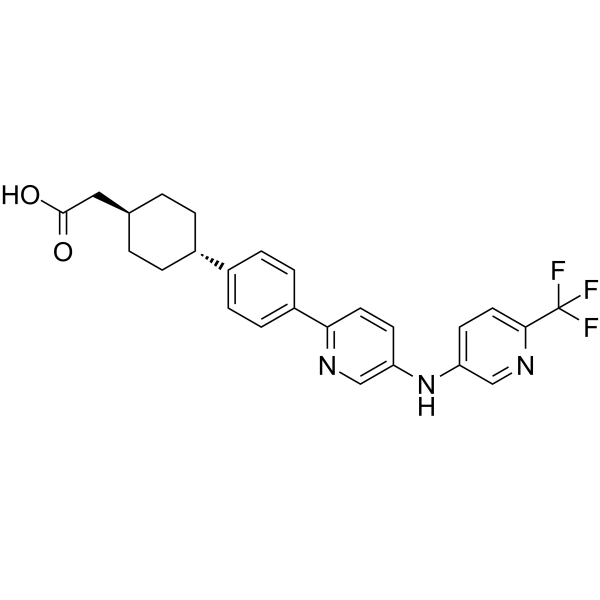
HY-16278
PradigastatDGAT1 Inhibitor -
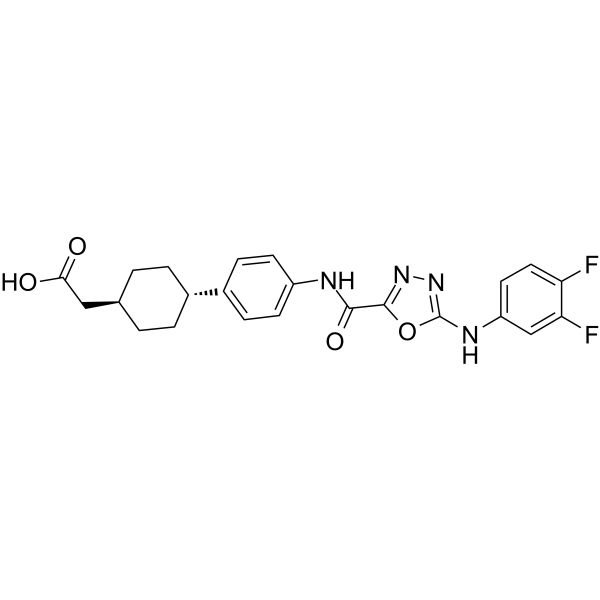
HY-50861
AZD3988DGAT-1 Inhibitor -
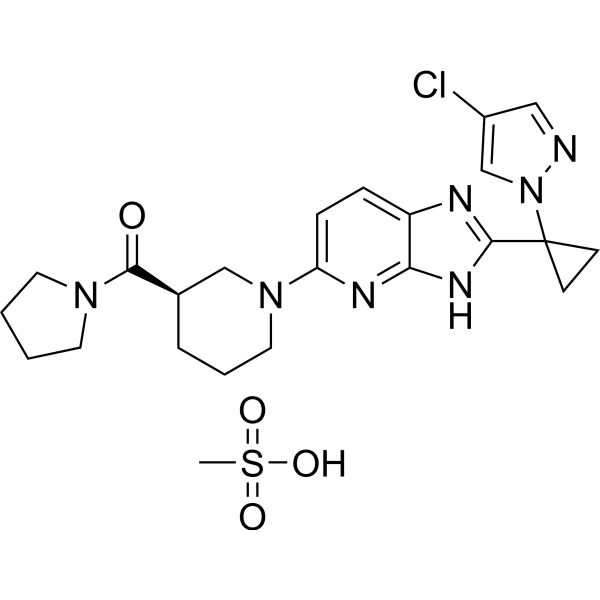
HY-108341A
PF-06424439 methanesulfonateDGAT2 Inhibitor -
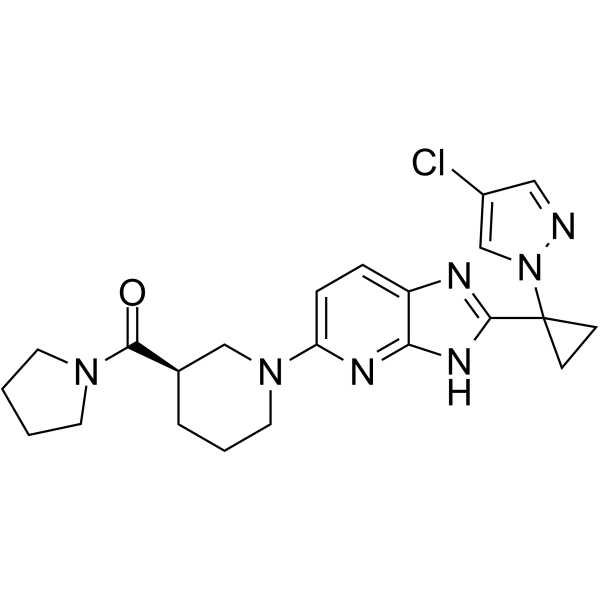
HY-108341
PF-06424439 -
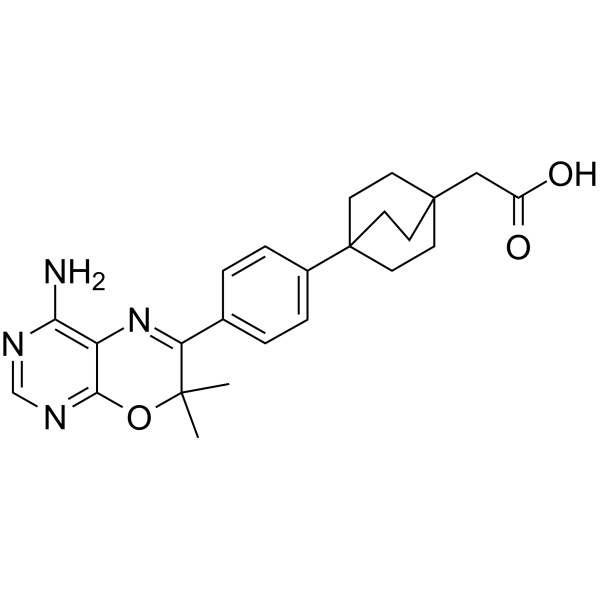
HY-50670
DGAT-1 inhibitor 2DGAT-1 Inhibitor -

HY-16278R
Pradigastat (Standard)DGAT1 Inhibitor -
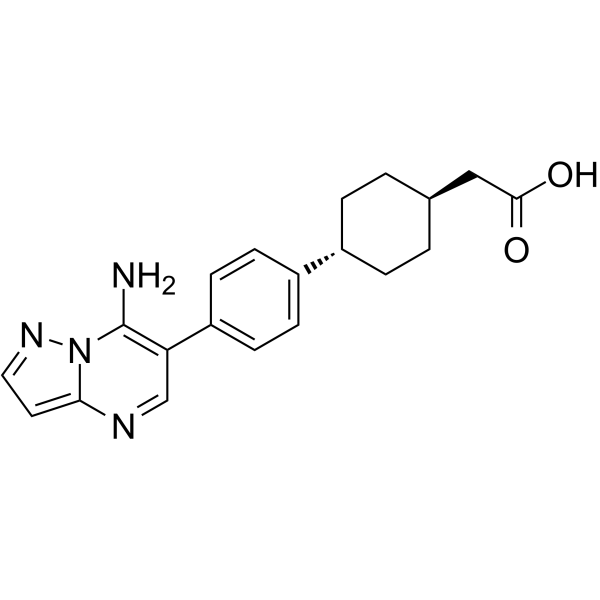
HY-15197
ABT-046DGAT-1 Inhibitor -
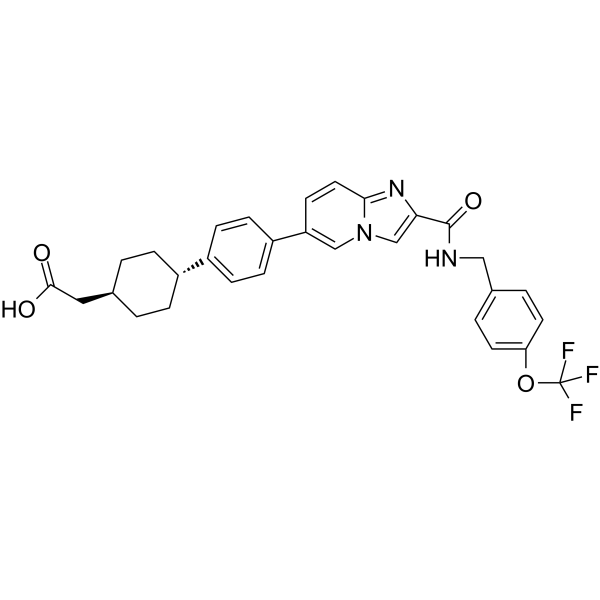
HY-12425
DGAT1-IN-1DGAT1 Inhibitor -
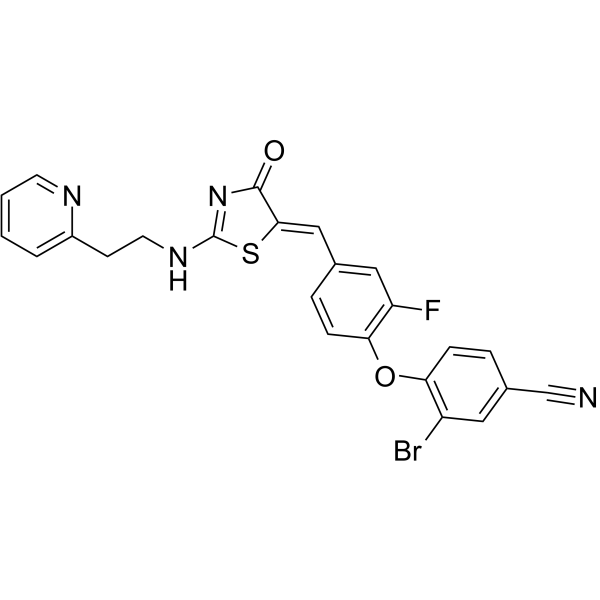
HY-110381
JNJ-DGAT2-ADGAT2 Inhibitor
Publications Citing Use of MedChemExpress (MCE) AZD7687
More

Activité biologique
Description
Cellular Effect
|
Cell Line

|
Type | Value | Description | References |
|---|---|---|---|---|
| Sf9 | IC50 |
0.43 μM
Compound: 75
|
Inhibition of human recombinant DGAT1 expressed in Sf9 cells by liquid scintillography
Inhibition of human recombinant DGAT1 expressed in Sf9 cells by liquid scintillography
|
[PMID: 23116186] |
In Vitro
In an in vitro recombinant mouse, dog, and human DGAT1 enzyme assay, AZD7687 has an IC50 of approximately 100 nM, 60 nM, and 80 nM, respectively. AZD7687 (compound 30) shows inhibition of acyl-CoA:cholesterol acetyltransferase (79% at 10 μM), fatty acid amide hydrolase (IC50 = 3.7 μM), muscarinic M2 receptor (IC50 = 80.5 μM), and phosphodiesterase PDE10A1 (IC50 = 5.5 μM). No activity against human DGAT2 is detected[1][2].
MedChemExpress (MCE) has not independently confirmed the accuracy of these methods. They are for reference only.
In Vivo
MedChemExpress (MCE) has not independently confirmed the accuracy of these methods. They are for reference only.
Essai clinique
| NCT Number | Sponsor | Condition | Start Date |
Phase
|
|---|---|---|---|---|
| NCT01329991 | Plexxikon| | 2011-05 | PHASE1 |


Chemical Information
-
CAS No. 1166827-44-6
-
Appearance Solid
-
Masse moléculaire 367.44
-
Formule C21H25N3O3
-
Color Off-white to pink
-
SMILES
CC1=C(C(N)=O)N=C(C2=CC=C([C@H]3CC[C@H](CC(O)=O)CC3)C=C2)C(C)=N1
-
Livraison
Room temperature in continental US; may vary elsewhere.
-
Stockage
Powder -20°C 3 years 4°C 2 years In solvent -80°C 2 years -20°C 1 year


Publications (1)
-
Journal Impact Factor
-
Most Recent
-
Cell Chem Biol
In vivo drug discovery for increasing incretin-expressing cells identifies DYRK inhibitors that reinforce the enteroendocrine system. [Abstract]2022 Sep 15;29(9):1368-1380.e5. PMID: 35998625


Solvant et solubilité
In Vitro:
DMSO : ≥ 50 mg/mL (136.08 mM; Hygroscopic DMSO has a significant impact on the solubility of product, please use newly opened DMSO)
* "≥" means soluble, but saturation unknown.
Please refer to the solubility information to select the appropriate solvent. Once prepared, please aliquot and store the solution to prevent product inactivation from repeated freeze-thaw cycles.
Storage method and period of stock solution: -80°C, 2 years; -20°C, 1 year. When stored at -80°C, please use it within 2 years. When stored at -20°C, please use it within 1 year.
Please refer to the solubility information to select the appropriate solvent. Once prepared, please aliquot and store the solution to prevent product inactivation from repeated freeze-thaw cycles.
Storage method and period of stock solution: -80°C, 2 years; -20°C, 1 year. When stored at -80°C, please use it within 2 years. When stored at -20°C, please use it within 1 year.
Concentration (start) × Volume (start) = Concentration (final) × Volume (final)
In Vivo:
Select the appropriate dissolution method based on your experimental animal and administration route.
- For the following dissolution methods, please ensure to first prepare a clear stock solution using an In Vitro approach and then sequentially add co-solvents:
- To ensure reliable experimental results, the clarified stock solution can be appropriately stored based on storage conditions. As for the working solution for In Vivo experiments, it is recommended to prepare freshly and use it on the same day.
- The percentages shown for the solvents indicate their volumetric ratio in the final prepared solution. If precipitation or phase separation occurs during preparation, heat and/or sonication can be used to aid dissolution.
Add each solvent one by one: 10% DMSO 40% PEG300 5% Tween-80 45% Saline
Solubility: 2.5 mg/mL (6.80 mM); Suspended solution; Need ultrasonic and warming
This protocol yields a suspended solution of 2.5 mg/mL. Suspended solution can be used for oral and intraperitoneal injection.
Taking 1 mL working solution as an example, add 100 μL DMSO stock solution (25.0 mg/mL) to 400 μL PEG300, and mix evenly; then add 50 μL Tween-80 and mix evenly; then add 450 μL Saline to adjust the volume to 1 mL.
Preparation of Saline: Dissolve 0.9 g sodium chloride in ddH₂O and dilute to 100 mL to obtain a clear Saline solution.
Add each solvent one by one: 10% DMSO 90% (20% SBE-β-CD in Saline)
Solubility: ≥ 2.5 mg/mL (6.80 mM); Clear solution
This protocol yields a clear solution of ≥ 2.5 mg/mL (saturation unknown).
Taking 1 mL working solution as an example, add 100 μL DMSO stock solution (25.0 mg/mL) to 900 μL 20% SBE-β-CD in Saline, and mix evenly.
Preparation of 20% SBE-β-CD in Saline (4°C, storage for one week): 2 g SBE-β-CD powder is dissolved in 10 mL Saline, completely dissolve until clear.
In Vivo Dissolution Calculator
Please enter the basic information of animal experiments:
-
-
-
-
Recommended: Prepare an additional quantity of animals to account for potential losses during experiments.
Please enter your animal formula composition:
-
%DMSO +
Recommended: Keep the proportion of DMSO in working solution below 2% if your animal is weak.
-
%+
-
+%Tween-80 + +
-
%Saline +
The co-solvents required include: DMSO, . All of co-solvents are available by MedChemExpress (MCE). , Tween 80. All of co-solvents are available by MedChemExpress (MCE).
Working solution concentration: 0.22 mg/mL
Method for preparing stock solution: mg drug dissolved in μL DMSO. Stock solution concentration: mg/mL.
1. Take μL DMSO stock solution;
2. Add μL .
μL , mix evenly;
3. Then add μL Tween 80, mix evenly;
4. Then add μL
Please ensure that the stock solution in the first step is dissolved to a clear state, and add co-solvents in sequence. You can use ultrasonic heating (ultrasonic cleaner, recommended frequency 20-40 kHz), vortexing, etc. to assist dissolution.


Pureté et documentation
-
Fiche technique (272 KB)
-
SDS (392 KB)
- English - EN (392 KB)
- Français - FR (392 KB)
- Deutsch - DE (392 KB)
- Norwegian - NO (392 KB)
- Español - ES (392 KB)
- Swedish - SV (392 KB)
- Italian - IT (392 KB)
- Korean - KR (392 KB)
- Portuguese - PT (392 KB)
-
Instruction de manipulation (2659 KB)
Références
[1]. Barlind JG, et al. Design and optimization of pyrazinecarboxamide-based inhibitors of diacylglycerol acyltransferase 1 (DGAT1) leading to a clinical candidate dimethylpyrazinecarboxamide phenylcyclohexylacetic acid (AZD7687). J Med Chem. 2012 Dec 13;55(23):10610-29. [Content Brief]
[2]. Denison H, et al. Diacylglycerol acyltransferase 1 inhibition with AZD7687 alters lipid handling and hormone secretion in the gut with intolerable side effects: a randomized clinical trial. Diabetes Obes Metab. 2013 Oct 4. [Content Brief]
[3]. Eike Floettmann, et al. Pharmacological inhibition of DGAT1 induces sebaceous gland atrophy in mouse and dog skin while overt alopecia is restricted to the mouse. Toxicol Pathol. 2015 Apr;43(3):376-83. [Content Brief]


Complete Stock Solution Preparation Table
Please refer to the solubility information to select the appropriate solvent. Once prepared, please aliquot and store the solution to prevent product inactivation from repeated freeze-thaw cycles.
Storage method and period of stock solution: -80°C, 2 years; -20°C, 1 year. When stored at -80°C, please use it within 2 years. When stored at -20°C, please use it within 1 year.
| Optional Solvent | Concentration Solvent Mass | 1 mg | 5 mg | 10 mg | 25 mg |
|---|---|---|---|---|---|
| DMSO | 1 mM | 2.7215 mL | 13.6077 mL | 27.2153 mL | 68.0383 mL |
| 5 mM | 0.5443 mL | 2.7215 mL | 5.4431 mL | 13.6077 mL | |
| 10 mM | 0.2722 mL | 1.3608 mL | 2.7215 mL | 6.8038 mL | |
| 15 mM | 0.1814 mL | 0.9072 mL | 1.8144 mL | 4.5359 mL | |
| 20 mM | 0.1361 mL | 0.6804 mL | 1.3608 mL | 3.4019 mL | |
| 25 mM | 0.1089 mL | 0.5443 mL | 1.0886 mL | 2.7215 mL | |
| 30 mM | 0.0907 mL | 0.4536 mL | 0.9072 mL | 2.2679 mL | |
| 40 mM | 0.0680 mL | 0.3402 mL | 0.6804 mL | 1.7010 mL | |
| 50 mM | 0.0544 mL | 0.2722 mL | 0.5443 mL | 1.3608 mL | |
| 60 mM | 0.0454 mL | 0.2268 mL | 0.4536 mL | 1.1340 mL | |
| 80 mM | 0.0340 mL | 0.1701 mL | 0.3402 mL | 0.8505 mL | |
| 100 mM | 0.0272 mL | 0.1361 mL | 0.2722 mL | 0.6804 mL |


AZD7687 Related Classifications
HY-15497 Related Classifications
 Powered by Bioz