



Etiocholanolone

Based on 1 Customer Validation
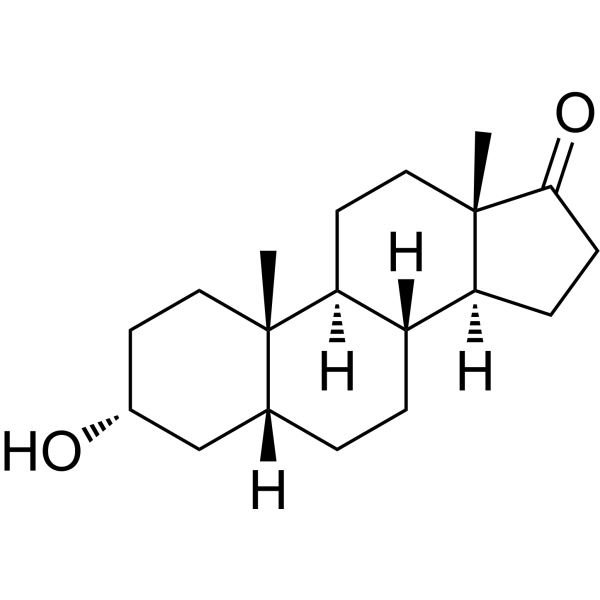
Etiocholanolone (5β-Androsterone) is the excreted metabolite of testosterone and has anticonvulsant activity. Etiocholanolone is a less potent neurosteroid positive allosteric modulator (PAM) of the GABAA receptor than its enantiomer form.
Nos produits utilisent uniquement pour la recherche. Nous ne vendons pas aux patients.
- Pureté : 99.49%
- CAS No.: 53-42-9
- Formule: C19H30O2
- Masse moléculaire:290.44
-
Stockage:Powder -20°C, 3 years , 4°C, 2 years ; In solvent -80°C, 6 months , -20°C, 1 month

To place orders, for customer services and technical support, please contact: MedChemExpress USA
Tel: 609-228-6898 E-mail: [email protected] [email protected]


-
 Activité biologique
-
Chemical Information
-
Solvant et solubilité
- Pureté et documentation
- Références
-
 Help & FAQs


-
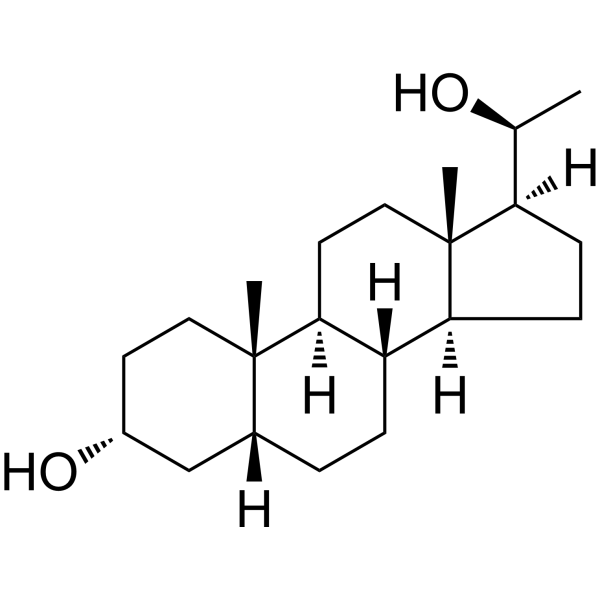
HY-107850
PregnanediolProgesterone Metabolite -
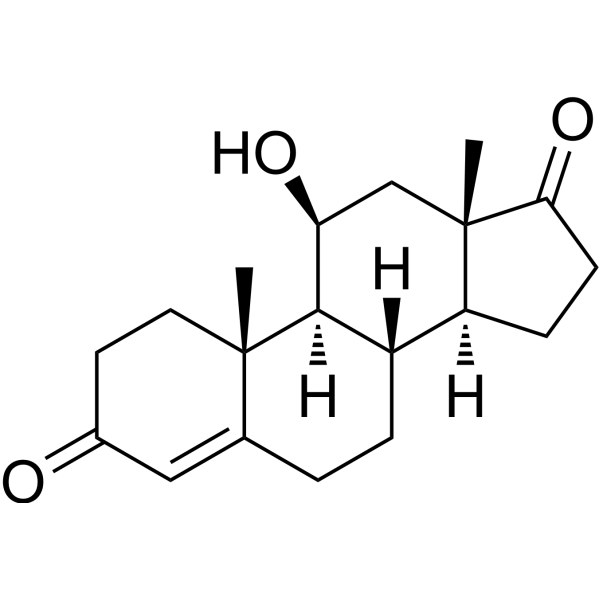
HY-114464
11-Beta-hydroxyandrostenedione11βHSD Isozymes Inhibitor -
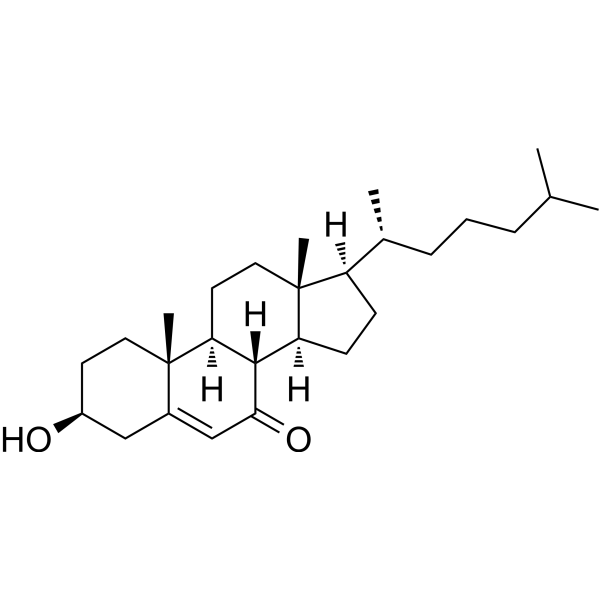
HY-113342
7-KetocholesterolCholesterol 7 Alpha-Hydroxylase Inhibitor -
HY-113416
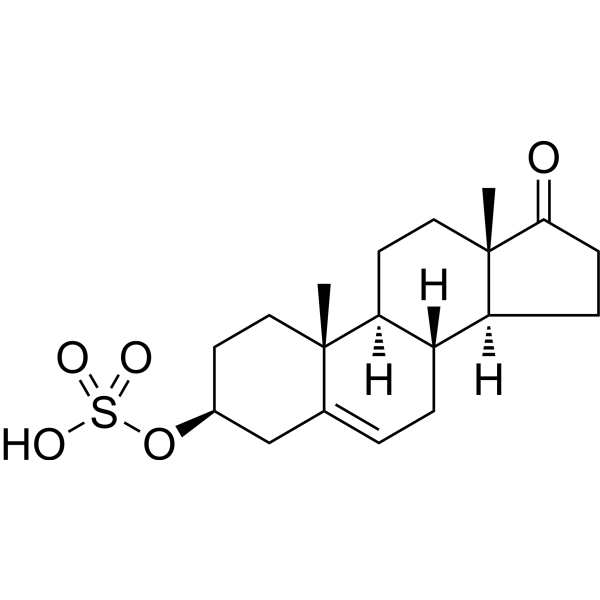
Dehydroepiandrosterone sulfateGABA(A) Receptor Antagonist/σ1 Receptor Agonist -
HY-77839
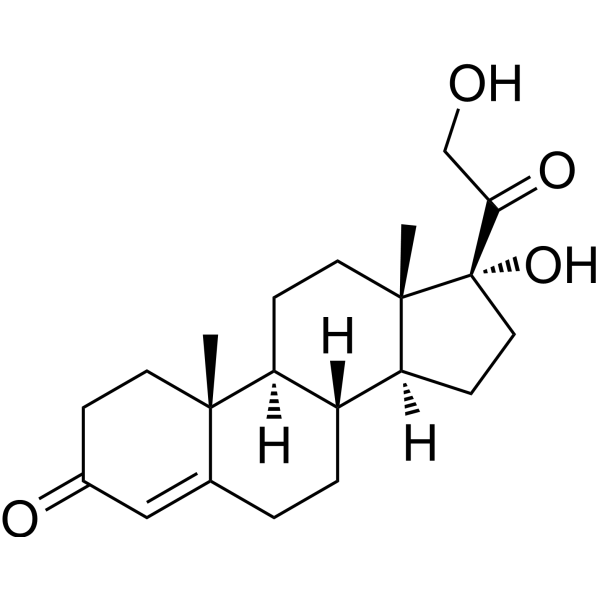
CortodoxoneGlucocorticoid Steroid Hormone -
HY-B0151
PregnenoloneCB1 Inhibitor -
HY-113263
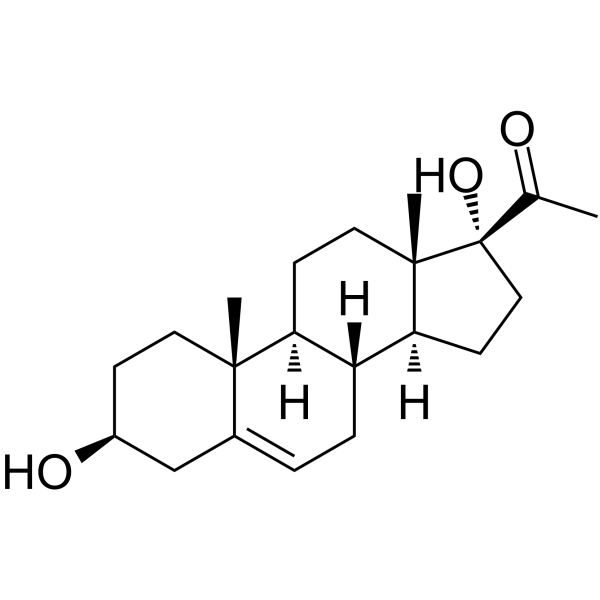
17a-HydroxypregnenoloneEndogenous Metabolite -
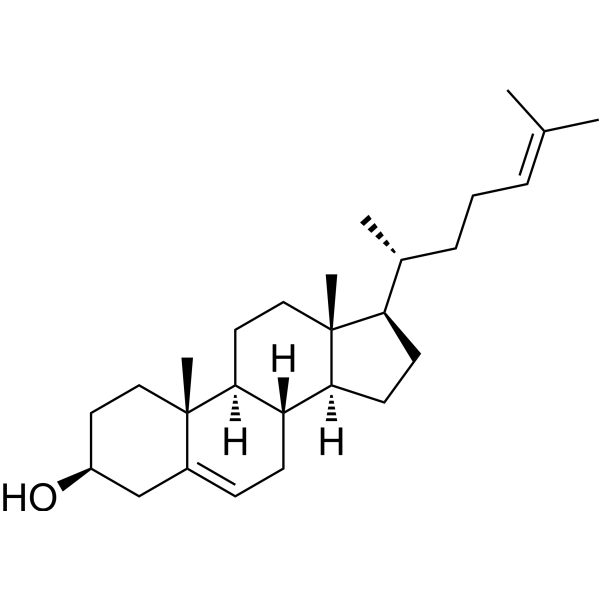
HY-113224
DesmosterolEndogenous Metabolite -
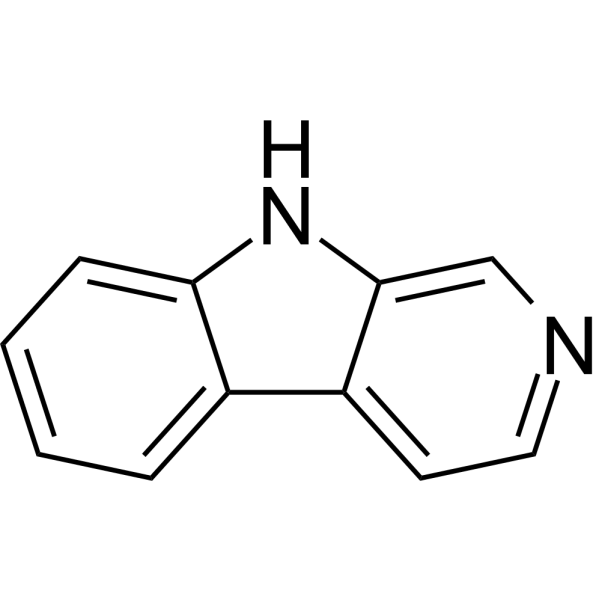
HY-W008566
NorharmaneMAO Inhibitor -
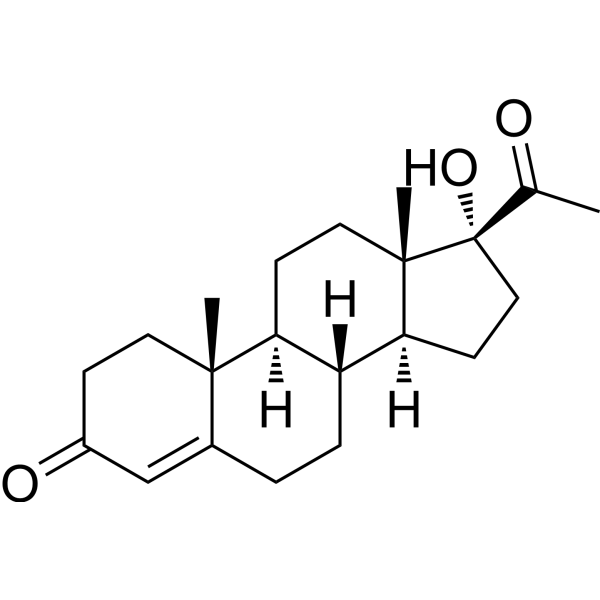
HY-B0891
17α-HydroxyprogesteroneSteroid Hormone -
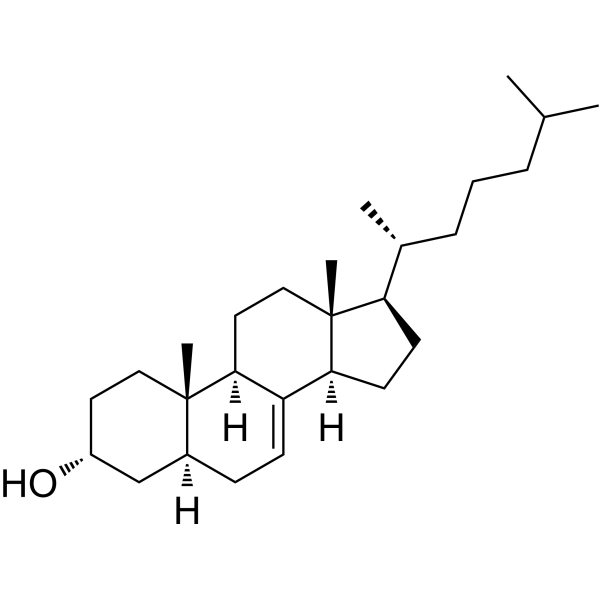
HY-113486
LathosterolEndogenous Metabolite -
HY-N2370
24-HydroxycholesterolLXR Activator
Voir tous les produits spécifiques à Isoform Endogenous Metabolite
More

Activité biologique
Description
IC50 & Target
|
Human Endogenous Metabolite |
Cellular Effect
|
Cell Line

|
Type | Value | Description | References |
|---|---|---|---|---|
| CHO | EC50 |
3.76 μM
Compound: 45
|
Agonist activity at human TGR5 expressed in CHO cells by luciferase assay
Agonist activity at human TGR5 expressed in CHO cells by luciferase assay
|
[PMID: 18307294] |
| HEK293 | IC50 |
182 nM
Compound: ADT
|
The ability to inhibit the Type-3 17-beta- hydroxysteroid dehydrogenase activity in transfected human embryonic kidney (HEK)-293 cells experiment 3
The ability to inhibit the Type-3 17-beta- hydroxysteroid dehydrogenase activity in transfected human embryonic kidney (HEK)-293 cells experiment 3
|
[PMID: 11806715] |
| HEK293 | IC50 |
330 nM
Compound: ADT
|
Inhibitory concentration against type-3 17-beta-HSD expressed in HEK293 cells
Inhibitory concentration against type-3 17-beta-HSD expressed in HEK293 cells
|
[PMID: 11086723] |
| HEK293 | IC50 |
330 nM
Compound: ADT
|
The ability to inhibit the Type-3 17-beta- hydroxysteroid dehydrogenase activity in transfected human embryonic kidney (HEK)-293 cells experiment 1
The ability to inhibit the Type-3 17-beta- hydroxysteroid dehydrogenase activity in transfected human embryonic kidney (HEK)-293 cells experiment 1
|
[PMID: 11806715] |
| HEK293 | IC50 |
330 nM
Compound: ADT
|
Inhibition of type-3 17 beta-hydroxysteroid dehydrogenase expressed in HEK293 cells at 37 degree C pH7.4
Inhibition of type-3 17 beta-hydroxysteroid dehydrogenase expressed in HEK293 cells at 37 degree C pH7.4
|
[PMID: 16078844] |
In Vitro
Etiocholanolone (10 μM) coapplication with GABA leads to an increase in the relative frequency of long openings (fraction of OT3, site A2 effect), but it is ineffective at increasing the duration of long openings (site B effect) or at decreasing the relative frequency of the activation-related closed time component (site A1 effect)[2].
MedChemExpress (MCE) has not independently confirmed the accuracy of these methods. They are for reference only. .
In Vivo
MedChemExpress (MCE) has not independently confirmed the accuracy of these methods. They are for reference only.


Chemical Information
-
CAS No. 53-42-9
-
Appearance Solid
-
Masse moléculaire 290.44
-
Formule C19H30O2
-
Color White to off-white
-
SMILES
C[C@@]1(CC2)[C@](CC3)([H])[C@](CC[C@]1([H])C[C@@H]2O)([H])[C@@](CCC4=O)([H])[C@]34C
-
Synonyms
5β-Androsterone
-
Structure Classification
-
Initial Source
-
Livraison
Room temperature in continental US; may vary elsewhere.
-
Stockage
Powder -20°C 3 years 4°C 2 years In solvent -80°C 6 months -20°C 1 month


Solvant et solubilité
In Vitro:
DMSO : 50 mg/mL (172.15 mM; ultrasonic and warming and heat to 60°C; Hygroscopic DMSO has a significant impact on the solubility of product, please use newly opened DMSO)
Please refer to the solubility information to select the appropriate solvent. Once prepared, please aliquot and store the solution to prevent product inactivation from repeated freeze-thaw cycles.
Storage method and period of stock solution: -80°C, 6 months; -20°C, 1 month. When stored at -80°C, please use it within 6 months. When stored at -20°C, please use it within 1 month.
Please refer to the solubility information to select the appropriate solvent. Once prepared, please aliquot and store the solution to prevent product inactivation from repeated freeze-thaw cycles.
Storage method and period of stock solution: -80°C, 6 months; -20°C, 1 month. When stored at -80°C, please use it within 6 months. When stored at -20°C, please use it within 1 month.
Concentration (start) × Volume (start) = Concentration (final) × Volume (final)
In Vivo:
Select the appropriate dissolution method based on your experimental animal and administration route.
- For the following dissolution methods, please ensure to first prepare a clear stock solution using an In Vitro approach and then sequentially add co-solvents:
- To ensure reliable experimental results, the clarified stock solution can be appropriately stored based on storage conditions. As for the working solution for In Vivo experiments, it is recommended to prepare freshly and use it on the same day.
- The percentages shown for the solvents indicate their volumetric ratio in the final prepared solution. If precipitation or phase separation occurs during preparation, heat and/or sonication can be used to aid dissolution.
Add each solvent one by one: 10% DMSO 40% PEG300 5% Tween-80 45% Saline
Solubility: ≥ 2.5 mg/mL (8.61 mM); Clear solution
This protocol yields a clear solution of ≥ 2.5 mg/mL (saturation unknown).
Taking 1 mL working solution as an example, add 100 μL DMSO stock solution (25.0 mg/mL) to 400 μL PEG300, and mix evenly; then add 50 μL Tween-80 and mix evenly; then add 450 μL Saline to adjust the volume to 1 mL.
Preparation of Saline: Dissolve 0.9 g sodium chloride in ddH₂O and dilute to 100 mL to obtain a clear Saline solution.
Add each solvent one by one: 10% DMSO 90% (20% SBE-β-CD in Saline)
Solubility: ≥ 2.5 mg/mL (8.61 mM); Clear solution
This protocol yields a clear solution of ≥ 2.5 mg/mL (saturation unknown).
Taking 1 mL working solution as an example, add 100 μL DMSO stock solution (25.0 mg/mL) to 900 μL 20% SBE-β-CD in Saline, and mix evenly.
Preparation of 20% SBE-β-CD in Saline (4°C, storage for one week): 2 g SBE-β-CD powder is dissolved in 10 mL Saline, completely dissolve until clear.
In Vivo Dissolution Calculator
Please enter the basic information of animal experiments:
-
-
-
-
Recommended: Prepare an additional quantity of animals to account for potential losses during experiments.
Please enter your animal formula composition:
-
%DMSO +
Recommended: Keep the proportion of DMSO in working solution below 2% if your animal is weak.
-
%+
-
+%Tween-80 + +
-
%Saline +
The co-solvents required include: DMSO, . All of co-solvents are available by MedChemExpress (MCE). , Tween 80. All of co-solvents are available by MedChemExpress (MCE).
Working solution concentration: 0.22 mg/mL
Method for preparing stock solution: mg drug dissolved in μL DMSO. Stock solution concentration: mg/mL.
1. Take μL DMSO stock solution;
2. Add μL .
μL , mix evenly;
3. Then add μL Tween 80, mix evenly;
4. Then add μL
Please ensure that the stock solution in the first step is dissolved to a clear state, and add co-solvents in sequence. You can use ultrasonic heating (ultrasonic cleaner, recommended frequency 20-40 kHz), vortexing, etc. to assist dissolution.


Pureté et documentation
-
Fiche technique (277 KB)
-
SDS (761 KB)
- English - EN (761 KB)
- Français - FR (761 KB)
- Deutsch - DE (761 KB)
- Norwegian - NO (761 KB)
- Español - ES (761 KB)
- Swedish - SV (761 KB)
- Italian - IT (761 KB)
- Korean - KR (761 KB)
- Portuguese - PT (761 KB)
-
Instruction de manipulation (2659 KB)
Références
[1]. Ping Li,et al. Natural and Enantiomeric Etiocholanolone Interact With Distinct Sites on the Rat alpha1beta2gamma2L GABAA Receptor. Mol Pharmacol. 2007 Jun;71(6):1582-90. [Content Brief]
[2]. Dorota Zolkowska, et al. Anticonvulsant Potencies of the Enantiomers of the Neurosteroids Androsterone and Etiocholanolone Exceed Those of the Natural Forms. Psychopharmacology (Berl). 2014 Sep;231(17):3325-32. [Content Brief]


Complete Stock Solution Preparation Table
Please refer to the solubility information to select the appropriate solvent. Once prepared, please aliquot and store the solution to prevent product inactivation from repeated freeze-thaw cycles.
Storage method and period of stock solution: -80°C, 6 months; -20°C, 1 month. When stored at -80°C, please use it within 6 months. When stored at -20°C, please use it within 1 month.
| Optional Solvent | Concentration Solvent Mass | 1 mg | 5 mg | 10 mg | 25 mg |
|---|---|---|---|---|---|
| DMSO | 1 mM | 3.4431 mL | 17.2153 mL | 34.4305 mL | 86.0763 mL |
| 5 mM | 0.6886 mL | 3.4431 mL | 6.8861 mL | 17.2153 mL | |
| 10 mM | 0.3443 mL | 1.7215 mL | 3.4431 mL | 8.6076 mL | |
| 15 mM | 0.2295 mL | 1.1477 mL | 2.2954 mL | 5.7384 mL | |
| 20 mM | 0.1722 mL | 0.8608 mL | 1.7215 mL | 4.3038 mL | |
| 25 mM | 0.1377 mL | 0.6886 mL | 1.3772 mL | 3.4431 mL | |
| 30 mM | 0.1148 mL | 0.5738 mL | 1.1477 mL | 2.8692 mL | |
| 40 mM | 0.0861 mL | 0.4304 mL | 0.8608 mL | 2.1519 mL | |
| 50 mM | 0.0689 mL | 0.3443 mL | 0.6886 mL | 1.7215 mL | |
| 60 mM | 0.0574 mL | 0.2869 mL | 0.5738 mL | 1.4346 mL | |
| 80 mM | 0.0430 mL | 0.2152 mL | 0.4304 mL | 1.0760 mL | |
| 100 mM | 0.0344 mL | 0.1722 mL | 0.3443 mL | 0.8608 mL |


Etiocholanolone Related Classifications
HY-113320 Related Classifications
 Powered by Bioz