



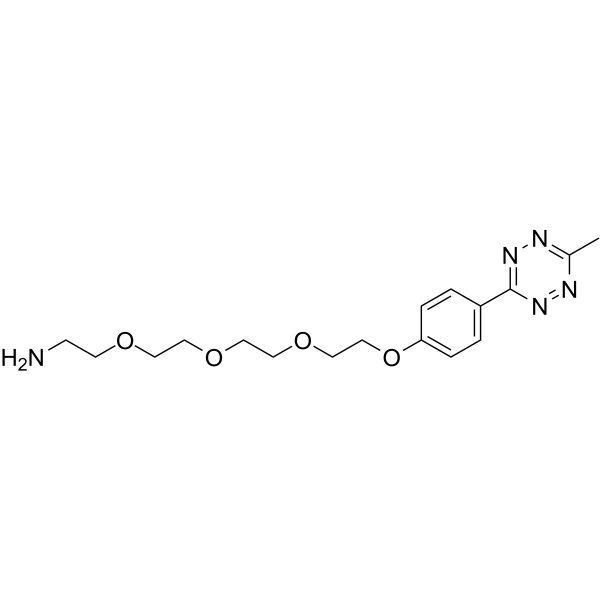
Methyltetrazine-PEG4-amine
Methyltetrazine-PEG4-amine is a linker for antibody-drug conjugates and a click chemistry reagent that can be used for the synthesis of ADCs. Methyltetrazine-PEG4-amine can be used to synthesize click-active albumin-binding radioligands as well as VLA-4-targeted radiopharmaceutical precursors. Methyltetrazine-PEG4-amine is applicable to research related to prostate cancer.
Nos produits utilisent uniquement pour la recherche. Nous ne vendons pas aux patients.
- CAS No.: 1802908-05-9
- Formule: C17H25N5O4
- Masse moléculaire:363.41
-
Stockage:
Please store the product under the recommended conditions in the Certificate of Analysis.

To place orders, for customer services and technical support, please contact: MedChemExpress USA
Tel: 609-228-6898 E-mail: [email protected] [email protected]


-
 Activité biologique
-
Chemical Information
- Protocole
- Pureté et documentation
- Références
-
 Help & FAQs


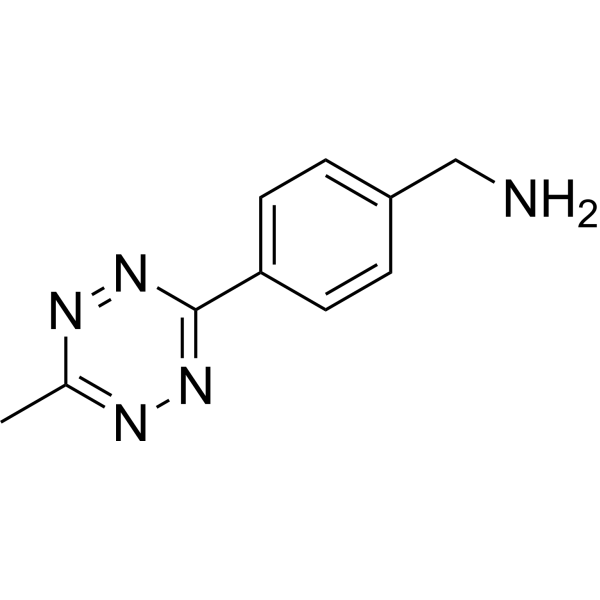
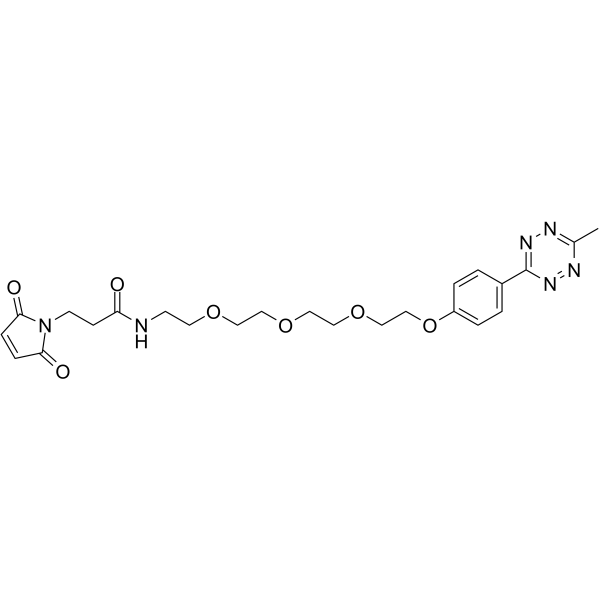
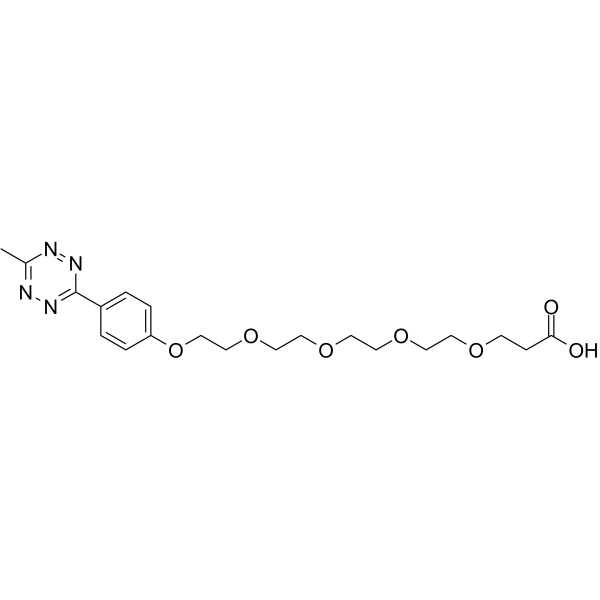

Voir tous les produits spécifiques à Isoform ADC Linkers
More

Activité biologique
Description
In Vitro
Methyltetrazine-PEG4-amine hydrochloride is a bifunctional linker commonly used in bioorthogonal labeling and antibody-drug conjugates (ADCs). Methyltetrazine-PEG4-amine hydrochloride consists of four functional moieties: the methyltetrazine group with catalyst-free ultrafast click chemistry activity, PEG4 which enhances water solubility and flexibility while reducing steric hindrance, an amine group with amide coupling activity, and hydrochloride which improves the storage and transportation stability of the overall reagent[1].
MedChemExpress (MCE) has not independently confirmed the accuracy of these methods. They are for reference only. Further protocols information, click here.


Chemical Information
-
CAS No. 1802908-05-9
-
Masse moléculaire 363.41
-
Formule C17H25N5O4
-
SMILES
CC1=NN=C(C2=CC=C(OCCOCCOCCOCCN)C=C2)N=N1
-
Livraison
Room temperature in continental US; may vary elsewhere.
-
Stockage
Please store the product under the recommended conditions in the Certificate of Analysis.

Protocole
-
EdU Incorporation Assay (Click Chemistry-Based DNA Synthesis Measurement)
The EdU incorporation assay measures DNA synthesis by adding the thymidine analog 5-ethynyl-2′-deoxyuridine to cells or tissues, where it is incorporated into newly synthesized DNA during S phase. Incorporated EdU is detected by copper-catalyzed azide-alkyne cycloaddition, in which a fluorescent azide covalently reacts with the ethynyl group on EdU, allowing S-phase cells to be detected by fluorescence microscopy, flow cytometry, or high-content imaging. EdU detection does not require DNA denaturation or anti-BrdU antibody access, which preserves sample structure and improves compatibility with immunostaining and multiparameter cytometry compared with BrdU-based detection. EdU can be cytotoxic in a cell-type- and exposure-dependent manner, so pulse duration, concentration, and continuous-labeling designs should be validated for each cell type.


Pureté et documentation
Références

Calculators
Concentration (start) × Volume (start) = Concentration (final) × Volume (final)


Methyltetrazine-PEG4-amine Related Classifications
HY-141261 Related Classifications
 Powered by Bioz
Keywords