



Nimesulide
Based on 10 publication(s) in Google Scholar
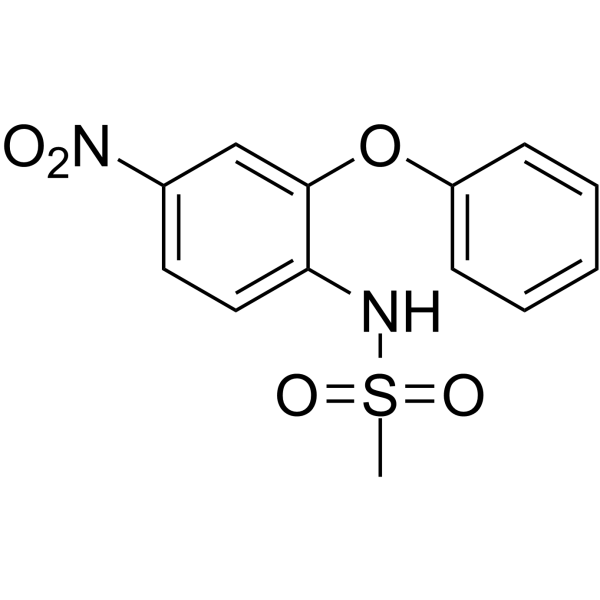
Nimesulide is a selective COX-2 inhibitor, with IC50s of 70 nM-70 μM in a time-dependent manner, but it shows no effect on COX-1 (IC50 >100 μM). Nimesulide has potent anti-inflammatory, analgesic and antipyretic properties.
Nos produits utilisent uniquement pour la recherche. Nous ne vendons pas aux patients.
- Pureté : 99.89%
- CAS No.: 51803-78-2
- Formule: C13H12N2O5S
- Masse moléculaire:308.31
-
Stockage:Powder -20°C, 3 years , 4°C, 2 years ; In solvent -80°C, 2 years , -20°C, 1 year

To place orders, for customer services and technical support, please contact: MedChemExpress USA
Tel: 609-228-6898 E-mail: [email protected] [email protected]


-
 Activité biologique
-
Chemical Information
-
Solvant et solubilité
- Protocole
- Pureté et documentation
- Références
-
 Help & FAQs


-
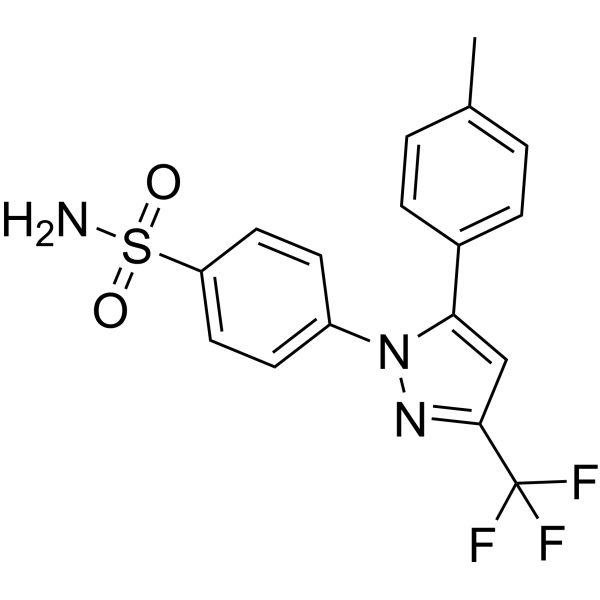
HY-14398
CelecoxibCOX-2inhibitor -
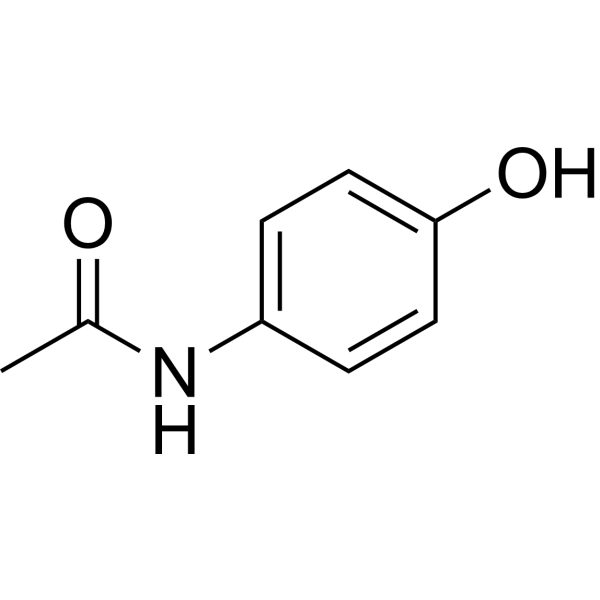
HY-66005
AcetaminophenCOX-2 Inhibitor -
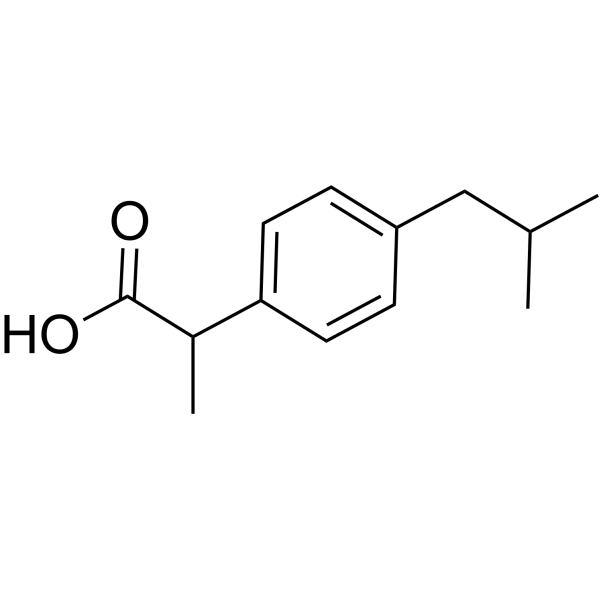
HY-78131
IbuprofenCOX-1 Inhibitor -
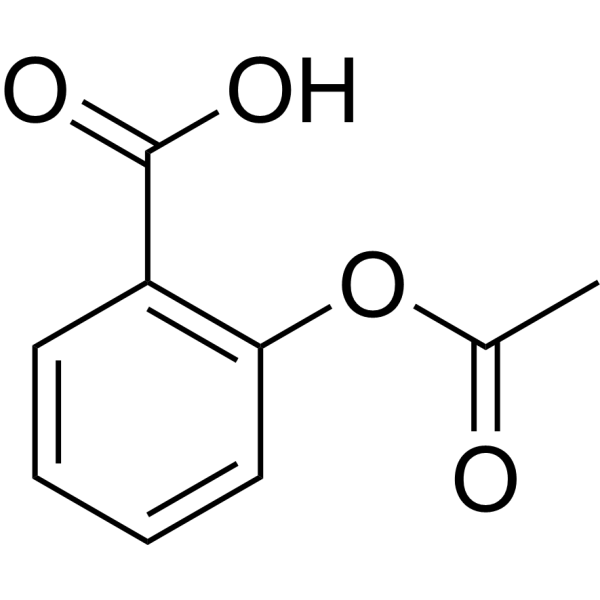
HY-14654
AspirinCOX Inhibitor -
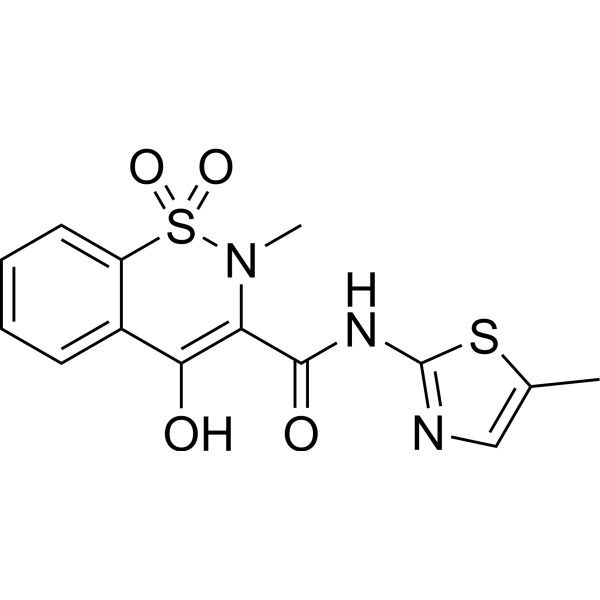
HY-B0261
MeloxicamCOX Inhibitor -
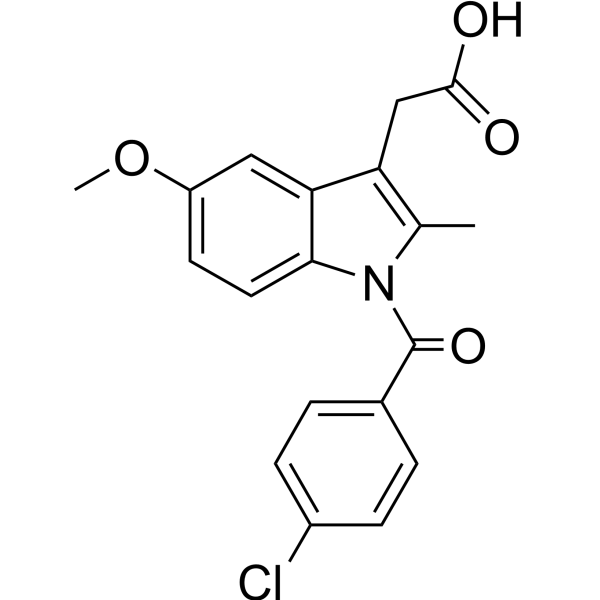
HY-14397
IndomethacinCOX1/2 Inhibitor -
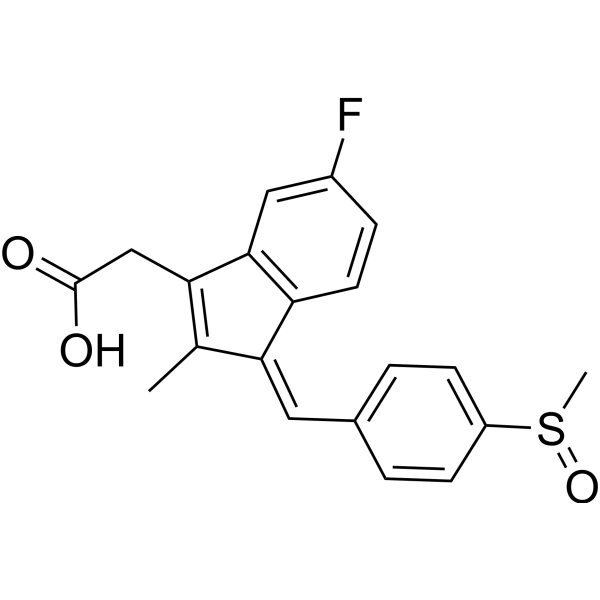
HY-B0008
SulindacAnti-inflammatory Agent -
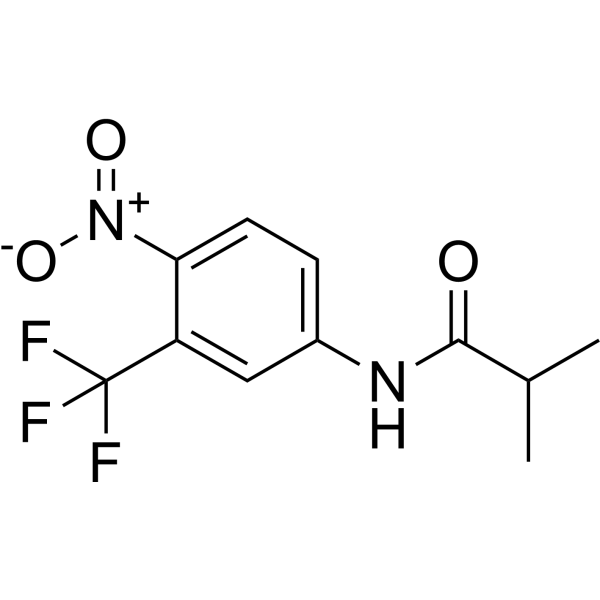
HY-B0022
FlutamideAntiandrogen Agent -
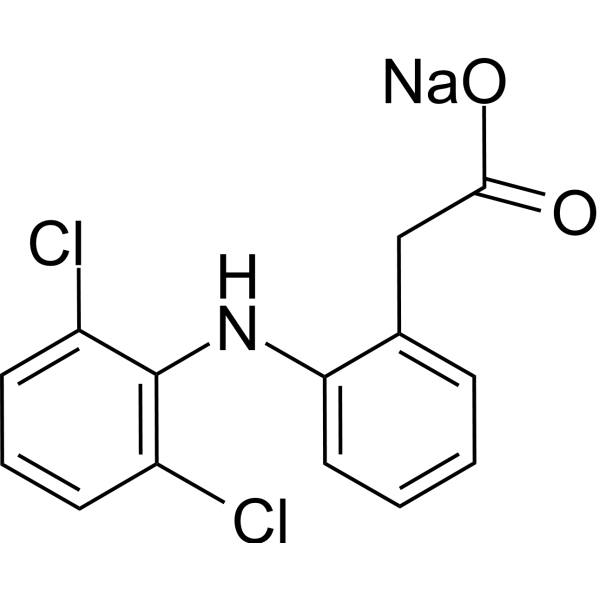
HY-15037
Diclofenac SodiumCOX Inhibitor -
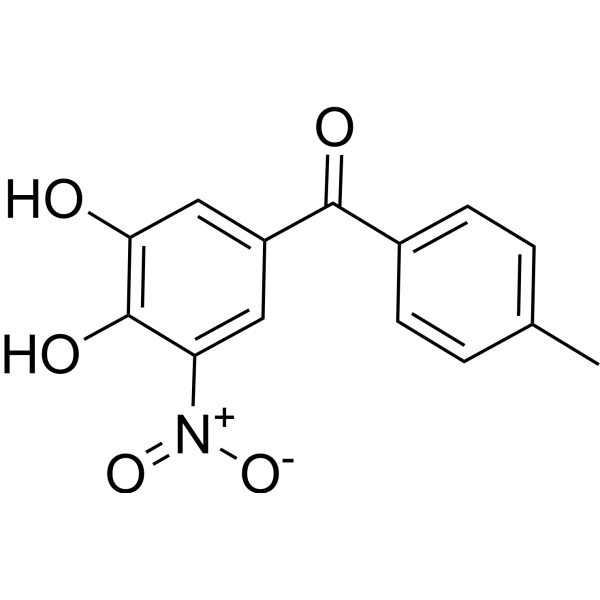
HY-17406
TolcaponeCOMT Inhibitor -
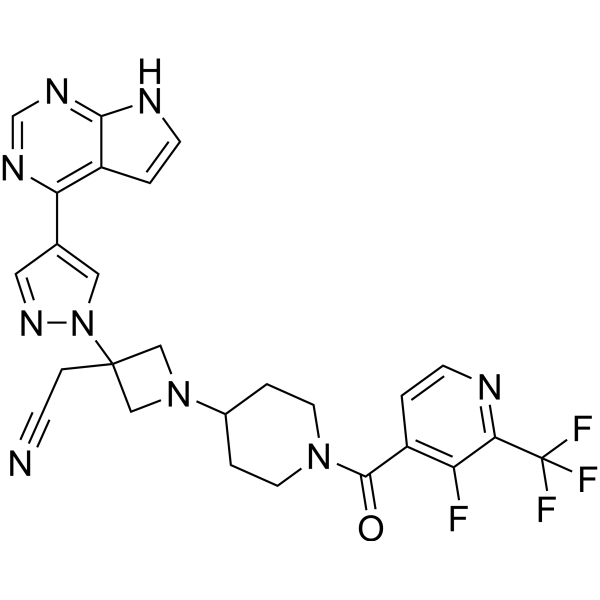
HY-16997
ItacitinibJAK1 Inhibitor -
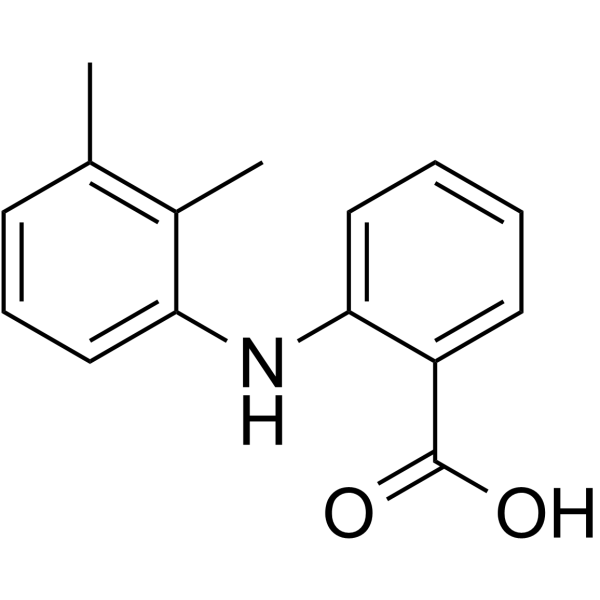
HY-B0574
Mefenamic acidCOX Inhibitor
Publications Citing Use of MedChemExpress (MCE) Nimesulide
More- J Hazard Mater. 2015 May 30:289:18-27. [Abstract]
- J Hazard Mater Lett. 2025 Nov.
- J Ethnopharmacol. 2023 Jun 12:309:116357. [Abstract]
- J Phys Chem Solids. 2017 October;109:117-123.
- Chem Biol Interact. 2021 Apr 1:338:109425. [Abstract]
- Biotechnol Bioeng. 2021 Dec;118(12):4687-4698. [Abstract]
- Infect Immun. 2021 Feb 16;89(3):e00680-20. [Abstract]
- Phys Chem Chem Phys. 2017 Aug 23;19(33):22099-22110. [Abstract]
- Heliyon. 2024 Jul 31;10(15):e35263. [Abstract]
- Federal University of Rio Grande do Sul. 2017 Nov.


Activité biologique
Description
IC50 & Target
[1]|
COX-2 0.07-70 μM (IC50) |
Cellular Effect
|
Cell Line

|
Type | Value | Description | References |
|---|---|---|---|---|
| A549 | IC50 |
67.81 μM
Compound: A
|
Growth inhibition of human A549 cells after 48 hrs by MTT assay
Growth inhibition of human A549 cells after 48 hrs by MTT assay
|
[PMID: 28011214] |
| HepG2 | IC50 |
35.21 μM
Compound: A
|
Growth inhibition of human HepG2 cells after 48 hrs by MTT assay
Growth inhibition of human HepG2 cells after 48 hrs by MTT assay
|
[PMID: 28011214] |
| LNCaP | IC50 |
26.69 μM
Compound: Nimesulide
|
Antiproliferative activity against human LNCAP cells after 48 hrs by MTT assay
Antiproliferative activity against human LNCAP cells after 48 hrs by MTT assay
|
[PMID: 28666860] |
| MCF7 | IC50 |
>100 μM
Compound: Nimesulide
|
Antiproliferative activity against human MCF7 cells after 48 hrs by MTT assay
Antiproliferative activity against human MCF7 cells after 48 hrs by MTT assay
|
[PMID: 28666860] |
| RAW264.7 | IC50 |
<0.078 μM
Compound: Nimesulide
|
Inhibition of LPS/IFN-gamma-induced PGE2 production in mouse RAW264.7 cells after 17 to 20 hrs by enzyme immunoassay
Inhibition of LPS/IFN-gamma-induced PGE2 production in mouse RAW264.7 cells after 17 to 20 hrs by enzyme immunoassay
|
[PMID: 27040659] |
| Sf21 | IC50 |
231.4 μM
Compound: Nimesulide
|
Inhibition of human recombinant COX2 expressed in baculovirus infected SF21 cell
Inhibition of human recombinant COX2 expressed in baculovirus infected SF21 cell
|
[PMID: 20974503] |
| SK-BR-3 | IC50 |
100 μM
Compound: Nimesulide
|
Antiproliferative activity against human SKBR3 cells after 48 hrs by MTT assay
Antiproliferative activity against human SKBR3 cells after 48 hrs by MTT assay
|
[PMID: 23767669] |
| SK-BR-3 | IC50 |
27 μM
Compound: nimesulide
|
Inhibition of aromatase in SK-BR-3 cells by tritiated water release assay
Inhibition of aromatase in SK-BR-3 cells by tritiated water release assay
|
[PMID: 17315855] |
| U-937 | IC50 |
<0.078 μM
Compound: Nimesulide
|
Inhibition of LPS/IFN-gamma-induced PGE2 production in PMA-treated human U937 cells after 17 to 20 hrs by enzyme immunoassay
Inhibition of LPS/IFN-gamma-induced PGE2 production in PMA-treated human U937 cells after 17 to 20 hrs by enzyme immunoassay
|
[PMID: 27040659] |
In Vitro
Nimesulide is a selective COX-2 inhibitor, with IC50s of 70 nM-70 μM in a time-dependent manner, but it shows weak effect on COX-1 (IC50 >100 μM)[1]. Nimesulide (10 μM) effectively decreases VEGF in endometrium cancer cells, and shows no effect on that in normal cells. Nimesulide (10 and 50 μM) dramatically decreases MCP-1 levels in normal cell, and such an effect is also observed with 10 μM in cancer cells. In addition, Nimesulide (50 μM) potently affects IL-8 level in normal cells, but causes no changes in cancer cells[3].
MedChemExpress (MCE) has not independently confirmed the accuracy of these methods. They are for reference only.
In Vivo
MedChemExpress (MCE) has not independently confirmed the accuracy of these methods. They are for reference only.
Essai clinique
| NCT Number | Sponsor | Condition | Start Date |
Phase
|
|---|---|---|---|---|
| NCT01329991 | 2011-05 | PHASE1 |


Chemical Information
-
CAS No. 51803-78-2
-
Appearance Solid
-
Masse moléculaire 308.31
-
Formule C13H12N2O5S
-
Color Light yellow to yellow
-
SMILES
CS(=O)(NC1=CC=C([N+]([O-])=O)C=C1OC2=CC=CC=C2)=O
-
Synonyms
R805
-
Livraison
Room temperature in continental US; may vary elsewhere.
-
Stockage
Powder -20°C 3 years 4°C 2 years In solvent -80°C 2 years -20°C 1 year


Publications (10)
-
Journal Impact Factor
-
Most Recent
-
J Hazard Mater
Microwave-assisted activated carbon from cocoa shell as adsorbent for removal of sodium diclofenac and nimesulide from aqueous effluents. [Abstract]2015 May 30:289:18-27. PMID: 25702636 -
-
J Ethnopharmacol
Involvement of p38 MAPK/cPLA2 and arachidonic acid metabolic pathway in Shengmai injection-induced pseudo-allergic reactions. [Abstract]2023 Jun 12:309:116357. PMID: 36906156 -
-
Chem Biol Interact
Regulatory effects of non-steroidal anti-inflammatory drugs on cardiac ion channels Nav1.5 and Kv11.1. [Abstract]2021 Apr 1:338:109425. PMID: 33617802 -
Biotechnol Bioeng
An integrated biomimetic array chip for establishment of collagen-based 3D primary human hepatocyte model for prediction of clinical drug-induced liver injury. [Abstract]2021 Dec;118(12):4687-4698. PMID: 34478150 -
Infect Immun
Annexin A1 Attenuates Neutrophil Migration and IL-6 Expression through Fpr2 in a Mouse Model of Streptococcus suis-Induced Meningitis. [Abstract]2021 Feb 16;89(3):e00680-20. PMID: 33318141 -
Phys Chem Chem Phys
Adsorption of anti-inflammatory nimesulide by graphene materials: a combined theoretical and experimental study. [Abstract]2017 Aug 23;19(33):22099-22110. PMID: 28795704 -
Heliyon
Screening chondrocyte necroptosis-related genes in the diagnosis and treatment of osteoarthritis. [Abstract]2024 Jul 31;10(15):e35263. PMID: 39170298 -


Solvant et solubilité
In Vitro:
DMSO : ≥ 100 mg/mL (324.35 mM; Hygroscopic DMSO has a significant impact on the solubility of product, please use newly opened DMSO)
H2O : < 0.1 mg/mL (insoluble)
* "≥" means soluble, but saturation unknown.
Please refer to the solubility information to select the appropriate solvent. Once prepared, please aliquot and store the solution to prevent product inactivation from repeated freeze-thaw cycles.
Storage method and period of stock solution: -80°C, 2 years; -20°C, 1 year. When stored at -80°C, please use it within 2 years. When stored at -20°C, please use it within 1 year.
Please refer to the solubility information to select the appropriate solvent. Once prepared, please aliquot and store the solution to prevent product inactivation from repeated freeze-thaw cycles.
Storage method and period of stock solution: -80°C, 2 years; -20°C, 1 year. When stored at -80°C, please use it within 2 years. When stored at -20°C, please use it within 1 year.
Concentration (start) × Volume (start) = Concentration (final) × Volume (final)
In Vivo:
Select the appropriate dissolution method based on your experimental animal and administration route.
- For the following dissolution methods, please ensure to first prepare a clear stock solution using an In Vitro approach and then sequentially add co-solvents:
- To ensure reliable experimental results, the clarified stock solution can be appropriately stored based on storage conditions. As for the working solution for In Vivo experiments, it is recommended to prepare freshly and use it on the same day.
- The percentages shown for the solvents indicate their volumetric ratio in the final prepared solution. If precipitation or phase separation occurs during preparation, heat and/or sonication can be used to aid dissolution.
Add each solvent one by one: 10% DMSO 40% PEG300 5% Tween-80 45% Saline
Solubility: ≥ 2.5 mg/mL (8.11 mM); Clear solution
This protocol yields a clear solution of ≥ 2.5 mg/mL (saturation unknown).
Taking 1 mL working solution as an example, add 100 μL DMSO stock solution (25.0 mg/mL) to 400 μL PEG300, and mix evenly; then add 50 μL Tween-80 and mix evenly; then add 450 μL Saline to adjust the volume to 1 mL.
Preparation of Saline: Dissolve 0.9 g sodium chloride in ddH₂O and dilute to 100 mL to obtain a clear Saline solution.
In Vivo Dissolution Calculator
Please enter the basic information of animal experiments:
-
-
-
-
Recommended: Prepare an additional quantity of animals to account for potential losses during experiments.
Please enter your animal formula composition:
-
%DMSO +
Recommended: Keep the proportion of DMSO in working solution below 2% if your animal is weak.
-
%+
-
+%Tween-80 + +
-
%Saline +
The co-solvents required include: DMSO, . All of co-solvents are available by MedChemExpress (MCE). , Tween 80. All of co-solvents are available by MedChemExpress (MCE).
Working solution concentration: 0.22 mg/mL
Method for preparing stock solution: mg drug dissolved in μL DMSO. Stock solution concentration: mg/mL.
1. Take μL DMSO stock solution;
2. Add μL .
μL , mix evenly;
3. Then add μL Tween 80, mix evenly;
4. Then add μL
Please ensure that the stock solution in the first step is dissolved to a clear state, and add co-solvents in sequence. You can use ultrasonic heating (ultrasonic cleaner, recommended frequency 20-40 kHz), vortexing, etc. to assist dissolution.


Pureté et documentation
-
Fiche technique (282 KB)
-
SDS (479 KB)
- English - EN (479 KB)
- Français - FR (479 KB)
- Deutsch - DE (479 KB)
- Norwegian - NO (479 KB)
- Español - ES (479 KB)
- Swedish - SV (479 KB)
- Italian - IT (479 KB)
- Korean - KR (479 KB)
- Portuguese - PT (479 KB)
-
Instruction de manipulation (2659 KB)
Références
[1]. Vago T, et al. Effect of nimesulide action time dependence on selectivity towards prostaglandin G/H synthase/cyclooxygenase activity. Arzneimittelforschung. 1995 Oct;45(10):1096-8. [Content Brief]
[2]. Werner MF, et al. Nimesulide-induced antipyresis in rats involves both cyclooxygenase-dependent and independent mechanisms. Eur J Pharmacol. 2006 Aug 14;543(1-3):181-9. [Content Brief]
[3]. Genç S, et al. The effect of COX-2 inhibitor, nimesulide, on angiogenetic factors in primary endometrial carcinoma cell culture. Clin Exp Med. 2007 Mar;7(1):6-10. [Content Brief]


Complete Stock Solution Preparation Table
Please refer to the solubility information to select the appropriate solvent. Once prepared, please aliquot and store the solution to prevent product inactivation from repeated freeze-thaw cycles.
Storage method and period of stock solution: -80°C, 2 years; -20°C, 1 year. When stored at -80°C, please use it within 2 years. When stored at -20°C, please use it within 1 year.
| Optional Solvent | Concentration Solvent Mass | 1 mg | 5 mg | 10 mg | 25 mg |
|---|---|---|---|---|---|
| DMSO | 1 mM | 3.2435 mL | 16.2174 mL | 32.4349 mL | 81.0872 mL |
| 5 mM | 0.6487 mL | 3.2435 mL | 6.4870 mL | 16.2174 mL | |
| 10 mM | 0.3243 mL | 1.6217 mL | 3.2435 mL | 8.1087 mL | |
| 15 mM | 0.2162 mL | 1.0812 mL | 2.1623 mL | 5.4058 mL | |
| 20 mM | 0.1622 mL | 0.8109 mL | 1.6217 mL | 4.0544 mL | |
| 25 mM | 0.1297 mL | 0.6487 mL | 1.2974 mL | 3.2435 mL | |
| 30 mM | 0.1081 mL | 0.5406 mL | 1.0812 mL | 2.7029 mL | |
| 40 mM | 0.0811 mL | 0.4054 mL | 0.8109 mL | 2.0272 mL | |
| 50 mM | 0.0649 mL | 0.3243 mL | 0.6487 mL | 1.6217 mL | |
| 60 mM | 0.0541 mL | 0.2703 mL | 0.5406 mL | 1.3515 mL | |
| 80 mM | 0.0405 mL | 0.2027 mL | 0.4054 mL | 1.0136 mL | |
| 100 mM | 0.0324 mL | 0.1622 mL | 0.3243 mL | 0.8109 mL |


Nimesulide Related Classifications
HY-B0363 Related Classifications
 Powered by Bioz