



18472-87-2
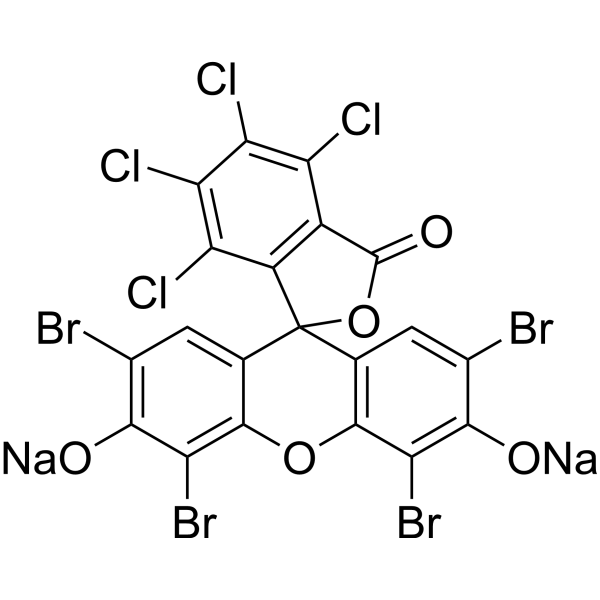
Chemical Structure
Phloxine B
- CAS. Nr.: 18472-87-2
- Formula:C20H2Br4Cl4Na2O5
- Molecular Weight:829.63
IUPAC Name: sodium 2',4',5',7'-tetrabromo-4,5,6,7-tetrachloro-3-oxo-3H-spiro[isobenzofuran-1,9'-xanthene]-3',6'-bis(olate)
InChIKey: OOYIOIOOWUGAHD-UHFFFAOYSA-L
SMILES: BrC1=C(C(Br)=CC2=C1OC3=C(C(O[Na])=C(C=C3C24C5=C(C(O4)=O)C(Cl)=C(Cl)C(Cl)=C5Cl)Br)Br)O[Na]
Biological Activity: Phloxine B is a red dye that can be used as a coloring agent in food, drugs, and cosmetics. Phloxine B is also used as an alternative to Gram staining to distinguish Gram-negative from Gram-positive bacteria. Phloxine B also exhibits antibacterial activity and phototoxicity. Phloxine B induces ATF6 upregulation, endoplasmic reticulum stress, calcium release, mitochondrial depolarization, caspase-dependent apoptosis, DNA damage, and cell cycle arrest in cells under ultraviolet irradiation. Phloxine B is also a cell viability indicator that can be used to distinguish dead cells from live cells. Phloxine B also modulates the activity of wild-type CFTR (Ks = 3.2 μM; Ki = 38 μM) and delF508 CFTR (Ks = 3 μM, Ki = 33 μM). Phloxine B can be used in research on histological staining, cell viability assays, antibacterial and photodynamic applications[1][2][3][4][5][6][7][8].
| Art. -Nr. | Produktname | Reinheit | Beschreibung | Pricing | |||||||||||||||||||
|---|---|---|---|---|---|---|---|---|---|---|---|---|---|---|---|---|---|---|---|---|---|---|---|
|
|
Phloxine B | 96.95% | Phloxine B is a red dye that can be used as a coloring agent in food, drugs, and cosmetics. Phloxine B is also used as an alternative to Gram staining to distinguish Gram-negative from Gram-positive bacteria. Phloxine B also exhibits antibacterial activity and phototoxicity. Phloxine B induces ATF6 upregulation, endoplasmic reticulum stress, calcium release, mitochondrial depolarization, caspase-dependent apoptosis, DNA damage, and cell cycle arrest in cells under ultraviolet irradiation. Phloxine B is also a cell viability indicator that can be used to distinguish dead cells from live cells. Phloxine B also modulates the activity of wild-type CFTR (Ks = 3.2 μM; Ki = 38 μM) and delF508 CFTR (Ks = 3 μM, Ki = 33 μM). Phloxine B can be used in research on histological staining, cell viability assays, antibacterial and photodynamic applications. | ||||||||||||||||||||
|
loading...
/
|
|||||||||||||||||||||||
-
Similarity Score 0.71
 HY-D0214EAcid Red 94 sodium (80%)
-
Similarity Score 0.69
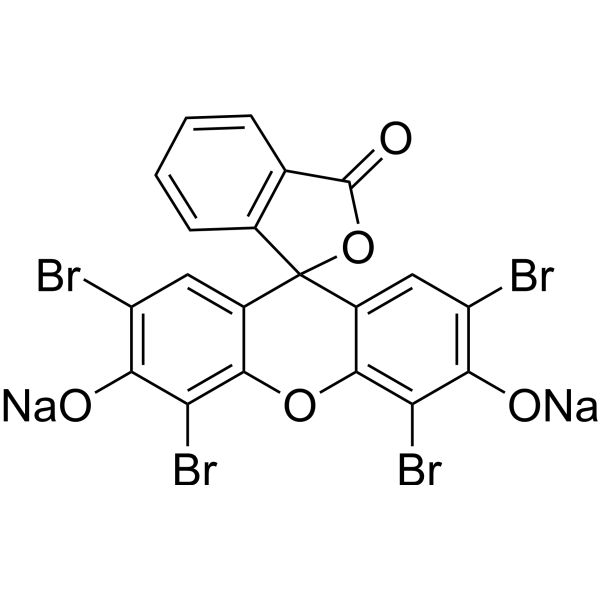 HY-D0505AEosin Y disodium
-
Similarity Score 0.63
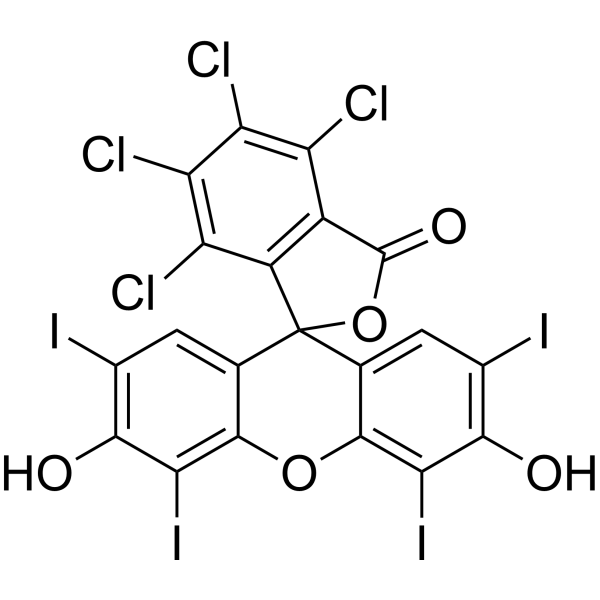 HY-D0214AAcid Red 94 lactone
-
Similarity Score 0.58
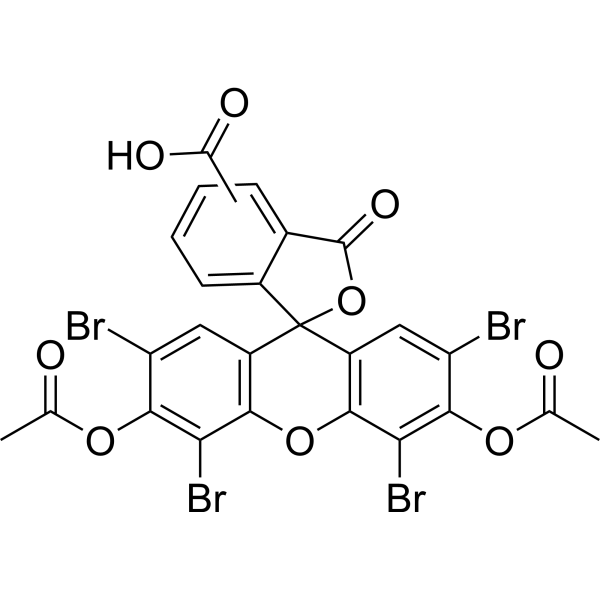 HY-D00525(6)-Carboxyeosin-diacetate
-
Similarity Score 0.57
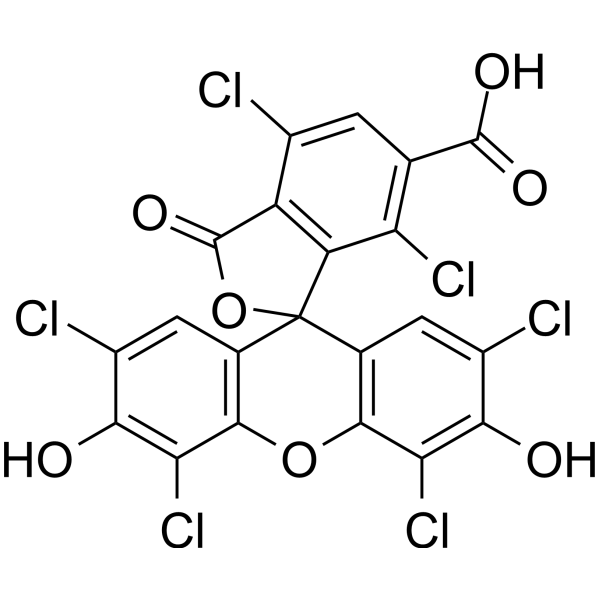 HY-1142896-HEX
-
Similarity Score 0.57
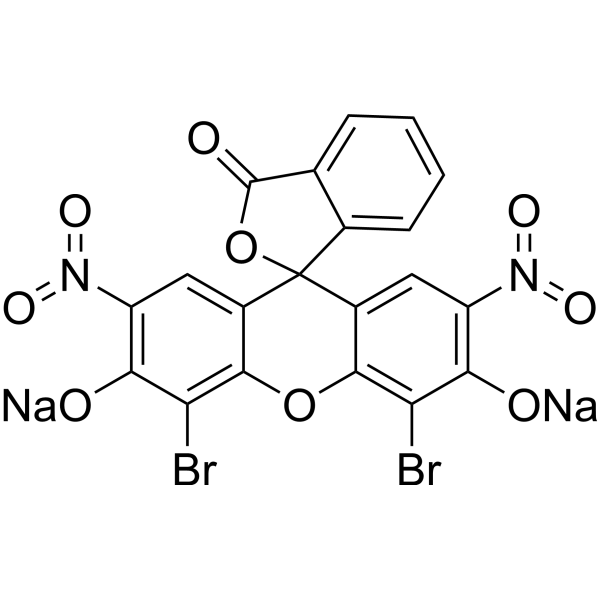 HY-D1198Eosin B
-
Similarity Score 0.55
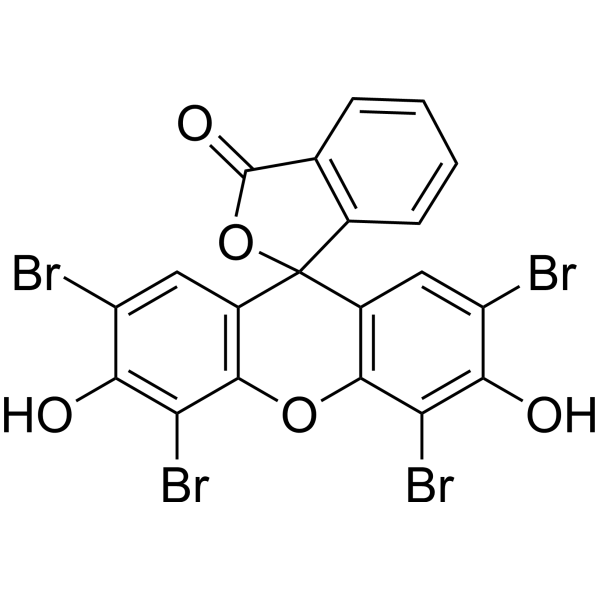 HY-D0505Eosin Y
-
Similarity Score 0.55
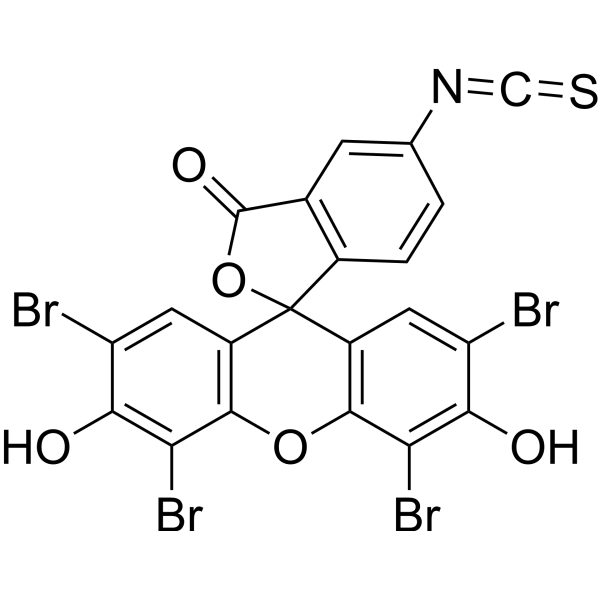 HY-D0805Eosin 5-isothiocyanate
-
Similarity Score 0.55
 HY-1305106-HEX dipivaloate
-

Explore the MedChemAI to find more analogs


References
- [1]. Rasooly R, et al. Expanding the bactericidal action of the food color additive phloxine B to gram-negative bacteria. FEMS immunology and medical microbiology. 2005 Aug 01;45(2):239-44.
- [2]. Willeford KO, et al. Efficacy of phloxine B as a bactericidal agent in plants. J Agric Food Chem. 1998;46(4):1637-41.
- [3]. Qi H, et al. Hydrogen [corrected] peroxide-dependent photocytotoxicity by phloxine B, a xanthene-type food colorant. Biochim Biophys Acta. 2011 Jul;1810(7):704-12.
- [4]. Goyal S, et al. ROS mediated crosstalk between endoplasmic reticulum and mitochondria by Phloxine B under environmental UV irradiation. Journal of photochemistry and photobiology. B, Biology. 2016 Aug;161:284-94.
- [5]. Noda T, et al. Viability assays to monitor yeast autophagy. Methods in enzymology. 2008;451:27-32.
- [6]. Rasooly R. Phloxine B, a versatile bacterial stain. FEMS Immunol Med Microbiol. 2007;49(2):261-5.
- [7]. Inbaraj JJ, et al. Phloxine B phototoxicity: a mechanistic study using HaCaT keratinocytes. Photochemistry and photobiology. 2005;81(1):81-8.
- [8]. Melin P, et al. The glycine residues G551 and G1349 within the ATP-binding cassette signature motifs play critical roles in the activation and inhibition of cystic fibrosis transmembrane conductance regulator channels by phloxine B. J Membr Biol. 2005 Dec;208(3):203-12.



