



Celite

Based on 1 Customer Validation
Celite (Diatomaceous earth) is a filter aid. Celite induces hepatic tryptophan oxygenase activity and reduces hepatic glycogen in mouse experiments. Celite can be used for studies of endotoxemia.
For research use only. We do not sell to patients.
- CAS No.: 61790-53-2
-
Storage:
Store at room temperature, keep dry and cool.
In solvent -80°C, 1 year , -20°C, 6 months


To place orders, for customer services and technical support, please contact: MedChemExpress USA
Tel: 609-228-6898 E-mail: [email protected] [email protected]


-
 Biological Activity
-
Chemical Information
- Protocols
- Purity & Documentation
- References
-
 Help & FAQs


-

HY-Y0498
Aluminum oxideAdjuvant -
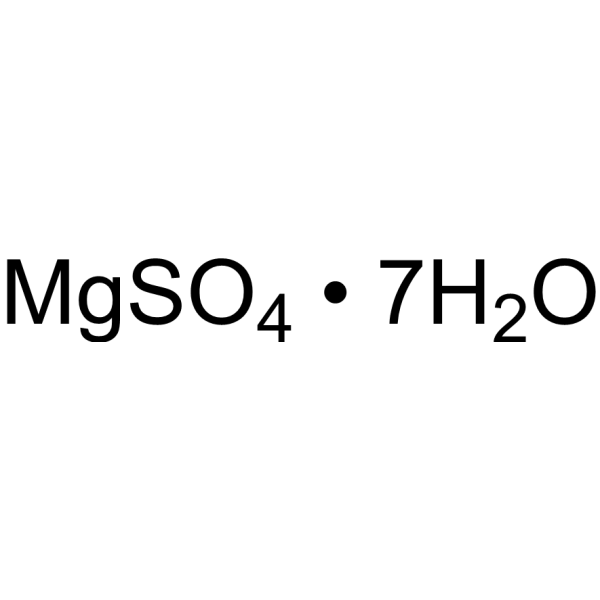
HY-W094475C
Magnesium sulfate heptahydrate, for cell cultureAnti-Inflammatory Agent -

HY-Y1212A
Purified Siliceous Earth, for injectionFiltering Aid -

HY-Y0344D
Sodium chloride, for cell cultureBiochemical Assay Reagent -

HY-Y1103
Iron(II) sulfate heptahydrate, 99%Iron Salt -

HY-Y1219H
Silica gel, high-purity grade, 200-400 meshDesiccant -

HY-Y1103A
Iron(II) sulfate heptahydrate, for cell culture, 99%Iron Salt -
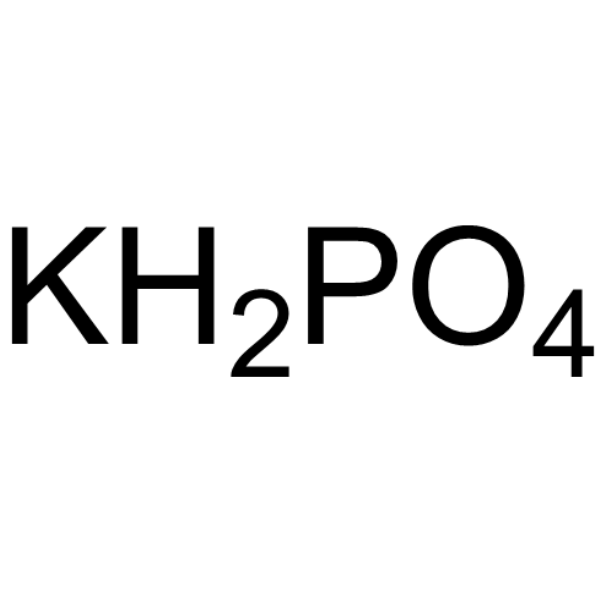
HY-Y0332B
Potassium dihydrogen phosphate, AR,99.5%Cell Culture Reagent -

HY-Y0292
Lithium carbonateBiochemical Reagent -
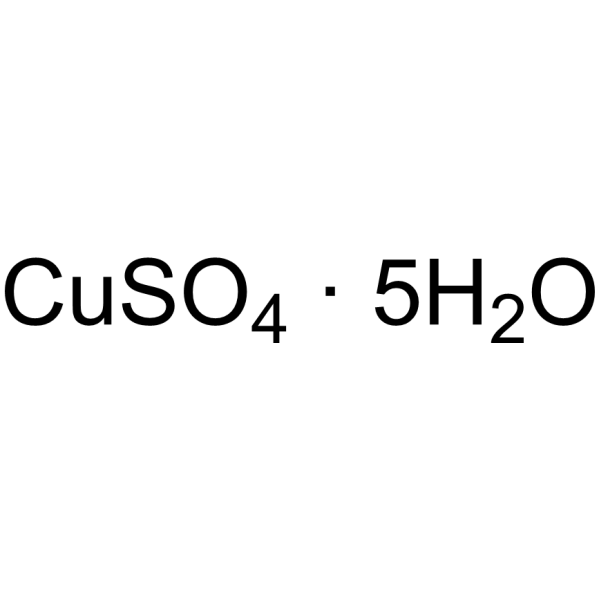
HY-Y1881B
Copper sulfate pentahydrate, for cell culture, 98%Biochemical Reagent


Biological Activity
Description
In Vivo
MedChemExpress (MCE) has not independently confirmed the accuracy of these methods. They are for reference only.
-
Animal Model:Swiss albino (male, 25 ± 2 g)[1]
-
Dosage:5 mg
-
Administration:i.p.; daily; 5 days
-
Result:Achieved 45% survival rate following LD50 endotoxin challenge without concurrent cortisone treatment, and 100% survival rate with concurrent cortisone treatment.
Induced fully elevated liver TO activity, significantly above saline control levels.
Reduced the level of endogenous hepatic glycogen.
Showed a carbon clearance K value of 0.048, not significantly different from saline control levels.


Chemical Information
-
CAS No. 61790-53-2
-
Appearance Solid
-
Color White to off-white
-
SMILES
[Celite]
-
Synonyms
Diatomaceous earth
-
Shipping
Room temperature in continental US; may vary elsewhere.
-
Storage
Store at room temperature, keep dry and cool
In solvent -80°C 1 year -20°C 6 months


Purity & Documentation
-
Data Sheet (269 KB)
-
SDS (418 KB)
- English - EN (418 KB)
- Français - FR (418 KB)
- Deutsch - DE (418 KB)
- Norwegian - NO (418 KB)
- Español - ES (418 KB)
- Swedish - SV (418 KB)
- Italian - IT (418 KB)
- Korean - KR (418 KB)
- Portuguese - PT (418 KB)
-
Handling Instructions (2659 KB)
References

Calculators
Concentration (start) × Volume (start) = Concentration (final) × Volume (final)


Celite Related Classifications
HY-Y1212 Related Classifications
 Powered by Bioz