



FR 167653 free base
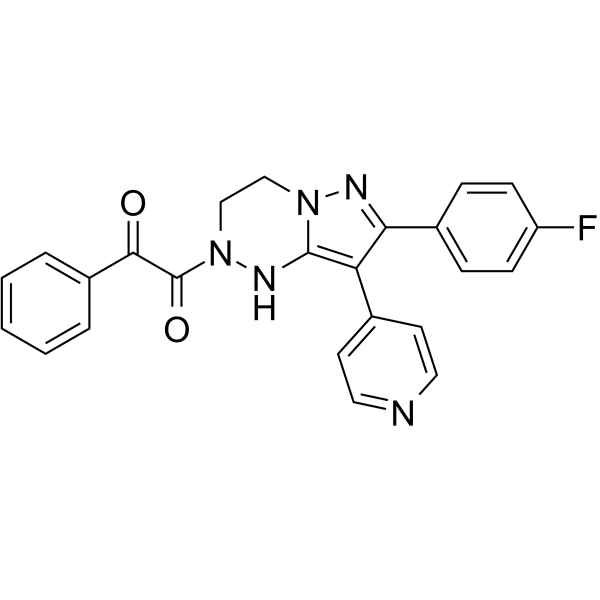
FR 167653 free base, an orally active and selective p38 MAPK inhibitor, is a potent suppressor of TNF-α and IL-1β production via specific inhibition of p38 MAPK activity. FR 167653 free base is effective in treating inflammation, relieving trauma and ischemia-reperfusion injury in vivo.
Nur für Forschungszwecke. Wir verkaufen nicht an Patienten.
- CAS. Nr.: 158876-65-4
- Formel: C24H18FN5O2
- Molecular Weight:427.43
-
Speicherung:
Please store the product under the recommended conditions in the Certificate of Analysis.

To place orders, for customer services and technical support, please contact: MedChemExpress USA
Tel: 609-228-6898 E-mail: [email protected] [email protected]


-
 Biologische Aktivität
-
Chemical Information
- Protokoll
- Reinheit & Dokumentation
- Verweise
-
 Help & FAQs


-
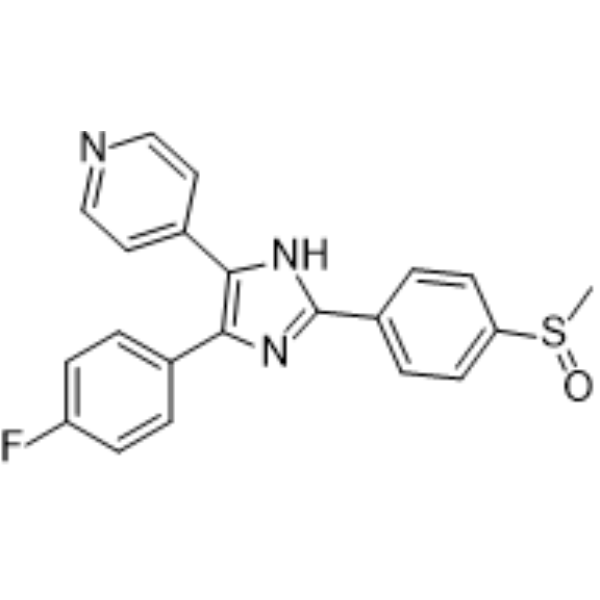
HY-10256
Adezmapimodp38 MAPK Inhibitor -
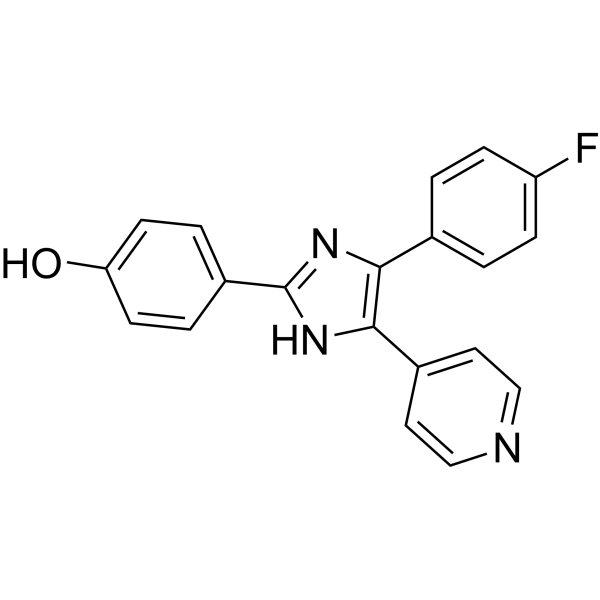
HY-10295
SB 202190p38 MAPK Inhibitor -
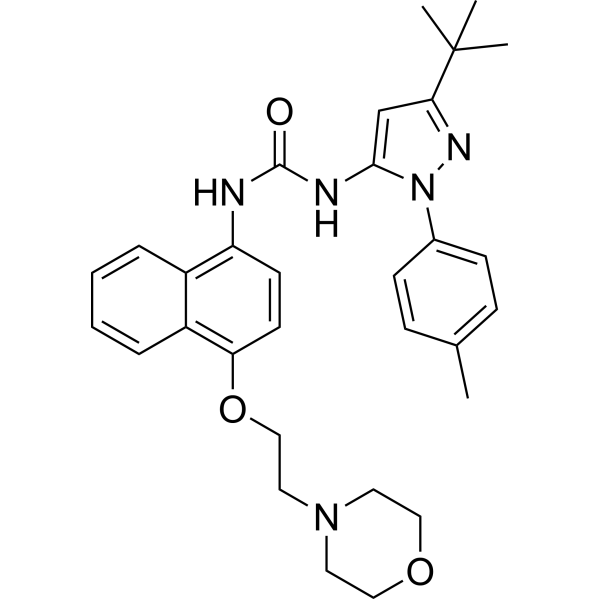
HY-10320
Doramapimodp38 MAPK Inhibitor -
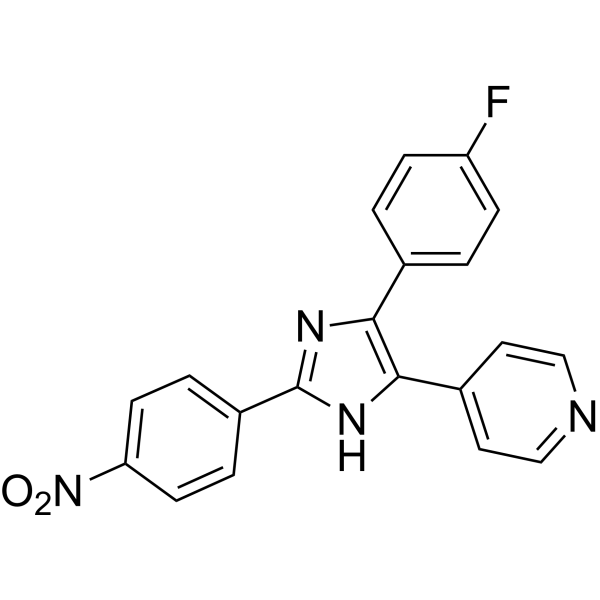
HY-10578
PD 169316p38 MAP Kinase Inhibitor -
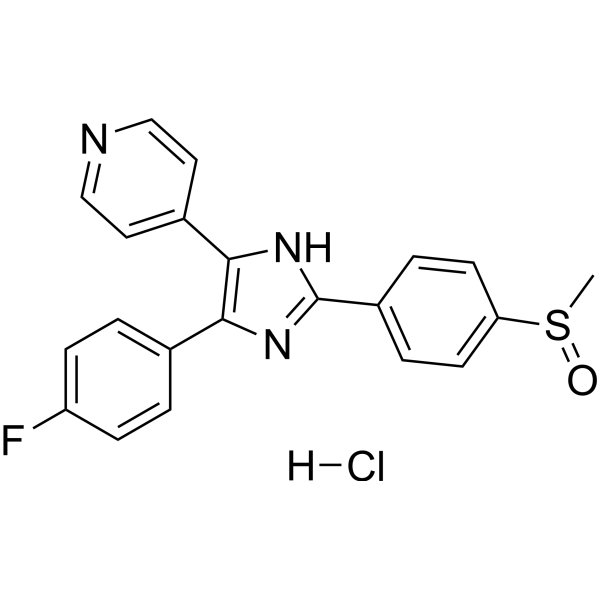
HY-10256A
Adezmapimod hydrochloridep38 MAPK Inhibitor -
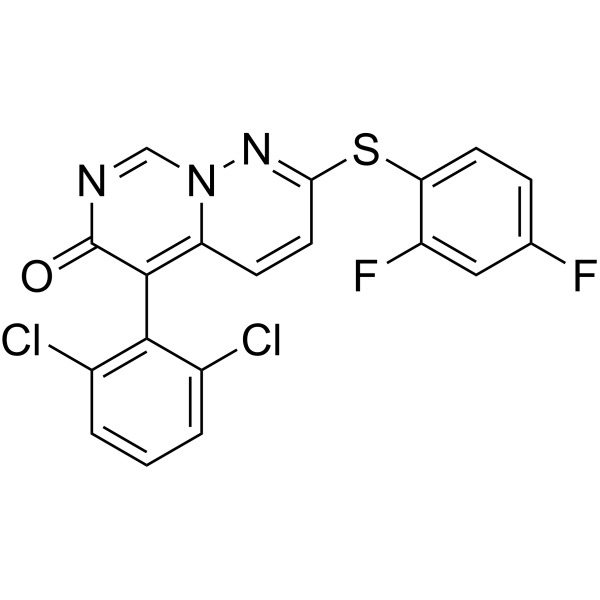
HY-10328
Neflamapimodp38α Inhibitor -
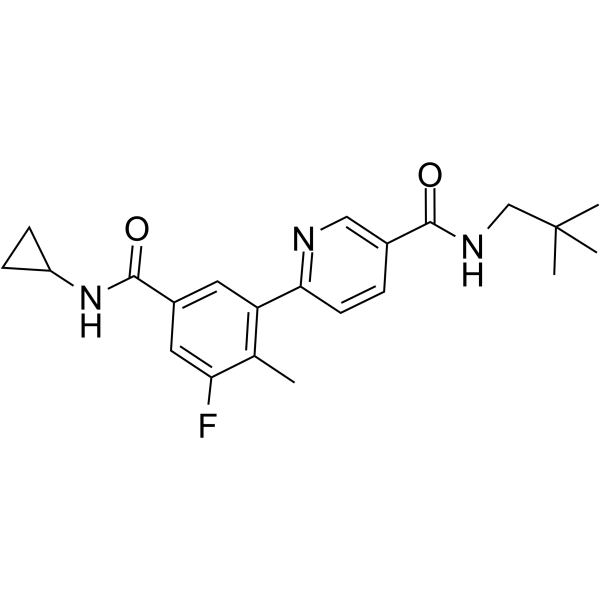
HY-10402
Losmapimodp38α/β MAPK Inhibitor -
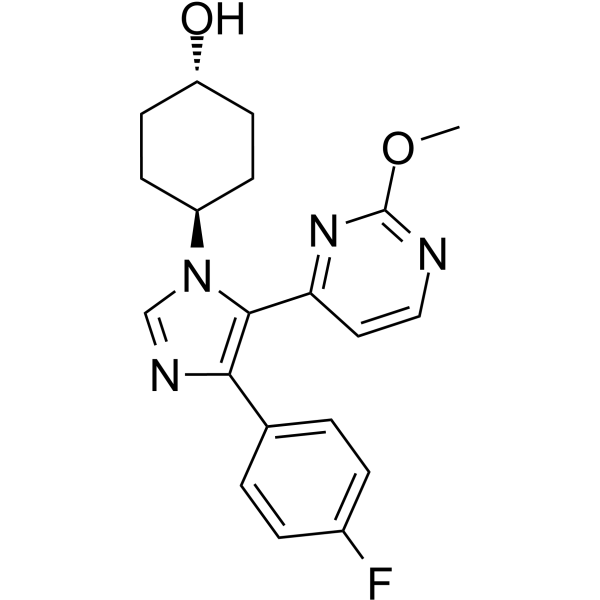
HY-11068
SB 239063p38 MAPK Inhibitor -
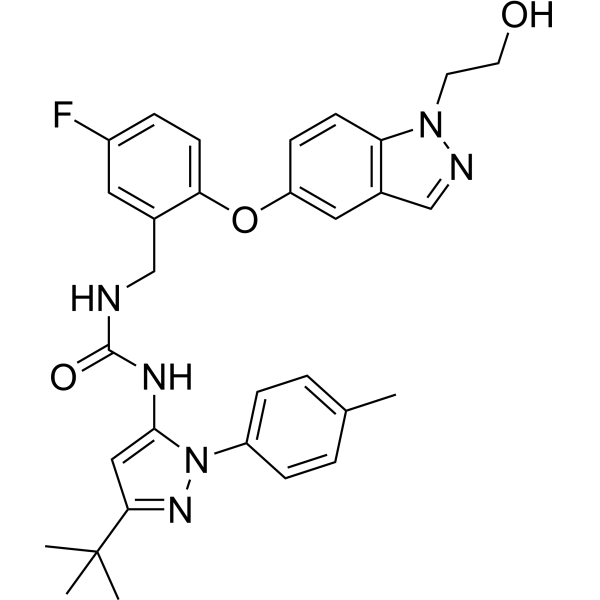
HY-16782
PexmetinibTie-2/p38 MAPK Inhibitor -
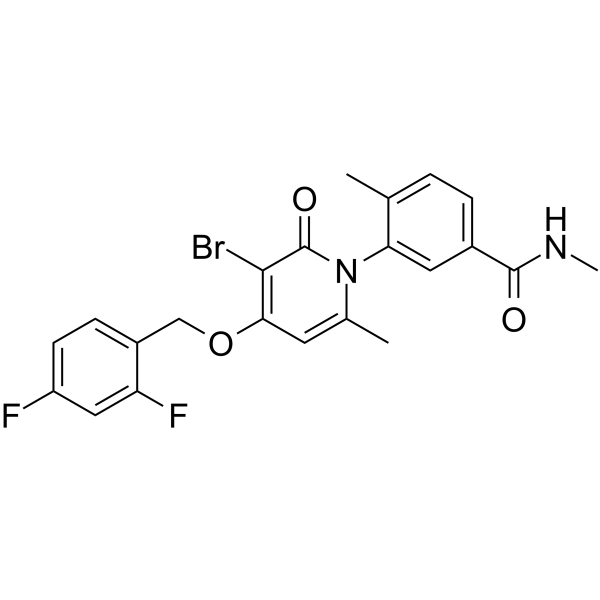
HY-10403
PH-797804p38α/β Inhibitor -
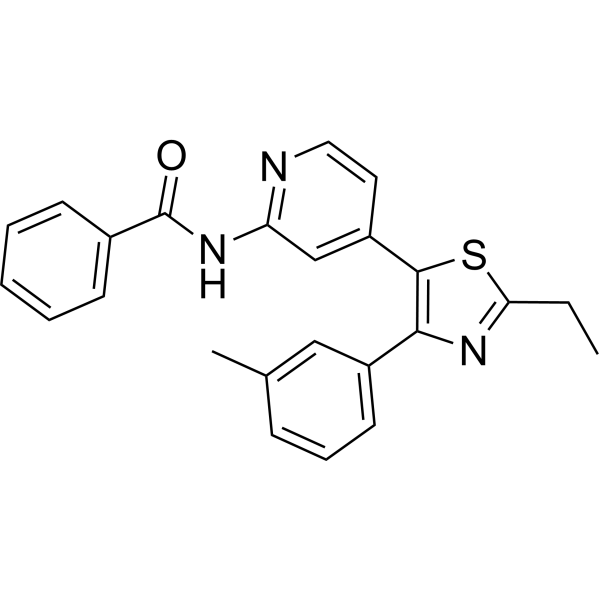
HY-10456
TAK-715p38 MAPK Inhibitor -
HY-18850
MAPK13-IN-1MPAK13 Inhibitor


Biologische Aktivität
Beschreibung
In Vivo
MedChemExpress (MCE) has not independently confirmed the accuracy of these methods. They are for reference only.
-
Animal Model:Inbred male Balbuc mice (aged 8 weeks)[1]
-
Dosage:32 mg/kg
-
Administration:Subcutaneous injection; 24-48 hours
-
Result:The scores of acute tubular necrosis in FR-167653-treated mice were significantly lower in vehicle-treated mice at 24 and 48 h after ischaemiaureperfusion both in cortex and outer medulla.


Chemical Information
-
CAS. Nr. 158876-65-4
-
Molecular Weight 427.43
-
Formel C24H18FN5O2
-
SMILES
O=C(N1NC2=C(C3=CC=NC=C3)C(C4=CC=C(F)C=C4)=NN2CC1)C(C5=CC=CC=C5)=O
-
Versand
Room temperature in continental US; may vary elsewhere.
-
Speicherung
Please store the product under the recommended conditions in the Certificate of Analysis.

Protokoll
-
Research Protocol for Inflammation-related Diseases
The NLRP3 inflammasome is a cytosolic innate immune signaling platform that integrates priming signals and danger-signal activation to promote caspase-1 activation, maturation of IL-1β and IL-18, and gasdermin D-mediated pyroptotic cell death. The core experimental logic is to determine whether inflammatory disease phenotypes are driven by increased NLRP3 expression, ASC-containing inflammasome assembly, caspase-1 cleavage, GSDMD cleavage, and extracellular release of IL-1β/IL-18 rather than by nonspecific cell injury alone. The pathway is strongly linked to inflammation-related disease phenotypes because monosodium urate crystals activate NALP3/NLRP3 inflammasome signaling in gout-like crystal inflammation, cholesterol crystals activate NLRP3 inflammasomes in atherogenesis models, and DSS-induced intestinal inflammation has been reported to involve NLRP3 inflammasome activity. However, experimental colitis studies also show context-dependent protective effects of NLRP3 inflammasome co
-
Pyroptosis Solutions
Pyroptosis is a lytic inflammatory cell-death pathway executed by gasdermin pores, most classically through inflammasome-mediated activation of caspase-1, cleavage of gasdermin D, membrane pore formation, LDH release, and secretion of IL-1β and IL-18. The canonical pathway is commonly modeled by priming cells with an inflammatory signal such as LPS to induce pro-IL-1β and inflammasome components, followed by an activation signal such as ATP or nigericin to activate NLRP3, ASC speck formation, caspase-1 cleavage, GSDMD cleavage, cytokine release, and pyroptotic membrane rupture. The non-canonical pathway is triggered when cytosolic LPS activates mouse caspase-11 or human caspase-4/5, leading to GSDMD cleavage and pyroptosis, and this can secondarily activate NLRP3-dependent IL-1β release. Pyroptosis is linked to inflammatory injury, infection, cancer, liver disease, ocular disease, placental inflammation, and other disease phenotypes, but unresolved questions include which gasdermin fam


Reinheit & Dokumentation
Verweise
[1]. Furuichi K, et al. Administration of FR167653, a new anti-inflammatory compound, prevents renal ischaemia/reperfusion injury in mice. Nephrol Dial Transplant. 2002 Mar;17(3):399-407. [Content Brief]
[2]. Iwata Y, et al. p38 Mitogen-activated protein kinase contributes to autoimmune renal injury in MRL-Fas lpr mice. J Am Soc Nephrol. 2003 Jan;14(1):57-67. [Content Brief]
[3]. Kawashima Y, et al. FR167653 attenuates ischemia and reperfusion injury of the rat lung with suppressing p38mitogen-activated protein kinase. J Heart Lung Transplant. 2001 May;20(5):568-74. [Content Brief]

Calculators
Konzentration (Stammlösung) × Volumen (Stammlösung) = Konzentration (Ziellösung) × Volumen (Ziellösung)


FR 167653 free base Related Classifications
HY-18754 Related Classifications
 Powered by Bioz